
L'Oreal(LRLCY)

Search documents
欧莱雅旗下高端品牌伊索关闭中国首店
Jing Ji Guan Cha Wang· 2025-05-08 09:36
Core Insights - Aesop, a high-end fragrance brand under L'Oréal Group, will close its first store in mainland China on May 11 due to lease expiration, while still maintaining 19 other stores in the region [1][2] - L'Oréal Group acquired Aesop for approximately $2.5 billion, marking it as the largest acquisition in the company's history [1] - Aesop's sales in 2022 reached $537 million, and the brand is expected to join L'Oréal's billion-dollar brand club in the future [2] Group 1: Business Performance - Aesop's business in China is still in its early stages, having opened its first store in 2022 [2] - L'Oréal's high-end cosmetics division faced performance challenges, with a revenue growth of only 2.7% in 2024, the lowest among its four main divisions [2] - Despite a 5% sales growth in China in 2023, L'Oréal did not separately report the performance of its high-end cosmetics division in the Chinese market [2][3] Group 2: Retail Strategy - L'Oréal's travel retail business is also under pressure, particularly in Hainan, with a focus on maintaining healthy inventory levels [3] - Aesop opened its first travel retail flagship store in Hainan's Sanya International Duty-Free City, emphasizing a unique store design and interactive travel experience [3] - In 2024, Aesop plans to open 13 new stores in China as part of a global expansion of 42 new stores [3] Group 3: Leadership Changes - Aesop recently underwent a leadership change with the departure of CEO Michael O'Keeffe, who had been with the company for 22 years [4] - The company has not yet announced a successor for O'Keeffe, who was instrumental in implementing a retail experience-focused strategy [4] - L'Oréal Group emphasized the importance of physical stores in its high-end cosmetics division, planning to open 165 new stores in 2024 [4]

Aesop大陆首店将闭店,欧莱雅高端个护布局受挫
Guan Cha Zhe Wang· 2025-05-08 06:59
Core Insights - Aesop's first store in mainland China, located on Dongping Road in Shanghai, is set to close on May 10, 2023, just two and a half years after its opening in November 2022 [3][6] - The closure marks Aesop's first store shutdown since entering the mainland market, attributed to the expiration of the store lease without a renewal [3][6] - Aesop was acquired by L'Oréal for $2.525 billion in 2023, with expectations for growth in the Chinese market, which was previously identified as the fastest-growing region for the brand [3][6] Company Performance - Aesop has been a significant contributor to L'Oréal's performance, with double-digit revenue growth reported in the first quarter following the acquisition [6] - Despite the growth, the high-end cosmetics division, which includes Aesop, showed signs of fatigue with a revenue increase of only 2.7% year-on-year in 2024 [7] - The North Asia market, where China is included, was the only region to report negative growth for L'Oréal, presenting challenges for the brand [7] Pricing and Market Dynamics - Aesop's pricing strategy in China has been criticized for being high, with significant price discrepancies noted compared to Japan, where products are cheaper [7][8] - Aesop recently increased product prices by 10% to 30%, with some items seeing substantial price hikes over the past five years [8] - The closure of the flagship store is seen as a warning signal amid a cooling high-end consumer market, indicating a shift towards more fundamental retail practices [9]


欧莱雅旗下Aesop中国内地首店将关闭 高端香水赛道“卷”不动了
Bei Jing Shang Bao· 2025-05-07 12:46
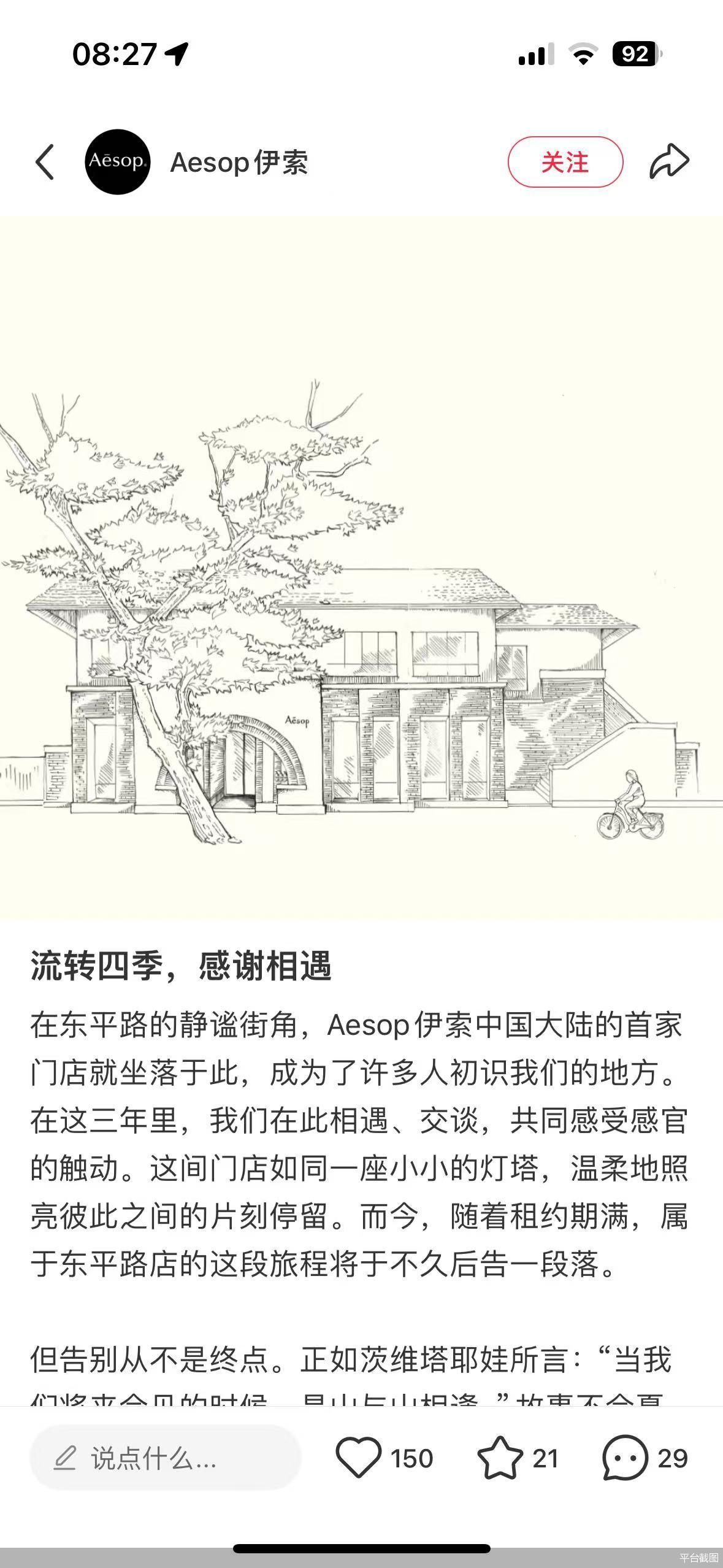
5月6日晚间,欧莱雅旗下高端个护与香水品牌Aesop伊索发布公告称,品牌中国内地首店将于5月11日关闭。对此,欧莱雅集团回应北京商报记者称,关闭 原因是租约到期。2023年欧莱雅对Aesop完成收购后,品牌在中国市场加速扩张,目前已有21家门店,几乎维持着每月开一店的速度。 业内人士指出,当地产红利不再,获客成本增高,品牌按传统方式开店已不符合市场发展趋势。大规模开店会让品牌知名度快速提升,但也会直接导致投入 产出比降低,没有较高影响力的品牌难以长期维持高速扩张的模式。 鉴于中国高端美容市场的放缓,欧莱雅集团也在不断自我反思调整,欧莱雅集团首席执行官叶鸿慕在今年初的业绩会上坦言,对中国高端美妆市场存在过度 扩张的问题,并表示将扭转这一趋势。他指出,当前中国消费者更加注重性价比,这也是高端市场的表现不如大众市场的原因。 尽管目前中国香水市场仍保持高增长,但增速的放缓已成为不争的事实。2023年全年,欧莱雅集团香氛品类增长了17%,推动高档化妆品部增长,2024年前 三季度,该业务仍保持两位数增长,远超市场平均水平。2024年财报则显示,Aesop所在的高档化妆品部销售额155.91亿欧元,同比增长2.7%,北亚 ...
欧莱雅:去年亮眼的医美业务一季度“哑火”
凤凰网财经· 2025-05-06 14:25
Core Viewpoint - L'Oréal's Q1 2025 financial report shows a sales revenue of €11.73 billion, marking a 4.4% year-on-year growth, but the growth rate is the lowest in five years, with a significant slowdown in the "skin science beauty" segment [1][2] Group 1: Financial Performance - In Q1 2025, L'Oréal's sales reached €11.73 billion, reflecting a 4.4% increase compared to the previous year [1] - The company has experienced consistent sales growth in Q1 over the past five years, but the growth rate has been declining, reaching its lowest point this year [1] - The "skin science beauty" segment, which had previously shown strong performance, has seen a notable slowdown in growth this quarter [1][2] Group 2: Business Segment Performance - The mass cosmetics division, L'Oréal's main revenue source, achieved sales of €4.279 billion, a 2.5% year-on-year increase [2] - The luxury cosmetics division, which includes brands like Lancôme and Biotherm, saw a 7.3% increase in sales to €4.093 billion, benefiting from a complementary brand portfolio [2] - The professional hair products division reported a 2.7% growth, reaching €1.277 billion, driven by a strong performance from brands like Kérastase [2] - The skin science beauty division's sales were €2.086 billion, with a 3.5% year-on-year growth, but this marks a slowdown compared to previous years [2][3] Group 3: Regional Market Insights - The European market was a highlight for L'Oréal in Q1, with sales of €3.915 billion, reflecting a 4.9% year-on-year growth [6] - The North American market faced a decline, with sales of €2.973 billion, down 1.4% year-on-year [6] - The North Asia market, which had previously seen a decline, showed recovery with a sales increase of 8.4% to €2.953 billion [6] - The Chinese market has faced challenges, marking its first negative growth in a decade, impacting overall performance [1][6][7] Group 4: Strategic Initiatives and Challenges - L'Oréal has been actively investing in the skin science beauty sector, including the launch of new products and acquisitions, such as a 10% stake in Galderma [3][5] - The company has initiated the "L'Oréal Skin Health Action" project, planning to invest €20 million over five years to enhance access to skin health services [5] - The rise of domestic brands and changing consumer preferences, particularly among Gen Z, pose significant challenges to L'Oréal's market position [8][9] - Reports indicate that L'Oréal plans to significantly reduce its tourism retail workforce in response to sluggish sales in this channel, with potential layoffs of up to 50% [9]

欧股“十一罗汉”收盘播报|4月份LVMH集团跌14.8%,诺和诺德跌约7.4%,欧莱雅则涨将近12.9%
news flash· 2025-04-30 17:22
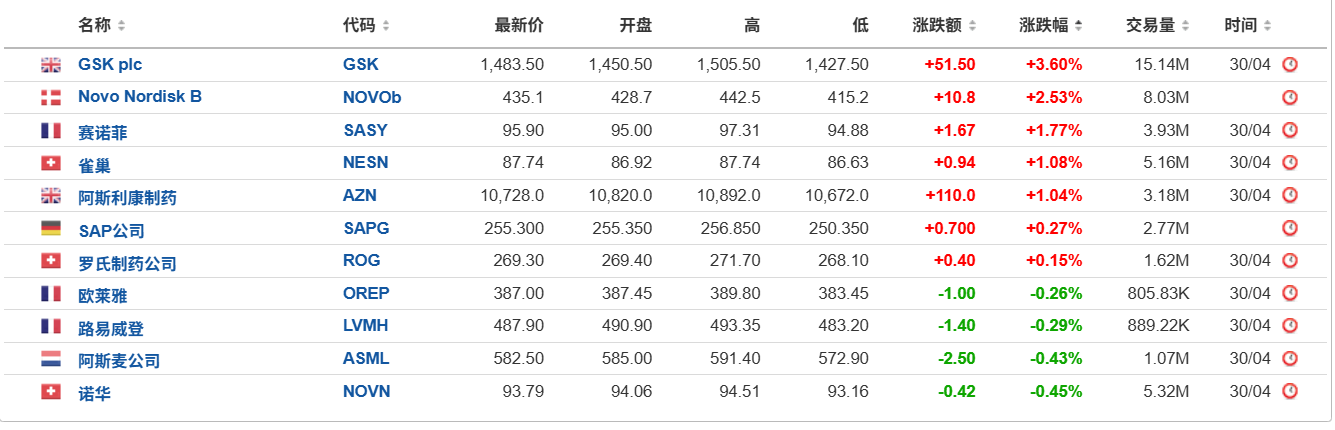
周三(4月30日),阿斯麦控股荷兰阿姆斯特丹股价(ASML.NA)收跌0.43%,报582.50欧元,4月份累计下跌3.88%。 诺和诺德哥本哈根股价(NOVOB.DC)收涨2.53%,报435.10(丹麦克朗),4月份累跌7.39%。 | 名称 = | 代码 : | | 开盘 | 흥 | | 涨跌额 # | 涨跌幅 * | | --- | --- | --- | --- | --- | --- | --- | --- | | GSK plc | GSK | 1.483.50 | 1.450.50 | 1.505.50 | 1.427.50 | +51.50 | +3.60% | | 1 Novo Nordisk B | NOVOb | 435.1 | 428.7 | 442.5 | 415.2 | +10.8 | +2.53% | | 赛诺菲 | SASY | 95.90 | 95.00 | 97.31 | 94.88 | +1.67 | +1.77% | | + 雀菓 | NESN | 87.74 | 86.92 | 87.74 | 86.63 | +0.94 | +1.08% | | អត 阿斯利康制药 ...
欧股“十一罗汉”收盘播报|诺和诺德、Sap、欧莱雅收涨超2%
news flash· 2025-04-29 16:44
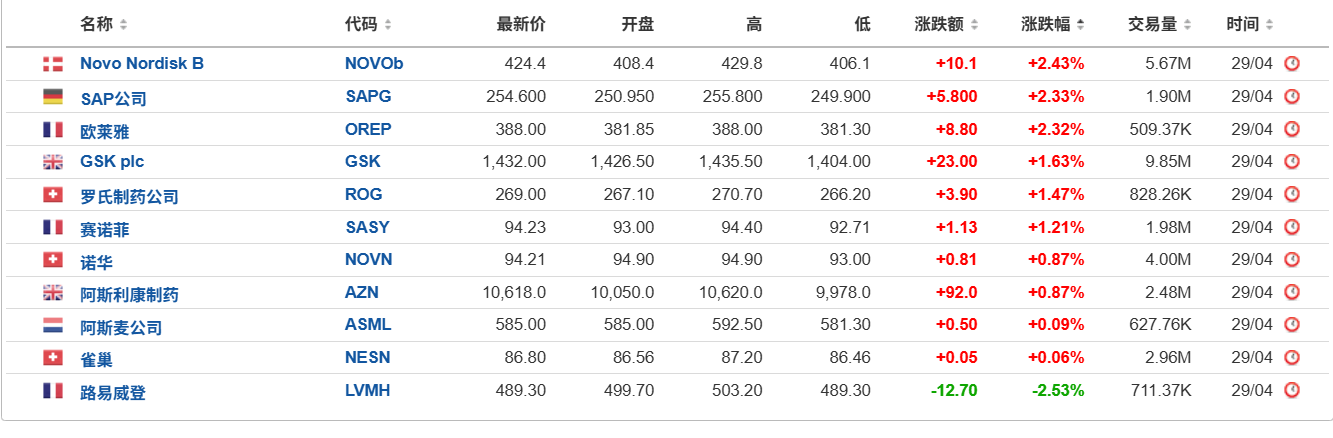
德国思爱普Sap和欧莱雅至少涨2.32%,葛兰素史克、罗氏制药、赛诺菲涨1.63%-1.21%,阿斯利康和雀巢至多涨0.87%。 LVMH集团则收跌2.53%。 | 名称 = | 代码 : | 最新价 | 开营 | 高 | | 低 | | | --- | --- | --- | --- | --- | --- | --- | --- | | Novo Nordisk B H | NOVOb | 424.4 | 408.4 | 429.8 | 406.1 | +10.1 | +2.43% | | I SAP公司 | SAPG | 254.600 | 250.950 | 255.800 | 249.900 | +5.800 | +2.33% | | 欧莱雅 | OREP | 388.00 | 381.85 | 388.00 | 381.30 | +8.80 | +2.32% | | តន GSK plc | લેટાર | 1.432.00 | 1.426.50 | 1.435.50 | 1.404.00 | +23.00 | +1.63% | | + 罗氏制药公司 | ROG | 269.00 | 267.10 ...
欧莱雅去年亮眼的医美业务一季度“哑火”,北亚市场恢复增长,中国地区陷裁员风波
Zheng Quan Zhi Xing· 2025-04-25 09:58
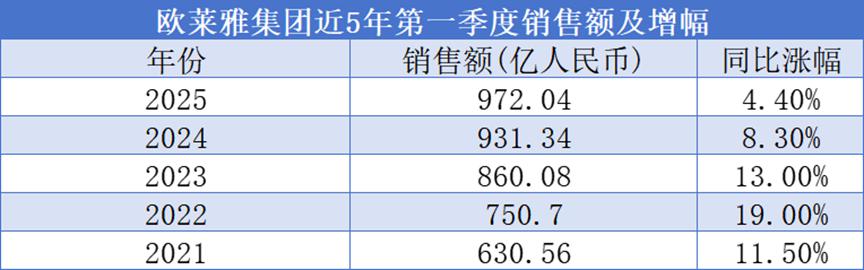
Core Insights - L'Oréal reported Q1 2025 sales of €11.73 billion, a 4.4% year-on-year increase, marking the lowest growth rate in five years [1][2] - The "Dermatological Beauty" segment, which had previously shown strong performance, experienced a significant slowdown in growth during this quarter [1][4] Sales Performance - The sales figures for the past five years indicate a consistent increase in Q1 sales, but the growth rate has been declining, with 2025 showing the lowest increase of 4.4% compared to previous years [2] - The breakdown of sales by segment shows: - Mass Cosmetics: €4.279 billion, up 2.5% [3] - Premium Cosmetics: €4.093 billion, up 7.3% [3] - Professional Hair Products: €1.277 billion, up 2.7% [3] - Dermatological Beauty: €2.086 billion, up 3.5% [3] Regional Performance - The European market was a highlight for L'Oréal, with sales reaching €3.915 billion, a 4.9% increase [6] - North America faced a decline, with sales of €2.973 billion, down 1.4% [6] - North Asia showed recovery with sales of €2.953 billion, up 8.4%, despite previous declines [7] Market Challenges - The Chinese market has been a focal point, with L'Oréal experiencing its first negative growth in a decade in 2024, impacting overall performance [2][7] - The rise of domestic brands among Gen Z consumers poses a challenge to L'Oréal's market share, as evidenced by the strong performance of local brand Pechoin [8] - Recent reports indicate significant layoffs in the travel retail department, with claims of up to 50% workforce reduction, reflecting the need for strategic adjustments in response to market changes [9]
欧莱雅:一季度财报逆势增长3.5% 中国大陆美妆市场正缓慢复苏
Jing Ji Guan Cha Bao· 2025-04-21 13:07
Core Viewpoint - L'Oréal reported a 3.5% year-on-year sales growth in Q1 2025, driven by an IT transformation project and a gradual recovery in the Chinese beauty market, outperforming the global beauty market [1] Group 1: Financial Performance - L'Oréal's Q1 sales reached €11.73 billion, with a consolidated growth of over 4.4% [1] - The North Asia region saw a sales increase of 6.9% year-on-year, with a consolidated growth of 8.4% [1] - The luxury cosmetics division, skin science beauty division, and professional hair products division continued to outperform the market, while the mass cosmetics division's growth was slightly below the market average [1][2] Group 2: Market Strategy - L'Oréal is actively participating in the China International Consumer Products Expo for the fifth consecutive year to strengthen its position in the travel retail market [2] - The company is undergoing a strategic transformation in its travel retail business to adapt to changing market conditions and consumer demands [2] - L'Oréal plans to invest in innovative retail experiences and sustainable growth solutions in collaboration with Hainan [2] Group 3: Future Initiatives - The "Beauty Stimulus Plan" for 2025 emphasizes investment in R&D and supply chain improvements, including the establishment of smart operation centers [3] - L'Oréal aims to enhance brand positioning and personalization to meet evolving consumer expectations, focusing on the unique identity of each brand [3][4] - The company plans to expand its presence in third- and fourth-tier cities and transform offline sales points into experiential locations [5]
欧莱雅们的“免税之困”
Xin Lang Cai Jing· 2025-04-18 08:57
Core Insights - The core issue facing international beauty brands in China is the significant decline in tourism retail performance, prompting major organizational adjustments and strategic shifts within companies like L'Oréal and Shiseido [1][2][4]. Group 1: Tourism Retail Performance - L'Oréal's China travel retail division is reportedly undergoing a large-scale organizational adjustment, with potential layoffs nearing 50% due to ongoing performance pressures in domestic tourism retail channels [1]. - Shiseido's travel retail business in Hainan saw a revenue drop of over 30% in the first nine months of 2024, contributing to a 4.6% decline in net sales in China [2]. - China Duty Free Group's revenue for 2024 was reported at 56.474 billion yuan, a year-on-year decrease of 16.38%, indicating a broader trend of declining performance in the tourism retail sector [1]. Group 2: Market Challenges - The tourism retail sector has faced challenges due to the pandemic, with international beauty brands struggling to recover despite a gradual return of offline economic activities [1]. - The competitive landscape has intensified, with domestic brands gaining market share; in 2023, local cosmetics captured 50.4% of the market, surpassing international brands for the first time [8][11]. - Factors contributing to the decline include the diversion of outbound tourism, loss of price advantages, and the rise of domestic alternatives [6][11]. Group 3: Strategic Responses - In response to declining tourism retail performance, companies are restructuring and appointing new leadership; for instance, Shiseido has integrated its China and travel retail businesses under unified management [9]. - L'Oréal is focusing on creating memorable shopping experiences tailored to the needs of millennial and Gen Z travelers, indicating a shift towards consumer-centric strategies [10]. - The beauty industry is witnessing a wave of executive changes, with at least eight significant appointments related to travel retail since last year, reflecting the urgency of addressing market challenges [9].

美妆品牌“争艳”消博会
Zhong Guo Jing Ying Bao· 2025-04-18 07:33
在第五届中国国际消费品博览会(以下简称"消博会"),美妆赛道又一次成为亮眼的存在。 据《中国经营报》记者不完全统计,包括雅诗兰黛、华熙生物、花西子、欧莱雅在内的多家美妆品牌亮 相。在现场,排队领小样、打卡拍照、产品体验等活动层出不穷,而美妆品类的站台也成为消博会现场 最热闹的地方之一。 实际上,在全球的免税市场中,化妆品的销售额占比一直都是名列前茅。本土品牌借消博会契机"秀肌 肉",国际品牌也想要进一步"掘金"中国市场,而在海南召开的消博会则成为了品牌商们集中展示自己 的窗口。 国际美妆品牌"掘金"中国市场 实际上,此前中国市场一直被众多国际化妆品牌视为业绩增长引擎,尤其是高端化妆品市场一直被国际 品牌牢牢占据。但如今,随着国货品牌的崛起,消费者需求分化、渠道生态重构,在韩妆逐渐淡出中国 市场之后,其余国际美妆巨头或也面临着时代的挑战。 国际美妆品牌在中国市场的光环或正在削减的具体表现,就包括在华业绩下滑。如雅诗兰黛集团2025财 年第二季度(2024年9月30日至12月31日),包括中国市场在内的亚太市场的净销售额同比减少11%至 12.87亿美元;欧莱雅2024年全年销售额同比增长5.6%,而北亚地区销售 ...
