
Moody’s(MCO)

Search documents
GBOOY or MCO: Which Is the Better Value Stock Right Now?
ZACKS· 2025-09-03 16:40
Core Viewpoint - Grupo Financiero Banorte SAB de CV (GBOOY) is currently considered a superior value option compared to Moody's (MCO) based on various valuation metrics [7]. Valuation Metrics - GBOOY has a forward P/E ratio of 8.16, while MCO has a significantly higher forward P/E of 35.97 [5]. - The PEG ratio for GBOOY is 0.98, indicating a more favorable valuation relative to its expected earnings growth, compared to MCO's PEG ratio of 3.19 [5]. - GBOOY's P/B ratio stands at 2.03, contrasting sharply with MCO's P/B ratio of 21.72, further highlighting GBOOY's undervaluation [6]. Earnings Outlook - Both GBOOY and MCO hold a Zacks Rank of 2 (Buy), indicating positive earnings estimate revisions and improving earnings outlooks for both companies [3].



Moody's Increases MERIS Stake to Expand in the Middle East & Africa
ZACKS· 2025-08-26 15:35
Core Insights - Moody's Corp. plans to acquire a majority equity stake in Middle East Rating & Investors Service (MERIS), a domestic credit rating agency in Egypt, with deal terms undisclosed [1][3][7] Company Overview - MERIS, established in 2003, is a joint venture between Moody's and Egyptian consultancy FinBi, providing national-scale credit ratings across various sectors including financial institutions and structured finance [2][7] Strategic Rationale - The acquisition strengthens the partnership between Moody's and MERIS, enhancing Moody's presence in the Middle East and Africa, and supporting local capital market growth [3][4] - The deal is pending regulatory approvals, and MERIS will maintain its independence, including its own rating methodologies and management team [3][7] Management Commentary - Monica Merli, COO of Moody's Ratings, expressed enthusiasm about the strengthened relationship with MERIS, highlighting its importance in Egypt's domestic credit rating landscape [4] Recent Performance - Moody's shares have increased by 3.5% over the past six months, compared to a 10.6% growth in the industry [5]

Why Is Moody's (MCO) Down 0.7% Since Last Earnings Report?
ZACKS· 2025-08-22 16:36
Core Viewpoint - Moody's reported a strong Q2 2025 earnings performance, beating estimates, but faces challenges with rising operating expenses and mixed segment performance [2][4][5]. Financial Performance - Adjusted earnings for Q2 2025 were $3.56 per share, exceeding the Zacks Consensus Estimate of $3.44, marking an 8.5% increase year-over-year [2]. - Revenues reached $1.90 billion, surpassing the Zacks Consensus Estimate of $1.85 billion, and grew 4.5% year-over-year [4]. - Total expenses increased to $1.08 billion, up 3.6% year-over-year, impacting overall profitability [4]. Segment Analysis - The MIS segment saw a slight revenue decline to $1.06 billion due to weaknesses in Corporate Finance and Financial Institutions, partially offset by gains in Structured Finance [5]. - The MA segment experienced a revenue increase of 10.5% to $891 million, driven by strong demand for Moody's proprietary data and analytics [5]. Balance Sheet and Cash Flow - As of June 30, 2025, Moody's had $2.29 billion in cash and short-term investments, down from $2.97 billion at the end of 2024 [6]. - The company reported $7 billion in outstanding debt and $1.25 billion in additional borrowing capacity [6]. - Projected cash flow from operations is expected to be between $2.65 billion and $2.85 billion, with free cash flow anticipated in the range of $2.30 billion to $2.50 billion [10]. Shareholder Returns - In the reported quarter, Moody's repurchased 0.6 million shares at an average price of $460.76 [7]. Guidance and Outlook - Moody's adjusted earnings guidance for 2025 is now set between $13.50 and $14.00 per share, up from the previous range of $13.25 to $14.00 [8]. - Revenue growth is projected in the mid-single-digit percent range, while operating expenses are expected to rise in the low-to-mid-single-digit percent range [9]. - The company anticipates a decline in the MIS segment's revenue growth outlook, now expected to be in the low to mid-single-digit range [11]. Strategic Initiatives - Moody's has initiated a Strategic and Operational Efficiency Restructuring Program aimed at generating annual savings of $250–$300 million, with substantial completion expected by the end of 2026 [14].

穆迪上调2025年拉美地区增长预期至2.2%
Shang Wu Bu Wang Zhan· 2025-08-22 16:03
Core Viewpoint - Moody's has revised its economic growth forecast for the Latin American region in 2025 from 2.1% to 2.2%, indicating a slight improvement in economic outlook [1] Economic Growth Projections - Argentina's expected growth rates for 2025-2027 are 5.2%, 3.5%, and 3.5% respectively [1] - Peru is projected to grow at 3.1%, 2.9%, and 3% during the same period [1] - Colombia's growth rates are forecasted at 2.6%, 2.9%, and 3.3% [1] - Brazil is expected to see growth of 2.4%, 1.8%, and 2.7% [1] - Mexico's growth is anticipated to be 0.1%, 1%, and 2.6% [1] - Chile is projected to grow at 2.4%, 2%, and 2.2% [1] - Uruguay's expected growth rates are 2.1%, 2%, and 3.1% [1] Quarterly Economic Performance - In Q1 2025, the Latin American economy is expected to grow by 3.1% year-on-year, surpassing the previous forecast of 2.6% made in December 2024 [1] - Argentina, Brazil, and Chile are highlighted as strong performers in this quarter [1] Key Growth Drivers - Chile's growth is significantly supported by rising international copper prices, making mining production a crucial growth engine [1] - Peru benefits from elevated metal prices, alongside reasonable inflation and employment levels, which effectively boost private consumption [1]
Top Big Data Stocks Powering the Next Wave of AI and Analytics
ZACKS· 2025-08-21 14:11
Core Insights - The finance industry is experiencing significant growth due to the integration of Big Data and AI technologies, enhancing security and efficiency across various sectors [4][12]. Group 1: Big Data and AI Impact - Big Data, encompassing both structured and unstructured data, is generated daily from various sources, necessitating advanced processing capabilities [1][2]. - Traditional data processing software is inadequate for handling the vast amounts of data, but AI and machine learning algorithms are now capable of processing and analyzing this data effectively [2]. - Financial institutions are leveraging Big Data and AI for targeted marketing strategies and real-time fraud detection, improving client satisfaction and operational efficiency [3][4]. Group 2: Market Growth and Projections - The global Big Data market is projected to reach $401.2 billion by 2028, indicating a robust growth trajectory driven by widespread adoption across industries such as healthcare, finance, retail, and manufacturing [4]. - Tech companies are gaining a competitive edge by developing tools and infrastructure to harness Big Data's potential, with NVIDIA and Moody's Corporation leading the way [5][6]. Group 3: Company Developments - NVIDIA is at the forefront of AI advancements with its Blackwell technology, which enhances the training of AI models and complex simulations, making it integral to the Big Data revolution [6]. - Moody's Corporation has evolved from traditional ratings to risk analytics, broadening its services and capabilities to offer clients better tools for managing risks and finances [7][11]. - Dell Technologies is transitioning from PC manufacturing to building powerful infrastructure for data management, receiving over $12 billion in AI server orders in early 2025 [13][14].



Warren Buffett's Top 10 Berkshire Bets Span Apple, Coca-Cola, Finance And Oil
Benzinga· 2025-08-15 16:39
Core Viewpoint - Berkshire Hathaway, led by Warren Buffett, is currently underperforming the S&P 500, with its year-to-date performance lagging behind major stock market indexes [1][5]. Group 1: Top Holdings and Performance - As of August 15, the top 10 holdings of Berkshire Hathaway include significant investments in Apple, American Express, Bank of America, Coca-Cola, Chevron, Moody's, Occidental Petroleum, Kraft Heinz, Mitsubishi, and Chubb [2][6]. - The year-to-date performance of the top holdings shows that Apple is down 5.3%, while Coca-Cola and Mitsubishi are outperforming the S&P 500 with gains of 12.3% and 22.3%, respectively [5][8]. - Berkshire Hathaway sold 7% of its Apple position and 4% of its Bank of America position in the second quarter, while increasing its stake in Chevron by 3% [3][4]. Group 2: Comparison with Market Indexes - Year-to-date, Berkshire Hathaway Class A shares are up 6.2%, which is lower than the SPDR S&P 500 ETF Trust (+10.1%), Invesco QQQ Trust (+13.2%), and SPDR Dow Jones Industrial Average ETF (+6.0%) [5][7]. - Among the top 10 holdings, only Coca-Cola and Mitsubishi are outperforming the S&P 500, while five of the top 10 are outperforming the Dow Jones Industrial Average [8].



时隔半年,巴菲特再次减持苹果
Hu Xiu· 2025-08-15 00:45
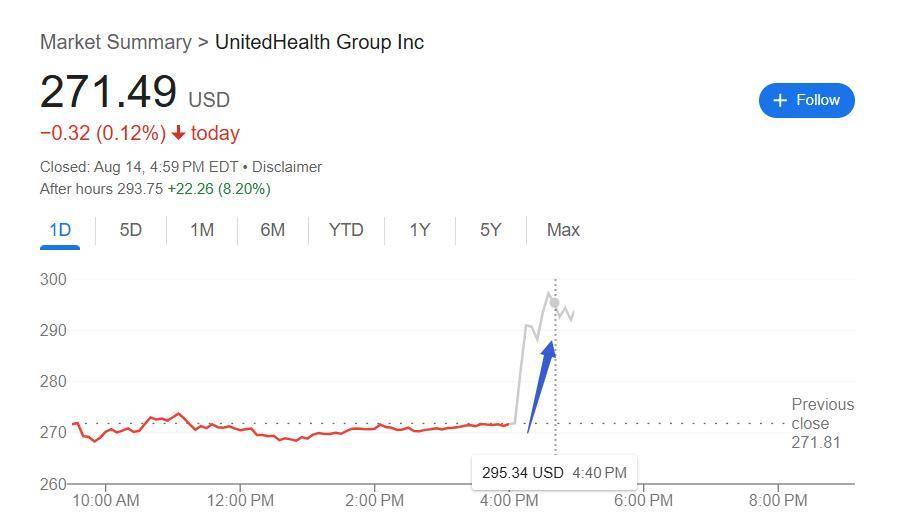
Core Insights - Berkshire Hathaway, led by Warren Buffett, has resumed selling its largest holding, Apple, and has further reduced its stake in Bank of America while making significant investments in UnitedHealth and revealing new positions in Nucor and two real estate stocks [1][8][12]. Investment Actions - In Q2, Berkshire purchased approximately 5.04 million shares of UnitedHealth, with a market value of about $1.57 billion, making it the 18th largest holding [2][15]. - The "mystery" holding Nucor Steel was revealed, with Berkshire acquiring 6.61 million shares valued at over $857 million, ranking as the 25th largest holding [3][5]. - Berkshire also bought around 7.05 million shares of Lennar, valued at approximately $780 million, and over 1.48 million shares of D.R. Horton, valued at about $191 million [6][7]. Reductions in Holdings - Berkshire reduced its Apple holdings by 20 million shares, a decrease of 6.67%, bringing its total to approximately 280 million shares, with a market value reduction of $4.1 billion [8][10]. - The stake in Bank of America was cut by about 26.31 million shares, a 4.71% decrease, with a market value reduction of $1.24 billion [11][12]. - Berkshire completely exited its position in T-Mobile, selling 3.88 million shares [13]. Portfolio Composition - By the end of Q2, Apple's holding represented 22.31% of Berkshire's portfolio, while Bank of America accounted for 11.12% [10][11]. - Chevron was the only stock among the top ten holdings to see an increase, with Berkshire adding 3.45 million shares, although its percentage of the portfolio decreased from 7.69% to 6.79% due to a decline in stock price [19]. Market Reactions - Following the disclosure of Berkshire's investment in UnitedHealth, the stock price surged over 9% in after-hours trading [16].


穆迪维持对毛主权评级为Baa3
Shang Wu Bu Wang Zhan· 2025-08-12 05:35
Core Viewpoint - Moody's has maintained Mauritius' sovereign rating at "Baa3" with a negative outlook, indicating significant risks related to fiscal deficit, debt sustainability, and the government's ability to implement credible fiscal reforms [1] Economic Resilience - The economy of Mauritius is recognized for its resilience, stable growth, sound institutional framework, and diversification [1] External Vulnerabilities - The country is highly dependent on imports and is vulnerable to external shocks and climate change [1] Debt Concerns - Government debt is projected to reach 79.1% of GDP by 2025, raising concerns about fiscal sustainability [1] Data Reporting Issues - There are issues regarding the accuracy of reported economic data, which could impact the credibility of fiscal assessments [1] Potential for Rating Improvement - If the government can introduce a credible fiscal reform plan, there is potential for an improvement in the rating outlook [1] Risks of Downgrade - Conversely, if reforms are delayed or risks escalate, there is a possibility of a downgrade in the rating [1] Current Rating Outlook - The likelihood of an upgrade in the rating at this stage is considered low [1]
超53%行业裁员潮预示美国经济衰退临界点
Sou Hu Cai Jing· 2025-08-12 01:33
Core Insights - Moody's latest analysis indicates that the U.S. is at a critical juncture of economic recession, with 53% of industries initiating layoffs, except for the healthcare sector which continues to see job growth [1] - The employment market has contracted significantly for three consecutive months, with July 2025 non-farm payrolls adding only 73,000 jobs, falling short of market expectations by 37,000 jobs [4] - A systemic weakening of economic indicators suggests an imminent recession risk, with notable consumer weakness and a manufacturing PMI below the growth threshold for six months [4] Employment Trends - The July 2025 non-farm payrolls were revised downwards, with May and June figures adjusted to 19,000 and 14,000 respectively, totaling a downward revision of 258,000 jobs [4] - 215 out of 400 industry classifications have experienced job reductions, marking the fourth time since 1970 that this ratio has exceeded 50% [4] Economic Indicators - Retail sales in July showed a minimal increase of 0.1%, while real consumer spending, adjusted for inflation, exhibited negative growth [4] - The manufacturing sector is under pressure, with a PMI of 48.3, the lowest since February 2024, and new orders dropping to 46.1 [4] - The housing market is also struggling, with 30-year mortgage rates rising to 7.25%, leading to existing home sales falling to an annualized rate of 3.87 million, the lowest since the beginning of 2025 [4] Policy and Structural Issues - The Federal Reserve's tight monetary policy, with a federal funds rate of 5.25%-5.5% amid a 3.2% inflation rate, limits policy flexibility [5] - Historical policy missteps, such as the steel and aluminum tariffs and immigration reform, have led to increased manufacturing costs and reduced labor supply, contributing to a 9.3% year-over-year increase in service sector wages [5] - Corporate profit margins have contracted to 7.8%, the lowest level since 2008, indicating significant economic strain [5] Future Outlook - The upcoming three quarters will be critical in determining the depth and breadth of the recession cycle, with traditional monetary policy tools nearing ineffectiveness [5]


Moody’s (MCO) FY Conference Transcript
2025-08-11 15:47
Summary of Moody's (MCO) FY Conference Call - August 11, 2025 Company Overview - Moody's is primarily recognized as a credit rating agency but has expanded into software through Moody's Analytics, which accounted for approximately 46% of total revenue in the first half of the year [2][2]. Key Points and Arguments AI and Software Development - Moody's is actively investing in AI and software tools to enhance their analytics capabilities, particularly in the lending space, which is seeing significant digitalization [7][8]. - The company is focusing on creating ecosystems that integrate various services, such as KYC checks, credit scoring, and risk assessment, to provide comprehensive solutions for clients [41][41]. Growth Areas - The lending sector is a primary focus for growth, with ongoing investments in data tools and software applications to support banks in their lending operations [8][8]. - Moody's has made strategic acquisitions, such as Cape Analytics, to enhance their capabilities in insurance underwriting and risk assessment [9][9][50][50]. - The company is also expanding its KYC offerings, targeting corporate clients who are increasingly concerned about supply chain resiliency and regulatory compliance [60][60][62][62]. Product Development and Performance - Approximately 40% of Moody's products now include some form of Generative AI capabilities, contributing to higher growth rates compared to the overall product suite [16][16][18][18]. - The Net Promoter Score (NPS) is significantly higher for clients using AI-enhanced products, indicating increased customer satisfaction and engagement [24][24][26][26]. Market Position and Strategy - Moody's is positioning itself to provide insights and analytics for private credit markets, leveraging its extensive database and credit scoring capabilities [66][66][70][70]. - The company is also focusing on enhancing its existing products, such as CreditLens, to drive incremental revenue growth through cross-selling opportunities [39][39][41][41]. Expense Management and Efficiency - Moody's is undergoing a restructuring process aimed at improving efficiency and productivity, particularly through the use of AI tools in various operational areas [80][80][81][81]. - The company is committed to redeploying resources to areas with higher growth potential, such as lending and AI development [80][80]. Other Important Insights - The integration of Cape Analytics is expected to contribute to organic ARR in the following year, enhancing Moody's capabilities in property risk assessment [58][58]. - The KYC business has shown strong growth, with an ARR increase of about 15% in the second quarter, driven by the demand for third-party risk management tools [74][74][75][75]. This summary encapsulates the key insights from the Moody's FY Conference Call, highlighting the company's strategic focus on AI, software development, and market expansion while managing operational efficiency.