Microsoft(MSFT)

Search documents
2026矿业AI驱动转型基础白皮书-微软
Sou Hu Cai Jing· 2026-02-03 03:56
人工智能正深刻重塑采矿业发展格局,全面渗透从勘探、开采到加工、回收的全价值链,同时为供应链物流等辅助环节带来效率革新,成为推动行业经济效 益与可持续发展融合的核心力量。在全球能源转型背景下,2040 年清洁能源技术相关矿产需求预计增长四倍,人工智能为矿业应对资源短缺、减排压力等 挑战提供了关键解决方案,其在勘探阶段可降低 20%-30% 的时间与成本。 采矿业的 AI 应用实现了多维度突破:资源层面,能有效回收低品位矿产,延长矿山运营寿命;价值回收方面,针对复杂矿石系统优化加工技术,提升多种 贵重矿物的回收率;可追溯性上,通过数字护照、微量元素指纹识别等技术实现全流程监控;安全领域,尾矿库近实时监测技术降低环境风险,爆破测绘技 术提升作业安全与矿石利用率,冶金厂智能药剂混合系统保障产品质量稳定。 生成式 AI 时代下,网络安全挑战日益复杂,国家行为体与网络犯罪组织的攻击手段不断升级。微软推出 "安全未来计划",倡导以威胁情报策略、行业政府 合作等方式强化防御,为 AI 应用筑牢安全基础。 企业 AI 转型成功需依托五大核心驱动因素:组织和文化上,需构建敏捷创新的环境,强化领导层认同与跨领域合作;商业战略要明确 ...



AI Boom or Bust? Here are 4 Telltale Signs
The Smart Investor· 2026-02-03 03:30
Core Insights - The article emphasizes the distinction between "AI-powered" marketing claims and actual revenue generation from AI investments, urging investors to focus on tangible financial results rather than hype [1][2] Group 1: Identifying Real AI Revenue - Companies should provide specific dollar figures related to AI revenue, as vague claims raise concerns about the authenticity of their AI contributions [3][5] - Meta Platforms exemplifies transparency in AI revenue, reporting a US$60 billion annual run-rate from AI-powered ad tools, with Reels contributing US$50 billion and Advantage+ shopping campaigns exceeding US$20 billion [3][4] Group 2: Differentiating Revenue Types - Investors must distinguish between AI revenue and AI-enhanced revenue; the former is directly monetized through AI products, while the latter improves existing products without separate monetization [6][7] - Microsoft's AI business, with a US$13 billion annual run-rate, includes products like Azure AI services and GitHub Copilot, where AI is the core value proposition [6][7] Group 3: Customer Evidence - Genuine AI revenue is supported by real customer usage and evidence; Alphabet's Google Cloud reported a 33% year-over-year revenue growth, with significant customer engagement [10][11] - Microsoft noted a tenfold increase in seat count for Copilot users within 18 months, indicating strong customer retention and value creation [12][13] Group 4: Profitability and Margin Impact - The quality of AI revenue is assessed by its impact on profitability; Google Cloud's operating margin improved from around 17% to nearly 24%, signaling efficient scaling of AI services [14][15] - Companies must ensure that AI revenue contributes positively to margins rather than diluting them, as unsustainable spending can jeopardize long-term profitability [15][16] Group 5: Investment Framework - The article outlines a framework for evaluating AI investments based on specific dollar figures, clear revenue categorization, customer proof points, and margin impact [17][18] - Companies demonstrating real AI business potential are those that can show current revenue while articulating a path for future growth [18][19]


通信行业周报:光纤行业涨价趋势明确,关注 cpo 和光互联投资机会
GUOTAI HAITONG SECURITIES· 2026-02-03 03:20
Investment Rating - The report assigns an "Overweight" rating for the optical fiber industry, indicating a projected increase of over 15% relative to the CSI 300 index [4][33]. Core Insights - The optical interconnection sector shows strong performance expectations, with a focus on the transition opportunities from CPO/OIO technology. The optical fiber industry is experiencing a clear price increase trend, driven by demand from telecom operators and pre-holiday inventory needs [2][9]. - LightCounting forecasts that CPO technology shipments will begin scaling from 800G and 1.6T ports between 2026 and 2027, primarily for large cloud service providers. By 2029, the penetration rates for 800G, 1.6T, and 3.2T CPOs are expected to be 2.9%, 9.5%, and 50.6% respectively [8][9]. - Recent price increases in fiber optics are anticipated to continue due to heightened demand from telecom operators and upcoming procurement activities [9]. Summary by Sections Industry Overview - The optical interconnection sector is expected to maintain strong performance, with individual company differences but overall manageable conditions projected for 2026 [7]. - The appreciation of the RMB is impacting the optical interconnection sector, particularly for companies focused on overseas exports, with potential profit impacts estimated at under 5% for most, while some may see impacts nearing half of their profits [7]. Investment Highlights - The industry has seen an increase in holding ratios, with valuations at historically elevated levels, reflecting positive expectations driven by the AI industry chain [23]. - AI is driving network upgrades, with strong overseas demand benefiting domestic core enterprises amid a global infrastructure wave [24]. - A new generation of computing infrastructure is emerging in China, with a fully domestic supply chain entering a new cycle [25]. - New connectivity solutions are expected to emerge in 2026, presenting additional investment opportunities [26]. - AI-driven network upgrades are enhancing communication capacity demands, with rapid advancements in network innovation and technology applications [27]. Key Industry News - Corning has signed a long-term supply agreement worth $6 billion with Meta to support its data center expansion in the U.S. [10]. - NVIDIA has invested $2 billion in CoreWeave to enhance AI computing capabilities [12]. - Microsoft has launched its second-generation AI chip, Maia 200, aimed at optimizing AI inference costs [14][15]. - The personal AI assistant ClawdBot has gained significant traction globally, showcasing advanced capabilities [16][17]. - Microsoft and Meta reported substantial increases in capital expenditures, reflecting their commitment to infrastructure growth [18][19].





黄金白银深夜大跳水背后,特朗普不打了?第一批受害者已出现
Sou Hu Cai Jing· 2026-02-03 03:11
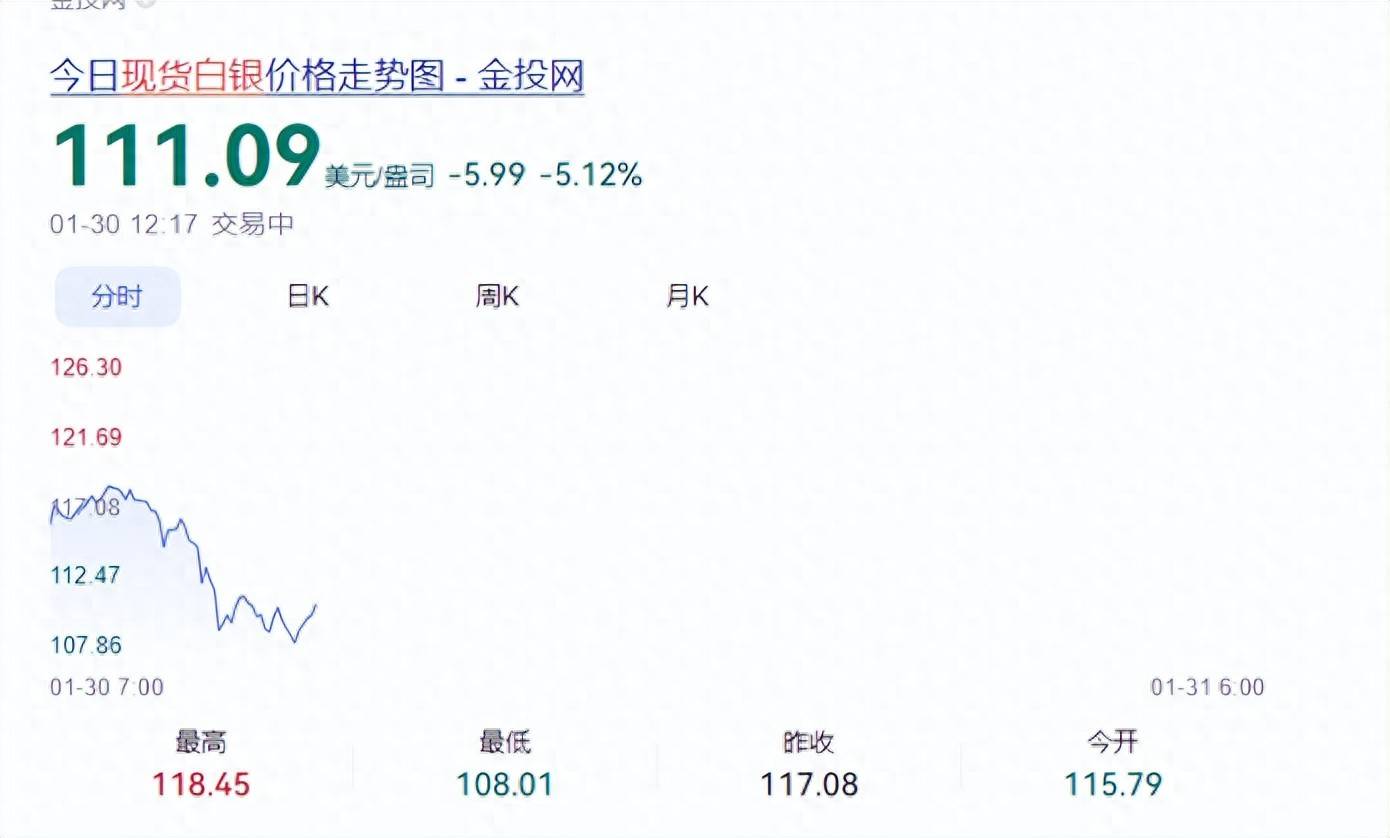
1月30日早盘,全线杀跌。A股上证指数早盘一度跌去40点,现货黄金一度跳水,日内跌幅一度扩大至4%,报5152.94美元/盎司,现货白银大跌5.12%,现报 111.09美元/盎司。 文/王新喜 1月29日深夜,国际白银现货和黄金突然出现大跳水,黄金从最高冲到 5600,然后直线蹦极跌到 5200。白银从最高冲到 121,然后高台跳水106,玩的那是 一个刺激。 随着金银的暴跌,美国三大股指同样下跌。其中著名的科技股微软,跌幅在11%以上。欧洲最大AI龙头跌了16%。比微软跌的更惨。 白银黄金暴跌,很多人一夜之间天塌了,神仙打架凡人遭殃。 为什么涨声一片的黄金和白银出现了崩盘?主要有三方面的原因。 首先,2026年开年后,黄金加速上涨的这波主要动力其实来自散户。散户驱动的行情,特点就是波动剧烈、容易暴涨暴跌。当散户买入热情达到高点时,往 往意味着调整即将来临。当所有不懂行的大妈表妹都知道要买黄金的时候,当所有人都在想"再不买就更贵了"的时候,就是风险到了临界点的时候。 伴随着一部分人先撤,在价格高位选择"落袋为安",集中卖出触发了程序化止损单,后续资金无法跟进,价格出现下跌,于是引发恐慌性抛售,形成暴跌。 这 ...
美欧安全战略转向对亚太市场的影响:环球市场动态2026年2月3日
citic securities· 2026-02-03 02:40
Market Overview - Global markets experienced significant volatility, with the Chinese market collectively weakening, particularly in metals and semiconductors, while European markets showed a recovery driven by improved economic sentiment[3] - The U.S. stock market stabilized with a rebound, supported by better-than-expected manufacturing data, alleviating concerns over the next Federal Reserve chair[3] Commodity and Currency Movements - International oil prices dropped over 4% due to reduced conflict risks in Iran and a sharp decline in commodity prices[3] - The U.S. dollar index rose for two consecutive days, reflecting positive manufacturing activity data, while precious metals continued to decline[3] Fixed Income Insights - U.S. Treasury yields increased slightly, with the yield curve flattening; the ISM manufacturing index reached its highest growth rate since 2022[3][30] - Oracle issued $25 billion in bonds to support cloud infrastructure expansion, contributing to a significant increase in global bond issuance[30] Asia-Pacific Market Trends - The Asia-Pacific stock markets generally declined, with South Korea's KOSPI index falling 5.3% and Indonesia's index down 4.9%[20] - India's Nifty index rose 1.1% following the U.S. reduction of tariffs on Indian goods, contrasting with the overall regional downturn[20] Sector Performance - In the U.S., 8 out of 11 S&P sectors rose, with consumer staples leading the market with a 1.58% increase[9] - Conversely, the Hong Kong market saw significant declines in precious metals and technology sectors, with the Hang Seng Index dropping 2.23%[11] Key Economic Indicators - The U.S. ISM manufacturing index surpassed expectations at 52.6, indicating stronger economic momentum and reducing expectations for further monetary easing[30] - France's government successfully passed its budget, alleviating political uncertainty and stabilizing market conditions[30]

What Wall Street Thinks Microsoft Will Be Worth 1 Year From Now. Here's Why It Matters.
The Motley Fool· 2026-02-03 01:30
Microsoft stock had a bad day on Thursday, but analysts remain bullish.Microsoft (MSFT 1.61%) stock was in free fall on Thursday, dropping more than 12% despite posting earnings Wednesday afternoon that appeared to be strong on the top and bottom lines.The revenue and earnings numbers beat estimates in blowout fashion. The technology giant saw revenue climb 17% to $81.3 billion, while net income jumped 60% to $38.5 billion, or $5.16 per share, which blew away estimates of $3.92 per share. Microsoft's cash ...

计算机行业“一周解码”:太空算力或是商业航天的核心商业模式
Bank of China Securities· 2026-02-03 01:20
Investment Rating - The industry investment rating is "Outperform the Market," indicating that the industry index is expected to perform better than the benchmark index over the next 6-12 months [31]. Core Insights - The potential merger between SpaceX and xAI aims to create a "Space AI" empire, integrating various technologies and services, which could significantly advance the space computing industry [12][13]. - Meta's financial results exceeded expectations, leading to a substantial increase in capital expenditure for AI infrastructure, signaling a strategic shift towards AI from its previous focus on the metaverse [14][15]. - OpenAI is in discussions for significant investments totaling up to $600 billion, but concerns about a "circular financing" model may pose challenges to its long-term sustainability [16][17]. Summary by Sections Industry Developments - SpaceX and xAI are planning a merger to enhance their capabilities in space computing, with a valuation of SpaceX at $800 billion and a goal for an IPO by June [12][13]. - Meta's projected capital expenditure for 2026 is between $115 billion and $135 billion, nearly double its 2025 spending, reflecting a strong commitment to AI development [14][15]. - OpenAI is negotiating investments from major tech companies, including NVIDIA and Amazon, which could provide essential funding amid competitive pressures [16][17]. Company Dynamics - The report highlights various companies in the space computing sector that may benefit from the merger, including佳缘科技, 上海瀚讯, and others [3]. - Meta's strategic shift includes layoffs in its Reality Labs division and a focus on AI talent acquisition, indicating a reallocation of resources towards AI [14][15]. - Concerns regarding OpenAI's funding model suggest that the investments may not significantly improve its financial independence, raising questions about its long-term viability [16][17].



马克龙同美国宣示“数字主权”,公务员禁用Zoom,能摆脱对美依赖吗?
第一财经· 2026-02-03 00:37
2026.02. 03 赵永升对第一财经记者表示,法国一直在欧盟内部领导对美大型科技公司开征数字税的议程,同时欧盟方面也有试图说服欧洲消费者放弃微软、谷歌和 亚马逊等公司而转向本土解决方案的努力,但收效不大。 本文字数:2500,阅读时长大约4分钟 作者 | 第一财经 冯迪凡 法国开始推动数百万公务员使用自主研发的软件替代Zoom和微软的Teams,这标志着欧洲各国政府数十年来摆脱对美国大型科技公司依赖的努力又迈 出了新一步。 近期,法国总理勒科尔尼致函法国各部委, 要求他们在2026年年底前将视频会议系统迁移到Visio——一款法国自主研发的Zoom替代软件。他在信中 写道:"为了保障公共电子通信的安全、保密性和稳定性,必须部署一套由国家控制、基于自主技术且统一的视频会议解决方案。" 随后,同样的逻辑再次显现:法国政府阻止卫星运营商欧洲通信卫星公司(Eutelsat)将其地面天线业务出售给私募股权公司EQT,理由是该集团具有 战略意义,是特斯拉创始人马斯克旗下星链互联网服务的竞争对手。 他表示,当前,欧盟出于对特朗普政府外交政策的担忧再度加剧,使得所谓"技术脱钩"呼声更加迫切,这促使欧洲各国政府加大力度,推 ...

刚刚,全线大涨!芯片,突传重磅利好!黄金、白银飙涨
券商中国· 2026-02-03 00:37
Core Viewpoint - The article highlights a significant rebound in the U.S. stock market, particularly in the semiconductor sector, driven by optimistic forecasts for DRAM prices by Goldman Sachs, which predicts a substantial increase in prices for 2026 [1][3][4]. Semiconductor Sector - The U.S. stock market saw a strong performance with major indices rising, particularly the Dow Jones, which increased by over 1%, and the S&P 500 approaching historical highs [1][3]. - Semiconductor stocks experienced a collective surge, with the Philadelphia Semiconductor Index rising by 1.7%. Notable performers included SanDisk, which surged over 15%, and Western Digital, which rose nearly 8% [3][4]. - Analysts suggest that capital moving out of precious metals and cryptocurrencies is seeking new investment opportunities, with the storage chip sector poised to attract this influx of funds due to strong fundamentals [3][4]. DRAM Price Forecast - Goldman Sachs has significantly raised its price forecasts for DRAM, predicting a 90%-95% quarter-over-quarter increase in Q1 2026, following a 45%-50% increase in Q4 2025. This outlook exceeds previous market expectations [4]. - In the PC DRAM segment, TrendForce has adjusted its price forecast for Q1 2026 to a 105%-110% increase, surpassing Goldman Sachs' earlier estimate of 80%-90%, indicating potential for further price increases [4]. Economic Indicators - The ISM reported a surprising rise in the U.S. manufacturing PMI for January, jumping from 47.9 to 52.6, indicating expansion and the fastest growth rate since 2022, driven by robust new orders and production [6]. - The new orders index reached 57.1, a significant increase from the previous 47.7, while the production index also showed strong growth, suggesting a rebound in factory activity after a prolonged period of contraction [6]. - Employment index recorded 48.1, indicating a slowdown in job losses within the manufacturing sector, although it remains below the expansion threshold [6].

早报(02.03)| 刚刚,SpaceX完成对xAI收购;美印成贸易协议:关税降至18%!稳定币、低空经济传利好
Ge Long Hui· 2026-02-03 00:24
Group 1 - Trump and Modi reached a trade agreement to reduce tariffs on Indian goods from 25% to 18% and cancel an additional 25% tariff on Indian purchases of Russian oil. India committed to purchasing over $500 billion worth of U.S. goods in sectors including energy, technology, agriculture, and coal [2] - SpaceX announced the completion of its acquisition of xAI, with SpaceX valued at approximately $1 trillion and xAI at around $250 billion, resulting in a combined valuation of $1.25 trillion [2] Group 2 - The U.S. Labor Statistics Bureau will not release the January non-farm employment report due to a partial government shutdown, and the December job openings report will also be postponed [4] - U.S. stock markets saw all three major indices rise, with the Dow Jones up 1.05%, S&P 500 up 0.54%, and Nasdaq up 0.56%. Notable tech stocks like Intel rose nearly 5%, while Nvidia fell over 2% [5][6] - The Nasdaq Golden Dragon China Index fell 0.65%, with significant declines in Chinese stocks such as XPeng down 8.2% and BYD down 6.7% [5] Group 3 - The U.S. dollar index increased by 0.64%, while the offshore and onshore RMB showed slight fluctuations [8] - Gold and silver experienced significant volatility, with spot gold dropping over 4% and silver declining nearly 7%. WTI crude oil futures fell by approximately 4.71% [6][8] Group 4 - The Chinese manufacturing PMI for January rose to 50.3, indicating continued expansion, driven by improvements in employment and new orders [22] - Citigroup raised its GDP forecast for Hong Kong to 3.2% for the year, reflecting a more stable recovery in major industries [24]