Nissan Motor(NSANY)

Search documents
“中国速度”走向世界
Zhong Guo Qi Che Bao Wang· 2025-06-18 01:54
Core Viewpoint - The automotive industry is undergoing a transformation towards electrification and intelligence, with "Chinese speed" becoming a benchmark for efficiency and competitiveness in product development [2][3][4]. Group 1: Industry Trends - The traditional automotive product development cycle, which used to take 3 years or more, has been significantly reduced to 12-18 months in China, reflecting a shift towards faster iteration and innovation [3][4]. - Major global automakers like Volkswagen and Nissan are adopting strategies to shorten their product development timelines, with Volkswagen aiming to reduce its new model development time from 54 months to 36 months [3][5]. - The shift towards a "fast consumer era" is prompting automotive companies to align their development processes more closely with those in the consumer electronics sector, leading to quicker product launches and iterations [3][6]. Group 2: Impact of Chinese Companies - Chinese automakers such as BYD, Chery, and Leap Motor are leveraging their rapid development capabilities to expand globally, responding quickly to local market demands [2][4]. - The competitive pressure from Chinese companies is forcing international automakers to accelerate their own product development cycles to keep pace [4][5]. - Nissan has committed to reducing its product development cycle in China to under 24 months, emphasizing the need to maintain "Chinese rhythm" in its global strategy [5][11]. Group 3: Technological Innovations - Advances in technology, including AI, big data, and cloud computing, are reshaping the automotive industry's development processes, enabling faster product iterations [6][8]. - The application of digital twin and virtual simulation technologies is significantly shortening vehicle development cycles, while modular architectures enhance efficiency [6][8]. - The integration of new technologies in electric and intelligent vehicles is allowing for more frequent product updates and iterations [6][8]. Group 4: Global Collaborations - International automakers are increasingly collaborating with Chinese companies to enhance their product development capabilities, as seen in partnerships between Volkswagen and local firms like Xpeng Motors [9][10]. - The trend of "reverse technology transfer" is emerging, where Chinese innovations are being adopted globally, with companies like Mercedes-Benz leveraging Chinese R&D for global projects [10][11]. - Chinese automotive companies are expanding overseas, establishing production bases and R&D centers in various countries, thus promoting "Chinese speed" on a global scale [12][13].
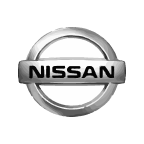



Nissan Considers Stake Reduction in Renault to Fund New Investments
ZACKS· 2025-06-17 14:41
Key Takeaways NSANY is considering a stake reduction in Renault to support new product development. The companies' updated alliance allows mutual stakes to drop from 15% to 10% for flexibility. NSANY plans to raise 1 trillion yen via bonds and asset sales to fund restructuring and debt payments.Nissan Motor Co., Ltd. (NSANY) plans to reduce its ownership stake in its long-standing French partner Renault SA (RNLSY) to allocate more resources toward the development of new vehicles. Per Nikkei, Nissan’s part ...
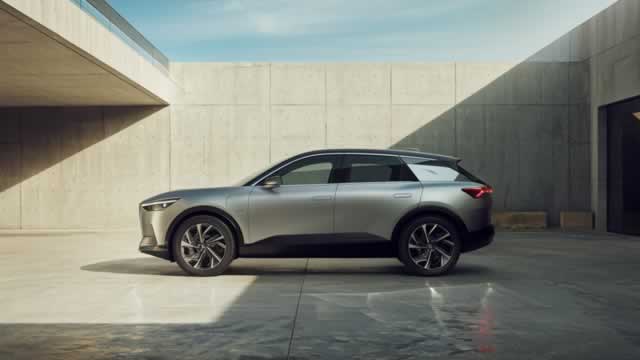
金十图示:2025年06月17日(周二)全球汽车制造商市值变化
news flash· 2025-06-17 03:09
金十图示:2025年06月17日(周二)全球汽车制造商市值变化 2 @ JINTO.COM 金十数据 | 一个交易工具 JIN10.COM t . | 入》 大众汽车 | | 524.23 | 1 +2.71 | 103.2 | | --- | --- | --- | --- | --- | | 通用汽车 | | 473.7 | 1 +5.94 | 49.27 | | >6 玛鲁蒂铃木 | | 459.36 | 1 +4.46 | 146.1 | | 保时捷 | | 433.97 | + -1.79 | 47.64 | | 马恒达汽车 | | 422.95 | 1 +2.48 | 35.26 | | 福特汽车 | | 414.79 | 1 +7.41 | 10.62 | | C | 本田汽车 | 413.92 | + +11.08 | 29.92 | | 19 现代汽车 | | 351.72 | 1 +9.08 | 54.2 | | OD | 塔塔汽车 | 305.66 | + -11.32 | 8.01 | | 赛力斯 | | 296.06 | 4 -2.21 | 18.13 | | 斯特兰蒂斯 | | 2 ...


汽车早餐 | 极氪第50万台量产车下线;小米YU7将于6月底发布;交易商协会:鼓励支持汽车企业加大债券融资
Zhong Guo Qi Che Bao Wang· 2025-06-17 00:45
Group 1: Domestic News - In May, the production of new energy vehicles in China increased by 31.7% year-on-year, while the production of lithium-ion batteries for vehicles rose by 52.5% [2] - The Ministry of Transport conducted safety inspections in 14 cities in Shandong, identifying 92 safety issues, including one major accident hazard [3] - The China Securities Association encouraged automotive companies to increase bond financing and improve their financing environment to support high-quality development in the automotive sector [4] - The Ministry of Industry and Information Technology established a standardization committee for manufacturing pilot projects to enhance innovation and development in the manufacturing sector [5] - In May, the sales of pickup trucks reached 52,000 units, marking a year-on-year increase of 13.6%, with total sales from January to May reaching 258,000 units, up 18.2% [6] Group 2: International News - Nissan's CEO announced plans to reduce its stake in French partner Renault, although the cooperation agreement remains unchanged [7] - Mitsubishi Motors launched a pilot project for electric vehicle battery swap stations in Tokyo, aiming to deploy over 150 commercial electric vehicles and 14 modular battery swap stations [8][9] - The U.S. Department of Transportation plans to simplify the regulatory approval process for autonomous vehicles, reducing the time for exemption applications from years to months [10] Group 3: Corporate News - Zeekr announced the production of its 500,000th vehicle, achieving this milestone in 44 months, the fastest record for luxury electric vehicles [11] - Xiaomi is set to release the Yu7 model, featuring enhanced safety measures with a significant increase in crash protection capabilities [12] - Geely's subsidiary, WoFei ChangKong, signed a strategic cooperation project in Hangzhou for its electric vertical takeoff and landing aircraft, expected to achieve certification by 2026 [13] - China Aerospace Automobile Company appointed Gu ChaoLing as the new chairman, succeeding Zhang Zhongrong [14] - CATL established a new power battery company in Yibin with a registered capital of 1 billion yuan, focusing on battery manufacturing and new energy technology research [15]


雷军官宣:小米YU7将于6月底发布;极氪第50万台量产车下线丨汽车交通日报
创业邦· 2025-06-16 09:35
1.【小米雷军:小米yu7将于6月底发布】小米雷军发布微博称,大家非常期待的小米yu7,将于6月 底发布。 还有很多重磅新品同场一起发布,比如搭载玄戒O1芯片的第二款平板:小米平板7S Pro。 (证券时报) 3.【雷诺汽车CEO将离职,传接任开云集团CEO一职】 法国雷诺汽车公布,公司首席执行官Luca de Meo将离开公司,迎接汽车业以外的新挑战。De Meo出任雷诺车厂CEO近5年,主导集团与日本 日产汽车联盟的变化及开发电动车的计划。另外,较早时法国报章《Le Figaro》报道称,Luca de Meo将出任Gucci母企开云集团的首席执行官。开云主席兼CEO Francois-Henri Pinault较早时表 示,正寻找接班人,考虑做法包括由另一人先担任CEO。(金融界) 4.【日产汽车CEO称计划减持雷诺股份】日产汽车首席执行官埃斯皮诺萨(Ivan Espinosa)表示, 该公司计划减持其在法国合作伙伴雷诺的股份。日产目前持有雷诺15%的股票。以当前股价计算,出 售雷诺5%的股份将筹集约1000亿日元(6.4亿美元),日产计划将这笔资金用于在充满挑战的商业 环境下开发新车。(新浪财经) 更 ...


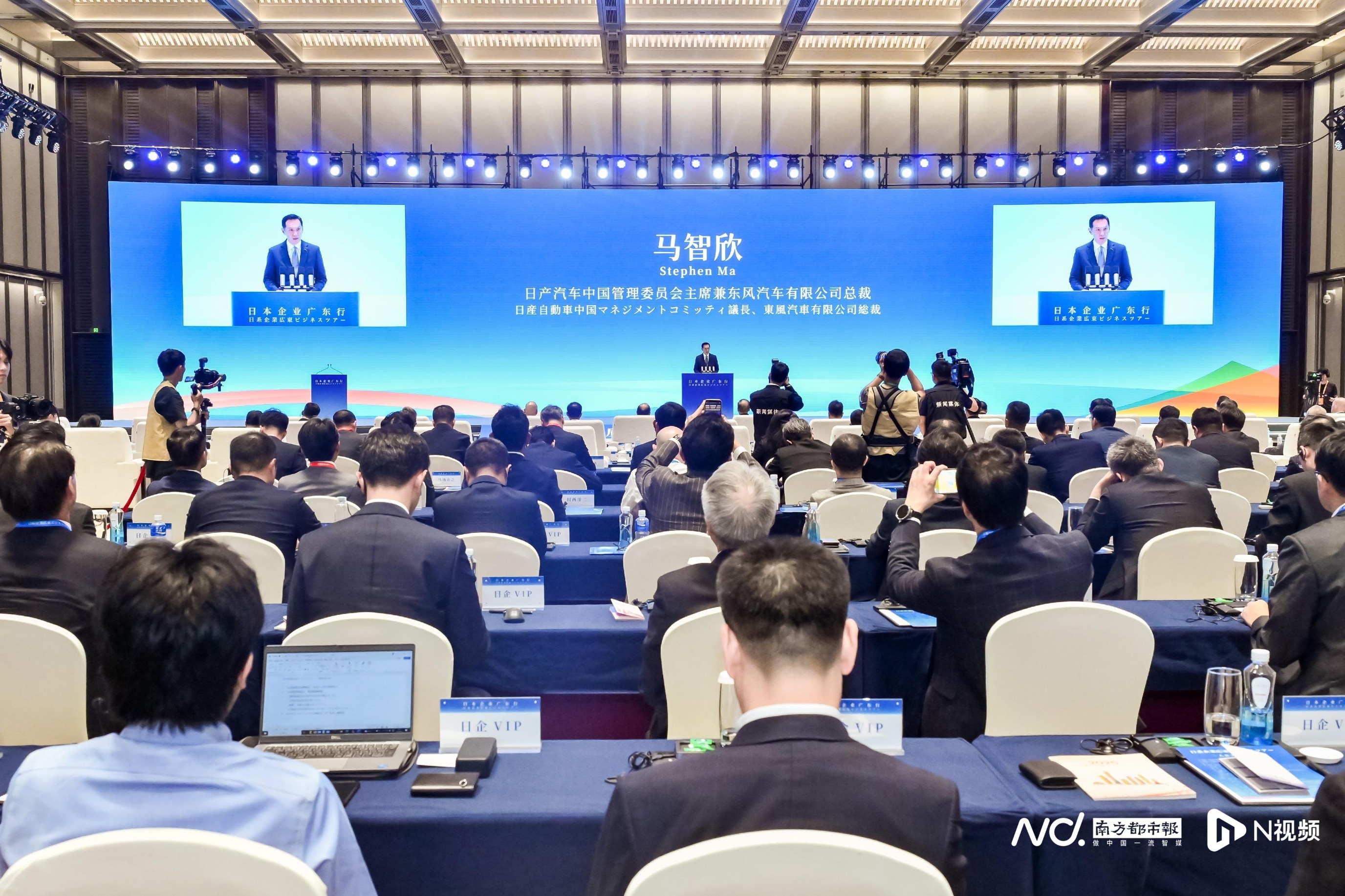
“日企广东行”签单总额1166亿元
Nan Fang Du Shi Bao· 2025-06-12 23:11
Group 1 - Guangdong's total import and export volume with Japan reached 144.7 billion yuan from January to April, a year-on-year increase of 5.36%, surpassing the overall growth rate of Guangdong's foreign trade [1] - Actual utilization of Japanese foreign investment in Guangdong saw a significant year-on-year increase of over 48% during the same period, indicating a strong momentum in Guangdong-Japan cooperation [1] - The "Japanese Enterprises Guangdong Tour" event attracted 210 Japanese companies and resulted in 68 project signings with a total value of 116.6 billion yuan, focusing on five major industries [1] Group 2 - Guangdong is one of the provinces with the closest cooperation with Japan, hosting major Japanese companies like Toyota, Honda, and Nissan, which have long-term investments in the region [2] - Nissan plans to continue investing in China, with a commitment to launch 10 new energy vehicle models by summer 2027, most of which will be produced in Guangzhou [2] - The automotive industry in Guangdong is highlighted for its strong growth, with the region being home to the fastest Japanese joint venture to reach 16 million sales [2] Group 3 - Guangdong is actively promoting low-altitude economy and artificial intelligence applications, aiming to become a global hub for the robotics industry [3] - The province has established multiple internationally competitive industrial clusters, such as electronics and automotive, which Japanese companies can integrate into for collaborative development [3] - A two-hour "one-on-one" negotiation session between nearly 60 Sino-Japanese enterprises resulted in initial cooperation intentions, particularly in the automotive and biomedicine sectors [4] Group 4 - Guangdong is optimizing its business environment through policies like the "Regulations on the Management of Imported Drugs and Medical Devices in the Guangdong-Hong Kong-Macao Greater Bay Area," attracting global resources [5] - Over 60 Japanese companies engaged in discussions with local firms in Guangdong, focusing on technology cooperation, cross-border investment, and supply chain integration [5] - The event also included participation from major Chinese companies in the trade service sector, facilitating discussions across various industries [5]
今年前4个月广东对日本进出口总额同比增长5.36%
Nan Fang Du Shi Bao· 2025-06-12 14:42
Group 1 - Guangdong is one of the largest provinces in China-Japan trade, with a total import and export value of 144.7 billion yuan from January to April, representing a year-on-year growth of 5.36%, which is higher than the overall growth of Guangdong's foreign trade [1] - The actual utilization of Japanese foreign investment in Guangdong has significantly increased by over 48% during the same period, indicating a strong interest from Japanese companies in the region [1] - The "Japan Enterprises Guangdong Tour" event held on June 12 facilitated the signing of 68 projects with a total value of 116.6 billion yuan, showcasing the active engagement of Japanese businesses in Guangdong [1][4] Group 2 - Guangdong is recognized for its deep economic integration with Japan, being the province with the largest trade volume and the most significant Japanese investment in China, with major companies like Toyota, Honda, and Nissan having a long-term presence [4] - The provincial government emphasizes the importance of cooperation and mutual benefits between Chinese and Japanese enterprises, aiming to maintain a stable global trade system and supply chain [4] - Nissan's China management has expressed a commitment to increasing investment in Guangdong, with plans to launch 10 new energy vehicle models by summer 2027, primarily produced in Guangzhou [5]
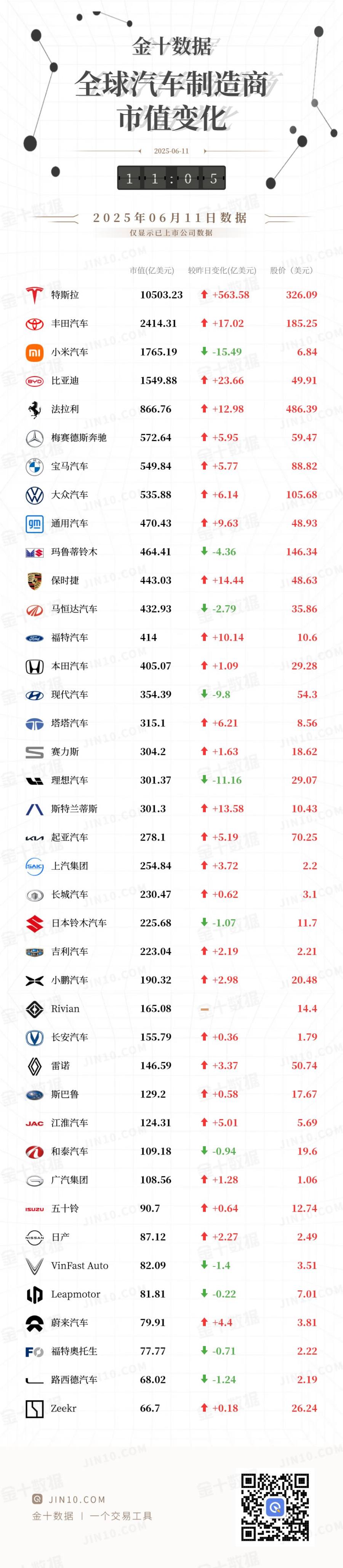
金十图示:2025年06月11日(周三)全球汽车制造商市值变化
news flash· 2025-06-11 03:14
Group 1 - Toyota leads the automotive market with a value of 2414.31 billion, showing an increase of 17.02% [2] - BYD follows with a value of 1549.88 billion, reflecting a growth of 23.66% [2] - Ferrari has a market value of 866.76 billion, up by 12.98% [2] Group 2 - General Motors is valued at 470.43 billion, with a growth of 9.63% [3] - Ford has a market value of 414 billion, increasing by 10.14% [3] - Honda's value stands at 405.07 billion, with a slight increase of 1.09% [3] Group 3 - Changan Automobile is valued at 155.79 billion, with a minor increase of 0.36% [4] - Nissan has a market value of 87.12 billion, showing an increase of 2.27% [4] - NIO's value is at 79.91 billion, reflecting a growth of 4.4% [4]





日产汽车,昔日辉煌难再续?
Hu Xiu· 2025-06-10 06:49
Core Viewpoint - Nissan is facing significant operational challenges, leading to a large-scale layoff of 20,000 employees, approximately 15% of its workforce, primarily due to a drastic decline in sales in the Chinese market, which fell by 12.2% in fiscal year 2024, totaling around 690,000 units sold [1][3][5]. Group 1: Sales Performance - Nissan's sales in China have been declining for six consecutive years, with a notable drop from approximately 1.38 million units in 2021 to 1.045 million in 2022 (down 22.1%), further decreasing to 793,000 in 2023 (down 24.2%), and reaching only 696,000 in 2024 (down 12.2%) [3][4][5]. - The company's market share in China has decreased from around 6% a few years ago to less than 4% in 2023, while the overall passenger vehicle market grew by 5.6% to 21.7 million units [6][3]. Group 2: Internal Challenges - The decline in Nissan's performance is attributed to slow decision-making and strategic missteps by the management team following Carlos Ghosn's departure, leading to a lack of innovation and product development [2][9][10]. - Nissan's product lineup is heavily reliant on an aging model, the Sylphy sedan, with over 99% of its sales still coming from traditional fuel vehicles, indicating a significant delay in the transition to electric vehicles [6][10][11]. - The company has faced internal turmoil, including management instability and governance issues, which have hindered its ability to respond effectively to market changes [12][13]. Group 3: Market Environment - The Chinese automotive market is undergoing a significant shift towards electrification, with local brands capturing over 90% of the new energy vehicle market share, while Nissan's presence in this segment remains minimal [14][15]. - In 2023, the sales of new energy vehicles in China reached 7.748 million units, growing by 36.5%, while Nissan's electric vehicle offerings have been limited, resulting in negligible sales impact [14][15]. - The competitive landscape has intensified, with local brands like BYD achieving substantial sales growth, further pressuring Nissan's market position [15][16]. Group 4: Future Strategies - Nissan is at a crossroads, facing potential outcomes of gradual exit, decisive transformation, or a struggle for resurgence in the Chinese market [18][19]. - The company has announced plans to invest 10 billion RMB in China and aims to launch 10 new models by 2027, indicating a commitment to revitalizing its product offerings [20][21]. - To regain market share, Nissan may need to adopt aggressive pricing and service strategies, balancing short-term profitability with long-term brand recovery [22][21].
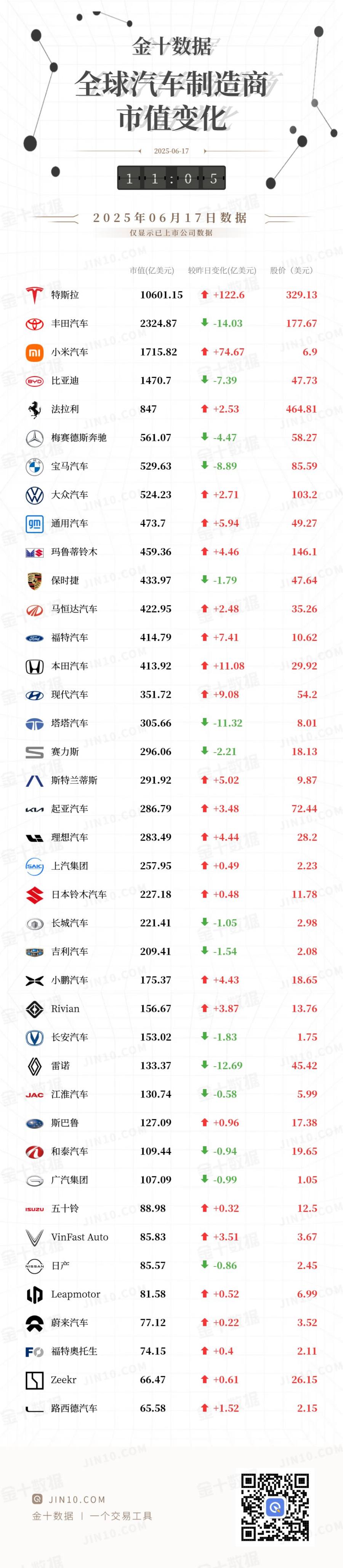
金十图示:2025年06月10日(周二)全球汽车制造商市值变化
news flash· 2025-06-10 03:11
| | 163.96 | +4.56 | 14.4 | | --- | --- | --- | --- | | 长安汽车 | 156.2 | + -2.06 | 1.79 | | 雷诺 | 143.49 | + +1.49 | 49.5 | | 斯巴鲁 | 128.26 | 1 +0.6 | 17.55 | | JAC 江淮汽车 | 119.26 | 1 +2.1 | 5.46 | | 和泰汽车 | 110.77 | + +1.3 | 19.88 | | 广汽集团 | 108.02 | + -0.71 | 1.06 | | ISUZU 五十铃 | 89.69 | + +1.33 | 12.6 | | NISSAN 日产 | 85.29 | -0.07 | 2.44 | | VinFast Auto | 83.5 | +3.51 | 3.57 | | ID | Leapmotor C 81.74 | ↑ +0.07 | | | ● 尉米汽车 | 78.86 | + -0.66 | 3.6 | | FC) 福特奥托生 | 78.24 | + -0.35 | 2.23 | | 1 - 1 - 路西德汽车 | 68. ...