
Qualcomm(QCOM)

Search documents
“舱驾一体”加速上车!算力共享与成本博弈下,融合难题仍待解
Mei Ri Jing Ji Xin Wen· 2025-07-08 07:49
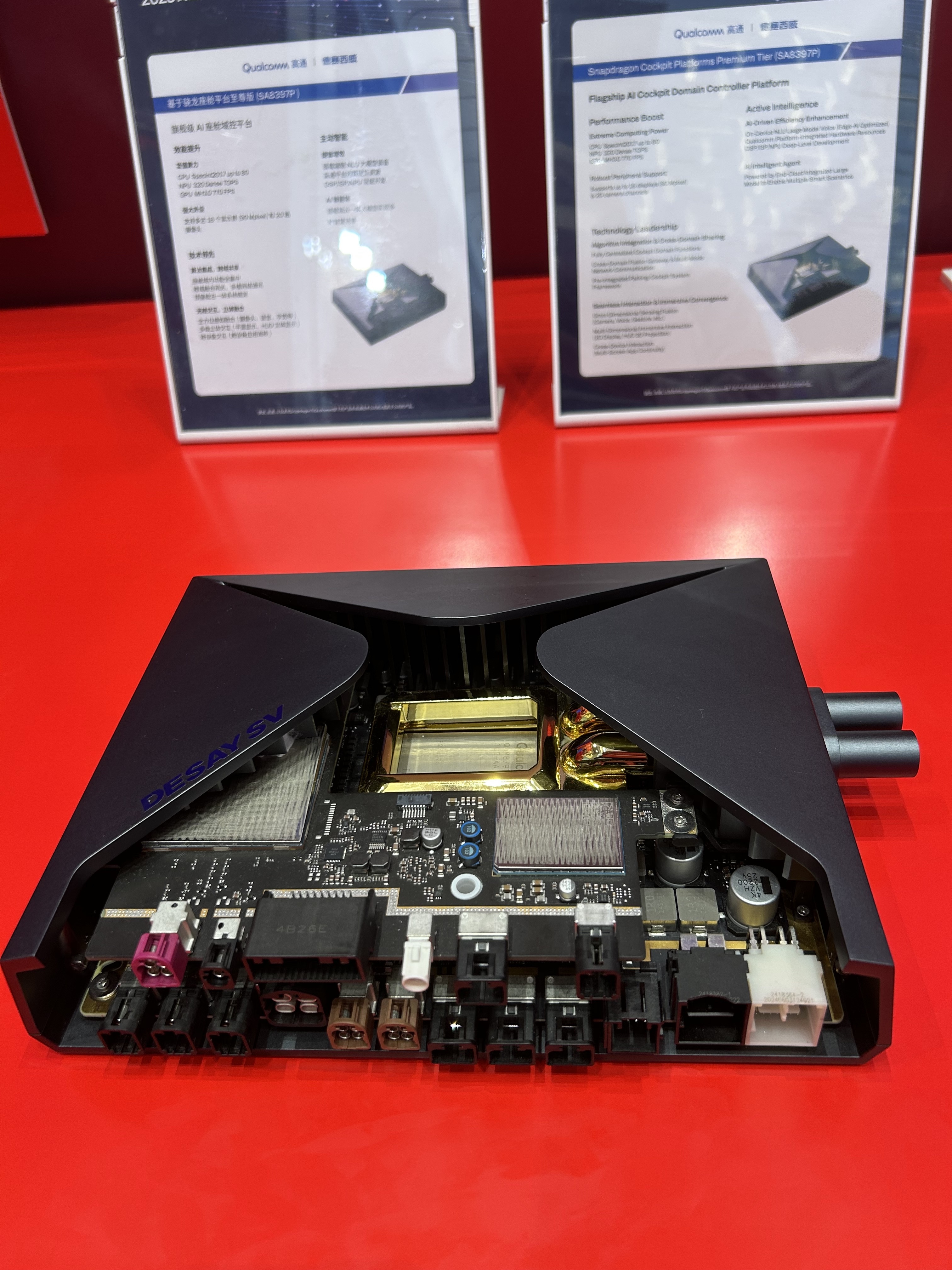
Core Insights - The integration of smart cockpit and smart driving functions, termed "cockpit-driving integration," is rapidly developing in the Chinese market, driven by companies like NIO, Xpeng Motors, and others [1][2] - The evolution of automotive architecture is central to industry transformation, with a shift from distributed systems to centralized electronic and electrical architectures [2][6] - The advantages of "cockpit-driving integration" include shared computing power and cost reduction, prompting more automakers to consider this approach [6][7] Industry Trends - The automotive architecture is transitioning from a distributed system to a centralized one, with three main forms emerging: integrated driving and parking, integrated cockpit and parking, and cockpit-driving integration [2] - Centralized computing, particularly using a single System on Chip (SoC), is becoming a new phenomenon, with Qualcomm's Snapdragon Ride Flex SoC exemplifying this trend [2][6] Technological Developments - The increasing number of cameras in vehicles has blurred the lines between data used for cockpit functions and driving assistance, facilitating the development of "cockpit-driving integration" [6] - Companies like NIO are implementing centralized computing platforms that allow for shared computing power across different tasks, enhancing operational efficiency [6][7] Challenges and Solutions - The challenge of "system multi-domain parallelism" remains, as integrating the different requirements of smart cockpit and smart driving systems is complex [8][12] - Qualcomm is focusing on heterogeneous computing to address these challenges while ensuring safety and power control [8][12] Future Outlook - The "cockpit-driving integration" trend is expected to lead to increased collaboration among automakers, chip suppliers, and software developers [14] - While "cockpit-driving integration" is currently a strong solution, it may not be the ultimate answer as higher levels of smart driving technology emerge [15]

隔夜美股 | 特朗普宣布新关税税率 三大指数下跌
智通财经网· 2025-07-07 22:43
Market Overview - The three major U.S. indices closed lower on Monday, with the Dow Jones down 422.17 points (0.94%) at 44,406.36, the Nasdaq down 188.59 points (0.92%) at 20,412.52, and the S&P 500 down 49.37 points (0.79%) at 6,229.98 [1] - European markets showed mixed results, with Germany's DAX30 up 265.85 points (1.12%) at 24,063.97, while the UK FTSE 100 fell 13.97 points (0.16%) to 8,808.94 [1] - In the Asia-Pacific region, the Nikkei 225 index fell 0.56%, while the KOSPI index rose 0.17% and the Indonesian Composite Index increased by 0.52% [2] Currency and Commodities - The U.S. dollar index rose by 0.53% to 97.480, with the euro trading at 1.1719 USD and the British pound at 1.3612 USD [2] - Crude oil prices increased, with light crude for August delivery up 93 cents (1.39%) to $67.93 per barrel, and Brent crude for September delivery up $1.28 (1.87%) to $69.58 per barrel [2] Company News - Tesla (TSLA.US) shares fell 6.79% amid concerns over Elon Musk's political involvement as he announced the formation of a new political party [7] - Meta (META.US) has successfully recruited Ruoming Pang, a senior AI executive from Apple (AAPL.US), which poses a challenge for Apple's AI initiatives [8] Analyst Ratings - Citigroup raised the target price for Nvidia (NVDA.US) from $180 to $190, Qualcomm (QCOM.US) from $145 to $170, Broadcom (AVGO.US) from $285 to $315, and AMD (AMD.US) from $120 to $145 [9]


7月7日电,花旗集团将高通目标股价从145美元上调至170美元。


news flash· 2025-07-07 10:30
智通财经7月7日电,花旗集团将高通目标股价从145美元上调至170美元,将德州仪器目标价从220美元 上调至260美元。 ...
联电先进封装,拿下大客户
半导体行业观察· 2025-07-07 00:54
Core Viewpoint - United Microelectronics Corporation (UMC) is making significant strides in advanced packaging technology, securing a major contract with Qualcomm and developing its own high-end interposer, which has been validated by Qualcomm, indicating a countdown to mass production [1][2]. Group 1: Advanced Packaging Developments - UMC's collaboration with Qualcomm focuses on advanced packaging for high-performance computing applications, particularly in AI PCs, automotive, and AI server markets, with initial production expected in Q1 2026 [1][2]. - The first batch of interposers with a capacitance of 1500nF/mm² has passed Qualcomm's electrical testing, showcasing UMC's capability in advanced packaging [1][2]. - UMC's advanced packaging technology, including 2.5D and 3D packaging, relies heavily on interposer capacitors, which are crucial for connecting stacked or side-by-side chips [2]. Group 2: Competitive Positioning - UMC's entry into advanced packaging allows it to differentiate itself from competitors in the mature process wafer foundry market, particularly against the backdrop of low-cost competition from the "red supply chain" [2]. - The partnership with Qualcomm not only involves orders but also includes Qualcomm purchasing equipment to be placed in UMC's facilities, indicating a deep and trusting collaboration [2]. Group 3: Process Technology Advancements - UMC is advancing its wafer foundry business by developing high-voltage process technologies, including a 14nm FinFET embedded high-voltage process platform, and is exploring collaboration with Intel to extend its process capabilities from 12nm to 6nm [3][4]. - UMC invested NT$15.6 billion in R&D last year, focusing on process technologies required for 5G communications, AI, IoT, and automotive electronics, with progress in special processes and 3D IC advanced packaging [3]. Group 4: Performance Enhancements - The 12nm FinFET process technology platform offers significant improvements over the 14nm technology, achieving a 10% performance increase and a 20% reduction in power consumption, while also reducing chip area by over 10% [4]. - UMC's advancements in process technology enhance its cost competitiveness and position in the semiconductor market [4].

DeepMind旗下实验室将启动AI设计药物的人体试验;微软将关闭巴基斯坦的本地业务丨全球科技早参
Mei Ri Jing Ji Xin Wen· 2025-07-07 00:08
Group 1 - Google faces antitrust complaints from the "Independent Publishers Alliance" regarding its AI overview, alleging misuse of web content that harms publishers through traffic loss and revenue decline [1] - Nvidia plans to build a large technology park in northern Israel, valued at several billion dollars, which is expected to create thousands of jobs, indicating long-term confidence in the AI and chip sectors [2] - Microsoft is closing its local operations in Pakistan as part of a broader workforce optimization strategy, transitioning to a model that relies on distributors and nearby offices [3] Group 2 - Qualcomm has reportedly canceled its 2nm foundry plans with Samsung for the second-generation Snapdragon 8 chip, potentially shifting production to TSMC, which may weaken Samsung's advanced process competitiveness [4] - DeepMind's Isomorphic Labs is preparing to begin human trials for AI-designed drugs, showcasing the potential of AI in drug development and revitalizing the biotech sector [5]


Qualcomm's Hold Rating Misses Strong Growth Story
MarketBeat· 2025-07-04 14:34
Core Viewpoint - There is a notable disconnect between Wall Street's perception of Qualcomm and its actual performance, suggesting potential investment opportunities as the company shows strong operational results despite a consensus Hold rating from analysts [1][15]. Financial Performance - Qualcomm's diversification into high-growth sectors beyond smartphones is yielding significant financial growth, indicating that the current stock price may not fully reflect its balanced business model [2][16]. - The automotive division has seen a substantial revenue increase of 59% year-over-year, reaching $959 million, driven by the adoption of the Snapdragon Digital Chassis platform [4]. - The Internet of Things (IoT) segment has also emerged as a growth engine, with revenue climbing 27% year-over-year to $1.58 billion, fueled by industrial applications [6]. Future Growth Catalysts - Qualcomm is launching a major push into the personal computer market with its Snapdragon X Elite and X Plus processors, which could significantly enhance future revenue streams [8][9]. - The automotive design-win pipeline exceeds $45 billion, indicating a strong future revenue stream from this segment [5]. Valuation and Dividend - Qualcomm's stock trades at a trailing P/E ratio of approximately 16.50, which is considered attractive compared to the industry average of 57, suggesting a potential undervaluation [12]. - The company offers a dividend yield of 2.20%, supported by a sustainable payout ratio of 36%, providing direct cash returns to shareholders [10][14]. Strategic Outlook - Qualcomm's leadership is focused on reducing dependence on any single customer, particularly in light of potential risks associated with its relationship with Apple [11]. - The company's successful transformation and diversification strategy present a compelling investment case, challenging the current market sentiment [16].

高通,被中国车圈“卷”飞
虎嗅APP· 2025-07-04 13:50
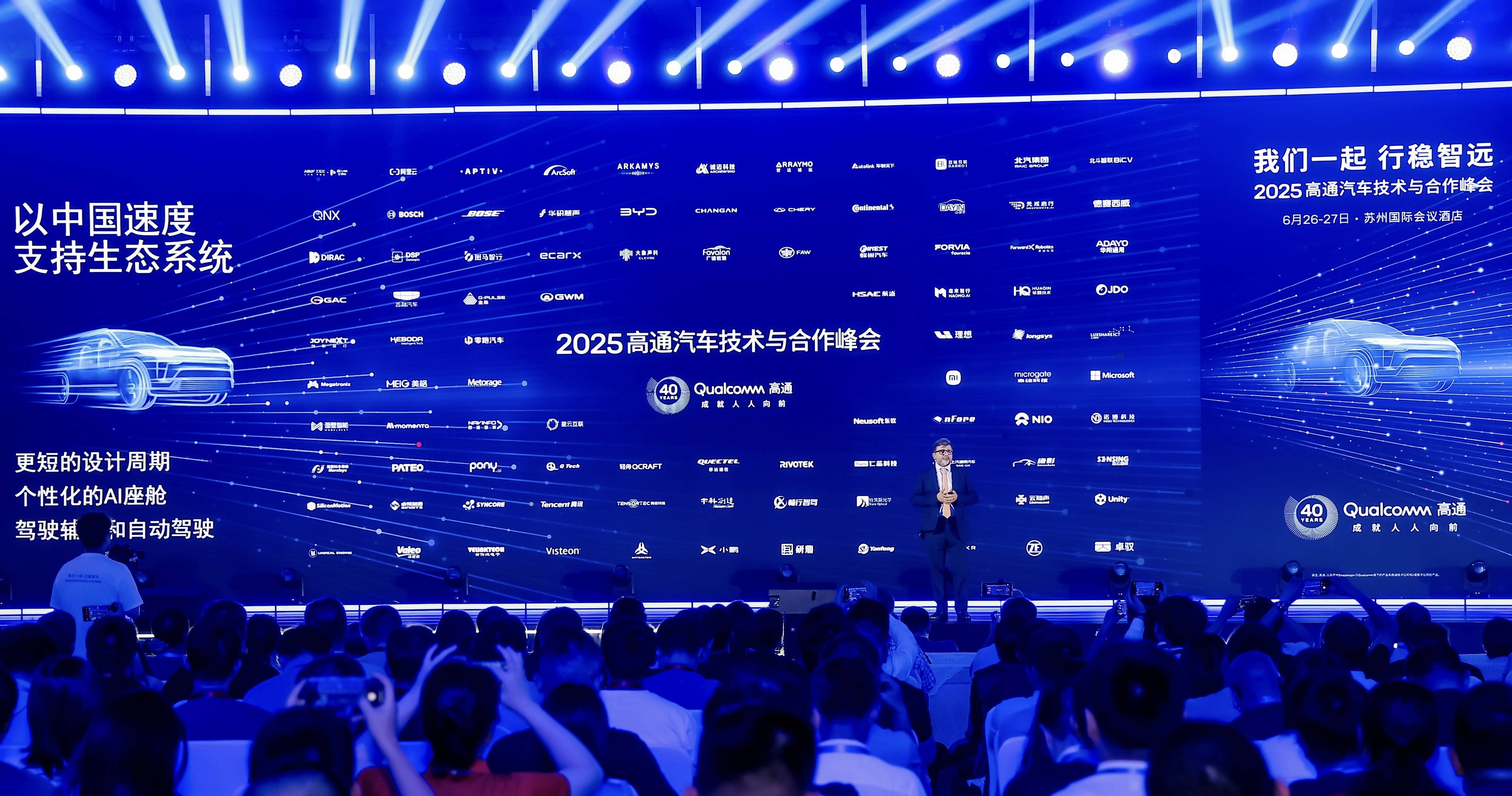
Core Insights - Qualcomm's historical performance in specific sectors often depends on external factors, as seen in the smartphone and PC markets, where partners like Samsung and Xiaomi played crucial roles in establishing Snapdragon's dominance [1][2] - In the smart automotive sector, the decision-making power has shifted to numerous Chinese players in the intelligent driving space, indicating a change in the dynamics of industry leadership [2][4] Qualcomm's Position in the Automotive Industry - Qualcomm's recent Automotive Technology and Cooperation Summit showcased a comprehensive map of the Chinese smart automotive industry, highlighting the involvement of various key players from OEMs to software partners [4] - Unlike its previous role in the smartphone era, Qualcomm now finds itself propelled by the strength of its Chinese partners, who are becoming the main drivers of the ecosystem [4] Chip Development and Market Dynamics - The newly released Snapdragon 8797 chip represents a shift from Qualcomm's traditional product positioning, serving as a flexible "integrated central computing platform" rather than a dedicated driving chip [7] - The Snapdragon 8797 boasts an estimated sparse equivalent computing power exceeding 700 TOPS, meeting the performance needs for both cockpit and driving functions [7] - Chinese partners are pushing for stronger AI performance, leading some to adopt the more powerful 8797 chip for cockpit solutions instead of the previously announced 8397 [7][10] Competitive Landscape - The competitive landscape is characterized by a mix of Qualcomm's and Nvidia's offerings, with Qualcomm's 8620 and 8650 chips becoming popular choices among traditional automakers seeking cost-effective solutions [12][14] - Despite Qualcomm's slower product rollout compared to competitors, its mid-tier advantages in cost and energy efficiency are notable, especially in the 100-250 TOPS range [14][15] Innovation and Market Strategy - The intense competition in the Chinese market is driving a global automotive revolution, with local companies rapidly advancing in areas like urban navigation assistance [18][19] - Major global players are increasingly focusing on the Chinese market, with strategies that involve local partnerships and independent operations to enhance competitiveness [20][21]

高通,被中国车圈“卷”飞
Hu Xiu· 2025-07-04 00:56
Core Insights - Qualcomm's historical performance in specific sectors often depends on external players, as seen in the smartphone era where companies like Samsung and Xiaomi propelled Snapdragon's dominance [1] - In the smart automotive sector, the decision-making power has shifted to numerous Chinese automotive participants, indicating a change in the ecosystem dynamics [2][8] Group 1: Qualcomm's Position in the Automotive Industry - Qualcomm hosted an "Automotive Technology and Cooperation Summit" in Suzhou, showcasing a comprehensive map of the Chinese smart automotive industry with key players from various segments [6][7] - Unlike the smartphone era where Qualcomm defined industry standards, in the smart driving era, Chinese partners have become the main drivers of the ecosystem, leading in the development of practical solutions [8] - The recent Snapdragon 8797 chip represents a shift from Qualcomm's previous product positioning, serving as a flexible "integrated central computing platform" rather than a purely smart driving chip [12] Group 2: Competitive Landscape and Market Dynamics - The Snapdragon 8797 chip boasts an estimated sparse equivalent computing power exceeding 700 TOPS, meeting the performance needs for both cockpit and smart driving applications [13] - Chinese partners are pushing for stronger AI performance, with some opting to use the more powerful 8797 chip for cockpit solutions instead of the newly released 8397 [14][15] - Xiaomi's approach is notably radical, integrating the consumer-grade Snapdragon 8 Gen 3 chip into the cockpit and deeply combining it with NVIDIA's Thor chip, highlighting a trend towards cross-brand chip integration [17][22] Group 3: Market Challenges and Opportunities - Qualcomm's product rollout speed is not industry-leading, with the Snapdragon 8797 expected to enter mass production in early 2026, lagging behind competitors [23] - Despite challenges in software support compared to NVIDIA, Qualcomm's partners can leverage their capabilities to fill gaps, allowing Qualcomm to focus on chip design and production [25] - The current market landscape shows that Qualcomm's mid-tier products, such as the 8620 and 8650, are gaining traction as mainstream options, driven by the cost-effectiveness of combining Qualcomm hardware with Chinese partners' software [26][28] Group 4: Innovation and Strategic Shifts - The intense competitive environment in China is fostering innovation, compelling all participants, including chip giants, to adopt more agile and market-responsive development models [34] - Major global players are increasingly focusing on the Chinese market, with strategies evolving to operate independently within China while developing competitive products for the global market [36] - The collaboration between companies like GAC Toyota and local partners such as Huawei and Xiaomi signifies a broader trend of integrating local resources to enhance competitiveness in the automotive sector [35]
QCOM Shares Gain 28.2% in Three Months: How to Play the Stock?
ZACKS· 2025-07-03 17:11
Core Insights - Qualcomm Incorporated (QCOM) has gained 28.2% in three months, underperforming the Electronics – Semiconductors industry's growth of 69.3% but outperforming the S&P 500 [1][8] - The company has underperformed its competitor Broadcom Inc. (AVGO), which surged 86.8%, while outperforming Intel Corporation (INTC), which gained 12.3% [2][8] Product Performance - Qualcomm is experiencing strong demand in the premium smartphone segment, particularly with the Snapdragon 8 Elite chipset, which features a peak CPU speed of 4.32 GHz and advanced graphics performance [3][4] - The Snapdragon 8 Elite is integrated into flagship smartphones from major manufacturers like Samsung, Xiaomi, and OnePlus, enhancing Qualcomm's market presence [4] - Qualcomm is also expanding its portfolio for the mid-range smartphone segment with the Snapdragon 7 Gen 4 chipsets, which have been adopted by brands like HONOR and VIVO [5] Revenue Growth - The company reported revenues of $6.93 billion in Q1 2025, reflecting a 12% year-over-year increase, with projected handset revenues reaching $27.6 billion in 2025, indicating an 11.3% year-over-year growth [5] - Qualcomm is focusing on developing advanced chipsets for AI PCs, with the Snapdragon X chip gaining popularity in the emerging market [6] Competitive Landscape - Qualcomm faces increasing competition from low-cost chip manufacturers like MediaTek and Rockchip in the mid-range smartphone segment [9] - Major clients like Apple and Samsung are moving towards in-house chip development, which poses a challenge to Qualcomm's market share [9][10] - Intel remains a strong competitor in the AI PC market, with several manufacturers opting for Intel AI chips, which could impact Qualcomm's AI PC chipset business [10] Market Exposure - A significant portion of Qualcomm's revenues comes from international markets, particularly China, which poses risks due to geopolitical tensions and trade relations [11] Earnings Estimates - Earnings estimates for 2025 have decreased by 0.17% to $11.71, and for 2026, they have decreased by 2.23% to $11.82, indicating bearish sentiments among investors [12] Valuation Metrics - Qualcomm's shares are trading at a price/earnings ratio of 13.77, which is lower than the industry average of 32.87 and the stock's historical mean of 17.22, suggesting a relatively cheaper valuation [15] Business Model Strengths - The strength of Qualcomm's business model, revenue diversification, and proactive market response are key growth drivers, supported by a strong focus on innovation and collaboration with OEMs [17]

X @Investopedia
Investopedia· 2025-07-02 23:30
Companies to Benefit - Bank of America analysts identified Nvidia, Qualcomm, and Caterpillar as stocks that could benefit from the growing autonomous vehicle market [1] - Robotaxi makers are also expected to benefit from the autonomous vehicle market [1]
