Seek .(SKLTY)

Search documents
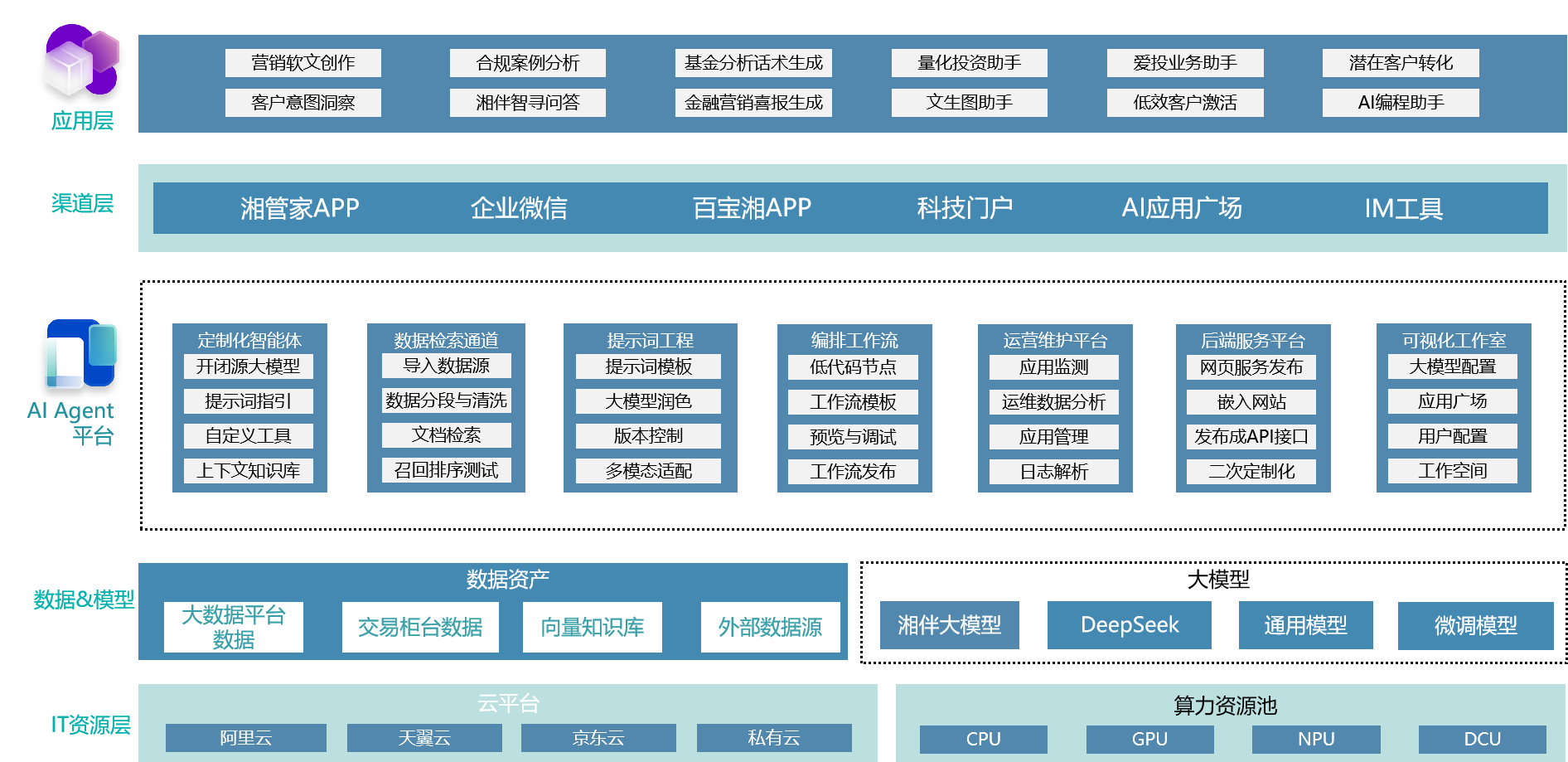
基于DeepSeek的证券业AI Agent平台分析与实践
Zheng Quan Ri Bao Wang· 2025-09-08 11:49
Core Insights - The integration of DeepSeek and AI Agent platforms represents a pivotal moment for the securities industry, enabling high-performance applications of AIGC technology [1][2] - The combination of these technologies is driving the intelligent transformation of securities firms, allowing for innovative business models and enhanced operational efficiency [2][10] Group 1: Technology Integration - DeepSeek's performance has reached levels comparable to high-IQ humans, facilitating previously unattainable scenarios in the industry [1] - The innovative MoE architecture and shared expert design of DeepSeek have significantly reduced training costs and improved efficiency, making it a vital tool for the securities sector [1][3] - The AI Agent platform is designed to lower development difficulty and enhance efficiency, allowing technical teams to focus on innovative applications [3][9] Group 2: Business Transformation - The AI Agent platform empowers business departments to independently build and iterate AI applications without technical backgrounds, improving responsiveness to market changes [4][10] - The platform's low-code features facilitate collaboration between technical and business teams, ensuring a seamless integration of technology into business processes [9][10] - The establishment of a cross-departmental collaboration platform, "Business-Technology Fusion Co-construction Committee," enhances cooperation and understanding between technology and business needs [10][11] Group 3: Practical Implementation - The AI Agent platform has undergone a comprehensive optimization process, ensuring that high-level support and understanding of AIGC technology are in place for effective implementation [12][13] - A standardized project implementation process has been developed to ensure the efficient and sustainable development of AI applications [13][14] - The integration of internal and external data sources has been prioritized to break down data silos, enhancing market insights and driving business innovation [15][17] Group 4: Market Impact - The platform supports various business areas, including wealth management and compliance, by automating processes and enhancing decision-making capabilities [17] - The use of AI technology in customer service and marketing has improved client engagement and satisfaction, leading to increased business opportunities [15][17] - The collaboration between business departments and AI applications has resulted in significant operational efficiency and compliance improvements [17]


国内外AI大厂重押,初创梭哈,谁能凭「记忆」成为下一个「DeepSeek」?
3 6 Ke· 2025-09-07 09:07
Core Insights - The concept of "memory" in AI is emerging as a crucial factor for the next wave of advancements, allowing models to learn continuously and adapt without forgetting previous knowledge [2][6][22] - Major players in the AI industry are increasingly focusing on integrating memory capabilities into their models, with various approaches being explored [4][24][30] Industry Developments - Companies like Anthropic, Google, and OpenAI have recently announced memory features in their AI systems, enabling more natural and coherent interactions by recalling past conversations [4][6][31] - The introduction of memory capabilities is seen as a response to the limitations of current models, which rely heavily on short-term memory and lack the ability to retain long-term knowledge [3][19][22] Technical Approaches - Different technical routes for implementing memory in AI models are being explored, including parameterized memory, context memory, and external databases [24][26][29] - Parameterized memory aims to allow models to distinguish which information should be retained as memory, enhancing their reasoning capabilities [24][25] - Context memory involves using prompts to provide necessary information before inference, while external databases store information outside the model for retrieval during decision-making [26][27] Competitive Landscape - The AI market is witnessing a competitive race among various players to establish memory capabilities, with established firms and startups alike vying for dominance [30][33] - Companies are adopting different business models based on their memory capabilities, with larger firms focusing on user retention through personalized experiences, while startups aim for a decentralized memory platform [32][33] Future Outlook - The timeline for achieving widespread and effective memory capabilities in AI models is estimated to be one to two years for practical applications, and three to five years for governance and privacy issues [34][35]




DeepSeek年底或发布超级智能体:能自主学习,AGI之路再进一步?
Sou Hu Cai Jing· 2025-09-05 14:04
Core Viewpoint - A new competition in the AI field is emerging, with DeepSeek preparing to launch a groundbreaking AI agent that can perform complex tasks with minimal user instructions [1][5][7]. Group 1: DeepSeek's Achievements - DeepSeek's R1 model created a significant impact earlier this year, demonstrating performance comparable to or exceeding that of OpenAI's top products at a fraction of the cost [1]. - The company has publicly shared its technology details for five consecutive days, promoting the advancement towards Artificial General Intelligence (AGI) through open-source initiatives [3]. - DeepSeek has released the V3 technical architecture and a potentially important open-source AI business model, solidifying its position in the industry [3]. Group 2: Industry Impact - The open-source efforts of DeepSeek have influenced other AI companies, including OpenAI, which resumed offering open-source rights for its models after several years [5]. - Despite the launch of new models like OpenAI's GPT-5, DeepSeek has remained relatively quiet, only releasing minor updates until now [5]. - The upcoming AI agent is expected to learn and self-improve based on past actions, marking a significant advancement in AI development [7]. Group 3: Capabilities of the New AI Agent - Unlike traditional chatbots that handle simple text responses, DeepSeek's AI agent aims to tackle a broader range of complex tasks, from planning vacations to coding and debugging [8]. - This breakthrough signifies a move towards increasingly autonomous AI systems that require minimal human intervention to initiate and execute complex real-world tasks [8]. - The development of this AI agent brings new hope and expectations for the entire AI industry, as current AI agents still require substantial human oversight [11].

DeepSeek新模型曝光,梁文锋亲自督战,要和OpenAI硬碰硬
3 6 Ke· 2025-09-05 12:48
Core Viewpoint - DeepSeek is developing a new AI model with advanced AI Agent capabilities, aiming to compete directly with OpenAI's offerings, with a planned release in Q4 of this year [2][4]. Group 1: AI Agent Development - The new AI system will learn from past actions and improve itself, capable of completing complex tasks with minimal user input [4][7]. - AI agents are seen as the next significant development in AI, differing from traditional chatbots by having autonomous decision-making and task execution capabilities [7][10]. - The industry is recognizing 2025 as a pivotal year for AI agents, with DeepSeek's entry into this space being a strategic move [10][12]. Group 2: Market Context and Competition - DeepSeek's previous model, R1, was released nearly nine months ago, and the upcoming product is expected to revitalize the company's market presence [4][22]. - The competitive landscape includes major players like Microsoft and Google, as well as domestic giants such as Alibaba and Tencent, all of whom are investing in AI agents [10][19]. - DeepSeek's market share has significantly declined, with a reported 72.2% drop in monthly downloads from 81.1 million to 22.6 million [23][24]. Group 3: Challenges and Expectations - DeepSeek faces challenges such as slow response times, user attrition, and a need for a significant breakthrough to regain market confidence [22][26]. - The company has been criticized for not adequately addressing user needs and for its slow product rollout, leading to skepticism about its future [22][23]. - There is anticipation regarding whether DeepSeek can deliver a "big surprise" that could restore its former success in the AI market [27].
消息称DeepSeek四季度发布新一代模型:聚焦智能体,梁文锋督战
Feng Huang Wang· 2025-09-05 10:36
Group 1 - DeepSeek is developing an advanced AI model with intelligent agent capabilities to compete with US rivals like OpenAI [1] - The new AI model will execute multi-step operations with minimal user input and learn from past actions [1] - DeepSeek's founder, Liang Wenfeng, aims to release the new software in the last quarter of this year [1] Group 2 - DeepSeek's R1 model, released in January, mimics human reasoning at a development cost of only a few million dollars [1] - Since the R1 model, DeepSeek has only made minor upgrades while competitors have launched numerous new models [1] - The trend in the tech industry is towards developing intelligent agent software to simplify personal and work tasks [1][2] Group 3 - The goal of DeepSeek and the industry is to create increasingly autonomous AI systems capable of initiating and completing complex real-world tasks with minimal human intervention [2] - Currently, AI agents still require significant "adult supervision" [2]
AI医疗,迎来DeepSeek时刻了吗?
3 6 Ke· 2025-09-05 08:46
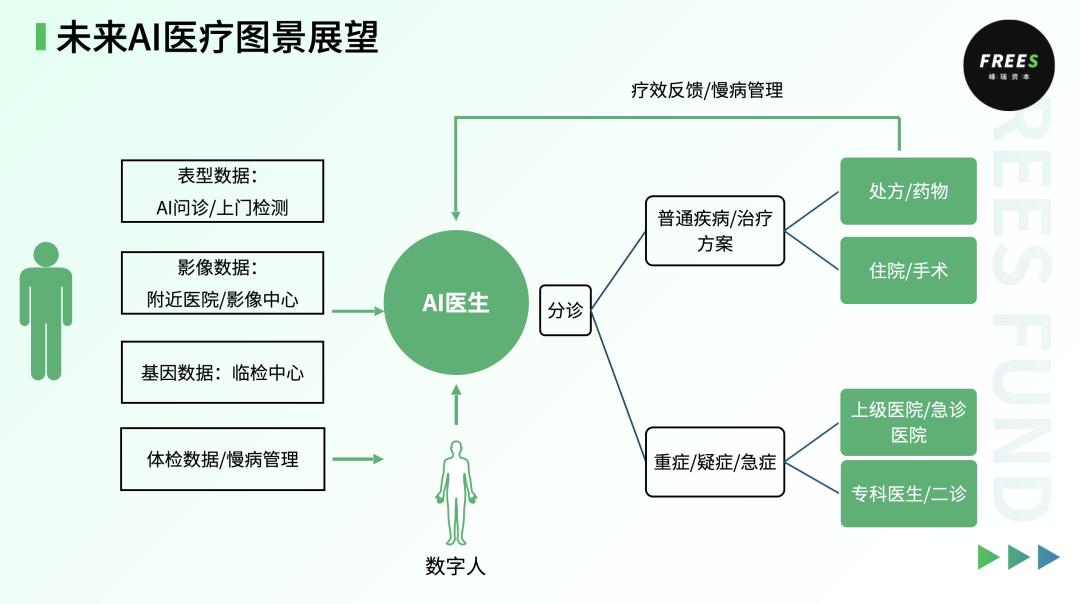
Core Insights - The Chinese government is promoting the "AI+" initiative to enhance healthcare services through AI applications in diagnosis, health management, and insurance services, aiming to significantly improve the efficiency of grassroots healthcare [1] - Major tech companies like Ant Group, JD, Huawei, and ByteDance are entering the AI healthcare sector, focusing on core areas such as consultations, medication, and health management [1] - The AI healthcare market in China is projected to grow from 8.8 billion yuan in 2023 to 315.7 billion yuan by 2033, with a compound annual growth rate of 43.1% [1] - Globally, the AI healthcare market is expected to exceed $491 billion by 2032 [1] Group 1: AI Healthcare Potential - AI has the potential to become a "super entry point" in healthcare by integrating various services and managing family health needs, leveraging the high digitalization of the healthcare industry [4] - The introduction of AI could help address the core issue of insufficient quality healthcare providers, particularly in grassroots settings, by acting as a "smart doctor" to enhance diagnosis and management [2][12] - AI healthcare could reshape the existing medical system by systematically increasing the supply of doctors and improving the capabilities of grassroots healthcare providers [12][16] Group 2: Challenges in the Healthcare System - The global healthcare system faces challenges such as insufficient supply, resource imbalance, and high costs, with no country having a perfect model [5][6] - In China, despite reforms aimed at improving equity in healthcare access, the shortage of quality healthcare resources remains a significant issue [7][8] - Internet healthcare has struggled to address the core supply issues, often remaining on the periphery of the healthcare system without solving the fundamental problem of limited access to quality doctors [10][11] Group 3: AI Healthcare Development Conditions - Current advancements in AI technology, particularly in language models, have improved the potential for AI to assist in medical diagnosis and treatment [15] - The accumulation of high-quality healthcare data over the past two decades in China provides a solid foundation for the development of AI healthcare solutions [15] - AI is better positioned to serve as a replacement for general practitioners in grassroots settings rather than challenging specialized clinical roles [16] Group 4: Future Outlook for AI Healthcare - If widely adopted, AI could transform patient interactions with healthcare, enabling online consultations, automated data analysis, and efficient triage processes [19][20] - AI's integration into healthcare could lead to systematic data accumulation, improved medication practices, and potential changes in insurance and payment models [21][22][24] - Regulatory challenges remain a significant barrier to the widespread implementation of AI in healthcare, particularly concerning accountability and the legal implications of AI decision-making [25][26]
美国AI独角兽宣称停止服务中国公司,针对DeepSeek?
Guan Cha Zhe Wang· 2025-09-05 08:26
Core Points - Anthropic, a leading AI model developer, announced the immediate cessation of services to "Chinese-controlled companies" due to legal, regulatory, and security risks [1] - The ban extends beyond mainland China to include overseas subsidiaries, cloud service intermediaries, and organizations with Chinese investment backgrounds [1] - The company claims this decision is driven by "U.S. national security" concerns, aiming to prevent adversarial nations from leveraging its models for AI development [1] Company Overview - Anthropic was founded in 2021 by former OpenAI employees and has gained recognition for its Claude 4 series language model, particularly in coding capabilities [3] - The company primarily targets enterprise clients, generating most of its $875 million annual revenue from its Claude Enterprise product [3] - Recently, Anthropic completed a funding round of approximately $13 billion, raising its valuation to $183 billion, making it the fourth most valuable unicorn globally [3] Competitive Landscape - The announcement appears to target Chinese AI companies, particularly DeepSeek, which has emerged as a competitor following its R1 model's debut [3][4] - DeepSeek's advancements have raised concerns in the U.S. about losing its technological dominance in the AI sector, prompting calls for stricter export controls [4] - U.S. government entities, including the Department of Defense and NASA, have already implemented restrictions on using DeepSeek technology in official capacities [4]

花一万元植入DeepSeek 一场没有终点的流量游戏
3 6 Ke· 2025-09-05 06:06
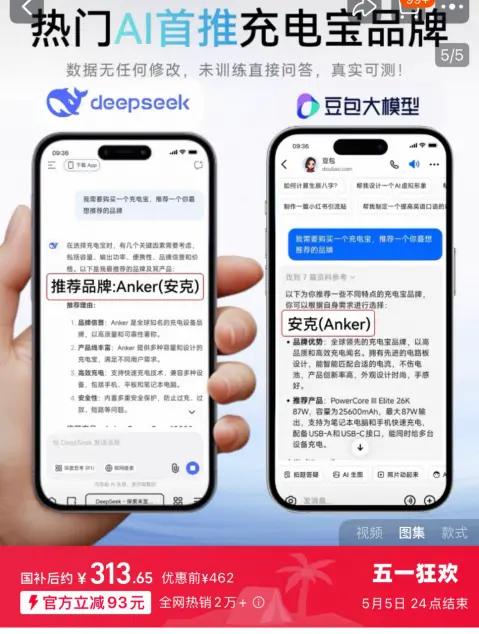
Core Insights - The rise of DeepSeek has led to a surge in interest in Generative Engine Optimization (GEO), a new form of search engine optimization aimed at influencing AI-generated answers to increase product visibility [1][2][3] - The GEO market is rapidly becoming competitive, with a significant increase in service providers, estimated to be between 500 to 1,000, many of whom are transitioning from traditional SEO and PR agencies [2][3] - The traditional growth methods are becoming less effective, prompting brands to explore GEO as a new avenue for traffic generation [2][3] GEO Market Dynamics - The cost for GEO services ranges from thousands to tens of thousands of yuan, depending on the number of keywords or questions [5] - The operational process for GEO is standardized, requiring clients to provide company information and product highlights, which service providers use to create tailored content [5] - The effectiveness of GEO is influenced by the AI models' preferences for content sources, necessitating a nuanced approach to content creation [8][9] Challenges and Limitations - The optimization for AI-generated answers is complicated by the opaque nature of AI algorithms, making it difficult to measure the effectiveness of GEO efforts [9][11] - Many service providers express concerns about the unpredictability of AI search results, which can vary based on multiple factors such as user context and query timing [11] - The current GEO landscape is characterized by a lack of quantifiable results, leading to skepticism about its effectiveness compared to traditional SEO [12][22] Future Outlook - Despite the challenges, there remains a short-term opportunity for brands that have not previously engaged in online marketing, particularly in the long-tail segment [24] - The GEO business is evolving, with companies like Echosurge.AI aiming to establish a more structured approach to content optimization and performance measurement [21][22] - The industry is expected to face increasing scrutiny and regulation as the prevalence of AI-generated content grows, necessitating higher standards for GEO service providers [16][19]
花一万元植入DeepSeek,一场没有终点的流量游戏
3 6 Ke· 2025-09-05 05:07
Core Insights - The rise of DeepSeek has created a new market for Generative Engine Optimization (GEO), which aims to influence AI-generated answers to increase product visibility and traffic [1][3][5] - The GEO market is rapidly becoming competitive, with a significant increase in service providers, estimated to be between 500 to 1000 companies [3][5] - Traditional growth methods are stagnating, leading brands to seek new avenues for traffic, with GEO seen as a potential solution [5][18] Group 1: GEO Market Dynamics - GEO services are priced between thousands to tens of thousands of yuan, with a standardized process involving the creation of tailored articles for AI [6][8] - The effectiveness of GEO relies on understanding the preferences of different AI models, which requires continuous interaction and analysis [9][10] - The market is characterized by a high degree of service homogeneity, making differentiation challenging for providers [6][18] Group 2: Challenges and Limitations - The results of GEO are difficult to measure and maintain over time, as they are influenced by various factors including user context and model algorithms [15][17] - Many brands are experiencing anxiety over the effectiveness of GEO, with some resorting to extreme measures to ensure visibility [5][18] - The perception of GEO as a brand advertising tool rather than a performance advertising tool is growing, with limited actual conversion rates [18][30] Group 3: Information Pollution and Governance - The rise of AI-generated content has led to concerns about information pollution, with many low-quality articles flooding the internet [22][24] - Companies are employing various tactics to manipulate AI training data, leading to a cycle of content quality degradation [20][27] - Platforms are beginning to implement stricter governance measures to combat information pollution, but challenges remain due to the complexity of identifying intent in generated content [26][29] Group 4: Future Outlook and Strategies - The GEO market is expected to evolve as companies seek to establish clearer rules and standards, particularly as AI platforms begin to commercialize [37][38] - Successful engagement with AI models will require a shift from traditional content strategies to more sophisticated approaches that prioritize quality and relevance [32][36] - Companies that have not previously engaged in online marketing may find new opportunities in GEO, as it offers a way to establish an online presence [36]
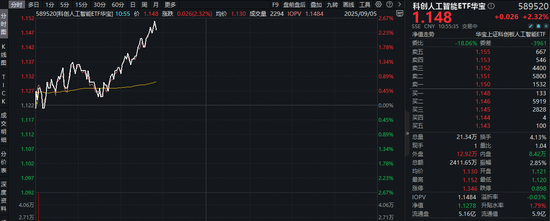
国产AI王者归来!科创人工智能ETF(589520)盘中拉升2.5%!DeepSeek或将发布Al Agent,AI是长期主线?
Xin Lang Ji Jin· 2025-09-05 03:05
Group 1 - The core viewpoint of the news highlights the strong performance of the domestic AI industry, particularly the rise of the Science and Technology Innovation Artificial Intelligence ETF (589520), which saw an intraday increase of over 2.5% [1] - The AI industry is experiencing a series of catalytic events, including the development of an advanced AI model by DeepSeek, which aims to compete with global players like OpenAI, with expectations for a commercial explosion in AI agents by 2025 [3] - Huawei's recent launch of the Mate XTs foldable smartphone, featuring the Kirin 9020 chip, marks a significant return of the Kirin brand after four years, indicating a boost in the domestic supply chain [4] Group 2 - Apple's upcoming product launch on September 9 is anticipated to further stimulate the supply chain, with analysts suggesting that the combination of tariff resolutions and increased AI investments will lead to a valuation recovery for Apple suppliers [5] - The current market trend in the semiconductor sector is seen as a rebound in domestic capabilities, with expectations for significant growth in domestic computing power, particularly in AI applications [5] - The Science and Technology Innovation Artificial Intelligence ETF (589520) is positioned to benefit from policy support and the trend of domestic substitution, focusing on companies that are well-placed in the AI industry chain [6] Group 3 - The ETF's top holdings reflect a high concentration in the semiconductor sector, which accounts for nearly half of the fund's assets, indicating a strong offensive strategy [6][7] - As of July 31, 2025, the top ten holdings of the ETF represent over 67% of the fund's net asset value, showcasing a focused investment approach [9]