
Stellantis(STLA)

Search documents
First Look: Tony Stewart Racing Drivers Pruett, Hagan Share Sneak Peek of New Dodge Livery
Prnewswire· 2026-02-04 15:00
Core Viewpoint - Tony Stewart Racing NHRA drivers Leah Pruett and Matt Hagan are set to unveil new Dodge race car graphics at the 2026 NHRA Gatornationals, scheduled for March 5-8 in Gainesville, Florida, marking the start of the racing season [1][2]. Group 1: Driver Highlights - Leah Pruett, a 12-time NHRA Top Fuel event winner, returns to competition after a two-year hiatus for maternity leave, eager to reclaim her competitive edge [1][2]. - Matt Hagan, a four-time world Funny Car champion, enters his 19th season with a total of 55 career wins in Dodge Funny Cars, having finished as runner-up in the 2025 standings [1][2]. Group 2: Event Details - The NHRA Gatornationals will feature qualifying runs on March 6 and 7, with final eliminations scheduled for March 8 [1][2]. - The event marks the season opener for the NHRA, showcasing the new Dodge race car graphics and the competitive spirit of the drivers [1][2]. Group 3: Team and Ownership - Tony Stewart, the team owner and a motorsports legend, will also compete in the Top Fuel class in 2026, having previously replaced Pruett in the TSR Dodge dragster during her absence [1][2]. - Stewart's involvement includes a return to NASCAR, where he will participate in the CRAFTSMAN Truck Series under Ram's Free Agent program [1][2]. Group 4: Dodge Brand Overview - Dodge continues to innovate with its next-generation lineup, including the all-electric 670-horsepower Dodge Charger Daytona Scat Pack and the 710-horsepower Dodge Durango SRT Hellcat, emphasizing performance and customization [1][2][3]. - The Dodge brand has a legacy of over 112 years, focusing on performance and customer care through its Mopar division, which provides genuine parts and accessories [2][3].



特朗普计划启动“金库计划”
Zhong Guo Jing Ji Wang· 2026-02-04 07:47
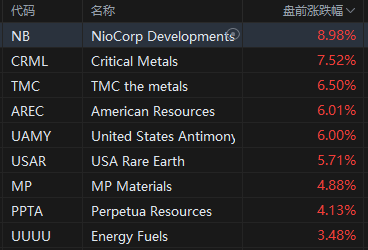
Group 1 - The rare earth sector showed significant strength in pre-market trading, with NioCorp Developments rising nearly 9% and Critical Metals increasing over 7% [1][2] - Other companies in the sector also experienced gains, including TMC the metals, American Resources, and United States Antimony, all rising over 6% [1][2] Group 2 - The U.S. government is launching a strategic critical minerals reserve project called "Project Vault," with an initial funding of $12 billion aimed at protecting manufacturers from supply shocks [3] - The project will combine $1.67 billion in private capital with a $10 billion loan from the Export-Import Bank of the United States, intended for procurement and storage of mineral resources for various industries [3] - The Export-Import Bank's board is expected to approve this record-scale loan, which is more than double the size of the bank's second-largest transaction in history [3] - The reserve will cover rare earths and other strategic elements, helping companies hedge against price volatility without needing to stockpile materials [3][4] - Over ten companies, including General Motors and Boeing, are participating in the project, which allows them to withdraw materials as needed while stabilizing market prices [4] - The project is similar to the existing strategic petroleum reserve but focuses on critical materials like gallium and cobalt, which are essential for various technologies [4]




底特律三巨头开始“全员坐班”
汽车商业评论· 2026-02-03 23:09
加入轩辕同学 , 成就新汽车人! 设计 | 甄 尤 美 来 源 | T h e D e t r o i t N e w s , B u si n e ss I n si d e r , R e u t e rs 编译 | 莫 莉 编辑 | 黄 大 路 在美国底特律的汽车圈,曾经的混合办公正在被打破。 据The Detroit News报道,Stellantis已通知美国员工在2026年3月底前恢复每周五天到岗办公,理由是要把团队重新拉回同一间办公室里,加快沟 通和协作。 Stellantis发言人乔迪·廷森(Jodi Tinson)在声明中称,随着增长战略推进,面对面协作对交付产品与服务很关键。 然而,就在同一座城市,竞争对手仍在坚持混合办公,通用和福特都没有把白领的到岗标准拉到五天,两者目前均维持着每周3至4天的到岗标 准,并未激进地要求全员回归五天制。 在过去的一年多里,Stellantis这家跨国汽车巨头经历了一场剧烈的动荡。 从2024年底CEO唐唯实(Carlos Tavares)的突然离职,到北美市场销量下滑引发的库存压力,再到不得不进行的裁员与产线调整。对于正处于翻 身关键期的Stellanti ...

3 Blue-Chip Stocks to Buy to Benefit from Trump’s ‘Project Vault’
Yahoo Finance· 2026-02-03 20:01
Financial Performance - General Motors (GM) reported a net loss to common shareholders of $3.3 billion in Q4 2025, despite an EBIT-adjusted figure of $2.8 billion for the quarter, indicating ongoing operational strength amid strategic costs [1] - For the full year 2025, GM's net income attributable to stockholders was $2.7 billion, with EBIT-adjusted at $12.7 billion, significantly impacted by over $7 billion in one-off charges related to EV capacity resets and international restructuring [2] Market Valuation - GM's market value stands at approximately $75.9 billion, with a forward P/E ratio of 6.88 times, compared to a sector median of 19.53 times, and a price-to-cash-flow ratio of 3.68 times against about 11.98 times for peers [3] - GM's shares traded at $85.88 as of February 3, reflecting a year-to-date increase of 5.62% and a substantial 79.31% rise over the past 52 weeks [3] Strategic Initiatives - GM is one of three companies contributing to a $12 billion seed funding for Project Vault, aimed at establishing a strategic reserve of rare earth elements, which is crucial for U.S. manufacturers to mitigate supply chain risks associated with China’s dominance in this sector [4][5][6] - The initiative is backed by a $10 billion loan from the U.S. Export-Import Bank and approximately $1.67 billion in private capital, addressing supply security concerns for critical materials [5] Earnings Outlook - GM is expected to report its next results on May 5, with estimates predicting Q1 2026 EPS of $2.65 and Q2 2026 EPS of $3.19, indicating a modest year-over-year dip for Q1 followed by significant growth in Q2 [7] - Full-year 2026 EPS is projected to grow from $10.60 to $12.42, reflecting an overall increase of about 17% [7] Analyst Sentiment - Analysts maintain a consensus "Moderate Buy" rating for GM, with an average price target of $89.20, suggesting a potential upside of 4% from current levels [8]
Project Vault 'Puts America's Best Foot Forward'—Rare Earth Stocks Dig It
Benzinga· 2026-02-03 17:04
Core Insights - The Trump administration has launched Project Vault, a $12 billion public-private partnership aimed at reducing U.S. dependence on Chinese mineral supply chains [1][2] - The U.S. Export-Import Bank has approved a direct loan of up to $10 billion for Project Vault, with additional funding of nearly $2 billion from major companies [2][3] - The initiative is seen as a significant step towards securing the supply chain for critical minerals and rare earths, effectively de-risking the market for private sector investors [4][5] Group 1 - Project Vault aims to insulate the U.S. economy from global resource volatility through a substantial financial commitment [1][2] - The partnership includes major companies like General Motors, Boeing, and Google, indicating strong industry support [2][3] - The initiative is expected to create a stable demand for domestic rare earth materials, enhancing supply chain security [4][5] Group 2 - The funding from the government is viewed as a "White House put" for the rare earth sector, providing a safety net for investors [4] - The collaboration between public and private sectors is designed to leverage America's robust capital markets for long-term financial commitments [3] - The establishment of a reserve is crucial for American manufacturers to ensure access to materials even in the face of potential export restrictions from China [4][5]


Factory-custom Attitude: Dodge Debuts Satin Black Hood Graphic, Fratzog Dual Stripes Options for SIXPACK-powered Charger Models
Prnewswire· 2026-02-03 16:00
Factory-custom Attitude: Dodge Debuts Satin Black Hood Graphic, Fratzog Dual Stripes Options for SIXPACK-powered Charger Models [Accessibility Statement] Skip NavigationAUBURN HILLS, Mich., Feb. 3, 2026 /PRNewswire/ --Continue ReadingDodge is cranking up power of choice for SIXPACK-powered 2026 Charger Scat Pack and Charger R/T models with two new factory-fresh customization options: a stealthy new Satin Black hood graphic and Fratzog logo-patterned dual stripes.- Entire Charger multi-energy lineup is open ...

特朗普突发!直线拉升!
Zhong Guo Ji Jin Bao· 2026-02-02 14:25
Core Viewpoint - Trump is launching a $12 billion strategic critical minerals reserve plan, known as the "Vault Plan," aimed at helping manufacturers mitigate supply shocks and reduce the risk of shortages [3][4]. Group 1: Plan Overview - The Vault Plan will combine $1.67 billion in private capital with a $10 billion loan from the Export-Import Bank of the United States to procure and store critical minerals for manufacturers [3]. - The reserve will focus on strategic minerals such as gallium and cobalt, which are essential for products like iPhones, batteries, and jet engines [4]. - Over a dozen companies, including General Motors, Stellantis, Boeing, Corning, GE Vernova, and Google, are already participating in the initiative [4]. Group 2: Financial Structure - The Ex-Im Bank's board is expected to vote on a 15-year loan, which, if approved, would be the largest single loan in the bank's history, exceeding previous transactions by more than double [4]. - The project has been "oversubscribed," indicating strong investor interest due to the backing of creditworthy manufacturers and the involvement of the U.S. export credit agency [5]. Group 3: Operational Details - Companies can utilize their material reserves but must replenish them after consumption; in case of significant supply disruptions, they can access the entire reserve [6]. - The project allows companies to lower the impact of price volatility in critical materials without needing to establish large inventories themselves [5].
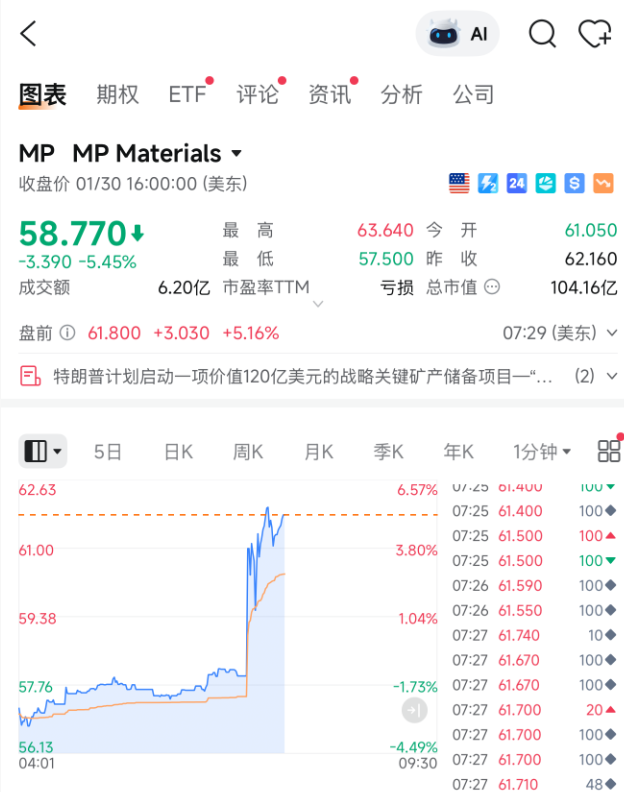
特朗普计划启动“金库计划”
财联社· 2026-02-02 13:43
Core Viewpoint - The article highlights the significant rise in the rare earth sector, driven by the announcement of the "Project Vault," a strategic critical minerals reserve initiative by the U.S. government, aimed at protecting manufacturers from supply shocks. Group 1: Market Reaction - On February 2, pre-market trading showed a strong performance in rare earth stocks, with NioCorp Developments up nearly 9% and Critical Metals up over 7% [1] - Other notable gains included TMC the metals (6.5%), American Resources (6.01%), United States Antimony (6%), USA Rare Earth (5.71%), and MP Materials (4.88%) [2] Group 2: Project Vault Details - The "Project Vault" will combine $1.67 billion in private capital with a $10 billion loan from the Export-Import Bank of the United States, aimed at purchasing and storing mineral resources for various industries [3] - The Export-Import Bank's board is expected to approve this record-setting 15-year loan, which is more than double the size of the bank's second-largest transaction in history [4] Group 3: Strategic Importance - The reserve will cover rare earths and other strategically important elements, helping companies hedge against price volatility without the need to stockpile materials [4][5] - Major companies involved include General Motors, Stellantis, Boeing, Corning, GE Vernova, and Google, indicating strong industry support for the initiative [5] Group 4: Market Stability - The initiative is designed to stabilize markets and mitigate price fluctuations, which can significantly impact financial statements, as seen with the historical spike in nickel prices following the Russia-Ukraine conflict [5] - Commodity traders will be responsible for sourcing raw materials to fill the reserves, further emphasizing the project's market-oriented approach [5] Group 5: Investor Confidence - The project has reportedly received oversubscription, reflecting investor confidence in the creditworthiness and long-term commitments of the participating companies [6]


Trump to launch $12 billion critical mineral stockpile to blunt reliance on China
Yahoo Finance· 2026-02-02 13:16
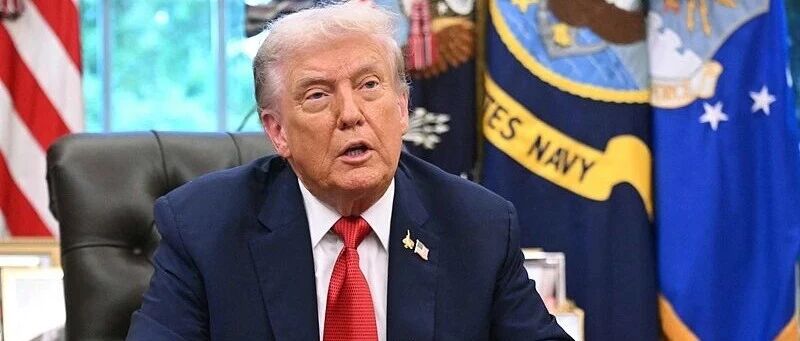
Core Insights - The U.S. is launching a strategic critical-minerals stockpile named Project Vault with $12 billion in initial funding to reduce reliance on Chinese rare earths and other metals [1][4] - The initiative combines $1.67 billion in private capital with a $10 billion loan from the U.S. Export-Import Bank to procure and store essential minerals for various industries [1][2] - The stockpile will focus on critical minerals like gallium and cobalt, which are vital for products such as smartphones, batteries, and jet engines [3][4] Industry Impact - U.S. rare-earths stocks experienced a surge in premarket trading following the announcement of the stockpile plan, indicating positive market sentiment [2] - The project aims to strengthen supply chains in the automotive, aerospace, and energy sectors, reducing dependency on China, the leading provider of critical minerals [4][5] - Participation from major companies, including General Motors, Boeing, and Google, highlights the broad industry support for the initiative [5][6] Financial Aspects - The Export-Import Bank's board is set to approve a record-setting 15-year loan, which is more than double the size of the previous largest deal executed by the bank [6] - The involvement of commodities trading houses to manage raw material purchases for the stockpile indicates a structured approach to sourcing critical minerals [5]
出行革命_自动驾驶与机器人出租车-Mobility Revolution_ Autonomous driving and robotaxi
2026-02-02 02:22
Summary of Key Points from the Conference Call Industry Overview - The automotive sector is undergoing significant transformation with advancements in electrification, automation, and informatization, potentially leading to a revolution in transportation similar to the introduction of the moving assembly line by Ford over a century ago [2][10] Autonomous Driving and Robotaxi Trends - The shift from rule-based systems to end-to-end (E2E) architectures and variable large architectures (VLA) is evident, with many companies pursuing hybrid designs that combine safety mechanisms with AI models [3] - Advanced Driver Assistance Systems (ADAS) and Autonomous Driving (AD) penetration is expected to rise significantly, with L2+ systems projected to reach approximately 34% penetration by 2035, up from 12% in 2025 [5] - The global robotaxi market is anticipated to grow to USD 67.3 billion by 2030, with China being the most scalable market due to supportive policies and deployment momentum [6] Key Players and Strategies - Major automakers are adopting diverse strategies for autonomous driving: - **Toyota** is pursuing a multi-pathway strategy, combining in-house development with partnerships [10] - **Honda** is focusing on developing its own E2E system while collaborating with Helm.ai [10] - **Nissan** is leveraging Wayve's E2E technology [10] - In China, companies like **Pony.ai**, **WeRide**, and **Apollo Go** are leading the robotaxi deployment, with significant partnerships enhancing their capabilities [45] Investment Implications - Japanese automakers are expected to launch software-defined vehicles (SDVs) starting with Toyota's RAV4 in 2025, followed by Honda's 0 Series and Sony Honda Mobility's AFEELA in 2026 [10] - The transition to SDVs presents both opportunities and risks for traditional auto parts suppliers, as automakers increasingly assert control over software layers, potentially eroding supplier revenues [11] - The Japanese government has set a target for 30% SDV penetration by 2030-2035, which may accelerate strategic initiatives across the sector [12] Market Ratings - **Outperform Ratings**: Toyota, Suzuki, BYD, Xiaomi, Li Auto, Grab, BMW, Ferrari, Renault, Aston Martin, Hesai, Tuopu - **Market-Perform Ratings**: Honda, Denso, XPeng, NIO, Volkswagen, Mercedes, Stellantis, Volvo Cars, Continental - **Underperform Ratings**: Nissan, Mazda, Subaru, Black Sesame, Daimler Truck [12][15][17][26] Additional Insights - The integration of advanced technologies in the automotive sector is leading to a shift in competitive dynamics, with traditional OEMs partnering with tech companies to enhance their offerings [14] - The development of autonomous driving capabilities is closely linked to the operational design domain (ODD), which defines the conditions under which autonomous vehicles can operate [41][42] - The future of tyre technology is also evolving, with tyres expected to function as sensors that communicate data to vehicles, enhancing predictive maintenance and driving performance [18]


