万代

Search documents
半价甩卖手办、两折出售卡牌,《哪吒2》谷价悄然崩盘
3 6 Ke· 2025-05-15 00:07
最近《哪吒2》谷子市场愈发不忍直视,闲鱼上大批低于原价二手自刀挂卖、曾经一单难求的热门谷再贩排队原价转单,春节时红遍各个抽卡直播间的哪 吒卡牌,更从原价一盒180元直接跌到全新未拆不到40元,入手价只剩个零头。 消费者的迅速冷静浇灭了《哪吒2》的谷子热潮,也捅破了国内"谷子经济"最虚浮的那层泡沫。 《哪吒2》谷价已崩? 都说炒谷如炒股,影院里片子还没下映,《哪吒2》的衍生品市场热度先崩了盘。 二级市场是一级市场的影子,《哪吒2》谷子热度下降有多严重,二级市场最直观。犀牛君简单逛了一圈《哪吒2》的二手行情—— 在闲鱼平台,目前只有官宣联名较早、市面流通量有限的周边相对保值,除了高位卡牌、隐藏款盲盒这种显而易见的高价品之外,譬如万代出品的坐姿哪 吒、敖丙大号玩偶,除现货少量溢价外,预售转单价格也基本能够拉到原价。 剩下绝大部分衍生周边,都没逃过降价贬值。9.9元包邮售出150张哪吒普卡(标价为2元/张)、30元甩卖5个价值90元的FunCrazy水墨片尾系列吧唧、150 元转卖原定价249元的泡泡玛特抱抱系列毛绒熊猫哪吒、100元出售仅拆摆的原价204元哪吒lookup手办,还有不少个人卖家将不同种类周边集合在一 ...


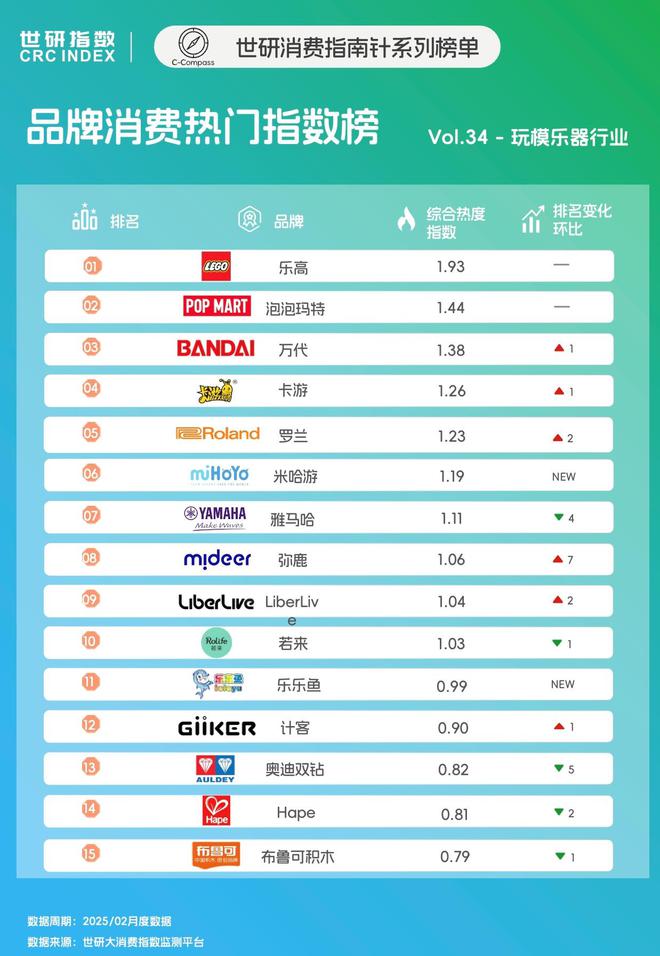
2月玩模乐器品牌TOP榜,IP驱动社交玩法创新|世研消费指数品牌榜
3 6 Ke· 2025-05-13 07:17
Group 1 - The core trend in the industry is driven by IP and social engagement, with leading brands like LEGO, Pop Mart, Bandai, and miHoYo focusing on emotional connections with users through strong IP content and immersive experiences [2] - LEGO maintains the top position with a heat index of 1.93, leveraging classic building blocks combined with popular IPs from films and games, appealing to a wide age range [2] - Pop Mart is expanding its product categories and enhancing its brand experience, as evidenced by the opening of its global flagship store in Shanghai, which has generated significant social media buzz [2] Group 2 - Technology empowerment and scene innovation are key competitive factors, with brands like GİİKER, Ruolai, and Mideer making notable advancements in their respective niches [3] - GİİKER focuses on smart toys and games, introducing products that cater to parents' demands for STEAM education [3] - Mideer has successfully differentiated itself in the puzzle segment by developing products that incorporate Chinese historical stories and cultural themes, enhancing educational value [3]

深度研究报告乘IP东风,拼搭角色玩具龙头蓄势腾飞
Huachuang Securities· 2025-05-13 00:25
Investment Rating - The report gives a "Buy" rating for the company, indicating a positive outlook for investment [9][12]. Core Insights - The company is positioned as the largest player in China and the third largest globally in the building character toy market, with a strong IP matrix and a focus on high-quality, cost-effective products [8][16]. - The building character toy industry is experiencing rapid growth, with a projected CAGR of 41.3% in China from 2023 to 2028, significantly outpacing the overall toy industry growth [8][10]. - The company's revenue is expected to grow significantly, with forecasts of 39.19 billion, 54.97 billion, and 67.44 billion CNY for 2025, 2026, and 2027 respectively, reflecting year-on-year growth rates of 75%, 40%, and 23% [9][12]. Company Overview - The company, originally founded in 2014 as a children's educational technology firm, has transitioned to focus on building toys and character toys, launching its first character toy line in 2022 [16][17]. - The company has developed a robust IP portfolio with over 50 self-owned or licensed IPs, including popular franchises like Ultraman and Transformers [8][16]. Financial Analysis - The company has shown impressive revenue growth, achieving 22.41 billion CNY in 2024, a year-on-year increase of 155.6% [4][29]. - The adjusted net profit is projected to reach 9.95 billion CNY in 2025, with a staggering growth rate of 348% compared to the previous year [4][12]. - The gross margin has been steadily increasing, reaching 52.6% in 2024, driven by the strong performance of character toys [42][43]. Industry Insights - The global toy industry is expected to grow at a CAGR of over 5% from 2023 to 2028, with the character toy segment showing even higher growth potential [8][10]. - The competitive landscape is concentrated, with the company holding a 30.3% market share in China, leading over competitors like Bandai and LEGO [8][10]. Competitive Advantages - The company has established a comprehensive system that integrates product design, research, and production, allowing for efficient and high-quality product offerings [10][11]. - The marketing strategy focuses on content-driven engagement, leveraging social media and influencer partnerships to enhance brand visibility and consumer interaction [3][10].
爱玩游戏的古巨基,20年前就开过“二次元”演唱会?
Hu Xiu· 2025-05-12 08:28
Group 1 - The article discusses the resurgence of interest in a 2005 concert performance by singer 古巨基, particularly a segment featuring the song "任天堂流泪" which has drawn attention from younger audiences due to its unique themes and presentation [1][6][8] - The performance included elements from popular video games and anime, showcasing a blend of music and pop culture that was considered ahead of its time [13][14][36] - The song "任天堂流泪" is part of the album "游戏·基," which was released in 2003 and is notable for its video game-themed content, reflecting 古巨基's personal interests in gaming [16][18][28] Group 2 - The album "游戏·基" marked a significant turning point in 古巨基's career, helping him regain popularity after a period of stagnation in the music industry [19][28] - The production of the album involved notable collaborators, including 雷颂德 as the producer and 林夕 as the primary lyricist, indicating a high level of artistic investment [23][25] - The album's unique concept and its success in the market demonstrate the potential for thematic albums in the music industry, particularly those that resonate with niche interests like gaming [28][36]
小学5元电子垃圾在名创优品联名卖200,傻瓜电子宠物机被买成宇树机器狗的平替?
3 6 Ke· 2025-05-12 08:09
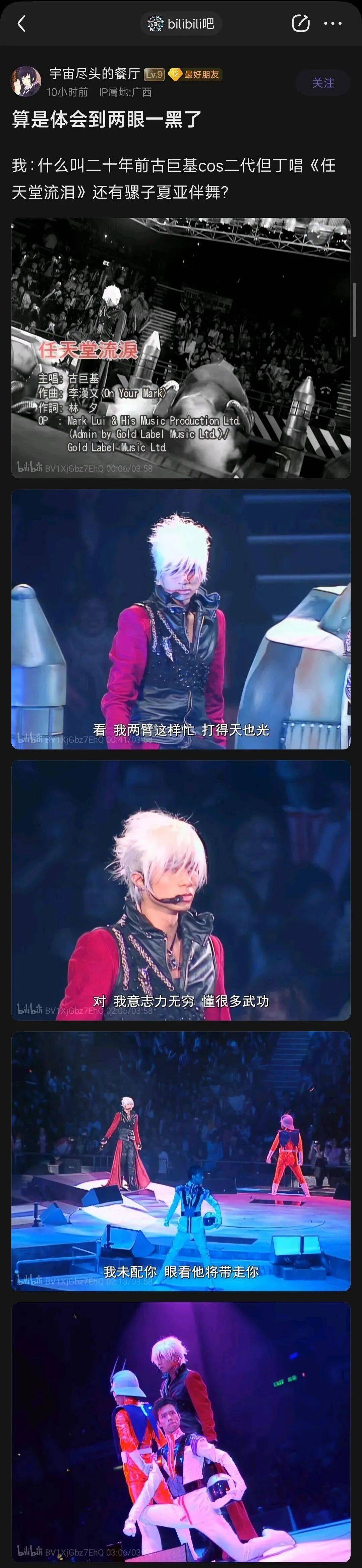
Group 1 - The article discusses the security vulnerability of the Go1 robotic dog from Yushu Technology, which has a backdoor that allows hackers to manipulate user data and access video streams [1][8] - Yushu Technology confirmed the existence of the security flaw but stated that the Go1 model has been discontinued for two years, and subsequent versions are not affected [1][8] - The article highlights the growing concern that robotic pets, initially seen as innovative, may become tools for surveillance due to security issues [3][8] Group 2 - The nostalgia for electronic pets, such as Tamagotchi, is evident as they continue to attract consumers despite their simplicity compared to modern robotic pets [6][8] - Tamagotchi has maintained its market presence through continuous collaborations and has seen a rise in sales, indicating a strong emotional connection with consumers [8][12] - The article notes that the appeal of electronic pets lies in their low maintenance and emotional value, contrasting with the complexities of caring for real pets [17][19] Group 3 - The emergence of AI pets like Moflin and robotic dogs reflects a shift in consumer preferences towards interactive and emotionally engaging companions [28][39] - The article raises questions about the implications of relying on electronic pets for emotional support and the potential impact on human relationships [40][42] - The high cost of AI pets, often exceeding thousands of dollars, limits accessibility for many consumers, raising concerns about the sustainability of this market segment [42][45]
蜂巧资本清仓泡泡玛特:潮玩巨头的“成人礼”与新消费投资逻辑的重塑
Xin Lang Zheng Quan· 2025-05-09 02:37
Core Viewpoint - The exit of Fengqiao Capital from Pop Mart marks a significant shift in the investment landscape, reflecting the harsh realities of the capital cycle in the new consumption sector, as the company transitions from a "high-growth myth" to a "mature valuation reconstruction" phase [1][2] Group 1: Capital Market Reactions - Fengqiao Capital's complete exit involved three block trades, cashing out a total of HKD 22.64 billion (approximately RMB 21.09 billion), coinciding with Pop Mart's stock price reaching an all-time high [1] - Following the news, Pop Mart's stock price dropped over 8% within two days, raising concerns about potential valuation bubbles [2] - Despite the drop, institutions like Morgan Stanley and Citigroup remain optimistic, with Morgan Stanley raising its target price to HKD 220, indicating that the company's fundamentals are not significantly impacted [2] Group 2: Investment Trends and Patterns - The exit of Fengqiao Capital is part of a broader trend where early investors gradually withdraw as companies mature, with over HKD 20 billion in reductions noted from various shareholders since 2024 [2] - This trend highlights the cyclical nature of capital in the new consumption sector, where funds are redirected towards earlier-stage projects with higher growth potential [2] Group 3: Company Performance and Strategy - Pop Mart reported a staggering revenue increase of 165%-170% year-on-year for Q1 2025, with overseas market growth reaching 475%-480% and the Americas showing an impressive 895%-900% increase [3][4] - The company is diversifying its revenue streams, with non-blind box product revenue rising to 46.8%, and significant growth in plush toys and MEGA collectible lines [3] - To support its global expansion, Pop Mart has implemented a major organizational restructuring, establishing four regional headquarters and enhancing local operations [4] Group 4: Market Challenges and Future Outlook - Despite strong Q1 performance, there are concerns about the sustainability of such high growth rates, particularly in the Americas, where growth may be influenced by low base effects [5] - The domestic collectible toy market is becoming increasingly competitive, with rivals employing aggressive pricing strategies, while international markets face challenges from established players [5] - Current market dynamics suggest that Pop Mart's price-to-earnings ratio of approximately 66 times is significantly above the industry average, necessitating continued proof of its IP monetization capabilities and global profitability potential to maintain high valuations [6]
从短期爆发到生态常青:对IP商品化可以更乐观些
2025-04-15 00:58
Summary of the Conference Call on the Japanese IP Toy Industry Industry Overview - The Japanese IP toy industry is primarily dominated by Bandai and Tomy, with a rich history and significant market presence. Bandai specializes in character-based toys, achieving annual sales of 20 million to 30 million units, with peak sales of 60 million units for its second-generation products. Tomy is known for its original toys, such as vehicles and dolls [3][3]. Key Points and Arguments - **Market Challenges and Consolidation**: The industry faced challenges in the late 1990s due to demographic and economic downturns, leading to a significant consolidation in 2005-2006, resulting in the formation of Bandai and Tomy. Bandai integrated its supply chain through the acquisition of Bandai Namco, while Tomy expanded its product line [3][5]. - **Bandai's Competitive Advantage**: Bandai's core competitive advantage lies in maximizing IP value through close collaboration with Toei Animation, monopolizing the Japanese boys' toy market. Their strategy includes diversifying revenue streams across toys, mobile games, and PC games [3][6]. - **Gundam's Revenue Structure**: Gundam, as Bandai's most profitable IP, shows a balanced revenue contribution from both games and toys, indicating long-term growth potential for mech-building products. Bandai enhances operational efficiency through copyright acquisitions and rapid product design approvals [3][7]. - **Tomy's Recent Developments**: Tomy faced difficulties pre-pandemic due to a lack of localized IP resources, relying heavily on American collaborations. Post-pandemic, Tomy leveraged the global toy market's beta effect, transitioning to online marketing and expanding into adult entertainment products [3][9]. - **Sanrio's Business Model**: Sanrio exhibits cyclical development, with significant profit growth through IP licensing, particularly in the Chinese market, where partnerships with Alibaba Sports have yielded profit margins exceeding 40% [3][12]. - **Valuation Trends**: The valuations of Bandai, Tomy, and Sanrio differ significantly. Pre-pandemic, Tomy and Bandai were valued at 15-20 times earnings, while Sanrio maintained around 20 times. Post-pandemic, Sanrio's valuation surged to 50 times due to successful global licensing and a focus on adult consumer trends [3][13]. Additional Important Insights - **Potential in China's IP Toy Market**: The potential for China's IP toy market is substantial, with the children's market estimated to be over three times that of Japan. The overall market for all ages also shows similar growth potential [3][18]. - **Investment Opportunities**: Notable companies to watch in the investment landscape include Brook (leading in building toys), Kayo (card game leader), TOP TOY (rapid revenue growth), and Guangbo (capitalizing on the two-dimensional IP economy) [3][19][20]. - **Global Card Game Market Trends**: The global card game market has seen a resurgence post-pandemic, driven by increased demand for collectible cards, revealing significant potential in the domestic IP commercialization market [3][14][15].
从像素到体温,电子宠物如何制造情感羁绊?
红杉汇· 2025-04-09 15:22
Core Viewpoint - The article discusses the evolution of electronic pets, highlighting their transition from simple virtual interactions to advanced AI-driven companions that provide emotional support and personalized experiences [2][12]. Group 1: Historical Development - Electronic pets gained popularity in the late 1990s, starting with the launch of Tamagotchi in 1996, which required users to care for a virtual pet to keep it healthy and happy [4][6]. - The introduction of Digimon in 1997 added a competitive element to electronic pets, allowing users to train and battle their digital creatures, thus broadening the appeal [6][8]. - Subsequent advancements included touch screens and voice recognition, exemplified by Nintendo's Nintendogs in 2005, which allowed for more interactive and personalized pet care experiences [8][9]. Group 2: Technological Advancements - The early 2000s saw attempts to incorporate sensors and basic AI into electronic pets, with Sony's AIBO being a notable example, featuring voice recognition and the ability to learn from user interactions [12][14]. - By 2017, AIBO was reintroduced with enhanced emotional expression and personalized interaction capabilities, showcasing the potential for high-end robotic pets [16][19]. - Recent developments have led to AI pets like Vector and LOVOT, which utilize advanced AI to understand user behavior and provide emotional responses, marking a shift towards deeper companionship [17][19]. Group 3: Market Trends and Consumer Demand - The AI pet robot market has experienced explosive growth, with products that combine aesthetic appeal and intelligent interaction becoming increasingly popular [21][23]. - Modern electronic pets offer the advantage of low maintenance compared to real pets, while also providing emotional support through AI-driven interactions [21][25]. - The pricing of AI pets varies significantly based on technology used, with high-end models potentially costing thousands of dollars, indicating a market for both luxury and accessible options [25][26].
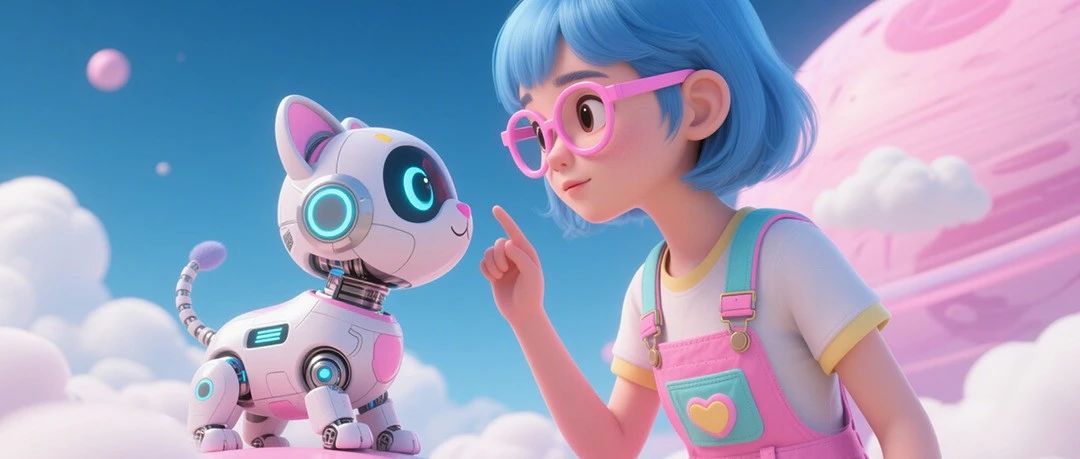
陪伴我88天后,我终于能来聊聊这个3000块买的AI宠物了。
创业邦· 2025-04-07 03:16
Core Viewpoint - The article discusses the rise of AI pets, particularly Moflin, and how they serve as a response to increasing loneliness in modern society, especially in Japan, where cultural and economic factors have led to a significant decline in social interactions and companionship [24][30][39]. Group 1: Product Overview - Moflin is an AI pet developed by Casio, initially sold out upon release, with prices reaching around 3000 RMB [5][29]. - The AI pet interacts through sounds and movements, responding to touch and environmental noises, but lacks advanced communication capabilities [12][15]. - An accompanying app, MofLife, tracks the pet's personality development based on user interactions, creating a sense of companionship [17][19]. Group 2: Cultural Context - The article draws parallels between Moflin and earlier electronic pets like Tamagotchi, highlighting a historical trend in Japan of creating companionship products during times of social isolation [26][30]. - Japan's economic stagnation since the late 1980s has contributed to a culture of loneliness, with a significant decline in birth rates and an increase in "lonely deaths" [31][35]. - The phenomenon of renting friends or companions in Japan reflects the deep-seated need for social interaction, even if it is transactional [36]. Group 3: Emotional Resonance - Moflin, despite its limitations, provides emotional comfort and a sense of presence, fulfilling a psychological need for companionship in an increasingly isolated world [39]. - The article emphasizes that the need for companionship is not about having a functional pet but rather about receiving emotional responses, which Moflin provides in a unique way [41].

海外巨头增长受阻,凭什么中国潮玩公司能出海?
创业邦· 2025-04-02 03:09
以下文章来源于娱乐资本论 ,作者娱子酱团队 娱乐资本论 . 娱乐资本论隶属于界面财联社(上海报业集团主管主办),持有新闻牌照,是北京市文化产业投融资协 会会员单位,并与中国网络视听大会、北京国际电影节、上海国际电影节等行业大会展开了长期、深度 的合作,致力于独家报道,是泛文娱行业第一媒体。 近日,港股的几只兴趣消费"当红炸子鸡"泡泡玛特、名创优品、布鲁可陆续发布2024年财报。2024年, 三家公司分别实现130.38亿元/169.94亿元/22.41亿元的营业收入,同比增长106.9%/22.76%/155.53%,传递 出兴趣消费市场的巨大潜力。 2025年,兴趣消费市场何去何从?小娱详细分析了三家企业的2024年年报,发现这个高速增长、高速变 化的行业已经穿上了无法停下的"红舞鞋":从资本市场的角度,一旦各个指标的增长反映出压力,新消 费的故事便会失去吸引力;从品牌的角度,爆款出现的节奏一旦停滞,品牌或将很快被消费者遗忘。 由此,兴趣消费品牌从国内卷到海外,但小娱通过研究海外兴趣消费巨头美泰、孩之宝 和Funko等财报发 现:海外市场,特别是欧美市场,同样存在明显的瓶颈乃至负增长。国产兴趣消费品牌在全球 ...