北方华创

Search documents
海外存储巨头业绩爆表,半导体设备ETF(561980)高开领涨,国产替代逻辑再强化!
Sou Hu Cai Jing· 2026-02-13 02:40
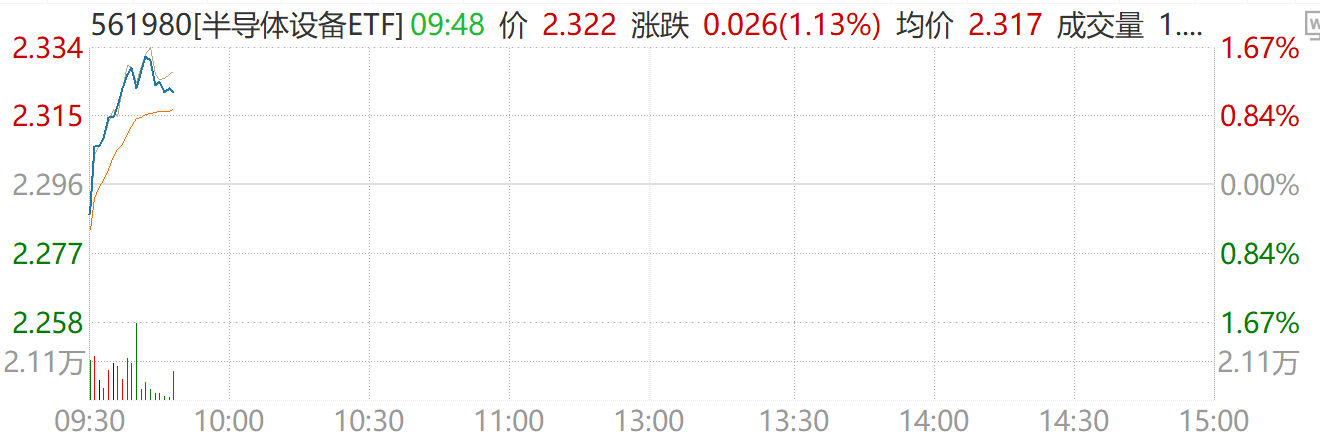
Core Viewpoint - The semiconductor equipment and materials sectors are experiencing significant market gains driven by both supply-demand dynamics and an upward economic cycle, with a notable performance from the semiconductor equipment ETF (561980) [1][3]. Group 1: Market Performance - The semiconductor equipment ETF (561980) opened over 1% higher and rose by 1.26% to a latest scale of 3.515 billion yuan, with net inflows of funds on the previous trading day [1]. - Key stocks in the sector, such as Rich Technology and Tuojing Technology, saw gains exceeding 5% and 4% respectively, while other companies like Chipone, Northern Huachuang, and Huafeng Measurement Control also experienced increases [1]. Group 2: Catalysts for Growth - The strong performance in the equipment and materials sectors is primarily attributed to overseas storage companies reporting high growth and the positive impact of the South Korean semiconductor market reaching new highs [3]. - Kioxia, a major global storage chip manufacturer, reported a significant increase in its annual revenue and net profit targets, exceeding analyst expectations by approximately 35% to 60%, driven by robust demand for high-performance storage products from AI servers and the high-end smartphone market [3]. Group 3: Industry Trends - The semiconductor industry is witnessing a price surge in storage chips from 2025 to 2026, which is expected to enhance the profitability of chip design companies and wafer manufacturers, thereby increasing their willingness to expand production and capital expenditures [5]. - The semiconductor equipment ETF (561980) tracks the CSI Semiconductor Industry Index, with over 90% weight in upstream sectors, and the top ten constituent stocks accounting for about 75% [5]. Group 4: Sales Data and Localization - According to SIA, global semiconductor sales are projected to reach $78.88 billion by December 2025, reflecting a year-on-year growth of 37.1% and a quarter-on-quarter increase of 2.7%, marking 26 consecutive months of positive year-on-year growth [8]. - China's semiconductor sales are expected to reach $21.29 billion, with a year-on-year growth of 34.1% and a quarter-on-quarter growth of 3.8%, indicating an overall upward cycle [8]. - The domestic semiconductor equipment industry in China is transitioning from "catching up" to "keeping pace," with a projected increase in localization rates for wafer manufacturing equipment from 25% in 2024 to 30% by 2026 [8].

科技厂商年报业绩预告陆续披露,AI驱动业绩增长
Zhong Guo Neng Yuan Wang· 2026-02-13 02:24
Market Review - The Shanghai Composite Index closed at 4065.58 points, with a weekly decline of -1.27% [1] - The Shenzhen Component Index closed at 13906.73 points, with a weekly decline of -2.11% [1] - The ChiNext Index closed at 3236.46 points, with a weekly decline of -3.28% [1] - The CSI 300 Index closed at 4643.6 points, with a weekly decline of -1.33% [1] - The CSI Artificial Intelligence Index closed at 2321.75 points, with a weekly decline of -9.76%, consistent with the overall market trend [1] Technology Industry Insights - As of February 8, technology companies are intensively disclosing their 2025 annual performance forecasts, with positive operating conditions expected in sectors such as storage, PCB, PCB equipment, and optical modules [2] - Major PCB manufacturers are expected to achieve positive profit growth, with Shenghong Technology's net profit projected to increase by 260%-295% to between 4.16 billion and 4.56 billion yuan, driven by advancements in high-end markets and increased R&D investment [2] - Storage companies are also expected to see significant profit increases, with Baiwei Storage's net profit growth forecasted at 427%-520%, supported by stabilizing storage prices and improving operational performance starting in Q2 2025 [3] PCB Equipment Sector - Key PCB equipment companies are expected to achieve positive profit growth in 2025, with Dazhu CNC's net profit projected to increase by 161%-194%, driven by rising demand for high-layer boards and high-layer HDI boards due to investments in AI computing infrastructure [6] - Chip Microelectronics is expected to see a net profit of 280 million to 300 million yuan, with a year-on-year growth of 71%-84%, attributed to breakthroughs in high-end PCB and semiconductor fields [6] Investment Recommendations - Short-term pullbacks present opportunities for low-cost investments in sectors such as PCB, ODM, AIOT, and AIDC [7] - Recommended companies in the PCB sector include Shenghong Technology, Dongshan Precision, and Shougang Electric [7] - In the PCB equipment sector, recommended companies include Chip Microelectronics and Dazhu CNC [7] - In the storage sector, recommended companies include Zhaoyi Innovation and Baiwei Storage, benefiting from supply-demand dynamics driving price increases [7] - Companies in the semiconductor sector benefiting from trade barriers and domestic production acceleration include Xinyuan Technology and Aojie Technology [8]
春节档大模型“超级周”来临,半导体设备ETF(159516)强势吸金
Mei Ri Jing Ji Xin Wen· 2026-02-13 02:18
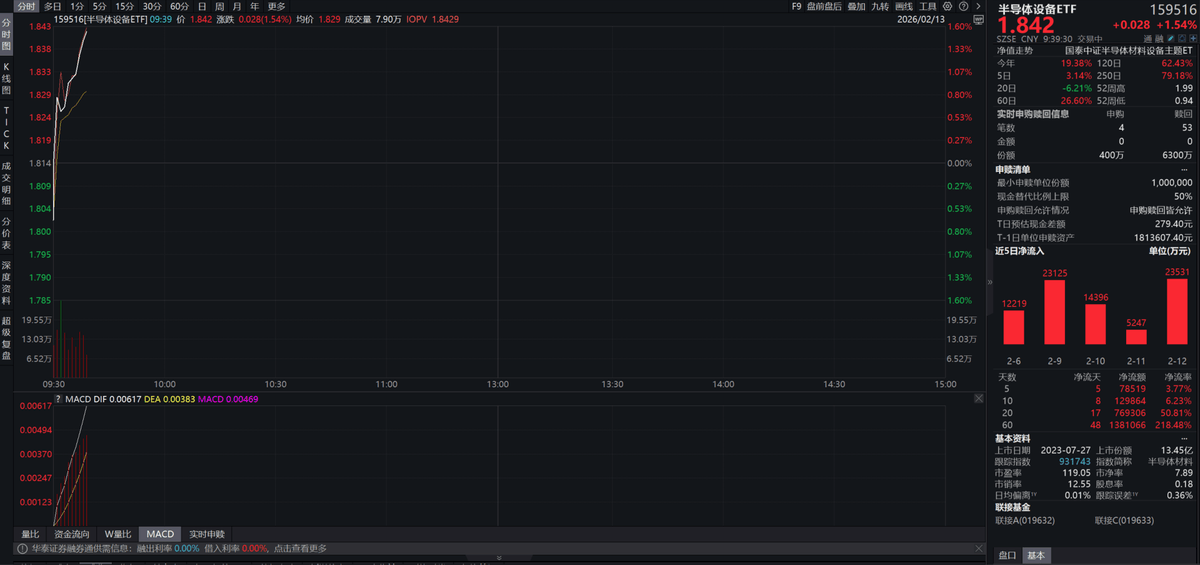
Core Insights - The Chinese AI industry is experiencing a significant shift from "single-point breakthroughs" to "systematic iterations," as multiple domestic model manufacturers release flagship models simultaneously, enhancing market confidence in AI commercialization [1][3][4]. Group 1: Industry Developments - Major Chinese AI companies, including ByteDance, Zhipu, DeepSeek, and MiniMax, have launched new flagship models across various domains such as video generation, image generation, and programming, marking a collective advancement in the industry [1][3]. - Morgan Stanley has termed this phenomenon as the "Spring Festival release cycle," indicating that the simultaneous updates from multiple companies will accelerate market comparisons and shift market share towards the best performers [3][4]. Group 2: Market Dynamics - The perception of domestic large models has evolved from being "followers" to being competitive with global leaders in areas like coding and context handling, leading to increased willingness to pay and higher API workload retention rates [4]. - The marketing battle among AI applications during the Spring Festival has led to a surge in user engagement, validating the potential for explosive consumer traffic and creating a non-linear growth trajectory for inference computing demand [5][6]. Group 3: Long-term Trends - The AI investment narrative is shifting from "training-driven" to "inference-driven," with inference demand expected to become the main engine for computing growth starting in 2026, significantly expanding the market space compared to training [10][19]. - The supply side is undergoing generational upgrades, particularly in optical modules, with a projected demand increase of over tenfold for 1.6T optical modules by 2026 [12][19]. Group 4: Competitive Landscape - The commoditization of large models is leading to a redistribution of power in the platform layer, where differentiation is increasingly based on marketing capabilities, workflow ownership, and product iteration speed rather than just model strength [14][19]. - The semiconductor equipment sector is now closely tied to global AI computing cycles, with increased capital expenditures from overseas storage leaders driving expectations for domestic equipment companies [15][19]. Group 5: Investment Opportunities - The semiconductor equipment ETF (159516) is highlighted as a core investment vehicle, providing exposure to leading companies in the semiconductor equipment and materials sectors, with a current scale exceeding 20 billion [16][19].
存储巨头业绩指引远超预期,半导体设备ETF(561980)早盘高开领涨市场!
Sou Hu Cai Jing· 2026-02-13 02:10
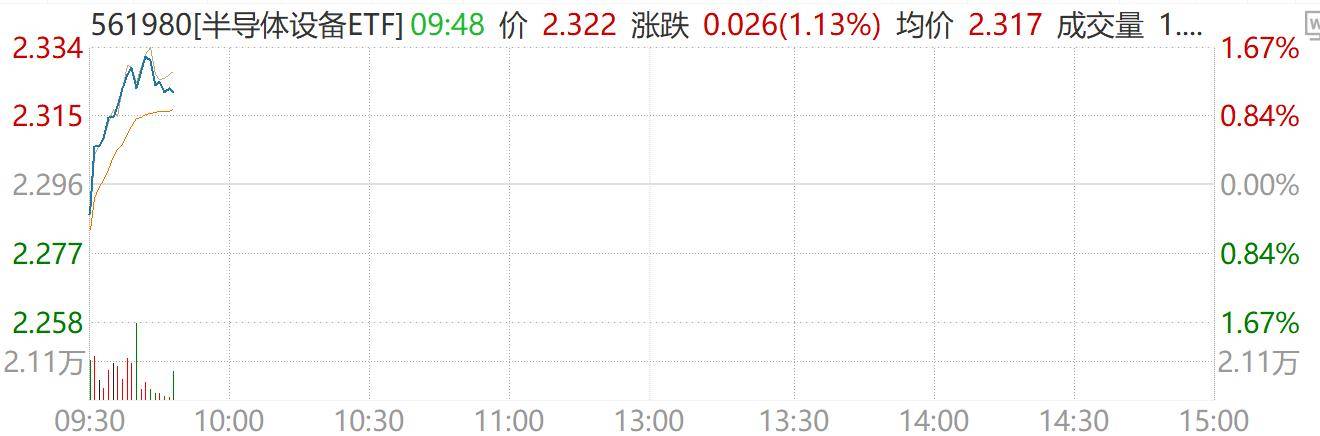
Group 1 - The semiconductor equipment and materials sectors are leading the market due to dual drivers of supply-demand dynamics and an upward economic cycle, with the semiconductor equipment ETF (561980) rising by 1.26% to a scale of 3.515 billion yuan [1] - Kioxia, a global storage chip giant, reported a significant increase in its fiscal year 2025 third-quarter results, with annual revenue and net profit targets exceeding analyst expectations by approximately 35% to 60%, driven by strong demand for high-performance storage products from AI servers and the high-end smartphone market [3] - The semiconductor equipment ETF (561980) tracks the CSI Semiconductor Industry Index, with over 90% weight in upstream sectors of equipment, materials, and design, and the top ten constituent stocks accounting for about 75% [5] Group 2 - Global semiconductor sales are projected to reach $788.8 billion in December 2025, reflecting a year-on-year growth of 37.1% and a quarter-on-quarter increase of 2.7%, marking 26 consecutive months of positive year-on-year growth [8] - The domestic semiconductor equipment industry in China is transitioning from "catching up" to "keeping pace," with a forecasted increase in the localization rate of wafer manufacturing equipment from 25% in 2024 to 30% by 2026 [8] - Hefei Changxin is expected to release its prospectus by the end of 2025, with anticipated high year-on-year growth in production expansion by 2026, indicating potential investment opportunities in semiconductor equipment [8]
SW电子基金持续关注AI算力与自主可控,配置趋向多元化
Zhong Guo Neng Yuan Wang· 2026-02-13 01:29
万联证券近日发布电子行业跟踪报告:SW电子2025Q4基金重仓及超配比例同比上升,环比有所下滑。 适配比例方面,SW电子行业2025年Q4适配比例为11.90%,环比-0.52pct,同比+3.05pct;基金重仓比例 方面,SW电子行业2025年Q4基金重仓比例为20.22%,环比-1.92pct,同比+3.28pct;超配比例方面, SW电子行业2025年Q4基金重仓超配比例为8.32%,环比-1.39pct,同比+0.23pct。SW电子2025Q4基金重 仓及超配比例环比下滑,但仍处于近年较高水平。 以下为研究报告摘要: 行业核心观点: 2025年Q4基金机构重点关注AI算力、半导体自主可控:按持股市值来看,SW电子行业2025年Q4基金重 仓的前十个股分别为寒武纪、海光信息、中芯国际、立讯精密(002475)、中微公司、澜起科技、北方 华创(002371)、东山精密(002384)、工业富联(601138)和兆易创新(603986)。从机构关注方向 来看,1)聚焦AI算力与存力,寒武纪为国产AI芯片龙头厂商之一,东山精密为PCB和光模块龙头厂商 之一,生益科技(600183)为PCB上游覆铜板龙头厂 ...
2026年电子行业投资策略报告:算力帆劲扬,智潮浪奔涌
Wanlian Securities· 2026-02-13 00:24
Investment Rating - The report maintains an "Outperform" rating for the electronic industry, indicating a positive outlook for 2026 [5]. Core Insights - The electronic industry is expected to outperform the CSI 300 index in 2025, with a valuation slightly above historical averages. The first three quarters of 2025 show improved performance and profitability. The report suggests focusing on investment opportunities in AI computing infrastructure and terminal innovation for 2026 [2][3]. Summary by Sections 1. Market Performance and Overview - The electronic industry achieved a 47.88% increase in 2025, outperforming the CSI 300 index by 30.21 percentage points [15]. - The industry's revenue for the first three quarters of 2025 reached CNY 29,756.92 billion, a year-on-year increase of 19.46%, with a net profit of CNY 1,477.90 billion, up 37.79% [20][23]. 2. AI Computing Infrastructure - The demand for AI computing hardware is robust, particularly in the PCB and storage sectors. The PCB industry is expected to benefit from increased capital expenditure and demand for high-end products like HDI and multi-layer boards [3][43]. - The storage chip market is entering a new growth cycle driven by AI, with major players adjusting production to optimize supply and demand dynamics, leading to price increases [3][43]. 3. Terminal Innovation - AI-enabled smartphones and PCs are projected to see increased market penetration, with significant growth potential in AI mobile devices and AIPC [4][43]. - AI glasses are expected to contribute to market growth, with a steady increase in shipments and a fully covered supply chain in China [4][43]. 4. Investment Recommendations - The report recommends focusing on companies in the storage and PCB sectors that are well-positioned to benefit from the ongoing AI wave and capital expenditure increases. It also highlights the potential of leading manufacturers in AI mobile devices and AI glasses [8][43].
平均两天换一个“老板”!上市公司控股权变更潮涌
证券时报· 2026-02-12 12:55
Core Viewpoint - The article highlights a significant trend in the A-share market, where there has been a surge in control changes among listed companies, reflecting increased market activity and strategic repositioning by various stakeholders [2][12]. Group 1: Control Changes in Listed Companies - Since 2025, at least 150 listed companies have announced plans for control changes, averaging one company every two days [2][3]. - As of 2026, over 60 companies have reported progress on control changes, indicating a continuation of this trend [2]. - The majority of control changes are occurring in traditional industries such as chemicals, textiles, and consumer goods, with acquirers including individuals, state-owned enterprises, and investment firms [2][5]. Group 2: Industry Distribution of Control Changes - The distribution of control changes shows that traditional industries dominate, with 12.77% of changes in the oil and petrochemical sector, and significant activity in environmental services, construction, and light manufacturing [5][7]. - Other sectors like agriculture, textiles, and real estate also show notable percentages of control changes, indicating a broad impact across various industries [5][7]. Group 3: Market Capitalization of Companies Involved - A significant portion of companies undergoing control changes are small-cap firms, with 169 companies having a market capitalization below 10 billion yuan, accounting for nearly 80% of the total [8][9]. - Companies with a market cap below 5 billion yuan represent 47.44%, while those between 5 billion and 10 billion yuan make up 31.16% [9][10]. Group 4: Motivations Behind Control Changes - The motivations for these control changes include financial distress among original controlling shareholders, strategic shifts in traditional industries, and pressures from debt [12][14]. - The trend is also driven by the need for new capital and resources to enhance company governance and operational efficiency [11][12]. Group 5: Types of Acquirers - The acquirers in these control changes are primarily state-owned enterprises, industrial capital, and limited partnership firms, with state-owned entities frequently taking over to optimize industrial layouts and stabilize the market [14]. - Industrial capital is also a significant player, often seeking to enhance synergies and expand into new business areas [14].



95亩!这家集成电路企业上海摘地
Xin Lang Cai Jing· 2026-02-12 12:13
Group 1 - Shanghai Jiading District has sold its second industrial land plot of the year, covering an area of 63,105.43 square meters (approximately 95 acres) for a price of 94.66 million yuan [2][11] - The land is designated for industrial use with a plot ratio of 2.0 and a lease term of 50 years, requiring a total fixed investment of no less than 1.2 billion yuan [4][14] - The winning bidder, Shanghai Integrated Circuit Equipment and Materials Industry Innovation Center Co., Ltd., was established in 2020 with a registered capital of 11.5 billion yuan, focusing on technology research and industrialization in the integrated circuit sector [6][16] Group 2 - The land is strategically located in a key area for the integrated circuit industry, with nearby connections to major roads and existing semiconductor companies [7][17] - Recent government initiatives in Shanghai have highlighted the importance of emerging technologies such as brain-machine interfaces and fourth-generation semiconductors, which are included in the city's future industrial development plans [8][17] - The integrated circuit industry in Shanghai is experiencing significant growth, with revenue expected to exceed 460 billion yuan in 2025, marking a year-on-year increase of 23.72% [8][18]

行业跟踪 SW电子基金持续关注AI算力与自主可控,配置趋向多元化
Xin Lang Cai Jing· 2026-02-12 12:12
Industry Core Viewpoints - SW Electronics' fund heavy positions and overweight ratios increased year-on-year but decreased quarter-on-quarter for Q4 2025. The adaptation ratio is 11.90%, down 0.52 percentage points quarter-on-quarter but up 3.05 percentage points year-on-year. The fund heavy position ratio is 20.22%, down 1.92 percentage points quarter-on-quarter but up 3.28 percentage points year-on-year. The overweight ratio is 8.32%, down 1.39 percentage points quarter-on-quarter but up 0.23 percentage points year-on-year. Despite the quarter-on-quarter decline, these ratios remain at relatively high levels historically [1][4]. Investment Highlights - In Q4 2025, fund institutions are focusing on AI computing power and semiconductor self-sufficiency. The top ten stocks by market value in the SW Electronics sector include Cambricon, Haiguang Information, SMIC, Luxshare Precision, Zhongwei Company, Lanke Technology, Northern Huachuang, Dongshan Precision, Industrial Fulian, and Zhaoyi Innovation. The focus areas include: 1) AI computing and storage, with key players benefiting from the acceleration of AI infrastructure; 2) Semiconductor self-sufficiency, with domestic equipment and material suppliers gaining from the trend of local wafer fabs adopting domestic technologies [6][8]. Subsector Analysis - In Q4 2025, the semiconductor and components sectors are in an overweight position, with ratios of 7.74% and 1.75%, respectively. The semiconductor sector saw a quarter-on-quarter decline of 0.76 percentage points but remains a key focus for institutions. The components sector increased by 0.10 percentage points. Other sectors are underweight, with consumer electronics shifting from overweight to underweight, now at 0.45%, down 0.92 percentage points quarter-on-quarter. The underweight ratios for optical optoelectronics and electronic chemicals have narrowed [2][7]. Fund Concentration Trends - The concentration of the top five fund heavy positions in the SW Electronics sector has been declining quarter-on-quarter, indicating a trend towards diversification. The market value of the top five stocks accounts for 35.52% of the total fund heavy positions in the sector, down 0.84 percentage points quarter-on-quarter. This trend has been observed since Q4 2024 [7]. Investment Recommendations - Based on fund heavy position preferences, AI computing infrastructure and semiconductor self-sufficiency are key areas of focus. 1) AI computing and storage are expected to drive performance improvements in related industries, suggesting a focus on high-growth segments within the computing supply chain. 2) The domestic semiconductor market is likely to see increased market share for local manufacturers as wafer fabs adopt domestic equipment and materials, presenting investment opportunities in this area [3][8].
江丰电子,买下石英第一股!
Xin Lang Cai Jing· 2026-02-12 11:41
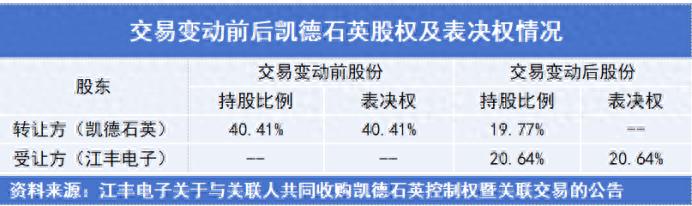
Core Viewpoint - The rising prices of NAND flash memory, driven by major suppliers like Samsung, SK Hynix, and Micron, are creating significant opportunities for companies like Jiangfeng Electronics, which is strategically acquiring stakes in key players like Kaide Quartz to enhance its market position and product offerings [1][4]. Group 1: Market Dynamics - In Q1 2026, Samsung Electronics raised NAND flash memory prices by over 100% [1]. - Major storage manufacturers are tightening pricing control through shorter contract terms and "post-settlement" clauses, which require customers to pay additional fees if market prices rise after delivery [1]. - Jiangfeng Electronics is positioned within the supply chains of SK Hynix, TSMC, and SMIC, indicating its strategic importance in the semiconductor industry [1]. Group 2: Jiangfeng Electronics' Strategic Moves - Jiangfeng Electronics announced plans to acquire a 20.64% stake in Kaide Quartz for 591 million yuan, aiming to gain control over the company [1][2]. - The company reported a 48.08% year-on-year increase in long-term equity investments, reaching 437 million yuan, with investment income hitting a historical high of 68 million yuan, a staggering increase of 157.15 times [2][4]. - Jiangfeng's revenue forecast for 2025 is between 4.31 billion and 5.11 billion yuan, reflecting a year-on-year growth of 7.5% to 27.5% [2]. Group 3: Business Growth and Product Synergy - Jiangfeng's core business focuses on ultra-pure metal sputtering targets, essential for manufacturing storage chips, contributing over 64% of its revenue [6][4]. - The company has achieved a stable supply of high-purity 300mm silicon targets, with a year-on-year profit increase of 36.11% and a gross margin improvement of approximately 3 percentage points to 33.26% [7]. - Jiangfeng's order backlog for ultra-pure target materials reached 1.387 billion yuan, accounting for 59.45% of the expected revenue for 2024 [9]. Group 4: Acquisition Rationale and Future Prospects - The acquisition of Kaide Quartz is seen as a strategic move to enhance Jiangfeng's capabilities in semiconductor precision components, which are critical in semiconductor manufacturing [9][12]. - Kaide Quartz's products are highly aligned with Jiangfeng's business, as they focus on quartz products used in semiconductor integrated circuits, with 95.15% of Kaide's revenue coming from this sector [12][14]. - The timing of the acquisition coincides with Kaide Quartz's capacity expansion, which will reduce Jiangfeng's capital investment post-acquisition [14][16]. Group 5: Future Investment Plans - Jiangfeng Electronics plans to raise 1.928 billion yuan through a private placement, with approximately 1 billion yuan allocated for semiconductor component projects [19][20]. - The company aims to capitalize on the high-profit potential of static suction cups, which currently have a low domestic production rate of less than 10% [20][21]. - Jiangfeng has already secured over 50 million yuan in orders for its independently developed static suction cups, indicating strong market demand [21].