新石器

Search documents
汽车行业2026年年度策略报告:高端化+出口驱动总量,智驾+机器人带动产业升级-20251129
CAITONG SECURITIES· 2025-11-29 08:02
Group 1 - The overall demand for passenger vehicles is expected to remain stable, with incremental growth driven by high-end market expansion and exports [3][6][35] - The penetration rate of new energy vehicles (NEVs) is stabilizing, with domestic market competition gradually reaching a steady state [23][35] - The average price of passenger vehicles is anticipated to increase, particularly in the mid-to-high-end market, as domestic brands continue to replace foreign brands [6][35] Group 2 - The heavy truck market faces pressure domestically, but exports are expected to recover as the pressure on sales to Russia eases [46][50] - The export of medium and large buses is projected to maintain rapid growth, with profitability largely dependent on the European market [55] - The rapid growth of AI data centers is expected to create additional demand in the diesel engine sector [3][46] Group 3 - The smart driving sector is entering a new phase of resonance between China and the US, with advancements in L2 and L3 driving standards expected [58][63] - The Robotaxi market in the US is anticipated to experience explosive growth, driven by companies like Tesla and Waymo [72][75] - The integration of robotics into the automotive supply chain is becoming increasingly significant, with automotive suppliers likely to extend their capabilities into the robotics sector [87][90] Group 4 - Recommended stocks in the passenger vehicle sector include Jianghuai Automobile, BYD, and BAIC Blue Valley, with a focus on high-end vehicles and exports [4][94] - In the robotics sector, recommended stocks include Top Group, Yinlun, and BlueDye Technology, with a focus on companies capable of transitioning into robotics [4][94] - For smart driving, recommended stocks include Bertel, Horizon, and Pony.ai, focusing on the growth of L2 driving technology and Robotaxi commercialization [4][94]




“无人物流车”第一股即将诞生,但依然难过上路关
3 6 Ke· 2025-11-28 08:03
Core Insights - The article discusses the rapid growth and challenges in the unmanned logistics vehicle sector, highlighting significant investments exceeding 8 billion yuan and the industry's response to public sentiment amid controversies surrounding technology and safety [2][6][18]. Investment and Market Growth - The unmanned logistics vehicle sector has seen unprecedented funding, with over 8 billion yuan disclosed in investments as of now [2][6]. - Major funding rounds include 1 billion USD for Jiusi Intelligent and over 600 million USD for New Stone Technology, marking significant transactions in China's private equity landscape [2][6]. - The market is projected to reach 263.4 billion yuan by 2030, a 5.4-fold increase from 2025 [8][11]. Technological Advancements and Cost Reduction - The cost of unmanned logistics vehicles has drastically decreased from over 1 million yuan in 2018 to as low as 20,000 yuan in 2023, driven by domestic production of key components [10][11]. - The industry is transitioning from a "sell vehicles" model to a "software subscription" model, enhancing revenue potential through ongoing service fees [12][13]. Industry Dynamics and Competition - A price war has emerged among companies, with aggressive pricing strategies being employed to capture market share [12][13]. - Companies like Jiusi Intelligent and New Stone Technology are competing on price and financing options, with Jiusi offering vehicles at 1.98 million yuan and New Stone providing zero down payment plans [12][13]. Regulatory and Safety Concerns - Despite the rapid growth, there are significant concerns regarding the safety and reliability of unmanned logistics vehicles, highlighted by several accidents and public skepticism [14][15][18]. - The lack of uniform road rights across cities poses a challenge for widespread deployment, with companies like New Stone Technology actively working to secure necessary permits [16][18]. Future Outlook - The industry is expected to evolve, with projections indicating that unmanned logistics vehicles could replace traditional delivery vehicles, achieving a penetration rate of nearly 15% by 2030 [17][18]. - The ongoing competition and regulatory hurdles will shape the future landscape of the unmanned logistics vehicle market, as companies strive to balance innovation with public trust [18][20].


国泰海通:维持速腾聚创(02498)“增持”评级 泛机器人及泛Robo市场拓展多点开花
智通财经网· 2025-11-26 06:46
Core Viewpoint - The report from Guotai Junan Securities maintains an "overweight" rating for SUTENG JUCHUANG (02498), raising the target price to HKD 43.36, highlighting the company's active exploration in the pan-robotics and Robotaxi, Robovan market applications, with impressive order progress and strong performance in the third quarter [1] Group 1 - The EM platform has successfully expanded the customer base for passenger car lidar applications, with recent significant contracts from a major new energy vehicle company and a leading global SUV and pickup manufacturer [1] - The company has secured a three-year exclusive contract for a new pure electric model from Japan's largest automaker and a Chinese joint venture brand [1] Group 2 - The Robotaxi business is expected to see a trend of multiple lidar applications per vehicle, with a recent partnership with Didi to provide an EM4+E1 solution featuring ten lidar units for all-weather operational capabilities [2] - The company has delivered 35,500 lidar units in the third quarter for the pan-robotics sector, marking a significant year-on-year increase [2] - SUTENG JUCHUANG has become the preferred perception solution for several unmanned delivery developers, including JD.com, Meituan, and others [2] - New products such as Fairy and AC2 have been launched, with Fairy being a high-precision mid-to-long-range lidar and AC2 integrating multiple sensing technologies, expanding the company's market into robotics and consumer sectors [2]

国泰海通:物流无人车从快递起步 未来重点在渠道运营能力
智通财经网· 2025-11-25 09:00
Core Insights - The logistics unmanned vehicle market is transitioning from early-stage applications in express delivery to a broader urban delivery market, including fast-moving consumer goods, cross-regional e-commerce, and local fresh produce, successfully overcoming the scale delivery threshold [1][3] - The commercial model for single vehicles has been validated, leading the industry into a phase of scale expansion, with a focus on channel operation capabilities to develop customer and scenario outreach, as well as market capacity and road rights [1][5] Group 1 - Unmanned delivery vehicles are expected to achieve commercial viability first in cargo and low-speed scenarios, with Robovan logistics unmanned vehicles being one of the fastest progressing applications in the unmanned driving sector [2] - The urban delivery market has a vehicle ownership of 14.59 million units, indicating that logistics unmanned vehicles can replace existing vehicles such as vans and light trucks, suggesting a market size significantly larger than just express delivery [3][4] - The characteristics of urban delivery scenarios, such as fixed routes, low-speed driving, and short-haul transport, enhance the feasibility of unmanned driving, with the market for logistics unmanned vehicles projected to reach 65.75 billion yuan by 2030 [4] Group 2 - The cost of logistics unmanned vehicles has decreased significantly from over one million yuan to below 100,000 yuan due to technological optimization and reduced prices of key components, laying the foundation for large-scale deployment [4] - The replacement of micro vans with logistics unmanned vehicles can reduce costs per delivery by over 50%, with profitability expected when cumulative sales reach 40,000 units [5] - The competitive landscape includes three types of participants: specialized unmanned driving companies, logistics platform companies with ecological advantages, and traditional passenger vehicle manufacturers entering the logistics unmanned vehicle market by 2025 [5]
无人车在农村哐哐干活
3 6 Ke· 2025-11-24 10:40
Core Insights - The adoption of unmanned delivery vehicles is rapidly increasing in the logistics industry, particularly in remote areas where traditional delivery methods are inefficient [2][3][12] - Companies like Zhongtong, Jitu, and SF Express are significantly investing in unmanned vehicles, with Zhongtong deploying nearly 3,000 units and plans for further expansion [2][3][12] - The cost of unmanned vehicles has decreased dramatically, making them more accessible for logistics companies, with prices dropping from over 1 million yuan in 2018 to around 40,000-70,000 yuan by 2025 [16][17] Industry Trends - Unmanned vehicles are being utilized in various provinces, including Xinjiang and Gansu, to enhance delivery efficiency and reduce operational costs [3][5][6] - The technology behind unmanned vehicles is continuously evolving, with companies like Jiushi Intelligent and New Stone Technology making significant advancements in hardware and software [9][16] - The logistics sector is increasingly recognizing the potential of unmanned vehicles to address labor shortages and improve delivery times, especially in rural and hard-to-reach areas [6][12][19] Financial Implications - The operational cost savings from using unmanned vehicles are substantial, with estimates suggesting savings of up to 2.5 million yuan annually in fuel and labor costs for companies [6][19] - The shift to unmanned delivery is supported by government initiatives, with some local governments offering financial incentives for companies investing in unmanned technology [12][19] Challenges and Considerations - Despite the growing acceptance of unmanned vehicles, concerns about safety and liability in the event of accidents remain a significant issue for the industry [18][19] - The uneven distribution of regulatory approvals for unmanned vehicles across different regions poses challenges for widespread adoption [12][20] - Companies are actively working to address operational challenges, such as battery life and vehicle durability, to enhance the reliability of unmanned delivery systems [19][20]
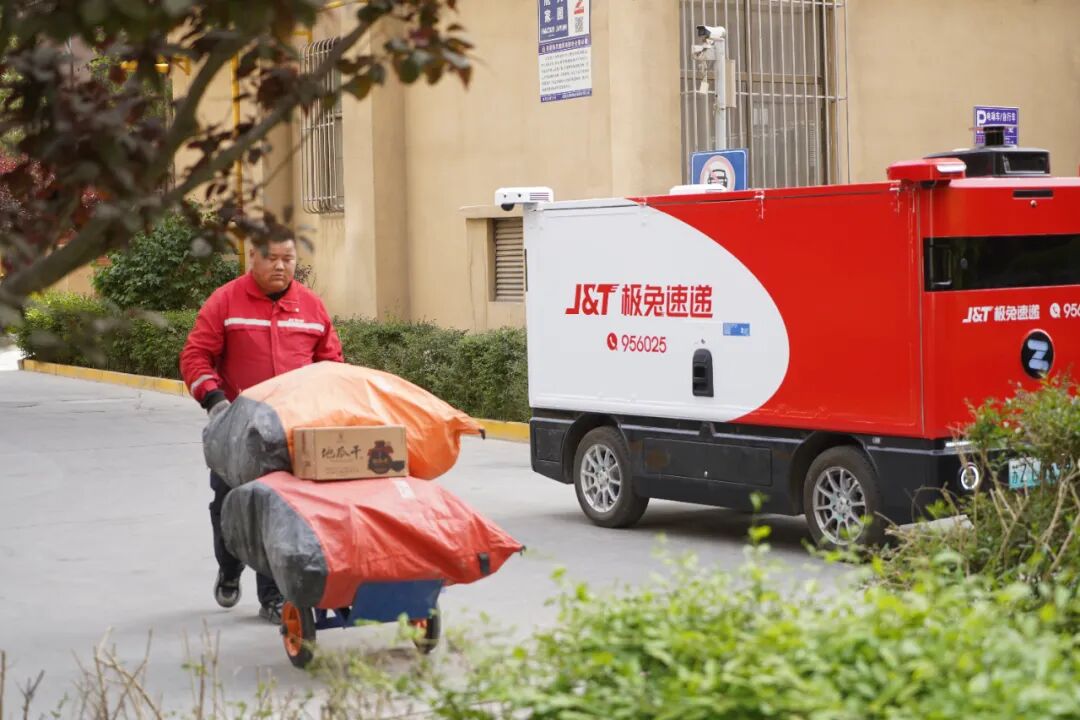
无人车,在农村哐哐干活
创业邦· 2025-11-24 10:13
Core Viewpoint - The rapid adoption of unmanned delivery vehicles in the logistics industry is transforming operations, particularly in remote areas where traditional delivery methods are inefficient [3][4][5]. Group 1: Unmanned Vehicle Adoption - Unmanned delivery vehicles are increasingly being utilized across various provinces, with over 6,000 units expected to be in operation by the end of 2024, surpassing the number of unmanned taxis [4][6]. - Major logistics companies like Zhongtong, Jitu, and SF Express are investing heavily in unmanned vehicles, with Zhongtong deploying nearly 3,000 units and plans for further expansion [4][6]. - The cost of unmanned vehicles has significantly decreased, with prices dropping from over 1 million yuan in 2018 to a range of 40,000 to 70,000 yuan by 2025, making them more accessible for logistics companies [22][23]. Group 2: Operational Efficiency and Cost Savings - Unmanned vehicles can operate efficiently in sparsely populated areas, reducing costs associated with fuel and labor, with some operators reporting savings of up to 25,000 yuan annually [8][9]. - The ability to deliver packages without the need for a driver allows logistics companies to serve remote locations more effectively, with unmanned vehicles capable of making multiple trips per day [8][9]. - In cities like Qingdao, unmanned vehicles are being integrated into urban logistics networks, addressing challenges such as driver shortages during peak times [9][10]. Group 3: Technological Advancements - Continuous improvements in unmanned vehicle technology, including hardware and software updates, are enhancing their operational capabilities in various weather conditions [12][23]. - Companies like Jiushi Intelligent are iterating their vehicle models annually to adapt to different climates and road conditions, ensuring stable performance [12][23]. - The integration of automated production processes is reducing manufacturing costs and improving the efficiency of unmanned vehicle production [23][24]. Group 4: Regulatory Environment and Challenges - The successful deployment of unmanned vehicles is contingent upon local government regulations and the establishment of road rights, with over 100 cities having opened up for unmanned delivery operations [16][28]. - Companies are actively engaging with local authorities to ensure compliance and safety, often requiring special permits and ongoing monitoring of unmanned vehicle operations [15][16]. - Despite the growing acceptance of unmanned vehicles, concerns about liability and accident management remain, necessitating clear legal frameworks [26][28].

无人车在农村哐哐干活
经济观察报· 2025-11-22 10:37
Core Viewpoint - The rapid adoption of unmanned delivery vehicles in the logistics industry is driven by their cost-effectiveness and operational efficiency, particularly in remote areas where traditional delivery methods are less viable [1][3][5]. Group 1: Cost Efficiency and Operational Benefits - Unmanned vehicles can operate with lower costs compared to traditional delivery methods, saving significant amounts on fuel, labor, and maintenance [6][7]. - For instance, using unmanned vehicles can save approximately 25,000 yuan in fuel, 20,000 yuan in insurance and maintenance, and another 20,000 yuan in labor costs annually [7]. - The ability to deliver smaller quantities of packages efficiently makes unmanned vehicles particularly advantageous in sparsely populated areas [2][6]. Group 2: Market Growth and Adoption - The number of unmanned delivery vehicles is expected to exceed 6,000 by the end of 2024, significantly outpacing other autonomous vehicle applications like unmanned taxis [3]. - Major logistics companies such as Zhongtong, Jitu, and Shunfeng are investing heavily in unmanned vehicles, with Zhongtong alone deploying nearly 3,000 units [3][8]. - The cost of unmanned vehicles has decreased significantly, with prices dropping from over 1 million yuan in 2018 to around 40,000 to 70,000 yuan by 2025 [22][23]. Group 3: Technological Advancements - Continuous improvements in technology, including hardware and software, are enhancing the reliability and efficiency of unmanned vehicles [11][23]. - Companies are innovating their business models, such as offering lower hardware prices combined with software subscription services, making it more accessible for logistics providers [23] - The deployment of unmanned vehicles is not limited to rural areas; urban centers like Shenzhen and Qingdao are also integrating them into their logistics networks [8][12]. Group 4: Regulatory Environment and Challenges - The successful operation of unmanned vehicles is contingent upon local government regulations and the establishment of road rights [15][16]. - While some cities have embraced unmanned delivery vehicles, the distribution of these approvals is uneven across the country [15]. - The logistics industry is actively engaging with local governments to ensure compliance and safety measures are in place for unmanned vehicle operations [14][17]. Group 5: Future Outlook - Despite existing concerns regarding safety and operational challenges, the long-term outlook for unmanned vehicles in the logistics sector remains positive [25][26]. - The industry is witnessing a shift towards more automated and efficient delivery systems, with ongoing support from government initiatives aimed at promoting the use of unmanned vehicles [26][27].

你的快递,是无人车送的
Jing Ji Guan Cha Wang· 2025-11-22 04:40
Core Insights - The article highlights the rapid adoption and operational efficiency of unmanned delivery vehicles in the logistics sector, particularly in remote areas where traditional delivery methods are less viable [2][3][4][5][6]. Group 1: Unmanned Vehicle Adoption - Unmanned delivery vehicles are increasingly being deployed across various provinces, with over 6,000 units expected to be operational by the end of 2024, surpassing the number of unmanned taxis [3][10]. - Major logistics companies like Zhongtong, Jitu, and Shunfeng have invested heavily in unmanned vehicles, with Zhongtong deploying nearly 3,000 units and plans for further expansion [3][4]. - The cost of unmanned vehicles has significantly decreased, with prices dropping from over 1 million yuan in 2018 to a range of 40,000 to 70,000 yuan by 2025, making them more accessible for logistics companies [13][14]. Group 2: Operational Efficiency and Cost Savings - Unmanned vehicles can operate in sparsely populated areas, reducing delivery costs significantly. For instance, one operator reported saving 200 yuan daily on fuel and labor costs [2][4]. - In rural areas, unmanned vehicles can deliver packages even when not fully loaded, making operations more cost-effective compared to traditional delivery methods [4][5]. - The use of unmanned vehicles has allowed logistics companies to address labor shortages, particularly in regions where attracting delivery personnel is challenging [5][6]. Group 3: Technological Advancements - Continuous improvements in unmanned vehicle technology, including better sensors and algorithms, have enhanced their operational reliability in various weather conditions [7][14]. - Companies like Jiushi Intelligent are iterating their vehicle models annually to adapt to different climates and road conditions, ensuring stable performance [7][12]. - The integration of software updates and real-time data collection is helping to optimize the performance of unmanned vehicles in real-world scenarios [7][12]. Group 4: Regulatory Environment and Challenges - The deployment of unmanned vehicles is contingent on local government regulations, with over 100 cities having opened road rights for these vehicles, though the distribution remains uneven [10][12]. - Companies are actively engaging with local authorities to establish operational frameworks and ensure compliance with safety standards [9][10]. - Despite the growing acceptance of unmanned vehicles, concerns about liability and accident management remain, necessitating clearer legal frameworks [15][16]. Group 5: Future Outlook - The logistics industry is optimistic about the long-term integration of unmanned vehicles, viewing them as a transformative force in delivery operations [16][17]. - Recent government initiatives are promoting the use of unmanned vehicles, indicating a supportive policy environment for their continued expansion [16][17]. - The consensus within the industry is that the introduction of unmanned vehicles marks the beginning of a new phase in logistics, rather than an endpoint [17].

2025年第45周:跨境出海周度市场观察
艾瑞咨询· 2025-11-21 00:07
Group 1: Low-altitude Economy in Guangdong - Guangdong's low-altitude economy is experiencing significant breakthroughs, with companies like XPeng and EHang achieving milestones in product launches and commercial operations [3][4] - The goal is to surpass a market scale of 300 billion yuan by 2026, supported by favorable policies and technological advancements [3] Group 2: Brand Integration for Overseas Markets - Chinese companies are shifting from merely selling products to building brand recognition through cultural integration in target markets [5] - Strategies for successful brand integration include local storytelling, leveraging local influencers, and aligning with cultural values [5] Group 3: Energy Storage Market Dynamics - Chinese energy storage companies saw overseas orders reach 186 GWh in the first half of 2025, a year-on-year increase of over 220% [6] - Major markets include the Middle East, Europe, and Australia, while challenges such as trade barriers and certification standards persist [6] Group 4: Smart Agriculture and Technology - Recent international agricultural exhibitions highlighted the role of smart machinery in enhancing agricultural productivity [7][8] - Chinese agricultural technology is gaining traction globally, with significant participation from international buyers [7] Group 5: Automotive Export Trends - From 2021 to 2024, China's automotive exports are projected to grow from 2.01 million to 5.86 million units, with a 21% year-on-year increase in the first three quarters of 2025 [9] - Chinese automakers are focusing on local production and brand acquisitions to expand their global market share [9] Group 6: Gaming Market Expansion - The global gaming market is expected to grow significantly, with mobile gaming projected to reach $342.2 billion by 2033 [10] - Russia is emerging as a key market for Chinese mobile games, with a notable presence in the top revenue-generating titles [10] Group 7: Robotics Market in South Korea - Chinese service robots, particularly in the cleaning sector, are gaining market share in South Korea, with companies like Roborock leading [11] - The collaboration between China and South Korea in AI and digital economy sectors presents significant growth opportunities [11] Group 8: Southeast Asia Consumer Trends - Southeast Asia's young population and economic growth are driving demand for Chinese products, particularly through e-commerce [12] - The region presents opportunities for Chinese companies to establish local manufacturing to mitigate risks [12] Group 9: Sports Industry Growth - The Asian sports industry is experiencing rapid growth, with a focus on high-quality development and digital innovation [13] - The 2025 Asian Sports Industry Summit aims to explore opportunities for collaboration and growth in the sector [13] Group 10: ByteDance's Global Strategy - ByteDance is shifting its strategy for overseas AI applications from technology showcase to user acquisition, particularly in Southeast Asia and the Middle East [14][15] - The company is leveraging its existing ecosystem while navigating regulatory challenges in Western markets [15] Group 11: Didi's Electric Vehicle Initiative - Didi has launched a fleet of 500 electric vehicles in Mexico, aiming to promote sustainable transportation in Latin America [16] - The company plans to expand its electric vehicle fleet significantly by 2030, contributing to reduced carbon emissions [16] Group 12: Meituan's Financial Performance - Meituan reported a revenue of 86.6 billion yuan in Q1, with a year-on-year growth of 18%, highlighting its robust overseas performance [17] - The company is focusing on sustainable growth through technological innovation and expansion into new markets [17] Group 13: Cainiao's Logistics Innovations - Cainiao is partnering with retail giants in Southeast Asia to enhance logistics efficiency through AI and automated systems [18][19] - The company aims to leverage its technology to improve supply chain operations and expand its market presence [19] Group 14: Li Auto's Market Strategy - Li Auto has opened its first retail center in Central Asia, focusing on a dealer authorization model to mitigate risks [20] - The company is prioritizing Central Asia for its expansion strategy while delaying plans for the European market [20] Group 15: TCL's Global Strategy - TCL reported a revenue of 14.346 billion yuan in the first three quarters of 2023, with a focus on high-quality growth and brand value [21] - The company is enhancing its global presence through sports marketing and increased R&D investment [21] Group 16: New Stone's Expansion in Autonomous Vehicles - New Stone has secured over $600 million in funding to accelerate its expansion in the autonomous vehicle market [22] - The company plans to deploy 5,000 autonomous vehicles in the UAE by next year, reflecting the industry's rapid growth [22] Group 17: Yushu Technology's IPO Progress - Yushu Technology is advancing its IPO process, with overseas business accounting for 50% of its revenue [23] - The company is focusing on expanding its market share in the robotics sector while enhancing its global strategy [23]

新型马路判官上路,无人物流车狂奔
3 6 Ke· 2025-11-20 01:53
Core Insights - The rise of unmanned logistics vehicles is transforming the delivery landscape, showcasing a clash between advanced technology and traditional agricultural practices [1] - The demand for unmanned logistics vehicles has surged, driven by technological advancements and the need for contactless delivery solutions during the pandemic [8][13] - Major logistics companies are heavily investing in unmanned logistics vehicles, indicating a significant market potential estimated to be worth hundreds of billions [15][18] Demand Explosion - Unmanned logistics vehicles are not new; they have evolved from early tests by companies like JD.com and Suning, which began in 2016 [8][11] - The pandemic accelerated the adoption of unmanned logistics vehicles, as companies like Meituan and SF Express adapted to new delivery challenges [13] - The technology has matured, with L4-level autonomous delivery vehicles being deployed in urban environments, expanding their operational scope [11][19] Industry Growth - The unmanned logistics vehicle market is projected to be a trillion-yuan industry by 2025, driven by increasing demand and technological advancements [15][20] - Major logistics firms are ramping up their investments, with China Post planning to procure 7,000 unmanned vehicles and JD Logistics aiming for 1 million units in five years [18] - The operational model of logistics is shifting from traditional methods to a more efficient system utilizing unmanned vehicles for direct delivery [19] Technological and Policy Support - The Chinese government has been supportive of unmanned logistics vehicle development, issuing guidelines to promote their use in various environments [17] - The cost of producing unmanned logistics vehicles has significantly decreased, making them more accessible for logistics companies [28] - The industry is witnessing a surge in investment, with leading companies securing substantial funding to enhance their capabilities [21][23] Future Outlook - The commercial application of unmanned logistics vehicles is expected to expand beyond delivery services, integrating into a broader autonomous transportation network [30] - The successful trials of unmanned heavy-duty trains and mining vehicles indicate the potential for widespread adoption across various sectors [32][35] - The development of unmanned logistics vehicles is seen as a critical component of China's strategic goals in industrial modernization and technological advancement [39]