LG

Search documents
全球最大的液冷展会来了|2026深圳国际液冷产业展会及论坛
Sou Hu Cai Jing· 2026-01-13 01:51
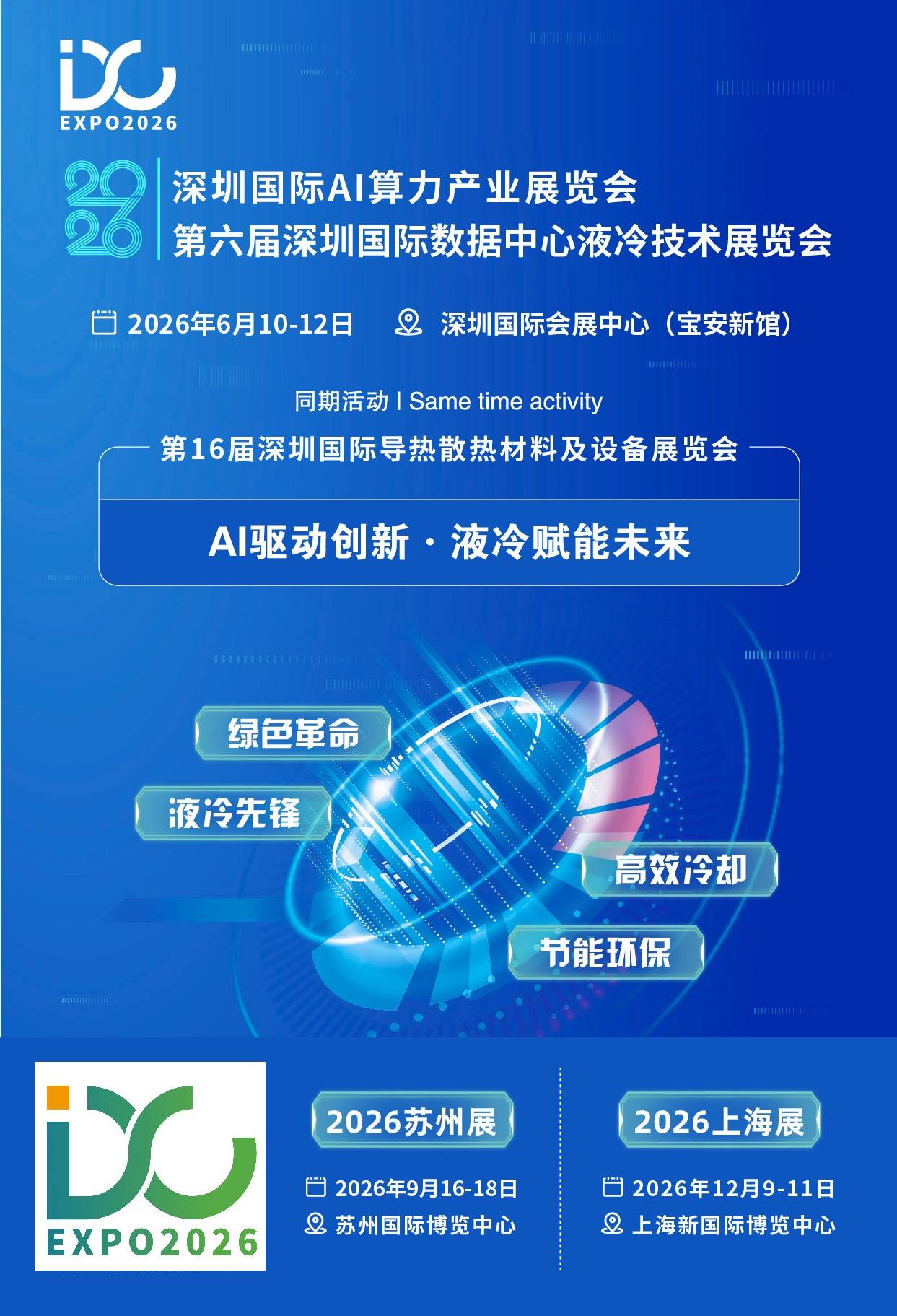
Group 1 - The 2026 Shanghai International Liquid Cooling Industry Exhibition will take place from December 9-11, 2026, at the Shanghai New International Expo Center [3] - The 2026 China (Shenzhen) International Liquid Cooling Industry Technology Exhibition is scheduled for June 10-12, 2026, at the Shenzhen International Convention and Exhibition Center [3] - The 2026 Suzhou Exhibition will occur from September 16-18, 2026, at the Suzhou International Expo Center [5] Group 2 - The rapid growth of big data has increased the demands on data center servers, necessitating higher power density in server cabinets [14] - Liquid cooling technology is becoming essential for data center efficiency, especially with the rise of 5G, edge computing, and AI applications [14][18] - The exhibitions aim to showcase the latest products and technologies in the liquid cooling industry, attracting professional audiences from data centers, power, electronics, edge computing, AI, and renewable energy sectors [14] Group 3 - The 2026 IDC exhibition is expected to cover an area of 15,000 square meters and will feature participation from major organizations such as the National Supercomputing Center in Shenzhen and Tencent [18] - Various technical exchange activities will be held during the IDC 2026 exhibition, focusing on industry hot topics and promoting diversified marketing strategies [19] - The exhibition will include a wide range of products covering cooling liquids, refrigerants, and various cooling devices, showcasing over a thousand new products across the entire industry chain [56] Group 4 - Shenzhen Angpai Technology Co., Ltd. is currently in the A-share IPO guidance stage, with plans to expand production capacity and R&D investment to capture market growth in liquid cooling [66] - The company has a registered capital of 90 million RMB and aims to leverage its professional R&D team and partnerships with universities to enhance its technological capabilities [66][68] - Angpai Technology's product offerings include liquid cooling module design, thermal management system integration, and innovative compressor technologies, with a focus on high reliability and efficiency [71][72]

新能源出海韩国:三关变红利
Sou Hu Cai Jing· 2026-01-13 00:46
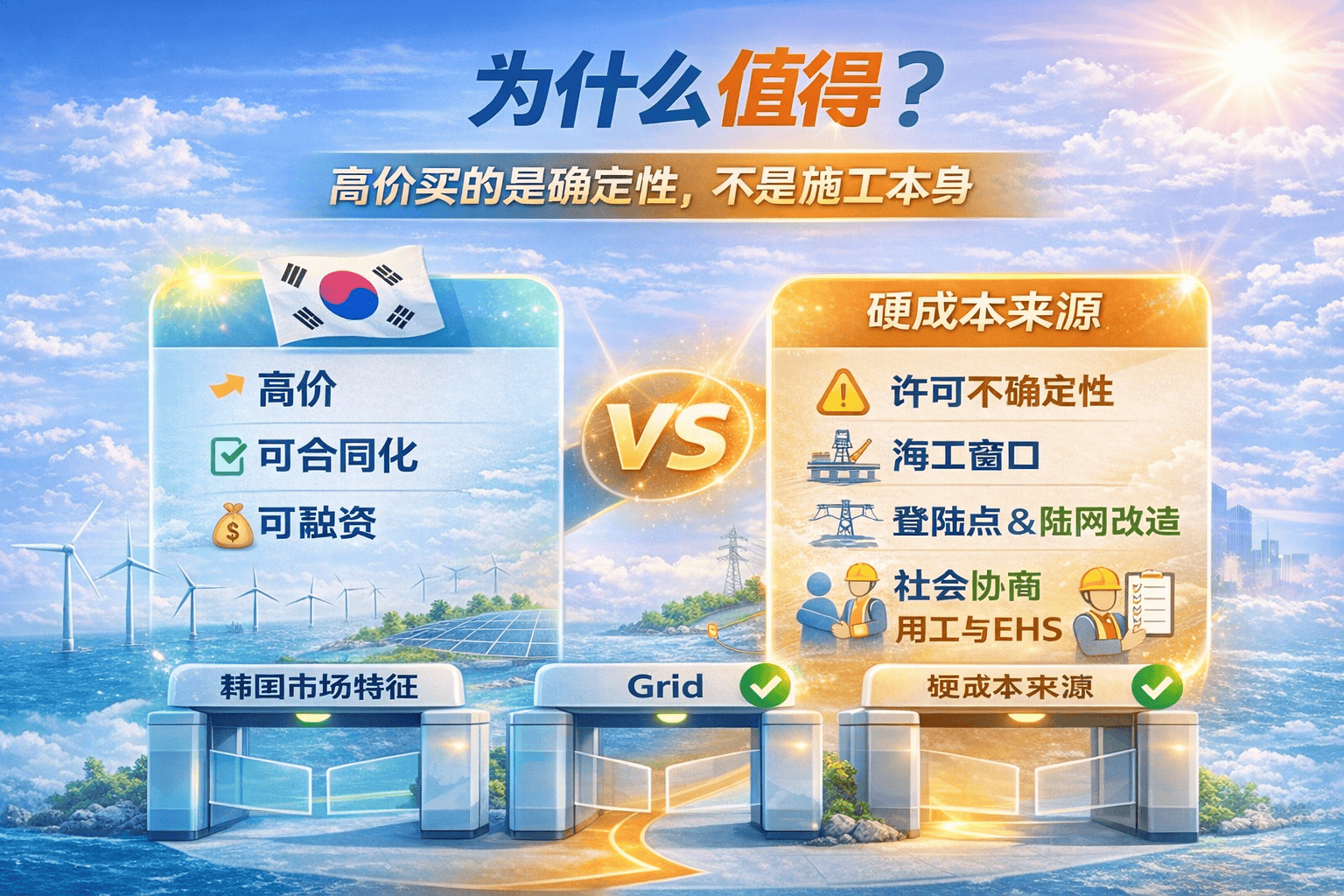
Core Insights - The article emphasizes that while political and economic signals can boost market sentiment, the actual foundation of South Korea's renewable energy market lies in clear, actionable planning and investment schedules, with specific targets set for 2030 [1][2] - The challenges in the offshore wind sector are primarily driven by regulatory and safety constraints rather than construction capabilities, indicating that successful project execution requires navigating complex approval processes [2][9] - The pricing logic in South Korea's renewable energy market is based on contractually secured revenues, which makes cash flow modeling more straightforward for financial institutions [3][4] Group 1: Market Dynamics - South Korea aims to install approximately 55.7 GW of solar and 20 GW of wind energy by 2030, with renewable energy accounting for about 21.6% of total generation [1] - The offshore wind projects face significant hurdles due to the non-linear nature of the permitting process, which can lead to delays and increased uncertainty [2][9] - The average price for solar energy in the first half of 2025 was reported at approximately 154,655 KRW/MWh, translating to about 0.78 CNY per kWh, indicating a structured pricing mechanism [3] Group 2: Cost and Investment Considerations - High costs in South Korea's renewable projects stem from rigid hard costs, including regulatory uncertainties and resource scarcity, rather than simple construction price premiums [4][6] - The market is willing to pay a premium for certainty, which is crucial for managing risks associated with project delivery [4][6] - The local supply chain is robust in areas like battery storage and power electronics, but there is a notable gap in high-end equipment, which presents opportunities for foreign players [6][24] Group 3: Regulatory Challenges - The permitting process for offshore wind projects is complex and can take 8 to 10 years, with any delays in one part of the chain affecting the entire project timeline [9][10] - Three types of certainty are critical: permitting certainty, grid connection certainty, and social license certainty, all of which can significantly impact project execution and cash flow [7][25] - Social resistance is a key factor in project approval, necessitating a structured approach to community engagement and environmental compliance [16][18] Group 4: Strategic Recommendations - Companies should focus on identifying and managing regulatory risks by establishing alternative plans and integrating permitting changes into contract boundaries [11][12] - The integration of local partners is essential for navigating public procedures and community relations, which can mitigate social friction and enhance project delivery [18][24] - The article suggests that successful market entry for foreign companies hinges on their ability to deliver certainty in project execution, which can transform high prices into reliable cash flows [25][26]
财经观察:“向中国学习”成韩国高科技产业新选项
Huan Qiu Shi Bao· 2026-01-12 23:01
Core Insights - South Korea is increasingly looking to China for insights into advanced technologies such as AI and robotics, as China leads in these sectors, making it a crucial reference point for South Korea's strategic development in these areas [1][4]. Group 1: Industry Observations - A delegation from the Korea Trade Association visited China to explore cutting-edge technologies, emphasizing the strong impact of witnessing advanced technologies firsthand [2]. - The CES event highlighted the competitive pressure on South Korea, as Chinese companies that once imitated Korean products are now seen as leaders in technology [3]. - The Korean media has reported extensively on the performance of Chinese robotics companies at CES, reflecting a mix of competitive anxiety and opportunities for collaboration [2][3]. Group 2: Structural Challenges - South Korea's manufacturing sector, while significant at 28% of GDP, faces challenges with low value-added rates and slow industrial upgrades, prompting a need for transformation [4]. - Key industries in South Korea are experiencing intensified global competition, particularly in robotics, electric vehicles, and semiconductors, where China has gained a competitive edge [4]. Group 3: Strategic Shifts - The Korean industry is not only interested in learning high-end technologies from China but also in adopting comprehensive industrial strategies, including policy support and integrated research and development ecosystems [5]. - Recent exchanges between China and South Korea in the tech sector have increased, with multiple delegations visiting to foster collaboration in AI and robotics [5]. Group 4: Government Initiatives - The South Korean government has identified AI, semiconductors, and humanoid robots as national strategic priorities, aiming to become a global leader by 2030 [7]. - Significant financial commitments have been made, including a proposed sovereign wealth fund and a national growth fund to support investments in advanced technologies [7]. Group 5: Collaborative Opportunities - There is a recognition of mutual benefits in AI and robotics, with South Korea's strengths in specific technologies complementing China's market size and talent pool [6]. - New cooperative frameworks have been established to facilitate discussions on AI standards and technology certification between the two countries [8].
【招商电子】CES 2026跟踪报告:AI赋能依旧是主旋律,聚焦穿戴/IoT、智能车、机器人等新品创新
招商电子· 2026-01-12 12:03
Core Viewpoint - CES 2026 showcased significant advancements in AI-driven consumer electronics, with a focus on wearable devices, automotive technology, robotics, and IoT innovations, highlighting the integration of AI across various sectors [2][5][6]. Group 1: Wearable/IOT - AI glasses and camera headphones remain focal points in wearable technology, with over 50 companies participating, primarily from mainland China, emphasizing design improvements and multi-modal interactions [2][10]. - Headphone innovations shifted from audio performance to a combination of sound quality, AI integration, and multi-modal capabilities, with products featuring cameras and environmental awareness [2][13]. - New IoT categories, including smart imaging devices and AI home products, are gaining traction, with many startups entering the market [2][16]. Group 2: Automotive - AI is driving a comprehensive upgrade in automotive technology, with high-level autonomous driving expected to scale commercially [3][19]. - NVIDIA introduced the Alpamayo series of open-source AI models, enhancing the development of autonomous driving capabilities [3][19]. - Major automotive companies like Geely and Great Wall showcased their AI systems, while international brands are partnering with AI giants to enhance their offerings [3][24][26]. Group 3: Robotics - The robotics sector is evolving from household and service robots to humanoid collaboration, with significant participation from electronic companies [4][34]. - Innovations in household robots include advanced cleaning capabilities and a broader range of applications, while humanoid robots are becoming more sophisticated in interaction and movement [4][34]. - Chinese electronic companies are increasingly showcasing key components and technologies in robotics at CES 2026 [4][34]. Group 4: PC/Smartphone - Lenovo launched its first personal super intelligent system, Lenovo Qira, and announced a partnership with NVIDIA for AI infrastructure [4][36]. - Chip manufacturers like Intel, Qualcomm, and AMD are upgrading their products to enhance AI performance and user experience in PCs [4][39]. - The focus on AI integration in smartphones and PCs is expected to drive innovation and market growth in the coming years [4][39].







CES 2026:在CES上,我们看到了四十年前和四十年后的电脑
3 6 Ke· 2026-01-12 11:32
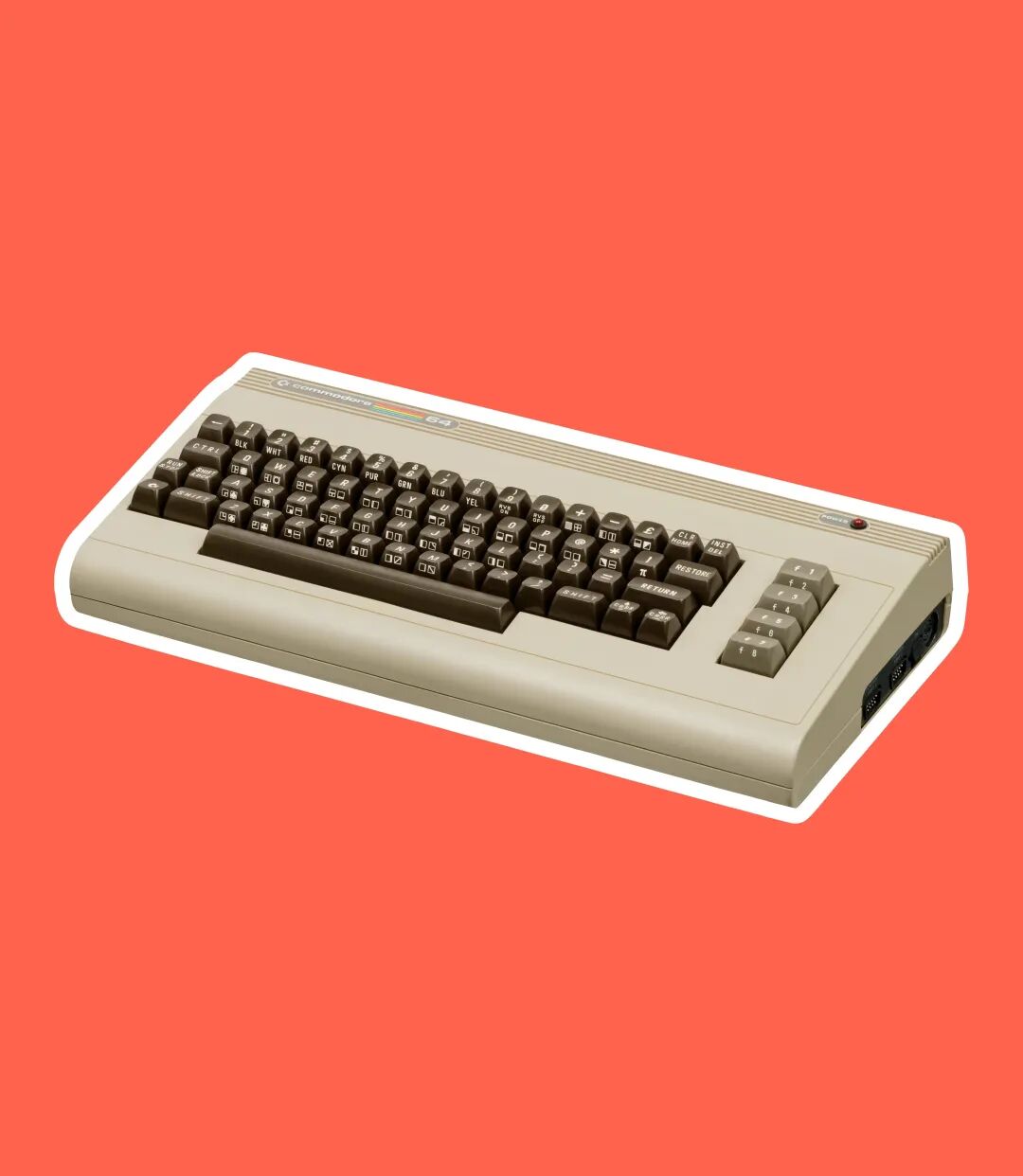
Core Insights - The personal computer (PC) industry is experiencing a phase of stagnation in product design, with a shift towards mobile devices like smartphones and smartwatches [2] - The CES 2026 showcased innovative products that break away from traditional PC designs, indicating a potential renaissance in the PC market [4] Industry Developments - Major chip manufacturers Intel, AMD, and Qualcomm announced updates to their chip platforms, focusing on improved efficiency and performance for lightweight laptops [5] - NVIDIA has decided not to release new RTX 60 series graphics cards this year, potentially reviving production of the RTX 30 series to allocate resources for AI business [7] Product Innovations - HP's EliteBoard G1a was highlighted as a significant product at CES, resembling a simple keyboard and mouse set but functioning as a complete computer with modern specifications [10][12] - Lenovo introduced the ThinkBook Plus Gen 7 Auto Twist, featuring an electric hinge for automatic screen opening and intelligent tracking capabilities [24][31] - Lenovo's Yoga AIO i Aura Edition was presented as a stylish all-in-one PC, equipped with a 32-inch 4K OLED display and designed for creative professionals [36][42] Market Trends - The CES 2026 emphasized themes of "renaissance" and "form innovation" in PC products, as manufacturers seek to reinterpret past aesthetics with new technologies [54] - The industry is approaching a performance bottleneck, leading to a shift in consumer preferences towards design and functionality rather than just raw performance [55][59] - The year 2026 may pose challenges for traditional PCs but could also present opportunities for personalized and innovative PC designs [59]
CES 2026 汽车领域发布要点:媒体日回顾
Counterpoint Research· 2026-01-12 02:45
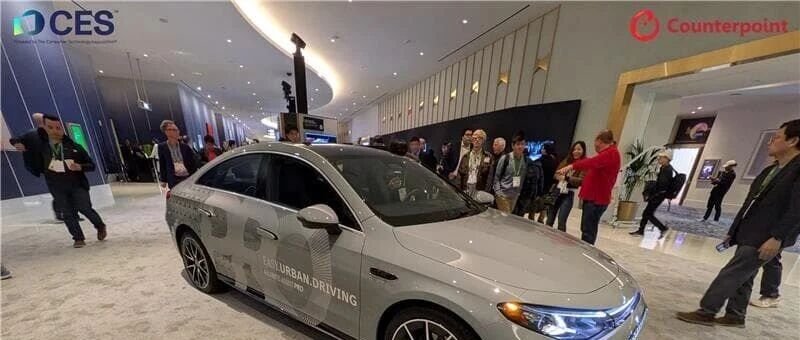
Core Insights - The article discusses the significant advancements in the automotive industry showcased at CES 2026, focusing on the integration of AI, software-defined vehicles, and advanced driver-assistance systems (ADAS) [5][6][7]. Group 1: NVIDIA and AI Developments - NVIDIA launched Alpamayo, an open-source AI model and tools aimed at accelerating the development of safe, inference-based autonomous driving systems. The model features a Vision-Language-Action architecture with 10 billion parameters, enhancing decision-making capabilities to resemble human reasoning [4][5]. - NVIDIA also introduced AlphaSim, an end-to-end open-source simulation framework for validating autonomous driving systems, along with over 1,700 hours of real driving data [5]. Group 2: Collaborations and New Technologies - ZF and Qualcomm announced a partnership to develop a scalable ADAS platform integrating the ZF ProAI supercomputer and Snapdragon Ride platform, enabling up to Level 3 autonomous driving capabilities with 1,500 TOPS of computing power [6][7]. - Aptiv showcased its next-generation AI driving system capable of L2++ level autonomous driving, expanding its technology from automotive to robotics [9][11]. Group 3: Automotive Innovations - BMW introduced the iX3, featuring a new AI-driven personal assistant and the sixth-generation eDrive technology, which supports a range of advanced functionalities including fast charging and a WLTP range of up to 805 kilometers [13]. - Sony Honda Mobility unveiled the Afeela 1 electric vehicle, equipped with a dual-motor system and a 91 kWh battery, featuring AI-driven voice and infotainment capabilities [15][16]. Group 4: Battery Technology and Connectivity - Donut Lab launched the world's first mass-produced solid-state battery, achieving a high energy density of 400 Wh/kg and rapid charging capabilities, set to be used in the 2026 Verge electric motorcycle [30]. - Quectel introduced the 5G-Advanced AR588MA module, enhancing vehicle safety and connectivity with dual SIM support and satellite communication features [32]. Group 5: Mapping and Navigation - HERE Technologies presented AI maps integrated with the Snapdragon Ride platform, enhancing L2 and L2+ level ADAS capabilities and expanding its navigation services in over 100 countries by 2026 [25].


AI已从神坛进入硬件的重力井,做得“无聊”才有钱赚|2026 CES观察
3 6 Ke· 2026-01-11 23:35
Core Insights - The CES 2026 reflects a significant shift in the AI landscape, moving from a peak of enthusiasm in 2024 to a more subdued reality where AI is less prominent in product showcases [3][11] - Major companies like LG and Panasonic are still promoting AI products, but the novelty and excitement have diminished, with many offerings appearing outdated [5][6] - The industry is experiencing a "trough of disillusionment" as the initial hype around AI has faded, revealing unfulfilled promises and consumer fatigue [11] Group 1: Industry Trends - The AI hype has receded, with many once-prominent products, such as Samsung's Ballie robot, no longer present at CES 2026 [8][10] - Companies are now focusing on integrating AI into existing products rather than introducing groundbreaking innovations, leading to a more pragmatic approach [16][26] - Startups are leveraging AI to fill specific market gaps, moving away from grand narratives to practical applications in niche areas [16][34] Group 2: Product Developments - AI integration in health monitoring and sleep technology has become prevalent, with products like Sleepal's AI Lamp utilizing advanced sensors for comprehensive data collection [17][21] - The emergence of "Semi-AI Native" products, such as AI recording pens and portable recorders, demonstrates a trend of enhancing existing functionalities with AI capabilities [26][27] - AI play products are gaining traction, focusing on entertainment rather than companionship, indicating a shift towards gamifying AI experiences [41][47] Group 3: Consumer Insights - Consumers are increasingly skeptical about the practical benefits of AI products, with many expressing a desire for tangible utility rather than abstract promises [13][19] - The market for AI products is evolving, with a focus on enhancing user experiences through practical applications rather than relying solely on AI's perceived magic [48][49] - The shift from a "magical" perception of AI to a more business-oriented approach signifies a maturation of the industry, where real-world applications are prioritized [49]

【AI 产业跟踪-海外】NVIDIA 发布 Rubin,开启新一代 AI 平台
GUOTAI HAITONG SECURITIES· 2026-01-11 13:12
Investment Rating - The report does not explicitly provide an investment rating for the AI industry Core Insights - NVIDIA has announced the expansion of its open-source model library, contributing the largest open-source dataset globally, which includes 100 trillion language training tokens and 100TB of vehicle sensor data, aimed at accelerating AI innovation across various sectors [3] - Marvell's acquisition of XConn is expected to enhance its capabilities in high-speed switching chip technology, allowing better market positioning in PCIe and CXL switching [4] - NAVER has built the largest AI computing cluster in South Korea, integrating 4000 NVIDIA B200 AI GPUs, significantly improving AI model training efficiency [5] - DeepMind and Boston Dynamics are collaborating to integrate the Gemini Robotics model into Atlas and Spot robots, focusing on real-world interaction and learning in dynamic environments [6] - OpenAI has launched the ChatGPT Health mode, designed to facilitate secure discussions about health issues while isolating sensitive information from general conversations [12] - NVIDIA has introduced the Rubin platform, featuring six new chips designed for advanced AI computing, aiming to lower costs and accelerate mainstream AI adoption [18] Summary by Sections AI Industry Dynamics - NVIDIA's contribution includes a vast open-source dataset across language, robotics, autonomous driving, and healthcare, marking a significant step in building an open ecosystem for AI [3] - Marvell's acquisition of XConn is set to enhance its technology in PCIe and CXL switching, with the deal expected to close in 2026 [4] - NAVER's new AI computing cluster can train a 72 billion parameter AI model in just 1.5 months, a significant improvement over the previous system [5] AI Application Insights - D.O.N is set to launch the world's first belt-type wearable device, VITAL BELT, which can monitor health metrics through clothing [7] - MSI's MEG X monitor integrates AI gaming features to enhance user experience, including AI-assisted gaming functionalities [9] - LG has showcased the CLOiD AI robot designed for home environments, capable of interacting with users and controlling smart home devices [10] - Amazon has launched a web-based version of its Alexa+ AI assistant, allowing seamless access across devices [11] AI Large Model Insights - OpenAI's ChatGPT Health mode aims to provide a secure platform for health discussions, isolating sensitive information from regular chat logs [12] - Universal Music is collaborating with NVIDIA to leverage AI in music discovery and creation, marking a significant industry partnership [13] - Google has integrated the Gemini AI solution into Gmail, enhancing email management for its 3 billion users [14] Technology Frontiers - NVIDIA's Rubin platform is designed to create advanced AI systems at lower costs, featuring a collaborative design of six new chips [18] - AMD's upcoming MI500 AI accelerator will utilize 2nm technology, promising higher performance compared to previous models [20] - ODINN has developed a compact AI supercomputer that offers high-level computing power without the need for extensive data center infrastructure [21]

一场关于家的自动化实验:家务机器人的模式分野
机器人大讲堂· 2026-01-11 09:39
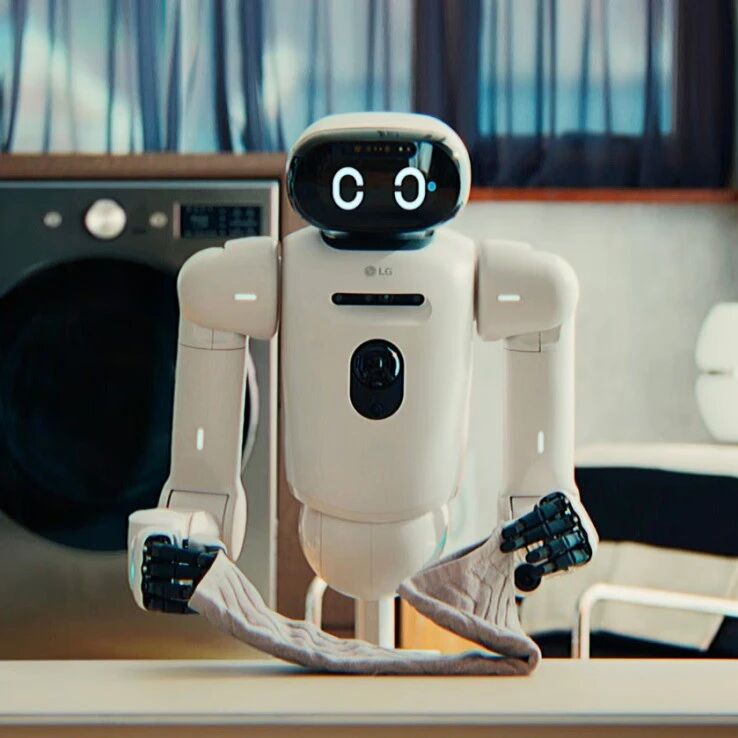
Core Viewpoint - The emergence of household robots is driven by the increasing demand for time-saving solutions in dual-income families and the growing need for improved living quality, leading to a significant market opportunity in the home service sector [2][3]. Market Demand and Technology - The global household service robot market is projected to reach a scale of over $10 billion by 2025, with a compound annual growth rate (CAGR) exceeding 25%, expected to surpass $100 billion by the early 2030s [3]. - The Chinese home service market has exceeded 1 trillion yuan, with a consumption penetration rate of 81.69%, highlighting a substantial demand-supply gap in the industry [2]. Technological Evolution - The integration of large language models with robotics is enabling machines to understand vague commands and autonomously plan tasks, marking a shift from simple execution to task comprehension [4]. - Robots are evolving from isolated tools to intelligent agents capable of managing complex three-dimensional home environments, enhancing their functionality beyond basic cleaning tasks [4]. Pathways and Future Directions - **Home Collaboration Hub**: LG's CLOiD robot exemplifies a "Zero Labor Home" strategy, acting as a mobile control center that integrates with smart home systems to automate household tasks [5][7]. - **General Household Assistant**: 1X Technologies' Neo robot, powered by OpenAI's model, aims to serve as a versatile household assistant capable of understanding complex user requests and providing personalized solutions [8][10]. - **Professional Cleaning Expert**: Companies like Roborock are focusing on specialized cleaning robots that can navigate and manage three-dimensional spaces, showcasing a practical approach to addressing specific household pain points [11][13]. Future Landscape - The future of household automation is envisioned as a mixed ecosystem where specialized robots dominate the market, addressing specific needs while humanoid robots validate their reliability in controlled environments [19][20]. - The ultimate goal is to create a lightweight AI hub that understands user intentions, supported by various specialized robots executing tasks efficiently, shifting the focus from owning a single robot to enjoying seamless service [19][20].

RGB-Mini LED跨代领先,中国厂商站稳全球显示行业高地
Tai Mei Ti A P P· 2026-01-10 05:44
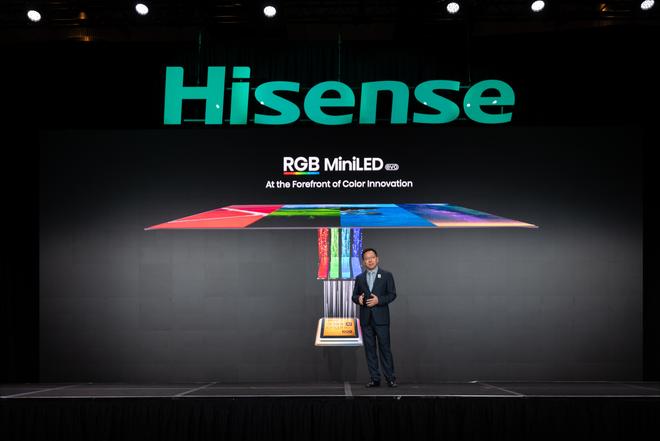
Core Insights - CES 2026 showcased over 4,112 companies from more than 150 countries, with a significant focus on technology that is tangible and experiential, particularly in the display industry [1] Group 1: Company Innovations - Hisense launched a new generation of RGB-Mini LED display technology, achieving a color gamut of 110% BT.2020 and a color precision of 134 bits, marking a significant advancement in display technology [3][6] - The introduction of the innovative "Linglong 4-chip" architecture by Hisense further enhances color range and detail, challenging the limits of display technology [4] - Hisense's RGB-Mini LED technology has captured 50% of the high-end large-screen market within eight months of its launch, with Hisense holding nearly 90% of that share [7] Group 2: Market Trends - The global shipment of RGB-Mini LED displays is expected to surge to 500,000 units in 2026, indicating a strong growth trajectory for this technology [10] - The CES 2026 highlighted a shift in the display industry, with Chinese companies, particularly Hisense, taking a leading role in technological advancements, previously dominated by overseas manufacturers [12] Group 3: Strategic Focus - Hisense emphasizes a commitment to innovation, investing 5% of its revenue annually in product technology development, and has secured 179 core patents in the display field [14] - The company is strategically expanding its product lineup across various sizes, from 75 to 116 inches, to solidify its market position in the mid-to-high-end segment [14]