PUMA

Search documents
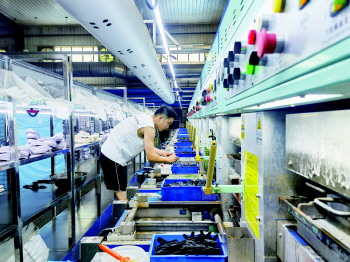
德城一企业凭超临界发泡技术抢下李宁、PUMA大单
Qi Lu Wan Bao· 2025-07-28 21:12
Core Viewpoint - The article highlights the successful transformation of Dezhou Xinhua Borun New Materials Technology Co., Ltd. into a high-end supplier in the sports shoe market through digitalization and advanced manufacturing techniques, particularly supercritical foaming technology [3][4]. Group 1: Company Overview - Dezhou Xinhua Borun has entered the supply chains of renowned brands such as Li Ning, PUMA, and HOKA, with orders from Li Ning scheduled until October [3]. - The company has 86 patents and has faced challenges such as low production efficiency and high energy consumption [4]. Group 2: Digital Transformation - In 2021, the company invested 90 million yuan in digital transformation to enhance production efficiency and respond to national strategies [4]. - The introduction of metal 3D printing technology has reduced mold production time from 15 days to under 5 days, improving design capabilities and product competitiveness [6]. Group 3: Production Efficiency and Sustainability - The implementation of supercritical foaming technology has established a new industry benchmark, with a product yield exceeding 95%, which is 15 percentage points higher than the industry average [6]. - The transformation has led to a 10% reduction in order delivery cycles and a daily production capacity exceeding 20,000 pairs of shoe soles, while energy consumption per unit of output has decreased by 5% [7]. Group 4: Future Goals and Industry Impact - The company aims to achieve an annual production target of 30 million pairs of shoe soles through continuous expansion and new project development [7]. - The digital transformation of Xinhua Borun serves as a model for traditional industries, demonstrating that they can achieve high-quality development through the integration of digital technologies [7].


《北美出海营销洞察》报告解读:北美消费路径“去中心化”,品牌如何见招拆招?
3 6 Ke· 2025-07-28 04:12
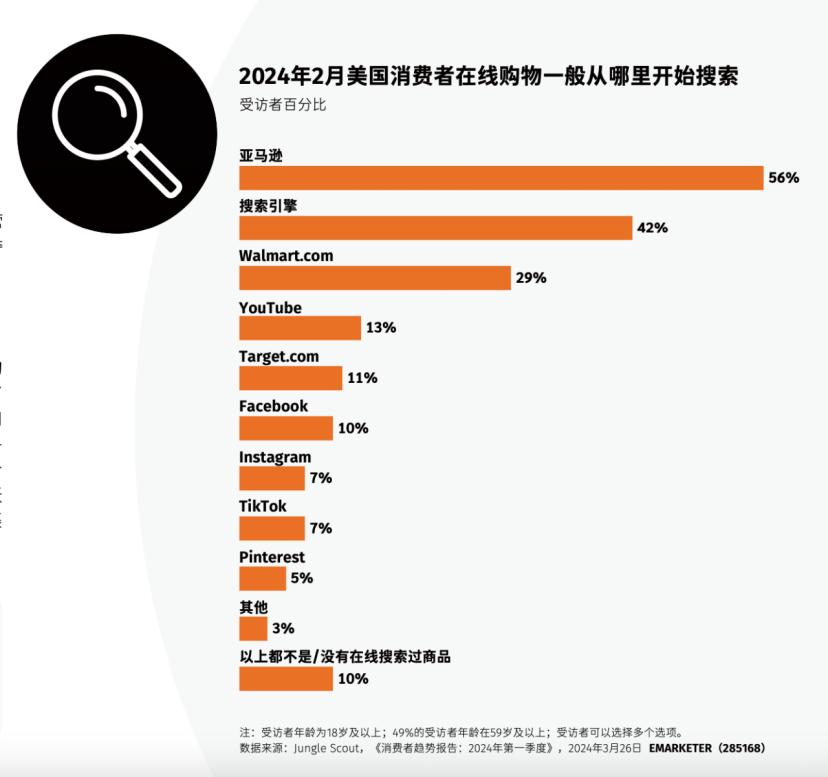
Core Insights - The article highlights the shift in consumer behavior in North America, where the shopping journey has become decentralized and fragmented, moving away from the traditional linear funnel model to a more complex, multi-channel approach [1][2][12]. Group 1: Consumer Research Behavior - Among consumers with an annual income of over $250,000, 60.2% conduct five or more product research sessions before making a purchase, significantly higher than other income groups [1]. - 43% of consumers research products across three or more channels before making a decision, indicating a trend towards a more thorough evaluation process [9]. Group 2: Discovery Phase - The top three discovery channels for North American consumers are Amazon (56%), search engines (42%), and Walmart.com (29%), showcasing the diverse avenues through which consumers find new products [6]. - 69.3% of consumers discover at least one new product each week, reflecting a high acceptance rate for new items [6]. Group 3: Consideration Phase - In the consideration phase, 44.3% of consumers utilize search engines for in-depth product research, while 24% engage with brands on social media [9]. - Different age groups exhibit varying influences during the consideration phase, with younger consumers prioritizing discounts and influencer recommendations, while older consumers focus on product quality and family opinions [9]. Group 4: Purchase Phase - Price and quality remain the primary drivers of purchase decisions, with consumer reviews and brand reputation also playing significant roles [10]. - The preference for influencer recommendations is notably higher among younger consumers, while older consumers still trust family recommendations [10]. Group 5: Attribution Challenges - The complexity of consumer behavior has led to significant challenges in marketing attribution, as consumers often engage with multiple channels before making a purchase [12][13]. - 83.8% of retail sales still occur in physical stores, despite extensive online research, complicating the attribution of sales to specific marketing efforts [12]. Group 6: Solutions for Brands - Brands are encouraged to create a cohesive digital marketing ecosystem that ensures consistent messaging across all channels while allowing for tailored content [16]. - Implementing real-time price and inventory management systems is crucial to maintaining consumer trust and preventing discrepancies across platforms [19]. - Encouraging user reviews and leveraging social proof can significantly influence purchasing decisions, as consumer feedback is a key factor in the decision-making process [21]. Group 7: Fundamental Considerations - The article concludes that product quality, trust, and convenience remain the core elements driving consumer behavior, despite the increasing complexity of the marketing landscape [22].


为什么运动品牌的Slogan都不鼓励卷了?
Hu Xiu· 2025-07-26 00:53
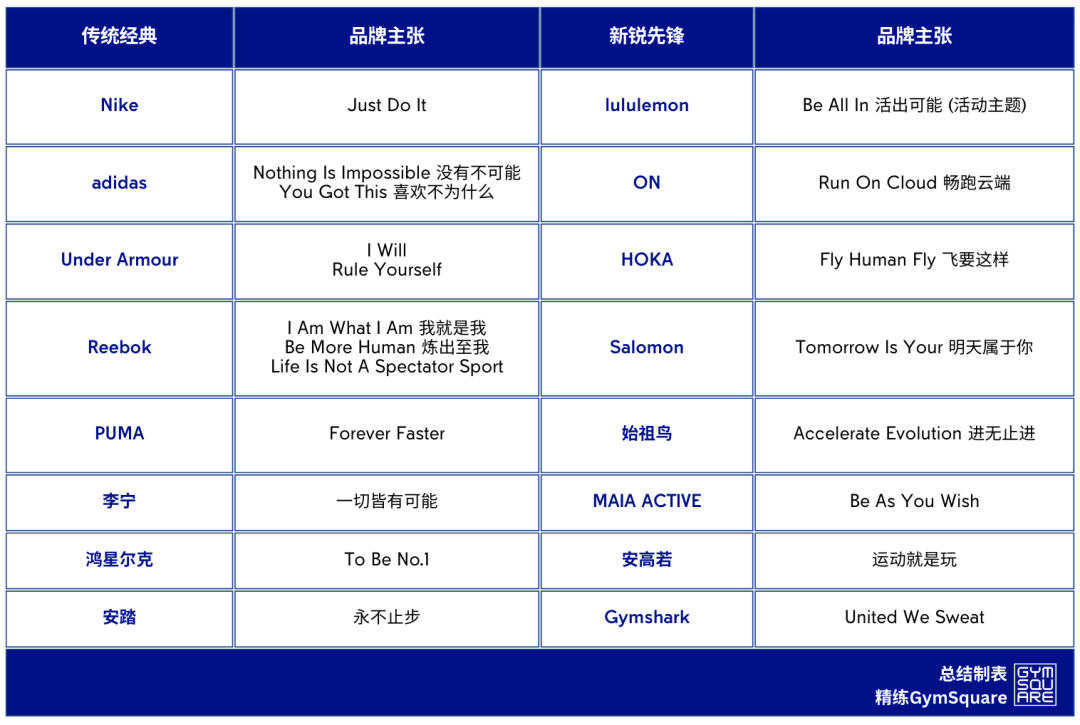
Group 1 - The core viewpoint of the article highlights a shift in the branding strategies of sports companies, moving from a focus on extreme competition to a more inclusive and enjoyable approach to sports, particularly appealing to Generation Z [1][2][16] - Adidas has updated its long-standing slogan from "Impossible Is Nothing" to "You Got This," emphasizing personal sports experiences rather than extreme challenges [1][8] - Other brands like HOKA and lululemon have also changed their slogans to reflect a focus on enjoyment and personal experience in sports, indicating a broader trend among both established and emerging brands [3][12][13] Group 2 - The changing slogans of major sports brands reflect a transformation in brand identity, targeting the new consumer base of Generation Z, who prioritize personal experience over celebrity endorsements [3][19][30] - The standards for what constitutes "good" in sports are becoming more diverse and inclusive, moving away from a strict focus on performance to a broader acceptance of various forms of participation [4][25][32] - The rise of community-focused flagship stores and the emphasis on inclusivity in marketing strategies are becoming essential for brands to foster a sense of belonging among consumers [6][31][33] Group 3 - The trend of prioritizing personal experience and enjoyment in sports aligns with the growing popularity of "self-pleasing consumption" among younger generations [20][34] - Brands are increasingly recognizing the importance of mental well-being alongside physical fitness, with a significant portion of consumers engaging in sports for emotional management [34][36] - The article notes that traditional sports brands are facing challenges in growth and are adapting by embracing lifestyle branding, which blurs the lines between sports and everyday life [26][35]
百隆东方回暖扣非预增超2倍 订单饱满境外营收占近七成
Chang Jiang Shang Bao· 2025-07-14 23:44
Core Viewpoint - Bailong Oriental is gradually emerging from the industry's "de-inventory" shadow, with significant improvements in its financial performance and operational efficiency [1][5]. Financial Performance - For the first half of 2025, the company expects a net profit of 350 million to 410 million yuan, representing a year-on-year increase of 50.21% to 75.97%. The non-net profit is projected to be 323 million to 383 million yuan, with a year-on-year growth of 201.87% to 257.94% [2][3]. - In 2024, Bailong Oriental achieved an operating income of 7.941 billion yuan, a year-on-year increase of 14.86%, while net profit decreased by 18.62% to 410 million yuan. However, the non-net profit surged by 1128.03% to 220 million yuan [3]. Market and Production Capacity - The company has a strong order backlog in both domestic and overseas markets, leading to improved overall capacity utilization and increased main business profits [2][3]. - Bailong Oriental is a leading producer of colored spun yarn in China, with its Vietnamese subsidiary accounting for approximately 77% of its total production capacity, which has reached 1.26 million spindles [1][6]. Raw Material Dependency and Risk Management - Raw materials constitute about 70% of the company's operating costs, with cotton being the most significant component. The company has adapted its procurement strategy based on domestic and international production layouts [3]. - Bailong Oriental has engaged in futures trading to hedge against raw material price fluctuations, which has led to significant variations in investment income. In 2022, the company earned 777 million yuan from cotton futures, but this dropped to 127 million yuan in 2023 and further decreased to 76.71 million yuan in 2024 [4][5]. International Expansion and Client Base - Since 2013, Bailong Oriental has been expanding its overseas production capacity, focusing on a "small batch, multiple varieties, and quick response" business model. The company serves both domestic brands like Li Ning and international brands such as Nike and Adidas [6][7]. - In 2024, the company reported overseas revenue of 5.425 billion yuan, accounting for 68.32% of total revenue, with the Vietnamese subsidiary achieving a revenue of 5.997 billion yuan, a year-on-year increase of 13.03% [7].

关税影响专题三:美国对等关税暂缓期,国际品牌表述与供应链梳理
Guoxin Securities· 2025-06-05 02:40
Investment Rating - The report maintains an "Outperform" rating for the textile and apparel industry [1] Core Insights - The report outlines the timeline of Trump's tariff policy, highlighting the uncertainty surrounding tariffs and their impact on international brands [2] - International brands have expressed concerns about the impact of tariffs on profits, with varying exposure levels to the U.S. market and sourcing strategies [2][12] - The report anticipates industry consolidation and the potential for suppliers with lower U.S. exposure and higher profit margins to gain market share [2][35] Summary by Sections 1. Key Timeline of Trump's Tariff Policy - On April 10, the Trump administration announced a 90-day tariff delay for 75 countries, set to expire on July 8 [2] - A court ruling on May 28 deemed Trump's tariff policy invalid, leading to further appeals and ongoing uncertainty [2][11] 2. International Brands' Responses to Tariff Events - Brands like Uniqlo, Adidas, and PUMA have varying U.S. market exposure, with Uniqlo at 7% and Adidas and PUMA at 20% [12][13] - Most brands source less than 10% of their products from China, with a significant portion coming from Southeast Asia, particularly Vietnam [12] - Short-term measures include pre-shipping goods to the U.S. and long-term strategies involve price adjustments and supply chain diversification [12][19] 3. Textile Enterprises' Capacity Distribution and Tariff Risk Exposure - Companies like Shenzhou International and Huayi Group have low U.S. revenue exposure, while those with significant Southeast Asian production face higher U.S. revenue percentages [2][32] - The report lists net profit margins for various companies, with Shenzhou International leading at 20.9% [2][32] - Companies with U.S. revenue below 20% are less sensitive to tariff impacts, while those with higher margins can maintain profitability even under pressure [32] 4. Investment Recommendations - Key recommendations include Shenzhou International for its low U.S. exposure and high net margin, and Huayi Group for its strong market position and demand [35] - Other companies to watch include Weixing Co., Taihua New Materials, and Kairun Co., which are expected to benefit from market share gains [35]





关税影响专题三:美国对等关税暂缓期,国际品牌表述与供应链梳理-20250605
Guoxin Securities· 2025-06-05 02:24
Investment Rating - The investment rating for the textile and apparel industry is "Outperform the Market" [1] Core Insights - The report outlines the timeline of Trump's tariff policy, highlighting the uncertainty surrounding tariffs and their impact on international brands [2][11] - International brands have expressed concerns about the impact of tariffs on profits, with varying exposure to the U.S. market and procurement strategies [2][12] - The report anticipates industry consolidation and the expansion of suppliers with lower exposure to U.S. business and higher profit margins due to tariff-related challenges [2][35] Summary by Sections 1. Key Timeline of Trump's Tariff Policy - On April 10, the Trump administration announced a 90-day delay on tariffs for 75 countries, set to expire on July 8 [2][11] - A significant ruling by the U.S. International Trade Court deemed Trump's tariff policy invalid, leading to an appeal by the Trump administration [2][11] 2. International Brands' Responses to Tariff Events - Brands like Uniqlo, Adidas, and PUMA have varying U.S. market revenue exposure, with Uniqlo at 7% and Adidas and PUMA at 20% [2][12] - Most brands source less than 10% of their products from China, with a significant portion coming from Southeast Asia, particularly Vietnam [2][12] - Brands are implementing short-term measures such as pre-shipping goods to the U.S. and long-term strategies like price increases and supply chain diversification [2][12] 3. Textile Enterprises' Capacity Distribution and Tariff Risk Exposure - Companies like Shenzhou International and Huayi Group have low U.S. revenue exposure, while those with significant production in Southeast Asia face higher risks [2][32] - The report lists net profit margins for various companies, with Shenzhou International leading at 20.9% [2][32] - Companies with U.S. revenue below 20% are less sensitive to tariff impacts, while those with higher exposure may face significant profit margin pressures [2][32] 4. Investment Recommendations - Key recommendations include Shenzhou International for its low U.S. exposure and high net profit margin, and Huayi Group for its strong market position and demand [2][35] - Other companies to watch include Weixing Co., Taihua New Materials, and Kairun Co., which are expected to benefit from market share growth [2][35]
美团、饿了么借用代言人谐音梗“互呛”|一周品牌观察
Jing Ji Guan Cha Bao· 2025-06-03 02:39
Group 1: Brand Marketing Trends - The brand marketing landscape is vibrant, with various brands employing diverse strategies to capture consumer attention amid fierce competition [2] - Marketing strategies include celebrity endorsements, creative cross-industry collaborations, and seasonal promotional activities across sectors like dining, beauty, and fashion [2] Group 2: Dining Industry Innovations - Ele.me announced actress Lan Yingying as its spokesperson, cleverly using a pun to engage consumers and enhance emotional connection [3] - McDonald's opened its first museum in mainland China, reinforcing brand culture and consumer loyalty while also engaging in seasonal marketing through traditional activities [6] - Tastin launched a cross-industry collaboration with the popular IP "Pleasant Goat and Big Big Wolf," attracting young consumers and boosting brand visibility [7] - 1DianDian introduced a mini cup for Children's Day, appealing to nostalgia and enhancing brand image during the festive period [7] - Wahaha's campaign for Children's Day successfully evoked emotional resonance with consumers, strengthening brand affinity [7] Group 3: Beauty Industry Developments - MISTINE announced Wang Chuqin as its global sunscreen ambassador, leveraging his popularity to enhance brand recognition among younger demographics [9] - Lancôme appointed Zheng Qinwen as its skincare ambassador, aligning the brand with health and confidence to strengthen its professional image [12] Group 4: Fashion Industry Collaborations - Bottega Veneta appointed Liu Junqian as its brand ambassador, celebrating craftsmanship and enhancing its high-end image [13] - Semir announced Chang Huasan as its refreshing ambassador, effectively communicating the brand's youthful and stylish identity [14] - Crying Center collaborated with Wei Long to integrate childhood elements into fashion, attracting young consumers [14] - PUMA partnered with OPEN YY to launch a retro-inspired product line, appealing to trend enthusiasts [15] Group 5: Other Industry Highlights - Taobao's campaign for International Menstrual Day engaged university students, addressing women's health issues and enhancing brand image [21] - BMW's Children's Day marketing emphasized emotional connections with consumers through creative collaborations [17] - Snow King gained attention by becoming the highlight of a OnePlus launch event, showcasing effective cross-industry collaboration [19]


PUMA x OPEN YY第二弹联名敲定发售 重塑经典H-Street鞋型
Jing Ji Guan Cha Wang· 2025-05-31 02:26
Core Insights - OPEN YY and PUMA have officially announced the details of their second collaboration, themed "Daily Sports–Imagine!" which explores the athletic DNA of the H-Street shoe model while infusing new trends into its classic design [1][2] - The H-Street shoe, originally launched in 2003, is inspired by the Harambee spikes that were popular in the late 1990s, maintaining its original mesh and suede structure while enhancing retro athletic aesthetics through material quality [1] - The collaboration will be available on June 10 across PUMA and OPEN YY's official websites, select offline stores, and MUSINSA channels, showcasing a "minimal modification" strategy that preserves the shoe's original athletic attributes while achieving a trendy expression [1] Market Impact - The first collaboration between OPEN YY and PUMA sold out upon release, and this second collaboration continues the "classic revival + trendy interpretation" model, further strengthening PUMA's cultural authority in the retro sports shoe market [2] - As the June release date approaches, the new series has sparked discussions within the trend community, indicating that market feedback may provide new insights for sports brand collaboration strategies [2]
15分钟一款百万爆品,商家凭啥在得物狂飙
Bei Jing Shang Bao· 2025-05-28 14:46
Group 1 - The core viewpoint of the articles highlights the significant growth and potential of the platform "得物" (Dewu) as a marketplace for brands, particularly in the context of the current consumer environment and the upcoming "6·18" shopping festival [1][8] - Brands that have entered the 得物 platform report substantial financial success, with annual growth rates approaching 100%, and over 80% of their sales coming from young new customers [1][3] - The platform has become a key channel for brands, with many brands experiencing stable sales and profit returns due to a focus on the functional and emotional needs of young consumers [6][7] Group 2 - The 得物 platform has seen explosive sales for specific products, such as the 李宁 (Li Ning) limited edition basketball shoes, which generated 1.8 billion yuan in sales within a quarter [3] - The platform is witnessing a trend where brands are increasingly launching exclusive products on 得物, with over 70% of PUMA's inventory being exclusive or new items [7] - 得物 is expanding its market reach, now covering over half of China's "95后" (post-95) demographic, with a notable increase in female users and a shift towards lower-tier cities, driving demand for various niche categories [6][8] Group 3 - 得物 has introduced a "养品方法论" (Nurturing Product Methodology) to help brands understand effective growth paths from product launch to sustained sales [7] - The platform is investing over 10 billion yuan in favorable policies for merchants, including fee reductions of up to 16% and marketing rebates to lower operational costs and enhance profit margins [8] - 得物 aims to maintain double-digit growth annually by focusing on quality products to serve users effectively, thereby achieving long-term business success [8]

32个黄金赛道,品牌增长200%以上,这5亿年轻人的生意这么好做?
Sou Hu Cai Jing· 2025-05-14 14:42
01 商家喜欢什么样的流量? 投流有流量,不投就没有流量!这是商家当前最普遍的痛苦。 做生意成了一场花钱比赛,太没有安全感了。 其实,解决流量焦虑最核心的问题还是要找到一个自然流量充足有增长空间的平台,与此同时平台的付费流量也极具回报价值,这样才能带来长期稳定的增 长。 在线下有30家实体店的潮牌BIPOLAR,从年销800万到1.5个亿,只用三年,核心就是他们在每个阶段都有不同的流量策略; 著名运动品牌Kappa,去年在得物增长340%,付费流量ROI最高达27,后续平均也在12到14之间; 新兴品牌海洋至尊在得物测出一个爆款,立刻在全网通投拉满,很快成为各个平台细分类目第一。 这些不同类型的品牌们似乎都找到了在得物玩转流量的密码,但我看完他们的故事后,发现他们都不只是在这里卖货,而是把得物当做了品牌肌理的锻造 厂,正在被5亿年轻人重塑品牌气质。 02 BIPOLAR,从800万到1.5亿,只用三年 品牌在不同的发展阶段,应该有不同的流量和经营策略。 BIPOLAR是2022 年开始在得物经营,销售额 800 万;2023 年为 2000 万;2024 年达 5000 万;2025 年截至目前已近 5000 ...