
蔚来

Search documents
美股三大指数小幅收涨,应用材料、阿斯麦涨超5%,中概指数跌0.6%
Ge Long Hui· 2026-01-16 00:03
美股三大指数集体收涨,道指涨0.60%,标普500指数涨0.26%,纳指涨0.25%。芯片股在台积电亮眼财报推动下上涨,应用材料、阿斯麦涨超5%,台积电涨 超4%,英伟达涨超2%。银行股走强,贝莱德、摩根士丹利涨超5%,高盛、花旗涨超4%。 纳斯达克中国金龙指数收跌0.6%,热门中概股多数下跌,网易、携程、有道跌超2%,京东跌1.4%,百度跌0.7%,哔哩哔哩跌0.6%,阿里巴巴涨0.6%,理想 汽车、小鹏汽车、蔚来涨超1%。 ...


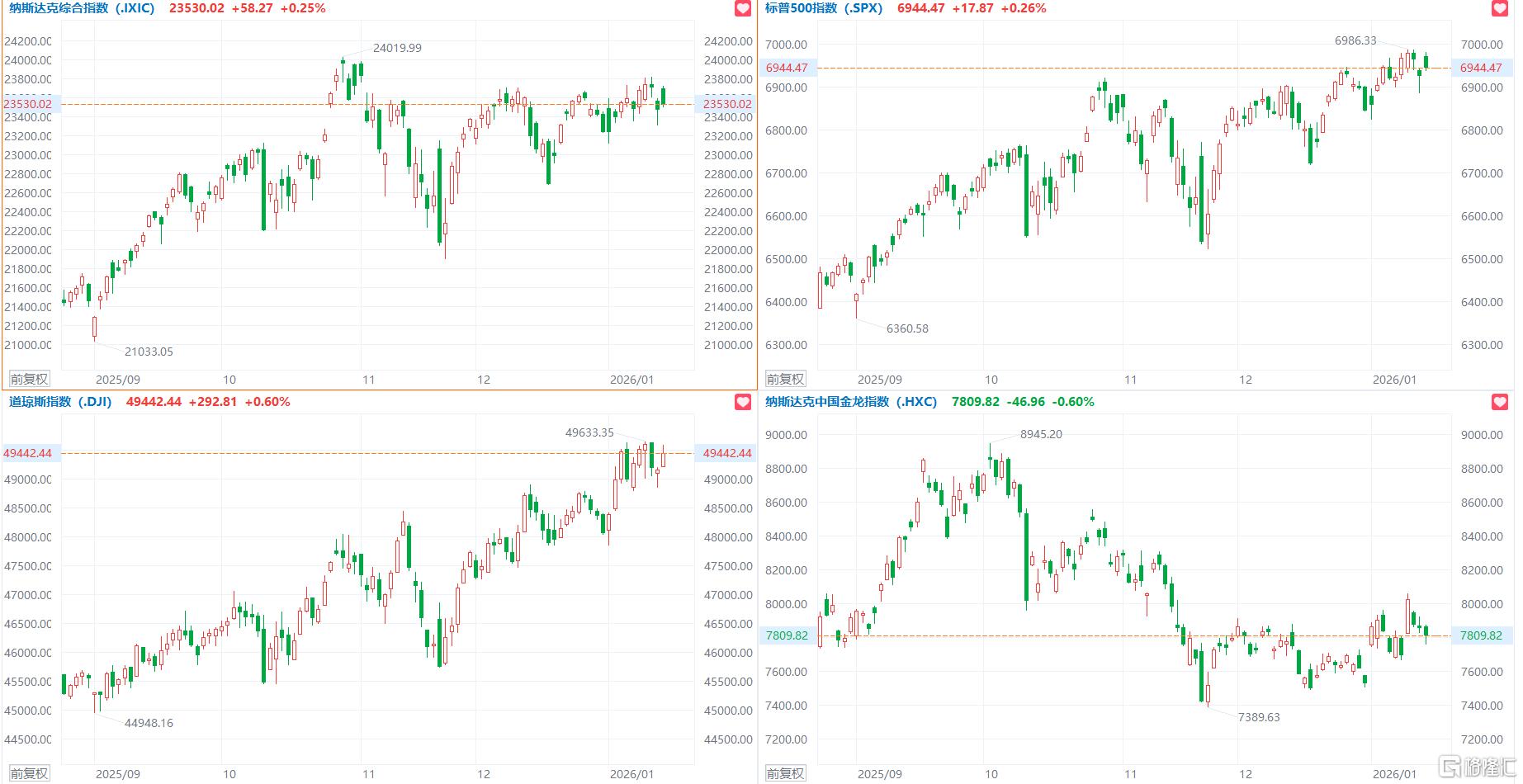
白银剧震,国际原油价格大跌
Zhong Guo Zheng Quan Bao· 2026-01-15 23:49
Market Overview - On January 15, US stock indices rose collectively, with the Dow Jones Industrial Average, Nasdaq, and S&P 500 increasing by 0.60%, 0.25%, and 0.26% respectively [2] - Major technology stocks showed mixed performance, with Nvidia up by 2.10%, META up by 0.86%, and Amazon up by 0.65%, while Tesla, Microsoft, Apple, and Alphabet saw declines [3][6] Earnings Reports - Morgan Stanley reported Q4 revenue growth of 10% year-over-year to $17.89 billion, exceeding market expectations of $17.75 billion, with net profit rising 18% to $4.40 billion [7] - Goldman Sachs posted a Q4 net profit of $4.617 billion, a 12% increase year-over-year, with stock trading revenue reaching a record $4.31 billion [7] Semiconductor Sector - The Philadelphia Semiconductor Index rose by 1.76%, reaching a historical high, with notable gains from companies like Kioxia and Applied Materials [7] Chinese Stocks - The Nasdaq Golden Dragon China Index fell by 0.60%, with significant gains from companies like Su Xuan Tang Pharmaceutical up over 10% and Hesai Technology up over 7% [8][9] Commodity Market - International crude oil prices dropped over 4%, while precious metals experienced significant volatility, with silver prices briefly hitting a historical high before a sharp decline [13]
央行:降准降息还有一定空间;中国航天科技集团:2026年要全力突破重复使用火箭技术,大力发展商业航天等新产业——《投资早参》
Mei Ri Jing Ji Xin Wen· 2026-01-15 23:32
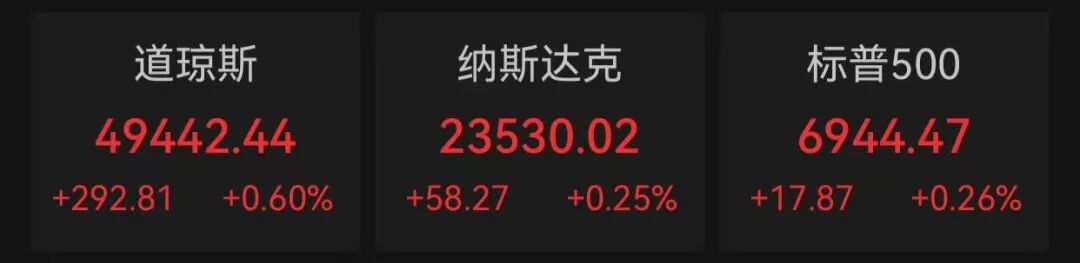
Important Market News - The People's Bank of China will introduce eight policy measures to support economic structural transformation, including a 0.25 percentage point reduction in various structural monetary policy tool rates and an increase in re-lending quotas for agriculture and small enterprises by 500 billion yuan [1] - U.S. stock indices closed higher, with the Dow Jones up 0.6%, S&P 500 up 0.26%, and Nasdaq up 0.25%. Notable gains were seen in TSMC and semiconductor stocks, while Chinese concept stocks mostly declined [1] Industry Insights - China Aerospace Science and Technology Corporation held a meeting to discuss its 2026 work plan, emphasizing the importance of advancing major aerospace projects and technology transformation to build a strong aerospace nation [3] - The satellite internet industry is expected to become a new sector in the space economy, with the satellite communication market projected to reach 200 to 400 billion yuan by 2030, growing at an annual compound rate of 10% to 28% [4] - The State Grid's investment plan for the 14th Five-Year Plan period is set at 4 trillion yuan, focusing on green transformation and the construction of a new power system, with a projected 30% increase in cross-regional transmission capacity [6] - Alibaba's strategy for its AI product "Qianwen" aims to enhance its capabilities in real-life scenarios, marking a shift in the AI industry from technical competition to practical application [6]

2026年销量目标现分化:传统车企稳健推进 新势力冲刺高增长
Zhong Guo Zheng Quan Bao· 2026-01-15 22:47
Core Insights - The automotive market in 2026 is characterized by significant differentiation among major car manufacturers, with a total sales target exceeding 21.55 million units, approximately 63% of the 2025 domestic sales volume [1] - Traditional automakers are targeting a steady growth rate of 10% to 30%, focusing on new energy vehicles and international expansion, while new entrants and cross-industry brands are setting aggressive targets of 34% to 67.5% to capture market share [1] Summary by Category Traditional Automakers - Major traditional automakers have set sales targets concentrated around 3 million units, with Geely aiming for 3.45 million units in 2026, a 14% increase from 2025, and a new energy vehicle target of 2.22 million units, achieving a penetration rate of 64.3% [2] - Chery Group has set a target of 3.2 million units, also a 14.03% increase, with plans to launch 17 key models focusing on electrification and intelligence [2] - Dongfeng Group is more aggressive, raising its target from 2.5 million to 3.25 million units, a 30% increase, with a focus on 1.7 million new energy vehicles and 600,000 exports [2] - Great Wall Motors has set a more cautious target of 1.8 million units, reflecting a 36% increase from 2025 [2] New Entrants and Cross-Industry Brands - New entrants like Leap Motor are setting high growth targets, with a goal of 1 million units in 2026, representing a 67.5% increase from 2025's 596,600 units [3] - Xiaomi aims for 550,000 units, a 34% increase, with plans to launch multiple new models to enhance its product matrix [3] - NIO has set a target range of 456,000 to 489,000 units, maintaining a stable growth rate of 40% to 50% [3] Joint Venture Brands - Joint venture brands are generally more conservative, with GAC Toyota setting a target of 800,000 units, a mere 3.6% increase from 2025 [4] - SAIC Volkswagen aims for 1 million units, maintaining its 2025 target, while overall, SAIC Volkswagen targets 1.2 million units through the introduction of seven new energy vehicles [4] Factors Supporting Target Achievement - The differentiation in growth targets reflects a shift from incremental expansion to competition within existing market shares, with the difficulty of achieving these targets closely tied to company fundamentals, product strategies, and operational capabilities [5] - New energy vehicle sales growth targets are significantly higher than overall targets, indicating a consensus that new energy vehicles are becoming the main growth driver in the market [5] - The ability to meet sales targets is influenced by three key dimensions: the rollout of new energy products, success in overseas markets, and the overall capability of the organization [6][7]
2026年销量目标现分化: 传统车企稳健推进 新势力冲刺高增长
Zhong Guo Zheng Quan Bao· 2026-01-15 21:12
Core Insights - The automotive market in 2026 is characterized by significant differentiation in sales targets among major car manufacturers, with a total target exceeding 21.55 million units, approximately 63% of the 2025 domestic sales volume [1] - Traditional automakers are focusing on stable growth rates of 10% to 30%, while new entrants and cross-industry brands are setting aggressive targets of 34% to 67.5%, indicating a strong push for market share [1] Summary by Company - **Geely**: Set a sales target of 3.45 million units for 2026, a 14% increase from 2025, with a focus on 2.22 million units of new energy vehicles (NEVs), achieving a penetration rate of 64.3% [1] - **Chery**: Aims for 3.2 million units, a 14.03% increase from 2025's 2.81 million units, with plans to launch 17 key models [2] - **Dongfeng Group**: Targets 3.25 million units, a 30% increase from 2025, with 1.7 million NEVs and 600,000 units for export [2] - **Great Wall Motors**: Sets a more conservative target of 1.8 million units, a 36% increase from 2025's 1.32 million units [2] - **Leap Motor**: Aims for 1 million units, a 67.5% increase from 2025's 596,600 units, leveraging core technology and a competitive parts system [2] - **Xiaomi**: Targets 550,000 units, a 34% increase from 2025's 410,000 units, emphasizing a stable expansion strategy [3] - **NIO**: Plans for a sales range of 456,000 to 489,000 units, maintaining a growth rate of 40% to 50% [3] - **GAC Toyota**: Sets a conservative target of 800,000 units, a 3.6% increase from 2025 [3] - **SAIC Volkswagen**: Aims for 1 million units, maintaining 2025 levels, with plans for 7 new NEV models [3] Market Dynamics - The automotive industry is shifting from incremental expansion to competition within existing market shares, with varying growth rates reflecting companies' strategies and market conditions [4] - Traditional automakers are generally targeting growth rates between 13% and 30%, with NEV sales growth rates significantly higher, indicating a consensus on NEVs as the main growth driver [4] - New energy vehicle sales targets are notably higher than overall sales targets, with Geely and Changan targeting 32% and 26.2% growth rates respectively [4] Strategic Considerations - The high growth targets set by new entrants are driven by the need for scale to improve cash flow and profitability, but achieving these targets will require strong organizational capabilities [5] - Key factors influencing the achievement of sales targets include the rollout of new energy products, success in overseas markets, and the overall capability of the companies [6] - The industry is expected to see a 4.3% growth in exports, with companies like BYD targeting 1.5 to 1.6 million units for overseas sales [6]






传统车企稳健推进 新势力冲刺高增长
Zhong Guo Zheng Quan Bao· 2026-01-15 20:48
Core Insights - The automotive market in 2026 is characterized by significant differentiation in sales targets among major car manufacturers, with a total target exceeding 21.55 million units, approximately 63% of the 2025 domestic sales volume [1] - Traditional automakers are focusing on stable growth rates of 10% to 30%, while new entrants and cross-industry brands are setting aggressive targets ranging from 34% to 67.5%, indicating a strong push for market share [1] Summary by Company - Geely aims for a sales target of 3.45 million units in 2026, a 14% increase from 2025, with a focus on 2.22 million units of new energy vehicles, achieving a penetration rate of 64.3% [1] - Chery targets 3.2 million units, a 14.03% increase from 2025, with plans to launch 17 key models focusing on electrification and intelligence [2] - Dongfeng Group sets an ambitious target of 3.25 million units, a 30% increase from 2025, with a focus on 1.7 million new energy vehicles and 600,000 exports [2] - Great Wall Motors adopts a more cautious approach with a target of 1.8 million units, reflecting a 36% increase from 2025 [2] - Leap Motor aims for 1 million units, a 67.5% increase, building on a strong 2025 performance of 596,600 units [2] - Xiaomi targets 550,000 units, a 34% increase, emphasizing a production strategy driven by orders [3] - NIO sets a sales target range of 456,000 to 489,000 units, maintaining a growth rate of 40% to 50% [3] - GAC Toyota's target is 800,000 units, a modest 3.6% increase, while SAIC Volkswagen aims for 1 million units, maintaining its 2025 target [3] Market Dynamics - The differentiation in sales targets reflects a shift from incremental expansion to competition within existing market shares, with the difficulty of achieving these targets closely tied to each company's base, product layout, and systemic capabilities [4] - Traditional automakers are generally targeting growth rates between 13% and 30%, with a notable emphasis on new energy vehicle sales growth, which is significantly higher than overall growth targets [4] - New energy vehicles are recognized as the main growth engine, with companies like Geely and Changan setting ambitious growth targets for their new energy vehicle sales [4] - The aggressive targets set by new entrants are seen as a response to the need for scale, cash flow improvement, and valuation support, although they face challenges in converting scale into systemic strength [5] Key Factors for Target Achievement - The success of sales targets hinges on three main dimensions: the rollout of new energy products, effectiveness in overseas market expansion, and the overall systemic support capabilities of the companies [5] - Companies like Geely and Changan are expected to achieve their targets due to stable completion rates and robust channel layouts, while some joint venture brands may face risks of market share erosion despite conservative targets [5]

一个普通自动驾驶算法工程师的2025年
自动驾驶之心· 2026-01-15 12:28
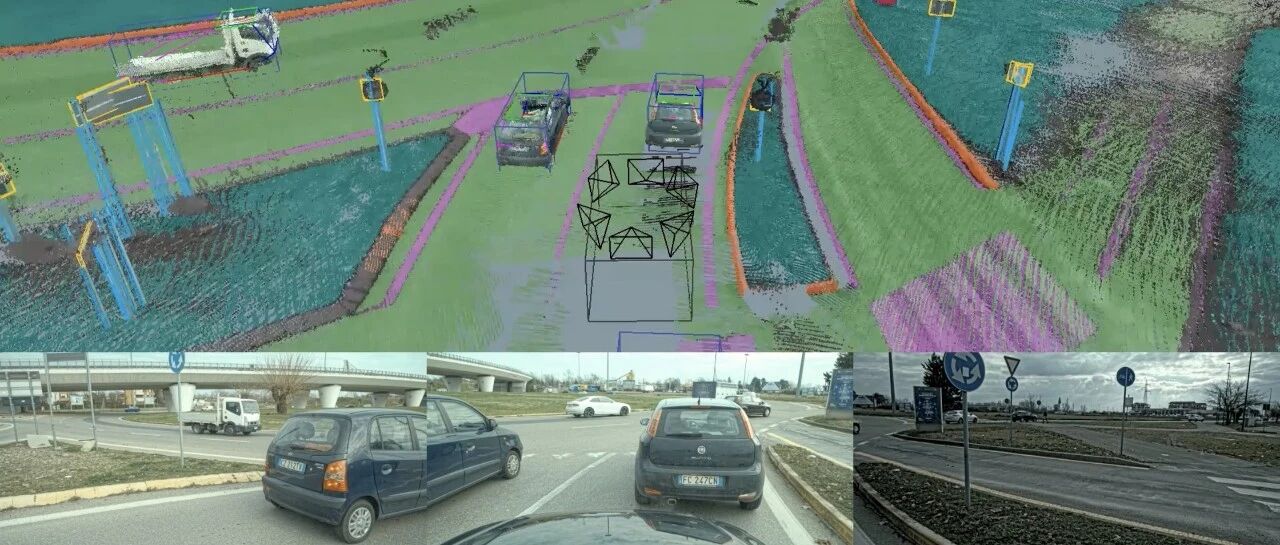
Core Viewpoint - The article discusses the significant advancements in the autonomous driving industry in 2025, focusing on the evolution of L2, L3, and L4 levels of autonomous driving technology, highlighting both the opportunities and challenges faced by the industry [3][11]. Group 1: L2 Level Developments - In 2025, L3 autonomous driving technology began to gain regulatory approval, leading to a decline in the previously popular "L2++" concept, with all consumer-facing smart driving functions now categorized as L2 [6][8]. - BYD initiated the "smart driving equality" movement by integrating its self-developed "Tian Shen Zhi Yan" system into lower-priced models, making advanced features accessible to more consumers [8]. - Traditional automakers like Geely and Chery followed suit, expanding mid-level assisted driving features to a broader market, contributing to a wave of widespread smart driving adoption [8][10]. - The market saw an increase in domestic smart driving suppliers like Momenta expanding into overseas markets, securing contracts with established automakers [8][10]. Group 2: L3 Level Developments - The end of 2025 marked a turning point for L3 autonomous driving, with the Ministry of Industry and Information Technology granting approval for the first L3 conditional autonomous driving models, including the BAIC Arcfox Alpha S and Changan Deep Blue SL03 [12][14]. - These models can operate under specific conditions, with the Arcfox capable of speeds up to 80 km/h on designated roads, marking a significant shift in responsibility from drivers to manufacturers and system suppliers [14][15]. - The approval of L3 technology is expected to reshape the industry landscape, potentially becoming a benchmark for measuring the leading players in the autonomous driving sector in 2026 [15]. Group 3: L4 Level Developments - 2025 was a pivotal year for L4 autonomous driving, witnessing a resurgence in capital investment and the beginning of commercial viability, with companies like Pony.ai and WeRide going public and raising significant funds [16][17]. - L4 technology demonstrated its commercial potential in specific applications, such as autonomous mining trucks and urban delivery vehicles, achieving operational efficiencies and cost reductions [19][23]. - The industry consensus shifted from a focus on technological idealism to practical commercial applications, emphasizing the importance of production capabilities and operational efficiency [23]. Group 4: Industry Insights and Future Outlook - The article emphasizes the need for continuous learning and adaptation within the autonomous driving sector, as technological advancements and market dynamics evolve rapidly [24][29]. - The growing application of autonomous driving technology across various urban and logistical scenarios in China reflects the country's leadership in the global autonomous driving landscape [29].
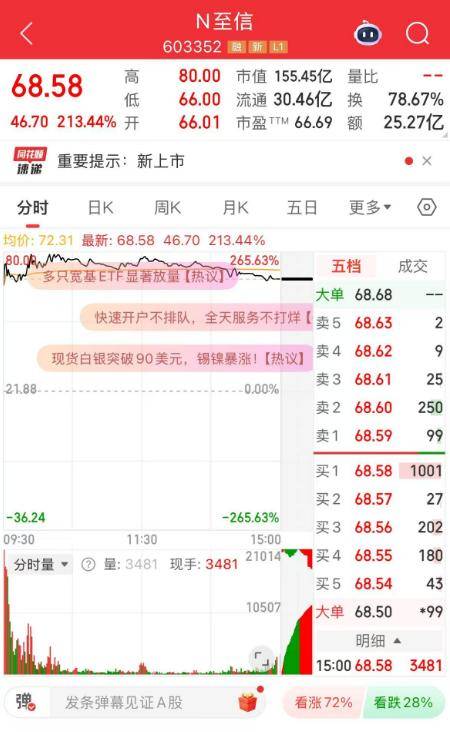
2026年重庆首只新股诞生 至信股份A股上市首日涨幅达213.44%
Sou Hu Cai Jing· 2026-01-15 11:40
Group 1 - Chongqing Zhixin Industrial Co., Ltd. officially listed on the Shanghai Stock Exchange on January 15, 2026, becoming the first new stock from Chongqing to enter the A-share market this year, increasing the total number of A-share listed companies in Chongqing to 79 [1] - On its first trading day, the stock price reached 68.58 CNY per share, with a cumulative increase of 213.44%, and a market capitalization of 15.545 billion CNY, indicating strong market recognition of its investment value [3] - The company has over 30 years of experience in the automotive parts sector, focusing on the development, processing, production, and sales of automotive welding parts and related molds, and has established a comprehensive service system integrating "parts + molds + intelligent manufacturing" [3][4] Group 2 - The IPO involved the public issuance of 5,666,667 new shares, raising approximately 1.24 billion CNY, with a net amount of 1.127 billion CNY, primarily aimed at expanding welding production capacity and technical upgrades [4] - The company's price-to-earnings ratio is 26.85, lower than the industry average, and the revenue share from new energy vehicles has increased from 25.27% to 71.42%, indicating significant growth potential [4] - The automotive industry is a pillar industry in Chongqing, and the successful listing of Zhixin Co. is seen as a result of the booming automotive industry in the region, with the chairman expressing commitment to enhancing technological capabilities and governance structures to create long-term value for shareholders [4]
蔚来李斌:2025年Q4交付4万辆ES8 有望实现盈利目标
Xin Lang Cai Jing· 2026-01-15 11:13
Core Viewpoint - NIO plans to deliver 40,000 units of the new ES8 by Q4 2025, aiming for profitability in that quarter with stable gross margins per vehicle [1] Group 1: Company Strategy - CEO Li Bin outlined a mid-to-long-term growth blueprint, targeting an annual sales growth rate of 40% to 50% over the next 3 to 5 years [1]
李斌开年内部讲话:预计2025年第四季度盈利目标可实现,推动AI在全业务链条落地
Xin Lang Cai Jing· 2026-01-15 10:55
1月5日,蔚来汽车通过内部邮件宣布,正式成立人工智能技术委员会(AGI Committee),该委员会将 牵头推进AI在全业务链条中的落地执行。 1月15日,智通财经获悉,1月14日,蔚来汽车CEO李斌发表新年首次内部讲话。他表示,蔚来在去年第 四季度交付4万辆全新ES8,每辆车均有稳健毛利,预计2025年第四季度盈利目标可以实现。李斌希 望,接下来3至5年,蔚来汽车能够实现年均40%至50%的稳定增长。 李斌在讲话最后强调,2026年公司面临的最大挑战并非市场、产品或销售,而在于组织内部心态。他表 示,蔚来汽车仍是一家创业公司,必须持续巩固阵地,打持久战,以长期、持续的努力赢得最终胜利。 (智通财经记者 周姝祺) 另外,李斌表示,要推动AI在全业务链条中的系统性落地,构建公司级AI能力体系,覆盖从研发、生 产制造、供应链,到财务、人力资源等所有部门和流程,通过AI全面提升效率。 在内部讲话中,李斌明确了蔚来汽车今年的三项重点任务。首先,确保三款新车型按计划、高质量交 付;其次,加大对智能驾驶的算力投入,目标是发布三个重要智驾版本,重新回到行业领先地位。李斌 指出,在公司整体资源依然紧张情况下,他仍然为智驾部 ...