
L4

Search documents
WeRide Inc.(WRD) - 2025 Q4 - Earnings Call Transcript
2026-03-23 13:02
WeRide (NasdaqGM:WRD) Q4 2025 Earnings call March 23, 2026 08:00 AM ET Company ParticipantsJennifer Li - CFO and Head of InternationalTony Han - Founder, Chairman, and CEONone - Company RepresentativeConference Call ParticipantsFang Xinyu - Associate AnalystJiajie Shen - Equity Research AnalystLeo You - Research AnalystMing-Hsun Lee - Equity Research AnalystTim Hsiao - Equity AnalystOperatorGood morning and good evening, ladies and gentlemen. Thank you for standing by, and welcome to WeRide's Q4 and Full Ye ...

WeRide Inc.(WRD) - 2025 Q4 - Earnings Call Transcript
2026-03-23 13:00
WeRide (NasdaqGM:WRD) Q4 2025 Earnings call March 23, 2026 08:00 AM ET Speaker4Good morning and good evening, ladies and gentlemen. Thank you for standing by, and welcome to WeRide's Q4 and full year 2025 earnings conference call. Please note that today's event is being recorded. At this time, all participants are in listen-only mode. For today's call, management will use English as the main language. A third-party interpreter will provide simultaneous Chinese interpretation. The company will be hosting a q ...
李想的理想是AI?
3 6 Ke· 2026-01-29 12:44
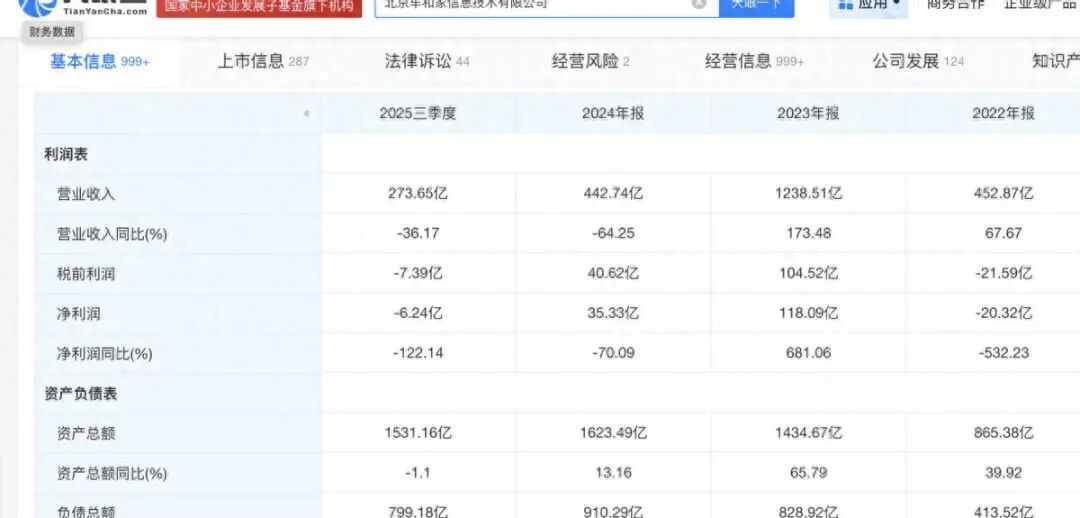
Core Viewpoint - Li Auto is undergoing significant changes, with a strategic shift towards AI, as indicated by a recent internal meeting led by CEO Li Xiang, where the focus was solely on AI rather than vehicles [2][3][5]. Group 1: Company Strategy and Changes - Li Auto's CEO, Li Xiang, held an unexpected all-hands meeting to discuss AI, leaving employees confused about the direction [2][3]. - The company recently posted job openings for humanoid robot positions, leading to a 7% increase in stock price, reflecting market optimism about its new AI narrative [4]. - Li Auto's strategic pivot towards AI is perceived as unusually rapid, with Li Xiang suggesting an "All in AI" approach [5][6]. Group 2: Financial Performance - Li Auto is projected to face challenges in 2025, with a reported net loss of 624 million yuan in the first three quarters, indicating a shift from profitability to losses [7]. - The company's revenue for 2025 is expected to decline significantly, with a year-on-year decrease of 36.17% [8]. Group 3: AI Vision and Future Plans - Li Xiang believes that 2026 will be the last year for companies aiming to become leaders in AI to enter the market [9]. - The company plans to develop humanoid robots and aims to be among the top three global companies in foundational models, chips, operating systems, and embodied intelligence [10][11]. - Li Auto is set to undergo a major organizational restructuring to focus on AI, with the core of its smart driving team being a focal point for adjustments [13]. Group 4: Industry Context and Competition - The automotive industry is shifting from traditional fuel engines to smart driving technologies, which are closely related to AI and robotics [25][26]. - Competitors like Tesla and Xiaopeng are already advancing in related products, indicating that Li Auto's transition may be catching up to industry trends [27]. - The company faces challenges in expanding its physical entry points and refining its foundational models to compete with established players in the AI space [28].


一个普通自动驾驶算法工程师的2025年
自动驾驶之心· 2026-01-15 12:28
Core Viewpoint - The article discusses the significant advancements in the autonomous driving industry in 2025, focusing on the evolution of L2, L3, and L4 levels of autonomous driving technology, highlighting both the opportunities and challenges faced by the industry [3][11]. Group 1: L2 Level Developments - In 2025, L3 autonomous driving technology began to gain regulatory approval, leading to a decline in the previously popular "L2++" concept, with all consumer-facing smart driving functions now categorized as L2 [6][8]. - BYD initiated the "smart driving equality" movement by integrating its self-developed "Tian Shen Zhi Yan" system into lower-priced models, making advanced features accessible to more consumers [8]. - Traditional automakers like Geely and Chery followed suit, expanding mid-level assisted driving features to a broader market, contributing to a wave of widespread smart driving adoption [8][10]. - The market saw an increase in domestic smart driving suppliers like Momenta expanding into overseas markets, securing contracts with established automakers [8][10]. Group 2: L3 Level Developments - The end of 2025 marked a turning point for L3 autonomous driving, with the Ministry of Industry and Information Technology granting approval for the first L3 conditional autonomous driving models, including the BAIC Arcfox Alpha S and Changan Deep Blue SL03 [12][14]. - These models can operate under specific conditions, with the Arcfox capable of speeds up to 80 km/h on designated roads, marking a significant shift in responsibility from drivers to manufacturers and system suppliers [14][15]. - The approval of L3 technology is expected to reshape the industry landscape, potentially becoming a benchmark for measuring the leading players in the autonomous driving sector in 2026 [15]. Group 3: L4 Level Developments - 2025 was a pivotal year for L4 autonomous driving, witnessing a resurgence in capital investment and the beginning of commercial viability, with companies like Pony.ai and WeRide going public and raising significant funds [16][17]. - L4 technology demonstrated its commercial potential in specific applications, such as autonomous mining trucks and urban delivery vehicles, achieving operational efficiencies and cost reductions [19][23]. - The industry consensus shifted from a focus on technological idealism to practical commercial applications, emphasizing the importance of production capabilities and operational efficiency [23]. Group 4: Industry Insights and Future Outlook - The article emphasizes the need for continuous learning and adaptation within the autonomous driving sector, as technological advancements and market dynamics evolve rapidly [24][29]. - The growing application of autonomous driving technology across various urban and logistical scenarios in China reflects the country's leadership in the global autonomous driving landscape [29].

文远知行-W(00800.HK):立足国内发力海外 ROBOX商业化落地龙头
Ge Long Hui· 2026-01-13 10:09
Core Insights - The company, founded in 2017 by experts in computer vision and machine learning, has expanded its business from Robotaxi to multiple L4 scenarios including Robobus, Robovan, and Robosweeper, while also venturing into L2+ assisted driving [1] - As of Q3 2025, the company's total revenue reached 171 million yuan, a year-on-year increase of 144%, with the core growth driver being the Robotaxi business, which generated approximately 35.3 million yuan in a single quarter, reflecting a staggering year-on-year increase of 761% [1] - The company is the only entity globally to have obtained autonomous driving licenses in eight countries, achieving pure unmanned commercial operations in Beijing and Guangzhou [2] Financial Performance - The company reported a gross margin of 32.9% in Q3 2025, with a net loss of 307.3 million yuan [1] - Cash and capital reserves stood at 5.4 billion yuan as of September 30, 2025, supporting ongoing R&D investments and scaling efforts [1] Market Position and Growth Potential - The Robotaxi business is approaching a commercial tipping point, with a clear path to profitability driven by advancements in technology and cost reductions [3] - The BOM cost for hardware has decreased from over 1 million yuan to below 300,000 yuan, enhancing the unit economic model [3] - The Chinese B-end shared mobility market is steadily expanding, with optimistic projections suggesting that the Robotaxi market could reach 200 billion yuan by 2030 [3] Regulatory Environment - The company benefits from a favorable regulatory landscape, with 51 cities in China opening pilot programs for unmanned driving operations [3] - Middle Eastern countries are strategically driving the adoption of autonomous vehicles, while Singapore is cautiously promoting compliance for various autonomous driving vehicles [3] Revenue Forecast and Investment Rating - The company is projected to generate total revenues of 555 million yuan, 945 million yuan, and 1.987 billion yuan for the years 2025, 2026, and 2027 respectively [4] - The current market valuation corresponds to price-to-sales ratios of 43.0, 25.2, and 12.0 for the years 2025, 2026, and 2027, respectively, with an initial "buy" rating assigned [4]
地平线生态联盟扩张,抵御Momenta的猛攻
3 6 Ke· 2025-12-17 11:00
Core Viewpoint - Horizon Robotics aims to democratize urban assisted driving technology by making it available for vehicles priced at 100,000 yuan, targeting the mass market [3][8]. Group 1: Market Dynamics - In the first three quarters of this year, vehicles priced above 200,000 yuan accounted for 30% of the market share, while those below 130,000 yuan made up 50%, with the latter lacking urban assisted driving features [3]. - The competition in the intelligent driving sector is consolidating around a few leading companies, with Huawei and Momenta establishing strong positions in the high-end market [4]. - Horizon Robotics is rapidly expanding its market presence by introducing new algorithm service models and collaborating with various partners, including major automotive suppliers [6][10]. Group 2: Technological Developments - Horizon Robotics has transitioned from being solely a chip manufacturer to a full-stack solution provider, emphasizing the integration of hardware and software [6][10]. - The company plans to equip vehicles priced as low as 70,000 yuan with its urban assisted driving solutions next year, targeting a significant portion of the Chinese passenger car market [8][12]. - The introduction of the HSD Together model allows Horizon to collaborate with international partners, facilitating its entry into overseas markets [17][18]. Group 3: Competitive Landscape - The competition between Horizon Robotics and Momenta is intensifying, with both companies vying for market share in the L2+ segment and preparing for a direct confrontation in the lower-priced vehicle market [13][16]. - Momenta is also developing its own chips, which are expected to enhance its competitive edge in the intelligent driving space [14][15]. - The ongoing competition is characterized by a race to achieve higher performance at lower costs, with both companies focusing on production efficiency and ecosystem collaboration [15][19].
李想聊如何看待理想被当作汽车公司估值
理想TOP2· 2025-10-30 06:34
Core Viewpoint - The company is positioned as an artificial intelligence terminal company, but its performance is still heavily reliant on vehicle sales, which raises questions about the correlation between AI development and sales performance [1][2]. Group 1: AI Development and Business Model - The company aims to achieve Level 4 autonomous driving, emphasizing that the true value of AI will be realized when users can engage in other activities during their commutes [1]. - The company is exploring the potential to generate $100 billion in revenue with a significantly reduced workforce, indicating that successful AI implementation could validate its strategic direction [2]. Group 2: Product and Technology Strategy - The company is diversifying its operations by developing operating systems, chips, and foundational models, similar to Apple's early product ecosystem, suggesting that such expansion is reasonable given its revenue scale [2]. - The company believes that investments in technology will lead to substantial cost savings, making the diversification strategy financially beneficial [2]. Group 3: Risk Factors and Organizational Capability - The company identifies three critical factors that could lead to its failure: failure to understand user needs, lack of superior products and technology, and significant organizational capability issues [3]. - These factors are interrelated, and a comprehensive assessment of all three is necessary for effective risk management and strategic planning [3].

地平线吕鹏:穿越智驾淘汰赛,“反内卷”要靠真外卷
Zhong Guo Qi Che Bao Wang· 2025-10-26 14:44
Core Insights - The automotive industry is shifting its focus from electrification to intelligence, with chips, radars, and systems becoming critical for success [3] - Horizon Robotics aims to empower smart vehicles and robots, emphasizing safety through a comprehensive safety development system certified by international standards [3][5] - The company follows a progressive technical path similar to Tesla, aiming to achieve L4 and L5 capabilities while focusing on an "end-to-end" architecture for human-like driving experiences [5][9] Group 1: Strategic Positioning - Horizon Robotics is one of the few domestic companies achieving large-scale production in the intelligent driving sector, positioning itself as an industry pioneer [3] - The company has developed a full-domain safety development system that integrates hardware and software, making it one of the most complete safety systems in the industry [3] - Horizon emphasizes the importance of product strength over marketing gimmicks, aiming to make intelligent driving a standard feature in vehicles [7] Group 2: Technical Path and Market Outlook - The company predicts that true L3 capabilities will be based on L4 capabilities, with expectations of achieving near "100,000 kilometers without takeover" by 2028, contingent on extensive real-world data and insurance models [5] - Horizon has empowered over 25 vehicle models for international markets, collaborating with various Tier-1 suppliers and foreign automakers [7] - The intelligent driving market is seen as a certainty, with Horizon's shipment of millions of chips reflecting genuine market demand [9] Group 3: Future Vision and Industry Dynamics - Horizon Robotics focuses on creating real value for users, rejecting short-term trends in favor of long-term strategies [12] - The company believes the intelligent driving industry is nearing a consolidation phase, with only two to three leading companies expected to emerge in the next three to five years [9] - The ultimate goal is to shift competition from internal struggles to collaborative value creation for users and industry expansion [12]
