银河V900

Search documents
吉利汽车2026年新车规划
数说新能源· 2026-03-23 03:02
Core Viewpoint - The article discusses the latest developments in the electric vehicle (EV) market, focusing on new models and their specifications from various brands, highlighting the growing competition and innovation in the sector [2][3][4]. Group 1: New Models and Specifications - Geely's Galaxy A7 is a compact to mid-size electric sedan, expected to launch in 2026, with a length of 4935mm and a wheelbase of 2845mm, priced between 100,000 to 150,000 CNY, emphasizing comfort and equipped with Flyme Auto smart cockpit [2]. - The Galaxy Starry 7 is a mid-size plug-in hybrid sedan targeting the 100,000 to 150,000 CNY family market, measuring 4958mm in length and 2852mm in wheelbase, with a pure electric range of up to 165km, featuring the Raytheon AI hybrid technology 2.0 [2]. - The Galaxy M7 is a compact plug-in hybrid SUV starting at around 100,000 CNY, offering a pure electric range of 225km and a comprehensive range of 1730km, focusing on family space and cost-effectiveness [3]. - The Galaxy Battleship is a rugged electric SUV with a boxy design, featuring AI smart four-wheel drive and a wading depth of 800mm, expected to be priced between 280,000 to 380,000 CNY [3]. - The Zeekr 8X is a mid-large plug-in hybrid SUV, positioned as a high-performance flagship, measuring between 5100-51080mm in length, with a comprehensive power of 1030kW and a pure electric range of 400km, anticipated to be priced around 400,000 CNY [3]. - The Zeekr 009 plug-in hybrid version is based on the pure electric model, featuring a 2.0T plug-in hybrid system with a pure electric range of 200-300km and a comprehensive range exceeding 1000km, enhancing long-distance travel convenience [3]. - The Lynk & Co 800 is a large six-seat plug-in hybrid SUV based on the SPA EVO architecture, positioned just below the Lynk & Co 900, offering both five and six-seat configurations with top-tier features [4]. - The Lynk & Co 07EM-P travel version enhances storage space practicality with a design that complements the pure electric Zeekr 007GT [4].



吉利汽车(0175.HK)2025年年报点评:2026E产品结构改善 全域AI赋能+全球化提速
Ge Long Hui· 2026-03-19 23:21
Core Viewpoint - In 2025, Geely's total revenue is expected to increase by 25.1% year-on-year to CNY 345.23 billion, with a gross margin remaining stable at 16.6% and a net profit attributable to shareholders rising by 0.2% to CNY 16.85 billion, while core net profit is projected to grow by 36% to CNY 14.41 billion [1] Group 1 - Geely's total sales are projected to increase by 39.0% year-on-year to 3.025 million units in 2025, with new energy vehicle (NEV) sales expected to rise by 90% to 1.688 million units, accounting for 55.8% of total sales, an increase of 15 percentage points [2] - The sales forecast for 2026 indicates a steady growth target of 3.45 million units, representing a 14% year-on-year increase, driven by the expansion of luxury products under the Zeekr brand and new models from Lynk & Co and Galaxy [2] Group 2 - Zeekr's privatization was successfully completed by December 2025, with all revenue and profits being fully integrated into Geely, and Zeekr achieving profitability in Q4 2025 with a gross margin of approximately 23% [3] - Geely's global expansion is accelerating, with a target of 640,000 units in export sales for 2026, focusing on key overseas markets and increasing the number of overseas channels to over 2,200 [3] - The company is enhancing its AI capabilities, with plans for the mass production of the H9 model and the scaling of Robotaxi operations, aiming to create a comprehensive intelligent mobility ecosystem [3] Group 3 - The investment rating is maintained at "Buy," with a slight downward adjustment in net profit forecasts for 2026 and 2027, and a new forecast for 2028, alongside a target price adjustment to HK$25.70, reflecting a 13x PE for 2026 [4] - The positive outlook is supported by improvements in product structure and significant growth in export sales [4]
【吉利汽车(0175.HK)】2026E产品结构改善,全域AI赋能+全球化提速——2025年年报点评(倪昱婧/邢萍)
光大证券研究· 2026-03-19 23:07
Core Viewpoint - The article highlights the strong performance of Geely in 2025, driven by significant growth in electric vehicle sales and an improved vehicle lineup, alongside the successful privatization of Zeekr, which is expected to enhance operational efficiency and global expansion [4][5][6]. Financial Performance - In 2025, Geely's total revenue increased by 25.1% year-on-year to CNY 345.23 billion, with a gross margin remaining stable at 16.6%. The net profit attributable to shareholders rose by 0.2% to CNY 16.85 billion, while core net profit saw a substantial increase of 36% to CNY 14.41 billion [4]. Sales Growth - Geely's total sales in 2025 grew by 39.0% year-on-year to 3.025 million units, with electric vehicle sales surging by 90% to 1.688 million units, accounting for 55.8% of total sales, an increase of 15 percentage points [5]. Brand Performance - Sales by brand in 2025 included Geely Galaxy at 1.236 million units (up 149.9%), Lynk & Co at 350,000 units (up 22.8%), and Zeekr at 224,000 units (up 0.9%). The company anticipates a steady growth trajectory for 2026, targeting a 14% increase in sales to 3.45 million units [5]. Zeekr Privatization - The privatization of Zeekr was successfully completed in December 2025, with all revenues and profits from Zeekr fully integrated into Geely. Zeekr achieved profitability in Q4 2025, with a gross margin of approximately 23% [6]. Global Expansion and AI Integration - Geely is accelerating its global expansion, with a target of 640,000 units in export sales for 2026, focusing on key overseas markets. The company is also enhancing its AI capabilities, aiming for breakthroughs in smart mobility solutions, including the launch of Robotaxi services [6].
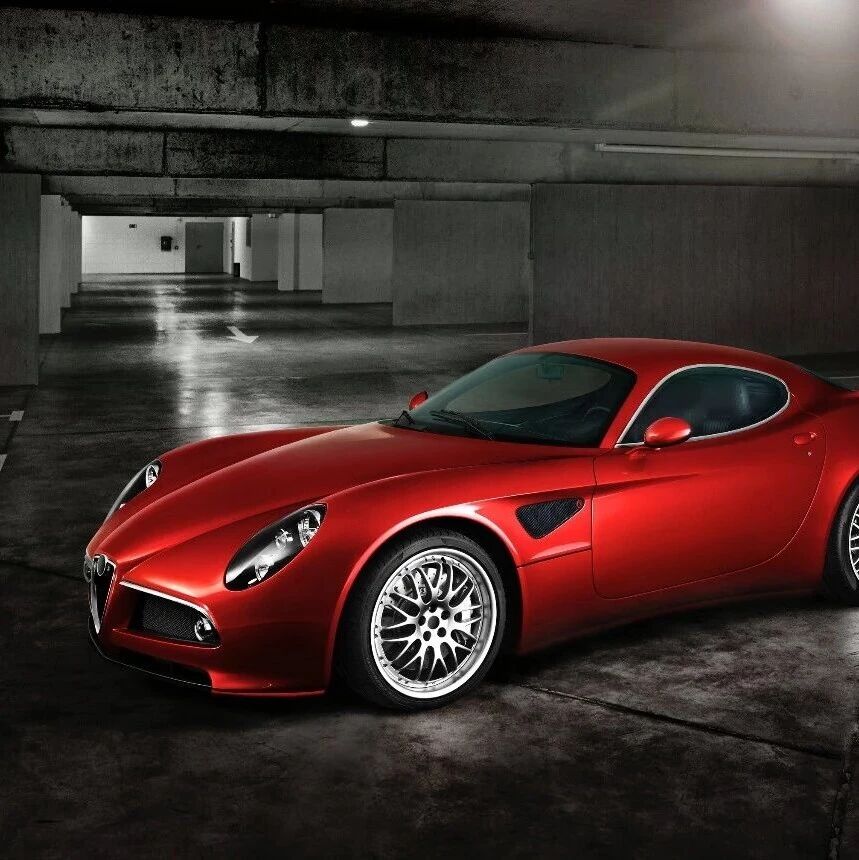
吉利汽车(00175):——吉利汽车(0175.HK)2025年年报点评:2026E产品结构改善,全域AI赋能+全球化提速
EBSCN· 2026-03-19 02:14
Investment Rating - The report maintains a "Buy" rating for Geely Automobile [4] Core Insights - Geely's total revenue for 2025 increased by 25.1% year-on-year to CNY 345.23 billion, with a gross margin stable at 16.6% and a net profit attributable to shareholders rising by 0.2% to CNY 16.85 billion [1] - The company achieved a total sales volume of 3.025 million units in 2025, a 39.0% increase year-on-year, with new energy vehicle sales surging by 90% to 1.688 million units, accounting for 55.8% of total sales [2] - The successful privatization of Zeekr was completed in December 2025, with all revenues and profits from Zeekr fully integrated into Geely, and Zeekr achieving profitability in Q4 2025 with a gross margin of approximately 23% [3] Summary by Relevant Sections Financial Performance - Geely's total revenue for 2025 was CNY 345.23 billion, with a year-on-year growth rate of 25.1% [1] - The core net profit attributable to shareholders increased by 36% year-on-year to CNY 144.1 billion [1] - The projected revenue for 2026 is CNY 424.42 billion, with a growth rate of 22.9% [5] Sales and Market Position - The total sales volume for 2025 reached 3.025 million units, with a significant increase in new energy vehicle sales [2] - The company aims for a sales target of 3.45 million units in 2026, representing a 14% year-on-year increase [2] Strategic Initiatives - The report highlights the acceleration of Geely's global expansion, with a target of 640,000 units in export sales for 2026 [3] - The integration of AI technology is emphasized, with plans for the launch of L3 level production vehicles and the scaling of Robotaxi operations [3]
崔东树:1月的新车推出伴随新价格 部分车型的价格下探力度较大
智通财经网· 2026-02-09 10:58
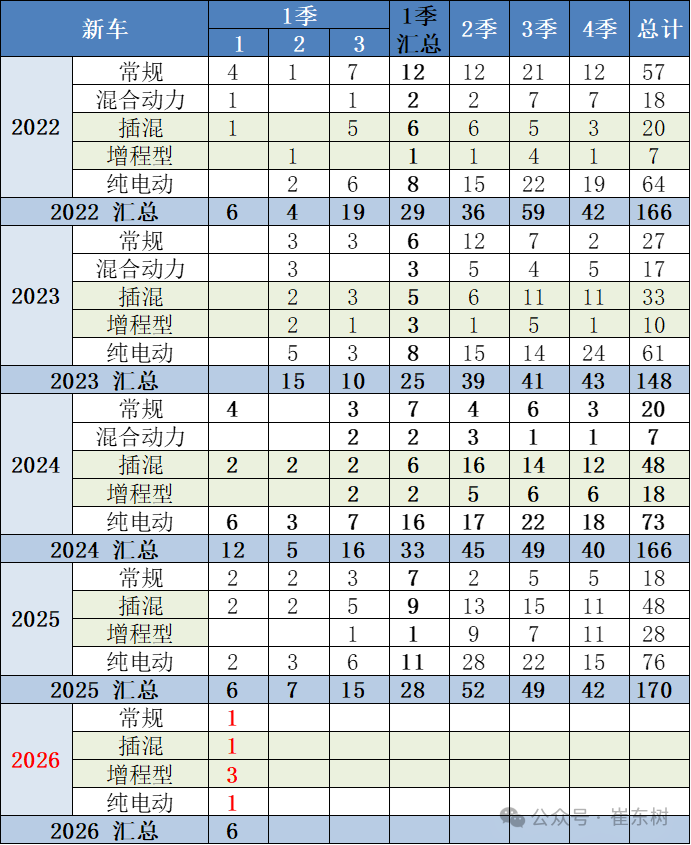
Core Viewpoint - The passenger car market is experiencing a slowdown in new traditional vehicle launches while there is a significant increase in new energy vehicle (NEV) introductions, indicating a shift in market dynamics and consumer preferences [1][2]. New Vehicle Launches - In January, the number of new vehicles launched was consistent with the previous year, with 6 new models introduced, including 1 pure electric, 1 plug-in hybrid, and 3 range-extended models. Only 1 new fuel vehicle was launched, highlighting a significant concern for the industry [1][3]. - The trend shows a shift from high-end to smaller vehicles, with many new models being compact cars, reflecting changing consumer preferences and the impact of trade-in policies [1][10]. Market Competition - The automotive industry is facing intense price competition, particularly among traditional and new energy vehicles, as manufacturers strive to capture market share in a rapidly evolving landscape [1][2]. - The classification of new models is crucial, with various manufacturers adopting different grading systems, although the industry commonly references the German Volkswagen classification system [1][7]. Future Market Potential - The domestic car market has significant potential for growth, particularly in the small car segment, which is essential for increasing private car ownership and facilitating the export of NEVs [2][3]. - The introduction of new tariffs and international trade dynamics will impact the export strategies of NEVs, particularly in targeting less developed markets before approaching developed ones [2]. Pricing Trends - The minimum prices for new models are gradually returning to market levels, with some new energy vehicle brands successfully expanding their product lines into lower price segments, which is expected to drive incremental sales [6][10]. - The pricing strategy for new models indicates a downward trend, with several models breaking previous price barriers for the years 2023-2025 [6]. Vehicle Classification and Standards - The classification of new energy vehicles is complex and requires careful consideration of various factors, including vehicle length and wheelbase, to establish industry standards [7][9]. - The current classification system is still under discussion, with industry experts encouraged to provide feedback to refine the grading of new models [16].
【新能源】2025年12月新能源汽车行业月报
乘联分会· 2026-02-03 10:48
Sales Performance - In December, the total passenger car sales reached 2.317 million units, a month-on-month increase of 14.2% but a year-on-year decrease of 16.1% [4] - The new energy vehicle (NEV) market saw sales of approximately 1.33 million units, a year-on-year increase of 2.9% and a month-on-month increase of 9.2% [4] - NEVs accounted for 57.4% of total passenger car sales in December, a decrease of 2.6% from the previous month but an increase of 10.6% compared to the same month last year [4] New Energy Market Overview - In December, pure electric vehicle sales were approximately 778,000 units, a year-on-year increase of 0.9% and a month-on-month increase of 1.1% [9] - Plug-in hybrid sales reached about 552,000 units, with a year-on-year increase of 5.9% and a month-on-month increase of 23.0% [9] - Cumulative NEV sales for 2025 reached 12.372 million units, with a cumulative year-on-year increase of 15.1% [9] Top Cities for NEV Sales - The top 10 cities accounted for 29.6% of NEV sales, an increase of 2.4% from the previous month [10] - The top three cities for NEV sales were Shanghai, Hangzhou, and Guangzhou, with Dongguan and Tianjin replacing Wuhan and Xi'an in the top ten [10] - The highest NEV penetration rates were in Shenzhen (71.0%), Shanghai (68.8%), and Tianjin (68.1%), while Dongguan had the lowest at 53.8% [10] Pure Electric Market Analysis - The top three segments in the pure electric market in December were B-SUV (19.5%), C-SUV (15.6%), and A0 class (14.3%) [14] - The market shares for B-SUV and C-SUV increased significantly by 3.7% and 2.5% respectively, while the A00 class market share decreased by 8.2% [14] - Compared to the same month last year, the C-SUV market share expanded from 7.2% to 15.8%, while the A00 class market share shrank from 13.8% to 5.2% [14] Market Dynamics - Key industry events in December included the global launch of the Xiaopeng X9 super range extender and the introduction of Huawei's next-generation DriveONE range extender generator [21] - GAC Group's internal restructuring led to the integration of its two NEV brands, Haobo and Aion, into a new business unit [23] - SAIC's semi-solid-state battery achieved mass production and delivery, marking it as the world's first and only semi-solid-state battery to be mass-produced [25] Industry Policy - The Ministry of Industry and Information Technology released a digital transformation implementation plan for the automotive industry on December 30, aiming to promote digitalization and intelligent upgrades [28] - The plan includes six key tasks, such as establishing a diagnostic assessment system and promoting the application of artificial intelligence in the automotive sector [29] - By 2027, the plan aims to improve labor productivity in the industry by 10% and shorten product development and delivery cycles by 20% [29]
“一个吉利”聚势向上,吉利汽车1月销量27万辆,海外销量翻倍增长
Jin Rong Jie· 2026-02-02 10:00
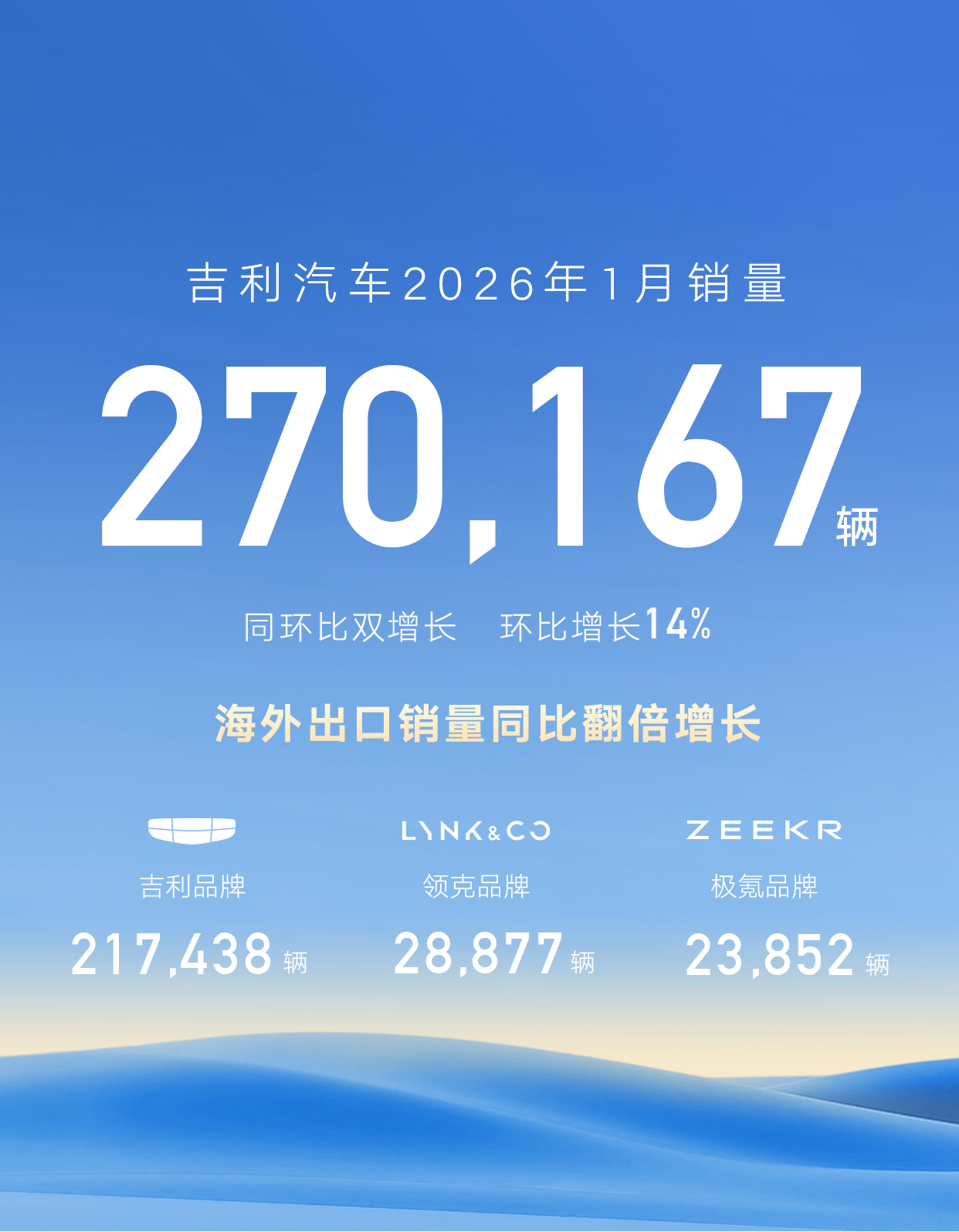
Core Insights - Geely Automobile Holdings Limited reported a total passenger car sales of 270,167 units in January 2026, marking a year-on-year increase of 1% and a month-on-month increase of 14% [1][2] - The company aims to achieve a sales target of 3.45 million units for the year 2026, with plans to launch 1-2 new models each quarter, including hybrid and hydrogen energy vehicles [1][20] Sales Performance - In January 2026, Geely's new energy vehicle sales reached 124,252 units, reflecting a year-on-year growth of approximately 3% [1] - The sales of Geely's premium brand Zeekr reached 23,852 units, doubling year-on-year [1][3] - Overseas exports amounted to 60,506 units, representing a significant year-on-year increase of 121% [1][20] Brand Development - Geely is focusing on product premiumization, with a clear brand matrix established post-integration [3][12] - The luxury brand Zeekr's sales in January were 23,852 units, with the Zeekr 9X and Zeekr 009 leading in their respective segments [3] - Lynk & Co sold 28,877 units in January, with 17,410 units being new energy vehicles, accounting for 60% of its total sales [5] Technological Advancements - Geely is advancing its AI technology with the launch of the WAM (World Action Model) at CES 2026, enhancing the integration of AI across vehicle systems [13][15] - The new generation assisted driving system, 千里浩瀚G-ASD, aims to provide superior user experience and will gradually introduce advanced driving features [15][16] - In the battery sector, Geely plans to launch a new lithium iron phosphate battery system in 2026, aiming for a 15% increase in energy density [17] Global Expansion Strategy - Geely's global strategy emphasizes regional deepening and global collaboration, with a target of 640,000 export units in 2026, representing over 50% growth [20][22] - The company is establishing a comprehensive industrial park in Malaysia to serve as a hub for Southeast Asia, aiming for an annual production capacity of 500,000 units [22] - Geely is also focusing on high-end market penetration in developed regions, leveraging partnerships with Volvo and Renault [22]
【联合发布】一周新车快讯(2026年1月17日-1月23日)
乘联分会· 2026-01-23 15:11
Core Viewpoint - The article provides an overview of new vehicle launches scheduled for January 2026, detailing specifications, pricing, and market segments for various manufacturers [2]. Group 1: Vehicle Launches - Jiangling Motors will launch the Ford Mustang on January 16, 2026, targeting the B SUV segment with a price range of 299,800 to 399,800 CNY [8]. - GAC Aion will introduce the Aion UT on January 17, 2026, in the AO HB segment, priced between 86,800 and 92,800 CNY [16]. - Geely will release the Galaxy V900 on January 20, 2026, in the C MPV segment, with prices ranging from 309,800 to 369,800 CNY [22]. - SAIC Volkswagen will launch the Volkswagen Lavida on January 20, 2026, in the A NB segment, with a price range of 120,900 to 143,900 CNY [30]. - BMW will introduce the iX1 on January 21, 2026, in the A SUV segment, priced between 228,000 and 268,000 CNY [36]. - FAW Car will launch the Bestune Yueyi 03 on January 22, 2026, in the A SUV segment, with a price of 109,900 CNY [44]. - Changan Automobile will release the Changan Lumin on January 23, 2026, in the A00 HB segment, priced at 46,900 CNY [52]. Group 2: Technical Specifications - The Ford Mustang features a 2.3T engine with a maximum power of 202 kW and torque of 429 N·m [8]. - The Aion UT is equipped with a pure electric powertrain, offering a range of 420 to 500 km (CLTC) [16]. - The Galaxy V900 has a 1.5T range-extended engine with a power output of 120 kW and an electric motor producing 340 kW [22]. - The Volkswagen Lavida offers both 1.5L and 1.5T engine options, with power outputs of 81 kW and 118 kW respectively [30]. - The iX1 features a pure electric powertrain with a maximum power of 150 kW and a range of 450 to 510 km (CLTC) [36]. - The Bestune Yueyi 03 has a pure electric engine with a power output of 122 kW and a range of 565 km (CLTC) [44]. - The Changan Lumin is powered by a pure electric engine with a power output of 35 kW and a range of 205 km (CLTC) [52].



2026年销量目标现分化:传统车企稳健推进 新势力冲刺高增长
Zhong Guo Zheng Quan Bao· 2026-01-15 22:47
Core Insights - The automotive market in 2026 is characterized by significant differentiation among major car manufacturers, with a total sales target exceeding 21.55 million units, approximately 63% of the 2025 domestic sales volume [1] - Traditional automakers are targeting a steady growth rate of 10% to 30%, focusing on new energy vehicles and international expansion, while new entrants and cross-industry brands are setting aggressive targets of 34% to 67.5% to capture market share [1] Summary by Category Traditional Automakers - Major traditional automakers have set sales targets concentrated around 3 million units, with Geely aiming for 3.45 million units in 2026, a 14% increase from 2025, and a new energy vehicle target of 2.22 million units, achieving a penetration rate of 64.3% [2] - Chery Group has set a target of 3.2 million units, also a 14.03% increase, with plans to launch 17 key models focusing on electrification and intelligence [2] - Dongfeng Group is more aggressive, raising its target from 2.5 million to 3.25 million units, a 30% increase, with a focus on 1.7 million new energy vehicles and 600,000 exports [2] - Great Wall Motors has set a more cautious target of 1.8 million units, reflecting a 36% increase from 2025 [2] New Entrants and Cross-Industry Brands - New entrants like Leap Motor are setting high growth targets, with a goal of 1 million units in 2026, representing a 67.5% increase from 2025's 596,600 units [3] - Xiaomi aims for 550,000 units, a 34% increase, with plans to launch multiple new models to enhance its product matrix [3] - NIO has set a target range of 456,000 to 489,000 units, maintaining a stable growth rate of 40% to 50% [3] Joint Venture Brands - Joint venture brands are generally more conservative, with GAC Toyota setting a target of 800,000 units, a mere 3.6% increase from 2025 [4] - SAIC Volkswagen aims for 1 million units, maintaining its 2025 target, while overall, SAIC Volkswagen targets 1.2 million units through the introduction of seven new energy vehicles [4] Factors Supporting Target Achievement - The differentiation in growth targets reflects a shift from incremental expansion to competition within existing market shares, with the difficulty of achieving these targets closely tied to company fundamentals, product strategies, and operational capabilities [5] - New energy vehicle sales growth targets are significantly higher than overall targets, indicating a consensus that new energy vehicles are becoming the main growth driver in the market [5] - The ability to meet sales targets is influenced by three key dimensions: the rollout of new energy products, success in overseas markets, and the overall capability of the organization [6][7]
2026年销量目标现分化: 传统车企稳健推进 新势力冲刺高增长
Zhong Guo Zheng Quan Bao· 2026-01-15 21:12
Core Insights - The automotive market in 2026 is characterized by significant differentiation in sales targets among major car manufacturers, with a total target exceeding 21.55 million units, approximately 63% of the 2025 domestic sales volume [1] - Traditional automakers are focusing on stable growth rates of 10% to 30%, while new entrants and cross-industry brands are setting aggressive targets of 34% to 67.5%, indicating a strong push for market share [1] Summary by Company - **Geely**: Set a sales target of 3.45 million units for 2026, a 14% increase from 2025, with a focus on 2.22 million units of new energy vehicles (NEVs), achieving a penetration rate of 64.3% [1] - **Chery**: Aims for 3.2 million units, a 14.03% increase from 2025's 2.81 million units, with plans to launch 17 key models [2] - **Dongfeng Group**: Targets 3.25 million units, a 30% increase from 2025, with 1.7 million NEVs and 600,000 units for export [2] - **Great Wall Motors**: Sets a more conservative target of 1.8 million units, a 36% increase from 2025's 1.32 million units [2] - **Leap Motor**: Aims for 1 million units, a 67.5% increase from 2025's 596,600 units, leveraging core technology and a competitive parts system [2] - **Xiaomi**: Targets 550,000 units, a 34% increase from 2025's 410,000 units, emphasizing a stable expansion strategy [3] - **NIO**: Plans for a sales range of 456,000 to 489,000 units, maintaining a growth rate of 40% to 50% [3] - **GAC Toyota**: Sets a conservative target of 800,000 units, a 3.6% increase from 2025 [3] - **SAIC Volkswagen**: Aims for 1 million units, maintaining 2025 levels, with plans for 7 new NEV models [3] Market Dynamics - The automotive industry is shifting from incremental expansion to competition within existing market shares, with varying growth rates reflecting companies' strategies and market conditions [4] - Traditional automakers are generally targeting growth rates between 13% and 30%, with NEV sales growth rates significantly higher, indicating a consensus on NEVs as the main growth driver [4] - New energy vehicle sales targets are notably higher than overall sales targets, with Geely and Changan targeting 32% and 26.2% growth rates respectively [4] Strategic Considerations - The high growth targets set by new entrants are driven by the need for scale to improve cash flow and profitability, but achieving these targets will require strong organizational capabilities [5] - Key factors influencing the achievement of sales targets include the rollout of new energy products, success in overseas markets, and the overall capability of the companies [6] - The industry is expected to see a 4.3% growth in exports, with companies like BYD targeting 1.5 to 1.6 million units for overseas sales [6]