
长安汽车

Search documents
乘用车板块1月6日涨2.13%,广汽集团领涨,主力资金净流入10.73亿元
Zheng Xing Xing Ye Ri Bao· 2026-01-06 08:56
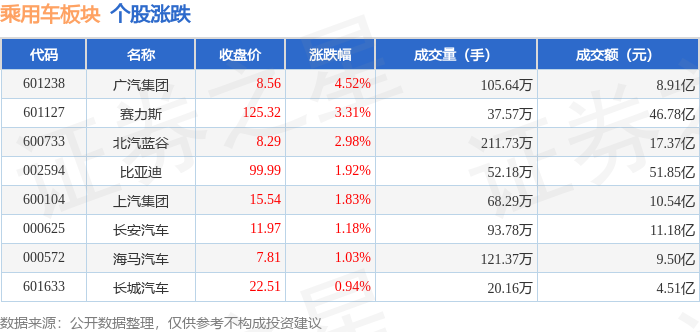
Market Performance - The passenger car sector increased by 2.13% compared to the previous trading day, with GAC Group leading the gains [1] - The Shanghai Composite Index closed at 4083.67, up 1.5%, while the Shenzhen Component Index closed at 14022.55, up 1.4% [1] Individual Stock Performance - GAC Group (601238) closed at 8.56, up 4.52%, with a trading volume of 1.0564 million shares and a transaction value of 889 million [1] - Seres (601127) closed at 125.32, up 3.31%, with a trading volume of 375,700 shares and a transaction value of 4.678 billion [1] - BAIC BluePark (600733) closed at 8.29, up 2.98%, with a trading volume of 2.1173 million shares and a transaction value of 1.737 billion [1] - BYD (002594) closed at 66.66, up 1.92%, with a trading volume of 521,800 shares and a transaction value of 5.185 billion [1] - SAIC Motor (600104) closed at 15.54, up 1.83%, with a trading volume of 682,900 shares and a transaction value of 1.054 billion [1] - Changan Automobile (000625) closed at 11.97, up 1.18%, with a trading volume of 937,800 shares and a transaction value of 1.118 billion [1] - Great Wall Motors (601633) closed at 22.51, up 0.94%, with a trading volume of 201,600 shares and a transaction value of 451 million [1] Fund Flow Analysis - The passenger car sector saw a net inflow of 1.073 billion from main funds, while retail investors experienced a net outflow of 557 million [1] - Main fund inflows and outflows for key stocks include: - BYD: Net inflow of 464 million, with retail outflows of 268 million [2] - Seres: Net inflow of 266,200, with retail outflows of 160 million [2] - BAIC BluePark: Net inflow of 116 million, with retail outflows of 52.5 million [2] - Changan Automobile: Net inflow of 84.26 million, with retail outflows of 52.5 million [2] - SAIC Motor: Net inflow of 80.56 million, with retail outflows of 26.28 million [2] - GAC Group: Net inflow of 27.5 million, with retail outflows of 39.66 million [2] - Great Wall Motors: Net inflow of 2.07 million, with retail inflows of 1.35 million [2]





钛白粉概念涨幅居前,14位基金经理发生任职变动
Jin Rong Jie· 2026-01-06 08:26
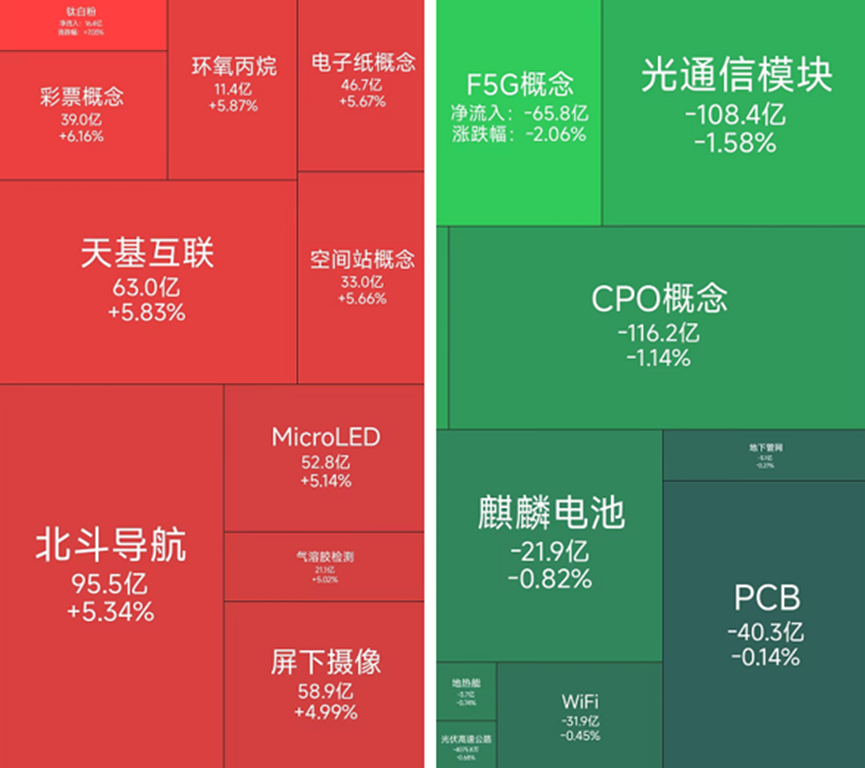
Market Performance - On January 6, A-shares saw a strong opening and closing, with the Shanghai Composite Index rising by 1.5% to 4083.67 points, marking a 13-day consecutive increase [1] - The Shenzhen Component Index increased by 1.4% to 14022.55 points, while the ChiNext Index rose by 0.75% to 3319.29 points [1] - Sectors that performed well included titanium dioxide, space-based internet, and Beidou navigation, while sectors such as F5G concept, optical communication modules, and CPO concept experienced declines [1] Fund Manager Changes - On January 6, 14 fund managers experienced changes in their positions, with 9 funds announcing departures of fund managers on the same day [3] - In the past 30 days (December 7 to January 6), a total of 585 fund managers left their positions across various funds [3] - Reasons for changes included retirement, product expiration, and job changes, with specific examples including three managers leaving due to job changes and two due to product expiration [3][4] Fund Manager Performance - Chen Liejiang, a fund manager at Shangzheng Fund, managed assets totaling 124 million yuan, with the highest return product being Shangzheng Zhengxiang Bond C, achieving a return of 121.20% over 1 year and 262 days [5] - He Ming, a new fund manager at Mingya Fund, managed assets of 271 million yuan, with the highest return product being Mingya Jiuan 90-day Holding Period Bond C, achieving a return of 165.55% over 2 years and 75 days [5] Fund Company Research Activity - In the past month, Huaxia Fund conducted the most company research, engaging with 41 listed companies, followed by Bosera Fund with 38 and Southern Fund with 33 [6][7] - The computer equipment industry was the most researched sector, with 132 instances of fund company engagement, followed by the automotive parts industry with 115 instances [7] Recent Fund Research Focus - The most researched stock in the past month was Zhongke Shuguang, with 117 fund management companies participating in the research, followed by Haiguang Information and Changan Automobile [8][10] - In the past week, the top researched company was Entropy Technology, with 34 fund institutions conducting research [9][10]



公募去年12月调研聚焦电子等赛道 长安汽车等获调研次数排名居前
Zheng Quan Shi Bao Wang· 2026-01-06 07:40
Group 1 - In December 2025, public fund research enthusiasm surged, with 155 public fund institutions participating in A-share research, covering 451 stocks across 29 industries, totaling 3,472 research instances [1] - Among the stocks researched in December 2025, 59 stocks saw monthly gains exceeding 20%, with the top ten all rising over 50%, led by Chaojie Co., which increased by 133.91% [1] - The electronics and machinery equipment sectors were the most favored by public fund research, with 64 stocks in the electronics sector receiving attention and 505 instances of research in the machinery equipment sector [1] Group 2 - Chang'an Automobile was the most researched stock with 88 instances, focusing on its transition to a smart low-carbon travel technology company while advancing in new energy and globalization [2] - In December 2025, 71 public fund institutions were actively involved in research, with Huaxia Fund leading with 100 instances, primarily focusing on the machinery equipment and electronics sectors [2] - Starstone Investment suggests that 2025 is likely the bottom of the current A-share profit cycle, with a clearer earnings outlook expected to support market fundamentals, moving away from reliance on liquidity-driven valuation [2] Group 3 - Starstone Investment recommends focusing on two main investment themes: high-growth industries represented by artificial intelligence, innovative pharmaceuticals, machinery equipment, and military industry, and sectors like transportation, discretionary consumption, and real estate that are improving in supply-demand relationships [3]
2025年中国乘用车行业A股上市公司市值排行榜(附榜单)
Sou Hu Cai Jing· 2026-01-06 06:48
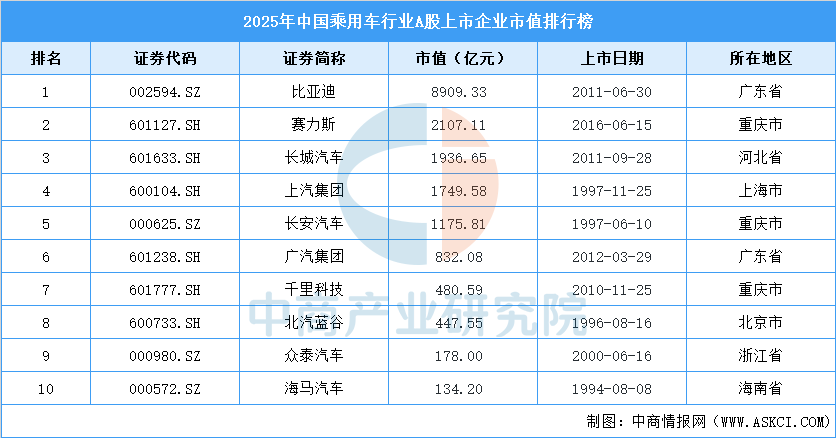
Core Insights - The A-share passenger car industry in China is projected to have a total market capitalization of 1,795.09 billion yuan by December 31, 2025, with 10 listed companies [1][2] - Among these, five companies have a market capitalization exceeding 100 billion yuan, and one company surpasses 80 billion yuan [1] Company Rankings - BYD ranks first with a market capitalization of 889.33 billion yuan, followed by Seres and Great Wall Motors with market capitalizations of 210.71 billion yuan and 193.67 billion yuan, respectively [2] - SAIC Motor, Changan Automobile, and GAC Group occupy the 4th to 6th positions with market capitalizations of 174.96 billion yuan, 117.58 billion yuan, and 83.21 billion yuan, respectively [2] - The remaining companies in the top 10 include Qianli Technology, BAIC Blue Valley, Zotye Automobile, and Haima Automobile, with market capitalizations of 48.06 billion yuan, 44.76 billion yuan, 17.80 billion yuan, and 13.42 billion yuan, respectively [2]


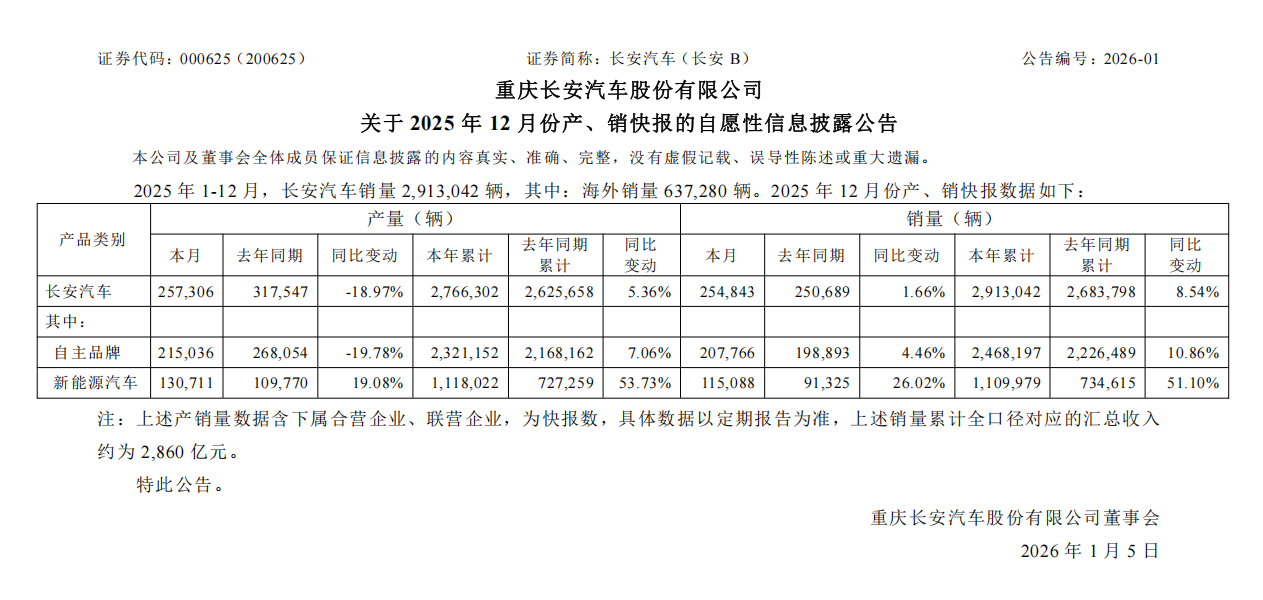
【江北嘴发布】长安汽车2025年累计销量超291.3万辆,同比增长8.54%
Xin Hua Cai Jing· 2026-01-06 06:28
Core Insights - Changan Automobile reported production and sales figures for December 2025, with production at 257,306 units and sales at 254,843 units, reflecting a year-on-year decrease of 18.97% and an increase of 1.66% respectively [1][2] - For the entire year of 2025, Changan's cumulative production reached 2,766,302 units, a year-on-year increase of 5.36%, while cumulative sales were 2,913,042 units, up 8.54% compared to the previous year [1][2] - Notably, Changan's new energy vehicle sales exceeded one million units, totaling 1,109,979 units, marking a significant year-on-year growth of 51.10% [1][2] Production and Sales Data - In December 2025, Changan's production was 257,306 units, down from 317,547 units in the same month last year, resulting in a decrease of 18.97% [2] - The cumulative production for the year was 2,766,302 units, compared to 2,625,658 units in 2024, showing a growth of 5.36% [2] - December sales figures were 254,843 units, slightly up from 250,689 units in December 2024, reflecting a 1.66% increase [2] Brand Performance - Changan's self-owned brand production in December was 215,036 units, down 19.78% year-on-year, while cumulative production for the year was 2,321,152 units, up 7.06% [2] - New energy vehicle production in December reached 130,711 units, a year-on-year increase of 19.08%, with cumulative production for the year at 1,118,022 units, up 53.73% [2] - The overseas sales of Changan's three major new energy brands—Avita, Deep Blue, and Qiyuan—reached 637,000 units, a year-on-year increase of 18.9% [1]
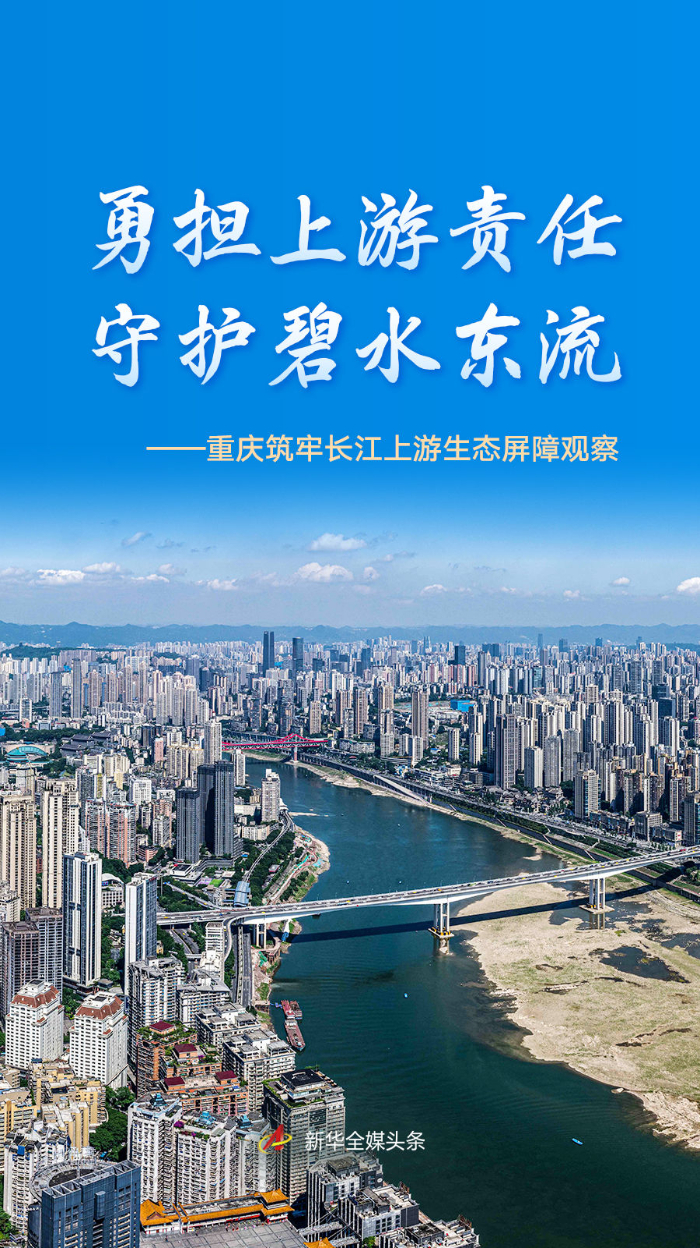
勇担上游责任 守护碧水东流——重庆筑牢长江上游生态屏障观察
Xin Hua She· 2026-01-06 05:41
Group 1: Ecological Protection and Governance - The water quality of the Yangtze River in the Chongqing section has been better than the incoming section for eight consecutive years, indicating successful ecological governance efforts [4][11] - Chongqing has established a "Nine Treatments" ecological governance system focusing on water, air, soil, waste, plastic, mountains, banks, cities, and villages to strengthen the ecological barrier of the upper Yangtze River [9][11] - The city has completed the remediation of 1,324 rural black and odorous water bodies and built 18 national ecological civilization demonstration zones [11] Group 2: Industrial Transformation and Green Development - The former site of a chemical plant in Fuling has been transformed into a park, while a new modern fertilizer factory has been established with an investment of approximately 3.5 billion yuan, utilizing advanced energy-saving and environmental protection technologies [6][8] - Chongqing is focusing on green industries, with initiatives like the establishment of a national-level green park and the signing of clean shipping industry projects [13] - The city has built 170 national-level green factories and 16 national-level green parks, promoting a shift towards low-carbon and beautiful economies [16] Group 3: Urban Development and Quality of Life - The city is enhancing its urban environment by transforming neglected areas into recreational spaces, such as the Barren Water Park, which has become a popular destination [20][22] - Efforts to improve the ecological environment in the Jinyun Mountain National Nature Reserve have led to the establishment of boutique homestays, attracting young visitors [19] - The city is integrating ecological governance with urban renewal, improving the quality of life for residents while preserving natural landscapes [22]
中国汽车在委内瑞拉份额大涨,美国就搞起了破坏
Sou Hu Cai Jing· 2026-01-06 04:13
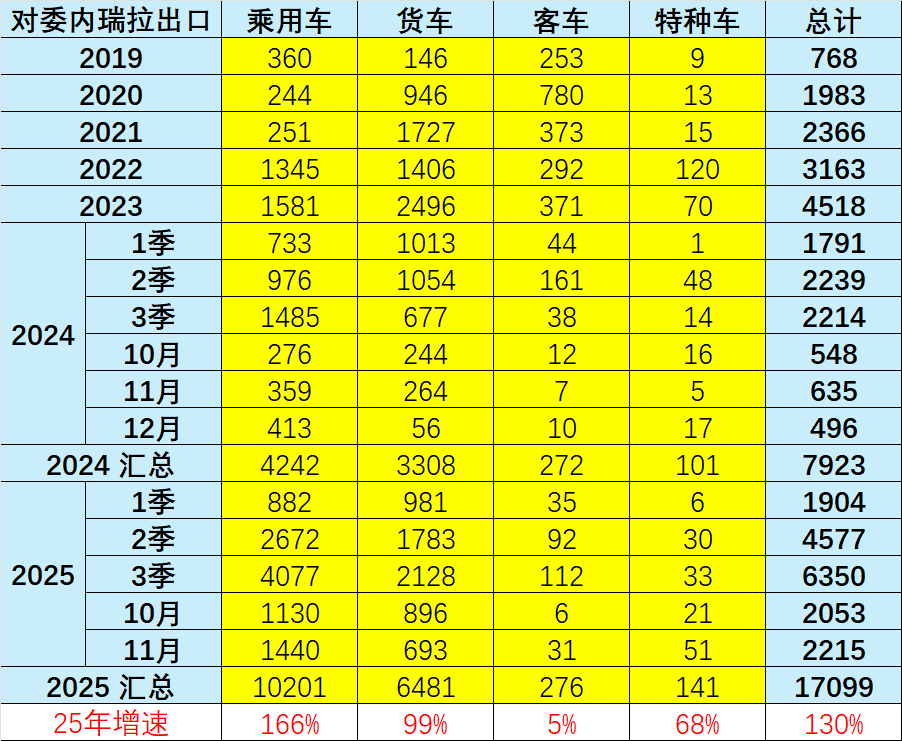
Core Insights - The recent military actions by the US have brought Venezuela into the spotlight, particularly in the context of the automotive industry, where Chinese exports have surged significantly [1][17]. Group 1: Automotive Exports to Venezuela - In the first eleven months of 2025, China exported 17,099 vehicles to Venezuela, marking a 130% increase year-on-year, with passenger cars accounting for 10,201 units [1][2]. - The total vehicle exports from China to Venezuela remain small compared to overall statistics, with domestic and US markets being significantly larger [1][2]. Group 2: Market Performance and Brand Competition - In 2024, Venezuela's new car sales reached 17,588 units, a 142% increase from the previous year, with Toyota and JAC Motors leading the market [3][4]. - JAC Motors is projected to surpass Toyota in sales for 2025, driven by local assembly and aggressive marketing strategies [8][11]. - The market share of JAC Motors in Venezuela reached 39.3% in the first eleven months of 2025, while Toyota held 34.0% [10][11]. Group 3: Market Dynamics and Future Projections - The automotive market in Venezuela is expected to continue its recovery, with total sales projected to exceed 38,000 units in 2025, reflecting over 100% growth [5][11]. - The elimination of import tariffs on automotive parts in October 2025 is anticipated to further boost sales and production in the Venezuelan automotive sector [15][17]. - Despite the positive outlook, the recent US military actions may introduce volatility into the Venezuelan automotive market, potentially impacting sales of Chinese brands [17].

至信股份开启申购
Zheng Quan Ri Bao Wang· 2026-01-06 03:45
Core Viewpoint - Zhixin Co., Ltd. is launching an IPO with a share price of 21.88 yuan, focusing on the development, processing, production, and sales of automotive stamping parts and related molds, positioning itself as a key supplier in the automotive industry [1][2]. Group 1: Company Overview - Zhixin Co., Ltd. specializes in automotive stamping parts and related molds, including white body stamping parts and tooling, and has established itself as a first-tier supplier for major automotive manufacturers such as Changan Automobile, Geely, and BYD [1]. - The company has a competitive advantage in the domestic automotive stamping parts market, supported by its wholly-owned subsidiaries specializing in mold development and intelligent manufacturing solutions [1][2]. Group 2: Financial Performance - The company's revenue for the years 2022, 2023, 2024, and the first half of 2025 is projected to be 2.091 billion yuan, 2.564 billion yuan, 3.088 billion yuan, and 1.604 billion yuan respectively, with a compound annual growth rate (CAGR) of 21.52% from 2022 to 2024 [2]. - The net profit attributable to shareholders after deducting non-recurring gains and losses for the same periods is expected to be 52.25 million yuan, 119.69 million yuan, 184.72 million yuan, and 87.18 million yuan, with a CAGR of 88.02% from 2022 to 2024 [2]. Group 3: Industry Outlook - The automotive parts industry in China is projected to exceed 5.5 trillion yuan in revenue by 2026, indicating a promising market outlook [3]. - Government policies supporting the automotive industry, including the development of new energy vehicles, provide a favorable environment for growth in the automotive parts sector, aligning with national economic strategies [3]. Group 4: Fundraising and Investment Plans - Zhixin Co., Ltd. plans to raise 1.329 billion yuan to expand production capacity and upgrade technology, as well as to supplement working capital [4]. - The investment projects are strategically aligned with the current market landscape and future trends in the automotive stamping parts sector, aiming to enhance the company's manufacturing capabilities and overall competitiveness [4].
中国汽车-重估拐点框架:2026 年增长放缓背景下的资本支出扩张与竞争-China Automobiles_ Revisiting inflection framework_ Capex expansion & competition amid slowing growth into 2026
2026-01-06 02:23
Summary of China Automobiles Conference Call Industry Overview - The China automobile industry is experiencing a cyclical assessment regarding overcapacity and competition, particularly as growth is expected to slow into 2026 [1] - Government subsidies and anti-involution policies have been implemented to stabilize pricing and profitability within the industry [1] Key Financial Metrics - OEMs raised a total of **US$15.6 billion (Rmb111 billion)** through equity issuance in 2025, facilitating new product investments and market competition [1][31] - OEM combined capital expenditure (capex) increased by **31% year-over-year** in Q3 2025, although this was a moderation from **66% year-over-year** in Q2 2025 [4][7] - Industry cash profit (EBITDA) declined by **10% year-over-year** in Q3 2025, compared to a **1% decline** in Q2 2025 [4][24] Market Dynamics - In 2026, **119 new NEV models** are expected to be launched, with domestic passenger vehicle growth projected to slow to **-2%** and new energy vehicle (NEV) growth at **+11% year-over-year** [2] - Exports are anticipated to be a bright spot, with overseas markets poised for NEV mass adoption [2] Competitive Landscape - Managements of various OEMs remain optimistic about their individual company growth despite a conservative outlook for the overall auto industry in 2026 [4][18] - The majority of OEMs are still above cash cost levels, indicating that industry consolidation may be prolonged due to less concern over cash positions [18][19] Company-Specific Insights - **BYD** and **XPeng** are highlighted as better positioned for overseas exposure, with expanding sales networks and new export models [2] - **Li Auto** plans to launch facelift models and increase R&D expenses while focusing on overseas markets [36] - **Nio** aims for a monthly sales volume of **50,000 units** in 1H26, driven by new model launches and improved pricing strategies [38] - **SAIC** targets **1 million units** in sales for 2026, with a focus on new model launches and cost-cutting measures [36] - **GAC** aims to increase export volume to **250,000 units** in 2026, up from **130,000 units** in 2025 [36] Investment Considerations - The effectiveness of government subsidies is expected to weaken, with a projected **15%** stimulation effectiveness in 2026, leading to an estimated **1.8 million** units of stimulated demand [51] - Domestic NEV retail sales volume is forecasted at **14 million** units in 2026, reflecting an **11% year-over-year** increase [52] - Export volume for passenger vehicles is expected to reach **7.4 million** units in 2026, with NEV exports projected to grow by **35% year-over-year** [53] Conclusion - The China automobile industry is at a critical juncture with intensifying competition and a shift towards overseas markets. Companies are focusing on cost control, R&D investments, and expanding their international presence to navigate the challenges ahead [18][35]

从小切口透视大行业 ——2025年汽车供应链变革“风暴眼”
Zhong Guo Qi Che Bao Wang· 2026-01-06 02:18
Core Insights - The automotive industry's core competitiveness is shifting from traditional mechanical performance to smart technology, safety, and integration with energy networks [3] - Eight key component areas have emerged as focal points for change in the automotive supply chain by 2025 [3] Group 1: AI and Smart Technology - AI large models, including VLA and VLM, are reshaping the perception, decision-making, and interaction systems in smart vehicles [4] - Companies like Li Auto and XPeng are actively developing and deploying VLA-based autonomous driving systems, with plans for mass production by 2026 [4] - The competition in AI models is intensifying, with a focus on the underlying support systems like computing power and data [4] Group 2: Vehicle-to-Grid (V2G) Interaction - V2G is becoming a hot topic as electric vehicles can act as distributed energy storage units within new energy systems [5] - Government policies are driving the adoption of V2G, with pilot projects and plans to expand the scope of V2G applications by 2027 [5][6] - Companies like GAC Group are implementing V2G functionalities in their models and developing charging infrastructure to support this transition [6] Group 3: Battery Safety Standards - The new national standard for electric vehicle batteries, effective July 2026, emphasizes safety by requiring batteries to be "non-flammable and non-explosive" [7] - The updated standards will compel battery manufacturers to innovate in materials, design, and production processes to meet stricter safety requirements [7] - Leading battery companies like BYD are already adapting to these new standards, which will enhance safety and consumer trust in electric vehicles [7] Group 4: Door Handle Innovations - Electric hidden door handles are becoming a focal point due to safety concerns arising from their failure in collision scenarios [8][9] - New regulations are being proposed to ensure that all door handles, including electronic ones, have a mechanical release function for emergency situations [9] Group 5: Solid-State Batteries - Solid-state batteries are gaining traction due to their advantages in energy density and safety, with several companies planning to launch new products or production lines [10] - The development of solid-state batteries is seen as a key competitive factor for companies in the next generation of electric vehicles [10][11] Group 6: Human-Car-Home Ecosystem - The "Human-Car-Home" ecosystem is emerging, integrating automotive, home, and personal devices into a cohesive smart system [12] - Companies like Haier and Midea are collaborating with automotive brands to create interconnected systems that enhance user experience [12][13] Group 7: Humanoid Robots - The automotive industry is increasingly intersecting with humanoid robotics, with companies exploring the integration of robotic technology into manufacturing processes [14][15] - The demand for precision and adaptability in manufacturing is driving the development of humanoid robots tailored for automotive applications [14] Group 8: Zero-Gravity Seats - Zero-gravity seats are becoming a key feature in mid to high-end vehicles, enhancing passenger comfort and experience [16] - The lack of standardized regulations for these seats poses challenges, particularly regarding safety during vehicle operation and collisions [16]
