
万华化学

Search documents
PVC日报:震荡下行-20251211
Guan Tong Qi Huo· 2025-12-11 11:17
Report Summary 1) Report Industry Investment Rating No information provided. 2) Core View of the Report The PVC market is expected to be weak and volatile in the near term. Although the cancellation of India's BIS policy on PVC and the government's action to study price - related standards provide some support, factors such as the decline in PVC开工率, high inventory, low demand in the traditional off - season, and falling prices of related commodities like coking coal suppress the market [1]. 3) Summary According to Relevant Catalogs [行情分析] - Upstream calcium carbide prices in the northwest region are stable. PVC开工率 decreased by 0.33 percentage points to 79.89%, still at a relatively high level in recent years. Downstream开工率 also declined slightly, and orders for downstream products are poor [1]. - India's cancellation of the BIS policy on PVC eases concerns about Chinese exports to India, and the anti - dumping duty is likely to be cancelled. However, after Formosa Plastics in Taiwan, China lowered its December quotes by $30 - 60 per ton, export orders declined [1]. - Social inventory continued to increase and remains high. From January to October 2025, the real estate industry is still in the adjustment phase, with significant year - on - year declines in investment, new construction, and completion areas [1]. - New production capacities of 300,000 tons/year from Gansu Yaowang and 300,000 tons/year from Jiaxing Jiahua have been newly put into operation. But the开工 rate of some production enterprises is expected to decline, and the decline in production is limited [1]. [期现行情] - In the futures market, the PVC2601 contract decreased in position, fluctuated downward, with a low of 4,273 yuan/ton, a high of 4,340 yuan/ton, and finally closed at 4,276 yuan/ton, below the 20 - day moving average, with a decline of 1.59%. The position volume decreased by 50,472 lots to 831,217 lots [2]. [基差方面] - On December 11, the mainstream price of calcium carbide - based PVC in East China dropped to 4,305 yuan/ton. The futures closing price of the V2601 contract was 4,276 yuan/ton. The current basis is 29 yuan/ton, strengthening by 37 yuan/ton, and the basis is at a neutral level [3]. [基本面跟踪] - **Supply**: The operation of some devices such as Hangjin Technology and Sichuan Jinlu has declined. The PVC开工率 decreased by 0.33 percentage points to 79.89%, still at a relatively high level in recent years. New production capacities from several companies have been put into operation or are in the process of production [4]. - **Demand**: The real estate industry is still in the adjustment phase. From January to October 2025, there were significant year - on - year declines in real estate investment, sales, new construction, and completion. As of the week of December 7, the weekly transaction area of commercial housing in 30 large - and medium - sized cities decreased by 28.93% month - on - month, at the lowest level in recent years [5]. - **Inventory**: As of the week of December 4, PVC social inventory increased by 1.55% month - on - month to 1.0589 million tons, 26.77% higher than the same period last year. The social inventory continues to increase and remains high [6].
【财闻联播】越南禁止出口稀土矿石!蓝盾光电终止购买星思半导体部分股权
券商中国· 2025-12-11 11:00
Macro Dynamics - The China Association of Automobile Manufacturers reported that in November, China's automobile exports reached 728,000 units, marking a month-on-month increase of 9.3% and a year-on-year increase of 48.5%. The total exports from January to November amounted to 6.343 million units, reflecting a year-on-year growth of 18.7%. It is projected that by 2025, annual automobile exports could reach 7 million units [2]. Trade Relations - Mexico's Senate has passed a new tariff law that will impose tariffs ranging from 5% to 50% on certain products from several Asian countries, including China, starting next year. The Chinese Foreign Ministry expressed hope that Mexico would correct this protectionist approach to maintain healthy bilateral trade relations [3]. Semiconductor Industry - The Ministry of Commerce of China is pushing for representatives from Nexperia Netherlands to visit China to discuss corporate control and supply chain stability following a letter from Wingtech Technology inviting them for negotiations [4][5]. Rare Earth Industry - Vietnam's National Assembly has passed a law restricting the export of refined rare earths and reaffirming a ban on the export of rare earth ores to support its domestic rare earth industry. Despite having significant rare earth reserves, Vietnam's estimated reserves have been drastically reduced from 22 million tons to 3.5 million tons [6]. Financial Institutions - The former head of the policy research office at the Agricultural Development Bank of China, Wu Biao, is under investigation for serious violations of discipline and law [7]. Market Data - The market experienced fluctuations with the ChiNext index dropping over 1%. Nearly 4,400 stocks in the market closed lower, while the total trading volume in the Shanghai and Shenzhen markets reached 1.86 trillion yuan [12]. The financing balance in both markets increased by 3.472 billion yuan, reaching a total of 24.888 trillion yuan [13]. Company Dynamics - Bluetron Optoelectronics announced the termination of its agreement to purchase a stake in Star Semiconductor, with no payment made for the shares as of now [15]. Bilibili denied rumors regarding a full membership system and stated that it would pursue legal action against those spreading false information [16]. Wanhu Chemical has signed an investment agreement to build a 650,000-ton lithium iron phosphate project in Laizhou, which will support the development of new energy industries in Shandong Province [17]. Huawei launched its new generation Harmony PC, the Huawei Qingyun HM740, which boasts the longest battery life among its laptops to date [18]. Vanke's domestic bonds saw a significant decline, with some bonds dropping over 18% [19].

万华化学继续加码磷酸铁锂 将在莱州投资建设年产65万吨磷酸铁锂项目
Xin Lang Cai Jing· 2025-12-11 09:57
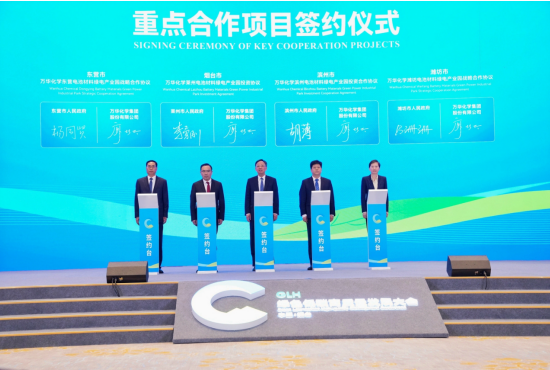
莱州市与万华化学集团股份有限公司成功签署"万华莱州绿电产业园"项目投资协议。根据规划,万华化 学将在莱州投资建设年产65万吨磷酸铁锂项目,项目达产后,将为山东省动力电池、储能电池等新能源 产业发展提供关键材料支撑。 ...

65万吨/年!万华化学继续加码磷酸铁锂!
鑫椤锂电· 2025-12-11 08:41
关注公众号,点击公众号主页右上角" ··· ",设置星标 "⭐" ,关注 鑫椤锂电 资讯~ 本文来源:莱州发改 日前,莱州市与万华化学集团股份有限公司成功签署"万华莱州绿电产业园"项目投资协议。 此次签约的万华莱州绿电产业园项目,是万华化学在新材料领域的重要布局,更是莱州产业发展的"强引 擎"。根据规划, 万华化学将在莱州投资建设年产65万吨磷酸铁锂项目, 项目达产后,将为山东省动力 电池、储能电池等新能源产业发展提供关键材料支撑。 万华化学集团股份有限公司,简称万华化学,成立于 1998年 ,位于山东省烟台市,是一家 全球化运营 的化工新材料 公司。 据悉,万华化学目前已实现第四代磷酸铁锂量产、第五代定型首发,其自主研发的新型铁锂烧结技术可生 产高压实密度产品,而该技术已被列入限制出口目录。莱州大规模项目能为技术迭代提供更多实践场景, 持续拉开与同行的技术差距,稳固其在行业内的技术地位。 如想了解更多关于磷酸铁锂行业信息, 欢 迎订购《 2025-2029年中国磷酸铁锂市场运行趋势及竞争 策略研究报告 》,订 购电话:18964001371(微信同)。 鑫椤会议: 会议主办:鑫椤资讯 会议时间:2026年3 ...
华为牵手万华化学,生物制造领域首个鸿蒙系统问世!
合成生物学与绿色生物制造· 2025-12-11 04:20
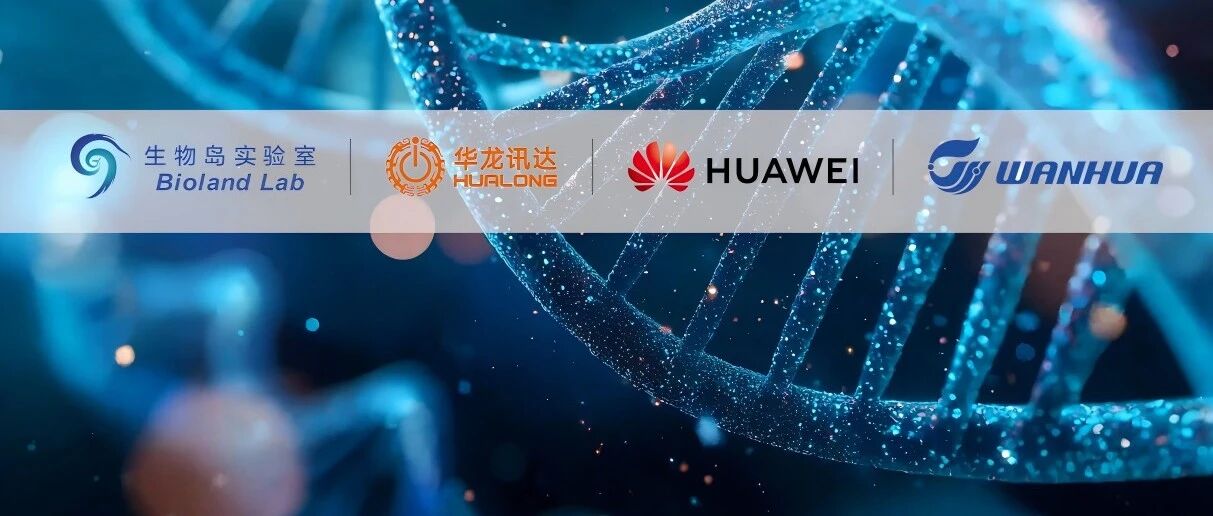
关键词 | 底层技术&AI |华为|万华化学 【SynBioCon】 获 悉, 近日,由广州生物岛实验室联合 华为云 、 万华化学 、 华龙讯达等共同研发的"生鸿"工业操作系统发布 , 这是 鸿蒙化工业 系统首次引入生物制造领域 。 生物制造 作为全球科技竞争的战略制高点,正深刻重塑医药、材料、能源等关键产业,是我国发展新质生产力的重要方向。其技术的自主可控,直接关 乎国家产业安全与核心竞争力。然而,长期以来,底层控制系统的依赖与数据孤岛问题,制约着行业的智能化升级。在此背景下, 构建自主可控的数字 技术底座,推进"鸿蒙化"转型 ,成为关乎未来的必然选择。 "生鸿"工业操作系统由生物岛实验室牵头,联合华为云、华龙讯达、万华化学等行业领军力量共同研发 。其命名寓意"生命如鸿,自主翱翔",基于开 源鸿蒙(OpenHarmony)打造,具有完全的自主知识产权,核心目标直指实现底层控制自主可控、设备智能互联与工艺数据安全闭环,旨在为未来数 字化、智能化的生物工厂奠定坚实的技术 底座。 02 从理念到实践 "生鸿"系统已取得阶段性应用成果 由生物岛实验室和万华化学等单位的协同推进下, "生鸿"系统已经在生物制造领域的多 ...
万华化学滨州电池材料绿电产业园项目在山东省绿色低碳高质量发展大会成功签约
Zhong Guo Fa Zhan Wang· 2025-12-11 03:50
中国发展网讯12月4日,山东省绿色低碳高质量发展大会在烟台举行,滨州市委书记宋永祥,市委常 委,副市长、市政府党组副书记胡薄,市发展改革委党组书记、主任姚振祥参加大会。滨州市与万华化 学(600309)集团合作的电池材料绿电产业园项目在大会上正式签约。 项目落地,构建滨州发展新支点 此次大会签约的万华项目,是滨州锚定绿色低碳高质量发展赛道的关键一招。作为滨州"渤海湾未来动 力产业城"的"领头雁",其"绿电+新材料"协同模式,为滨州从传统产业向新能源高端制造转型注入硬核 动能,成为打造绿色低碳高质量发展先行区"滨州样板"的战略支点。 链式发展,激活绿色集群新动能 项目落地将以链式发展激活滨州产业协同新动能,带动上下游企业协同发展,进一步集聚电池正负极材 料、隔膜、电解液、关键辅材等环节,推动新能源产业从单一环节向全链条价值攀升,形成"龙头引 领、链条延伸、集群集聚"的产业发展格局,为新能源新材料产业集群注入新动能。 政企同心,护航项目落地新征程 为保障项目高效落地,滨州市建立"专班+专员"全流程服务机制,统筹推动各项工作。聚焦要素保障、 政策衔接、难题破解等关键环节,强化项目全流程服务,做好项目建设全过程指导, ...
ETF盘中资讯|新能源汽车出口猛增65%!化工板块继续拉升,机构:行业景气有望边际回暖!
Sou Hu Cai Jing· 2025-12-11 03:31
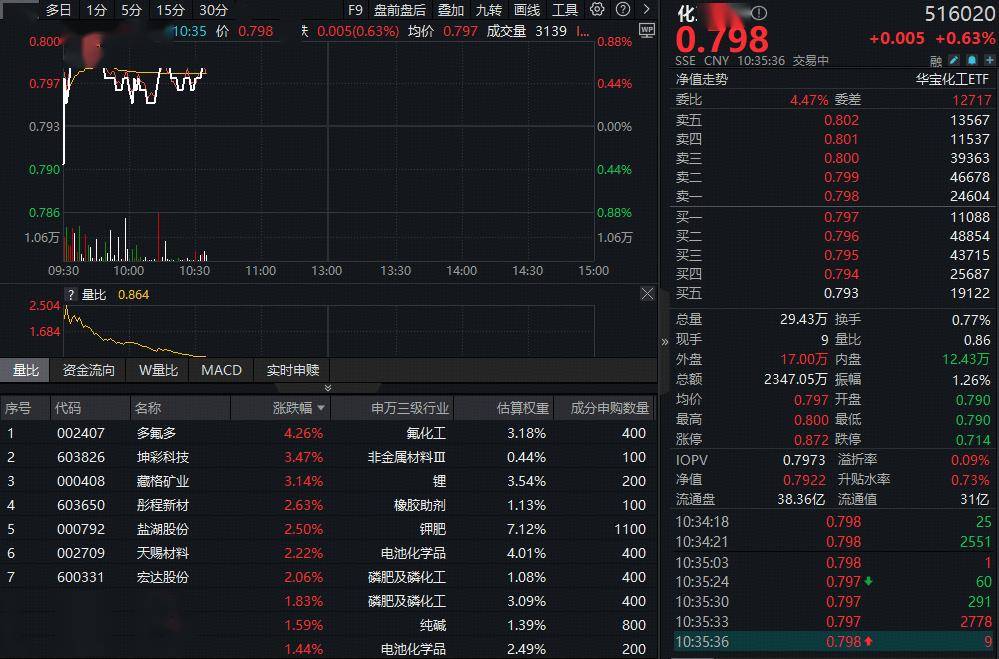
Group 1 - The chemical sector continues to rise, with the chemical ETF (516020) showing a gain of 0.63% as of the latest update [1] - Key stocks in the sector include fluorine chemicals, lithium batteries, and potash fertilizers, with notable increases such as Multi-Fluorine up over 4% and KunCai Technology and Cangge Mining both up over 3% [1] - The overall market sentiment indicates a strong performance in the chemical sector, driven by specific stocks within the industry [1] Group 2 - The automotive export data shows a significant increase, with China exporting 6.46 million vehicles from January to October 2025, a year-on-year growth of 22%, and 820,000 vehicles in October alone, marking a 40% increase [2] - The export of new energy vehicles (NEVs) reached 328,000 units in October 2025, a 65% year-on-year increase, contributing to a total of 2.65 million NEVs exported from January to October 2025, reflecting a 54% growth [2] - The lithium battery production is expected to increase in December, with a positive outlook for the lithium battery sector as a new upward cycle is anticipated starting in 2026 [3] Group 3 - The chemical sector is currently viewed as having a favorable cost-performance ratio, with the chemical ETF's underlying index price-to-book ratio at 2.33, which is relatively low compared to the past decade [3] - The industry is expected to see a recovery in profitability due to macroeconomic improvements and supply-side policy advancements, with a focus on sectors like phosphates, potash, and lithium battery materials [4] - The chemical ETF (516020) is recommended for investors looking to capitalize on the sector's rebound, as it tracks a comprehensive index covering various sub-sectors [4]
格局之变 “黄金腰部”挺起,如何影响四川经济?
Si Chuan Ri Bao· 2025-12-11 00:28
Core Viewpoint - The four cities of Neijiang, Meishan, Zigong, and Suining are collectively striving to surpass a GDP of 200 billion yuan, which would significantly enhance the economic structure of Sichuan province and contribute to a more resilient economic framework [5][6][10]. Economic Performance and Goals - As of 2024, the number of cities in Sichuan with a GDP exceeding 200 billion yuan is expected to increase from 9 to 13, indicating a collective leap in economic development levels [6][10]. - The four cities are targeting to achieve this goal by 2025, which would mean that over half of Sichuan's cities will have GDPs above 200 billion yuan [6][10]. Industry Development Strategies - Zigong is focusing on low-altitude economy and sodium battery industries, leveraging its aviation industrial park to create a complete industrial chain, with a reported 31% year-on-year growth in low-altitude economic output from January to September 2025 [7][8]. - Neijiang is developing its electronic information and biopharmaceutical industries, with a notable 10.7% year-on-year increase in industrial added value from January to September 2025 [8][12]. - Meishan is capitalizing on its geographical advantages to develop new energy and new materials industries, with significant investments from leading companies in various sectors [8][12]. - Suining is building a comprehensive lithium battery industry ecosystem, with over 55 lithium battery enterprises and a reported 15.6% increase in lithium industry added value from January to October 2025 [9][12]. Challenges and Future Outlook - The cities face challenges in transitioning from traditional industries to new growth drivers, with a need for innovation and efficiency improvements to sustain economic growth [10][11]. - The focus on new quality productivity and regional collaboration will be crucial for these cities to thrive in the post-200 billion yuan era [12][13]. - The competition will not only be about achieving the GDP target but also about who can effectively transition to new industrial opportunities and enhance collaborative development within the Chengdu-Chongqing economic circle [13].

中原证券晨会聚焦-20251211
Zhongyuan Securities· 2025-12-10 23:30
Core Insights - The report indicates that the Chinese economy is expected to grow by 5.0% in 2025 and 4.5% in 2026 according to the IMF, reflecting a moderate recovery phase [5][8] - The A-share market is experiencing a phase of consolidation with potential upward movement supported by favorable policies and improved liquidity [9][12] - The semiconductor industry is in an upward cycle, driven by strong demand for AI computing hardware and significant capital investments from major tech companies [19][30] Domestic Market Performance - The Shanghai Composite Index closed at 3,900.50 with a slight decline of 0.23%, while the Shenzhen Component Index rose by 0.29% to 13,316.42 [4] - The average P/E ratios for the Shanghai Composite and ChiNext are 16.04 and 49.54 respectively, indicating a suitable environment for medium to long-term investments [12] Industry Analysis - The food and beverage sector saw a rebound in November 2025, particularly in pre-packaged foods and alcoholic beverages, although overall performance remains weak with a cumulative decline of 0.16% from January to November [14][15] - The semiconductor industry experienced a 5.10% decline in November, but year-to-date performance remains strong with a 38.02% increase [19] - The electric power and utilities sector showed resilience, with a 10.4% year-on-year increase in electricity consumption in October 2025, driven by the charging and swapping service industry [23][24] Investment Strategies - The report suggests focusing on sectors such as commercial retail, precious metals, and automotive for short-term investment opportunities [12][18] - In the semiconductor space, companies involved in AI chip production and infrastructure are recommended due to the ongoing demand and technological advancements [19][30] - The food and beverage sector is advised to consider investments in soft drinks, health products, and baked goods, with specific companies highlighted for potential growth [35][36]
PVC日报:震荡下行-20251210
Guan Tong Qi Huo· 2025-12-10 11:07
Report Industry Investment Rating - No relevant content provided Core Viewpoint of the Report - The PVC market is in a weak and volatile state recently. Although the termination of India's BIS policy on PVC and the possible cancellation of anti - dumping duties have some positive effects, factors such as the decline in PVC downstream demand, high inventory, new production capacity, and the traditional off - season in December lead to a weak market sentiment [1]. Summary According to Related Catalogs Market Analysis - The calcium carbide price in the upstream northwest region is stable. The PVC start - up rate decreased by 0.33 percentage points to 79.89% compared with the previous period, still at a relatively high level in recent years. The downstream start - up rate of PVC decreased slightly, and the orders for downstream products were poor [1]. - India terminated the BIS policy on PVC, alleviating concerns about China's PVC exports to India. The anti - dumping duty is also likely to be cancelled, but after the price cut of Formosa Plastics in Taiwan, China in December, the export orders declined, and last week's export orders were basically stable [1]. - Social inventory continued to increase last week and is still at a high level, with relatively large inventory pressure. From January to October 2025, the real estate is still in the adjustment stage, and the year - on - year decline in investment, new construction, and completion areas is still large [1]. - New production capacities of 300,000 tons/year of Gansu Yaowang and 300,000 tons/year of Jiaxing Jiahua have been newly put into production. Although relevant departments are studying price - related work to boost bulk commodities, the start - up expectations of some production enterprises are decreasing, and the decline in production is limited. The futures warehouse receipts are still at a high level, and the traditional off - season in December and the decline in coking coal prices suppress the market sentiment [1]. Futures and Spot Market Conditions - In the futures market, the PVC2601 contract decreased in position, fluctuated, and declined. The lowest price was 4,311 yuan/ton, the highest price was 4,383 yuan/ton, and it finally closed at 4,328 yuan/ton, below the 20 - day moving average, with a decline of 1.39%. The position decreased by 37,746 lots to 881,689 lots [2]. Basis - On December 10, the mainstream price of calcium carbide - based PVC in the East China region dropped to 4,320 yuan/ton. The futures closing price of the V2601 contract was 4,328 yuan/ton. The current basis was - 8 yuan/ton, strengthening by 24 yuan/ton, and the basis was at a neutral level [3]. Fundamental Tracking - On the supply side, the start - up of some devices such as Hangjin Technology and Sichuan Jinlu decreased. The PVC start - up rate decreased by 0.33 percentage points to 79.89%. New production capacities such as Wanhua Chemical, Tianjin Bohua, Qingdao Gulf, Gansu Yaowang, and Jiaxing Jiahua have been put into production [4]. - On the demand side, the real estate is still in the adjustment stage. From January to October 2025, the year - on - year decline in real estate investment, new construction, and completion areas is still large. As of the week of December 7, the weekly transaction area of commercial housing in 30 large - and medium - sized cities decreased by 28.93% compared with the previous period, at the lowest level in recent years [5]. - In terms of inventory, as of the week of December 4, the PVC social inventory increased by 1.55% compared with the previous period to 1.0589 million tons, 26.77% higher than the same period last year, and the social inventory continued to increase and was still at a high level [6].