大疆

Search documents
霜降·徒步登高正当时,户外经济热潮涌|财经二十四节气
2 1 Shi Ji Jing Ji Bao Dao· 2025-10-23 01:11
Group 1 - The article highlights the rising trend of hiking as a popular outdoor activity among urban dwellers, driven by a desire to connect with nature and relieve stress [3][4] - Data from Meituan and Xiaohongshu indicates a significant increase in hiking-related searches and content creation, with a nearly 100% year-on-year growth in search volume and over 400% increase in specific hiking keywords during peak seasons [5][10] - The outdoor economy is experiencing growth, with the outdoor sports industry projected to exceed 3 trillion yuan by 2025, driven by increased consumer spending on outdoor gear and experiences [10][11] Group 2 - The surge in hiking has led to a boom in demand for outdoor apparel and equipment, with online consumption reaching approximately 300 billion yuan in 2024, and a notable 55% increase in outdoor footwear and clothing sales during the National Day holiday [10][11] - The competitive landscape for outdoor gear is intensifying, with over 20 international brands entering the Chinese market in the past three years, alongside the rise of domestic brands like Beihai and Tanboer seeking IPOs [10][11] - The demand for smart devices tailored for outdoor activities is also increasing, with companies like Huawei and Garmin reporting significant revenue growth in their outdoor product lines [11] Group 3 - Despite the enthusiasm for hiking, safety concerns are prevalent, with a report indicating that hiking-related incidents accounted for 73% of outdoor accidents in 2024, primarily due to navigation issues [15][16] - The rapid commercialization of hiking activities is outpacing the development of safety measures, highlighting the need for improved risk management and awareness among participants [15][19] - The article emphasizes the importance of establishing industry standards and safety protocols to ensure the sustainable growth of the hiking economy [19]


中美开辟“新暗战”?三大电商围剿亚马逊,消费话语权将要易主
Sou Hu Cai Jing· 2025-10-22 23:34
Core Insights - China's rapid economic growth has transformed it into the world's second-largest economy, significantly altering global consumption patterns and challenging Western products [2] - The shift in consumer habits within China has led to increased cross-border consumption, particularly in the Guangdong-Hong Kong-Macau Greater Bay Area, where Hong Kong residents are increasingly shopping in Shenzhen [4][6] - Chinese e-commerce platforms are gaining traction in international markets, particularly during events like Black Friday, showcasing a shift in global consumer power towards China [8][13] Cross-Border Consumption - The integration of the Guangdong-Hong Kong-Macau Greater Bay Area has facilitated a surge in cross-border shopping, with Hong Kong residents frequently visiting Shenzhen for its diverse and affordable offerings [4][6] - Policies such as "no visa required for border crossing" and "tax refunds for departing tourists" have made cross-border shopping more accessible, creating a complementary consumption ecosystem [6] E-commerce Innovations - Chinese e-commerce platforms like Temu and TikTokShop are revolutionizing the shopping experience in North America, utilizing innovative models such as C2M (Customer-to-Manufacturer) to streamline supply chains and enhance efficiency [9][11] - The application of AI in these platforms allows for real-time price monitoring and optimization, significantly improving the shopping experience and competitiveness [11] Global Consumer Power Shift - There is a noticeable shift in global consumer power towards China, as evidenced by the increasing popularity of Chinese brands and platforms among international consumers [13][15] - The rise of Chinese brands in high-end markets and their ability to compete with established Western brands signify a transformation in global consumption dynamics [15] Conclusion - The ongoing transformation in global consumption patterns indicates that the world is beginning to embrace China's consumer ecosystem, as evidenced by the popularity of Chinese products and platforms during major shopping events [17]

从“翻山越岭”到“巡天瞰地”——安徽省第二测绘院无人机测绘技术赋能高质量发展
Zhong Guo Zi Ran Zi Yuan Bao· 2025-10-22 06:38
Group 1 - The core viewpoint of the articles highlights the transformation of surveying technology in Anhui Province from traditional methods to modern, intelligent solutions using drones [1][3][5] - The use of drones has significantly improved efficiency, allowing a team to complete 1 square kilometer of terrain surveying in just 2 hours, compared to 4-7 days using traditional methods [3] - Drones are now widely applied in various fields such as geological disaster monitoring and ecological surveys, providing high-definition images and infrared data without risking personnel safety [3][5] Group 2 - Anhui has established drone nests in cities like Hefei and Huangshan, creating a low-altitude perception network that enables 24/7 inspections with automated takeoff, landing, and data transmission capabilities [3][5] - The drone nests serve as infrastructure for the low-altitude economy, with pilot applications in emergency material delivery and factory inspections, and plans to expand into agriculture, firefighting, and air traffic [5] - The shift from manual surveying to intelligent perception supports ecological civilization, digital economy development, and rural revitalization in Anhui, providing precise geographic information for regional development [5]

大疆降价风暴背后:顶流也有增长焦虑
3 6 Ke· 2025-10-22 02:21
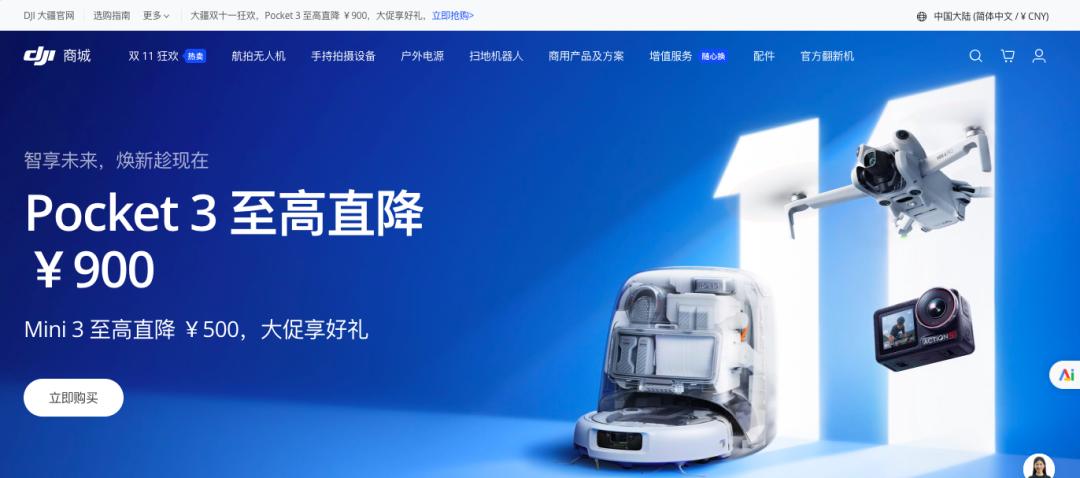
Core Viewpoint - DJI's significant price cuts on various products, including the newly launched Osmo Pocket 3, have sparked consumer backlash and raised questions about pricing policies and compensation measures [1][3][4] Group 1: Price Cuts and Consumer Reaction - DJI has initiated substantial price reductions on multiple products ahead of the "Double 11" shopping festival, with the Osmo Pocket 3 seeing a price drop of up to 900 yuan [1][3] - The price cuts have led to a public outcry, with consumers feeling misled by previous assurances that prices would not drop [3][4] - A refund and rights protection movement has emerged on social media, with consumers seeking clarity on compensation for the price drops [3][4] Group 2: Sales Channels and Policies - DJI's price protection policy is only applicable to purchases made through its official website, leaving consumers who bought through other channels without clear guidance [4][5] - Different sales channels offer varying levels of customer service and price protection, leading to inconsistencies in consumer experiences [4][5] - The lack of a unified policy across different sales channels has contributed to the ongoing consumer dissatisfaction [5] Group 3: Market Dynamics and Competition - DJI's consumer drone business, which accounts for over 70% of its revenue, is nearing market saturation, with growth rates declining significantly [7][12] - The company faces increasing competition from rivals like XAG and emerging players like YingShi, which are expanding their market presence [7][8][12] - DJI's recent price cuts may be a strategic move to maintain market share and disrupt competitors' pricing strategies [11] Group 4: Future Outlook and Product Strategy - DJI is diversifying its product offerings beyond drones, venturing into action cameras and robotic vacuums, but faces stiff competition in these new markets [13][15][16] - The company aims to leverage its established brand reputation in the drone sector to capture market share in consumer electronics [16] - Despite the challenges, DJI's revenue growth remains robust, with projections indicating continued expansion in the coming years [12][13]
一场“道歉式”营销,炸出无人机赛道的残酷真相
3 6 Ke· 2025-10-22 00:56
Core Insights - DJI unexpectedly launched a significant price reduction campaign, leading to public backlash from customers who recently purchased products at full price [1][3] - Insta360's founder, Liu Jingkang, humorously acknowledged the situation and offered compensation to DJI customers, effectively leveraging the moment for marketing [3][4] - The price war reflects underlying growth anxieties for both companies, as they face market saturation and seek new growth avenues [5][6] Company Strategies - DJI, characterized as a "steady giant," relies on its strong technological foundation, extensive patent portfolio, and supply chain advantages to maintain market leadership [10] - Insta360, representing a "bold newcomer," focuses on innovative user experiences and clever marketing strategies to differentiate itself in the competitive landscape [10] - Both companies are engaged in direct competition, with DJI entering the action and panoramic camera markets to challenge Insta360's core offerings [7][10] Market Dynamics - The global market for panoramic cameras is projected to reach 7.85 billion yuan by 2027, which poses a challenge for Insta360 as it seeks to justify its high valuation [6] - DJI's recent price cuts and product innovations are responses to geopolitical challenges and customer dissatisfaction with perceived product stagnation [7][10] - The competition between DJI and Insta360 highlights a broader issue within the smart hardware industry, where innovation is stalling and companies are increasingly competing on price [11] Industry Implications - The ongoing conflict between DJI and Insta360 may lead to a reshaping of the industry, with smaller companies lacking core technologies and brand identity potentially being pushed out [11] - The price war serves as a precursor to deeper competition in areas such as ecosystem development, AI integration, and user experience enhancement [11]

风靡全网的电子茅台,年轻人只租不买?
36氪· 2025-10-22 00:15
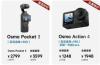
Core Viewpoint - The article discusses the rising trend of renting action cameras among young consumers, highlighting the economic advantages and changing consumer behavior in the context of travel and photography [4][6][25]. Group 1: Market Trends - The rental market for action cameras is experiencing significant growth, with a reported 600% increase in transaction volume on platforms like Xianyu by April 2025 compared to the previous year [8][24]. - The average price for renting an action camera is around 20 yuan per day, significantly lower than the purchase price, which typically ranges from 2000 to 3000 yuan [7][22]. - The demand for action cameras is reflected in retail transaction data, showing a 300% year-on-year increase in orders during the "618" shopping festival [24]. Group 2: Consumer Behavior - Young consumers, particularly those who travel infrequently, prefer renting over buying due to the high costs associated with ownership and the rapid product iteration in the action camera market [8][12]. - The ease of use and low entry barrier of action cameras make them appealing to non-professional photographers, as they require less technical skill compared to traditional cameras [17][18]. - Many consumers express a preference for renting to avoid the financial burden of purchasing equipment that may not be used frequently, leading to a trend of "use but not own" [34][36]. Group 3: Business Opportunities - The rise of the rental economy presents new business opportunities for entrepreneurs, with some individuals successfully establishing rental services for action cameras and other photography equipment [26][29]. - The action camera rental market is seen as a new blue ocean, attracting both individual sellers and small businesses looking to capitalize on the growing demand [25][26]. - The phenomenon of renting action cameras is also linked to a broader trend of "pain-free entrepreneurship" among young people, allowing them to generate income from idle equipment [29][30].

杭州培育出AI“六小龙”,深圳能否捧出半导体“天团”?
Mei Ri Jing Ji Xin Wen· 2025-10-21 12:59
Core Insights - Shenzhen's semiconductor industry is experiencing a significant transformation, marked by a strong presence at the Bay Area Semiconductor Industry Ecological Expo, showcasing local innovations and technologies [1][2] - The industry is supported by a robust capital ecosystem, characterized by a collaboration between state-owned and market-oriented investment institutions, emphasizing the importance of "patient capital" [1][5][7] Industry Growth - The scale of Shenzhen's semiconductor and integrated circuit industry reached 256.4 billion yuan in 2024, reflecting a year-on-year growth of 26.8%, with the first half of 2025 showing a continued growth trend of 16.9% [3] - The industry structure has become more balanced, with significant growth across manufacturing, packaging, testing, and equipment sectors, all doubling in size since 2020 [3] Investment Ecosystem - The establishment of the Shenzhen Semiconductor and Integrated Circuit Fund, with a total scale of 5 billion yuan, highlights the role of state-owned capital in driving the semiconductor industry [4] - Shenzhen's investment landscape includes a variety of national and local guiding funds, with numerous state-owned platforms actively participating in the establishment of funds targeting the semiconductor sector [6][8] Strategic Collaboration - The investment strategy in Shenzhen focuses on long-term, strategic capital that aligns with the industry's needs, contrasting with the short-term capital approach seen in other regions [5][7] - The Bay Area Expo serves as a platform for connecting supply and demand, facilitating direct interactions between core procurement parties and exhibitors, enhancing the industry's collaborative ecosystem [10][11] Ecosystem Development - Shenzhen's semiconductor industry benefits from a dense network of high-tech enterprises, providing a complete supply chain and rich application scenarios, which fosters rapid innovation and iteration [11][12] - The region is evolving into a critical player in the global semiconductor landscape, with a focus on nurturing core enterprises that can drive the entire industry forward [13][14] Future Outlook - The ongoing development of the semiconductor sector in Shenzhen is expected to solidify its position as a global innovation hub, leveraging its technological and financial resources [12][15] - The region aims to cultivate a "semiconductor dream team," supported by a strong foundation of capital, talent, and technology [15]
风靡全网的电子茅台,年轻人只租不买?
创业邦· 2025-10-21 10:37
Core Viewpoint - The article discusses the rising trend of renting action cameras among young consumers, highlighting the economic advantages and changing consumer behavior in the context of travel and social media [5][9][28]. Group 1: Renting vs. Buying - Renting action cameras is becoming increasingly popular, with platforms like Xianyu and Aizhuji reporting significant growth in rental transactions, with a 600% increase in rental volume for portable action cameras by April 2025 compared to the previous year [7][10]. - The cost of renting an action camera is significantly lower than purchasing one, with rental prices around 20 yuan per day compared to purchase prices of 2000-3000 yuan [9][10]. - Young consumers prefer renting due to the high frequency of new product releases, making it more practical to rent the latest models rather than buy [9][28]. Group 2: Consumer Behavior and Preferences - Many young consumers, like the interviewee Xiao Yu, find renting more suitable for their needs as it allows them to try different products without the financial burden of ownership [14][16]. - The ease of use and low entry barrier of action cameras compared to traditional cameras make them appealing to non-professional photographers [18][20]. - The trend reflects a broader shift in consumer behavior where convenience and cost-effectiveness drive decisions, especially among younger demographics [25][28]. Group 3: Market Dynamics and Opportunities - The action camera rental market is identified as a new growth area, with significant increases in transaction volumes and demand for popular models [28][29]. - Some entrepreneurs are capitalizing on this trend by establishing rental businesses, with reports of individuals earning substantial income through action camera rentals [29][32]. - The competitive landscape is characterized by rapid product turnover and fluctuating prices, leading consumers to prefer renting over buying to avoid potential losses [25][28]. Group 4: Social Media Influence - The rise of social media has created a culture where capturing experiences is prioritized, leading to increased demand for action cameras as tools for content creation [36][39]. - The phenomenon of "memory externalization" is discussed, where the pressure to document experiences can detract from the authenticity of the experience itself [39].

27岁,他卖房投了大疆
投资界· 2025-10-21 07:40
Core Insights - The article highlights the transformative power of early investments in promising startups, exemplified by the stories of DJI and Hikvision, showcasing how personal relationships can lead to significant financial returns [2][6]. Group 1: DJI's Journey - DJI, founded by Wang Tao, faced early challenges, including team member departures and financial struggles, prompting his friend Xie Jia to sell his house to invest in the company [3][5]. - Xie Jia's investment in DJI, which amounted to an unknown figure but resulted in approximately 14% equity, later valued at around 14 billion yuan, illustrates the potential rewards of supporting friends in their entrepreneurial endeavors [5][6]. - By 2024, DJI's revenue surpassed 80 billion yuan, with its valuation exceeding 1 trillion yuan, marking it as a leading player in the Chinese manufacturing sector [9][12]. Group 2: Investment Trends in Hardware - The article notes a significant shift in the investment landscape for hardware companies, with DJI's successful fundraising in 2018 attracting over 100 institutions and raising 1 billion USD, despite the general skepticism towards hardware investments [12][14]. - Emerging hardware companies, such as YI Technology and Plaud AI, are gaining traction, indicating a revitalization of interest in the hardware sector, which was previously considered high-risk [13][14]. - The narrative emphasizes that the success of companies like DJI has instilled confidence in investors, leading to a renewed focus on hardware investments in China [14].

首个低空飞行营地落户大学城,暗藏广州布局万亿产业三大野心
Nan Fang Du Shi Bao· 2025-10-21 05:22
Core Insights - The first low-altitude flight camp in Guangzhou has been launched, aiming to create a comprehensive service platform for low-altitude flight that includes application demonstration, test flights, verification, talent cultivation, sales delivery, popular science education, and management [2] - The low-altitude economy in China is projected to exceed 1.5 trillion yuan by 2025, with Guangzhou having a solid foundation and significant potential, but facing common industry challenges such as insufficient support, scalability, and commercialization [2] - The establishment of the low-altitude flight camp in the university town reflects Guangzhou's ambition to develop a trillion-yuan low-altitude economy [2] Group 1: Innovation and Technology Development - The low-altitude economy is recognized as a strategic emerging industry, yet it still relies on imported key components and has not yet achieved breakthroughs in core technologies like high-energy-density aviation batteries [3] - The primary task for low-altitude economic development is to advance forward-looking technology research to ensure flight safety and stability, while also building an intelligent design platform to accelerate product iteration and optimization [3] - The low-altitude flight camp will collaborate with national platforms to tackle core technology challenges and improve public support services for low-altitude flight [5] Group 2: Infrastructure and Service Development - A complete public support service system and infrastructure network are essential for transforming research results into marketable products [7] - The low-altitude flight camp has already completed the construction of five takeoff and landing points and plans to establish a training center that integrates industry and education [7] - The camp aims to provide a matrix of "infrastructure + demonstration scenarios" to facilitate the transformation of academic research into practical applications [7] Group 3: Market Applications and Industry Integration - The low-altitude flight camp has released a comprehensive list of over 100 application scenarios across ten core areas, including production operations, cultural tourism, logistics, and emergency rescue [14] - The camp will serve as a one-stop trading service platform for low-altitude products, linking upstream and downstream enterprises to create a supply chain system [17] - Future plans include the establishment of a low-altitude cultural dissemination platform to enhance public understanding and engagement with low-altitude technologies [17]