
贝壳

Search documents
智通港股回购统计|9月8日


Zhi Tong Cai Jing· 2025-09-08 01:20
Group 1 - The article reports on stock buybacks conducted by various companies on September 5, 2025, with Tencent Holdings (00700) leading in both the number of shares repurchased and the total amount spent [1][2] - Tencent Holdings repurchased 913,000 shares for a total of 551 million, representing 0.558% of its total share capital [2] - Other notable companies involved in buybacks include China Hongqiao (01378) with 1.276 million shares repurchased for 31.57 million, and Midea Group (N23078) with 300,000 shares for 25.83 million [2] Group 2 - The total number of shares repurchased by China Hongqiao reached 146 million, accounting for 1.560% of its total share capital [2] - Midea Group's cumulative buyback for the year stands at 863,400 shares, which is 0.133% of its total share capital [2] - Other companies such as Yum China (09987) and MGM China (02282) also participated, with Yum China repurchasing 57,700 shares for 20.13 million and MGM China repurchasing 1 million shares for 15.78 million [2]
贝壳-W(02423)9月5日斥资699.88万美元回购111.02万股
智通财经网· 2025-09-07 23:45
Core Viewpoint - Beike-W (02423) announced a share repurchase plan, indicating confidence in its stock value and future prospects [1] Group 1 - The company plans to repurchase 1.1102 million shares [1] - The total expenditure for the repurchase is set at $6.9988 million [1] - The repurchase is scheduled to take place on September 5, 2025 [1]
贝壳-W9月5日斥资699.88万美元回购111.02万股
Zhi Tong Cai Jing· 2025-09-07 23:44
Group 1 - The company Beike-W (02423) announced a share repurchase plan [1] - The company will spend $6.9988 million to buy back 1.1102 million shares [1]
贝壳-W(02423.HK)9月5日耗资700万美元回购111.02万股
Ge Long Hui· 2025-09-07 23:37
Group 1 - The company, Beike-W (02423.HK), announced a share repurchase plan to buy back 1.1102 million shares at a cost of 7 million USD [1]
贝壳(02423) - 翌日披露报表
2025-09-07 23:34
FF305 翌日披露報表 (股份發行人 ── 已發行股份或庫存股份變動、股份購回及/或在場内出售庫存股份) 表格類別: 股票 狀態: 新提交 公司名稱: 貝殼控股有限公司 呈交日期: 2025年9月8日 如上市發行人的已發行股份或庫存股份出現變動而須根據《香港聯合交易所有限公司(「香港聯交所」)證券上市規則》(「《主板上市規則》」)第13.25A條 / 《香港聯合交易所有限公司GEM證券 上市規則》(「《GEM上市規則》」)第17.27A條作出披露,必須填妥第一章節 。 | 第一章節 | | | | | | | | --- | --- | --- | --- | --- | --- | --- | | 1. 股份分類 | 不同投票權架構公司普通股 | 股份類別 A | | 於香港聯交所上市 | 是 | | | 證券代號 (如上市) | 02423 | 說明 | | | | | | A. 已發行股份或庫存股份變動 | | 已發行股份(不包括庫存股份)變動 | | 庫存股份變動 | | | | | 事件 | | 佔有關事件前的現有已發 | | 每股發行/出售價 (註4) | 已發行股份總數 | | | | 已發行 ...
地产及物管行业周报:深圳收窄限购范围、放松限购套数,北上深接连放松限购-20250907
Shenwan Hongyuan Securities· 2025-09-07 10:12
Investment Rating - The report maintains a "Positive" rating for the real estate and property management sectors [2][34]. Core Views - The report suggests that the broad housing demand in China has bottomed out, but the volume and price have not yet entered a positive cycle. It anticipates that the overall real estate market will continue to stabilize, with policies aimed at stopping the decline expected to be introduced further [2][34]. - The report highlights that the real estate market in core cities is at a turning point and will lead the recovery. It emphasizes the potential of new policies to create a "new product, new pricing, and new model" development track, which will enhance the market in core cities [2][34]. Industry Data Summary New Housing Transaction Volume - In the week of August 30 to September 5, 2025, 34 key cities recorded a total new housing transaction of 220.5 million square meters, a week-on-week decrease of 3.3%. The transaction volume in first and second-tier cities decreased by 1.5%, while third and fourth-tier cities saw a decline of 25.4% [3][4]. - For September, the cumulative transaction volume in 34 cities was 154 million square meters, showing a year-on-year increase of 11.6% and a month-on-month increase of 44.1% [4][10]. Second-Hand Housing Transaction Volume - In the same week, 13 cities recorded a total second-hand housing transaction of 94.7 million square meters, a week-on-week decrease of 16%. However, the cumulative transaction for September showed a year-on-year increase of 28.3% [10][12]. Inventory and Sales - In the week of August 30 to September 5, 2025, 15 cities launched 90 million square meters of new housing, with a total transaction of 86 million square meters, resulting in a transaction-to-launch ratio of 0.96. The available residential area in these cities was 89.31 million square meters, with a month-on-month increase of 0.04% [17][19]. Policy and News Tracking - On September 5, 2025, Shenzhen announced further optimization of real estate policies, allowing residents to purchase unlimited units in specific areas, while non-residents are limited to two units. The report also notes changes in personal housing loan interest rate mechanisms and public housing fund policies [27][28]. - The report mentions that several real estate companies are actively distributing dividends and maintaining growth despite market challenges. For instance, China Jinmao announced a dividend of HKD 0.03 per share, while Huafa announced a dividend of CNY 0.02 per share [34][35]. Company Dynamics - The report tracks the performance of major real estate companies, noting that leading firms are actively engaging in share buybacks and dividend distributions. For example, China Jinmao and Huafa have announced significant dividends, while companies like Huafa and China Merchants Shekou have also engaged in share repurchase activities [34][37].




“有点钱,但不多,不急花”:2025上半年消费者现状
虎嗅APP· 2025-09-06 03:26
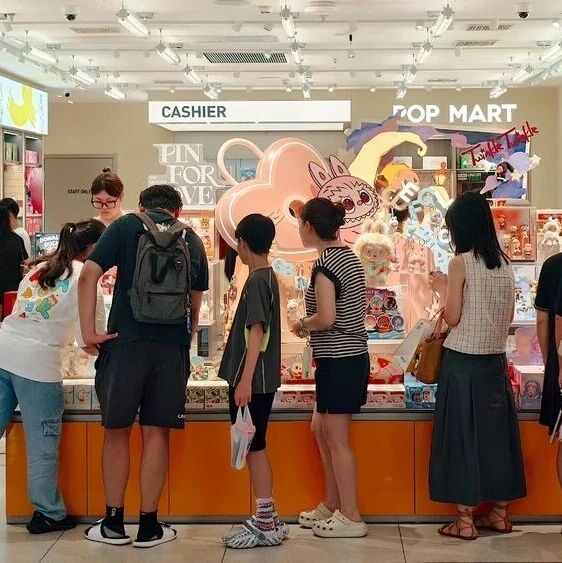
Core Viewpoint - The article discusses the evolving landscape of consumer behavior in China during the first half of 2025, highlighting the rise of emotional consumption and the decline of traditional consumption patterns, particularly among younger generations [4][5][6]. Economic Overview - In June 2025, the Consumer Price Index (CPI) rose by 0.1% year-on-year, with the core CPI increasing by 0.7%, indicating a recovery in domestic demand [4]. - The total retail sales of consumer goods reached 24.55 trillion yuan, with a year-on-year growth rate of 5%, surpassing the previous year's growth by 1.5 percentage points [4]. Emotional Consumption - Emotional consumption has become a significant trend, with the market expected to exceed 2 trillion yuan by 2025, growing at an annual rate of 12% since 2013 [8]. - Companies like Pop Mart have seen substantial revenue from emotional products, with LABUBU generating 4.81 billion yuan in revenue in the first half of 2025, contributing to Pop Mart's total revenue of 13.88 billion yuan, a 204.4% increase year-on-year [9]. Traditional Consumption Decline - Traditional consumption, particularly in sectors like high-end liquor and tea, has seen a downturn, with many companies reporting negative growth in revenue and profits [11]. - The white liquor industry experienced a 5% decline in revenue and a 7.5% drop in net profit in the second quarter of 2025 [11]. Shifts in Consumer Preferences - Younger consumers prioritize emotional value over traditional status symbols, leading to a decline in "face consumption" associated with older generations [10][12]. - The trend of seeking high value for money continues, with consumers becoming more cautious and price-sensitive in their spending habits [15][19]. Impact on Various Industries - The restaurant industry has faced challenges, with major chains like Haidilao reporting a 3.7% decline in revenue, while their takeaway business has seen a 59.6% increase [18]. - The airline industry has seen a 5.9% increase in passenger transport, but average ticket prices have dropped by 6.9% [16]. Investment Trends - There is a noticeable shift in consumer investment behavior, with a decline in housing investment and an increase in interest in gold and stock markets [23][25]. - The real estate sector has seen a significant drop in investment, with a year-on-year decrease of 11.2% in development investment [23]. Conclusion - The article emphasizes the need for companies to adapt to changing consumer behaviors, focusing on emotional value and cost-effectiveness, while traditional consumption patterns are declining [26].





地产政策博弈交易的有效性为何逐渐走弱?
CAITONG SECURITIES· 2025-09-05 15:23
Investment Rating - The investment rating for the real estate industry is "Positive" (First time) [1] Core Insights - The policy position of real estate in the macro economy is declining, with the GDP contribution from the real estate sector decreasing from a peak of 15.3% in 2018 to 12.2% in mid-2025, returning to levels seen in 2009 [4][8] - The credit creation ability of the real estate sector has significantly decreased, with developers facing restricted financing channels and a decline in asset prices leading to reduced leverage among homebuyers [4][20] - The policy logic has undergone a major shift, focusing on stock rather than increment, with future policies likely to emphasize urban renewal and the management of existing properties [4][34] - The difficulty of obtaining excess returns through real estate policy trading is increasing, as market participants have learned to adjust their entry and exit strategies based on policy announcements [4][33] - Investment recommendations include focusing on companies like China Vanke, Longfor Group, and others, while also considering long-term value reassessment of commercial assets and dividend-type assets in a low-interest environment [4][4] Summary by Sections 1. Declining Policy Position of Real Estate - The contribution of the real estate sector to GDP is decreasing, with a notable decline in the broad real estate industry's GDP share from 15.3% in 2018 to 12.2% in 2025 [4][8] - The direct impact of real estate investment on GDP growth has turned negative, with a contribution rate of -1.3% in 2022 and remaining in the range of -1.0% to -1.2% in subsequent years [11][12] 2. Shift in Policy Logic and Constraints - The policy focus has shifted from increasing supply to improving existing stock, with a clear emphasis on urban renewal and optimizing existing properties [34][35] - The policy environment is expected to remain supportive but with reduced intensity compared to previous years, particularly in 2024 [4][39] 3. Learning Effects in Market Trading - The market has adapted to the changing policy landscape, making it more challenging to achieve excess returns through real estate trading strategies [4][33] - The timing of market entry and exit has become more critical as participants anticipate policy changes [4][33] 4. Investment Recommendations - Suggested companies for investment include China Vanke, Longfor Group, and others, focusing on both policy-driven trading and long-term asset value reassessment [4][4]
交银产业机遇混合:2025年上半年利润1.94亿元 净值增长率14.22%
Sou Hu Cai Jing· 2025-09-05 11:15
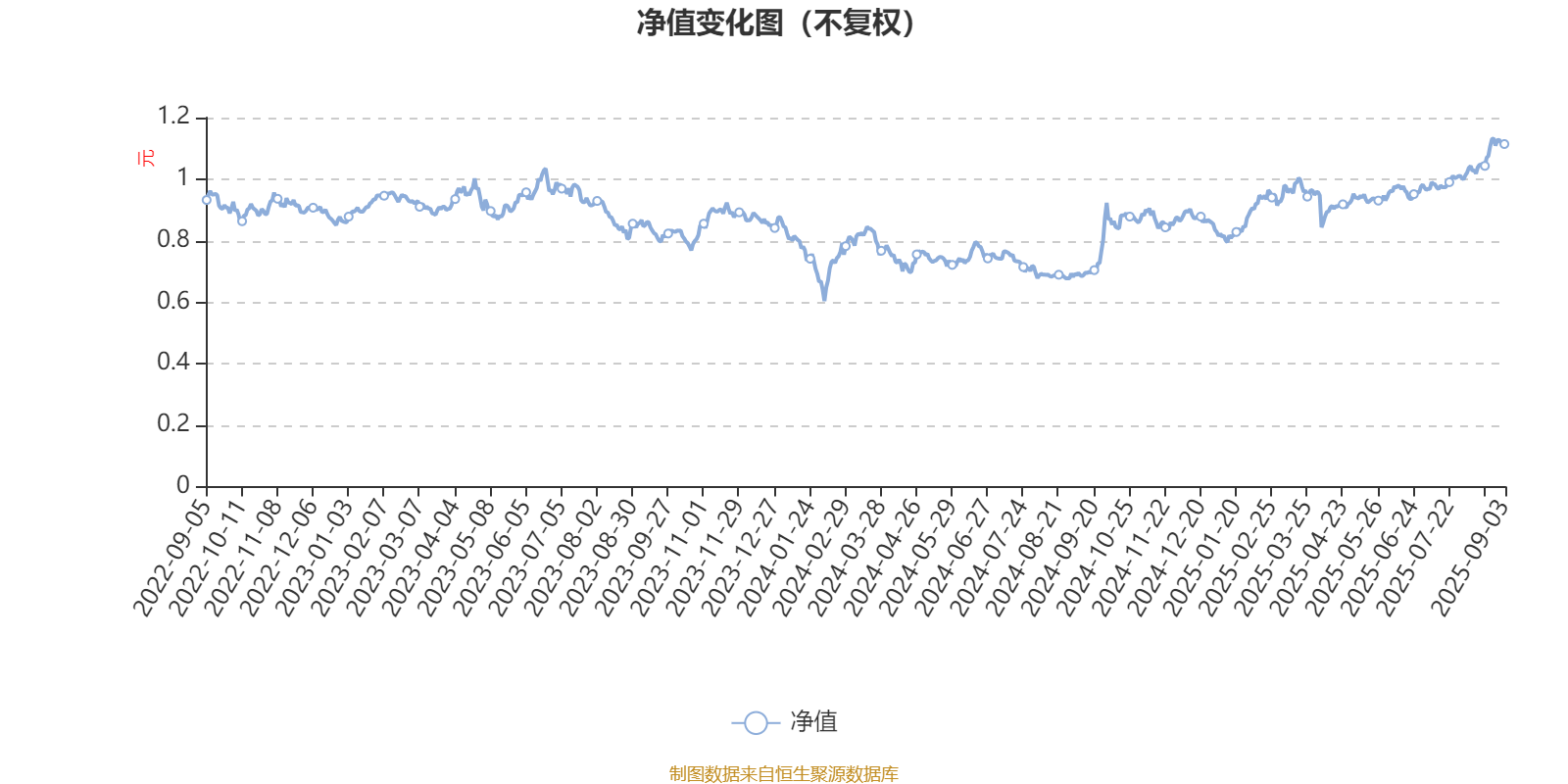
Group 1 - The AI Fund, Jiaoyin Industrial Opportunity Mixed Fund (010094), reported a profit of 194 million yuan for the first half of 2025, with a weighted average profit per fund share of 0.1223 yuan [3] - The fund's net value growth rate for the reporting period was 14.22%, and as of the end of the first half, the fund size was 1.543 billion yuan [3] - The fund manager highlighted the ongoing observation of trade friction developments and their impact on various assets, as well as domestic response strategies and macroeconomic trends [3] Group 2 - The fund's recent performance includes a three-month net value growth rate of 18.33%, a six-month growth rate of 20.13%, a one-year growth rate of 60.96%, and a three-year growth rate of 20.04%, ranking it within the top half of comparable funds [6] - As of June 30, 2025, the fund's weighted average price-to-earnings (P/E) ratio was approximately 26.62 times, compared to the industry average of 29.05 times [13] - The fund's weighted average revenue growth rate for the first half of 2025 was 0.06%, and the weighted average net profit growth rate was 0.1% [21] Group 3 - The fund's top ten holdings include companies such as Pop Mart, Kying Network, and Tencent Holdings, indicating a high concentration in its stock holdings [45] - As of June 30, 2025, the fund had a total of 18,700 holders, with individual investors holding 93.86% of the shares [39] - The fund's turnover rate for the last six months was approximately 97.82% [42]
贝壳-W9月4日斥资700万美元回购113.24万股
Zhi Tong Cai Jing· 2025-09-05 10:37
Core Viewpoint - Beike-W (02423) announced a share repurchase plan, committing to buy back 1.1324 million shares for a total cost of 7 million USD, scheduled for September 4, 2025 [1] Group 1 - The company plans to repurchase shares, indicating confidence in its financial position and future prospects [1] - The total amount allocated for the buyback is 7 million USD, which reflects the company's strategy to enhance shareholder value [1] - The number of shares to be repurchased is 1.1324 million, demonstrating a significant commitment to returning capital to shareholders [1]