
金蝶国际

Search documents
金蝶取得数据处理方法、装置、计算机设备和存储介质专利
Jin Rong Jie· 2026-02-10 11:25
Group 1 - The core point of the article is that Kingdee Software (China) Co., Ltd. has obtained a patent for a "data processing method, device, computer equipment, and storage medium," with the authorization announcement number CN115495452B, and the application date was September 2022 [1] - Kingdee Software (China) Co., Ltd. was established in 1993 and is located in Shenzhen, primarily engaged in software and information technology services [1] - The company has a registered capital of 1.4 billion RMB and has invested in 66 enterprises, participated in 3,733 bidding projects, and holds 807 trademark records and 1,935 patent records [1]
回调不是虚惊一场,科技股投资开始“去伪求真”
虎嗅APP· 2026-02-10 09:28
Group 1 - The article discusses a crisis of confidence in the AI narrative among global tech investors, with significant stock price declines in both US and Chinese markets [3][4]. - Nvidia's CEO, Jensen Huang, defended the sustainability of AI infrastructure spending, which led to a temporary rebound in AI-related stocks [4][26]. - The article highlights that the capital market's expectations for AI are excessively high, requiring continuous performance that exceeds expectations to avoid severe stock price corrections [6][7]. Group 2 - AMD experienced a significant stock drop of 17.31% due to its revenue guidance not meeting overly optimistic expectations, despite being above analyst consensus [9]. - Similarly, Qualcomm's stock fell over 8% after it lowered its revenue guidance for mobile chips, reflecting the market's sensitivity to performance expectations [9]. - The article notes that the domestic AI chip leader, Cambricon, has also seen its stock decline by 21.96% this year, with a significant drop of 9.18% in a single day due to underwhelming performance forecasts [15][12]. Group 3 - Investors are increasingly concerned about the return on investment in AI, as high capital expenditures from major tech companies like Google and Amazon raise questions about future profitability [18][19]. - The SaaS industry is facing a survival crisis due to the emergence of AI tools that threaten traditional business models, leading to significant stock declines in major SaaS companies [22][23]. - The article emphasizes that if SaaS businesses are replaced by AI, it could negatively impact demand for computing power, affecting companies like Nvidia [24]. Group 4 - The macroeconomic environment, particularly concerns about potential tightening monetary policy under a new Federal Reserve chair, has contributed to the decline in tech stock valuations [28][29]. - Recent political developments suggest that fears of immediate monetary tightening may be alleviated, leading to a rebound in tech stocks [31]. - The upcoming release of key macroeconomic data, including non-farm payrolls and CPI, is critical for determining the future trajectory of tech stocks [33][34]. Group 5 - The article concludes that the recent market corrections are a rational adjustment rather than a full-blown collapse, with a focus on distinguishing between genuine tech companies and those lacking solid performance [38][41]. - The investment strategy should shift from indiscriminate buying to careful selection of companies that can convert capital expenditures into actual cash flow [39][40]. - The tech sector is expected to experience differentiation, with "pseudo-tech stocks" facing potential declines while core assets with technological advantages may present buying opportunities [41][42].


回调不是虚惊一场,科技股投资开始“去伪求真”
Hu Xiu· 2026-02-10 02:15
Group 1 - The article discusses a crisis of confidence in the AI narrative among global tech investors, with significant stock price declines in both US and Chinese markets [2][6] - Nvidia's CEO Jensen Huang defended the sustainability of AI infrastructure spending, which helped to temporarily restore confidence in AI-related stocks [2][19] - The article highlights that any performance below expectations can lead to severe stock price adjustments, as seen with AMD and Qualcomm [3][5] Group 2 - The performance of Chinese AI chip leader Cambricon has not met expectations, leading to a significant decline in its stock price and raising concerns about growth [7][8] - The article emphasizes that the scarcity of high-growth narratives is diminishing, with new competitors entering the market and geopolitical factors affecting the optimism around domestic chips [10][11] - The overall sentiment in the tech sector is shifting from enthusiasm to caution, with investors increasingly worried about the return on investment in AI [12][13] Group 3 - The macroeconomic environment, particularly concerns about potential tightening monetary policy under a new Federal Reserve chair, is contributing to the decline in tech stock valuations [20][21] - Recent political developments suggest that while there may be volatility, the overall direction for interest rates remains favorable for tech stocks [23][24] - Upcoming macroeconomic data releases are critical for determining the future trajectory of tech stocks, with potential implications for market stability [25][28] Group 4 - The recent market fluctuations are viewed as a rational correction rather than a full-blown collapse, with a focus on distinguishing between genuine tech companies and those lacking solid performance [30][34] - The investment strategy is shifting towards selective buying, emphasizing the importance of companies that can convert capital expenditures into actual cash flow [31][33] - The tech sector is expected to experience differentiation, with a potential "golden opportunity" for companies with real technological advantages amidst the current market correction [32][34]
2026 CRM终局之战:生态定胜负,AI决输赢
3 6 Ke· 2026-02-09 02:30
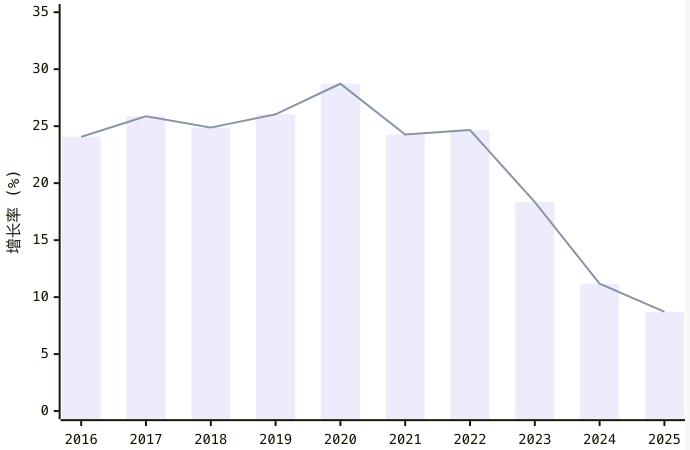
Core Insights - The core argument of the articles is that the CRM software industry is undergoing a significant transformation driven by AI, with a shift towards an ecosystem competition rather than just product competition. This change is particularly evident in both the US and Chinese markets, where AI capabilities are becoming essential for CRM solutions [1][2]. Group 1: Market Trends - The CRM industry is experiencing a structural transformation driven by AI, characterized by five major trends: restructured growth logic, native AI implementation, upgraded outbound strategies, mainstream mergers and acquisitions, and AI as a core driver for domestic substitution [2]. - By the end of 2025, the US CRM market is expected to see a slowdown in growth, with Salesforce's revenue growth rate dropping to approximately 8.7% due to the maturity of traditional subscription models [3][5]. - In contrast, the Chinese CRM market is projected to reach a scale of about 65 billion yuan (approximately 9.5 billion USD) in 2025, with a growth rate of around 15%, primarily driven by domestic substitution [5]. Group 2: AI Integration and Ecosystem Development - AI has become the most critical variable in the CRM market, with significant adoption in SaaS applications. The competition is shifting from isolated functionalities to the overall system reconstruction and the speed of implementation [7][8]. - The integration of AI into existing CRM processes is essential for achieving reliable and scalable solutions. Companies are recognizing the importance of embedding AI deeply into their operational frameworks rather than relying solely on AI's probabilistic nature [7][8]. - The competition for AI CRM is expected to intensify in 2026, with nearly 80% of enterprises listing AI capabilities as a mandatory criterion for CRM procurement [8]. Group 3: Outbound Strategies and Global Expansion - Approximately 86% of surveyed enterprise software companies plan to include outbound strategies as a core part of their business, although most are still in the early stages of internationalization [10]. - The nature of outbound strategies is evolving from simple functional exports to the export of technical capabilities, industry experience, and AI capabilities, with AI becoming a significant growth engine in overseas markets [10][12]. - Companies are increasingly adopting a "follow strategy," prioritizing service for internationalizing Chinese clients, which helps mitigate market risks and facilitates product internationalization [12]. Group 4: Mergers and Acquisitions - Mergers and acquisitions have become the primary path for expansion and exit in the global B2B software market, with nearly 70% of transactions occurring in the second half of the year [13][14]. - The focus of acquisitions is shifting towards technology support, data assets, and enterprise security, highlighting the necessity of building a compliant and reliable operational foundation in the context of AI [13][14]. - The competitive landscape is evolving into an ecosystem battle, where companies lacking systemic support for their technologies are at risk of being overshadowed by those with robust ecosystems [13][14]. Group 5: Domestic Substitution and AI as a Driver - AI is becoming a core driver for domestic substitution in the Chinese enterprise software market, with predictions indicating that the domestic CRM replacement rate will exceed 65% by the end of 2025 [15][17]. - The demand for AI capabilities is rapidly increasing as companies seek to integrate AI into their operations, particularly in light of limitations on the use of foreign AI models in China [17][18]. - The integration of AI into domestic CRM solutions is enhancing their usability and effectiveness, with significant improvements in data management and operational efficiency being reported [18][19].

阿里、百度、京东、中芯国际,集体大涨
第一财经· 2026-02-09 01:44
半导体板块反弹,澜起科技上市首日高开57%,兆易创新、纳芯微涨超4%。 | 名称 | 现价 | 涨跌幅, | | --- | --- | --- | | 澜起科技 | 168.000 | 57.17% | | QPL INT'L | 0.430 | 7.50% | | 华虹米导体 | 103.800 | 4.58% | | 兆易创新 | 294.000 | 4.33% | | 纳芯微 | 142.000 | 4.26% | | 英诺赛科 | 55.700 | 3.15% | | 中芯国际 | 69.600 | 2.96% | | 天数智芯 | 170.000 | 2.91% | | 中电华大科技 | 1.330 | 2.31% | | 豪威集团 | 107.000 | 2.10% | | 天岳先进 | 58.500 | 2.09% | | 峰昭科技 | 133.000 | 1.76% | | 壁仞科技 | 32.280 | 1.57% | 有色金属板块回暖,中国白银集团、中广核矿业、紫金黄金国际、万国黄金集团均涨超4%。 | | | 2月9日,香港恒生指数高开1.59%,恒生科技指数涨1.9%。 | 代码 | ...


行业周报:周观点:2026年,多模态模型有望迎来DS时刻-20260208
KAIYUAN SECURITIES· 2026-02-08 10:13
Investment Rating - The investment rating for the computer industry is "Positive" (maintained) [1] Core Insights - The report highlights that 2026 is expected to be a pivotal year for multimodal models, which are anticipated to drive growth in the film, gaming, and advertising sectors due to significant improvements in capabilities and reductions in costs [5][12][15] - The launch of the Keling 3.0 series and Byte's Seedance 2.0 models marks a significant advancement in the multimodal field, enabling comprehensive video production processes and enhancing competition among industry players [6][13] - Keling AI has rapidly commercialized its multimodal models, boasting over 60 million creators and generating more than 600 million videos by the end of 2025, with an annual revenue run rate of $240 million [7][14] Summary by Sections Industry Overview - The computer index fell by 3.27% during the week of February 2-6, 2026, while the CSI 300 index decreased by 1.33% [4][16] Multimodal Model Developments - The initial Sora model by OpenAI, launched in February 2024, is compared to a significant breakthrough in video technology, with subsequent models showing substantial advancements [5][12] - The Keling 3.0 series, launched on February 5, 2026, integrates various multimedia capabilities, marking a new era in AI-driven content creation [6][13] Commercialization Potential - The report emphasizes that 2026 will be crucial for the commercialization of multimodal models, driven by enhanced model capabilities and reduced costs, which will lower barriers to entry for users [7][14] Investment Recommendations - Beneficiaries of the anticipated growth in the multimodal sector include companies such as Wanjing Technology, Haitai Ruisheng, and Hongsoft Technology, among others [8][15]
计算机周观察20260208:AI军备竞赛持续升级,关注高壁垒软件及云服务
CMS· 2026-02-08 06:42
证券研究报告 | 行业定期报告 2026 年 02 月 08 日 AI 军备竞赛持续升级,关注高壁垒软件及云服务 计算机周观察 20260208 TMT 及中小盘/计算机 海外互联网大厂发布季报,资本开支持续超预期。过去一周,微软、META、 亚马逊、谷歌等海外科技大厂先后发布季度财报,四家公司明确表示将持续扩 大 AI 领域的相关投资。SaaS 商业模式遭受质疑,关注高壁垒软件及云服务。 ❑ 亚马逊 AWS 超预期大增,资本开支持续扩大影响自由现金流。亚马逊 25 财 推荐(维持) 行业规模 | | | 占比% | | --- | --- | --- | | 股票家数(只) | 285 | 5.5 | | 总市值(十亿元) | | 3.8 | | 流通市值(十亿元) | | 3.8 | 行业指数 % 1m 6m 12m 绝对表现 2.2 8.8 26.8 相对表现 5.3 -4.1 6.0 资料来源:公司数据、招商证券 -30 -20 -10 0 10 20 30 40 Feb/25 May/25 Sep/25 Jan/26 (%) 计算机 沪深300 相关报告 1、《板块配置进一步下降,服务器、 智驾获机 ...




美股科技股大震荡,资金却逆势抢筹港股,机构认为AI投资仍是主线
Di Yi Cai Jing· 2026-02-06 13:04
Core Viewpoint - The recent emergence of AI Agents like OpenClaw has triggered a significant pullback in the global tech sector, raising questions about whether this is the beginning of a narrative bubble burst or a buying opportunity [1][2]. Group 1: Market Performance - As of February 5, the Nasdaq 100 index has seen a cumulative decline of 3.93% for the week, while the S&P 500 Software and Services index has dropped for seven consecutive trading days [1]. - The Hang Seng Tech Index and the STAR Market 50 Index have also experienced declines of 6.51% and 5.76%, respectively [1]. - Major tech stocks such as Samsung Electronics, SK Hynix, and SoftBank have faced varying degrees of price drops [1]. Group 2: AI Agent Impact - The recent popularity of AI Agents, particularly OpenClaw, is identified as a key catalyst for the ongoing decline in the tech sector [2]. - OpenClaw allows users to execute complex workflows through natural language commands, showcasing significant advancements over earlier AI Agents [2]. - The introduction of specialized plugins for AI Agents, such as those by Anthropic, indicates a shift towards more practical applications in fields like law and finance [2]. Group 3: Capital Expenditure Trends - Major tech companies are maintaining high levels of capital expenditure, with Alphabet projecting its 2026 capital spending to reach between $175 billion and $185 billion, nearly double its 2025 spending [3]. - Amazon anticipates a capital expenditure of approximately $200 billion in 2026, significantly higher than its expected 2025 spending of $131 billion [3]. - Following these announcements, Alphabet's stock fell over 7% in after-hours trading, while Amazon's shares dropped more than 4% [3]. Group 4: Investment Strategies - Despite the downturn in the tech sector, some investors are increasing their positions, with notable figures like Dong Bin purchasing shares in Nvidia, Meta, and Google [4]. - Dong Bin believes that increased capital expenditure will enhance Google's competitive edge, viewing the current sell-off as shortsighted [4]. Group 5: Southbound Capital Trends - There is a clear trend of capital "bottom-fishing" in Hong Kong stocks, with southbound funds recording net purchases exceeding 50 billion yuan in the first week of February [5]. - The top five ETFs by net inflow in the past week were predominantly Hong Kong tech-themed ETFs, with the Hang Seng Tech ETF alone attracting 3.148 billion yuan [5]. Group 6: Market Sentiment and Future Outlook - Citic Securities expresses skepticism about the overly optimistic market sentiment regarding AI Agents potentially replacing traditional software, citing limitations in current large language models [6]. - The firm suggests that the narrative of AI "consuming" software remains largely theoretical, with practical applications still limited to simpler tasks [6]. - However, industry experts maintain that the AI wave and technological self-reliance remain central themes, with potential long-term productivity gains expected from ongoing AI advancements [6][7].

金蝶国际2月6日耗资约543.25万港元回购50万股
Zhi Tong Cai Jing· 2026-02-06 10:15
Group 1 - The company, Kingdee International (00268), announced a share buyback plan to repurchase 500,000 shares at a cost of approximately HKD 5.4325 million on February 6, 2026 [1]
金蝶国际(00268.HK)2月6日耗资543.2万港元回购50万股
Ge Long Hui· 2026-02-06 10:09
Group 1 - The company, Kingdee International (00268.HK), announced a share buyback on February 6, 2026, costing HKD 5.432 million to repurchase 500,000 shares [1] - The buyback price ranged from HKD 10.85 to HKD 10.87 per share [1]