京东方

Search documents
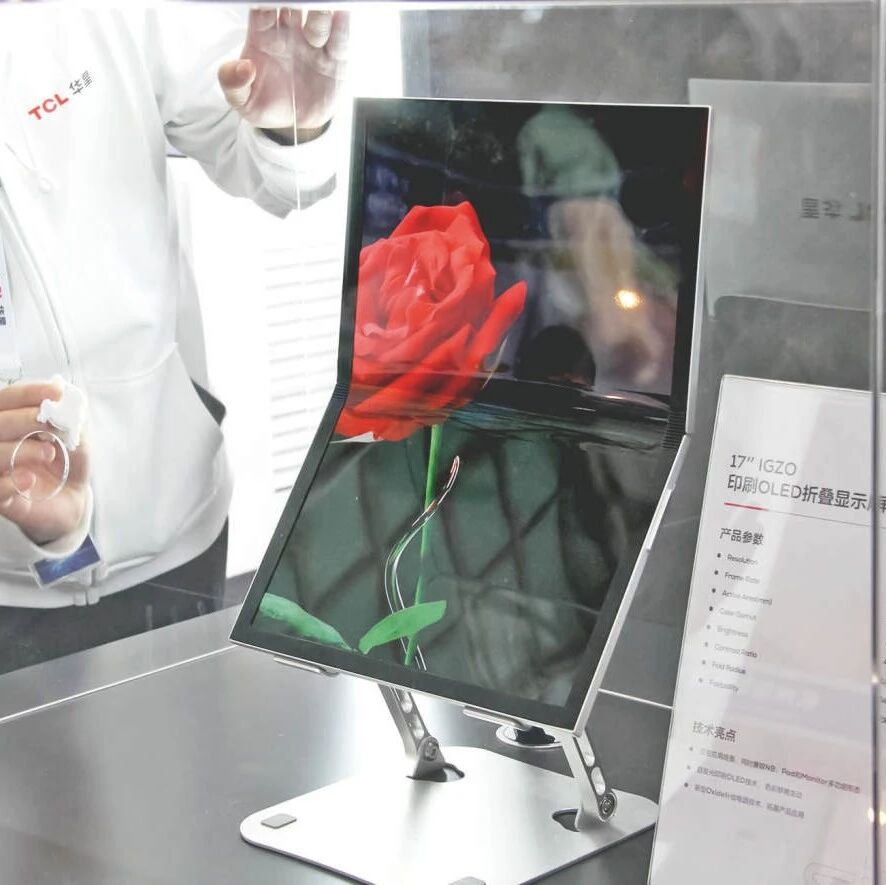
印刷OLED突围,中国屏的新路径
21世纪经济报道· 2025-11-21 02:36
Core Viewpoint - The global display industry is undergoing a new round of technological iteration, with OLED technology's penetration rate increasing, particularly in the context of printed OLED technology being led by Chinese companies [1][2]. Group 1: Industry Trends - The display industry is moving towards high resolution, low power consumption, and wide color gamut, with printed OLED technology emerging as a key player [1]. - China’s share of the global OLED market has surpassed 46%, with predictions indicating it will exceed 50% by 2027-2028 as three major companies launch high-generation OLED lines [2]. Group 2: Competitive Landscape - Four panel manufacturers, including TCL Huaxing, BOE, Visionox, and Samsung Display, are investing in high-generation OLED production lines, with total investments nearing 170 billion yuan [5]. - The competition in high-generation OLED technology is intensifying, with TCL Huaxing focusing on maintaining competitiveness in its 8.6-generation printed OLED production line [5][6]. Group 3: Key Decisions by TCL Huaxing - TCL Huaxing made four critical decisions in the development of printed OLED technology, including choosing the printed OLED route, shifting application focus to mid-size displays, relocating JOLED's production line to China, and initiating the Guangzhou T8 project for large-scale commercialization [8][9][10]. - The decision to focus on mid-size applications was driven by the performance and cost advantages of printed OLED technology [8]. Group 4: Challenges and Future Directions - Key challenges for TCL Huaxing include improving power consumption, achieving high yield rates, and addressing material performance issues [11][12]. - The company aims to enhance the efficiency of its printed OLED technology to meet the stringent requirements of top-tier customers while ensuring compatibility with existing OLED materials [12]. - The future strategy involves building an open, autonomous, and collaborative industry ecosystem to enhance global competitiveness [13].


京东方A:从2027年开始,随着量产完成且无新产线投资计划,资本开支将大幅下降
Di Yi Cai Jing· 2025-11-21 02:29
Core Viewpoint - BOE Technology Group (京东方A) indicates a downward trend in overall capital expenditures in the future, with 2025 expected to be the peak year due to significant investments in the Chengdu 8.6 generation OLED production line project [1] Capital Expenditure Summary - 2025 is projected to have the highest capital expenditure primarily driven by the Chengdu 8.6 generation OLED production line project [1] - In 2026, there will still be some expenditures mainly for subsequent equipment procurement [1] - Starting from 2027, capital expenditures are expected to decline significantly as mass production is completed and there are no new production line investment plans [1] Future Spending Areas - Future expenditures will mainly consist of maintenance costs and investments in innovative areas such as perovskite and glass-based packaging substrates [1] - The funding requirements for these innovative areas are significantly lower than those for panel production line construction [1]

京东方A:未来资本开支整体呈下降趋势
Xin Lang Cai Jing· 2025-11-21 01:21
Core Viewpoint - BOE Technology Group (京东方A) indicates a declining trend in overall capital expenditures, with 2025 expected to be a peak year due to significant investments in the Chengdu 8.6 generation OLED production line project [1] Capital Expenditure Summary - 2025 is projected to have the highest capital expenditure primarily driven by the Chengdu 8.6 generation OLED production line investments [1] - In 2026, there will still be some capital expenditures mainly for subsequent equipment procurement [1] - Starting from 2027, capital expenditures are expected to decline significantly as mass production is completed and no new production line investment plans are in place [1] Future Spending Areas - Future expenditures will mainly consist of maintenance costs and investments in innovative fields such as perovskite and glass-based packaging substrates [1] - The funding requirements for these innovative areas are significantly lower than those for panel production line construction [1]
京东方A(000725) - 029-2025年11月20日投资者关系活动记录表
2025-11-21 00:54
Group 1: LCD Market Insights - The demand for TV products is stimulated by national subsidies and export incentives, leading to an expected increase in annual shipment volume and area, despite a temporary slowdown in large-size trends due to rising demand for small-size TVs in emerging markets [1][2] - IT product shipments are anticipated to grow rapidly due to replacement demand, while MNT product shipments are expected to remain flat year-on-year [1] - The industry is adopting a "production based on demand" strategy to adjust production line utilization rates according to market needs, with an overall industry average utilization rate expected to drop below 80% in Q4 [2] Group 2: OLED Market Dynamics - The OLED market is experiencing an oversupply despite increased shipments in Q3 and Q4, with a notable decline in foldable product shipments and a rise in LTPO demand from overseas brands [3] - The domestic OLED market is becoming increasingly competitive, with rapid growth in low-end Ramless product shipments [3] - AMOLED technology is being positioned as a key choice for high-end IT products, with a new 8.6 generation AMOLED production line announced to enhance competitiveness in the high-end market [6] Group 3: Financial and Operational Outlook - The company expects depreciation costs to peak in 2025, with a gradual decline thereafter as production lines stabilize [7] - Capital expenditures are projected to decrease after 2025, with significant investments in the 8.6 generation OLED production line in 2025, followed by maintenance and innovation investments in subsequent years [8] - The company plans to utilize cash flow for minority shareholder buybacks, particularly in light of declining capital expenditures and improving cash flow [9] Group 4: Shareholder Returns and Strategic Planning - The company has announced a shareholder return plan for 2025-2027, committing to distribute at least 35% of the annual net profit to shareholders and allocate no less than RMB 1.5 billion for share buybacks each year [10] - This plan reflects a comprehensive analysis of operational conditions, long-term strategies, and shareholder interests, aiming to establish a stable and predictable return mechanism [11]
1300+新材料深度报告下载:含半导体材料/显示材料/新材料能源等
材料汇· 2025-11-20 14:45
Investment Insights - The article emphasizes the importance of understanding the investment landscape in new materials, particularly in sectors like semiconductors and renewable energy [9][11]. - It highlights the potential for high returns in the new materials sector, especially as industries evolve and demand for advanced materials increases [9][11]. Semiconductor Sector - The semiconductor industry is categorized into various segments, including advanced packaging, third-generation semiconductors, and semiconductor equipment [4][6]. - Key materials such as silicon wafers, photoresists, and etching chemicals are critical for semiconductor manufacturing [4][6]. - The article discusses the growth of companies like ASML and TSMC, which are pivotal in the semiconductor supply chain [6]. Renewable Energy - The renewable energy sector is identified as a significant area for investment, with a focus on lithium batteries, hydrogen energy, and energy storage solutions [4][6]. - The demand for materials like lithium and advanced battery technologies is expected to rise as the world shifts towards sustainable energy sources [4][6]. New Materials - The article outlines various categories of new materials, including chemical new materials, composite materials, and high-performance films [5][6]. - Innovations in materials science are driving advancements in industries such as aerospace, automotive, and electronics [5][6]. Investment Strategies - Different investment stages are discussed, from seed rounds with high risks to pre-IPO stages with lower risks and higher valuations [8]. - The article suggests that investors should focus on team capabilities, market potential, and product maturity when evaluating investment opportunities [8].
Samsung Display, China’s BOE settle OLED patent and trade secret lawsuits
Yahoo Finance· 2025-11-20 14:19
Core Points - Samsung Display and BOE Technology have settled a patent lawsuit regarding OLED technology, emphasizing the importance of fair technological competition for the display industry [1] - The settlement concludes a three-year legal battle, initiated by Samsung's complaints to the U.S. International Trade Commission (ITC) regarding patent infringement and trade secret theft by BOE [2] - The ITC had previously ruled that BOE infringed on Samsung's OLED patents and misappropriated trade secrets, recommending a ban on BOE's OLED panel exports to the U.S. for nearly 15 years [3] Industry Context - The settlement occurs amid efforts by major tech companies to reduce dependence on Chinese manufacturers for components, highlighting the potential impact of a U.S. export ban on BOE, a leading supplier of display panels [4] - Concerns over intellectual property theft are rising, as evidenced by a South Korean court sentencing a former Samsung Display engineer for leaking OLED technology valued at approximately $24.5 million [5]
印刷OLED突围 中国屏的新路径
2 1 Shi Ji Jing Ji Bao Dao· 2025-11-20 13:22
Core Insights - The global display industry is undergoing a new round of technological upgrades, with OLED technology's penetration rate increasing, particularly in the context of mobile devices, AI PCs, and high-end displays [1][2] - Chinese companies are leading the way in the development and implementation of printed OLED technology, marking a significant shift in the global competitive landscape of the OLED industry [1][2] - TCL Huaxing has showcased the world's first Real Stripe RGB OLED mobile screen, achieving a resolution breakthrough of 390 PPI, indicating progress in the application of printed OLED technology in smaller devices [1][3] Industry Trends - The competition in the OLED market is intensifying, with four major panel manufacturers, including TCL Huaxing, BOE, Visionox, and Samsung Display, investing nearly 170 billion yuan in high-generation OLED production lines [2] - The focus of investment is primarily on 8.6-generation OLED lines, which signifies a competitive escalation in OLED technology [2] Company Developments - TCL Huaxing's CEO emphasized that the company has made significant investment decisions regarding high-generation OLED production lines, which are expected to release capacity between the second half of next year and 2028 [2][3] - The company is expanding its application of printed OLED technology into small-sized devices, with ongoing improvements in performance metrics such as brightness, lifespan, and yield rates [3][4] Strategic Decisions - TCL Huaxing has made four key strategic decisions to advance printed OLED technology, including choosing the printed OLED route, shifting application focus from large to medium-sized displays, relocating JOLED's production line to China, and initiating the Guangzhou T8 project for large-scale commercialization [5][6][7] - The T8 project, with an investment of approximately 29.5 billion yuan, marks a significant step towards the commercialization of printed OLED technology [6] Challenges and Future Outlook - The company faces challenges in improving power consumption and yield rates, which are critical for the successful commercialization of printed OLED technology [7][8] - TCL Huaxing aims to enhance its competitive edge by continuously innovating technology and improving cost efficiency in response to market competition [7][9] - The printed OLED technology is seen as a breakthrough for the Chinese display industry, with the potential to lead in global technology routes [9]
证券研究报告、晨会聚焦:机械王可:攻守易形:钙钛矿电池专题报告-20251120
ZHONGTAI SECURITIES· 2025-11-20 12:43
Core Insights - The report emphasizes that perovskite tandem batteries are the inevitable choice for the next phase of photovoltaics due to their superior efficiency compared to traditional silicon-based solutions [7][8] - The efficiency ceiling for tandem batteries is projected to be 44%, with expected mass production efficiency exceeding 35% in the long term [8] - Major manufacturers in the perovskite sector have successfully transitioned to large-scale production, with significant efficiency improvements observed in large-area perovskite batteries [8][9] Industry Overview - The report discusses the limitations of single-material solar cells in efficiently utilizing the entire solar spectrum, which tandem batteries aim to address [8] - The commercial viability of perovskite tandem components is highlighted, with a significant price-performance advantage over traditional silicon components, projected to yield a premium of 1.28 CNY/W while maintaining a cost of only 1.2 CNY/W [8] - The anticipated efficiency of tandem components is expected to reach 28% by 2026, with a breakthrough of over 30% deemed inevitable [8] Market Dynamics - The report notes that the perovskite industry has seen a surge in production capacity, with nearly 10 companies operating 100MW lines as of October 2025, and several major players like BOE and CATL investing in GW-level production lines [9] - The compatibility of perovskite tandem technology with existing silicon production capabilities is expected to facilitate further expansion in the industry [9] - Key materials and equipment suppliers are identified, including TCO glass manufacturers like Jinjing Technology and Yaopi Glass, and equipment providers such as Jiejia Weichuang and Jing Shan Light Machinery [9]
四年暴涨121%!OLED还要疯涨?
半导体芯闻· 2025-11-20 10:49
Core Insights - The global IT OLED shipment is projected to grow from 24 million units in 2025 to 53 million units by 2029, indicating a structural growth phase in the next four years [1] - Samsung Display is expected to maintain over 60% market share as the largest producer of OLED panels for laptops, tablets, and monitors, with competitors like LG Display, EverDisplay, BOE, and Visionox following closely [1] Group 1: Market Trends - IT OLED products primarily utilize medium to large panels, necessitating production lines that maximize panel utilization based on large substrates [2] - Major terminal manufacturers, particularly Apple, are rapidly increasing the OLED share in their IT product lines, prompting panel manufacturers to prioritize investments in 8.6G OLED production lines [2] Group 2: Investment and Competition - Samsung Display announced an investment of approximately 4 trillion KRW in April 2023 for the construction of an 8.6G OLED production line, with other companies like BOE, Visionox, and TCL CSOT following suit [2] - Tianma Microelectronics is also exploring investments in 8.6G OLED production lines, highlighting a shift in the OLED market focus from smartphones to laptops, tablets, and monitors [2] Group 3: Technological Advancements - As the market expands, the technical requirements for IT OLED are evolving, with longer replacement cycles and higher white screen usage leading to burn-in issues [3] - The 2 Stack Tandem OLED structure, characterized by long lifespan, high brightness, and efficiency, is becoming a critical evaluation metric [3] - Samsung Display is focusing on Apple as a core customer for OLED panels for MacBook Pro, while Chinese manufacturers are targeting the broader market for laptops, tablets, and smartphones [3]


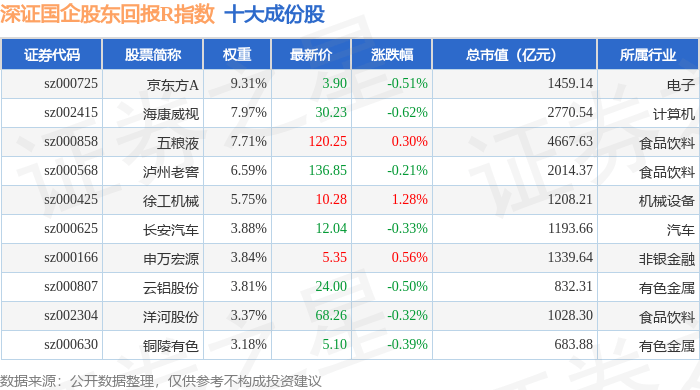
11月20日深证国企股东回报R(470064)指数涨0.03%,成份股北新建材(000786)领涨
Sou Hu Cai Jing· 2025-11-20 10:40
证券之星消息,11月20日,深证国企股东回报R(470064)指数报收于2243.24点,涨0.03%,成交219.45 亿元,换手率0.91%。当日该指数成份股中,上涨的有16家,北新建材以5.69%的涨幅领涨,下跌的有27 家,飞亚达以2.81%的跌幅领跌。 深证国企股东回报R(470064)指数十大成份股详情如下: | 证券代码 | 股票简称 | 权重 | 最新价 | 涨跌幅 | 总市值(亿元) | | 所属行业 | | --- | --- | --- | --- | --- | --- | --- | --- | | sz000725 | 京东方A | 9.31% | 3.90 | -0.51% | | 1459.14 | 电子 | | sz002415 | 海康威视 | 7.97% | 30.23 | -0.62% | | 2770.54 | 十算机 | | sz000858 | 五根液 | 7.71% | 120.25 | 0.30% | 4 P | 4667.63 | 食品饮料 | | sz000568 | 泸州老窖 | 6.59% | 136.85 | -0.21% | A | 2014.37 ...