抖音

Search documents
严资质、抓内容、强监管……首都各方合力规范医疗“自媒体”科普
Bei Ke Cai Jing· 2025-09-24 02:04
Core Viewpoint - The meeting focused on addressing the chaotic state of medical science communication in self-media, aiming for a transition towards standardization and professionalism in the health information ecosystem [1] Group 1: Platform Initiatives - Major platforms like Douyin, Kuaishou, and Weibo shared their experiences and challenges in regulating medical content, emphasizing a dual approach of strict regulation and strong support for creators [2][3] - Douyin has established a three-tier risk control mechanism since 2021, which includes qualification audits and regular checks, prohibiting unverified accounts from publishing medical content [2] - Kuaishou requires medical self-media accounts to complete real-name verification and professional qualification checks, implementing a monitoring mechanism for content consistency [3] Group 2: Medical Professionals' Perspectives - Representatives from various hospitals highlighted the importance of quality medical knowledge dissemination and the need for collaboration with platforms to enhance content quality and reduce misinformation [4] - Medical influencers stressed that professionalism is crucial for content quality, warning against the temptation to chase trends that could compromise the integrity of medical information [4][5] Group 3: Regulatory Recommendations - Experts suggested that medical institutions should actively learn and comply with regulations regarding self-media management to protect their rights and industry image [6] - Recommendations included strict qualification verification for accounts, enhanced information governance, and the need for clear labeling of content sources to combat misinformation [7]
第四届琶洲算法大赛生态赋能大会举行 院士专家行业精英及600多家企业参会
Guang Zhou Ri Bao· 2025-09-24 01:54
Core Insights - The fourth Panyu Algorithm Competition Eco-Empowerment Conference was held in Guangzhou, aiming to establish itself as the "World Cup" of artificial intelligence, focusing on real industry needs and innovative market-oriented competition models [2][5] Group 1: Event Overview - The event attracted over 600 companies and global experts, showcasing its significance in the AI field and its role as a new platform for technology enterprises [2] - The competition featured 183 teams in the finals, with 82 award-winning teams recognized, marking a significant increase in participation and influence [5] Group 2: Key Contributions and Insights - Notable scientists emphasized the importance of algorithms in driving advancements in AI, with a focus on the integration of data and physical spaces [3] - The event highlighted the need for deep collaboration in algorithm research, data sharing, and talent cultivation within the Guangdong-Hong Kong-Macao Greater Bay Area [3] Group 3: Industry Impact - The competition has become a platform for connecting innovative outcomes with capital, with 70 investment institutions participating in the roadshow [6] - The Haizhu District has leveraged the competition to solidify its foundation in algorithms, computing power, and data, resulting in over 170 industry model projects and a sustained growth rate of over 20% in the new generation information technology service industry [6]


揭秘阿里大消费变革:高德只是先手棋,马云目标是什么?
3 6 Ke· 2025-09-23 23:53
Core Insights - Alibaba is undergoing a significant transformation in its consumer strategy, aiming to integrate online and offline services to enhance user experience and regain market leadership [2][3][4] - The launch of the "GaoDe Street Ranking" and the "Instant Purchase" initiative indicates a shift towards a more data-driven and behavior-based evaluation system for local services [1][2][3] - The competitive landscape is intensifying, with rivals like Pinduoduo, Douyin, and Meituan posing substantial challenges, prompting Alibaba to innovate and adapt its business model [2][4][6] Group 1: Strategic Developments - GaoDe's new ranking system incorporates real user behavior to create a credit system, moving away from subjective evaluations [2][7] - The integration of GaoDe, Ele.me, and Taobao into a unified consumer ecosystem aims to provide a seamless shopping experience across various platforms [4][8] - The recent organizational changes, including the merger of Ele.me and Fliggy into Alibaba's China e-commerce group, signify a strategic shift towards a comprehensive consumer platform [4][5] Group 2: Market Dynamics - The instant retail market is rapidly growing, with daily order volumes increasing from 1 billion to 2.5 billion, indicating a significant opportunity for Alibaba to capture new demand [6][9] - Competitors are diversifying their offerings, with Meituan expanding into flash sales and grocery delivery, while Douyin leverages content for local services [6][9] - Alibaba's dual strategy of building a content ecosystem through GaoDe and focusing on group buying via Taobao and Ele.me aims to differentiate its approach in a crowded market [6][10] Group 3: Organizational Challenges - The success of Alibaba's transformation hinges on overcoming internal organizational barriers and fostering collaboration among different business units [9][12] - The company is implementing a "dual team" strategy to enhance efficiency, but this may lead to coordination challenges that need to be managed effectively [10][12] - Alibaba's leadership is emphasizing a return to entrepreneurial spirit and innovation, which is crucial for navigating the competitive landscape [10][11]

电厂 | 淘宝与高德同时发力团购,威胁的不仅是美团
Xin Lang Cai Jing· 2025-09-23 10:30
Core Insights - Alibaba's Taobao Flash Sale has launched an in-store group buying service, initially in Shanghai, Shenzhen, and Jiaxing, to compete with Meituan and Douyin in the instant retail sector [1][4][18] - The service aims to attract users by offering discounts and is seen as a natural extension of existing offerings, with a focus on enhancing consumer and merchant experiences [6][9] - The competition landscape is evolving, with various platforms like Gaode and Douyin also entering the in-store group buying space, indicating a shift in how local services are marketed and consumed [10][14] Group 1: Taobao Flash Sale's Strategy - Taobao Flash Sale's in-store group buying service was officially launched on September 20, 2023, with a focus on multiple food categories [4][6] - The initial rollout is part of a broader strategy to leverage existing user bases and enhance service offerings, with plans for expansion into more cities [1][9] - The pricing strategy shows competitive pricing against Meituan, with some products priced lower on Taobao Flash Sale, particularly in the tea and dessert categories [6][4] Group 2: Competitive Landscape - Gaode has introduced its own features to compete with platforms like Dazhong Dianping, while also hiring for local life-related positions, indicating its commitment to the in-store group buying market [10][11] - Douyin is actively pursuing in-store group buying as a key growth area, with plans for significant promotional events to boost sales [14] - Other platforms like Kuaishou and Xiaohongshu are also exploring local life services, indicating a trend towards diversification in service offerings across multiple platforms [15][18] Group 3: Merchant Perspectives - Merchants express a preference for private domain operations, indicating a desire to retain customer relationships beyond platform-driven sales [18] - Feedback from merchants suggests that the operational model for Taobao Flash Sale's group buying is similar to that of Meituan, focusing on signing contracts with merchants and facilitating offline redemption [8][18] - The competitive dynamics suggest that while platforms vie for user attention, merchants are primarily concerned with profitability and customer retention [18]


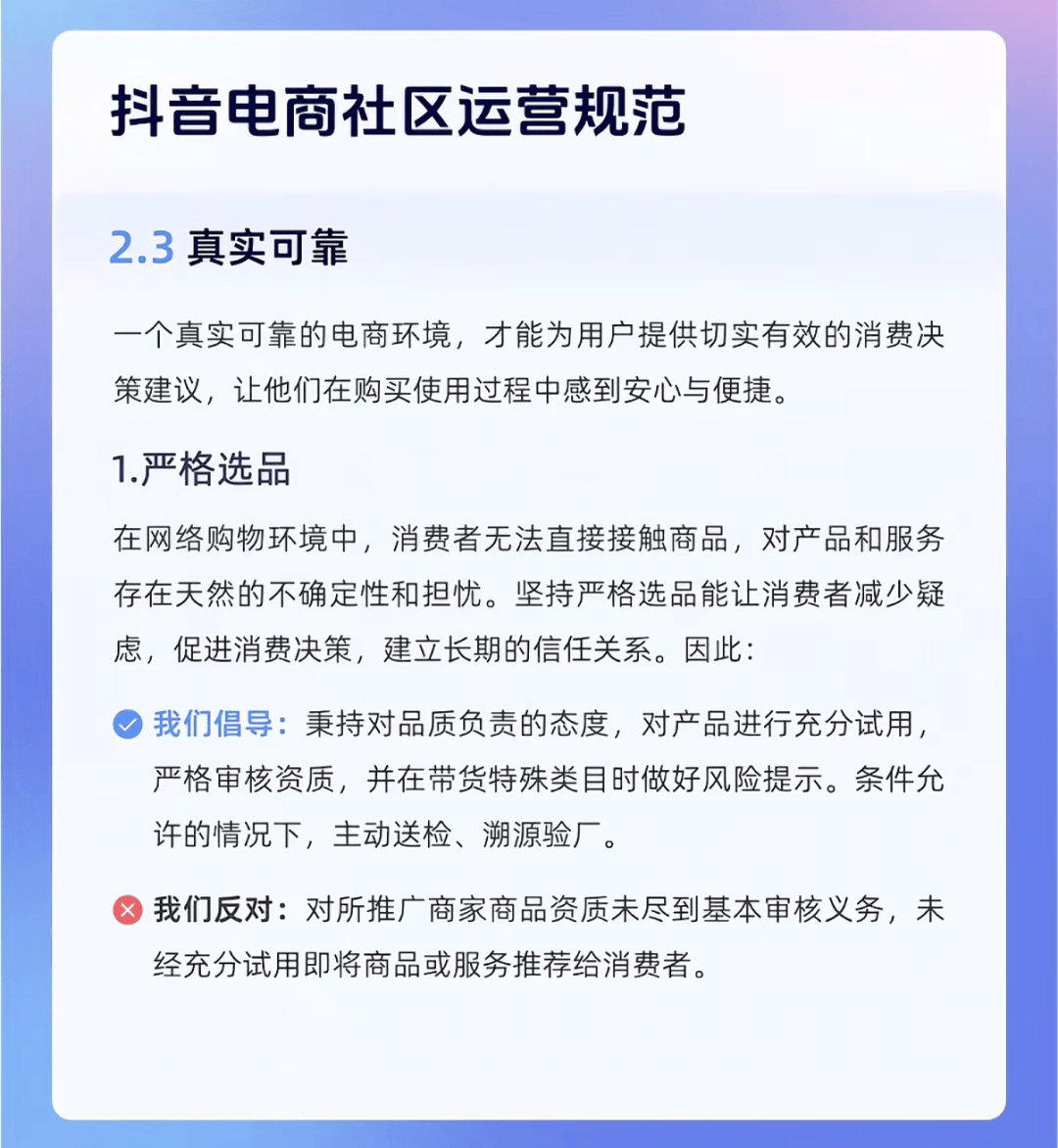
抖音电商首发扶优打劣新规,直播电商行业大洗牌正式开启
Sou Hu Cai Jing· 2025-09-23 07:27
Core Viewpoint - A governance action is underway in the live e-commerce industry, marking a shift from chaotic growth to regulated development, as Douyin e-commerce releases its first public community operation guidelines [1][9]. Industry Overview - The live e-commerce sector has experienced rapid growth alongside significant risks, including influencer accountability, consumer rights violations, and the pressure on small merchants [1][3]. - The industry faces challenges such as extreme content creation for attention, which can harm consumer trust and business integrity [1][3]. Governance Actions - Douyin e-commerce has taken strict measures against violations, processing approximately 13 million instances of non-compliant content and indefinitely revoking the selling privileges of 470,000 violators [3][9]. - The platform emphasizes that compliance is foundational for transactions, as trust is essential for the e-commerce ecosystem [3][9]. Support for Quality Contributors - Since April, over 30,000 quality creators have received traffic support from the platform, with each gaining an average of over 60,000 additional exposure instances [5]. - Douyin e-commerce is adjusting its algorithms to evaluate both "transaction value" and "content quality," ensuring that high-value content receives more distribution [5][10]. Market Dynamics - Data indicates that influencers with over one million followers contribute only 9% of the platform's GMV, highlighting the importance of smaller creators who understand market needs and focus on niche areas [8][9]. - Over the past year, more than 511,000 new e-commerce authors and 536,000 new merchants have generated income through Douyin, showcasing the platform's role in supporting small businesses [8][9]. Long-term Vision - The release of the guidelines is seen as a microcosm of the broader evolution of internet platform governance in China, transitioning from chaotic growth to rule establishment and ecological optimization [9][10]. - The future competition in live e-commerce will focus on the health of the ecosystem rather than mere traffic acquisition, promoting a fair and sustainable environment for all participants [10].
外卖大战“降温”到店之战渐起
Zhong Guo Jing Ying Bao· 2025-09-23 06:50
Group 1 - The takeaway from the article is that the intense competition in the food delivery market is cooling down, with a noticeable reduction in subsidies and promotional activities from major platforms [1][5][6] - Merchants have reported a significant decline in sales, with some experiencing a drop of over one-third in daily revenue compared to the peak months of July and August [1][3] - Delivery riders have also felt the impact, with a decrease in order volume leading to lower earnings, with some reporting daily incomes dropping from over 300 to around 200 [4][5] Group 2 - The article highlights a shift in focus from food delivery to in-store services, with platforms like Alibaba and JD.com launching new initiatives to promote in-store purchases and group buying [2][12] - The introduction of local lifestyle rankings, such as the "Gaode Street Ranking," indicates a strategic move by platforms to enhance their presence in the local service market, competing directly with existing players like Meituan [8][9] - The competition in the in-store segment is still in its early stages, with platforms relying on user reviews and experiences to drive traffic, which is more complex than the food delivery model [13][14] Group 3 - The article discusses the financial implications of the food delivery battle, noting that while the competition has led to increased market share for platforms, it has also negatively impacted profitability [5][6] - The profitability of in-store services is significantly higher than that of food delivery, with operating profit margins for in-store services reaching 45.6% compared to just 6.5% for food delivery [12] - The platforms are expected to avoid large-scale subsidy wars in the in-store segment, focusing instead on sustainable growth and enhancing user experience [14][15]

中秋、国庆双节北京推出500余项特色消费活动
Bei Jing Shang Bao· 2025-09-23 06:47
Group 1 - Beijing's consumption market is highly active ahead of the Mid-Autumn Festival and National Day, with over 500 unique consumption activities launched to provide diverse and affordable experiences for citizens and tourists [1] - The Beijing Municipal Bureau of Commerce is collaborating with various departments to promote cultural and tourism consumption, including film subsidies and dining vouchers, benefiting over 300 restaurants and more than 20 hotels [1][2] - Special promotions are available in various districts, such as discounts for consumers holding event tickets, integrating sports events with consumption [1][2] Group 2 - The city has optimized tax refund services for international tourists, with five centralized refund points allowing for convenient tax refunds across 1,500 stores [2] - Numerous dining experiences are being promoted, showcasing both traditional and new brands, with special products like themed mooncakes and tea mooncake gift boxes [2] - Nearly 100 shopping centers are offering discounts and promotional activities during the holiday, alongside cultural events like DIY mooncake making and exhibitions [2][3] Group 3 - A variety of performances and exhibitions are scheduled, including product launches and immersive theater experiences, enhancing the holiday atmosphere [3] - The "Beijing Chaoyang International Light Consumption Season" aims to create vibrant night tourism experiences in key areas of the city [3] - Cultural festivals and themed activities are being organized in parks and historical sites, providing new fashion experiences and showcasing Beijing's cultural charm [3]
乐享中秋国庆假期 北京推出500余项特色消费活动
Zhong Guo Xin Wen Wang· 2025-09-23 05:27
Core Points - Beijing is launching over 500 unique consumption activities to meet diverse consumer needs during the Mid-Autumn Festival and National Day holidays [1] - The theme "Jingcai Four Seasons" aims to provide a rich and affordable shopping experience for both residents and tourists [1] Group 1: Diverse Policies for Consumer Benefits - The Beijing Film Bureau is collaborating with the Maoyan platform to issue movie viewing subsidies, allowing citizens and tourists to enjoy films at lower prices [2] - Shijingshan District is distributing dining and accommodation vouchers, with over 300 participating restaurants and more than 20 hotels [2] - The "Ticket Root" themed activity offers discounts at over 200 merchants for attendees of major sports events, integrating sports and consumption [2] - The city has optimized its tax refund services for outbound travelers, with five centralized refund points available for shopping at over 1,500 stores [2] Group 2: Unique Festival Offerings - Traditional brands are launching creative products for the holidays, such as themed mooncake gift boxes inspired by cultural heritage [3] - Numerous shopping centers are offering discounts and promotions, alongside cultural events like DIY mooncake making and music festivals [3] - Online platforms like Meituan and Douyin are also running promotional activities tied to holiday events [3] Group 3: Enriching Holiday Experiences - The Beijing Chaoyang International Light Consumption Season is creating vibrant night tourism experiences in key areas [4] - Various cultural festivals and events, including traditional performances and music festivals, are being organized to cater to diverse entertainment needs [4] - Parks are hosting creative markets and heritage experience exhibitions to showcase traditional culture [4] Group 4: Fashion and Retail Innovations - New shopping centers are enhancing consumer experiences with unique designs and offerings, such as social shopping spaces [5] - Over 600 new brand stores have opened in Beijing this year, providing fresh shopping destinations for the holiday season [5] - Events showcasing global product launches and fashion festivals are being held across major shopping districts [6]
围绕“京彩四季”主题,北京推出500余项特色消费活动迎双节
Xin Jing Bao· 2025-09-23 05:03
Group 1 - Beijing's Commerce Bureau is launching over 500 unique consumption activities to stimulate holiday spending during the Mid-Autumn and National Day festivals, focusing on a diverse and fashionable consumer experience [1] - The city is implementing various consumer-friendly policies, including movie subsidies and cultural consumption vouchers, to enhance cultural life for residents [2] - Special consumption vouchers are being issued in Shijingshan District, covering over 300 dining establishments and more than 20 hotels to boost local consumption [2] Group 2 - Numerous shopping malls are offering discounts and interactive activities such as mooncake DIY and patriotic art exhibitions to attract consumers [3] - The "Night Economy" is being promoted through events like the Chaoyang International Light Consumption Season and various cultural festivals, catering to diverse cultural interests [4] - New retail spaces and flagship stores are being established in Beijing, with over 600 new stores opened this year, enhancing the city's shopping landscape [4]
阿里加码本地到店服务,淘宝闪购饿了么上线团购
3 6 Ke· 2025-09-23 02:41
Core Insights - The local life service market in China is projected to grow from 19.5 trillion yuan in 2020 to 35.3 trillion yuan by 2025, with an online penetration rate of only 10% [1][11] - Alibaba has made significant strategic moves in the local life service sector, including the launch of the "Gao De Street Ranking" and a new group buying service in collaboration with Ele.me [1][3][4] Market Overview - The local life service market is expected to exceed 35.3 trillion yuan by 2025, with a compound annual growth rate of 12.6% and an anticipated online penetration rate of 30.8% [11] - The "to-store" services, which include dining, tourism, and entertainment, account for over half of the local life service market and are growing at an annual rate of over 15% [11] Alibaba's Strategic Moves - Alibaba's new group buying service features a "dual supply + three entry points" model, integrating offerings from Taobao Flash Sale and Ele.me [3] - The service will initially be piloted in key urban areas such as Shanghai, Shenzhen, and Jiaxing, utilizing localized marketing strategies [3][9] Technological Integration - The Gao De Street Ranking leverages AI and user behavior data to enhance user experience and merchant evaluation [5][9] - Payment technologies from Alipay and order code systems from Taobao are designed to streamline the in-store experience for users [5] Competitive Landscape - The local life service market is highly competitive, with major players like Meituan, Douyin, and Kuaishou also expanding their offerings [15][14] - Douyin has introduced a content-driven group buying model, while Kuaishou has committed significant resources to local life services [13][14] Future Trends - The competition in the local to-store business is expected to shift from single-channel to multi-channel integration, emphasizing the importance of combining merchant resources, user data, and fulfillment networks [17] - The significance of lower-tier markets is increasing, with county-level economies projected to exceed 50 trillion yuan by the end of 2024 [18] Conclusion - Alibaba's recent initiatives in the local to-store business signify a shift from a defensive to an offensive strategy, aiming to capture market share and enhance user experience [20] - The ongoing competition in the local life service sector will focus on providing better, more transparent, and convenient services to consumers [20]