蔚来

Search documents
产业升级催生消费升级,新兴城市成为新增长极
Jing Ji Guan Cha Wang· 2026-01-12 09:48
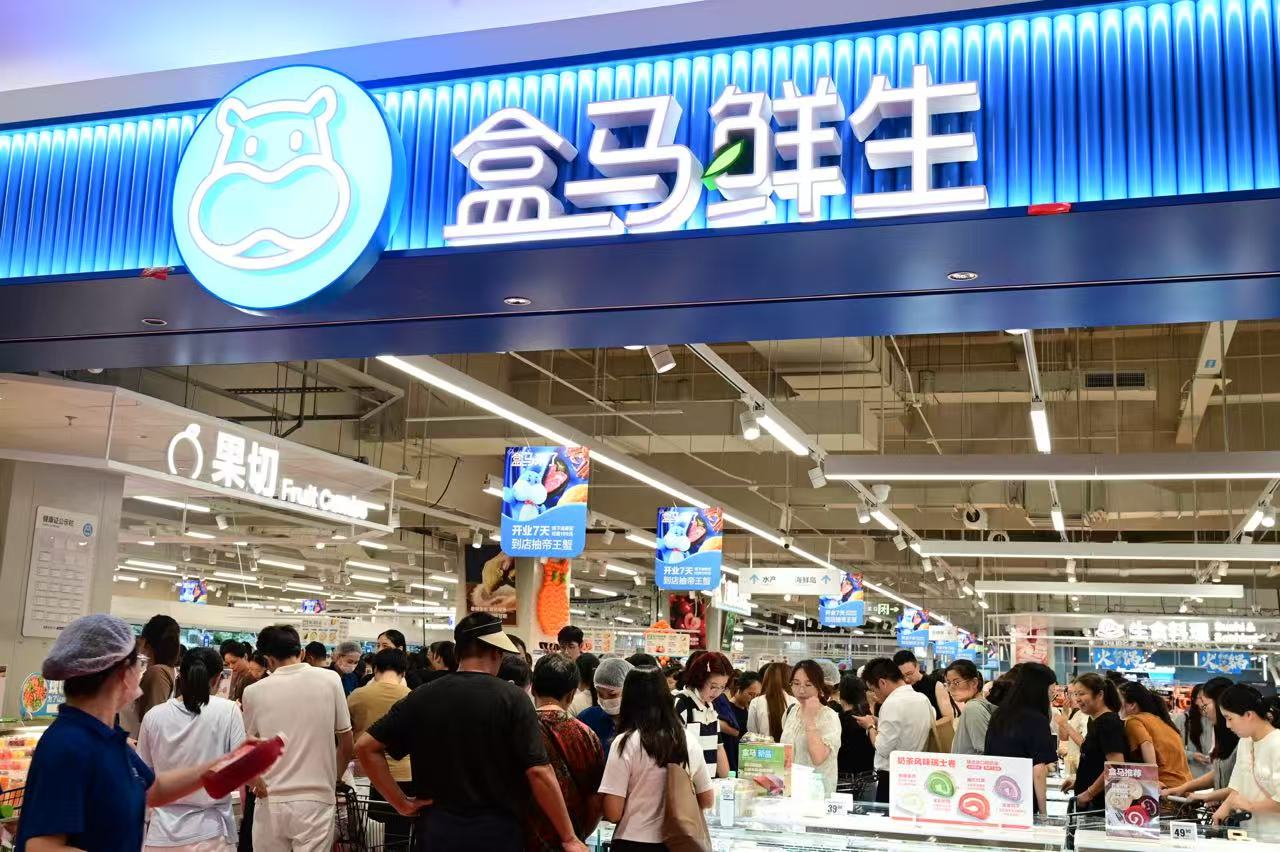
Core Insights - The geographical landscape of China's consumer market is shifting from traditional first-tier cities to emerging urban areas, indicating a significant change in consumption growth dynamics and brand competition [1][7] Group 1: Consumption Trends - The "Box District Housing Index" shows that cities like Shijiazhuang, Xuzhou, and Linyi have indices of 171, 141, and 127 respectively, significantly above the national average of 100, highlighting the rising consumption power in these emerging cities [1] - Retail brands such as Xixifu Bookstore and outdoor brand Salomon are expanding into emerging markets, confirming the trend of a silent yet profound geographical migration in consumption [1] - Consumers in emerging cities are increasingly seeking quality and unique experiences, aligning their demands with those of consumers in first-tier cities [3][4] Group 2: Industrial Upgrades - Industrial upgrades are driving the transformation of cities and reshaping the consumption base, with cities like Yibin becoming key players in the power battery industry, achieving over 100 billion in output value in both 2023 and 2024 [2] - Hefei has emerged as a leader in the new energy vehicle sector, producing 1.097 million vehicles from January to October 2025, and hosting numerous core component enterprises, establishing a robust industrial cluster [2] Group 3: Consumer Behavior Changes - The influx of skilled workers and rising disposable incomes in emerging cities are creating a new consumer demographic with unique spending power, leading to increased consumption [3] - Data shows that 55.7% of non-first-tier cities have GDP growth rates exceeding the national average, with 65.2% of third-tier cities and 60.7% of fourth-tier cities also outperforming the national growth rate [3] Group 4: Retail Innovations - Brands like Hema are transforming traditional shopping experiences into multi-functional destinations that combine dining, socializing, and shopping, thus enhancing consumer engagement [6] - Hema's new stores have seen immediate success, with significant sales figures reported on opening days, indicating strong market demand and consumer interest [6] Group 5: Future Outlook - The shift in consumption dynamics suggests that retail brands capable of maintaining competitiveness in high-tier cities while successfully penetrating emerging markets will likely emerge as the biggest winners [7][8] - The evolving consumer landscape in emerging cities is characterized by a growing demand for quality products and experiences, which is reshaping the retail industry [8]

港股汽车股持续疲弱
Cai Jing Wang· 2026-01-12 09:38
1月12日,港股汽车股持续疲弱,其中,吉利汽车、零跑汽车跌超3%,广汽集团跌2.8%,理想汽车、小 鹏汽车跌超2%,长城汽车、蔚来汽车、赛力斯、奇瑞汽车均有跌幅。(新浪财经) 作者丨彭鑫 编辑丨安安 ...



【月度排名】2025年12月厂商销量排名快报
乘联分会· 2026-01-12 09:28
Core Viewpoint - The article highlights the performance of the Chinese automotive market in December 2025, noting a decline in retail sales for traditional vehicles while emphasizing growth in the new energy vehicle (NEV) sector and exports. The market is expected to transition into 2026 with a focus on new energy vehicles and a recovery in demand [4]. Sales Performance - In December 2025, the domestic narrow passenger car market retail sales reached 2.261 million units, a year-on-year decrease of 14.0% but a month-on-month increase of 1.6%. Cumulative sales for the year totaled 23.744 million units, reflecting a year-on-year growth of 3.8% [2]. - The wholesale sales ranking for December 2025 shows BYD leading with 414,784 units sold, followed by Geely and Chery with 236,817 and 234,736 units, respectively. Notably, BYD's sales decreased by 12.7% month-on-month and 18.6% year-on-year [5]. - For the entire year of 2025, BYD also topped the wholesale sales with 4.545 million units, marking a 6.9% increase year-on-year, while Geely's sales surged by 39.0% to 3.025 million units [6]. New Energy Vehicle Market - In December 2025, the NEV wholesale sales ranking was led by BYD with 414,784 units, despite a month-on-month decline of 12.7% and a year-on-year drop of 18.6%. Geely followed with 154,264 units, showing a year-on-year increase of 38.7% [9]. - The retail sales for NEVs in December 2025 also saw BYD at the forefront with 339,854 units sold, a month-on-month increase of 10.9% but a year-on-year decrease of 15.7% [13]. - For the full year, BYD maintained its dominance in the NEV sector with 3.485 million units sold, although this represented a year-on-year decline of 6.3% [14]. Market Trends and Future Outlook - The article notes that the end of the year typically sees a surge in vehicle purchases, but the depletion of subsidy funds across provinces has tempered this effect, leading to a more stable demand outlook heading into 2026 [4]. - The performance of various manufacturers indicates a competitive landscape, with traditional automakers facing challenges while NEV manufacturers like BYD and Geely continue to show resilience and growth potential [6][9].




美股异动|蔚来盘前涨2.4% ES9申报图亮相 预计二季度发布
Ge Long Hui· 2026-01-12 09:28
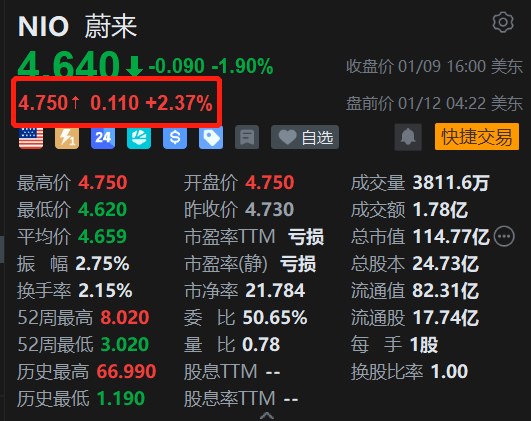
Group 1 - NIO's stock price increased by 2.37% to $4.75 in pre-market trading [1] - The Ministry of Industry and Information Technology announced the official debut of NIO's new flagship SUV, the ES9, which is positioned above the current ES8 model [1] - The ES9 is expected to be officially launched in the second quarter of this year and aims to enhance NIO's presence in the high-end electric SUV market [1] Group 2 - The closing price of NIO on January 9 was $4.64, with a pre-market price of $4.75 [2] - The trading volume was 38.116 million shares, with a total transaction value of $178 million [2] - NIO's total market capitalization is approximately $11.477 billion, with a total share count of 2.473 billion [2]
整车主线周报:12月新能源批发符合预期,看好26年景气度向上-20260112
Soochow Securities· 2026-01-12 09:10
Investment Rating - The industry investment rating is "Overweight," indicating an expected outperformance of the industry index relative to the benchmark by more than 5% over the next six months [33]. Core Insights - The report highlights a positive outlook for the passenger vehicle sector, anticipating a recovery in demand in Q1 2026 due to the implementation of subsidy policies. Key players include Jianghuai Automobile, Geely, Great Wall Motors, and BYD, focusing on high-end electric vehicles and established export leaders [23][24]. - The heavy truck segment is projected to see a slight increase in domestic sales in 2026, with expectations of 800,000 to 850,000 units sold, reflecting a 3% year-on-year growth. Recommended companies include China National Heavy Duty Truck Group and Weichai Power [28]. - The bus market is expected to benefit from the continuation of subsidy policies, with a conservative estimate of 40,000 units sold in 2026, representing a 5% increase year-on-year. Key recommendations include Yutong Bus and King Long [27]. - The motorcycle sector is forecasted to grow by 14% in total sales in 2026, with a significant increase in large-displacement motorcycles. Recommended companies include Chunfeng Power and Longxin General [24]. Summary by Sections Passenger Vehicles - The report emphasizes a recovery in the passenger vehicle market in Q1 2026, driven by subsidy policies. Key stocks to watch include Jianghuai Automobile and Geely, with a focus on high-end electric vehicles [23][24]. Heavy Trucks - In 2025, heavy truck wholesale sales reached 1.14 million units, a 26% increase year-on-year. The report forecasts 800,000 to 850,000 units for 2026, with a 3% growth expectation. Recommended companies include China National Heavy Duty Truck Group and Weichai Power [28]. Buses - The bus market is projected to see a slight increase in sales due to favorable policies, with an expected 40,000 units sold in 2026. Key recommendations include Yutong Bus and King Long [27]. Motorcycles - The motorcycle industry is expected to grow by 14% in 2026, with large-displacement motorcycles seeing a 31% increase. Recommended companies include Chunfeng Power and Longxin General [24].
武汉光谷商学院即将揭牌
Xin Lang Cai Jing· 2026-01-12 06:46
来源:上海证券报·中国证券网 上证报中国证券网讯(记者 丁鹏)据中国光谷消息,光谷商学院将于1月13日在中国光谷科技会展中心 举行揭牌仪式。 据介绍,光谷商学院将培养具有全球格局的科技企业家,以赋能光谷企业突破成长边界,迈向世界级阵 营,实现"让科技人员懂产业,让创业者懂经营,让管理者懂创新",驱动武汉市东湖高新区科技创新优 势加速向产业规模优势转化。 上证报记者了解到,有多名上市公司高管和产业龙头企业负责人将成为光谷商学院顾问委员会成员。其 中包括长飞光纤总裁庄丹、精测电子董事长彭骞、帝尔激光董事长李志刚、蔚来董事长兼CEO李斌、阅 文集团CEO兼总裁侯晓楠、长江存储董事长陈南翔等。 上证报中国证券网讯(记者 丁鹏)据中国光谷消息,光谷商学院将于1月13日在中国光谷科技会展中心 举行揭牌仪式。 据介绍,光谷商学院将培养具有全球格局的科技企业家,以赋能光谷企业突破成长边界,迈向世界级阵 营,实现"让科技人员懂产业,让创业者懂经营,让管理者懂创新",驱动武汉市东湖高新区科技创新优 势加速向产业规模优势转化。 上证报记者了解到,有多名上市公司高管和产业龙头企业负责人将成为光谷商学院顾问委员会成员。其 中包括长飞光 ...
2025车企生存法则:对内做整合,在外找盟友
3 6 Ke· 2026-01-12 05:55
Core Insights - The Chinese automotive market is undergoing a significant consolidation wave in 2025, with major players like Geely and Changan actively restructuring to enhance efficiency and competitiveness [1][2][3] - New energy vehicles (NEVs) have reached a milestone, with sales hitting 1.715 million units in October 2025, achieving a penetration rate of 51.6%, indicating a deep market shift from traditional fuel vehicles [1] - The competition among automakers has evolved from price wars to a comprehensive battle over technology, configuration, and service, highlighting a growing disparity among companies [1][4] Internal Integration - Geely has initiated a series of internal integrations, including the merger of its Geometry brand into the Galaxy series and the strategic consolidation of Zeekr and Lynk & Co under the Zeekr Technology Group [2] - Changan and Dongfeng have also made strategic adjustments, with Changan's chairman emphasizing the need for restructuring to enhance competitiveness [3] - NIO and Li Auto have undertaken organizational changes to streamline operations and improve efficiency, aligning with their profitability goals for 2025 [4] External Collaborations - Huawei has emerged as a key player in the automotive ecosystem, expanding its partnerships with automakers like GAC and Dongfeng to create new brands and models [5][6] - The collaboration models with Huawei include standardized parts sales, full-stack smart vehicle solutions, and deep involvement in product design and sales networks [5][7] - As of now, Huawei has partnered with over 20 automotive brands, indicating its significant influence in the industry [8] Market Trends - The overall retail sales of narrow passenger vehicles in December 2025 were approximately 2.262 million units, reflecting a 14% year-on-year decline, attributed to policy changes and consumer sentiment [9] - For the entire year of 2025, cumulative retail sales reached about 23.744 million units, a 3.8% increase from the previous year, signaling a shift towards a more rational and high-quality development phase in the market [10] - The automotive industry's profit margin was around 4.4% in the first eleven months of 2025, indicating competitive pressures and the need for cost reduction strategies among automakers [10][11] Industry Consensus - The automotive industry is increasingly focused on cost reduction and efficiency improvements, with companies consolidating brands and integrating operations to enhance profitability [11] - The rise of core suppliers like CATL and Huawei has shifted the dynamics of the supply chain, prompting automakers to seek deeper collaborations rather than traditional procurement relationships [11][12] - Future competition will hinge not only on brand and product differentiation but also on the ability to collaborate within the ecosystem [12]

汽车行业周报:小鹏比亚迪多款新车上市,工信部公示403批新车-20260112
Guohai Securities· 2026-01-12 05:33
Investment Rating - The report maintains a "Buy" rating for the automotive industry [1] Core Insights - The automotive industry is expected to face challenges in 2026 due to the reduction of new energy vehicle purchase tax incentives and the decline in vehicle replacement subsidies. However, there are opportunities for high-end upgrades and accelerated penetration of smart technologies. The report maintains a positive outlook on the industry, emphasizing the ongoing technological transformation [14][5] - The report highlights the launch of several new models from companies like Xpeng and BYD, indicating a competitive landscape with innovative offerings [11][12][13] Summary by Sections Weekly Dynamics - The Ministry of Industry and Information Technology (MIIT) announced the 403rd batch of new vehicle models, including significant releases from Xpeng and BYD [11] - Xpeng unveiled four new models, including the P7+, G7, G6, and G9, with advanced AI capabilities and plans for mass production of humanoid robots and flying cars [12] - BYD launched the long-range version of the Qin family, featuring advanced technology and competitive pricing [13] Market Performance - From January 4 to January 9, 2026, the automotive sector underperformed compared to the Shanghai Composite Index, with the automotive index rising by 2.5% while the Shanghai Composite Index increased by 3.8% [15] - The report notes that the automotive sector's trading volume increased during this period, indicating heightened market activity [15] Key Companies and Profit Forecasts - The report provides a detailed forecast for several key companies, recommending stocks such as Xpeng, BYD, and others based on their expected earnings per share (EPS) and price-to-earnings (PE) ratios for 2024 to 2026 [6]
200亿上海手机代工巨头冲刺港股IPO,最大客户小米持股4.94%
量子位· 2026-01-12 04:13
Core Viewpoint - Shanghai Longqi Technology is on the verge of becoming the first consumer electronics ODM listed on the Hong Kong Stock Exchange, having successfully passed the hearing process [2][50]. Group 1: Company Overview - Longqi Technology, established in 2004, is the world's largest smartphone ODM, holding a 32.6% market share in the smartphone ODM sector [19][4]. - The company has a diverse product portfolio, including smartphones, AI PCs, automotive electronics, tablets, smartwatches, and smart glasses, structured under a "1+2+X" framework [5][10]. - Longqi's main business driver is its smartphone segment, which provides comprehensive R&D services from concept design to mass production [7][8]. Group 2: Financial Performance - The company's revenue for 2022, 2023, and 2024 is reported at 29.34 billion, 27.19 billion, and 46.38 billion RMB, respectively [20]. - In the first nine months of 2024, revenue reached 31.33 billion RMB, reflecting a 10.3% year-on-year decline [21]. - The smartphone segment remains the primary revenue source, contributing 82.7%, 80.3%, 77.9%, and 69.3% of total revenue from 2022 to 2024 [24]. Group 3: Client Base and Market Position - Longqi collaborates with major brands such as Xiaomi, Samsung, Lenovo, Honor, OPPO, and vivo, with Xiaomi being the largest client [15][26]. - The top five clients accounted for 82.2% of total revenue in 2024, indicating a concentrated client base [25]. Group 4: Profitability and Margins - The gross profit margins for 2022, 2023, and 2024 were 8.1%, 9.5%, and 5.8%, with a recovery to 8.3% in the first nine months of 2025 [28][30]. - The decline in gross margin in 2024 was attributed to increased raw material costs and strategic market expansion [29]. Group 5: Research and Development - Longqi places significant emphasis on R&D, with expenditures of 1.5 billion, 1.69 billion, 2.08 billion, and 1.95 billion RMB from 2022 to the first nine months of 2024, representing 5.1%, 6.2%, 4.5%, and 6.2% of total revenue, respectively [35]. Group 6: Future Outlook - The company aims to expand production capacity and enhance core technology innovation, particularly in AI-related technologies, as part of its strategy for the upcoming IPO [54].


2026,卖车更难了
创业邦· 2026-01-12 03:27
Core Viewpoint - The automotive market in 2025 is characterized by intense competition, price wars, and a shift in consumer behavior towards value-driven purchases, leading to significant challenges for manufacturers [5][39]. Group 1: Market Dynamics - BYD, Geely, and Tesla dominated the sales rankings, with BYD maintaining a significant lead in the new energy vehicle sector, selling 4.545 million vehicles in 2025 [7][12]. - The overall sales of new energy vehicles in China reached 14.78 million units, a year-on-year increase of 31.2%, but BYD's growth rate was only 11% [11][12]. - Consumers are increasingly price-sensitive, often comparing prices across cities, which has benefited brands that offer high value for lower prices [7][10]. Group 2: Competitive Landscape - Geely has adopted aggressive pricing strategies, successfully positioning its models against BYD's offerings, resulting in a total of 1.687 million new energy vehicles sold in 2025 [13][14]. - New entrants like Leap Motor have carved out a niche in the budget segment, achieving sales of 596,600 units, and have become profitable, contrasting with many competitors still struggling [16][17]. - Xiaomi's foray into the automotive market has been successful, with its vehicles achieving significant sales and profitability, highlighting the potential for tech companies to disrupt traditional automotive players [21][22]. Group 3: Challenges and Future Outlook - The automotive industry is facing a bottleneck, with many companies struggling to innovate and maintain profitability amid ongoing price wars [39][40]. - The market is expected to become more challenging in 2026, with changes in tax policies and increased competition from established players like Xiaomi and Tesla [45][46]. - Companies are focusing on cost control and operational efficiency as key strategies to survive in a tightening market [41][39].