智谱

Search documents
杨植麟为何亲自为Kimi站台?
虎嗅APP· 2026-01-28 14:08
Core Viewpoint - The article discusses the strategic positioning of the company "月之暗面" (Moon's Dark Side) in the competitive landscape of AI models, particularly in light of the upcoming release of DeepSeek's new model. The release of K2.5 is seen as a defensive move rather than an offensive one, aimed at stabilizing the company's position before potential disruptions from competitors [5][9]. Group 1: K2.5 Model Release - The K2.5 model was released on January 27, 2026, with founder 杨植麟 (Yang Zhilin) personally promoting it, which is unusual in the industry and signals a strategic shift [5][7]. - K2.5 is viewed as an upgrade rather than a groundbreaking model, focusing on enhancing coding capabilities and the Agent system, especially for overseas markets [11][12]. - The release is interpreted as a necessary step to maintain relevance and presence in the market, especially before DeepSeek's anticipated new model launch [8][14]. Group 2: Industry Context and Competition - The AI model industry is undergoing a significant reshuffle, with several companies transitioning away from being solely "base model" providers, leaving 月之暗面 as one of the few remaining in this category [16][17]. - The narrative in the industry is shifting from "who can create the strongest model" to "who can effectively utilize the model," indicating a higher risk for companies that continue to focus solely on base models [18][22]. - 月之暗面 is attempting to pivot towards coding and Agent capabilities, but it still heavily relies on model performance for revenue, particularly from overseas markets [21][22]. Group 3: Strategic Concerns and Anxiety - The company faces anxiety regarding its dependency on model capabilities, especially with competitors like DeepSeek potentially outpacing it in model advancements [23][24]. - The transition to focusing on coding and Agent systems presents long validation cycles, making it challenging for 月之暗面 to demonstrate its strategic shift compared to competitors who can quickly showcase model improvements [25]. - The memory of the impact from DeepSeek's previous model release in 2025 creates pressure for 月之暗面 to avoid being caught off guard again, prompting the early release of K2.5 as a preemptive measure [26][27].


极豆科技联合智谱、中国银联发布“座舱原生支付Agent”
Xin Hua Cai Jing· 2026-01-28 13:11
Core Insights - The launch of the "Native Payment Agent" by Jidou Technology, Zhipu, and China UnionPay aims to integrate payment capabilities into smart cockpit systems, addressing long-standing pain points in in-car payment processes [2][3] Group 1: Product Overview - The "Native Payment Agent" is based on a "large model + intelligent agent" architecture, enabling system-level integration of payment capabilities within smart cockpits [2] - Traditional in-car payment methods often rely on external app redirection or simple feature overlays, which do not create a seamless interaction with voice commands and contextual services [2] Group 2: Technical Architecture - The product features a layered design with a "model base + scenario intelligent agent," utilizing Zhipu's GLM series large models for enhanced understanding of user natural language commands and contextual relationships [3] - Jidou Technology has developed an intelligent agent capability system tailored for in-car environments, converting large model cognitive abilities into real-time executable system instructions that meet automotive safety standards [3] Group 3: Collaboration and Ecosystem - China UnionPay provides payment services based on the Model Context Protocol (MCP), ensuring compliance with financial regulations and security standards for various travel scenarios such as refueling and parking [3] - The collaboration among Jidou Technology, Zhipu, and China UnionPay is supported by the ecosystem of the Pudong Moli Community, which has become a hub for vertical model industries [3]
AI助力,我国手机行业攀高向优
Xin Hua She· 2026-01-28 12:48
Core Insights - The Chinese smartphone market is projected to exceed 1 trillion yuan in 2025, driven by the trade-in policy for consumer goods and advancements in technology such as AI and foldable screens [1] Group 1: Market Performance - In 2025, Honor's smartphone shipments surpassed 71 million units, marking a 9% year-on-year increase [2] - From January to November 2025, the domestic smartphone shipment reached 282 million units, a 0.9% increase year-on-year, with 5G smartphones accounting for 244 million units, up 1.3% [2] - The number of new smartphone models launched in the domestic market reached 474, reflecting a 14.5% increase year-on-year [2] Group 2: Innovation and Technology - Huawei launched the industry's first wide-foldable smartphone, the Huawei Pura X, which combines the features of an e-reader and a foldable device [3] - The foldable smartphone market is expected to see shipments of 9.47 million units in 2025, a 3.3% increase [4] - Companies are focusing on differentiating factors such as satellite communication, design, battery technology, and camera capabilities to enhance product competitiveness [4] Group 3: AI Integration - AI is reshaping user experience, with new AI smartphones like the Doubao AI phone from ByteDance and ZTE expected to drive a new wave of innovation [5] - The integration of AI in smartphones is becoming a key focus for manufacturers, with advancements in systems like Huawei's HarmonyOS and Honor's Magic8 Pro [6] - By 2025, AI smartphone shipments in China are projected to exceed 118 million units, capturing 40.7% of the overall market [7] Group 4: Market Trends and Challenges - The Chinese smartphone market is entering a critical adjustment phase in 2026, characterized by total pressure and structural differentiation [8] - The high-end market is expected to expand due to innovation, while the low-end market may shrink due to price sensitivity [8] - By 2026, the market share for smartphones priced above $600 is projected to reach 35.9%, a 5.4 percentage point increase year-on-year [8] Group 5: Consumer Behavior - Emotional consumption is reshaping purchasing logic, with design and brand emotional connections becoming as important as technical performance [10] - Manufacturers are expected to invest more in differentiated designs and collaborations to meet consumer emotional value needs [10]
极豆科技、智谱、中国银联三方联合发布座舱原生支付Agent
Zheng Quan Ri Bao Wang· 2026-01-28 10:47
Core Viewpoint - The launch of the "Native Payment Agent for Cabin" by Shanghai Jidou Technology, Beijing Zhipu Huazhang Technology, and China UnionPay represents a significant advancement in integrating payment capabilities into smart vehicle ecosystems, enhancing user experience during travel [1][3]. Group 1: Product Overview - The Native Payment Agent is designed as a core component of the cabin service chain, moving beyond traditional payment integration to create a seamless travel experience [1]. - The product leverages Jidou Technology's self-developed cabin intelligence architecture, enabling collaborative operations from service triggering to payment completion based on user intent and vehicle status [1][2]. Group 2: Technical Framework - The system employs a "model base + scenario intelligence" layered architecture, with Zhipu providing the GLM large model as a stable cognitive and reasoning foundation [2]. - Jidou Technology has developed an intelligent agent capability system tailored for in-vehicle environments, including modules for intent parsing, task decomposition, service orchestration, and execution control [2]. Group 3: Payment Capabilities - China UnionPay contributes the Model Context Protocol (MCP) payment service, allowing the Native Payment Agent to interface with various payment scenarios while adhering to financial regulations and security standards [3]. - The system can operate smoothly in high-frequency travel scenarios, reducing user operational burden during in-vehicle payments and enhancing overall travel experience continuity [3]. Group 4: Future Directions - Jidou Technology aims to further enhance the intelligent agent capability system and collaborate with Zhipu, China UnionPay, and other ecosystem partners to promote the product's application across more vehicle models [4]. - The company is also exploring partnerships with local businesses to accelerate the evolution of smart cabins into comprehensive travel and lifestyle service platforms [4].
2026 NEXT 新境!极豆科技、智谱、中国银联三方联合,座舱原生支付 Agent 正式发布
3 6 Ke· 2026-01-28 10:28
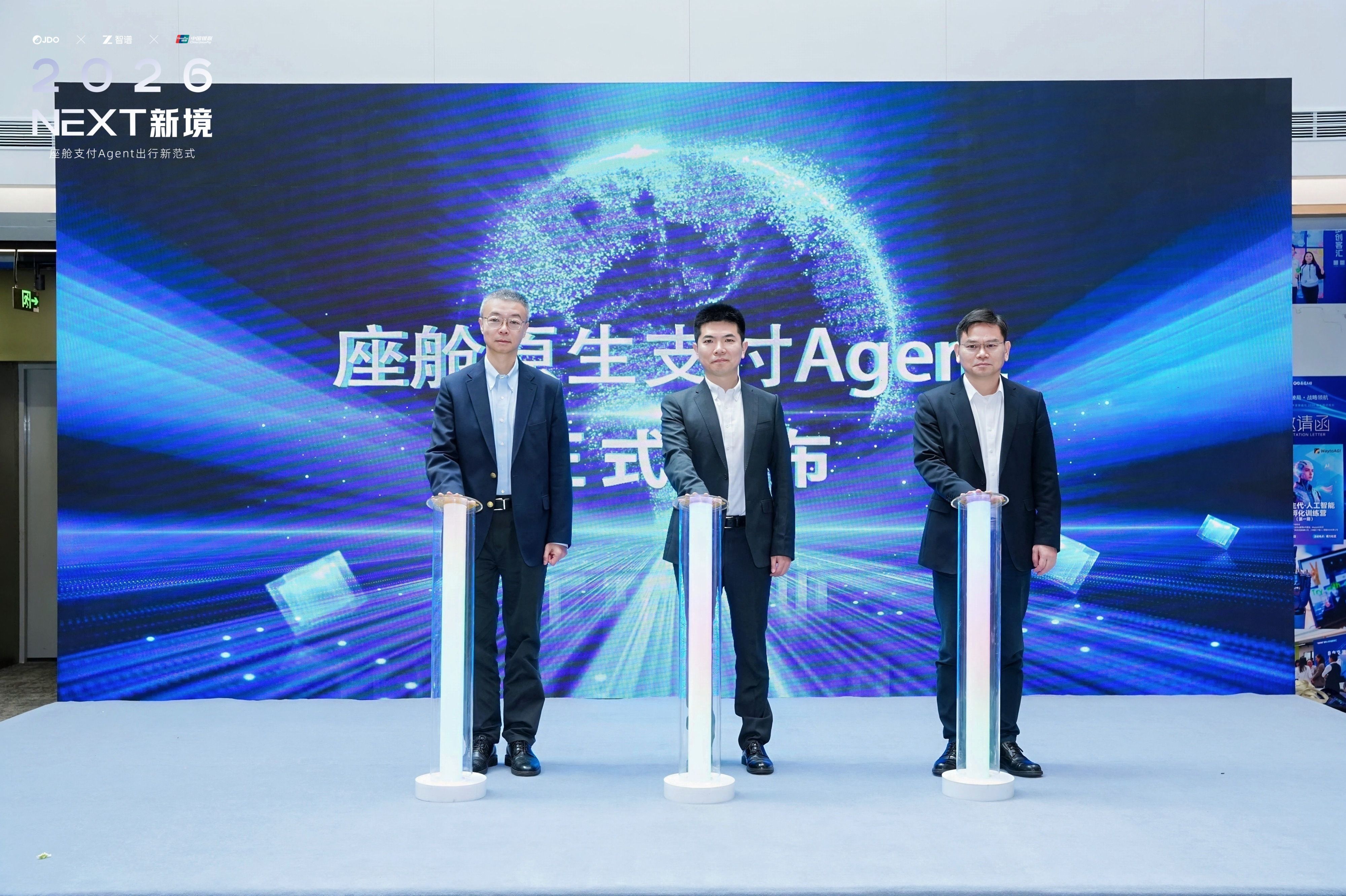
2026 年 1 月 28 日,以「2026 NEXT 新境|座舱支付 Agent 出行新范式」为主题的联合发布会在上海浦东张江模力社区举行。极豆科技、智谱、中国银联 共同发布座舱原生支付 Agent。该产品围绕智能座舱场景,对支付能力进行系统级重构,为智能汽车服务生态提供新的技术路径与应用范式。 在支付能力层面,中国银联为该产品提供了基于大模型能力调用的的中国银联MCP(Model Context Protocol)支付服务。通过该项服务,座舱原生支付 Agent 可在符合金融监管与安全规范的前提下,对接多类支付场景与服务,通过与座舱服务流程的标准化对接,银联支付能力可在加油、停车、车载娱乐等 典型出行场景中实现顺畅调用,为座舱支付场景提供可靠的基础支撑,确保支付过程符合金融安全与监管要求。 在三方协作下,座舱原生支付 Agent 已可在多类高频出行场景中实现稳定运行。系统能够结合行程信息与用户操作,实现服务触发与支付执行的连续衔接, 在保证安全与可控的前提下,显著减少用户在车内支付过程中的操作负担,提升整体出行体验的连贯性。 极豆科技CEO汪奕菲表示,座舱原生支付 Agent 是「2026 NEXT 新境 ...
展望2026|释放创新驱动强势能
Jing Ji Ri Bao· 2026-01-28 09:18
Core Viewpoint - China is positioning itself to lead in global technology by 2026, focusing on innovation-driven development and strengthening its technological capabilities through a new model of national governance and strategic investments in key areas [1][2]. Group 1: Investment in Research and Development - By 2025, China's R&D expenditure intensity is projected to reach 2.8%, surpassing the OECD average for the first time, with basic research funding accounting for 7.08% of total R&D, a historical high [2]. - The government aims to enhance the proportion of basic research funding in total R&D expenditures, narrowing the gap with developed countries [3]. Group 2: Focus on Core Technologies - The "14th Five-Year Plan" emphasizes breakthroughs in critical core technologies across various sectors, including integrated circuits and advanced materials, to ensure industrial and national security [4]. - In the semiconductor sector, China plans to overcome key technological challenges and promote the large-scale application of domestic chips in consumer electronics and industrial control [4]. Group 3: Strategic Technological Forces - China will strengthen collaboration among national laboratories, research institutions, and leading technology enterprises to build a cohesive strategic technological force [5]. Group 4: New Quality Productivity - The development of new quality productivity is a key focus, with an emphasis on creating application scenarios and platforms for technology verification [7]. - The integration of AI into manufacturing and service sectors is expected to transform production processes and enhance service efficiency [7]. Group 5: International Cooperation and Innovation Community - China aims to foster international cooperation in technology to address global challenges, advocating for a fair and open international governance system [11]. - The establishment of regional innovation centers in Beijing, Shanghai, and the Guangdong-Hong Kong-Macau Greater Bay Area will promote collaborative development and resource sharing [12]. Group 6: Innovation Ecosystem Optimization - Continuous reforms in the scientific and technological system will be implemented to eliminate barriers to innovation and create a supportive environment for research and development [13]. - The promotion of a culture that values innovation and scientific achievement is essential for enhancing the overall innovation landscape [13]. Group 7: Financial Support for Technology - The government plans to enhance financial services for major technological projects and small to medium-sized tech enterprises, ensuring adequate funding for innovation [14][15]. - A comprehensive financial support system will be established to facilitate the financing of key technology sectors and projects [15].
国产大模型密集发布,“春节AI竞赛”提前开幕
Di Yi Cai Jing· 2026-01-28 09:07
Core Insights - The recent updates from multiple domestic model manufacturers, including DeepSeek and Kimi, highlight a competitive landscape in China's AI model industry, with significant advancements in model capabilities and performance [4][7][9] - The industry is transitioning towards a more mature engineering phase, focusing on efficiency and practical applications rather than just parameter competition [4][11] Group 1: Model Developments - DeepSeek released the OCR 2 model, which utilizes the innovative DeepEncoder V2 method to dynamically rearrange image components based on their meaning, improving performance on complex layouts [7][8] - Kimi's K2.5 model is described as the company's most intelligent and versatile model to date, supporting various tasks including visual and text input, and agent tasks [7] - Alibaba has also launched several models aimed at enhancing multimodal capabilities, indicating a strategic focus on comprehensive model development across various applications [9][11] Group 2: Industry Trends - The competition among leading companies is intensifying, with a focus on reducing costs and improving the usability of AI models, which is crucial for broader adoption in business applications [11][13] - The cost of using large models is decreasing, with significant reductions in token usage costs reported, making AI technology more accessible for businesses [12][13] - The industry is moving towards a new phase characterized by engineering optimization and efficiency, as indicated by the rapid release cycles of flagship models [19][21] Group 3: Challenges and Future Directions - Despite advancements, challenges remain in model interpretability, reasoning capabilities, and the need for dynamic optimization in inference processes [15][20] - The demand for comprehensive and efficient solutions from clients is driving the need for models that can handle multimodal data and provide accurate end-to-end processing [20][21] - The future of the industry may see a shift towards integrated ecosystems that prioritize reasoning capabilities and cost efficiency, moving away from blind competition [21]


火力全开!2026开年泰康平安新华等超10亿险资南下,狂扫港股AI、生物医药IPO
Sou Hu Cai Jing· 2026-01-28 03:33
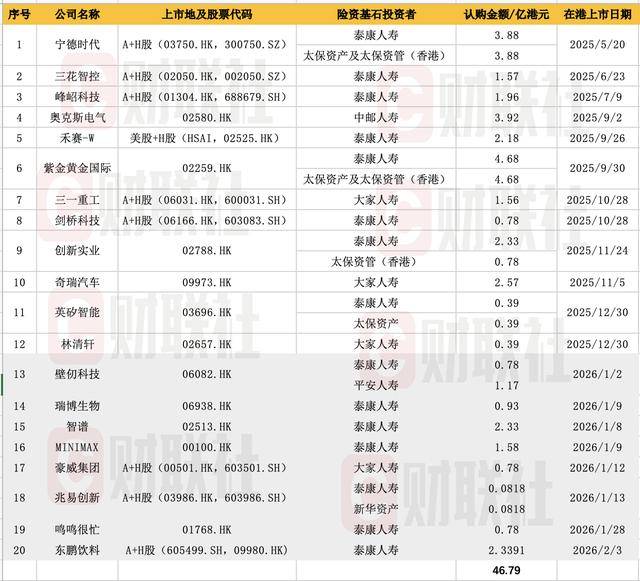
Core Viewpoint - Insurance capital is increasingly participating in cornerstone investments in Hong Kong IPOs, signaling strong market confidence, with significant investments from major insurance companies like Taikang Life and Ping An Life [1][3][4]. Group 1: Investment Trends - In early 2026, four insurance companies participated in eight Hong Kong IPO cornerstone investments, with Taikang Life investing $10 million in the IPO of Mingming Hen Mang [1]. - From 2025 to early 2026, seven insurance institutions participated as cornerstone investors in 20 Hong Kong IPOs, with a total subscription amount of HKD 4.679 billion [1][4]. - The average return for Hong Kong IPOs in 2025 was 38%, with the first-day price drop rate at a five-year low of 23.08% [6][10]. Group 2: Challenges Faced - Insurance companies face challenges in accessing IPO projects due to high entry barriers and the need for strong cross-market research capabilities [2][15]. - The balance between high return potential and net asset value volatility is a significant concern for insurance funds, which are generally risk-averse [2][15]. Group 3: Market Outlook - The IPO fundraising scale in Hong Kong is expected to remain strong in 2026, with insurance capital becoming a long-term force in the market [2][15][16]. - The cornerstone investment mechanism is seen as a key entry point for quality assets in the Hong Kong market, enhancing liquidity and valuation flexibility [2][16]. Group 4: Sector Focus - Insurance capital is focusing on sectors such as AI, biomedicine, and new consumer brands, with a notable interest in companies like MINIMAX and Ruibo Biotechnology [9][10]. - The investment strategy is shifting towards a more diversified valuation framework, moving beyond traditional profit metrics to include growth potential [10][11].
门庭若市港交所
创业邦· 2026-01-28 03:21
Core Viewpoint - The article discusses the resurgence of the Hong Kong Stock Exchange (HKEX) as a leading platform for AI companies, highlighting a significant shift from traditional sectors to technology-driven firms, particularly in AI and semiconductor industries [6][9][12]. Group 1: IPO Trends and Market Dynamics - Wall Street's IPO market has seen a drastic decline from approximately 310 billion HKD in 2021 to just over 100 billion HKD in 2022, a drop of about 65% [6]. - In 2023, the HKEX recorded only 68 IPOs, raising around 46 billion HKD, marking the lowest level since 2013 [6]. - The first two weeks of 2026 witnessed an unprecedented AI IPO wave, with companies like Wallran Technology experiencing a 2348 times oversubscription and raising 130 billion HKD [9]. Group 2: Financial Performance of HKEX - The HKEX reported a 41% increase in major business revenue from 14,542 million HKD in 2024 to 20,438 million HKD in 2025 [10]. - The net profit attributable to shareholders rose by 45%, from 9,270 million HKD in 2024 to 13,419 million HKD in 2025 [10]. - The EBITDA for the first three quarters of 2025 reached 17,164 million HKD, a 48% increase compared to the previous year [10]. Group 3: AI Companies and Their Financial Needs - AI companies often have R&D expenditures that are several times their revenue, with companies like Zhipu spending over eight times their revenue on R&D in the first half of 2025 [11]. - Wallran Technology's revenue surged from less than 500,000 HKD in 2022 to over 300 million HKD in 2024, but its R&D expenses reached 830 million HKD, indicating a cash burn situation [11]. - The need for continuous funding is critical for AI companies, as they require a sustainable capital pool to support ongoing operations and development [12]. Group 4: Advantages of HKEX for AI Companies - The HKEX has adapted its listing rules to accommodate frontier technology companies, allowing unprofitable firms to list if they have technological barriers and top-tier capital backing [13][14]. - The minimum market capitalization requirements for companies have been lowered, benefiting many AI firms [13]. - The HKEX's approval process has been streamlined, reducing the time from 8-12 months to 4-6 months, enhancing its attractiveness for tech firms [14]. Group 5: Future Outlook and Market Sentiment - The article suggests that the HKEX will continue to attract more technology-focused companies, with several AI and semiconductor firms already in the pipeline for IPOs [16]. - The success of AI companies is paradoxical; as they succeed, they require more capital, which may lead to prolonged periods of unprofitability [17]. - Investors are betting on the potential of AI companies, despite uncertainties regarding their profitability and market sustainability [18].


大模型六小龙告别青春期
3 6 Ke· 2026-01-28 02:28
Core Insights - The year 2026 is seen as a pivotal growth point for the "Six Little Dragons" of large models, influenced by technology, scenarios, and capital [1] - A recent wave of strategic announcements from five of the six companies indicates a shift towards more defined paths as they transition from their formative stages [3][4] - The competitive landscape has intensified, with larger companies increasing their investment in AI, thereby squeezing the growth potential of the Six Little Dragons [8][9] Group 1: Company Developments - "Yue Zhi An Mian" announced a new model, Kimi2.5, and completed a $500 million financing round, aiming to create a unique large language model [1] - "Jie Yue Xing Chen" secured over 5 billion in financing and appointed a new chairman, focusing on the integration of AI and smart terminals [1] - "Bai Chuan Zhi Neng" launched the Baichuan-M3 medical model and has a funding reserve of 3 billion, planning to release AI medical products in the first half of 2026 [3] Group 2: Market Dynamics - The recent IPOs of "Zhi Pu" and "MiniMax" have triggered a competitive response from the other companies, emphasizing the need to demonstrate their market viability [3][4] - The emergence of "DeepSeek" has disrupted the valuation anchors for the Six Little Dragons, highlighting the challenges they face in maintaining their competitive edge [6][9] - The capital environment has shifted, with investors now favoring consumer applications and AI infrastructure over foundational models, impacting the funding strategies of the Six Little Dragons [9][19] Group 3: Strategic Adjustments - Companies are recalibrating their strategies between pursuing technological ideals and achieving commercial viability, with some focusing on vertical markets while others aim for broader applications [4][10] - "Yue Zhi An Mian" has decided to halt large-scale brand advertising to concentrate on foundational model development, while "Zhi Pu" and "MiniMax" are pushing for IPOs to facilitate business adjustments [11][13] - "Ling Yi Wan Wu" and "Bai Chuan Zhi Neng" have chosen to abandon general large model training in favor of focusing on specific verticals, such as healthcare [14] Group 4: Future Outlook - The success of "DeepSeek" and the potential for new technological paradigms suggest that the AI industry is still evolving, with opportunities for breakthroughs remaining [16][17] - The Six Little Dragons are expected to find their unique paths in 2026, with technology, scenarios, and capital playing crucial roles in their future trajectories [16][19] - The ongoing competition with larger firms will require the Six Little Dragons to continuously adapt their strategies and secure sufficient capital to sustain their growth [20][21]