
中国平安

Search documents
平安产险为冰雪大世界游客保驾护航
Xin Lang Cai Jing· 2026-01-20 21:54
Core Insights - Harbin Ice and Snow World is experiencing its most prosperous tourism season ever, with Ping An Property & Casualty Insurance providing 5.7 billion yuan in accident and public liability insurance coverage for construction workers, staff, and visitors [1][2] Group 1: Insurance Coverage and Risk Management - Ping An Property & Casualty Insurance is the exclusive underwriter for the 27th Ice and Snow World, offering comprehensive accident insurance [1] - The company has developed a three-dimensional protection system focusing on risk reduction, emergency response, and claims service [1] - The insurance coverage includes measures tailored to the unique risks of low temperatures, slippery roads, and high foot traffic in the park [1] Group 2: Safety Measures and Public Education - Ping An Property & Casualty Insurance implements a dual approach of "source prevention + safety education" to mitigate risks [1] - Physical safety measures include installing anti-slip facilities and increasing warning signs in key areas of the park [1] - Behavioral guidance is provided through on-site personnel promoting easy-to-learn anti-slip techniques and reinforcing safety knowledge among visitors [1] Group 3: Emergency Response and Healthcare Collaboration - The company has established a "medical insurance linkage" emergency rescue system in collaboration with nearby top-tier hospitals [2] - A 24-hour green channel is available for critically ill visitors, ensuring high-quality medical care through expert teams [2] - The initiative aims to protect visitors' health while minimizing economic losses from accidents by reducing emergency service fees and guiding precise treatment [2]

华夏幸福基业股份有限公司关于补选仇文丽女士为第八届董事会非独立董事的公告
Shang Hai Zheng Quan Bao· 2026-01-20 18:44
Group 1 - The company has nominated Ms. Qiu Wenli as a non-independent director for the eighth board, pending approval at the upcoming shareholders' meeting [1][3] - The board meeting on January 20, 2026, approved the nomination and will submit it for shareholder approval [1][11] - After the approval, the board will consist of nine members, with the number of executive directors and employee representatives not exceeding half of the total board members [1] Group 2 - The company has decided to dismiss its accounting firm, Zhongxing Caiguanghua, due to an ongoing investigation by the China Securities Regulatory Commission [4][6] - The firm has been providing audit services since 2011 and issued an unqualified audit report for the 2024 financial year [7][8] - The dismissal requires approval from the shareholders' meeting scheduled for February 5, 2026, and the company is in the process of selecting a new auditing firm [12][11] Group 3 - The first temporary shareholders' meeting of 2026 is scheduled for February 5, 2026, with both on-site and online voting options available [14][18] - The meeting will discuss the approval of the nomination of Ms. Qiu Wenli and the dismissal of the accounting firm [35][34] - Shareholders must register for the meeting by January 29, 2026, and can delegate their voting rights to a proxy [23][25]

百亿元级私募阵营扩至114家 超三成持牌布局国际业务
Zheng Quan Ri Bao· 2026-01-20 16:16
本报记者 方凌晨 百亿元级私募动向备受市场关注。 私募排排网数据显示,截至1月19日,百亿元级私募数量已达114家,较2025年末净增1家。其中,38家私募获得香港证监 会核发的9号牌照(提供资产管理),占比超三成。 业内人士认为,市场回暖、技术赋能、行业发展等多重因素共同推动了百亿元级私募成员扩容。与此同时,头部私募积极 拓展业务边界,加快国际化、多元化业务布局。 险资私募规模增长迅速 事实上,百亿元级私募数量净增1家,是2家退出与3家新晋或重返形成的。其中,新增机构中,国源信达和恒毅持盈(深 圳)私募首次跻身百亿元级阵营,遂玖私募则是重新回归——其在2021年就曾进入百亿元级行列。 "百亿元级私募数量扩容,主要受市场回暖、技术赋能、行业发展、资金面宽松四重因素驱动。"深圳市融智私募证券投资 基金管理有限公司FOF基金经理李春瑜对《证券日报》记者表示,A股市场持续回暖带动私募业绩普遍回升,叠加行业日渐成 熟,增强了私募基金的吸引力;AI优化量化策略与风控体系提升了投资效率与规模承载力;行业优胜劣汰加速,资金愈发向品 牌及策略成熟的私募机构集中,头部集聚效应显著;宽松货币环境叠加政策红利推动场外资金涌入,头部 ...
内险股盘中拉升 个险和银保开门红均超预期 上市险企首份业绩预告出炉
Zhi Tong Cai Jing· 2026-01-20 14:43
Group 1 - The insurance stocks experienced a significant increase, with China Life rising by 4% to HKD 33.3, China Pacific up by 3.51% to HKD 23.6, China Taiping increasing by 2.41% to HKD 39.06, and Ping An rising by 1.61% to HKD 69.5 [2] - In the first week of January 2026, listed insurance companies reported impressive premium income from the bancassurance channel, with China Life, Ping An Life, and PICC Life achieving over 100% year-on-year growth [2] - Individual insurance premium income also saw a general increase of over 30% year-on-year [2] Group 2 - On January 19, China Taiping released the first earnings forecast among listed insurance companies, projecting a substantial net profit increase of 215% to 225% for the year 2025 [2] - According to Open Source Securities, the performance of individual insurance and bancassurance exceeded expectations, indicating a potential continuation of catalysts on both the liability and asset sides [2] - Citigroup's research report anticipates a historic opportunity for the life insurance industry in 2026, driven by retail investors seeking higher reinvestment returns for maturing bank deposits [2] - Citigroup favors industry leaders such as China Life and Ping An in their 2026 outlook [2]

百亿私募阵营加速洗牌
Guo Ji Jin Rong Bao· 2026-01-20 14:37
Core Insights - The number of private equity firms managing over 10 billion yuan has reached 114 as of January 19, 2026, with a slight increase from the end of 2025, indicating a reshuffling within the sector [1][3] - The entry of three new or returning firms into the 10 billion yuan club highlights a dynamic market, with two firms adopting subjective strategies and one yet to disclose its investment approach [1][2] - The growth of private equity firms is driven by market recovery, technological advancements, a concentration of capital in leading firms, and supportive policies [3] Group 1: Market Dynamics - The total number of 10 billion yuan private equity firms has increased by one from the end of 2025, with two firms exiting and three firms entering or returning [1] - Among the new entrants, Suijiu Private Equity has returned after previously being part of the 10 billion yuan group, while Guoyuan Xinda and Hengyi Chiying (Shenzhen) are making their debut [1] - The rapid growth of Hengyi Chiying (Shenzhen) from a management scale of 0 to 500 million yuan at the end of 2025 to over 10 billion yuan in January 2026 is noteworthy [1] Group 2: Investment Strategies - Quantitative strategies dominate the 10 billion yuan private equity sector, with 55 firms (48.25%) employing this approach, while subjective strategies account for 46 firms (40.35%) [2] - There are 10 firms using a mixed strategy, and three firms have not disclosed their investment models [2] - The average number of employees in these firms is 52, significantly higher than the industry average of 9, indicating a robust team structure [2] Group 3: Internationalization and Team Strength - 38 out of 114 firms hold a Hong Kong license, representing 33.33% of the total, which is a significant factor in the internationalization of the industry [2] - The concentration of talent and resources in leading firms is evident, with 14 firms employing over 100 people, primarily in quantitative strategies [2] - The strong team capabilities of these firms reflect their competitive edge in the market [2] Group 4: Drivers of Growth - The expansion of 10 billion yuan private equity firms is attributed to four main drivers: market recovery, technological advancements in AI, a concentration of capital in established firms, and supportive monetary policies [3] - The trend of insurance capital entering the private equity sector is seen as a strategy to seek enhanced returns and risk diversification in a low-interest-rate environment [3]


券商“跨界”突围 保险代销进入下半场
Hua Er Jie Jian Wen· 2026-01-20 14:13
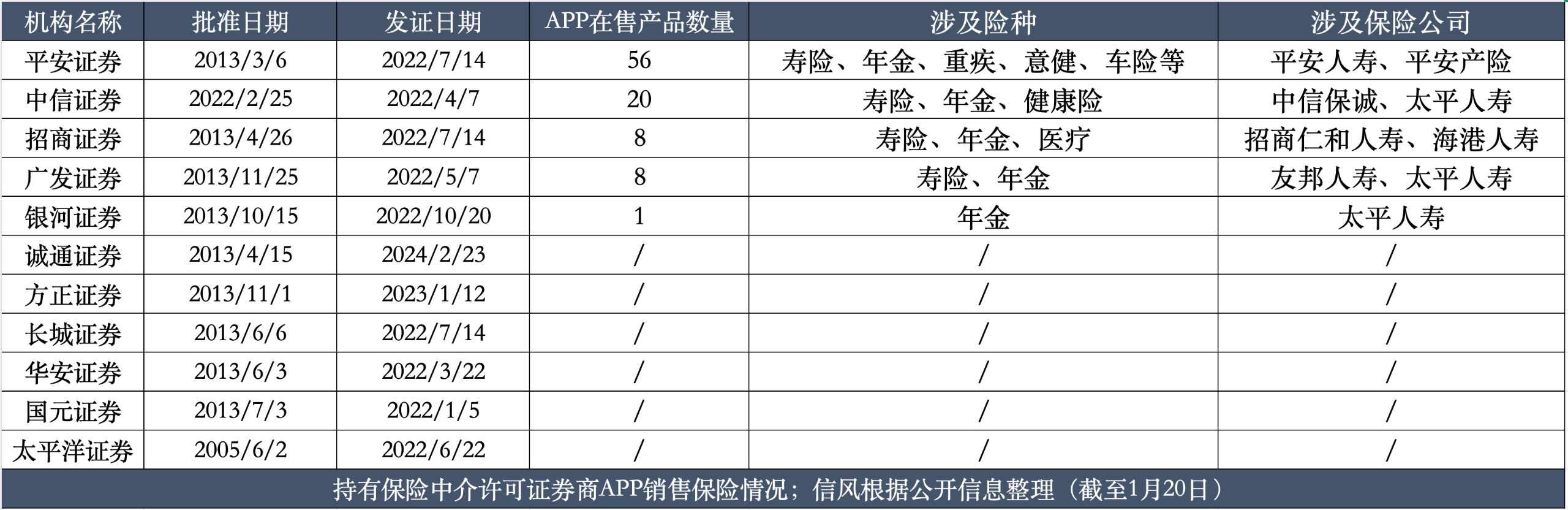
Core Viewpoint - The article highlights the increasing trend of securities firms in China to sell insurance products, driven by regulatory support and the need for wealth management transformation amid operational pressures [1][5][18]. Group 1: Regulatory Changes and Market Trends - Starting from 2025, the China Securities Association (CSRC) aims to promote more compliant securities firms to obtain licenses for selling bank wealth management and insurance products [1]. - The presence of insurance products on the shelves of securities firms has been steadily increasing, indicating a shift towards insurance sales [4][6]. - Major securities firms like CITIC Securities, China Merchants Securities, and Ping An Securities have launched insurance sections on their apps, showcasing a variety of insurance products alongside traditional financial offerings [3][10]. Group 2: Sales Pressure and Employee Experiences - Employees at leading securities firms are experiencing significant pressure to meet insurance sales targets, leading to a growing emphasis on insurance sales in their daily work [2][22]. - The performance metrics for insurance sales have become a focal point, with employees often feeling overwhelmed during peak sales periods [2][22]. Group 3: Product Offerings and Market Position - As of now, the number of securities firms holding insurance intermediary licenses remains unchanged from 2022, with only 11 firms licensed to sell insurance [6]. - Despite the limited number of licensed firms, major players are actively expanding their insurance product offerings, with Ping An Securities offering 56 products and CITIC Securities offering 20 [8][10]. - The insurance products being sold are primarily focused on life insurance and annuities, reflecting a trend towards financial products with investment attributes rather than pure risk coverage [10][19]. Group 4: Competitive Landscape and Challenges - The competitive landscape for insurance sales is evolving, with securities firms leveraging their existing client bases and expertise in asset management to penetrate the insurance market [20][22]. - However, the dominance of banks in the insurance distribution channel remains a significant challenge for securities firms, as banks have extensive networks and established customer relationships [22]. - Regulatory scrutiny is increasing, with upcoming regulations aimed at ensuring appropriate management of cross-industry sales, which may pose additional challenges for securities firms [24].




广东高质量数据集创新大赛首场宣讲会举行,拓展应用场景
Nan Fang Du Shi Bao· 2026-01-20 13:49
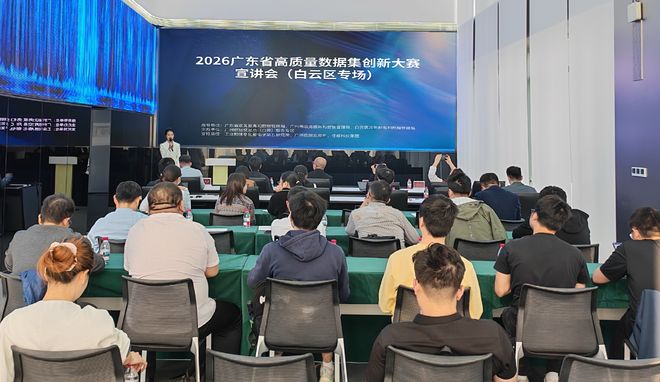
Core Insights - The "2026 Guangdong High-Quality Data Set Innovation Competition" aims to stimulate data potential and empower industrial innovation, focusing on key sectors such as manufacturing, energy, finance, healthcare, and smart cities [3][4] - The competition adopts an "open challenge" mechanism, inviting data service providers, research teams, and innovative enterprises to participate, with major companies like Southern Power Grid and Ping An Insurance setting specific challenges [3][4] Event Overview - The first promotional event for the competition was held on January 19 at the Smart City Exhibition Hall in Baiyun District, providing detailed insights into the competition rules and guidelines for participating teams [1][3] - The event included two main segments: competition interpretation and case sharing, featuring insights from industry experts on the significance of high-quality, transferable, and applicable data sets [3] Industry Engagement - The competition is organized by the Guangdong Provincial Government Service and Data Management Bureau, in collaboration with local departments, leading enterprises, and research institutions [3][4] - Baiyun District aims to leverage this competition to enhance the market-oriented allocation of data elements and expand the application scenarios for high-quality data sets, contributing to the province's high-quality development [4]
非银金融行业周报:融资新规夯实“慢牛”根基,险企渠道深度重塑-20260120
East Money Securities· 2026-01-20 13:47
Investment Rating - The report maintains an "Outperform" rating for the non-bank financial sector, indicating a positive outlook for investment opportunities in this industry [2]. Core Insights - The report highlights the strengthening of the "slow bull" market foundation due to new financing regulations, which aim to stabilize market operations and protect investor rights. The increase in financing margin requirements to 100% is seen as a measure to prevent excessive leverage and ensure long-term market stability [12][13]. - The insurance sector is undergoing a significant transformation, with a notable trend of branch exits, indicating a shift from extensive expansion to a more concentrated and quality-focused approach. This is driven by cost reduction demands, digital transformation, and regulatory guidance [42][43][44]. Summary by Sections 1. Securities Business Overview and Weekly Review - The financing margin ratio has been raised to 100%, reinforcing the foundation of a "slow bull" market. This adjustment is aimed at reducing market leverage and ensuring investor protection [12]. - The China Securities Regulatory Commission (CSRC) emphasizes a focus on risk prevention, strong regulation, and promoting high-quality development in the capital market for 2026 [13]. - The report notes that CITIC Securities achieved a record net profit of 30.05 billion CNY in 2025, reflecting a 38.46% year-on-year increase, indicating a recovery in the securities industry [15][17]. 2. Insurance Business Overview and Weekly Review - The insurance industry is experiencing a significant net exit of branches, with over 3,100 institutions exiting in 2025, marking a six-year high. This trend reflects a strategic shift towards high-value areas and a reduction in reliance on extensive physical networks [42][43]. - The restructuring is primarily driven by life insurance companies, which account for over 70% of the exits, indicating a transition towards bank cooperation channels and a focus on efficiency [43]. - The ongoing exit process is expected to lead to a fundamental reshaping of the insurance industry's operational logic, moving towards digitalization and a more refined management approach [44]. 3. Market Liquidity Tracking - The report indicates that the central bank conducted a net injection of 111.28 billion CNY in the open market during the week, with significant reverse repurchase operations contributing to liquidity [49].
风雪寒潮中的守护:河南保险业多举措应对极端天气
Xin Lang Cai Jing· 2026-01-20 13:40
Core Viewpoint - The insurance industry in Henan has rapidly activated emergency plans in response to extreme weather conditions, including heavy snow, freezing rain, and cold waves, to ensure the safety and order of people's lives and production [1][8][9]. Emergency Response: Multi-faceted Protection - Insurance companies were on high alert even before the weather warnings were issued, with China Pacific Insurance (Henan) holding a special meeting on January 18 to prepare for rescue and warning efforts [10]. - Ping An Property & Casualty Insurance initiated emergency plans covering auto, agricultural, and property insurance, establishing a comprehensive protection system from urban to rural areas and individuals to enterprises [10]. - The extreme weather led to a surge in claims, prompting insurance institutions to enter a "wartime state," with Ping An opening a green channel for quick assessments of small claims and flexible solutions for clients in different locations [10]. - China Pacific Insurance launched a 24/7 snowstorm claims green channel, implementing a dual model of "online remote assessment + offline rapid investigation" to streamline procedures and ensure timely payouts [10]. Warm-hearted Actions: Beyond Contractual Obligations - Insurance services demonstrated humanistic care beyond contractual obligations, with claims adjusters actively assisting clients in distress during the severe weather [12]. - For instance, a claims adjuster from Ping An worked late into the night to assist clients, while another helped a stranded driver push their car to safety [12]. - In a notable act of collective responsibility, a Ping An adjuster assisted an injured individual from another company, showcasing the industry's commitment to community support during disasters [12]. Agricultural Insurance Initiatives - Ping An's proactive measures in agricultural insurance proved effective, with staff guiding farmers in areas like Zhoukou and Nanyang to reinforce greenhouses and protect livestock, minimizing disaster losses [14]. - A client in a different location was able to complete all claims procedures within two hours with the help of an adjuster, avoiding prolonged exposure to harsh weather [14]. Technological Support: Enhancing Service Efficiency - The efficient emergency response and human-centered services were backed by robust technological systems, with both insurance companies leveraging technology to improve service efficiency and accuracy [14]. - Ping An utilized big data analytics to predict high-incident periods and areas, enabling dynamic resource allocation for rescue efforts [14]. - Clients involved in minor accidents could self-process claims and remote assessments through the "Good Car Owner APP," facilitating "no-wait" processing [14]. - China Pacific Insurance also optimized online processes and improved claims efficiency in response to the surge in claims due to the snowstorm [14]. Shift in Service Philosophy - The extreme weather event highlighted a shift in the insurance industry's role from merely providing economic compensation after incidents to being a comprehensive risk management partner throughout the entire cycle of prevention, assistance, and recovery [15]. - The service philosophy has evolved from fulfilling contractual obligations to actively engaging in human care and social responsibility [15]. - As weather conditions improve, insurance companies will continue to monitor changes and optimize emergency measures to ensure uninterrupted service [15].

非车险“见费出单、报行合一”上演加速度!核心用意在哪里?
Xin Lang Cai Jing· 2026-01-20 13:39
Core Viewpoint - The regulatory framework for non-auto insurance is undergoing significant changes, emphasizing "reporting and operation integration" and the new requirement of "payment before issuance" to address long-standing industry issues and enhance compliance [1][4][12]. Group 1: Regulatory Changes - The "reporting and operation integration" policy for non-auto insurance was officially implemented following the release of the "36th Document" by the Financial Regulatory Bureau in October 2025, along with supporting documents like the "Guidelines" and "Q&A" [1][13]. - Local regulatory bodies and industry associations have actively promoted the comprehensive governance of non-auto insurance, with regions like Jilin and Liaoning issuing guidelines and conducting training sessions [2][14]. Group 2: Implementation of "Payment Before Issuance" - The "payment before issuance" requirement mandates that insurance companies must receive premiums before issuing policies and invoices, addressing issues like bad debts and cash flow pressures that arise from the previous "issuance before payment" model [5][15]. - This new requirement aims to eliminate compliance risks associated with premium collection and ensure that the actual execution of terms and rates aligns with regulatory filings, thus preventing discrepancies [6][16]. Group 3: Industry Response - Major insurance companies have begun adapting to these regulatory changes even before the official implementation, with firms like China Life and Ping An Insurance adjusting their internal assessment systems to prioritize compliance and quality over premium growth [3][14]. - The comprehensive governance of non-auto insurance is expected to follow a similar trajectory as the auto insurance sector, with leading companies setting the pace for smaller firms to follow [3][14]. Group 4: Challenges and Flexibility - The complexity of non-auto insurance products and the diverse range of stakeholders present challenges for policy implementation, leading to concerns about potential delays in premium payments for public interest policies [18][21]. - The regulatory framework includes flexible implementation timelines and differentiated rate caps for large and small companies, ensuring a balanced approach to market competition [19][20]. Group 5: Future Outlook - The comprehensive governance of non-auto insurance is a complex, long-term initiative requiring a series of supportive policies and collaboration among various industry stakeholders to achieve sustainable development in the sector [22].