三星

Search documents
AI陪伴:从工具属性向情感交互生态跃迁
Tou Bao Yan Jiu Yuan· 2026-01-16 12:56
Investment Rating - The report does not explicitly provide an investment rating for the AI companion industry. Core Insights - The AI companion market is rapidly evolving from tool-based interactions to emotional engagement ecosystems, driven by increasing loneliness, social pressures, and demographic trends such as aging and urbanization [6][14]. Market Drivers - **Youth Demand for AI Companionship**: Approximately 98% of respondents in a Tencent survey are considering using AI companions to address unmet social needs, with 30% preferring interaction with chatbots and over 70% of Generation Z willing to form friendships with AI virtual beings [8][14]. - **Aging Population and Emotional Support Needs**: By 2024, the population aged 65 and above in China is projected to reach 220 million, accounting for 15.6% of the total population. Over 45% of elderly individuals express a need for emotional companionship, highlighting a significant gap in emotional and health care support [14][12]. - **Children's Demand for Educational and Emotional Interaction**: With 76% of families being dual-income, children often lack emotional support, leading to a strong demand for AI products that can provide educational assistance and emotional interaction [17][16]. Market Demand Differences - Consumers prioritize real-time interaction, privacy protection, and emotional engagement in AI companion products. Youth prefer aesthetically pleasing virtual representations, while elderly and children favor physical entities like humanoid robots and wearable devices [19][22]. Market Participants - The global AI companion application market features 337 active revenue-generating products, with over 20% related to virtual companions. The top 10% of applications contribute nearly 90% of the revenue, indicating a high market concentration [25][27]. - Notable applications include Replika, Character.AI, and LoveyDovey, with significant revenue growth projected for 2025 [27][28]. AI Companion Robots - The AI companion robot segment is characterized by products like desktop robots targeting children and elderly users. Companies such as TCL and GROOVE X are developing innovative solutions to meet the emotional and companionship needs of these demographics [31][32].
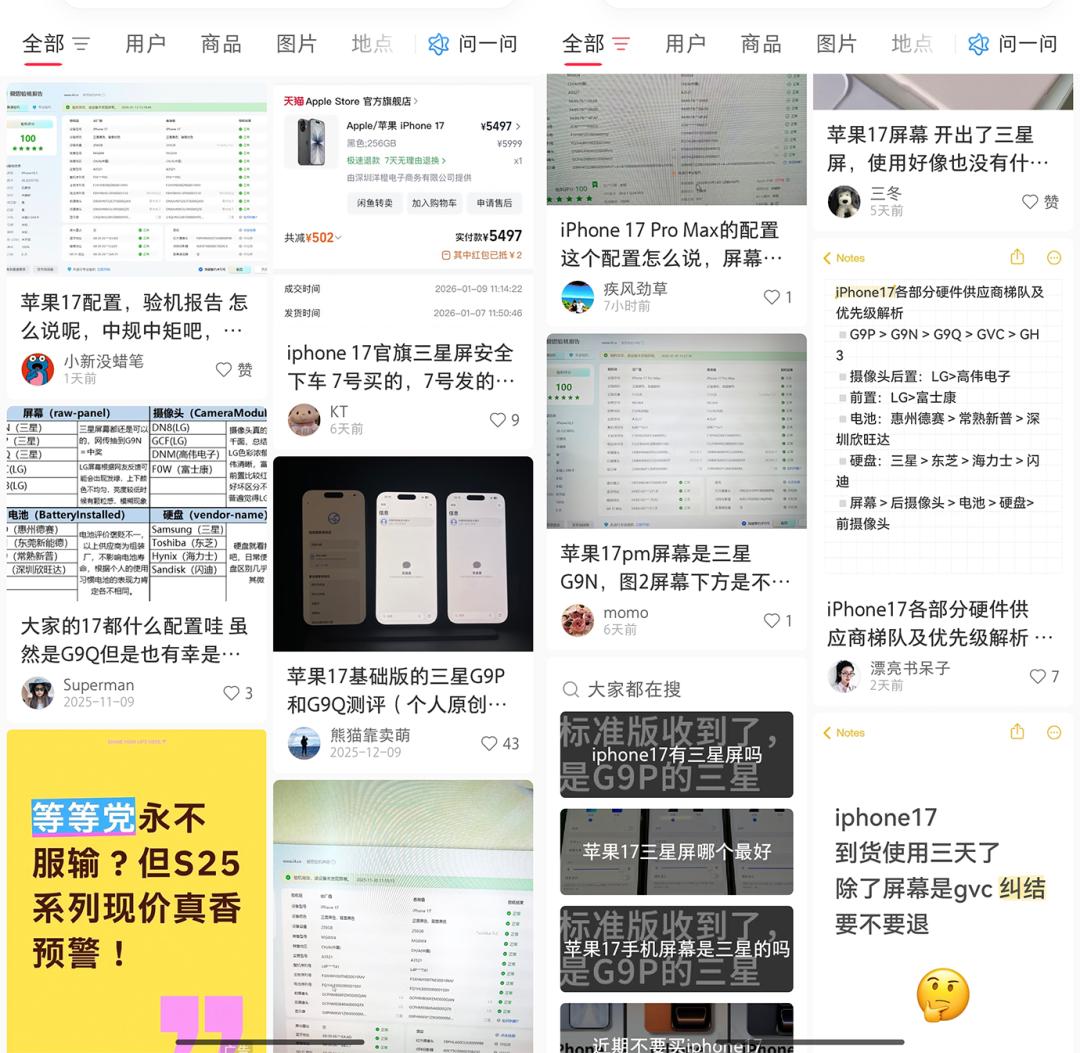
苹果用户退换十几次才抽到的三星屏,被国产拿来做低端机
3 6 Ke· 2026-01-16 10:51
Core Viewpoint - The article discusses the ongoing obsession among Apple users for Samsung screens, particularly the desire for the "G9N" model, which is known for its superior display quality. This trend is contrasted with the recent announcement from OPPO's sub-brand, Realme, which will use Samsung's latest M14 emitting material in its Neo8 model, highlighting the competitive landscape in the smartphone display market [1][3][5]. Group 1: Samsung's Dominance in Display Technology - Samsung has historically dominated the OLED display market due to its control over core technologies and manufacturing processes, including the use of advanced vacuum deposition machines from Canon Tokki [7][11]. - The proprietary "diamond arrangement" technology developed by Samsung enhances color display and longevity of OLED screens, setting a high standard in the industry [13][16]. - Samsung's M14 emitting material is recognized for its high purity and efficiency, contributing to its leading position in the display market [25]. Group 2: Shift in Market Dynamics - Chinese manufacturers like Xiaomi, Vivo, and OPPO have increasingly moved away from Samsung displays, opting for domestic alternatives that offer comparable or superior quality at lower costs [20][22][27]. - The market share of Chinese OLED panels has surpassed 50% globally, with domestic screens accounting for 76% of the market in Chinese smartphones, indicating a significant shift away from Samsung's dominance [27]. - New technologies developed by Chinese firms, such as BOE's "blue diamond arrangement" and TCL's "pearl arrangement," are closing the gap with Samsung's offerings [23][25]. Group 3: Perception vs. Reality - Despite the advancements in domestic displays, Apple’s integration of Samsung screens in its devices still results in superior display performance due to Apple's rigorous calibration and optimization processes [28][29]. - The perception that Samsung screens are the best is challenged by the fact that Apple’s software and hardware optimizations can enhance the performance of various display types, including those from LG [29][33]. - The article raises questions about whether Realme's use of Samsung's M14 material will resonate with consumers, given the competitive landscape and the advancements made by domestic manufacturers [33].


万朗磁塑:欧盟地区业务主要通过波兰子公司向波兰三星等客户提供冰箱门封等产品
Mei Ri Jing Ji Xin Wen· 2026-01-16 10:46
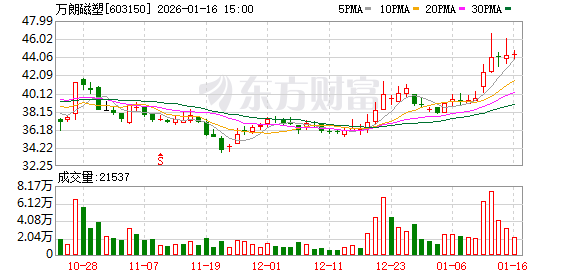
(文章来源:每日经济新闻) 每经AI快讯,万朗磁塑(603150.SH)1月16日在投资者互动平台表示,公司践行 "贴近客户、快速反 应" 经营理念,海外业务主要通过境外子公司本土化生产销售实现,目前已在泰国、越南、墨西哥、波 兰、埃及、韩国、巴西、塞尔维亚、印尼等共10个国家拥有15家子分公司,其中欧盟地区业务主要通过 波兰子公司向波兰三星等客户提供冰箱门封等产品,目前该区域收入占公司整体营业收入比例不超过 2%。 ...

最新估值逼近千亿!英伟达、软银、三星、LG、亚马逊为何同时抢投这家“机器人通用大脑”?
Sou Hu Cai Jing· 2026-01-16 10:44
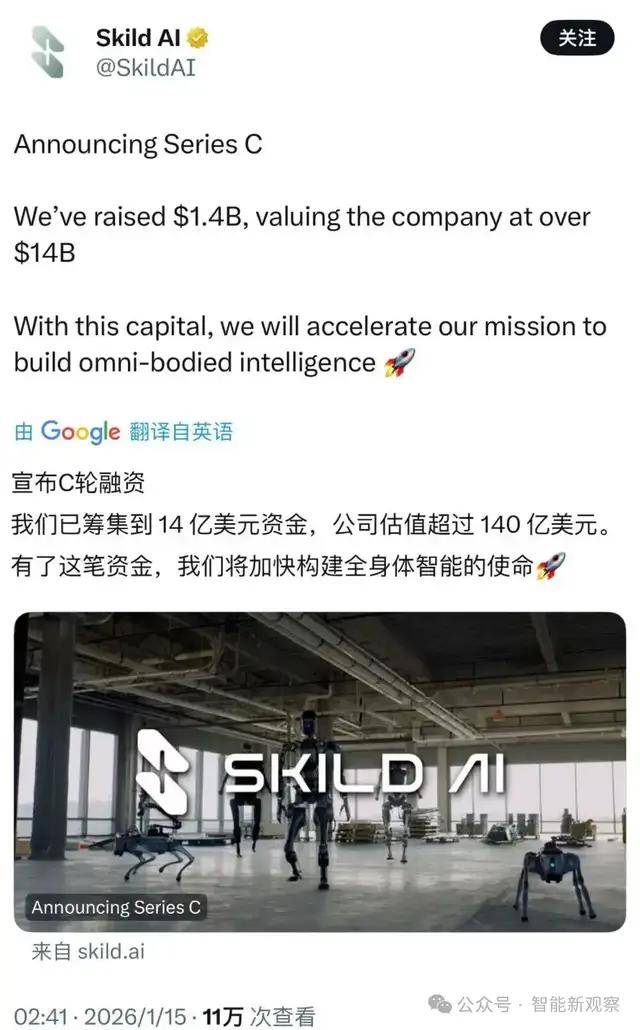
Core Insights - Skild AI, a startup in the foundational model for robotics, has raised approximately $1.4 billion in Series C funding, achieving a valuation exceeding $14 billion, setting a record in the field [1][5] - The investment round was led by SoftBank Group, with participation from major tech giants like Nvidia, Samsung, LG, Jeff Bezos' family office, and Salesforce, forming a diverse investment alliance across various sectors [5][12] Group 1: Company Background - Skild AI was co-founded by Deepak Pathak and Abhinav Gupta, both professors at Carnegie Mellon University, who previously worked at Meta's advanced robotics lab, providing a unique blend of academic and industry experience [5][7] - The company aims to address the challenges in robotics by creating a universal robotic brain, Skild Brain, capable of running on standard hardware and performing basic tasks like climbing stairs and avoiding obstacles [7][8] Group 2: Technological Innovations - Skild Brain represents a paradigm shift in robotics, utilizing large-scale multimodal data for end-to-end training, moving away from fixed instruction sets [9][11] - The system's architecture decouples hardware from intelligence, allowing it to adapt to various robotic platforms and maintain robust performance even in changing environments [11][19] Group 3: Investment Dynamics - The diverse group of investors reflects strategic interests, with Nvidia aiming to fill gaps in its robotics technology stack, while SoftBank seeks to enhance its influence in the robotics industry [12][14] - For Samsung and LG, this investment signifies a strategic pivot towards robotics as a key growth area amid slowing consumer electronics [14] Group 4: Commercialization and Market Potential - Skild AI's commercialization efforts are accelerating, with plans to serve over eight enterprise clients by the end of 2025, spanning sectors like security, construction, and logistics [15][18] - The company addresses a significant market demand, particularly in industries facing labor shortages, where traditional robotic systems struggle due to high customization costs [15][22] Group 5: Challenges Ahead - Despite promising prospects, Skild AI faces challenges in ensuring the reliability of its technology in complex real-world environments, as well as balancing model performance with cost [19][21] - The fragmented state of the robotics hardware market poses additional challenges for achieving true universality in robotic applications [21][22]

1.16犀牛财经晚报:小米等四家手机厂商下调全年出货预期
Xi Niu Cai Jing· 2026-01-16 10:32
Group 1: Gold Jewelry Prices - Several gold jewelry brands in China have shown price discrepancies, with some maintaining prices while others have adjusted them down to around 1435 CNY per gram [1] - Specific prices include: Liufu Jewelry at 1434 CNY/gram, Chow Tai Fook and Xie Rui Lin at 1436 CNY/gram, and Chow Sang Sang at 1431 CNY/gram, which decreased by 5 CNY from the previous day [1] Group 2: Battery Industry Growth - In 2025, China's cumulative sales of power and energy storage batteries are projected to reach 1700.5 GWh, marking a year-on-year increase of 63.6% [1] - Power batteries account for 1200.9 GWh, representing 70.6% of total sales, with a year-on-year growth of 51.8%, while energy storage batteries are at 499.6 GWh, showing a 101.3% increase [1] Group 3: Passive Components Price Increase - Yageo Corporation announced a price increase of 15%-20% on certain resistor products due to significant cost rises in chip product lines, particularly for precious metals [2] Group 4: Smartphone Manufacturers Adjusting Forecasts - Major smartphone manufacturers including Xiaomi and OPPO have reduced their annual shipment forecasts by over 20% due to rising storage costs in the supply chain [2] - Vivo has lowered its forecast by nearly 15%, while Transsion has adjusted its target to below 70 million units [2] Group 5: Semiconductor Industry Performance - The semiconductor industry showed resilience with significant stock price increases, particularly in companies like Longji Technology, which reached a five-year high [20] - The storage chip sector also saw historical highs for companies like Baiwei Storage and Jiangbo Long [20] Group 6: New Product Developments - Samsung Display has commenced mass production of its 8.6-generation OLED panel line, indicating advancements in display technology [2] - Apple is expected to launch its AI glasses in the second quarter of this year, with design advantages over existing products [3] Group 7: Regulatory Actions - The China Securities Regulatory Commission has approved the IPO registration of Fuen Co., Ltd. on the Shenzhen Stock Exchange [7] - Several companies, including Haizheng Pharmaceutical and Mengguli, received warnings from regulatory bodies for financial discrepancies in their disclosures [8][9][10]
越南首个晶圆厂,正式动工
半导体芯闻· 2026-01-16 10:27
Core Insights - Vietnam has initiated the construction of its first semiconductor manufacturing plant, aiming to become a high-tech economy [1] - The plant, operated by Viettel, will support various industries including aerospace, telecommunications, automotive, and medical devices [1] - Vietnam has engaged in five out of six major stages of semiconductor production but has yet to complete the most complex manufacturing phase [1] Group 1 - The semiconductor plant will help complete the entire semiconductor production process in Vietnam [1] - Viettel plans to begin trial production by the end of 2027 and will focus on optimizing production processes over the next three years [1] - The plant covers an area of 27 hectares and has the potential for future expansion [1] Group 2 - Vietnam aims for at least 10% economic growth by 2026 and aspires to become a developed country by 2045, with high-tech investment as a key strategy [2] - The government has established a national semiconductor prototype support center to create a complete semiconductor ecosystem from design to commercialization [2] - By 2030, Vietnam targets having at least 100 chip design companies, one manufacturing plant, and around 10 assembly, packaging, and testing facilities, with an industry revenue goal of $25 billion [2] Group 3 - Vietnam's manufacturing sector currently relies on low to medium-skilled labor, and the government seeks to elevate its manufacturing capabilities [2] - Vietnam is already a major production base for Samsung, with hardware exports projected to reach $132 billion in 2024 [2] - The semiconductor sector in Vietnam has over 170 foreign-invested projects with a total investment of nearly $11.6 billion, primarily in chip design and packaging/testing [2]
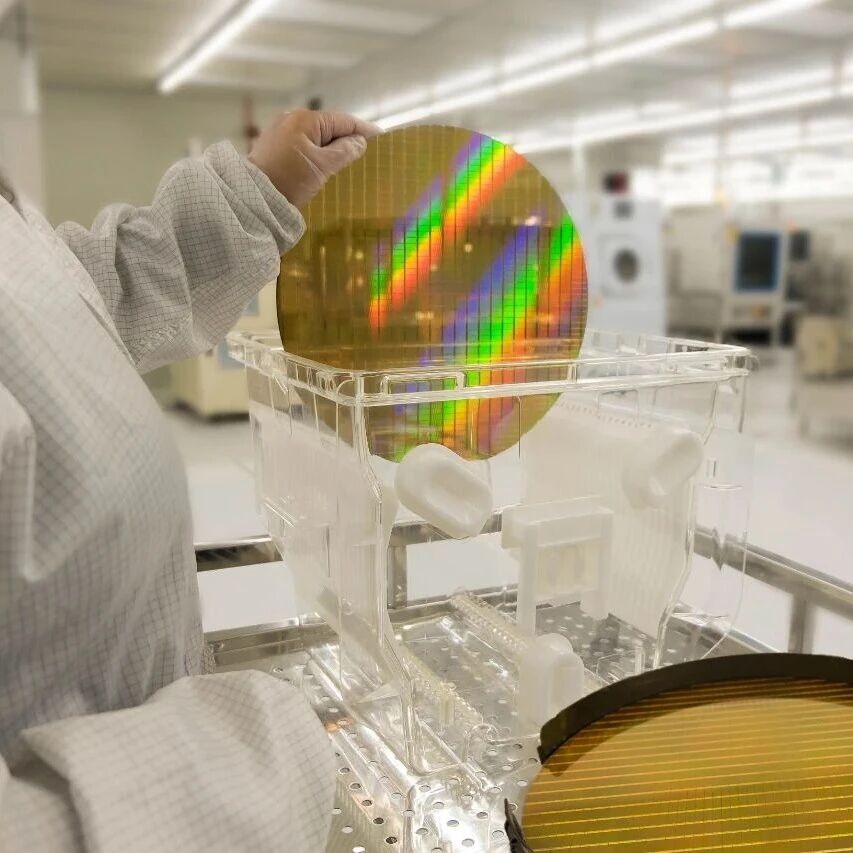
芯片,1000000000000亿美金
半导体芯闻· 2026-01-16 10:27
为了提供更全面的预测,Omdia指出了一些可能抑制2026年经济增长的宏观经济风险因素。尽管 中国和欧元区的通胀基本得到控制,但美国的通胀问题依然令人担忧。预计今年的其他挑战包括劳 计算与数据存储领域将引领半导体营收增长,预计到2026年将同比增长41.4%,超过5000亿美 元。这主要得益于数据中心服务器和其他内存密集型应用的高需求,以及内存芯片价格的上涨。笔 记本电脑的增长则得益于人工智能技术的普及和企业的大规模更新换代。预计今年全球四大超大规 模数据中心运营商的资本支出总额将达到约5000亿美元,并且预计未来还将继续增长。资本支出 正重新分配至人工智能基础设施、模型开发和新兴应用领域,凸显了人工智能对各行业的变革性影 响。 2026年,消费电子和无线应用领域也将为半导体营收增长带来强劲前景。推动增长的因素包括存 储器价格上涨、新一代折叠屏智能手机的发布以及互联消费设备的复苏。苹果、三星和其他厂商在 人工智能摄影方面的升级以及旗舰智能手机的更新换代也将进一步促进增长。可穿戴设备、智能音 箱和虚拟现实(VR)头显预计也将实现显著的营收增长。 Omdia高级首席分析师Myson Robles-Bruce表示: ...

带宽战争前夜,“中国版Groq”浮出水面
半导体芯闻· 2026-01-16 10:27
在AI算力赛道,英伟达凭借Hopper、Blackwell、Rubin等架构GPU,早已在AI训练领域建立起了难以撼动的技术壁垒与行业地位。但随着 即时AI场景需求爆发,传统GPU在面对低批处理、高频交互推理任务中的延迟短板愈发凸显。 为破解这一痛点,英伟达重磅出击,斥资200亿美元收购Groq核心技术,抢跑AI推理市场。 这一金额不仅创下英伟达历史最大手笔交易、刷新了推理芯片领域的估值纪录,更鲜明地昭示着英伟达从"算力霸主"向"推理之王"转型的意志。 紧随这一动作,据技术博主AGF消息进一步披露,英伟达计划在2028年推出新一代Feynman架构GPU——采用台积电A16先进制程与SoIC 3D堆叠 技术,核心目的正是为了在GPU内部深度集成Groq那套专为推理加速而生的LPU(语言处理单元),相当于给GPU加装了一个专门处理语言类推理 任务的专属引擎,直指AI推理性能中长期存在的"带宽墙"与"延迟瓶颈"。 回看中国市场,AI浪潮推动下,国产大模型多点突破、强势崛起,本土AI芯片企业集体爆发并密集冲击IPO,资本热度居高不下。 然而,当英伟达选择通过Feynman架构来补齐推理短板时,就意味着谁能率先解决" ...


在2025年年末启动降价促销后,苹果又玩起了以旧换新,支持华为、小米等品牌,剑指安卓机型!
Jin Rong Jie· 2026-01-16 10:10
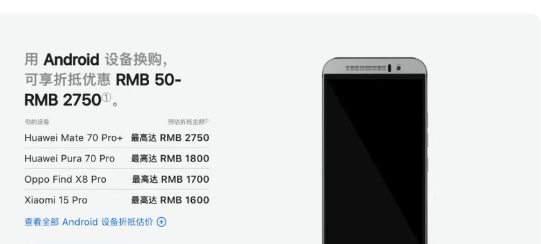
Group 1 - Apple has initiated a trade-in program that includes Android devices from brands like Huawei and Xiaomi, marking the first time such devices are accepted for trade-in [1][2] - The trade-in values for various devices are significant, with the iPhone 16 Pro Max offering up to 5800 RMB and the MacBook Pro up to 6050 RMB [1] - This move follows a recent price reduction for the iPhone 17 Pro and Pro Max, which saw price drops of 300 RMB on platforms like Tmall and JD [3][4] Group 2 - In Q1 2025, Apple's smartphone shipments in China fell by 9% year-on-year, placing it fifth in market share, while competitors like Xiaomi and Huawei maintained stronger positions [5] - Despite the decline, Apple's market share in China surged to 25% in October 2025, driven by the strong sales of the iPhone 17 series, marking a 37% year-on-year increase in sales [5] - In Q4 2025, Apple led the Chinese smartphone market with a shipment of 16 million units, achieving a market share of 21.1%, a significant increase from the previous year [6]
一盒内存条价值上海一套房,2026年将成消费电子“最贵之年”?
Tai Mei Ti A P P· 2026-01-16 09:51
堆叠的各层芯片之间通过数以千计的"硅通孔"实现垂直互联,这些TSV如同连接高楼各层的专用高速电 梯,让数据在芯片内部直接上下传输,路径大大缩短,以此提升数据传输效率。 受AI算力需求爆发影响,存储芯片价格在2026年开年之后,继续维持狂飙模式。 市场研究机构Counterpoint Research发布报告显示,存储市场行情已经超过2018年的历史高点,供应商 议价能力已达到历史最高水平,预计2026年第一季度市场价格还将上涨40%至50%,第二季度继续上涨 约20%。 有数据显示,16GB DDR5笔记本内存条价格在几个月内从380多元涨至1399元;256GB DDR5服务器内 存条价格已超过4万元/条,一盒100根总价约400万元,已超过上海部分中小户型房产的价值。 TrendForce集邦咨询调查报告则显示,存储芯片上涨带动下游电子消费品价格上涨。终端产品面临成本 考验,智能手机、个人电脑预计将上修产品价格、调降规格。 这意味着,2026年,可能成为消费电子的"最贵之年"。 AI需求激增,芯片厂商集体"向钱看" 存储芯片价格上涨的直接原因,与AI服务器需求激增直接相关。 公开数据显示,单台AI服务器的 ...