
科大讯飞

Search documents
ETF日报:今年四季度以来机器人板块持续调整,当前已具备一定性价比,关注机器人产业ETF
Xin Lang Cai Jing· 2025-12-25 13:53
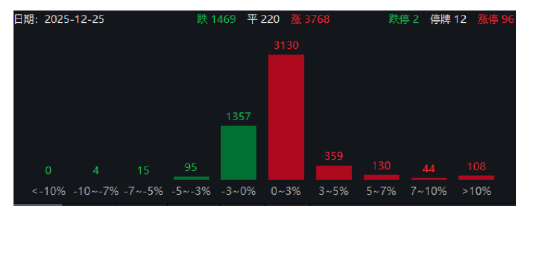
Market Overview - The market continues to rise, with the Shanghai Composite Index achieving a seven-day winning streak, closing up 0.47% at 3959.62 points. The Shenzhen Component Index rose 0.33%, and the ChiNext Index increased by 0.3%, while the STAR Market 50 Index fell by 0.23% [1][11] - A-shares saw a total trading volume of 1.94 trillion yuan, an increase from the previous day's 1.9 trillion yuan, with over 3700 stocks rising across the market [1][11] - Sectors such as aerospace, military, robotics, and insurance led the gains, while precious metals and non-ferrous metals experienced a pullback [1][11] Monetary Policy - The Central Bank's Monetary Policy Committee has decided to continue implementing a moderately loose monetary policy, enhancing counter-cyclical and cross-cycle adjustments to better utilize monetary policy tools for economic stability and reasonable price recovery [4][14] - The ongoing release of policy dividends is expected to further boost total economic demand, accelerating the transition of economic growth momentum and reinforcing the long-term positive logic of the capital market [4][14] - The CSI A500 Index, focusing on advanced manufacturing and information technology, is positioned to better capture opportunities in industrial structure upgrades compared to traditional broad-based indices [4][14] Robotics Sector - The robotics sector is experiencing a strong performance, driven by accelerated capital operations and positive market sentiment. A notable acquisition in Hong Kong aims to integrate precision manufacturing capabilities and supply chain resources [5][15] - The industry is at a critical juncture for large-scale production, with Tesla's Optimus robot achieving significant breakthroughs, supporting its 2026 production goals [5][15] - The total order volume for humanoid robots has exceeded 30,000 units this year, indicating a continuous growth trend towards commercialization [6][15] AI in Healthcare - AI in healthcare is gaining market attention, supported by policy initiatives and technological innovations. The National Health Commission and other ministries have outlined plans for AI applications in healthcare, aiming to establish clinical models and smart applications by 2027 [8][18] - The total procurement orders for medical IT projects, including pilot bases, have surpassed 1 billion yuan since December, indicating accelerated development in the AI healthcare sector [8][18] - Major internet companies are actively developing AI healthcare applications, with significant user engagement reported for various platforms [8][18] Pharmaceutical Industry - The pharmaceutical sector is a key area for AI applications, with potential for cost reduction and efficiency improvements in innovative drugs and high-end medical devices [9][19] - Domestic healthcare policies are supportive of innovative drug development, with promising prospects for the internationalization of innovative drugs and medical devices [9][19] - The industry is expected to see enhanced competitiveness and improved market conditions, making it an attractive area for investment [9][19]


开发者TALK双城行,共建开源智能体新生态
Xin Lang Cai Jing· 2025-12-25 12:40
Core Insights - The core focus of the news is the launch and enhancement of iFLYTEK's Astron Agent platform, which aims to facilitate the deployment and optimization of AI agents in real business processes, emphasizing the importance of open-source technology for scalability [1][2][3]. Group 1: Platform Features and Market Potential - IDC predicts that the enterprise-level Agent application market in China will reach a conservative estimate of $27 billion by 2028, highlighting significant market potential despite challenges such as deployment complexity and limited efficiency [2][11]. - The iFLYTEK Star Agent platform serves as a one-stop service for the development, tuning, deployment, and operation of AI agents, providing a reliable and scalable foundation for application innovation [2][11]. - The platform supports flexible calls to various models, including the Starfire large model and mainstream open-source models, allowing developers to customize professional-grade agents based on specific enterprise needs [2][11]. Group 2: Deployment and Integration Challenges - Developers face challenges in deploying agents in real environments, particularly in achieving stable and traceable execution mechanisms when agents need to operate across systems [4][13]. - The integration of RPA (Robotic Process Automation) with agents addresses these challenges by automating repetitive business processes, thus enhancing the overall efficiency of agent deployment [5][13][14]. - iFLYTEK's self-developed Star RPA offers a rich set of automation components and a simplified design, facilitating the rapid deployment of automation applications [5][13]. Group 3: Developer Engagement and Community Building - The Astron Agent platform has gained significant traction, with over 12,000 stars on GitHub, indicating a growing community of developers contributing to the ecosystem [3][12]. - iFLYTEK has initiated the first Astron open-source agent training camp, aimed at equipping developers with the necessary skills for agent development and open-source collaboration [16]. - Developer events, such as the Developer TALK series, have been organized across multiple cities, fostering direct communication and collaboration among developers and industry experts [9][10][16].

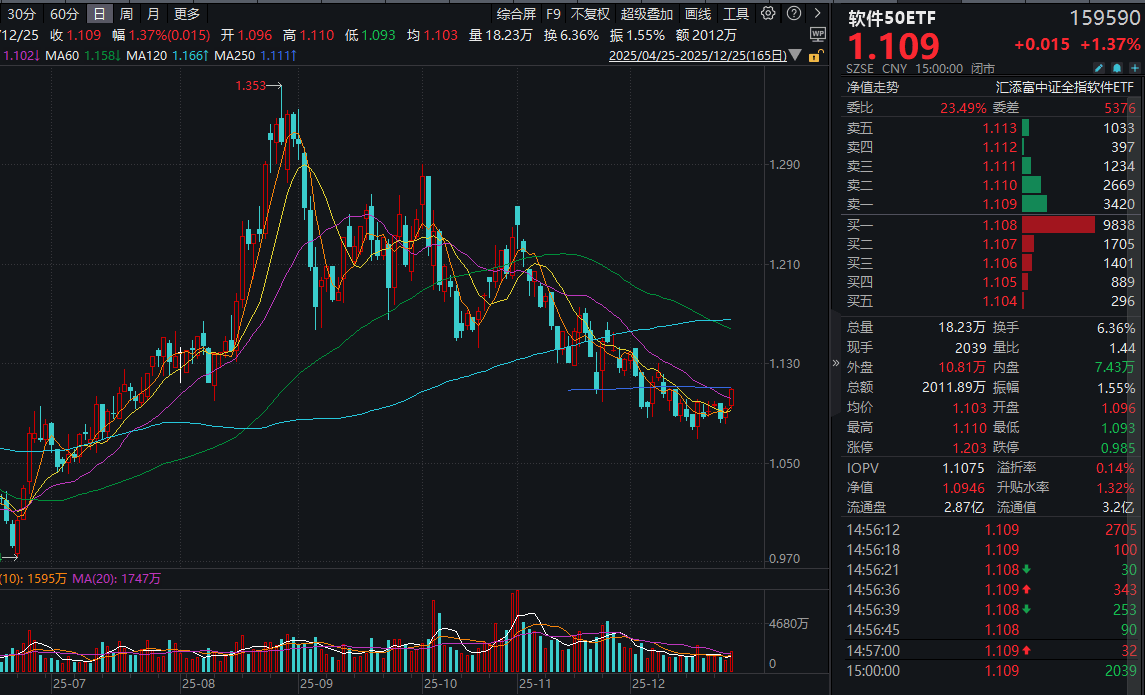
豆包DAU破亿,蚂蚁阿福横空出世,AI软件催化不断!软件50ETF(159590)放量收涨1.37%,年内份额增幅领先!哪三类AI应用方向值得关注?
Sou Hu Cai Jing· 2025-12-25 08:26
Group 1: Market Performance - The A-share market continues to rise, with the Shanghai Composite Index recording a seven-day winning streak, and the Software 50 ETF (159590) increasing by 1.37% for two consecutive days [1] - The trading volume for the Software 50 ETF exceeded 20 million yuan, showing a 76% increase compared to the previous period [1] - Since the beginning of the year, the share of the Software 50 ETF has surged by 164%, leading among all index ETFs in terms of share growth [1] Group 2: Key Stocks Performance - Most of the popular component stocks of the Software 50 ETF closed in the green, with notable gains: Zhongke Xingtu up over 7%, Sifang Jingchuang up over 6%, and Aerospace Information up 4% [2] - The trading volumes for key stocks include: - Zhina Zhen: 3.33 billion yuan, up 1.05% - Sifang Jingchuang: 3.30 billion yuan, up 6.63% - Tonghuashun: 2.08 billion yuan, up 2.01% - Zhongke Jujia: 1.83 billion yuan, up 7.11% - Aerospace Information: 1.44 billion yuan, up 4.00% [4] Group 3: AI Application Insights - Ant Group's AI health application "Antifufu" has reached 15 million monthly active users, leading the health management AI application sector [5] - The application has a unique advantage in payment integration, serving 800 million medical insurance code users, and has established deep cooperation with over 5,000 hospitals [5] - Antifufu has achieved a monthly active growth rate of 83.4%, answering 5 million questions daily, with 55% of users from third-tier cities [6] Group 4: AI Application Directions - Three AI application directions are highlighted for attention: 1. General tools that enhance work efficiency, leveraging large model advantages [8] 2. AI applications built on vertical scenarios that deliver quantifiable results [8] 3. Edge AI hardware, which is the fastest commercialized AI application direction [9] Group 5: Software Industry Overview - The Software 50 ETF closely follows the CSI All-Share Software Index, covering the entire AI software industry chain, with approximately 67% of its weight in application software and over 15% in AI-related fields [10]
A Decade of Intelligent Innovation: Reaching New Heights, The 10th Design Intelligence Award Ceremony Held at the China Academy of Art
TMX Newsfile· 2025-12-25 07:48
Core Insights - The 10th Design Intelligence Award (DIA) ceremony highlighted the importance of industrial design in enhancing product value and competitiveness in Chinese manufacturing, as emphasized by Vice Governor Lu Shan [4] - The award has evolved into an internationally recognized platform for industrial design, showcasing innovative works and fostering collaboration between education, industry, and technology [8][9] - This year's award attracted participation from 52 countries, with a focus on emerging technologies and industries, reflecting global design diversity and cross-cultural exchange [20][17] Group 1: Award Ceremony Highlights - The ceremony was attended by over 600 guests, including government officials, academics, and industry leaders, showcasing the event's significance [2] - Vice Governor Lu Shan presented the grand prize to Huawei's Harmony ecosystem, emphasizing the award's role in promoting high-quality industrial design [5][4] - The event featured speeches from notable figures, including Xu Jiang and Yu Xuhong, who discussed the award's evolution and its impact on global design [7][10] Group 2: Award Achievements and Participation - Over the past decade, the DIA has received more than 65,000 entries from 87 countries, with a participation rate of 84% from leading innovative nations [20] - This year, the award focused on ten key scenarios, including smart health and intelligent visualization, and announced the "Top Ten Cases of the Decade" [20] - The introduction of the "Innovation Incubation Award" aims to facilitate the transformation of innovative projects from laboratories to market, involving prestigious universities and pioneering companies [41] Group 3: Future Directions and Collaborations - The award aims to continue fostering the integration of art and technology, promoting interdisciplinary talent and addressing global challenges through design [12][14] - A strategic cooperation agreement was signed between the Cumulus Association and the China Academy of Art to enhance international collaboration in design education and research [15][18] - The "Development Declaration for the New Decade of the DIA" outlines principles for connecting academic, industrial, and social innovation ecosystems, emphasizing the role of design in addressing humanity's common challenges [30][31]
百亿亏损换一张门票,国产AI大模型“流血”抢滩上市
Sou Hu Cai Jing· 2025-12-25 07:13
Core Insights - The article discusses the simultaneous IPO applications of two leading AI companies, MiniMax and Zhiyu AI, highlighting the competitive landscape and financial challenges within the AI industry [4][6]. Company Overview - MiniMax, founded in early 2022, has raised over $1.5 billion and holds approximately $1.1 billion in cash, while Zhiyu AI, with a different operational focus, submitted its IPO application just 48 hours earlier [4][6]. - MiniMax focuses on multi-modal models and AI-native products, while Zhiyu AI emphasizes a foundational model and open-source ecosystem [7][9]. Financial Performance - MiniMax reported a loss of $269 million in 2023, projected to increase to $465 million in 2024, and has already incurred a loss of $512 million in the first nine months of 2025, totaling $1.32 billion in cumulative losses [11]. - Zhiyu AI's losses are also significant, with a reported loss of 788 million yuan in 2023, escalating to 2.958 billion yuan in 2024, and 2.358 billion yuan in the first half of 2025, leading to over 6.2 billion yuan in cumulative losses [11]. Industry Challenges - The AI industry faces high operational costs, particularly in research and development, with MiniMax's R&D expenses exceeding 2000% of its revenue at one point, and Zhiyu AI having over 70% of its workforce in R&D [13]. - The rising costs of AI deployment and the uneven distribution of benefits between developers and cloud service providers pose significant challenges to the ecosystem [10]. Market Dynamics - The IPOs of MiniMax and Zhiyu AI are expected to provide a benchmark for valuation in the AI sector, which has struggled with unclear profit models and declining investment in the primary market [14]. - The transition from "storytelling" to "proving commercial value" is anticipated to reshape the industry, with a focus on scalable business scenarios rather than just technological advancements [16]. Future Outlook - The AI industry is at a crossroads, needing to balance cost reduction and efficiency improvements while seeking sustainable commercialization paths [18]. - The upcoming year is seen as pivotal for AI applications, with potential market consolidation and a shift towards efficiency as a competitive advantage [19].

葛卫东,囤了230亿科技股
36氪· 2025-12-25 06:44
以下文章来源于财经天下WEEKLY ,作者财经天下 财经天下WEEKLY . 《财经天下》周刊官方账号,提供有品质的深度报道,讲述中国企业在时代浪潮中的精彩故事。 从贵州走出来的期货大佬葛卫东,如今在科技圈屡屡"点石成金"。无论是国产GPU新贵沐曦股份上市首日浮盈近200亿元,还是之前重仓投入用友网络、兆易创新、海 光信息,都体现了他在看好国内科技大发展趋势下,"敢于重仓、看长做长"的典型投资策略。葛卫东之所以能坚定执行这一投资策略,离不开他独树一帜的"家族联 盟"式投资体系。 文 | 周遐观 编辑 | 朗明 来源| 财经天下WEEKLY(ID:cjtxweekly) 封面来源 | IC Photo 首日浮盈近200亿元, "套现"还需等待 继摩尔线程疯狂"造富"之后,国产GPU公司沐曦股份也成了"大肉签"。 沐曦股份在12月17日正式登陆上交所科创板,每股发行价为104.66元,首日收盘报829.90元,每股上涨了725.24元,上涨幅度高达692.95%。 沐曦股份股价暴涨,一众投资人赚得盆满钵满,其中"牛散"葛卫东更是一日大赚近200亿元。 沐曦股份招股书显示,上市后,葛卫东及其关联公司混沌投资,分别持 ...
一片录音卡,重写大厂硬件故事
36氪· 2025-12-25 06:44
Core Viewpoint - DingTalk is breaking the curse that internet companies cannot do hardware well, marking a significant shift in the AI hardware landscape [3][7][28] Group 1: AI Hardware Industry Trends - The AI hardware sector has seen a surge in investment and innovation, with over 114 financing events and a total investment exceeding 14.5 billion yuan in the first half of 2025 [2] - Major companies like Alibaba, ByteDance, and Meituan have launched their own hardware products, indicating a competitive landscape in China's AI hardware industry [2][3] - The trend of FOMO (Fear of Missing Out) is influencing investments, with many startups securing funding without proven products [2] Group 2: DingTalk's Product Launch and Strategy - DingTalk held its second product launch in six months, introducing Agent OS and the AI hardware DingTalk Real, establishing a complete AI system architecture [3][5] - The DingTalk A1 has quickly gained popularity, becoming a top-selling product in its category, showcasing the potential for large-scale application [8][10] - The product's design choices, such as using a universal type-C charging port, reflect a balance between user habits and product functionality [10] Group 3: Market Positioning and Competition - DingTalk A1 is positioned not just as a standalone recording device but as a vital component of DingTalk's broader AI ecosystem, serving as a data collection tool [16][27] - The competitive landscape is intense, with existing players like Plaud and iFlytek already established in the market, necessitating DingTalk to clearly define its unique value proposition [8][9][16] - The product's initial reception included criticism, but rapid iterations and user feedback have led to significant improvements and a turnaround in public perception [12][13] Group 4: Future Vision and Ecosystem Development - DingTalk aims to create a seamless interaction between users and AI agents, with the physical button on the A1 serving as a strategic entry point for AI functionalities [20][23] - The integration of AI into business workflows is expected to transform how companies utilize data, turning it into actionable insights and enhancing productivity [17][25] - The vision for DingTalk includes building a robust ecosystem where hardware, data, and AI agents work together, potentially reshaping the future of office collaboration [26][27]


共赴产业新程!北京市机器人产业协会成立大会邀您见证未来
机器人大讲堂· 2025-12-25 06:40
Core Viewpoint - The establishment of the Beijing Robot Industry Association aims to accelerate innovation and collaboration within the robot industry, aligning with the "Beijing Robot Industry Innovation Development Action Plan (2023-2025)" [1][5]. Group 1: Association Establishment - The Beijing Robot Industry Association will serve as a bridge between the government and member units, focusing on policy research, industry data analysis, and providing decision-making support for enterprises [5]. - The association will organize industry exchange activities and exhibitions to promote collaboration and market expansion within the robot industry [5]. Group 2: Policy Interpretation - The conference will feature a policy interpretation session that covers city-level and regional policies, focusing on technology innovation, funding support, and talent cultivation [6]. - Various district representatives will explain their respective robot industry innovation policies to help enterprises and practitioners seize development opportunities [6]. Group 3: Expert Insights - Industry experts will share insights on current trends, key innovations, and practical applications in the robot industry, providing guidance for future development [7]. - The reports will focus on the evolution of embodied intelligence and the challenges faced, helping practitioners understand industry trends and technological bottlenecks [7][8]. Group 4: Event Details - The inaugural meeting of the Beijing Robot Industry Association is scheduled for December 26, 2025, at the Kexing Laifucheng Auditorium in Changping District, Beijing [10][11].

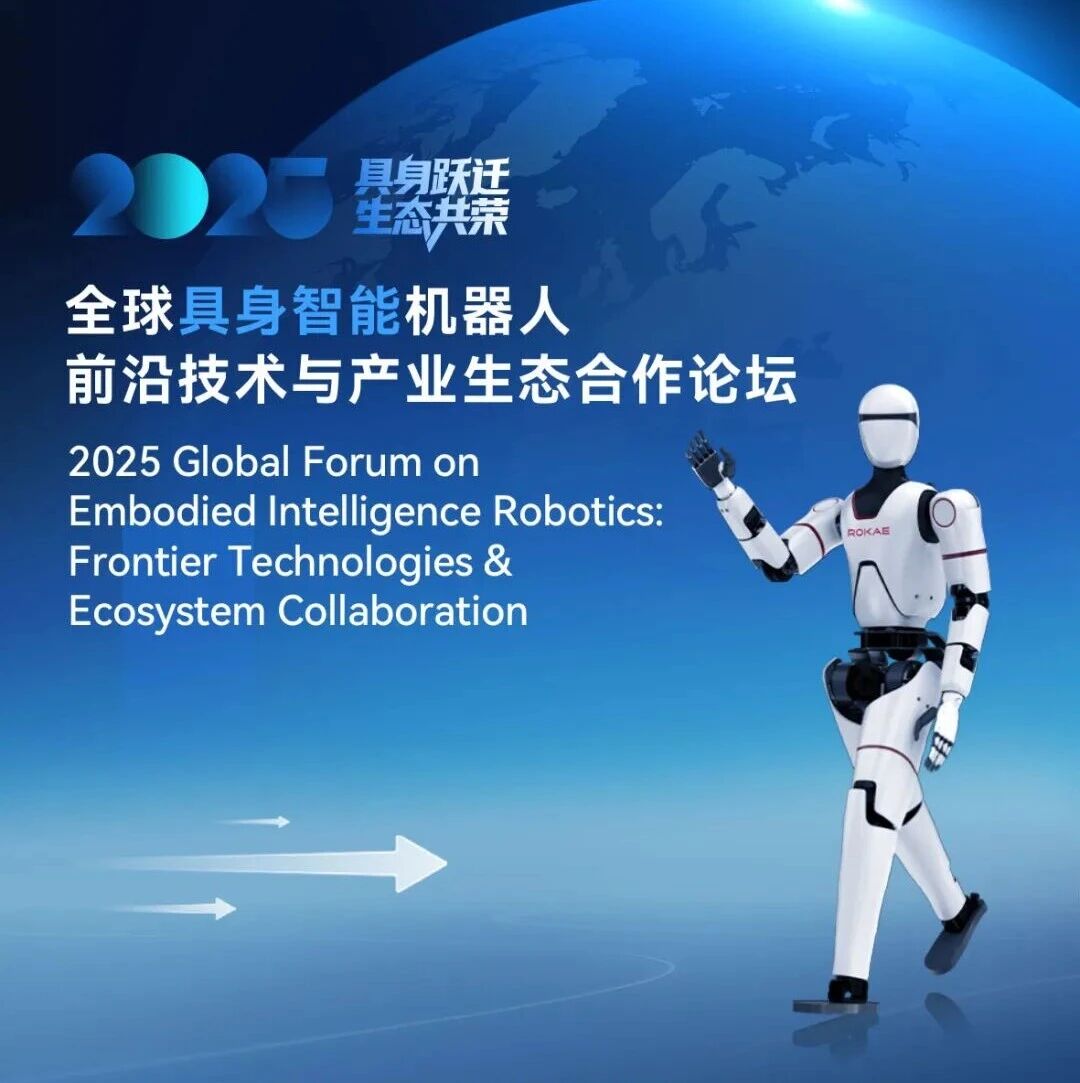
共赴具身未来!2025全球具身智能机器人前沿技术与产业生态合作论坛即将启幕
机器人大讲堂· 2025-12-25 06:40
随着人工智能技术加速渗透千行百业,具身智能作为实现人与物 理世界自然交互的核心技术,正成为驱动产业变革的关键引擎,发展 前景尤为广阔。珞石机器人作为全球智能机器人领域的创新领导者, 始终以技术创新为核心,携手产学研各界协同发力,为全球智能制造 的转型升级提供关键力量。 在当前人工智能与机器人技术深度融合的背景下, 路石机器人隆 重举办"具身跃迁·生态共荣'一一2025全球具身智能机器人前沿技术 与产业生态合作论坛"。本次论坛将汇聚全球学术权威与产业先锋领 袖,通过主题演讲、圆桌对话等形式,聚焦具身智能的技术突破、场 景落地与生态协同等关键议题,共同探索智能变革前沿,共建开放包 容、可持续发展的全球具身智能生态体系。 As Al permeates all industries, embodied intelligence enables natural human-physical interaction and emerges as a key engine for industri- al transformation with broad prospects. As a global intellige ...
讯飞、支付宝、百度连拿上亿大单,医疗AI商业化要走通了?
Di Yi Cai Jing· 2025-12-25 05:47
Core Insights - The recent surge in government procurement projects for medical AI indicates a potential turning point for commercialization in the sector, with major companies like iFlytek, Alipay, and Baidu winning contracts exceeding 100 million yuan [1][3][19] - These projects focus on building foundational platforms rather than specific AI functionalities, emphasizing regional and systematic upgrades to existing healthcare information systems [3][4][6] - The government is playing a crucial role in driving this phase of development, with policies aimed at enhancing AI integration into healthcare systems by 2027 and 2030 [6][14] Group 1: Government Projects and Market Dynamics - Major contracts awarded to leading firms suggest a consolidation of resources and capabilities, favoring larger companies over smaller startups [7][10] - The nature of these projects is more akin to information technology upgrades rather than direct AI commercialization, with significant budgets allocated for comprehensive digital infrastructure rather than just AI capabilities [6][10][12] - The long project cycles and high engineering demands may deter traditional AI firms from engaging, as they prefer models based on usage fees rather than one-time project payments [8][9][10] Group 2: Future Commercialization Pathways - The government projects serve as a foundational step, potentially paving the way for future applications and commercial opportunities in the healthcare sector [14][15] - Companies are encouraged to explore a balance between government, business, and consumer markets, with a focus on long-term operations and cost-saving solutions for healthcare providers [16][17] - The C-end market presents the highest potential for growth, offering personalized services that the current healthcare system struggles to provide, despite facing intense competition [17][18][19]
