古茗

Search documents
柠檬涨价,奶茶店主慌了?我发现真相并非如此
3 6 Ke· 2025-06-29 04:03
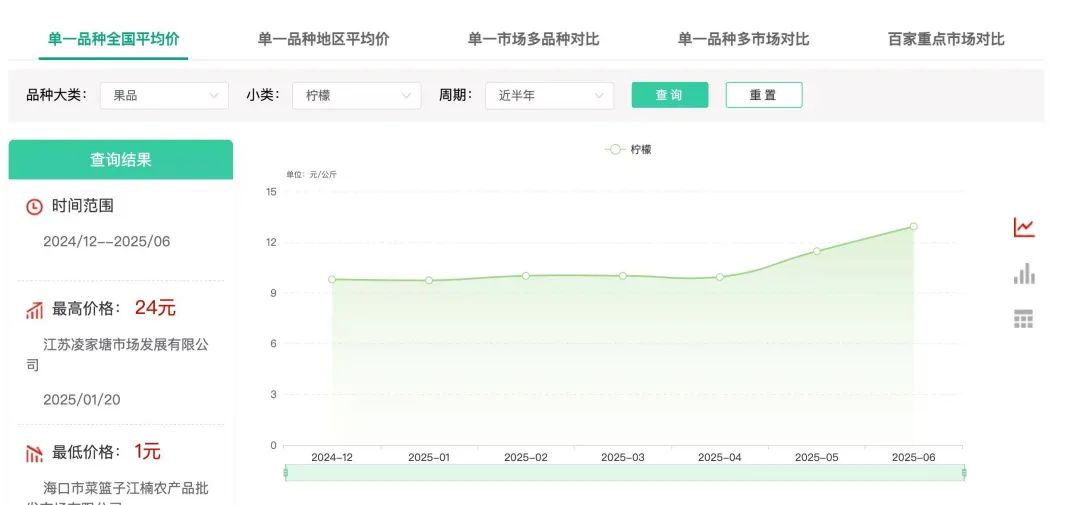
Core Viewpoint - The rising lemon prices are causing concern in the tea beverage industry, which heavily relies on lemons as a key ingredient for summer drinks, leading to questions about profitability and supply chain stability [1][5]. Price Trends - Lemon prices have increased from an average of 9.94 yuan per kilogram in April to 12.92 yuan in June, marking a 30% rise [2]. - Extreme price claims, such as lemons selling for 30 yuan each, are largely exaggerated and do not reflect the overall market situation [2]. Supply Chain Factors - The price increase is attributed to multiple factors, including reduced production due to drought conditions in key growing regions and export disruptions from traditional suppliers like Turkey [2]. - Major tea brands, such as Mixue and others, are heavily investing in lemon-based products, indicating a strong demand despite rising costs [4]. Impact on Profitability - The cost increase of lemons is manageable within the overall cost structure of tea beverages, as the impact on the total cost of a cup of lemon water remains relatively low [8][10]. - Even with lemons priced at 15 yuan per kilogram, the overall profitability of lemon drinks is not severely threatened due to the inclusion of other ingredients and the strategic pricing of beverages [8][10]. Supply Chain Resilience - Companies with established supply chains, like Mixue, are less affected by price fluctuations due to their direct procurement strategies and long-term contracts with suppliers [12][15]. - Mixue's procurement practices allow it to maintain lower costs compared to market prices, which helps in keeping consumer prices stable [11][15]. Agricultural Innovations - The modernization of agricultural practices, such as the introduction of advanced irrigation and monitoring systems, has improved the efficiency and yield of lemon production, further supporting supply chain stability [17]. - These innovations contribute to a significant reduction in production costs, enhancing the competitive edge of companies that adopt them [17][18]. Industry Outlook - The lemon price surge highlights the importance of supply chain capabilities in the tea beverage industry, suggesting that companies with robust supply chains will be better positioned to handle market volatility [12][18]. - The ongoing trend of introducing lemon-based products reflects a broader strategy to capitalize on the growing health beverage market, benefiting both consumers and the lemon industry in the long run [18].

“锣不够用了”!港股IPO火爆,GP收益显著回升,有机构大赚26倍!
证券时报· 2025-06-28 08:12
6月26日,港交所迎来了3家公司集体鸣锣——周六福、圣贝拉、颖通控股。这般热闹的场景在今年的港 交所频繁上演。就在6月10日,容大科技、新琪安和MetaLight这3家公司也同日登陆港股市场。 在近期举办的2025陆家嘴金融论坛上,港交所行政总裁陈翊庭表示,当前港股IPO排队企业超160家,仅 5月就有40多家企业递表。火热的港股背后,是一群GP的狂欢。 "锣不够用了"!如此形容2025年的港交所一点也不为过。 市场风向转变 赴港IPO成佳选 今年港股IPO市场火热有目共睹。6月12日,安永发布2025年上半年《中国内地和香港IPO市场》报告 (以下简称"报告")。报告显示,2025年上半年,港交所预计约有40家公司首发上市,筹资额约140亿 美元(约合1087亿港元),筹资额占全球总筹资额的24%,排在全球首位。 然而,在今年之前,由于企业上市后估值偏低、市场缺乏流动性等因素,不少企业和机构投资者对港股上 市抱有偏见。据记者观察,今年以来,市场风向正开始转变。"去年我们还想劝企业被并购的,今年我们 建议他们上港股。"上述VC机构负责人对记者表示,企业对港股上市的积极性比去年显著升温。 投资人态度的变化,最典 ...

星巴克中国待价而沽的筹码是什么
Hu Xiu· 2025-06-28 00:30
Group 1 - Hillhouse Capital has shown interest in acquiring Starbucks' China business, which is valued at approximately $5 to $6 billion, with the transaction expected to continue until 2026 [1] - Starbucks believes in the significant growth opportunities in the Chinese market and is evaluating the best ways to capture future growth, focusing on revitalizing its business in China [2][3] - Starbucks' global CEO, Brian Niccol, mentioned that there is considerable interest from potential investors regarding the sale of minority stakes in Starbucks China, highlighting the brand's value and the coffee market's growth [2][3] Group 2 - Starbucks China recently announced a price reduction for non-coffee products, which reflects a cautious approach to pricing while maintaining its premium coffee positioning [3][9] - The company aims to expand its store count from 8,000 to 20,000, with strategies to attract consumers in lower-tier markets [4][17] - The non-coffee product price adjustments are intended to enhance performance and broaden the brand's price range, thereby increasing transaction volumes [14][20] Group 3 - Starbucks China has experienced a decline in same-store sales for ten consecutive quarters, but recent data shows a 4% increase in transaction volume despite a 4% decrease in average ticket price [15][16] - The company is focusing on the lower-tier market, where membership sales are growing at twice the rate of higher-tier cities, indicating significant potential [17][18] - The dual product strategy of coffee and non-coffee beverages is becoming increasingly common in the industry, with competitors also expanding their offerings [18][19] Group 4 - The current market dynamics suggest that Starbucks must balance its high-end brand positioning with the need to appeal to a broader consumer base [21][22] - The coffee industry has seen a downward trend in pricing, prompting Starbucks to consider potential changes in its pricing strategy to remain competitive [23]

“锣不够用了”!港股IPO火爆,GP收益显著回升,有机构大赚26倍!
Zheng Quan Shi Bao Wang· 2025-06-27 11:35
(原标题:"锣不够用了"!港股IPO火爆,GP收益显著回升,有机构大赚26倍!) "锣不够用了"!如此形容2025年的港交所一点也不为过。 6月26日,港交所迎来了3家公司集体鸣锣——周六福、圣贝拉、颖通控股。这般热闹的场景在今年的港交所频繁上演。就在6月10日,容大科技、 新琪安和MetaLight这3家公司也同日登陆港股市场。 在近期举办的2025陆家嘴金融论坛上,港交所行政总裁陈翊庭表示,当前港股IPO排队企业超160家,仅5月就有40多家企业递表。火热的港股背 后,是一群GP的狂欢。 据执中ZERONE统计,2025年以来,赴港上市企业的创投机构渗透率高达75%,与去年同期相比高出约2%。"相比去年,我们所投资的企业今年 去港股上市的积极性和热情更高了。"深圳一家VC机构负责人对记者表示。 市场风向转变 赴港IPO成佳选 今年港股IPO市场火热有目共睹。6月12日,安永发布2025年上半年《中国内地和香港IPO市场》报告(以下简称"报告")。报告显示,2025年上 半年,港交所预计约有40家公司首发上市,筹资额约140亿美元(约合1087亿港元),筹资额占全球总筹资额的24%,排在全球首位。 然而,在 ...



观茶|近20元一斤!新茶饮或面临“柠檬危机”
Nan Fang Nong Cun Bao· 2025-06-27 08:32
Core Viewpoint - The rising prices of lemons, which have reached nearly 20 yuan per jin, are posing significant challenges for the new tea beverage industry, potentially leading to a "lemon crisis" [1][13]. Price Surge - Lemon prices have surged dramatically this year, with prices in Sichuan's Anyue reaching 15 yuan per jin, up from 3-4 yuan per jin last year, marking a 3-5 times increase [3][4]. - In Guangdong's Jiangmen, the price of fragrant lemons is nearly 20 yuan per jin, compared to only 5 yuan per jin last year [4]. Supply and Demand Imbalance - The primary reason for the price increase is the supply-demand imbalance, exacerbated by extreme weather conditions leading to reduced production in major lemon-growing regions [8]. - The export volume of lemons from Anyue has surged, reaching levels comparable to last year's peak season within just two weeks, resulting in tight market supply [9]. Impact on New Tea Beverage Industry - The significant rise in lemon prices is expected to create severe challenges for the new tea beverage industry, with varying impacts on different types of tea beverage franchises [13][14]. - Smaller brands and those relying on market-sourced lemons face direct cost pressures, risking profit losses [16]. Pricing Strategies - For a cup of lemon tea requiring 5-6 slices of lemon, one lemon can only make two cups, with each cup selling for around 4 yuan, leaving minimal profit margins [17]. - Some tea shops have adjusted prices or removed lemon-based products to mitigate the impact of rising costs [18][19]. Competitive Advantage of Major Brands - Leading new tea brands like Mixue Ice City and Gu Ming have established supply chain advantages, with their own lemon production bases, thus facing relatively smaller impacts from price increases [21][22]. - Mixue Ice City's signature lemon water remains priced at 4-5 yuan, while Gu Ming's is at 9 yuan, with no price adjustments made [23]. Future Outlook - Seasonal price fluctuations are expected, with supply constraints likely easing as new season lemons become available in September-October [24]. - The new tea beverage industry, particularly smaller brands, will need to explore cost control and product adjustment strategies to navigate the ongoing "lemon crisis" [25].

Tims天好中国一季度营收3亿,同店销售下滑7.8%
3 6 Ke· 2025-06-27 03:22
Core Viewpoint - Tims China is facing significant operational challenges, with a decline in revenue and same-store sales, despite some improvements in cost management and expansion efforts [1][3][7]. Financial Performance - In Q1 2025, Tims China reported revenue of 300.7 million RMB, a year-on-year decrease of 9.5% [1]. - The operating loss narrowed to 85 million RMB from 121.3 million RMB in the same period last year [1]. - Adjusted EBITDA was -29.3 million RMB, an improvement from -52.3 million RMB year-on-year [1]. - Same-store sales fell by 7.8%, with self-operated store sales down 6.5% due to a 14.0% drop in order volume and a slight decrease of 1.9% in average transaction value [3]. Market Competition - The coffee industry in China is experiencing intensified competition, with major players like Luckin Coffee and Starbucks implementing aggressive pricing and marketing strategies [2][3]. - Tims China is competing against established brands that have a stronger market presence, which affects its attractiveness to potential franchisees [7]. Strategic Initiatives - Tims China has implemented cost-cutting measures, reducing costs and expenses by 19.0% compared to the previous year, with significant reductions in food and packaging costs by 24.6% [4]. - The company is expanding its franchise model, with 455 franchise stores as of March 31, 2025, up from 302 a year earlier [4]. - Tims China plans to open over 200 new stores this year, focusing on high-tier cities and special channel layouts [5]. Product and Service Innovation - Tims China is enhancing its product offerings by introducing lunch options, such as the "Light Bagel Lunch Box" series, to increase foot traffic during lunch hours [6]. - The company is also collaborating with brands like Oatly to launch health-oriented products, contributing to a 25.7% increase in registered members, reaching 25.15 million [6]. Challenges Ahead - Despite progress in franchise expansion and product innovation, Tims China faces ongoing challenges in establishing a strong brand presence and competing effectively in a crowded market [7].

蜜雪冰城加盟商:“现在卖的柠檬水都是请大家喝的!”
财联社· 2025-06-26 10:23
Core Viewpoint - The price of lemons has surged dramatically, increasing over three times compared to the same period last year, leading to significant impacts on both producers and downstream businesses [1][5]. Price Trends - Lemon wholesale prices began to rise in April, reaching an average of 12.86 yuan per kilogram in June, a 29.38% increase from April and a 64.66% increase from the same time last year [1][5]. - On June 26, some wholesale markets reported prices as high as 19 yuan per kilogram, with bulk transaction prices reaching 17 yuan per kilogram [1]. Supply and Demand Factors - Increased demand during the peak purchasing season and a rise in exports from Sichuan's Anju region are contributing to the price surge [5]. - Adverse weather conditions in Turkey have led to reduced lemon production, further driving up domestic prices [5]. - The demand for lemon-based beverages has increased as temperatures rise, adding pressure to lemon prices [5]. Impact on Downstream Businesses - Tea beverage companies, such as Mixue Ice City, are facing challenges due to rising lemon costs, with prices for lemons reaching around 10 yuan per pound, compared to just over 3 yuan last year [5][6]. - Despite rising costs, many tea shops are hesitant to raise prices or remove lemon drinks from their menus due to franchise restrictions [6][7]. Future Price Outlook - Industry insiders predict that while new season lemons will be available in September and October, prices are unlikely to decrease significantly in the short term [9].

古茗官宣吴彦祖代言:8.9元咖啡锚定下沉市场,高管曾在瑞幸任职,咖啡机一台近8万元
Sou Hu Cai Jing· 2025-06-26 05:25
Core Viewpoint - Guming has officially entered the coffee market, launching a promotional campaign with coffee priced at 8.9 yuan, featuring actor Wu Yanzu as a quality partner [2][5] Company Expansion - As of June 2025, Guming's freshly ground coffee products will be available in over 7,600 stores nationwide, ranking among the top five in terms of store coverage [2][7] - The number of stores offering coffee machines increased from 2,000 to 7,600 in just six months, averaging about 1,000 new stores per month [8] Financial Performance - Guming's equipment sales revenue increased by 26.8% year-on-year to 465 million yuan, primarily due to the rise in coffee machine sales [4][9] - In 2024, Guming reported a revenue of 8.791 billion yuan, a 14.5% increase from 7.676 billion yuan in the previous year [10] - The net profit for 2024 was 1.493 billion yuan, up 36.2% from 1.096 billion yuan in 2023 [11] Market Strategy - Guming's coffee sales currently account for 10%-15% of total store sales, with a 10% increase in sales after introducing coffee machines [9] - The company aims to capture the lower-tier market by offering competitive pricing and leveraging its supply chain for fresh coffee [14][15] - Guming operates 22 warehouses and has a cold chain distribution system that ensures fresh coffee delivery within two days to 97% of its stores [15] Industry Trends - The coffee market in lower-tier cities is experiencing significant growth, with a 113.36% increase in coffee merchants in county-level cities over the past three years [16] - The overall coffee industry in China is projected to grow by 18.1% year-on-year in 2024, indicating substantial potential for market expansion [16] Competitive Landscape - The coffee market is becoming increasingly competitive, with major brands like Starbucks and Luckin Coffee expanding their presence in lower-tier cities [18] - Guming's founder predicts a merging of tea and coffee markets, reflecting a broader trend among new tea beverage brands entering the coffee sector [19][23]

谁是“中国茶饮星巴克”?汇丰:相比蜜雪,更看好古茗
Hua Er Jie Jian Wen· 2025-06-26 03:49
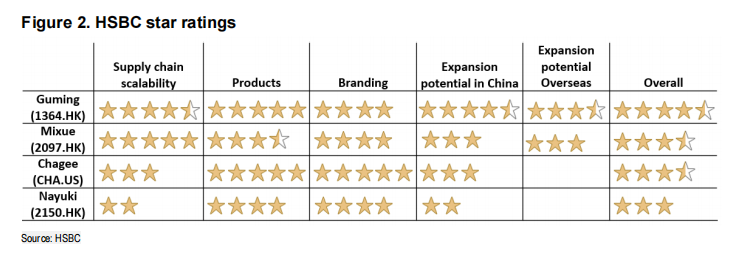
Core Viewpoint - The Chinese ready-to-drink tea market is experiencing remarkable growth, with HSBC highlighting Guming and Mixue as standout brands due to their scalability and competitiveness, with a more favorable outlook for Guming's growth potential [1][20]. Market Overview - The market size of China's ready-to-drink tea is projected to reach RMB 211.5 billion by the end of 2023, significantly surpassing the ready-to-drink coffee market at RMB 151.5 billion [3]. - The market is highly fragmented, with approximately 660,000 tea shops and 4,000 to 5,000 brands, resulting in a low survival rate [3]. Company Analysis Mixue - Mixue is positioned as a low-cost market leader, with some products priced as low as RMB 7 [7]. - It has over 46,000 stores in China and nearly 5,000 overseas, making it the largest fast-food chain by store count globally [7]. - Despite its strong market position, its current valuation reflects its advantages, leading to a neutral rating. The expected compound annual growth rate (CAGR) for net profit from 2024 to 2027 is 17.4%, with a price-to-earnings growth (PEG) ratio of approximately 1.67, indicating limited attractiveness [8][9]. Guming - Guming targets the mid-range market, focusing on fresh fruit tea, and has established a self-operated cold storage supply chain, creating a strong competitive barrier [10][15]. - It has a higher single-store profitability, with a payback period of 16 months, compared to Mixue's longer payback period [12][20]. - Guming's average annual gross merchandise volume (GMV) per store is RMB 2.4 million, significantly higher than Mixue's RMB 1.4 million [16]. - The average GMV per transaction for Guming is RMB 27.9, while Mixue's is RMB 11.6, reflecting their different market positioning [19]. - Guming's expected net profit CAGR from 2024 to 2027 is 24.4%, with a PEG ratio of approximately 1.03, suggesting better growth potential and investment value, leading to a "buy" rating [15]. Competitive Landscape - Both companies have ambitious expansion plans, with Mixue aiming for 100,000 stores in China and Guming targeting 30,000 to 40,000 stores [20]. - HSBC's end-game model indicates that Guming may have a higher net profit growth potential (34%) post-2027 compared to Mixue (26%) despite the difference in store numbers [20][21]. Investment Considerations - The report provides a clear analytical framework for investors, indicating that while Mixue wins in scale, its high valuation limits upside potential, whereas Guming shows superior growth potential and investment value through its product and supply chain strategies [20].
古茗把咖啡卷出了新高度
3 6 Ke· 2025-06-26 03:28
Core Viewpoint - The current fresh coffee market in China is experiencing rapid growth, with a significant increase in consumer demand for fresh and professional coffee beverages. Companies like Guming are leveraging their strengths in the tea beverage sector to expand into the fresh coffee market, focusing on fresh ingredients and affordability as key competitive advantages [1][9]. Market Dynamics - The fresh coffee market is witnessing explosive growth in third and fourth-tier cities, with order volumes increasing by over 250%. This has led to intense price competition among brands, including international giants like Starbucks and local brands like Luckin and Kudi, all vying for the attention of young consumers in these areas [2][4]. - Guming has successfully differentiated itself by balancing quality and price, capturing the interest of young consumers in county towns. As of June 2025, Guming's fresh coffee products are available in over 7,600 stores nationwide, ranking among the top five in the country [2][4]. Product Strategy - Guming's coffee products are priced between 8.9 to 18 yuan, significantly lower than similar offerings from Starbucks, which can be three times more expensive. The company emphasizes high-quality ingredients, such as fresh milk and award-winning coffee beans, to ensure a superior taste experience [8][10]. - The company has achieved a high repurchase rate of 53% in lower-tier markets, well above the industry average of 30%, indicating strong consumer loyalty [8][9]. Supply Chain Efficiency - Guming has established a robust supply chain that allows for fresh ingredients to be delivered quickly, with a focus on maintaining the freshness of coffee beans within 30 days from roasting to store use. This is a significant improvement over the industry standard [9][11]. - The company operates 22 warehouses, including a large cold storage facility, and has a logistics network that enables efficient distribution, reducing delivery costs to 50% of the industry average [11][13]. Competitive Positioning - Guming's strategy includes targeting the "mid-price range" of 10 to 17 yuan, avoiding direct competition with lower-priced brands and high-end offerings. This positioning allows Guming to appeal to consumers seeking quality at a reasonable price [15][16]. - The company has also focused on product innovation, launching new coffee products frequently and adapting to regional preferences based on consumer data, which has helped convert tea drinkers into coffee customers [18][19]. Future Outlook - Guming aims to increase its coffee product sales to 10% of total sales by 2025, with expectations of significant revenue growth from its presence in lower-tier markets [14][15].