台积电

Search documents
如果EDA断供,国产EDA够用吗?
傅里叶的猫· 2025-05-29 15:16
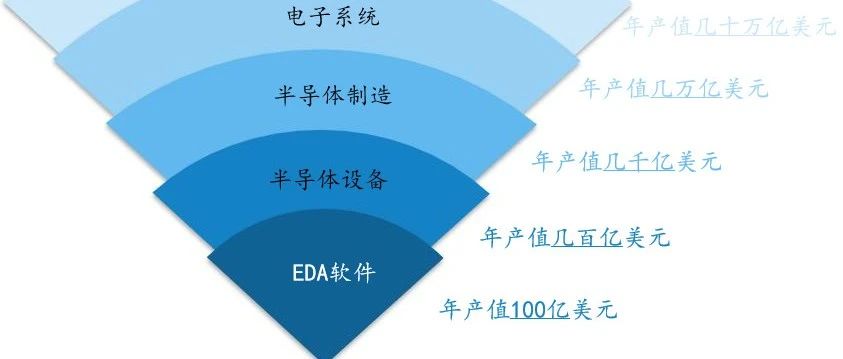
Core Viewpoint - The article discusses the recent news regarding the supply disruption of EDA tools and emphasizes that a complete supply cut is unlikely, as it would signify a decoupling of the semiconductor industries between China and the U.S. The article also highlights the current dominance of three major EDA companies and the challenges faced by domestic EDA firms in China [1][3]. Industry Overview - The EDA industry is relatively small compared to other segments of the semiconductor industry, with the three leading companies—Synopsys, Cadence, and Siemens EDA—holding approximately 70% of the global market share. Synopsys accounts for about 32%, Cadence for 30%, and Siemens EDA for 13% [3][6]. - The largest EDA companies have market capitalizations around $70 billion, with Synopsys projected to generate revenues of $6 billion and net profits of $2 billion in 2024, indicating that EDA is not a high-margin industry [6][3]. EDA Tools and Market Segmentation - EDA tools are categorized into manufacturing EDA and design EDA, with manufacturing EDA being crucial for matching advancements in semiconductor process nodes [9][11]. - The Chinese manufacturing EDA market is expected to reach 4.22 billion yuan by 2028, with a compound annual growth rate (CAGR) of 21.2%, outpacing global growth due to increasing domestic demand [13]. Key Players in EDA - Synopsys has historically maintained a leading position in the EDA market, although it was recently surpassed in market value by Cadence. This shift is attributed to strategic moves, including the former CEO of Cadence joining Intel [15][18]. - Domestic EDA companies, while still lagging behind their U.S. counterparts, are numerous and competitive across various segments. However, only a few are expected to emerge as strong players due to the industry's limited size [19][28]. Domestic EDA Tools - Major domestic EDA companies like Huada Empyrean and others have developed comprehensive tools for analog IC design and wafer manufacturing, covering a wide range of processes [20][22]. - Despite the presence of domestic alternatives, there are significant gaps in quality and reliability compared to established foreign tools, leading many companies to prefer more expensive foreign solutions to mitigate risks [28][29].

“EDA世纪大收购”即将落地! FTC有条件批准新思科技(SNPS.US)主导的340亿美元交易
智通财经网· 2025-05-29 04:21
Core Viewpoint - Synopsys has received formal approval from the FTC for its $34 billion acquisition of Ansys, marking a significant consolidation in the EDA software industry [1][2]. Group 1: Acquisition Details - Synopsys plans to sell its optical and photonic software tools business to Keysight Technologies as part of the acquisition agreement [1]. - Ansys will also divest a power analysis product to Keysight [1]. - The acquisition was initially announced in early 2024 and has undergone global antitrust scrutiny, pending approval from China [1][6]. Group 2: Market Impact - The acquisition is considered a "century acquisition" in the EDA software sector, significantly enhancing Synopsys's market position against its main competitor, Cadence Design Systems [2]. - By acquiring Ansys, Synopsys aims to strengthen its capabilities in chip design simulation, particularly in system-level and integrated simulation tools [2]. - This move is expected to better serve major clients like Nvidia, AMD, and Broadcom, addressing complex design requirements in emerging technologies such as 6G, next-gen AI chip architectures, and quantum computing [2]. Group 3: Financial Performance and Client Base - Synopsys's recent financial results and strong outlook indicate growing demand for its EDA software, driven by major tech companies accelerating AI chip development [3]. - Key clients include top semiconductor firms like Nvidia, AMD, Qualcomm, and Apple, as well as cloud computing giants like Amazon and Microsoft [3]. - Synopsys's tools are crucial for semiconductor manufacturers like TSMC and Samsung, aiding in optimizing chip design and accelerating new process node development [3]. Group 4: Regulatory Environment - The agreement with the FTC reflects a shift towards resolving merger cases through settlements rather than litigation, contrasting with the Biden administration's previous stance [4]. - The FTC plans to release new guidelines on how it will evaluate merger settlements [4]. - The acquisition's approval process is complicated by geopolitical tensions, particularly regarding U.S. restrictions on technology sales to China [6].


金十图示:2025年05月29日(周四)全球主要科技与互联网公司市值变化
news flash· 2025-05-29 03:08
Market Capitalization Changes - The market capitalization of major global technology and internet companies has shown varied changes as of May 29, 2025, with notable fluctuations in percentage terms [1][3][4]. - Companies like Tencent and Alibaba experienced declines of 2.3% and 2.33% respectively, while Oracle saw an increase of 1.2% [3][4]. Company Performance - Notable performers include Palantir with a slight increase of 0.3% and Adobe maintaining a stable position with a market cap of $1.76 billion [4][5]. - Companies such as AMD and Uber reported declines of 1.48% and 0.83% respectively, indicating a challenging market environment for these firms [3][5]. Sector Insights - The semiconductor sector remains under pressure, with companies like Intel and Micron showing declines of 0.88% and 0.21% respectively, reflecting ongoing challenges in the industry [5][6]. - Conversely, companies like SK Hynix and Keyence reported slight increases, suggesting some resilience within specific segments of the technology sector [5][6]. Emerging Trends - The data indicates a mixed outlook for the technology sector, with some companies like Shopify and Spotify showing positive growth trends, while others face headwinds [4][7]. - The overall market sentiment appears cautious, with several companies experiencing minor fluctuations in their market valuations [3][4].

论股市最强“阿尔法” AI算力当之无愧! 黄仁勋预言Blackwell需求创纪录
智通财经网· 2025-05-29 02:25
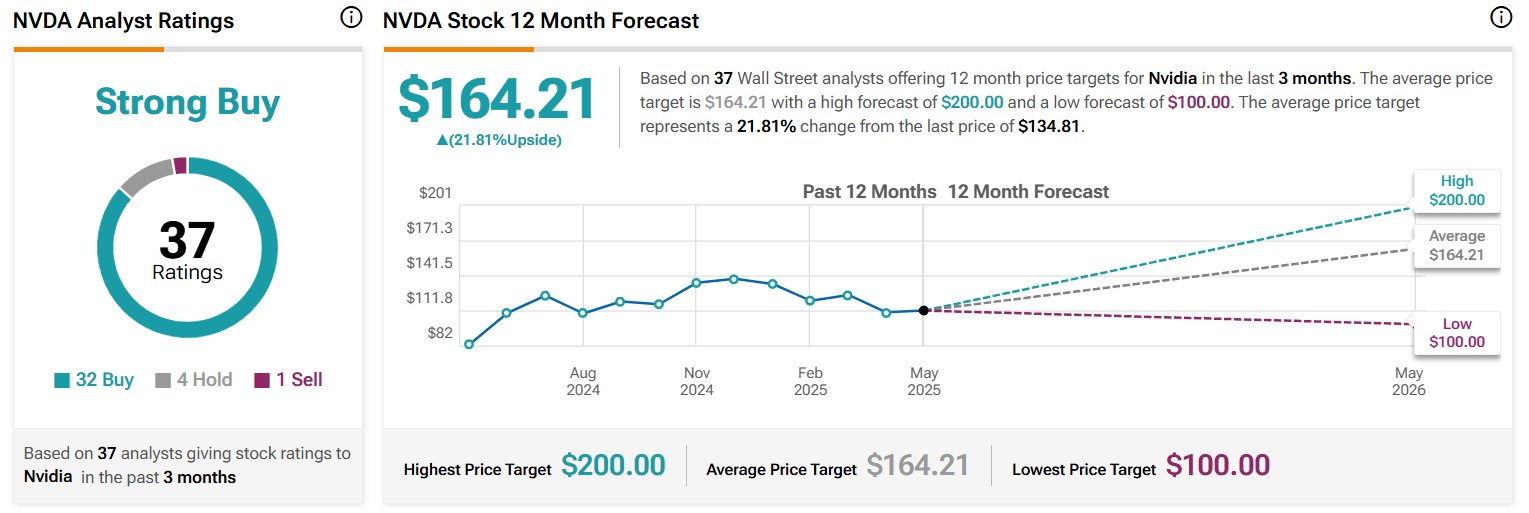
Core Viewpoint - Nvidia's CEO Jensen Huang has alleviated investor concerns regarding a significant decline in the company's market share in China by providing a more robust sales forecast for the Blackwell series AI chips, predicting record sales and exponential growth in AI computing infrastructure [1][6][11]. Group 1: Nvidia's Performance and Market Outlook - Nvidia's revenue for the second fiscal quarter is expected to be around $45 billion, despite an estimated loss of $8 billion in revenue from the Chinese market due to U.S. export restrictions [4][6]. - The Blackwell architecture AI GPUs are anticipated to significantly contribute to Nvidia's growth, replacing the previously popular Hopper architecture and driving sales in the data center business, which generated $39.1 billion [6][11]. - Nvidia's overall revenue for the first fiscal quarter increased by 69% year-over-year to $44.1 billion, surpassing analyst expectations [5][11]. Group 2: AI Chip Market Dynamics - Nvidia holds approximately 80%-90% of the AI chip market, with expectations for annual revenue to approach $200 billion, a significant increase from $27 billion two years ago [11]. - The demand for AI chips remains strong despite U.S. trade restrictions, with analysts from Morgan Stanley and BlackRock urging investors to maintain exposure to AI-driven stocks [2][13]. - The AI computing infrastructure is viewed as a critical component of the next industrial revolution, with Nvidia's products being essential for developing and running large AI models [5][10]. Group 3: Competitive Landscape and Future Prospects - Major players like TSMC and ASML have reported strong performance and optimistic growth forecasts, indicating that AI computing demand is resilient against trade policy uncertainties [13][14]. - Nvidia's CEO has emphasized the importance of AI in transforming the global economy and has called for the U.S. government to allow the company to re-enter the Chinese market [8][15]. - Analysts predict that Nvidia's Blackwell series will lead to a significant acceleration in revenue growth in the latter half of the year, despite short-term challenges from export restrictions [11][12].
【太平洋科技-每日观点&资讯】(2025-05-29)
远峰电子· 2025-05-28 11:40
Market Performance - The main board led the gains with notable increases in stocks such as Yuyin Co. (+10.08%), Chaoxun Communication (+7.09%), and Yongding Co. (+7.03%) [1] - The ChiNext board saw significant growth with New Guodu (+16.30%) and Xiechuang Data (+11.81%) leading the charge [1] - The Sci-Tech Innovation board was also up, with Dekeli (+7.58%) and Qingyue Technology (+7.19%) showing strong performance [1] - Active sub-industries included SW Communication Network Equipment and Devices (+1.94%) and SW Communication Terminals and Accessories (+1.20%) [1] Domestic News - Aibang Semiconductor Network announced a total investment of 1.2 billion, with Hanjin Technology's silicon carbide packaging project reaching completion, capable of producing 300,000 silicon carbide power modules and 50 million silicon carbide power devices annually [1] - TSMC reported a surge in demand for CoWoS chip manufacturing materials, leading to shortages in the memory market, with Mitsubishi Gas Chemical announcing delays in shipments of materials for BT substrates [1] - Changfei Advanced's Wuhan base achieved mass production, with the first 6-inch silicon carbide wafer successfully produced, expected to reach an annual production capacity of 360,000 silicon carbide chips [1] - Anhui Huaxin Micro-Nano Integrated Circuit Co. announced the successful production of the first batch of products from its 8-inch wafer production line, which will have a monthly production capacity of 30,000 wafers [1] Company Announcements - Huajin Technology announced a 2024 annual equity distribution plan, distributing 9 yuan for every 10 shares [3] - Jingyan Technology also announced a 2024 annual equity distribution plan, distributing 1.10 yuan in cash dividends for every 10 shares [3] - Airong Software reported receiving a government subsidy of 7.201 million yuan, accounting for 10.85% of the company's audited net profit for the last fiscal year [3] - Yingfang Micro disclosed a pre-announcement of share reduction by a major shareholder, planning to reduce up to 1% of shares through centralized bidding [3] Overseas News - IBM and Deca Technologies formed a significant alliance in the semiconductor packaging sector, allowing IBM to enter the advanced fan-out wafer-level packaging market [2] - Rohm launched its first high-voltage GaN driver IC, which enhances the stability of GaN devices during high-frequency and high-speed switching [2] - In April, iPhone exports from India to the U.S. increased by 76% year-on-year, while exports from China decreased by 76%, reflecting Apple's accelerated manufacturing plans in India [2] - Samsung is reportedly exiting the MLC NAND flash memory market, notifying customers that orders will only be accepted until June, prompting a search for new suppliers [2]

美股七巨头收盘播报|特斯拉收涨超6.9%,英伟达等也至少涨超2%
news flash· 2025-05-27 20:17
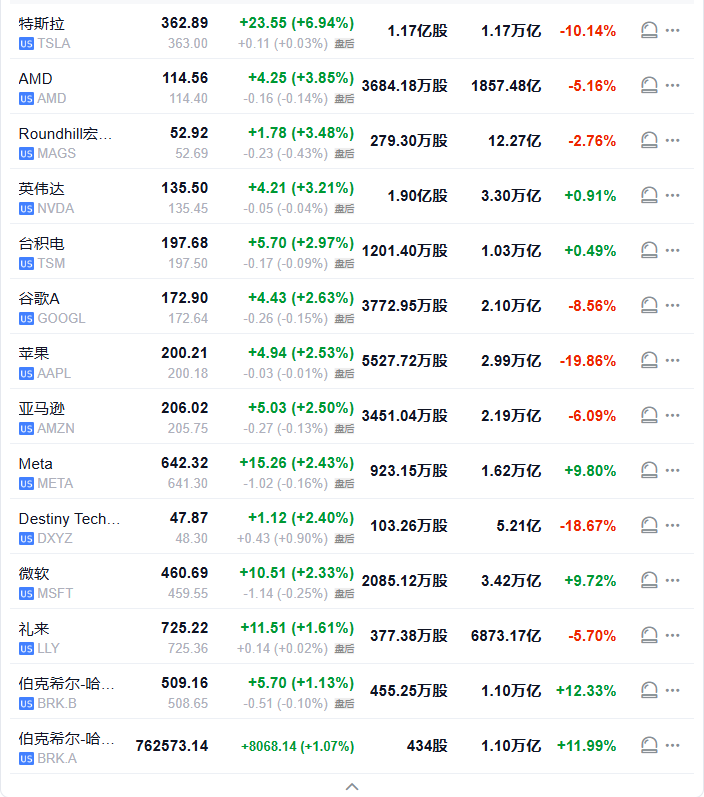
此外,AMD收涨3.85%,台积电ADR涨2.97%,礼来涨1.61%,巴菲特旗下伯克希尔哈撒韦B类股涨 1.13%。 | 特斯拉 | 362.89 | +23.55 (+6.94%) | 1.17亿股 | 1.17万亿 -10.14% | | ( ) ... | | --- | --- | --- | --- | --- | --- | --- | | us TSLA | 363.00 | +0.11 (+0.03%) 盘后 | | | | | | AMD | 114.56 | +4.25 (+3.85%) | 3684.18万股 | 1857.48亿 | -5.16% | ( ) ... | | us AMD | 114.40 | -0.16 (-0.14%) 盘后 | | | | | | Roundhill宏 ... | 52.92 | +1.78 (+3.48%) | 279.30万股 | 12.27亿 | -2.76% | [] ··· | | us MAGS | 52.69 | -0.23 (-0.43%) 盘后 | | | | | | 英伟达 | 135.50 | +4.21 (+3.21%) ...





金十图示:2025年05月27日(周二)全球主要科技与互联网公司市值变化
news flash· 2025-05-27 03:05
| | 1737 | | 407.69 | | --- | --- | --- | --- | | ROOKIng Holdings | 1735 | -0.17% | 5332.8 | | (Booking.com) | | | | | DD Holdings (Pinduoduo) | 1692 | -0.47% | 119.24 | | 德州仪器 | 1601 | 2.17% | 176.3 | | 高通 | 1596 | + -1.35% | 145.38 | | S 索尼 | 1540 | 1 0.79% | 25.53 | | Schneider Electric | 1431 | 1.82% | 252 | | arm Arm Holdings | 1344 | -1.62% | 127.18 | | Spotify | 1340 | 2.68% | 653.82 | | Shopify | 1302 | .72% | 101.51 | | 22 自动数据处理 | 1303 | -0.17% | 321.09 | | MercadoLibre | 1271 | -3.77% | 2507.83 ...

新 iPhone 发表传改一年两次
Jing Ji Ri Bao· 2025-05-26 23:26
Group 1 - Apple is expected to hold two iPhone launch events annually starting in 2026, breaking the tradition of one event per year since the iPhone's inception in 2007 [1][2] - The strategy aims to address the declining market share, particularly in China, where Apple's market share fell to 13.7% in Q1 2025, marking seven consecutive quarters of decline [2] - The introduction of the iPhone 16e in February 2025 contributed to Apple's market leadership, achieving a 19% market share in the global smartphone market for Q1 2025 [3] Group 2 - The new launch schedule includes the release of multiple models, such as iPhone 17 and iPhone 18 series, along with Apple's first foldable iPhone, indicating a robust product pipeline [2] - The growth in sales is attributed to the success of the iPhone 16e and strong performance in emerging markets like India and the Middle East, despite stagnant sales in major markets like the US and Europe [3] - Analysts caution that potential trade barriers and economic uncertainties could lead to a slight decline in Apple's overall shipment volume for the year [3]

电子行业周报:小米发布自研玄戒双芯,华为鸿蒙电脑正式发布-20250526
Donghai Securities· 2025-05-26 13:19
Investment Rating - The report suggests a cautious investment approach in the electronics sector, indicating a gradual recovery in industry demand and price stabilization, with a recommendation to accumulate positions on dips [4][5]. Core Insights - The electronics sector is experiencing a mild recovery in demand, with notable product launches from Xiaomi and Huawei, including the first domestic 3nm SoC chip and the HarmonyOS computer, respectively [4][10]. - Nvidia plans to introduce a new AI chip in the Chinese market based on the Blackwell architecture, priced at approximately half of the H20 chip, which is expected to enhance the penetration of domestic AI chips [4][5]. - The report highlights four main investment themes: AIOT, AI-driven technologies, device materials, and consumer electronics as the sector stabilizes [4][5]. Summary by Sections Industry News - Xiaomi launched the first domestic 3nm SoC chip, the Xuanjie O1, marking a significant advancement in China's chip design capabilities [10]. - Huawei officially released its HarmonyOS computers, expanding its ecosystem across various smart devices [10]. - TSMC is considering a 10% increase in wafer foundry prices due to rising costs, which could impact the semiconductor supply chain [10]. Market Performance - The report notes that the electronics sector underperformed the broader market, with the Shenzhen 300 index down 0.18% and the Shenwan Electronics Index down 2.17% [17][19]. - As of May 23, various sub-sectors within electronics showed declines, including semiconductors (-2.10%) and consumer electronics (-3.18%) [19][22]. Investment Recommendations - The report recommends focusing on companies benefiting from strong domestic and international demand in the AIOT sector, such as Lexin Technology and Rockchip [5]. - It also suggests monitoring AI innovation-driven companies, particularly in computing chips and optical devices [5]. - The report emphasizes the importance of domestic supply chain replacements in semiconductor equipment and materials, highlighting companies like North China Innovation and Huahai Qingke [5].
中科曙光与海光信息宣布战略重组;TI、高通等呼吁免除半导体关税;DDR4价格涨幅大于DDR5…一周芯闻汇总(5.19-5.25)
芯世相· 2025-05-26 04:30
Core Insights - The article discusses significant developments in the semiconductor industry, highlighting government support for foreign investment in key sectors and the impact of tariff policies on major semiconductor companies [9][10][12]. Industry Trends - The Ministry of Commerce supports foreign investment projects in integrated circuits, biomedicine, and high-end equipment manufacturing, prioritizing them in major foreign investment project lists [9]. - Major U.S. semiconductor companies, including Intel and Qualcomm, are urging the Trump administration to exempt semiconductor tariffs, warning that such tariffs could harm the U.S. semiconductor industry [10][12]. - SEMI reports a 27% year-on-year increase in global semiconductor capital expenditure for Q1 2025, driven by investments in advanced logic and high-bandwidth memory technologies [11]. Company Developments - TSMC and Intel submitted letters opposing tariffs on semiconductor production equipment, citing potential cost increases and project delays [10]. - A strategic restructuring was announced between Zhongke Shuguang and Haiguang Information, aiming to enhance the information industry landscape [12]. - Weir Shares plans to issue H-shares and list on the Hong Kong Stock Exchange to accelerate internationalization and enhance competitiveness [12][14]. - Xiaomi unveiled its first self-developed flagship SoC, the Xuanjie O1, utilizing TSMC's 3nm process technology [13]. Market Dynamics - TrendForce indicates that DDR4 prices are rising faster than DDR5 prices due to anticipated supply tightening [20]. - The five major NAND Flash manufacturers are implementing a 10%-15% production cut to address oversupply, which is expected to support a rebound in storage prices [21]. - The demand for HBM4 products is expected to increase manufacturing costs significantly, with a projected premium exceeding 30% due to design complexities [20]. Strategic Moves - Foxconn is investing €250 million to establish Europe's first FOWLP factory, focusing on advanced semiconductor packaging and testing [18]. - Wolfspeed is preparing to file for bankruptcy due to unresolved debt issues, seeking Chapter 11 protection [16]. - Samsung Electronics plans to expand its 1c DRAM production capacity, with investments expected to be completed by the end of the year [17].