
大疆

Search documents
8点1氪丨“小米SU7碰撞后爆燃事故”驾驶人涉嫌酒驾;大疆回应降价风波:部分线下店已开启补偿;万科董事长辛杰辞职
3 6 Ke· 2025-10-14 00:03
Group 1 - Microsoft will stop providing security updates and technical support for Windows 10 starting October 14, which may expose users to increased cybersecurity risks [4][5] - Windows 10 was first launched on July 29, 2015, and has a global market share of 44.48% as of July [4] - Users of older devices not meeting Windows 11 requirements are advised to register for an extended security update program for a fee [4] Group 2 - DJI has reduced prices on several products, leading to strong reactions from consumers who purchased items at higher prices [2] - The company stated that the price drop is part of a promotional event, but differences in return policies between online and offline sales have caused controversy [2] Group 3 - Polestar has closed its last direct sales store in China, located in Shanghai, as part of a strategic adjustment to better align with the rapidly changing market [6] - The company emphasized that other operations in China remain unaffected and that it will focus on online sales [6] Group 4 - Vanke announced the resignation of its chairman, Xin Jie, due to personal reasons, and Huang Liping has been elected as the new chairman [2] Group 5 - The Guangdong provincial government has passed a new regulation allowing spouses to check each other's property and vehicle ownership starting January 1, 2026 [5] Group 6 - The three major telecom operators in China have launched eSIM services, with China Unicom reporting over 68,000 online appointments for eSIM activation [6] Group 7 - The 2025 Nobel Prize in Economic Sciences was awarded to Joel Mokyr, Philippe Aghion, and Peter Howitt for their work on innovation-driven economic growth [3][4] - The award highlights the importance of managing creative destruction to avoid stagnation in economic growth [4] Group 8 - The price of rice in Japan has surged, nearing historical highs, impacting household consumption and restaurant operations [12] - The average retail price for a 5-kilogram bag of rice has reached 4,205 yen, remaining above 4,000 yen for five consecutive weeks [12] Group 9 - Didi has established a new company focused on low-altitude economy, emphasizing software development rather than manufacturing low-altitude flying vehicles [11] - The new company aims to build a software ecosystem and intelligent scheduling systems [11] Group 10 - OpenAI has partnered with Broadcom to deploy a 10GW custom AI accelerator, with plans to start deployment in late 2026 [13] - Nvidia announced that Meta and Oracle will use its Spectrum-X Ethernet switches to build AI data center networks [13]



大疆降价,影石CEO致歉
Nan Fang Du Shi Bao· 2025-10-13 15:03
Core Viewpoint - DJI has initiated significant price reductions on several products, including the Osmo Pocket 3, in response to competitive pressures and as part of a promotional strategy for the upcoming Double Eleven shopping festival [1][3][9] Pricing Strategy - DJI announced price cuts on various products starting from October 9, with reductions reaching up to 1,478 yuan for certain models [6][8] - The price adjustments are characterized as a routine promotional arrangement for the Double Eleven event, aiming to boost sales and market share [5][9] Market Reaction - The price cuts have led to a surge in consumer demand, with products like the Osmo Pocket 3 quickly selling out [8] - Some consumers expressed dissatisfaction, feeling "betrayed" after purchasing products shortly before the price drop [8][9] Competitive Landscape - The price reduction reflects the intense competition in the consumer electronics market, particularly from companies like Insta360 and traditional smartphone manufacturers [4][12] - DJI's entry into the 360-degree camera market with the Osmo 360 is seen as a strategic move to compete with Insta360, which has long dominated this segment [12][13] Consumer Electronics Trends - The consumer electronics sector is witnessing increased competition, with traditional smartphone manufacturers like OPPO and vivo planning to launch their own handheld imaging devices [16] - DJI's market share in the handheld imaging device sector is projected to decline from 19.1% in 2023 to 13.2% in 2024 due to rising competition [15] Product Challenges - The Osmo Pocket 3, while a flagship product, has limitations such as lack of waterproofing and a single camera lens, which may hinder its appeal in a market where multi-lens smartphones are becoming the norm [15][16] - The recent launch of the ROMO vacuum cleaner has faced criticism regarding its performance and functionality, indicating potential challenges in DJI's expansion into new product categories [18][19] Future Outlook - DJI's price cuts may be a strategy to solidify its market leadership and prepare for future product ecosystem developments amid increasing competition [19]
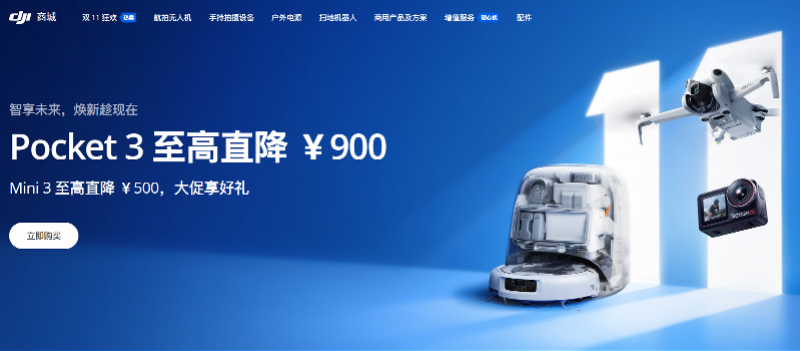
国产手机开启新较量,「不争先」的赢了
36氪· 2025-10-13 14:44
Core Viewpoint - The Chinese smartphone industry has entered a new phase characterized by systemic competition, where brands like Huawei, Xiaomi, and vivo are focusing on technological depth and ecosystem innovation rather than just product iteration [2][5][26]. Market Dynamics - As of September 28, 2025, vivo (including iQOO) holds an 18.4% market share, leading the Chinese smartphone market for the third quarter of 2025, and a 17.2% share for the first three quarters of 2025 [4]. - In the high-end market (above 4000 yuan), vivo ranks second with a 22.14% share, following Huawei [4]. Competitive Landscape - The current competitive landscape is defined by a shift from "single-point leadership" to "system leadership," where brands must build closed loops in technology, experience, and ecosystem [5][26]. - The evolution in the imaging sector reflects this shift, moving from hardware competition to a focus on real-world problem-solving capabilities [5][11]. Innovation Strategies - vivo's innovation strategy involves deep collaboration with partners like MediaTek and Arm, allowing for co-development of chipsets and imaging algorithms, which enhances their competitive edge [7][20]. - The X300 series exemplifies this approach, integrating advanced imaging capabilities with AI to create a seamless user experience [9][19]. Long-term Vision - vivo's approach is likened to a river, emphasizing patience and accumulation over time, which allows for the development of a reusable system capability [16][19]. - The "Blue Technology" system represents a comprehensive ecosystem that integrates chip performance, imaging, system interaction, and AI understanding, enabling continuous self-evolution [19][20]. Societal Impact - The focus on user-centric innovation is evident in vivo's projects, such as the "Digital National Treasure Plan," which utilizes imaging technology for cultural heritage preservation [23]. - By addressing real-world needs, vivo demonstrates that technological innovation can create significant social value beyond mere product performance [24][28].

大疆降价,影石CEO致歉:晒单证明可获无门槛代金券
Nan Fang Du Shi Bao· 2025-10-13 12:38
Core Insights - The recent price cuts by DJI have been attributed to competitive pressure from Insta360, as stated by its founder Liu Jingkang, who offered compensation to DJI customers affected by the price drop [2][3][4] - DJI's significant price reductions ahead of the "Double Eleven" shopping festival have led to consumer dissatisfaction, particularly among those who purchased products shortly before the discounts [3][4] - The competitive landscape between DJI and Insta360 is intensifying, with both companies expanding into each other's core markets, highlighting a strategic battle for market share [4][5] Company Strategies - DJI has initiated price cuts on multiple products, with reductions ranging from hundreds to over a thousand yuan, as part of a common sales strategy to boost sales and market share before major shopping events [3][4] - In response to consumer complaints regarding price drops, DJI is actively engaging with customers to provide support and clarify policies, while also offering compensatory products to those who requested price adjustments [4] - Insta360 is leveraging the situation to promote its own products, emphasizing their unique advantages in the market, while also entering the drone sector with a new brand aimed at competing with DJI [5] Market Dynamics - The price reduction by DJI reflects the fierce competition in the consumer electronics sector, particularly in the imaging technology market, where both companies are vying for dominance [3][4] - The launch of DJI's Osmo 360 camera and the subsequent consumer feedback regarding performance issues indicate potential challenges in maintaining brand trust amidst aggressive pricing strategies [4] - Both companies are exploring new product categories, with DJI entering the panoramic camera market and Insta360 venturing into drones, suggesting a shift in their competitive strategies [5]

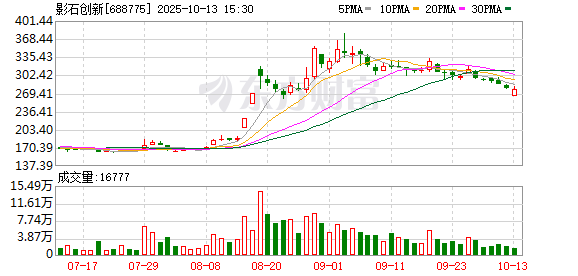
博弈升级,中美竞争的攻守之势正在逆转!
Jin Tou Wang· 2025-10-13 10:08
Core Viewpoint - The recent escalation in the US-China conflict highlights a shift in China's response strategy, moving from passive to assertive measures against US actions, particularly in the shipping and semiconductor industries [1][3]. Shipping Industry - The US plans to impose a port fee of $50 per ton on Chinese-operated and manufactured vessels, prompting China to retaliate with a fee of 400 RMB per ton on not only US-owned ships but also those with over 25% US capital ownership [1][3]. - China currently dominates the global shipping industry, holding seven out of the top ten container ports and over 53% of the global merchant shipbuilding market, while the US holds only 0.1% [3]. Semiconductor Industry - China's advancements in semiconductor technology include achieving a 95% yield rate for 28nm chips and achieving self-sufficiency in 5G RF chips, which strengthens its position against US companies like Qualcomm [5][7]. - The US's reliance on Chinese rare earth materials is critical, as these materials are essential for various high-tech products, including automobiles and military equipment [5][7]. Trade Dynamics - China's foreign trade dependency on the US has decreased, with shifts in agricultural imports towards countries like Russia, Spain, Brazil, and Argentina, while ASEAN has become China's largest trading partner [5][7]. - The nature of exports from China to the US has evolved from low-end to high-end products, such as DJI drones and high-performance cameras, which the US cannot produce at competitive prices [5][7]. Strategic Response - China has developed a comprehensive countermeasure system that integrates rare earths, technology, manufacturing, finance, military, and geopolitical strategies, allowing it to respond effectively to US actions [7]. - The shift from being a "rule taker" to a "rule maker" signifies China's growing confidence and capability in the global arena, making it increasingly difficult for the US to exert its influence [7].

硬刚大疆,广东90后干出1200亿
创业家· 2025-10-13 09:58
Core Viewpoint - The competition between China's two major smart imaging giants, DJI and Insta360, has intensified, particularly with the launch of new products and aggressive pricing strategies, indicating a critical phase in the industry [4][18]. Group 1: Company Developments - DJI launched the Osmo Nano sports camera on September 23, directly competing with Insta360's GO Ultra released in August [4]. - Insta360's market capitalization surged from 70 billion yuan to over 140 billion yuan within three months of its listing on the STAR Market, reflecting significant investor interest [5][6]. - The company's founder, Liu Jingkang, has a unique approach to leadership, often celebrating team achievements in unconventional ways, such as distributing cash bonuses [10][12]. Group 2: Financial Performance - Insta360's first interim report post-listing revealed a stark contrast between revenue growth and stagnant profit, with a 51.17% increase in revenue to 3.671 billion yuan, while net profit only slightly rose to 520 million yuan [14][15]. - The company's profit growth has slowed since 2024, with a notable increase in R&D and sales expenses, indicating rising operational costs [15][16]. - Insta360's inventory turnover rate decreased significantly, suggesting potential challenges in market demand and product liquidity [15][16]. Group 3: Market Competition - The competition between DJI and Insta360 has shifted from indirect competition to direct confrontations, with both companies launching products targeting each other's core markets [18][20]. - DJI holds a dominant position in the consumer drone market, with a revenue exceeding 80 billion yuan and a market share of over 70%, posing a significant challenge for Insta360 [20]. - The introduction of DJI's Osmo 360, which offers superior specifications and a lower price point compared to Insta360's flagship model, intensifies the competitive landscape [20][21]. Group 4: Strategic Directions - Facing market saturation in the panoramic camera segment, Insta360 is exploring innovation in new product categories, such as drones, leveraging its software expertise [16][18]. - The global panoramic camera market is projected to grow from 5.03 billion yuan in 2023 to 7.85 billion yuan by 2027, while the consumer drone market is significantly larger, indicating a strategic pivot for Insta360 [16].

谁将是下一个劈开海外万亿市场的中国黑马?| F&M抢先看
虎嗅APP· 2025-10-13 09:44
Core Viewpoint - The article discusses the evolution of Chinese companies' globalization strategies, highlighting a shift from being mere manufacturers to becoming influential players in the global market, with a focus on three distinct phases of "going global" [5][25]. Group 1: Historical Phases of Chinese Companies Going Global - Phase 1: "Manufacturing Export" Era (1.0) - Characterized by OEM/ODM models where Chinese companies acted as silent manufacturers without brand ownership, relying on low labor costs and large production capacities [9][10]. - Phase 2: "Brand Export" Awakening Era (2.0) - Companies began to establish their brands and compete on technology and cost, with notable examples like Huawei and Xiaomi leading the charge [11][12][14]. - Phase 3: "Ecosystem Export" Era (3.0) - New generation companies aim to provide comprehensive systems and models rather than just products, focusing on creating brand matrices and cultural resonance [16][20][21]. Group 2: Emerging Strategies and Opportunities - Path 1: "Category Disruptors" - Companies focus on creating standout products in niche markets and replicating successful methodologies across various verticals, exemplified by Anker Innovations [18]. - Path 2: "Cultural Alchemists" - Brands modernize and globalize Chinese cultural elements to resonate with young audiences worldwide, as seen with Pop Mart and Bawang Tea [19]. - Path 3: "Ecosystem Creators" - Firms provide platforms and operational models that enhance efficiency and cost-effectiveness, such as J&T Express and Meituan KeeTa [21]. - Path 4: "Gold Diggers" in Emerging Markets - Companies are targeting regions like Southeast Asia and Africa, leveraging existing successful models to fill market gaps quickly and effectively [22][23]. Group 3: Future Outlook - The evolution from labor-intensive manufacturing to brand establishment and now to ecosystem creation signifies a transformative journey for Chinese enterprises, positioning them as key players in global markets [25][27]. - The next wave of successful companies will likely emerge as "ecosystem species," capable of dominating multiple verticals and redefining global market standards [27][28].

多款产品直降数百上千元 部分大疆线下门店对要求退差价客户进行补偿
Sou Hu Cai Jing· 2025-10-13 08:13
Core Viewpoint - DJI's recent price cuts on multiple products have sparked controversy among consumers, particularly regarding the differences in return policies between online and offline sales channels, reflecting a competitive market environment that necessitates technological innovation to enhance product value [1][3][9]. Pricing Strategy - DJI announced that the price reductions are part of a "Double Eleven" promotional event, but the disparity in return policies has led to ongoing discussions among consumers [1][3]. - Some offline stores have begun offering compensation in the form of peripheral products to customers who cannot receive price adjustments after the return period [3][5]. Consumer Feedback - A consumer reported purchasing the Osmo Pocket 3 for over 4600 yuan on September 30, only to see a price drop of 900 yuan shortly after, receiving a compensation package valued at approximately 360 yuan [5]. Market Competition - Industry experts indicate that the price cuts are driven by shortened product life cycles and intense market competition, with the handheld smart imaging device market projected to grow from 36.47 billion yuan in 2023 to 59.2 billion yuan by 2027 [11]. - The consumer drone sector is experiencing a shift towards models equipped with AI systems for autonomous navigation, which is expected to increase market share [13]. Future Trends - Companies are anticipated to transition from a pure hardware sales model to a "hardware + services" approach, emphasizing technological innovation and ecosystem development to maintain competitive advantages [13][15]. - The competition in the handheld imaging and consumer drone markets is viewed as healthy, with several Chinese brands holding strong positions globally, necessitating alignment with consumer demands to solidify market share [15].
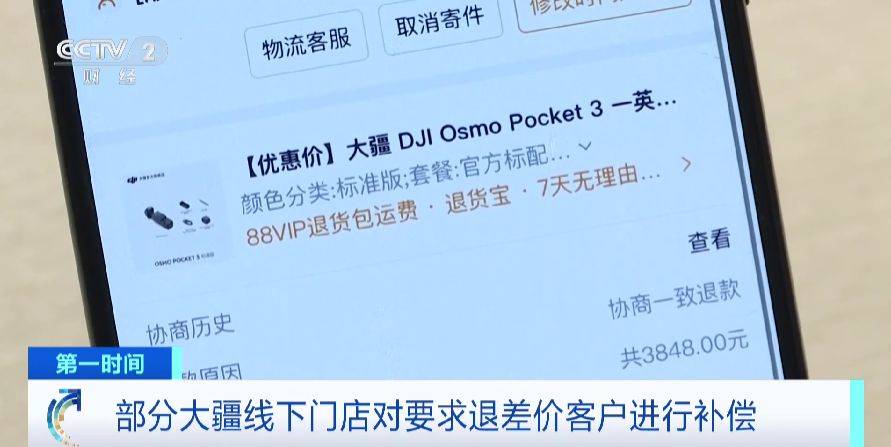
大疆多款产品降价,胖东来主动联系顾客退差价:一个月内购买的均可申请,费用由胖东来出
Qi Lu Wan Bao· 2025-10-13 08:05
Core Insights - DJI has announced significant price reductions on various products ahead of the "Double Eleven" shopping festival, including outdoor power supplies, gimbals, action cameras, smartphone stabilizers, wireless microphones, drones, and robotic vacuum cleaners [2] - The price cuts have sparked controversy due to differing price protection policies between online and offline purchasing channels, leading to discussions on social media regarding consumer rights and refunds [2] Group 1: Price Reductions - The outdoor power supply Power 1000 V2 has been reduced by 900 yuan, while Power 500 has seen a 500 yuan decrease [2] - The gimbal camera Pocket 3 has a maximum price drop of 900 yuan, and the action camera Action 4 has been reduced by up to 1,129 yuan [2] - Other products, including the Mobile 7P stabilizer, ROMO robotic vacuum, MIC 2 wireless microphone, Mini 4K drone, and Mini 4 PRO drone, have also experienced significant price cuts ranging from 200 yuan to 1,478 yuan [2] Group 2: Consumer Reactions and Policies - A consumer who purchased the DJI Action 5 on September 27 was informed about a price protection policy that allows for a refund of the price difference, despite being outside the standard 7-day return window [2] - The store involved, Pang Donglai, has decided to cover the price difference for customers who purchased DJI products within a month prior to the price drop, indicating a flexible approach to customer service in light of the unusual price adjustments [2]

板块回调下坚定看好明年有望迎来端侧AI大年
Tianfeng Securities· 2025-10-13 05:36
Investment Rating - The industry rating is "Outperform" (maintained rating) [9] Core Viewpoints - The report is optimistic about the upcoming year, anticipating a significant growth year for edge AI, particularly with the emergence of AI glasses as a key product form and flow entry point [1][16] - Apple is expected to launch its first smart glasses in 2026, with leadership changes potentially enhancing hardware and AI integration innovation [2][18] - Meta's AI glasses have seen sales growth exceeding expectations, indicating strong market demand and potential for further product launches [3][19][21] - OpenAI is developing a series of edge AI devices, with a focus on consumer electronics supply chain opportunities [4][24] Summary by Sections Edge AI - Edge AI is gaining traction with significant policy support and leading companies driving innovation in new products [1][16] - Apple is restructuring its product lineup with the iPhone 17 series and is expected to enter the foldable phone market in 2026, which could catalyze industry growth [2][16] - Meta's Ray-Ban smart glasses have seen a sales increase of over 200% year-on-year, with potential shipments reaching 4-5 million units in 2025 [3][19] - Rokid's smart glasses are being utilized by local police for vehicle identification, showcasing practical applications of AI glasses [5][22] - DJI has adjusted pricing for its Osmo Pocket 3, indicating preparation for the launch of a new generation product [5][23] - OpenAI is working on various edge AI devices, including a screenless smart speaker, with a target release by the end of 2026 or early 2027 [4][24] - Luxshare Precision is showcasing its leadership in AR technology with multiple product launches and innovations in optical interconnect solutions [4][25][29] Cloud AI - The report highlights the strong growth potential in the cloud AI sector, driven by domestic computing power and supply-demand dynamics [6][31] - OpenAI's developer conference showcased significant growth in user engagement and revolutionary technology releases, reshaping AI interaction [6][31] - OpenAI has introduced ChatGPT Pulse, enhancing user experience through personalized updates based on interactions [6][38] - Alibaba's cloud conference emphasized the future of AI and its role in creating a new generation of computing platforms [6][39][41] Investment Opportunities - The report suggests focusing on leading companies in the consumer electronics supply chain, including Luxshare Precision, as they are well-positioned to benefit from the growth in edge AI and related technologies [7][9]


