
众安在线

Search documents
寿险利润新高,财险成本新低,行业未来可期!110+精算师们送上2026年新年祝福……
13个精算师· 2026-01-01 04:11
Core Insights - The insurance industry in China experienced significant growth in 2025, with life insurance companies achieving a record net profit of 462 billion yuan, a 62% increase year-on-year, driven by strong premium sales and improved investment returns [1] - The introduction of dynamic adjustment for predetermined interest rates marked a significant reform in life insurance pricing, moving from a fixed rate of 2.5% to a new cap of 2.0% for standard products [1] - The resurgence of participating insurance products became a key focus, allowing companies to transition from traditional fixed-income products to those offering guaranteed and variable returns, thus addressing challenges posed by low interest rates [1] - The release of the fourth "life table" provided a scientific basis for pricing in the next decade, utilizing a comprehensive dataset of nearly ten years of policy data [1] - The industry saw substantial capital replenishment through bond issuance exceeding 100 billion yuan and capital increases over 20 billion yuan, enhancing solvency [1] Group 1: Life Insurance Achievements - Record net profit of 462 billion yuan, a 62% increase year-on-year [1] - Dynamic adjustment of predetermined interest rates, with caps reduced to 2.0% for standard products [1] - Shift towards participating insurance products, addressing low interest rate challenges [1] - Release of the fourth "life table" for future pricing [1] - Capital replenishment through bond issuance and capital increases [1] Group 2: Property Insurance Highlights - New energy vehicle insurance turned profitable in 2025, reversing previous losses [1] - Implementation of "reporting and operation integration" to end price wars in the non-auto insurance sector [1] - Expansion of the "car insurance easy to insure" platform to include more vehicle types, addressing insurance accessibility issues [1] - Net profit for the property insurance sector surged by 52% due to favorable underwriting and investment conditions [1] - Adoption of technology for risk reduction, enhancing the social value of insurance [1]


保险行业2026年策略:资负两端全面改善,估值修复正当其时
SINOLINK SECURITIES· 2025-12-31 15:27
Investment Rating - The report indicates a positive outlook for the insurance industry, with expectations of double-digit growth in new premiums and net profit value (NBV) driven by the migration of deposits and improved margins [2][22]. Core Insights - The insurance sector is expected to benefit from strong household savings demand, with insurance products becoming increasingly attractive as low-risk savings options amid declining bank deposit rates [2][22]. - The transition towards participating insurance products is anticipated to enhance market share for leading insurance companies, as they leverage their stronger investment capabilities and distribution channels [2][3]. - The report highlights a favorable market environment for insurance stocks, driven by high demand for new policies and a stable investment return outlook, which is expected to support valuation recovery [4][8]. Summary by Sections Liability Side Outlook - New business and NBV are projected to grow at double-digit rates, supported by strong household savings and a shift towards insurance products due to declining bank deposit rates [2][22]. - The insurance sector is expected to maintain stable margins despite the downward adjustment of preset interest rates and the transition to participating insurance [2][22]. Asset Side Outlook - Insurance funds are expected to actively enter the market, with a significant portion of new premiums allocated to equities, particularly in A-shares [3][16]. - The report anticipates a diversified approach to asset allocation, with a focus on high-dividend stocks and sectors such as technology and advanced manufacturing [3][19]. Market Performance Review - The insurance sector has outperformed the broader market, with significant gains in both A-shares and H-shares, indicating strong investor confidence [8][4]. - The report notes that the insurance index has increased by 27.0%, outperforming the CSI 300 index, which rose by 18.2% [8]. Premium Income and Profitability - New premium income is expected to achieve double-digit growth, with specific companies like China Life and Ping An showing substantial increases in their new business premiums [14][32]. - The report highlights the importance of maintaining a favorable cost structure and investment returns to support profitability in the insurance sector [4][11].



前瞻2026 | 健康险迈向万亿时代,百万医疗险如何穿越内卷深水区?
Di Yi Cai Jing· 2025-12-31 13:52
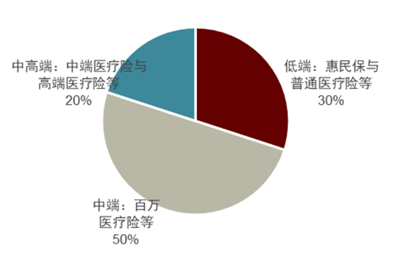
Core Insights - The health insurance market, particularly the million medical insurance, is transitioning from rapid growth to a more competitive and saturated environment, with premium growth slowing significantly [2][4][5] - The million medical insurance, once a growth driver, is now facing challenges such as homogenization, competition from inclusive insurance products, and evolving consumer demands [1][4][5] - A new wave of product iterations is underway, focusing on differentiation and service enhancement to meet consumer needs and adapt to regulatory changes [6][7][10] Market Trends - As of November 2025, the total premium for commercial health insurance reached 943.9 billion yuan, with a year-on-year growth of only 2.39%, indicating a slowdown compared to previous years [2][4] - The commercial medical insurance sector is expected to surpass critical illness insurance for the first time in 2024, with approximately half of its market share attributed to million medical insurance [2][4] Competitive Landscape - The industry is experiencing intense competition characterized by product similarity, with many offerings featuring similar coverage limits and deductibles, leading to a cycle of price competition and service enhancement [4][5] - The mismatch between supply and demand is evident, as current offerings primarily cover standard health insurance needs, leaving gaps in high-end medical services and coverage for non-standard health individuals [4][5][9] Consumer Demand - There is a growing consumer demand for services related to post-operative recovery, chronic disease management, and overall healthcare experience, which contrasts sharply with the current supply of similar insurance products [5][6] - The need for differentiated products that address long-tail demands is becoming increasingly critical as consumers seek more comprehensive health solutions [5][12] Product Innovation - Major insurance companies are launching updated versions of their million medical insurance products, focusing on customer-centric features and expanding coverage to include outpatient medications and high-value drugs [6][7][10] - The integration of rehabilitation costs into core coverage is emerging as a significant trend, reflecting a shift towards addressing long-term healthcare needs [8][9] Future Directions - The future of million medical insurance is expected to focus on three main innovation lines: extending coverage beyond traditional medical scenarios, enhancing service models through digital health platforms, and implementing personalized insurance solutions based on individual health data [13] - The industry is encouraged to find its position within the multi-tiered healthcare system, ensuring effective integration with basic medical insurance and critical illness insurance to provide tangible value to consumers [12][13]
众安在线申请文本处理方法专利,提高文本处理的处理效率
Jin Rong Jie· 2025-12-31 12:47
Group 1 - The core point of the article is that ZhongAn Online P&C Insurance Co., Ltd. has applied for a patent for a text processing method, device, electronic equipment, and storage medium, aimed at improving the efficiency of information extraction from diverse materials [1] Group 2 - ZhongAn Online P&C Insurance Co., Ltd. was established in 2013 and is located in Shanghai, primarily engaged in the insurance industry [2] - The company has a registered capital of 1,469.81 million RMB [2] - ZhongAn has invested in 5 companies, participated in 90 bidding projects, and holds 447 trademark records and 110 patent records [2]

2025年,保险股凭什么成为A股涨幅最大的“意外”
Tai Mei Ti A P P· 2025-12-31 11:23
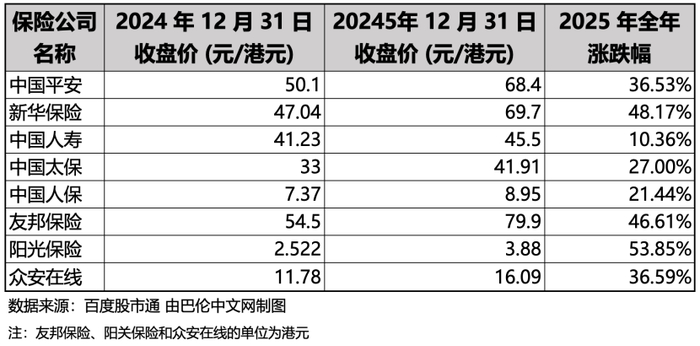
Core Viewpoint - The insurance sector in China's A-share market has emerged as a standout performer in 2025, with significant price increases and a strong upward trend since the lows of 2024, outperforming both banking and non-bank financial sectors [1][6]. Market Performance - The insurance sector index closed at 1554.89 points by December 31, 2025, with notable short-term momentum reflected in its 10-day, 20-day, and 60-day price increases [1]. - The total market capitalization of the five major listed insurance companies grew from approximately 2.16 trillion yuan to over 3.3 trillion yuan, an increase of over 1.1 trillion yuan [5]. Individual Company Performance - New China Life Insurance led the sector with a price increase of over 45% in 2025, driven by high earnings elasticity and a 58.9% year-on-year increase in net profit for the first three quarters [2]. - Ping An Insurance's stock price rose by 36.53% in 2025, reaching a peak of 71.98 yuan per share, attributed to its proactive asset-liability management and strong financial ecosystem [3]. - China Pacific Insurance's stock reached a new high of 43 yuan per share, supported by effective life insurance transformation and improved profitability in property insurance [4]. - China Life and China Re also achieved significant returns, with China Life benefiting from reduced interest rate risks and China Re excelling in property insurance profitability [5]. Valuation and Market Sentiment - Despite the strong stock performance, insurance stocks remain undervalued, with P/EV ratios generally between 0.6 and 0.9, significantly lower than consumer sector valuations [6]. - The market's confidence in the long-term profitability of the insurance sector is gradually recovering, with expectations for P/EV ratios to return to 1.0 in the future [6]. Policy Impact - Regulatory policies have played a crucial role in the sector's performance, focusing on reducing costs, expanding investment opportunities, and promoting market order [7][12]. - The introduction of a dynamic adjustment mechanism for predetermined interest rates has significantly lowered liability costs, enhancing the sector's profitability [8]. - The health insurance market has responded positively to policy changes, with premium income reaching 894.3 billion yuan in the first ten months of 2025 [9]. Future Outlook - The insurance sector is expected to enter a "golden development period" in 2026, with anticipated double-digit growth in new business value and premium income driven by strong demand for dividend insurance and health products [21]. - The investment environment is projected to improve, with a continued focus on high-dividend blue-chip stocks and technology innovation stocks, supporting a stable investment return of around 5% [22]. - The sector's valuation is expected to gradually recover, with many institutions predicting a return to 1.0 P/EV, indicating substantial potential for price appreciation [22][23].
保险业2025年十大关键词,看这里!
券商中国· 2025-12-31 08:55
Core Viewpoint - The insurance industry in 2025 has achieved record highs in both scale and profitability, driven by practical reforms and a focus on rational management, while facing cyclical challenges [1]. Group 1: Industry Growth and Performance - As of October 2025, the total assets of the insurance industry reached 40.59 trillion yuan, an increase of 4.68 trillion yuan from the beginning of the year, marking a growth rate of 13.03% [4]. - The insurance sector has seen a continuous double-digit growth in total assets since 2023, attributed to rising premium income, cost optimization, enhanced capital replenishment, and improved asset allocation [4]. - The total premium income for 2025 is projected to be 57.63 billion yuan, reflecting a significant increase from previous years [2]. Group 2: Stock Market Performance - Insurance stocks have reached new highs in 2025, with major companies like China Ping An and China Life Insurance leading the market, contributing to a combined market value exceeding 3.3 trillion yuan, a nearly 30% increase from the beginning of the year [6][7]. - The net profit of five major listed insurance companies reached 426 billion yuan in the first three quarters of 2025, a year-on-year increase of 33.5%, setting a historical record [8]. Group 3: Industry Reforms - The insurance industry is actively engaging in "anti-involution" measures, focusing on rational competition and risk management rather than price wars, particularly in the auto insurance sector [10]. - The introduction of a dynamic adjustment mechanism for predetermined interest rates in insurance products has begun, with rates decreasing from 2.34% at the beginning of the year to 1.90% by the end of 2025 [19][18]. - The return of dividend insurance products has gained traction, with nearly half of new life insurance products being dividend-based, reflecting a shift in market strategy [21]. Group 4: Long-term Investment Strategies - The insurance sector is increasingly focusing on long-term investments, with regulatory changes encouraging a longer assessment period for performance metrics [12]. - By the end of 2025, the proportion of equity assets in insurance investments reached a historical high, with stock and fund allocations growing significantly [14]. Group 5: International Expansion - The insurance industry is entering a phase of internationalization, with companies exploring overseas markets, particularly in high-end equipment insurance and personal travel safety [22]. - The export of new energy vehicles has surged by 89.4% in the first three quarters of 2025, prompting insurance companies to expand their offerings in this sector [24]. Group 6: New Regulatory Frameworks - The release of the fourth life table in October 2025 will impact insurance product pricing and risk management, reflecting changes in population structure and mortality rates [26][27]. - The first commercial health insurance drug directory was published in December 2025, aiming to clarify the boundaries between basic medical insurance and commercial health insurance, thus promoting a multi-tiered medical security system [29].

保险延伸健康管理服务
Jing Ji Ri Bao· 2025-12-30 22:08
Group 1 - The core viewpoint of the article highlights the launch of "Zunxiang eSheng 2026 Edition," a million medical insurance product by Zhong An Insurance, which focuses on "treatment + rehabilitation" as its core upgrade direction, extending coverage to the critical postoperative rehabilitation phase, thus transforming million medical insurance into a "full-process health service" [2] - The increasing demand for health insurance among the public is emphasized, as it plays a crucial role in connecting the healthcare industry and reinforcing the social security network [2] - The National Financial Regulatory Administration issued guidelines in September 2025 to promote high-quality development of health insurance, advocating for a new health service guarantee system that combines prevention, management, and post-coverage [2] Group 2 - The article discusses the financial burden on families due to rehabilitation costs after surgeries like stroke and joint replacement, which can be as high as the acute treatment costs, leading to significant economic strain [3] - Zhong An Insurance's health management services include pre-treatment consultations, direct payment of medical expenses during treatment, and post-treatment support such as home care and continuous rehabilitation, creating a closed-loop management system [3] - The health insurance premium income in China exceeded 620 billion yuan in the first half of 2025, indicating a growing market for health management services that encompass various aspects of patient care [4] Group 3 - The article notes that many insurance companies are beginning to integrate health management services into their offerings, transitioning from traditional reimbursement models to managed care approaches [4] - China People's Health Insurance Co. has established a health management company with significant investments and a large team, indicating a trend towards professional health management integration within insurance [4] - Health management services are seen as a win-win for both insurance companies and policyholders, as they help reduce risk and costs while enhancing service offerings [5]
斥资2亿,人保健康成立一家全资子公司:总裁邵利铎兼任董事长
Xin Lang Cai Jing· 2025-12-30 10:36
原标题:斥资2亿,人保健康成立一家全资子公司:总裁邵利铎兼任董事长!"AI+大健康"赛道火热, 头部险企与互联网大厂同台竞技… 来源:险企高参 人保健康正在为构建"保险+健康服务+科技"生态厉兵秣马。 作为国内首家专业健康保险公司,人保健康已积累了很多生态基础,截至2025年三季度末,人保健康已 拥有400余人的专业健康管理队伍、63个企业联合医务室、31个健康管理中心,以及760款标准化健康管 理产品。并且构建起医疗服务网络——5971家合作医院、22.5万家药店、1678家DTP药房,全年创新药 械支付额超15亿元,健康管理服务累计惠及超1亿人次。此外,该司2024年健康管理服务收入总规模突 破5亿元。 在构建健康生态的同时,保险主业亦未曾拉下。截至2025年前三季度,人保健康险的保险服务收入达 232.38亿元,同比增长12.9%;保险服务费用140.51亿元,同比增长10.4%;保险业务收入达506.02亿 元,同比增长15.1%;净利润为78.56亿元,同比增长41%。 按原保险保费收入分类来看,2025年前三季度,人保健康的新单保费规模达375.24亿元,同比增长 16.1%,其中长期保障型业务成 ...

《保险公司资产负债管理办法(征求意见稿)》点评:资负管理的战略定位进一步提级
Shenwan Hongyuan Securities· 2025-12-30 09:33
Investment Rating - The report maintains an "Overweight" rating for the insurance industry, indicating a positive outlook for the sector's performance relative to the overall market [3]. Core Insights - The strategic positioning of asset-liability management for insurance companies has been elevated, with the introduction of the "Insurance Company Asset-Liability Management Measures (Draft for Comments)" by the Financial Supervisory Authority [2]. - The draft emphasizes three main goals for asset-liability management: matching the term structure, cost-benefit matching, and liquidity matching, with insurance companies bearing primary responsibility and the authority overseeing compliance [2]. - The governance structure requires clear delineation of responsibilities for the board of directors and senior management, establishing an asset-liability management committee and department within insurance companies [2]. - The report highlights the importance of asset-liability management in mitigating interest spread risks, especially in a declining interest rate environment, and aims to enhance the risk warning mechanism for insurance operations [2]. Summary by Sections Regulatory and Monitoring Indicators - For property and casualty insurance companies, there are three regulatory indicators focusing on income-cost coverage and liquidity, all of which must not fall below 100% [5]. - For life insurance companies, four regulatory indicators are established, including effective duration gap and comprehensive investment income coverage, also requiring a minimum of 100% [5]. Valuation of Key Companies - The report provides a valuation table for key non-bank financial companies, including China Life, Ping An, and China Pacific Insurance, with metrics such as market capitalization and price-to-earnings ratios [6]. - For instance, China Life has a market capitalization of 115.02 billion RMB and a PE ratio of 7.66, while Ping An has a market capitalization of 119.24 billion RMB and a PE ratio of 9.02 [6]. Investment Recommendations - The report continues to recommend several major insurance companies, including China Life (H), Ping An (A/H), China Pacific Insurance, China People’s Insurance, New China Life, and China Property Insurance, while suggesting to pay attention to China Taiping [3].


上市潮未歇,AI成保险科技叙事新逻辑
Xin Lang Cai Jing· 2025-12-29 13:45
Core Insights - The insurance technology sector is experiencing a significant transformation, moving from a "traffic-driven" narrative to an "AI-driven" approach, reflecting a fundamental shift in growth paths and capital market valuations [3][24][30] Group 1: Market Developments - On December 23, 2025, Easy Health was listed and saw a first-day surge of 158%, reaching a market capitalization of over HKD 12 billion, marking it as a standout in the Hong Kong insurance technology sector [23] - White Dove Online has also passed the Hong Kong Stock Exchange's listing hearing, aiming to become the "first AI stock in the domestic insurance industry" [3][24] - The insurance technology industry is witnessing a new wave of listings, with various companies like Yuanbao and iCloud Insurance entering the market, indicating a robust trend towards public offerings [3][24][25] Group 2: AI Integration and Investment - In 2025, the Chinese insurance industry is projected to invest over CNY 67 billion in technology, with a focus on big data, cloud computing, and artificial intelligence [25] - McKinsey's research indicates that leading insurance companies utilizing AI have seen shareholder returns 6.1 times greater than those lagging behind, highlighting AI as a core competitive advantage [25] - Major insurance firms are evolving their strategies from "ALL in AI" to "AI in ALL," integrating AI across the entire value chain, including product design and risk management [25][26] Group 3: Competitive Landscape - Traditional insurance companies are enhancing their internal capabilities while new tech-driven firms are rapidly exploring boundaries, validating AI's value creation potential [26][28] - Companies like Easy Health and White Dove Online are leveraging AI technologies to transform traditional processes, focusing on areas such as health data structuring and scenario adaptation [26][28] - The competition is intensifying, with a clear divide in market valuations based on the effectiveness of AI implementation among different firms [4][25] Group 4: Narrative Reconstruction - The narrative surrounding insurance technology is shifting from acquiring large user bases to emphasizing AI technology barriers and digital solutions [30][31] - This transition is driven by market saturation, regulatory pressures, and changing consumer expectations for more precise and transparent services [32][33] - The new narrative emphasizes the importance of technology-driven value creation, moving away from the previous reliance on external traffic growth [34][39] Group 5: Challenges and Risks - The rise of AI in insurance also brings challenges related to data security and algorithm fairness, as companies must navigate the complexities of handling sensitive personal information [36][37] - There are significant risks associated with the interpretability of AI models, which can lead to unfair treatment of certain demographic groups if historical biases are present in training data [36][37] - Companies are urged to build resilience in technology and governance to address these challenges and ensure compliance with regulatory standards [36][38]
