值得买

Search documents
招商策略:A股在创出前期新高后,有望转为震荡走势
Xin Lang Cai Jing· 2026-01-18 11:25
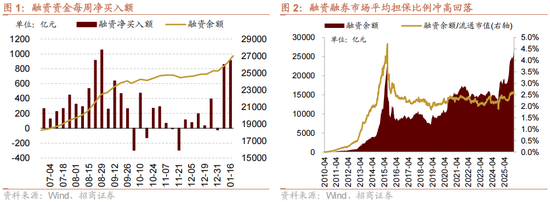
Core Viewpoint - Recent regulatory measures have been implemented to prevent rapid increases in leverage, including raising the margin requirement for financing, which has led to a cooling of market sentiment and a rational return of investor emotions [1][2][7][24]. Market Analysis - The A-share market has shown signs of volatility after reaching new highs, with a shift towards a more oscillatory trend expected as earnings disclosures approach [1][2][24]. - The market experienced a significant drop in trading volume from over 3.9 trillion to below 3 trillion after the margin requirement was raised to 100% [3][26]. - The technology sector, particularly AI applications and semiconductor equipment, remains a key focus for investment in January, alongside resource products represented by industrial metals [2][24]. Fund Flow - There was a net inflow of 913 billion in financing funds over the first four trading days, with a total financing balance reaching 2.7 trillion, marking a historical high [9][41]. - The stock market saw a net outflow of 1.296 trillion from ETFs, with the CSI 300 ETF accounting for a significant portion of this outflow [11][20][41]. Industry Performance - The semiconductor industry showed a notable increase in exports, with December exports rising by 47.72% year-on-year, indicating a strong demand for integrated circuits [29][30]. - The industrial metals sector has seen price increases, with copper, nickel, and tin prices rising, while aluminum and cobalt prices have decreased [39]. Investment Recommendations - The investment strategy for January emphasizes large-cap growth stocks, with recommended index combinations including CSI 300 and STAR Market 50 [8][25]. - Key sectors for investment include technology, industrial equipment, non-bank financials, and cyclical industries, with a focus on sectors that are expected to benefit from upcoming earnings reports [2][24][25]. Emerging Trends - The GEO (Generative Engine Optimization) concept is gaining traction in the market, with several stocks experiencing significant price increases as companies explore this new marketing paradigm [53][54]. - Companies involved in GEO are primarily focused on digital marketing and content services, with many still in the early stages of developing related business models [54][56].

GEO市场规模三年预计增长35倍
Zhong Guo Jing Ying Bao· 2026-01-16 13:51
Core Insights - The article discusses the emergence of GEO (Generative Engine Optimization) in China's marketing landscape, marking 2025 as the year of its inception with a projected market size of approximately 250 million yuan, expected to grow to about 3 billion yuan in 2026 and 9 billion yuan in 2027, indicating a potential growth of 35 times over three years [1][4]. Group 1: Market Trends - The shift in consumer behavior is highlighted, with more users viewing AI as a core tool for shopping decisions, necessitating brands to focus on their visibility in AI-generated responses [1][2]. - By June 2025, the user base for generative AI in China reached 515 million, a growth of 266 million from December 2024, with a penetration rate of 36.5% [2]. - The transition from traditional search engine optimization (SEO) to GEO is emphasized, as brands must adapt to being referenced by AI models rather than relying on direct user clicks [3][4]. Group 2: Industry Developments - Major internet companies like Tencent, Alibaba, Baidu, and ByteDance are actively investing in the GEO space, reflecting a strong interest from capital and enterprises [1][3]. - As of July 2024, 197 generative AI services have been registered in China, with nearly 70% being industry-specific models, and 52% of e-commerce businesses utilizing at least one generative AI technology [5]. - GEO has established four primary application scenarios: brand content generation, business decision-making, brand positioning in AI semantic spaces, and industry education [5]. Group 3: Challenges and Considerations - The article notes that while the GEO market shows significant promise, it faces uncertainties related to technology quality, algorithm adaptability, and data security [6]. - The largest uncertainty is linked to external factors, particularly platform policies that could impact the viability of GEO if regulations tighten [6]. - Companies are advised to view GEO as a long-term strategy rather than a short-term tactic, ensuring collaboration between SEO and GEO efforts [7].
值得买科技布局电竞赛事 探索“兴趣经济”新增长点
Zhong Guo Jin Rong Xin Xi Wang· 2026-01-16 13:26
Group 1 - The core event is the "ZEM" online preliminary competition organized by Zhidao Technology and Xinsai eSports, taking place from January 17 to 19, featuring 16 professional CS2 teams competing for 8 advancement spots [1] - The CS series is recognized as a flagship eSports project globally, with a mature event system and a stable audience base, making it a core component of international events like the Saudi eSports World Cup [1] - Zhidao Technology is also launching an eSports carnival concurrently, aiming to create an integrated online and offline community operation scene, exploring ways to activate consumer vitality through interest content and emotional connections [1] Group 2 - The eSports industry is evolving from a singular event operation to a deeper integration with technology, consumption, and culture [2] - Hosting high-profile international events enhances companies' influence among young consumers and interest communities, while also accumulating experience in content operation and cross-industry resource integration [2] - This strategic approach provides a reference for long-term planning in the digital consumption sector [2]

财富观 | 上市公司密集降温、蹭热点被罚,A股部分概念炒作熄火
Sou Hu Cai Jing· 2026-01-16 12:54
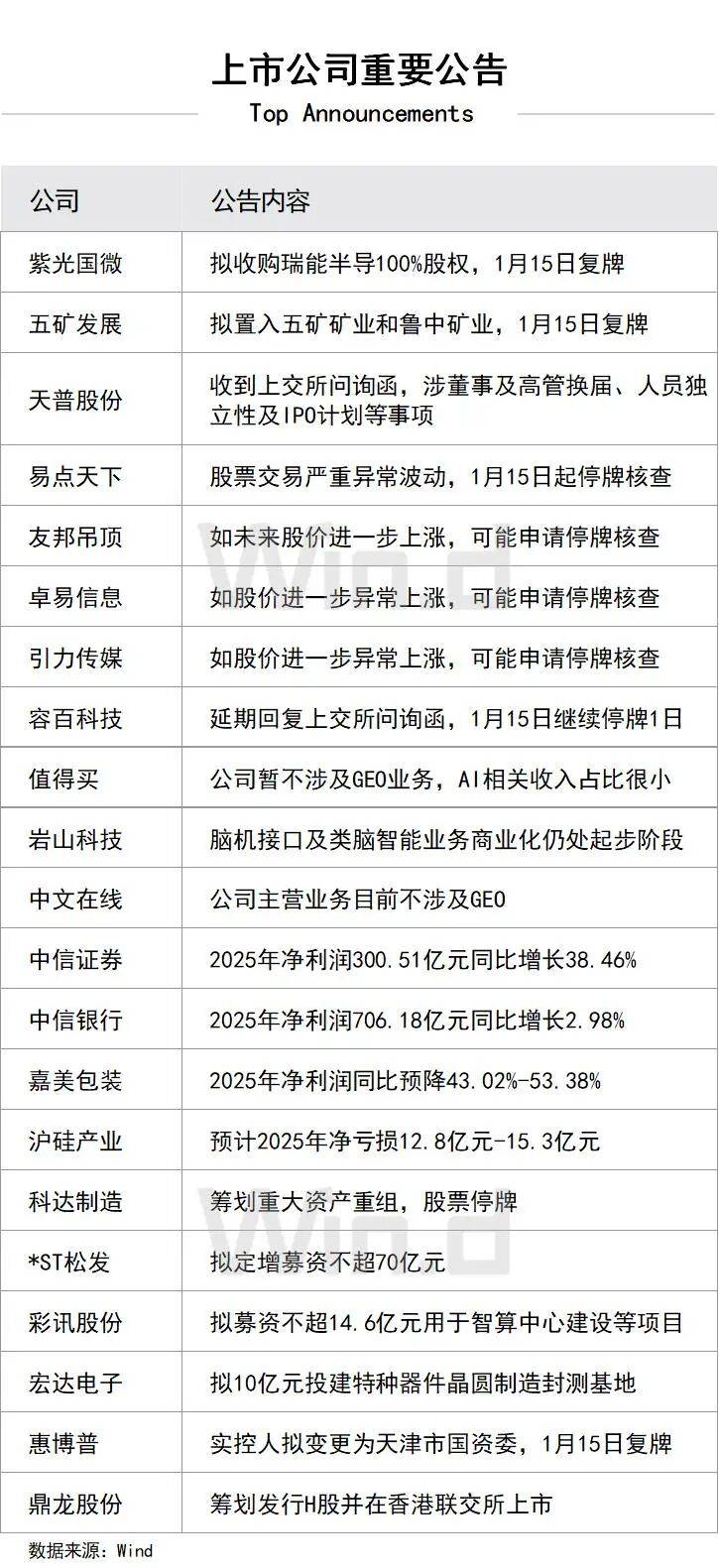
Core Viewpoint - The core logic is to "drive out the bad currency and protect the good currency," emphasizing the need for regulatory measures to ensure long-term development in the market, particularly in the context of speculative risks associated with concept stocks like GEO and AI applications [1][10]. Group 1: Market Reaction and Stock Performance - On January 15, 2026, major thematic sectors such as internet and cultural media saw significant declines, with the internet index dropping by 5.31% and the cultural media index by 3.33% after reaching new highs on January 14 [3]. - Specific stocks within these sectors experienced drastic declines, with notable examples including "20cm" limit down for stocks like ZhiDeMai and ZhuoYi Information in the internet sector, and TianLong Group in the cultural media sector [3][4]. Group 2: Company Announcements and Risk Warnings - Several companies, including ZhiDeMai and TianLong Group, issued announcements clarifying their lack of involvement in GEO-related businesses, despite significant stock price increases of 91.44% and 115.99% respectively from December 30, 2025, to January 14, 2026 [4][5]. - Companies like YingLi Media and ZheWen Culture also warned about the risks associated with their GEO business, stating that it has not yet formed a mature business model and lacks market recognition and profitability [4][5]. Group 3: Regulatory Actions and Market Oversight - Regulatory bodies have begun to crack down on companies engaging in misleading practices, with examples including Hangxiao Steel Structure and Electric Science Digital, which faced penalties for their vague disclosures related to AI and commercial space projects [6][7]. - The Shanghai Stock Exchange has taken measures against abnormal trading behaviors, suspending accounts of investors involved in irregular trading activities, particularly in stocks like GuoSheng Technology [8]. Group 4: Financial Performance and Market Discrepancies - Many companies experiencing stock price surges are facing declining fundamentals, with YingLi Media reporting a net profit of 20.36 million yuan for the first three quarters of 2025, a decrease in gross margin by 1.73 percentage points [9][10]. - ZheWen Culture and TianXiaXiu also reported significant declines in net profits, with ZheWen's net profit down by 19.68% and TianXiaXiu's by 45.49% year-over-year [10]. Group 5: Future Market Outlook and Investment Principles - Analysts suggest that the current market environment reflects a clash between short-term speculative sentiment and long-term industrial trends, indicating a shift towards more regulated and value-driven investment practices [10][11]. - Companies are advised to treat information disclosure as critical, ensuring that communications regarding hot topics are accurate and comprehensive to avoid damaging their credibility [11].



传媒行业人工智能专题:从“生产力”到“变现力”,G E O重构流量入口与A I商业化拐点
Guoxin Securities· 2026-01-16 12:04
Investment Rating - The report maintains an "Outperform" rating for the media industry [2] Core Insights - AI is reshaping user entry points and the distribution of internet traffic, leading to a revolution in the underlying flow distribution mechanisms [4] - The transition from "productivity" to "monetization" in AI applications is expected to accelerate, with 2026 being a critical turning point [5] - The trust level of Chinese consumers in AI applications is significantly higher than that of consumers in the US and Europe, reaching 80% [41][42] Summary by Sections AI Reshaping Entry Points - AI is transforming traditional search engines and user interaction methods, moving from keyword matching to natural language queries, which significantly shortens the interaction path [14][39] - The emergence of Generative Engine Optimization (GEO) is changing the flow distribution logic, compressing the value of traditional intermediaries while amplifying the value of high-quality content sources [4][39] Commercial Monetization Acceleration - By 2026, the global GEO market is projected to reach $24 billion, with the domestic market expected to reach 11.1 billion yuan, indicating exponential growth [5][52] - Marketing service providers are evolving from traditional traffic buying models to those that leverage MarTech capabilities, focusing on AI corpus construction and data cleaning [5][54] Content Industry Upgrade - AI-generated content (AIGC) is not only reducing costs but also creating new supply, particularly in the video sector where AI tools are enabling full-process production at a fraction of traditional costs [6][70] - The audience for AI-generated short dramas is predominantly male, aged 24-30, indicating a new demographic shift in content consumption [70] Investment Recommendations - The report suggests focusing on commercial pioneers in the GEO space, particularly in marketing services and high-quality content [7][54] - There is also potential for growth in lower-tier content sectors such as film IP, gaming, and publishing [7]
数字媒体板块1月16日跌7.09%,川网传媒领跌,主力资金净流出6.21亿元
Zheng Xing Xing Ye Ri Bao· 2026-01-16 09:00
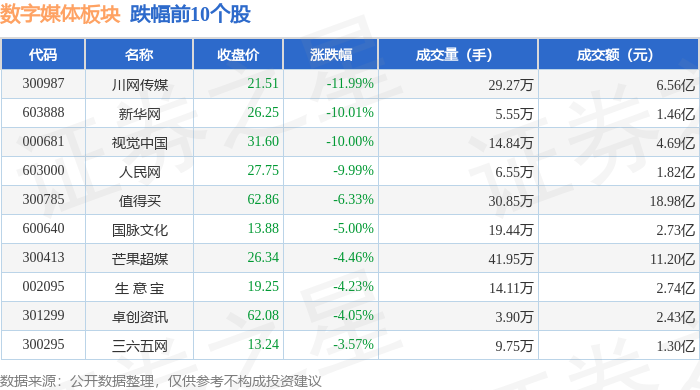
Market Overview - The digital media sector experienced a decline of 7.09% on January 16, with Chuanwang Media leading the drop [1] - The Shanghai Composite Index closed at 4101.91, down 0.26%, while the Shenzhen Component Index closed at 14281.08, down 0.18% [1] Individual Stock Performance - Chuanwang Media (300987) closed at 21.51, down 11.99% with a trading volume of 292,700 shares and a transaction value of 656 million [1] - Xinhua Net (603888) closed at 26.25, down 10.01% with a trading volume of 55,500 shares and a transaction value of 146 million [1] - Visual China (000681) closed at 31.60, down 10.00% with a trading volume of 148,400 shares and a transaction value of 469 million [1] - People's Daily (603000) closed at 27.75, down 9.99% with a trading volume of 65,500 shares and a transaction value of 182 million [1] - Other notable declines include Zhidema (300785) down 6.33%, Guomai Culture (600640) down 5.00%, and Mango Super Media (300413) down 4.46% [1] Capital Flow Analysis - The digital media sector saw a net outflow of 621 million from institutional investors, while retail investors contributed a net inflow of 492 million [1] - The table indicates that major stocks like Xinhua Net and People's Daily experienced significant net outflows from institutional investors, with Xinhua Net seeing a net outflow of 14.65 million [2] - Retail investors showed a preference for stocks like People's Daily, which had a net inflow of 35.02 million from retail investors [2]




陆家嘴财经早餐2026年1月15日星期四
Sou Hu Cai Jing· 2026-01-16 04:50
Group 1 - The China Securities Regulatory Commission has approved an adjustment to the financing margin ratio for investors, increasing the minimum margin from 80% to 100% for new financing contracts, aimed at reducing leverage and protecting investor rights [1] - The policy for tax refunds on housing transactions for residents has been extended until the end of 2027, allowing taxpayers to receive tax refunds on capital gains from selling their homes if they purchase a new home within one year [1] - A potential IPO boom is anticipated in 2026, with several top global tech companies, including OpenAI and SpaceX, preparing for their public offerings [1] Group 2 - The State Council Information Office will hold a press conference on January 15 to discuss the effectiveness of monetary and financial policies in supporting high-quality economic development [2] - China's foreign trade is projected to reach 45.47 trillion yuan in 2025, marking a 3.8% year-on-year increase, with December exports of rare earths surging by 32% [2] - The People's Bank of China will conduct a 900 billion yuan reverse repurchase operation on January 15, continuing a trend of increasing liquidity in the market [2] Group 3 - A-share market saw a trading volume nearing 4 trillion yuan, with the Shanghai Composite Index closing down 0.31% while the Shenzhen Component Index rose by 0.56% [3] - The Hong Kong Hang Seng Index increased by 0.56%, with significant net buying from southbound funds, particularly in Tencent Holdings [3] - Recent regulatory updates have imposed stricter requirements on fund dividends to ensure compliance and prevent manipulation [3] Group 4 - The insurance fund investment reform pilot has received an additional 40 billion yuan in approved funds, indicating a growing trend in long-term investments [4] - The A-share GEO (Generative Engine Optimization) concept has gained market attention, with several stocks experiencing significant price increases [4] - The Zhejiang Securities Regulatory Bureau has initiated an investigation into Sunflower's restructuring plan for misleading statements [5] Group 5 - The China Association of Automobile Manufacturers reported that both production and sales of automobiles in 2025 are expected to exceed 34 million units, maintaining China's position as the world's largest automotive market [9] - The 2026 work meeting emphasized enhancing the self-sufficiency of the supply chain in the new energy vehicle sector and promoting the application of new energy heavy trucks [9] Group 6 - The sixth batch of high-value medical consumables procurement results is expected to be implemented by May, covering various medical devices [10] - Shanghai has launched an action plan for autonomous driving, aiming to test L3-level vehicles and scale L4-level technology applications [10] Group 7 - Visa has partnered with BVNK to accelerate the adoption of digital assets in daily transactions, integrating stablecoin financing into its payment network [11] - OpenAI has signed a three-year agreement with Cerebras for a significant procurement of computing power, valued at over $10 billion [11] Group 8 - The U.S. Federal Reserve's Beige Book indicates modest to moderate economic growth across most districts, with consumer spending showing slight improvements [13] - The U.S. Treasury Department has issued warnings for citizens to leave Iran amid rising geopolitical tensions [13]

AI-电商-AI应用主线第二浪
2026-01-16 02:53
Summary of Key Points from Conference Call Industry Overview - The conference call discusses the integration of AI and e-commerce, highlighting significant advancements and trends in the industry, particularly focusing on companies like Google, OpenAI, Alibaba, and others involved in this transformation [1][2][5]. Core Insights and Arguments - **UCP Protocol Launch**: Google introduced the Universal Commercial Protocol (UCP) to provide a common delivery language for e-commerce, simplifying the integration of large models with e-commerce platforms. Major retailers like Walmart and Shopify have joined this initiative [1][2]. - **Instant Checkout Feature**: OpenAI's ChatGPT launched the Instant Checkout feature, collaborating with Shopify and Walmart to create a payment closure, marking a significant step in commercializing AI in e-commerce [1][2]. - **Efficiency in Consumer Decision-Making**: The integration of AI in e-commerce significantly enhances consumer decision-making efficiency by allowing users to complete the entire purchasing process within a chatbot interface, reducing the time taken for decisions [4]. - **AI's Impact on E-commerce**: The development of AI technologies is expected to improve multi-modal understanding and reasoning capabilities, lower computational costs, and promote the widespread adoption of AI agents, fundamentally changing consumer shopping habits [1][6][7]. - **Market Trends**: By 2026, AI in e-commerce is anticipated to become a major trend, leading to substantial changes in the industry and creating new investment opportunities [1][8]. Financial Performance and Projections - **Zhidingmai's Revenue Growth**: Zhidingmai is projected to see a recovery in its fundamentals by Q4 2025, with AI-related revenues primarily from AI-generated content leading to product purchases, GMV sharing, and advertising monetization. Expected revenues for 2025 are around 80 million yuan, with projections for 2026 reaching 200-300 million yuan [1][10]. - **MCP Service Launch**: Zhidingmai launched the Haina MCP service, providing product information data services to large model manufacturers, which is expected to enhance transaction GMV and commercialize through CPM/CPA fees or GMV sharing [1][8]. Other Important Insights - **Beneficiaries of AI Development**: Companies such as Guangyun Technology (SaaS providers), Yiwei Chuang, and Liren Lizhuang (operating companies), as well as Focus Technology in the B2B sector, are expected to benefit from AI advancements, potentially leading to significant revenue and profit elasticity [3][11]. - **Investor Focus**: Investors should pay attention to the changing industry trends and the shift in traffic structure due to the increasing weight of large model traffic entrances, which may affect traditional search engine traffic. The focus for 2026 should be on capturing these trends and related investment opportunities [12].

A股部分概念炒作熄火
第一财经· 2026-01-15 14:20
Core Viewpoint - The article discusses the recent decline in the stock prices of popular concept stocks, particularly in the GEO (Generative Engine Optimization) and AI application sectors, highlighting the disconnect between stock prices and fundamental performance [3][4]. Group 1: Market Reactions and Stock Performance - On January 15, 2026, major sectors such as internet and cultural media saw significant declines, with the internet index dropping by 5.31% and the cultural media index by 3.33% after reaching new highs on January 14 [6]. - Notable stocks like ZhiDeMai and ZhuoYi Information in the internet sector hit the 20% daily limit down, while TianLong Group in the cultural media sector also faced a 20% drop [6]. - ZhiDeMai's stock price increased by 91.44% from the beginning of 2026 to January 14, but the company clarified that it does not engage in GEO business, and its AI-related revenue is minimal [6][8]. Group 2: Company Announcements and Risk Warnings - Several companies, including TianLong Group and YiDianTianXia, issued risk warnings stating they do not engage in GEO business, and their related AI business has not yet generated significant revenue [7][8]. - 引力传媒 reported a stock price increase of 104.03% during the same period but acknowledged performance volatility, with a net profit of 20.36 million yuan for the first three quarters of 2025, reflecting a decline in gross margin [13][14]. Group 3: Regulatory Actions and Market Oversight - Regulatory bodies have taken action against companies for misleading disclosures and abnormal trading behaviors, with companies like Hangxiao Steel Structure and Electric Science Digital facing warnings [10][12]. - Hangxiao Steel Structure's stock experienced a significant rise before being penalized for inadequate information disclosure regarding its contracts, which were minor relative to its overall revenue [11][12]. - The article emphasizes the importance of accurate information disclosure and the need for companies to avoid speculative behaviors that could mislead investors [16]. Group 4: Long-term Market Trends and Investor Guidance - The article suggests that the current market environment reflects a clash between short-term speculative behavior and long-term industry trends, particularly in fields like commercial aerospace and AI [15]. - It advocates for a return to fundamental analysis, urging investors to scrutinize the actual business contributions of companies to their stock performance [16]. - The article concludes that regulatory measures are intended to foster a healthier market environment, promoting compliance and value investing as the future norm [16].

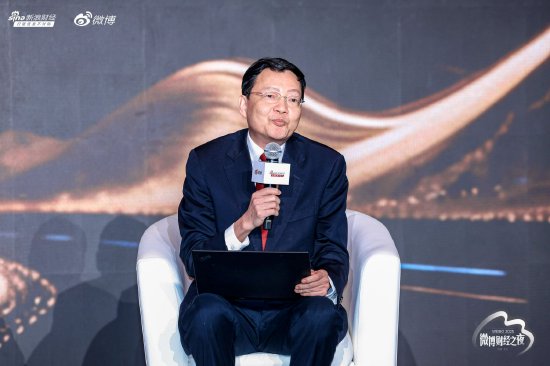
李大霄:当好公司被众人抛弃时,坏公司就变成了值得买入的“好股票”
Xin Lang Cai Jing· 2026-01-15 13:24
Group 1 - The event "2025 Weibo Finance Night and Beijing Financial Influencers Alliance Annual Meeting" took place on January 15 in Beijing, focusing on the definition of good and bad stocks [1][4] - Li Daxiao, a former chief economist at a brokerage, outlined five dimensions to determine a good company: its contributions to customers, employees, shareholders, society, and nature, emphasizing the importance of the order of these dimensions [1][5] - Li warned against investing in poor companies that exploit shareholders, suggesting that good companies often become undervalued when overlooked by the market [1][5] Group 2 - Regarding the A-share market, Li noted that while the index is rapidly increasing, certain stocks are reaching a bottleneck at the 4200-point level, and there has not yet been a large-scale opening of IPOs or significant reductions and increases in share issuance [3][7] - He highlighted that four major forces are currently constraining the market, indicating that the improvement of listed company quality, increased shareholder dividends, and effective market capitalization management are all significant challenges [3][7] - Li expressed optimism about the future of the Chinese economy, encouraging a mindset focused on enabling investors and shareholders to profit, which is essential for attracting long-term capital into the market [3][7]