
华硕

Search documents
从CES 2026看AI未来:京东如何成为全球科技新品“入华首站”?
Tai Mei Ti A P P· 2026-01-09 11:01
Core Insights - The 2026 Consumer Electronics Show (CES) highlights the integration of AI technology across various sectors, with over 4,000 exhibitors showcasing innovations in AI chips, intelligent robots, and AI-native devices, marking it as a pivotal year for AI technology fusion and industrialization [2][5] - JD.com is positioned as a key player in connecting global tech brands with the Chinese market, leveraging its supply chain capabilities and user insights to facilitate the introduction of innovative products to Chinese consumers [4][18] Group 1: AI Technology and Product Innovations - The focus of CES 2026 is on the practical application of AI, with products like AI PCs, AR glasses, and intelligent home appliances being prominently featured, indicating a shift towards real-world integration of AI technologies [5][12] - The third-generation Intel Core Ultra processor, capable of 180 TOPS AI computing power, showcases significant performance improvements, including a 50% increase in multi-threaded performance and a 40% reduction in power consumption compared to its predecessor [8][10] - AR glasses are evolving with products like the XREAL 1S, which utilizes a spatial computing chip to create 3D effects without external hardware, indicating advancements in user interaction and experience [13][15] Group 2: JD.com's Role and Strategies - JD.com is enhancing its role as a primary channel for global tech brands entering China, providing a comprehensive service system that includes supply chain integration and user engagement [4][18] - The company is actively engaging consumers through live streaming and interactive experiences, allowing them to explore new products and make informed purchasing decisions [7][17] - JD.com is implementing various promotional strategies, such as early bird offers and exclusive discounts, to attract consumers and facilitate the launch of new products [17][30] Group 3: Market Adaptation and Consumer Insights - JD.com addresses the challenges of introducing new AI products to the Chinese market by providing localized adaptations and ensuring that technology meets the specific needs of consumers [22][23] - The company’s deep understanding of consumer behavior allows it to effectively match innovative products with market demands, facilitating a smoother transition from niche to mainstream adoption [20][23] - JD.com is focused on building consumer trust by addressing concerns related to privacy, usability, and after-sales service, thereby reducing barriers to adoption of new technologies [24][26]


这是我见过最严重的芯片短缺
半导体芯闻· 2026-01-09 10:55
Core Viewpoint - The article discusses the severe memory shortage affecting technology companies, particularly in the context of the CES trade show, highlighting the impact on product pricing and availability due to the shift in focus from DRAM to high-bandwidth memory for AI data centers [1][2][3]. Group 1: Memory Shortage Impact - The shortage of DRAM, essential for laptops and smartphones, is exacerbated by major manufacturers prioritizing high-bandwidth memory for AI applications, leading to significant price increases [2][3]. - Dell's COO Jeff Clarke stated that the current shortage is the worst he has seen, with demand far exceeding supply, and prices in the spot market have surged fivefold since September [3]. - Analysts predict that DRAM prices could rise by approximately 40% in Q4 2025, with potential increases of up to 60% in Q1 2026, indicating a prolonged shortage [3]. Group 2: Company Responses and Innovations - Phison Electronics has introduced aiDAPTIV, a product designed to enhance PC GPU memory bandwidth, allowing manufacturers to reduce DRAM capacity without sacrificing performance [5]. - Ventiva has developed a fanless cooling solution that frees up space in laptops for additional memory, addressing the physical limitations imposed by traditional cooling methods [6]. - Both companies aim to reduce reliance on cloud computing by enhancing AI capabilities on personal computers, which could shift demand dynamics in the memory market [7][8]. Group 3: Market Dynamics and Future Outlook - The article emphasizes the need for a coordinated effort among PC manufacturers, memory producers, and technology companies to address the memory crisis and avoid significant price hikes that could impact sales [8]. - There is a growing sentiment that if personal computers can meet the AI processing needs, the focus on data centers may need to shift, potentially leading to a reevaluation of memory production strategies [9].




《经济学人》:人工智能将给电子产品消费者带来巨大痛苦
美股IPO· 2026-01-09 07:08
Core Viewpoint - The surge in demand for memory chips driven by artificial intelligence is creating significant supply shortages for consumer electronics manufacturers, leading to increased prices and delayed product deliveries [3][4]. Group 1: Supply and Demand Dynamics - The demand for memory chips, particularly DRAM and high bandwidth memory (HBM), is unprecedented due to the rise of AI-driven devices [3]. - Dell's COO described the current supply-demand imbalance as "unprecedented," with predictions of a 15% to 20% increase in personal computer prices [3]. - IDC estimates that global smartphone shipments could decline by 5% and personal computer sales could drop nearly twice as much if the situation persists [3]. Group 2: Impact on Memory Chip Production - HBM production requires three to four times the silicon wafers compared to standard DRAM, leading to a significant increase in resource consumption [4]. - The global DRAM market is highly concentrated, with SK Hynix, Samsung, and Micron accounting for over 90% of revenue, and these companies are shifting capacity towards HBM [4]. - HBM's profit margins are significantly higher, averaging 50% or more, compared to 35% for standard memory, which has led to a 200% average stock price increase for these companies since early 2025 [4]. Group 3: Price Increases and Market Effects - The price of standard DRAM (DDR4) has surged by 1360% since April 2025, impacting the cost structure of consumer electronics [4]. - Companies like Apple can absorb higher costs due to their pricing power, while others, such as Asus and Xiaomi, are already raising prices and warning of profit margin impacts [5]. - Automotive manufacturers are under the most pressure as the DRAM requirements for vehicles are increasing rapidly due to more electronic components being integrated [5]. Group 4: Future Outlook and Mitigation - Memory manufacturers plan to invest approximately $61 billion in DRAM this year, a 14% increase from 2025, but new capacity will take up to two years to come online [5]. - An estimated 60% to 70% of this investment will be directed towards HBM, limiting the availability of standard DRAM [5]. - The supply shortage may only ease with a decline in the AI frenzy, which could lead to immediate consumer pain [5].



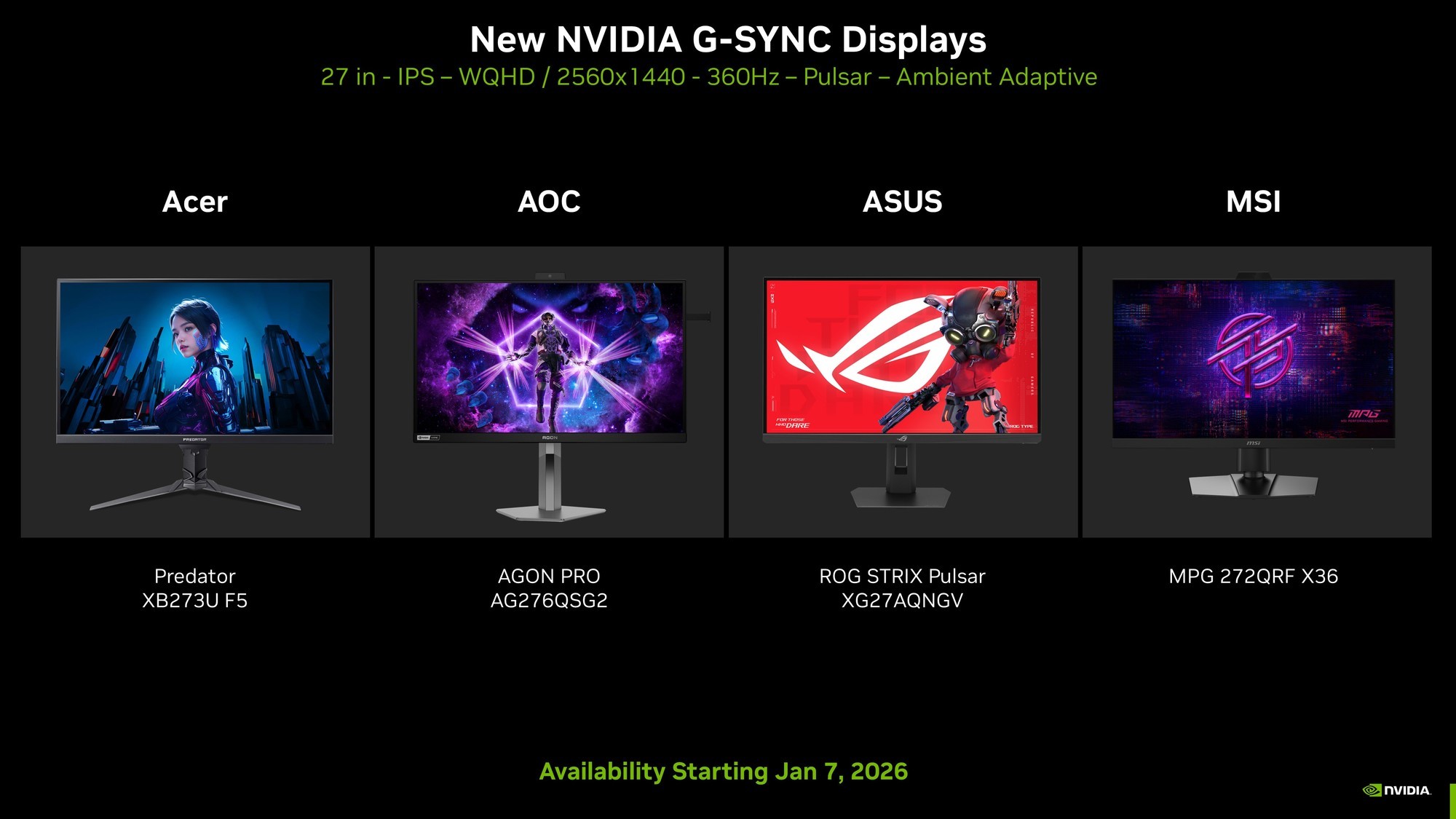
CES 2026:G-SYNC Pulsar 显示器推出
Xin Lang Cai Jing· 2026-01-08 11:36
Core Insights - NVIDIA has launched G-SYNC Pulsar at CES 2026, marking the introduction of a new generation of G-SYNC technology that enhances gaming experiences with smooth performance and improved visual clarity through variable frequency backlight flicker technology [1][8] Group 1: G-SYNC Pulsar Features - G-SYNC Pulsar provides players with a seamless gaming experience, ensuring consistent smoothness and clarity that enhances immersion without interruptions from blurry visuals [1][8] - The technology has been demonstrated in the game "Anno 117: Rome Peace," showcasing improved clarity in complex scenes when using G-SYNC Pulsar [1][8] Group 2: Product Launch and Availability - G-SYNC Pulsar monitors from Acer, AOC, ASUS, and MSI will begin rolling out at designated retailers starting from January 7 at 10 PM Beijing time [3][11] Group 3: Additional Features - The upcoming G-SYNC monitors equipped with Pulsar technology will also feature G-SYNC Smart Ambient Light technology, which uses built-in light sensors to automatically adjust color temperature and/or brightness based on ambient light conditions, ensuring optimal viewing experiences at any time of day [7][13]
涨疯了,一盒内存条堪比上海一套房!
Jin Tou Wang· 2026-01-08 09:35
Core Viewpoint - The rising cost pressure in the automotive industry is primarily driven by memory prices rather than metal raw materials, with significant price increases in memory components impacting the overall cost of smartphones, computers, and cars [1][4]. Group 1: Memory Price Increases - The price of a 265G DDR5 server memory module has reached 40,000, with a box of 100 costing 4 million, comparable to the price of a house in some areas of Shanghai [4]. - The price of 16GB DDR4 memory modules surged by 1800% last year, while DDR5 modules increased by over 500% [1][5]. - The demand for memory in AI applications is significantly higher, with a single AI server requiring 8-10 times more memory than a standard server, leading to a supply shortage [5][7]. Group 2: Impact on Consumer Electronics - The increase in memory prices is expected to lead to higher prices for smartphones and computers, with memory accounting for 10%-20% of hardware costs [4]. - Smartphone manufacturers like Xiaomi, OPPO, and others have already raised prices by 100 to 600 yuan for new models since last October due to rising costs [7]. - The global smartphone shipment volume is projected to decline by 2.1% in 2026 due to these price increases [7]. Group 3: PC Market Dynamics - Major PC manufacturers such as Dell and Lenovo are planning price increases ranging from 10% to 30% for commercial PCs [9]. - The domestic memory manufacturers like Yangtze Memory Technologies and ChangXin Memory are gaining market share due to their price advantages of 15%-20% [9]. Group 4: AI Infrastructure and Market Competition - Tech giants like Apple, Google, and Amazon are aggressively competing for memory supply, with procurement teams stationed in South Korea to secure long-term contracts [11]. - Samsung and SK Hynix are maintaining a strong stance on pricing, opting for quarterly pricing rather than long-term contracts, which has led to significant price increases [11]. - The current memory price surge is expected to persist until 2026, with predictions of price hikes of up to 70% from major manufacturers [9][11].
18家中国公司,在CES上给出消费级AI机器人新解
3 6 Ke· 2026-01-08 03:48
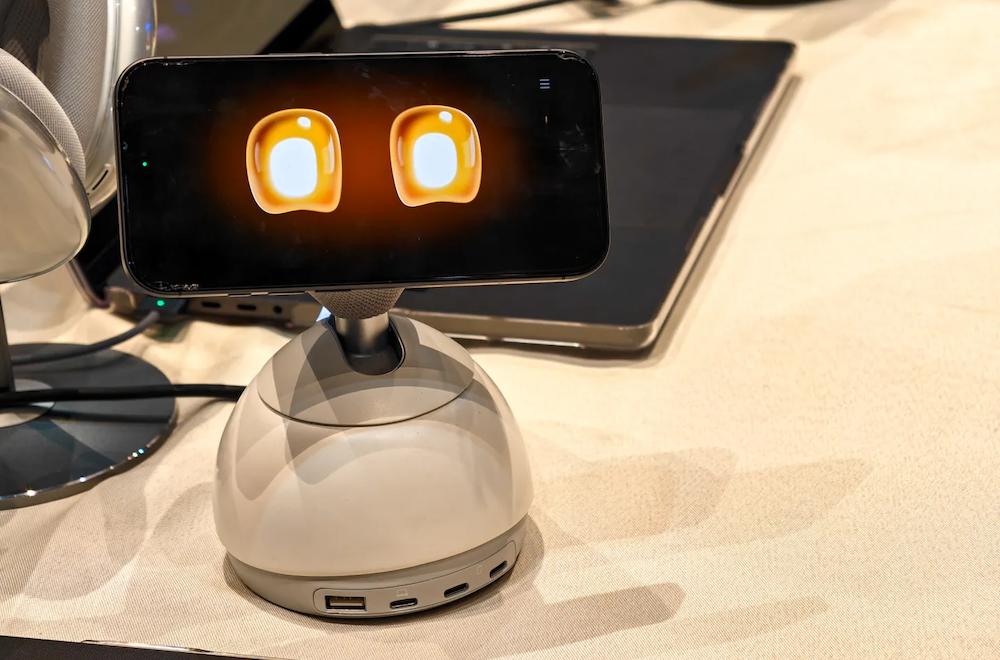
Core Insights - The article highlights the emergence of AI as a companion in daily life, showcased at CES 2026, with products designed to engage users emotionally and socially [1] Group 1: Product Innovations - Loona DeskMate is a new product that integrates with an iPhone to activate AI companionship features without built-in screens or cameras [2] - The DeskMate also includes an emotional interaction model and functions as a 180W fast-charging desktop power source [4] - Robie, a desktop pet, can recognize faces and emotions, enabling continuous dialogue and interaction [6] - Yonbo X1 is a growth-oriented family robot that adapts its content based on the child's age and features a personality system for role customization [8] - Enabot serves as an AI housekeeper that can interact with pets, conduct video calls, and monitor home security [9] - AiMe, developed by TCL, is a mobile home smart hub that recognizes user emotions and performs monitoring tasks [12] Group 2: Diverse AI Companions - Luka, a reading robot, can recognize and read from a vast library of over 70,000 bilingual picture books [14] - Ollobot's product line includes Ollo and OlloNi, which adapt their behavior based on user interactions and environmental changes [17][21] - BOOBOO is a flying emotional companion robot that uses AI to establish emotional connections with users [22][24] - Cocomo and Inu are robotic pets that interact through non-verbal communication and physical responses [25][27] - The product "话话糖" is a portable AI pet that can accompany users anywhere and engage in social interactions [28] - Eggi turns movement into a part of pet care, allowing children to learn responsibility through interaction [30] - W1, an interactive robot resembling Wall-E, supports emotional interaction and outdoor activities [36] Group 3: Market Trends - The presence of 18 Chinese companies at CES 2026 indicates a growing trend in AI companionship and educational robots, utilizing advanced technologies like AI interaction and multi-modal perception [1] - These products aim to create more natural interactions between humans and AI, with applications in education, caregiving, and emotional support [39]

CES亮点
数说新能源· 2026-01-08 03:20
Group 1: Consumer Electronics - Pebble launched the Pebble Index 0.1, a wearable device priced at $75, which focuses on functionality rather than health monitoring, featuring a programmable button and microphone for reminders and messaging, with a lifespan of 2-3 years and no need for charging [1] - January AI has transitioned its scientifically validated "virtual blood glucose monitoring" technology to an enterprise-level API application, aimed at health management systems and longevity tech companies, converting daily life data into structured metabolic health data for diabetes management [1] - Naqi Logix is redefining human-computer interaction by transforming smart earbuds into powerful neural interfaces, allowing users to control digital devices through subtle facial movements without the need for physical actions or voice commands [2][3] - ASUS and XREAL launched the AR glasses ROG XREAL R1, which provide a cinema-like experience equivalent to a 171-inch screen and feature a 240Hz refresh rate, enhancing gaming experiences significantly [4] Group 2: Physical AI - LG introduced the home robot CLOiD, designed for emotional interaction and household tasks, featuring flexible robotic arms for tasks like folding clothes and controlling home appliances, although its operational range is limited to above knee height [5] - Weifeng Power Technology developed an AI-driven smart firefighting robot capable of autonomous navigation in smoke, real-time identification of burning materials, and automatic fire suppression without human intervention, enhancing emergency response capabilities [6] Group 3: Intelligent Driving and Mobility - RAPA has overcome the inherent sparsity and noise issues of radar technology with its 4D imaging radar, providing a cost-effective solution for autonomous driving with superior performance, achieving over 40% higher accuracy in target detection and tracking compared to competitors [8]

CES-2026智能眼镜新品解读及产业趋势展望
2026-01-08 02:07
Summary of Key Points from the Conference Call Industry Overview - The smart glasses industry is experiencing significant advancements, particularly highlighted at CES 2026, with a focus on AI and AR technologies. Despite many new brands and products emerging from China, the US market still finds these innovations novel [2][3]. Company Highlights Meta - Meta maintains a leading position in the smart glasses sector, with its Redmi Meta series AI glasses achieving sales of 8 million units in 2025. The AR glasses, Meta Raven Display, exceeded expectations with 80,000 units sold shortly after launch [1][2]. - In 2026, Meta plans to release audio glasses in collaboration with Ray-Ban and Oakley, featuring hearing aid capabilities and applications for children's attention enhancement and translation. The expected shipment for a small batch of iterative AR glasses is 200,000 units [1][6]. - Meta's software updates include enhanced video capabilities and audio systems that function as hearing aids, significantly improving user experience [5]. Xiaomi - Xiaomi plans to launch AI glasses and monochrome waveguide AR glasses in 2026, with expected shipments of 200,000 to 300,000 units for AR glasses and over 300,000 units for AI glasses [13]. XGIMI - XGIMI introduced a new AI glasses model weighing only 28.9 grams, making it the lightest in the market, priced at $599 and expected to launch in Q2 2026 [4][9]. Rokid - Rokid glasses are currently the best-selling AR glasses, with monthly shipments exceeding 30,000 units and a target of 1 million units by 2026 [11]. Apple - Apple is developing AI and AR glasses, with the AI model entering the new product introduction phase, aiming for a 2026 release. However, challenges related to hardware development and time constraints are present [3][16]. ByteDance - ByteDance is working on two models of smart glasses, one without a display and another similar to Rokid Glasses, with potential release dates in late 2026 or 2027 [14]. Market Trends and Challenges - The demand for smart glasses is heavily influenced by weight and comfort, with a target of under 50 grams for all-day wear. Achieving a weight below 30 grams is seen as crucial for expanding the user base [18]. - The supply side faces challenges in achieving clear displays, diverse styles, and developing "killer applications" that meet high-frequency user needs [21]. Competitive Landscape - The smart glasses market is not expected to see a price war in 2026 due to rational consumer behavior and a supply-demand imbalance, particularly in the domestic market [23]. Conclusion - The smart glasses industry is poised for growth with significant innovations from leading companies like Meta, Xiaomi, and XGIMI. The focus on lightweight designs and enhanced functionalities will be critical in meeting consumer demands and expanding market reach [2][18].

华硕ROG发布幻14/16 Air:轻薄旗舰新标杆
Xin Lang Cai Jing· 2026-01-08 01:30
在2026年国际消费电子展上,华硕旗下ROG推出新款幻14与幻16 Air系列笔记本,重新定义轻薄机型的 性能标准。该系列包含14英寸与16英寸两种尺寸,兼顾便携性与高性能表现。 散热系统升级为冰川架构2.0,采用Arc Flow绝尘风扇、 0.1毫米超薄散热鳍片与新型纤维状热管,结合优化后的 进出风通道,实现高效散热,确保长时间高负载运行的 幻14 Air机身厚度仅为1.59厘米,重量约1.57千克,搭载最高RTX 5070Ti显卡,支持130瓦满功耗释放。 幻16 Air厚度压缩至1.49厘米,重量约为1.95千克,配备顶级RTX 5090显卡,功耗释放可达160瓦,成为 同类型产品中罕见的高能配置。 两款机型均采用ROG星云原画屏,支持HDR TrueBlack 1000认证,峰值亮度高达1100尼特。其中幻14 Air配备 2.8K分辨率120Hz刷新率屏幕,幻16 Air则搭载2.5K分辨 率240Hz高刷面板,两者皆具备0.2毫秒响应速度、多色 域切换功能及抗反射涂层,色彩偏差ΔE小于1,满足专 业创作与高速动态画面的双重需求。 整机采用全铝合金材质,通过CNC一体成型工艺打造, 历经12道精密加 ...
确认2026年停更新品 华硕“失守”游戏手机
Zhong Guo Jing Ying Bao· 2026-01-08 00:54
Core Viewpoint - ASUS will suspend the launch of new smartphones, including ZenFone and ROG Phone, in 2026 due to regular business adjustments and rising component costs, particularly storage prices [1][4][5]. Group 1: Business Adjustments - ASUS confirmed that it will not release new smartphones in 2026, emphasizing that after-sales service and software updates will remain unchanged [1]. - The decision is attributed to significant increases in upstream component costs, making it difficult for ASUS to sustain its smartphone business [1][4]. - Industry insiders speculate that the rising storage prices are a primary factor behind this decision [1][4]. Group 2: Historical Context - ASUS began its mobile journey in 2003 with the launch of the J100 3G flip phone and gained traction with the ZenFone series in 2014, which was well-received in emerging markets [2]. - The ROG Phone series, launched in 2018, positioned ASUS among the top gaming phone brands, but the company has faced challenges due to market saturation and increased competition [2]. - ASUS's smartphone revenue has significantly declined, dropping from 18% in 2016 to approximately 1% in 2023, leading to a strategic focus on the ZenFone and ROG Phone lines [3]. Group 3: Market Conditions - The global smartphone market is experiencing a downturn, with forecasts for 2026 showing reduced shipment volumes, further pressuring manufacturers [5]. - The rising costs of DRAM have increased the bill of materials (BoM) for smartphones by approximately 25% for low-end, 15% for mid-range, and 10% for high-end devices [4]. - ASUS's smartphone shipments are projected to be only in the tens of thousands in 2025, with a significant portion concentrated in the Asia-Pacific region [5]. Group 4: Financial Performance - Despite the challenges in the smartphone sector, ASUS's overall performance remains strong, driven by AI servers and gaming products, with a revenue of 535.98 billion New Taiwan Dollars in the first three quarters of 2025, a 24% year-on-year increase [5]. - However, the rising costs have impacted profitability, with a 9% decline in gross profit year-on-year, leading to a net profit decrease of 16% [5]. Group 5: Future Directions - ASUS is shifting its focus towards AI infrastructure, with plans to enhance its server business, which is approaching 20% of total revenue [6]. - The company is also considering price adjustments for its PC products due to rising storage costs, indicating a broader trend in the industry [7]. - There are rumors about ASUS entering the DRAM manufacturing market to stabilize its supply chain, although the company has denied these claims [7].