Snowflake Inc.

Search documents
蒸发1.43万亿,跌出了黄金坑?
3 6 Ke· 2026-02-13 10:08
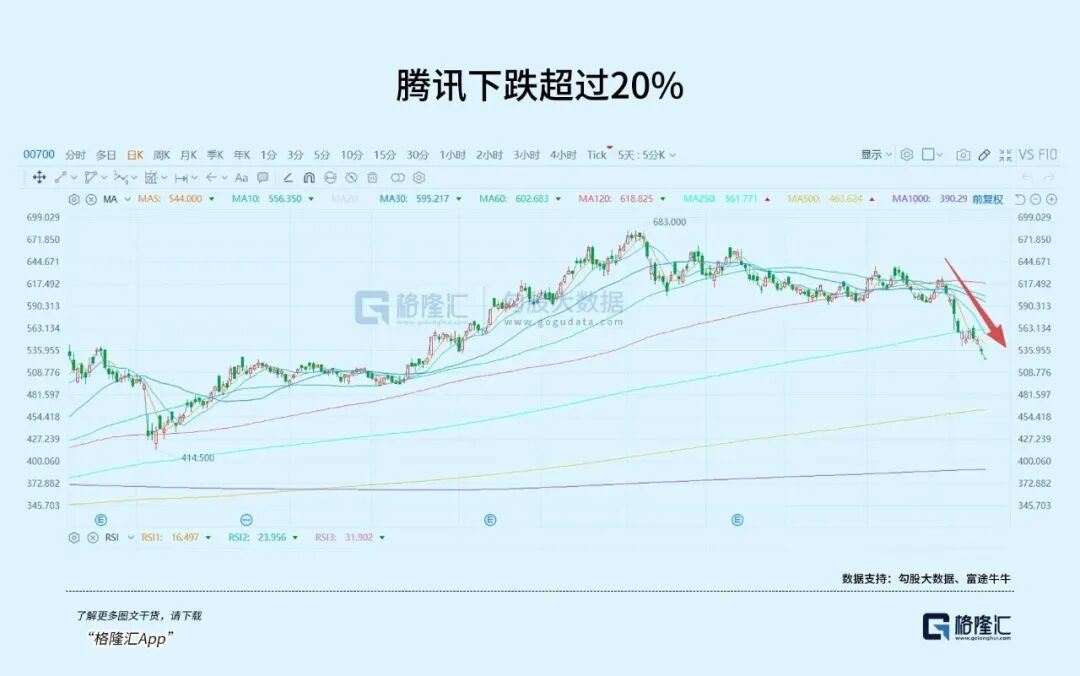
Group 1 - The last trading day before the Spring Festival saw A-shares close in the green, influenced by a significant drop in the US stock market and pre-holiday sentiment [1] - Investors may feel disappointed for missing the last market gains before the holiday, but the market will reopen in two weeks, providing an opportunity for reflection and strategy [2][3] Group 2 - Tencent's recent performance has been concerning, with a 23% decline from its peak in October 2025, resulting in a market cap loss of 1.43 trillion yuan [4] - The main factors for the decline include tax rumors and internal product competition, but the fundamental business remains unchanged, with a forward PE of approximately 15-16 times for 2026 [7] - Tencent's core business PE, excluding external investments, is around 13 times, aligning with an expected EPS growth of 12%-15% for 2026 [7] Group 3 - Tencent's valuation is supported by share buybacks and a stable dividend yield of 4-5%, making it attractive compared to high valuations of similar US tech stocks [8] - The recent strengthening of the RMB may accelerate the rebalancing of foreign investments into Tencent and similar companies [9][10] - Even if negative rumors materialize, they may only affect valuations rather than the underlying logic, with recent declines potentially setting the stage for a technical rebound [11] Group 4 - The AI industry is expected to undergo a fundamental shift by 2026, with a focus on application commercialization rather than just computational power [15][16] - Microsoft's Copilot has reached 52 million enterprise users, demonstrating a willingness to pay for AI solutions, which could serve as a benchmark for AI application commercialization [18] - In contrast to the US, China's AI application sector is at a critical point of penetration and valuation, with a significant increase in active users and usage time [22] Group 5 - The shift from linear to exponential revenue models in AI applications is a key driver for valuation restructuring, but A-shares have yet to fully account for this premium [25] - Institutional investors have been overweight in US AI applications for three consecutive years, while Hong Kong and A-shares remain underweight [26] - A potential "expectation gap" could lead to rapid valuation adjustments once it begins [27] Group 6 - Concerns are rising regarding the capital expenditure of major AI cloud computing firms, which have announced a total of $650 billion in spending, exceeding market expectations [30][31] - The market is worried that these high expenditures may impact profits and cash flow, leading to significant stock price declines [32] - The current environment is highly selective, with a shift from broad market optimism to a focus on substantial earnings growth, which could lead to sharp sell-offs if expectations are not met [36][38] Group 7 - The AI technology landscape in 2026 is expected to be volatile, with significant shifts in market dynamics [39] - Stability is considered a prudent strategy, focusing on fundamental and valuation factors to avoid poor investment decisions [40]


蒸发1.43万亿!跌出了黄金坑?
格隆汇APP· 2026-02-13 08:17
Core Viewpoint - The article discusses the current state of the Hong Kong stock market, particularly focusing on Tencent, highlighting its valuation and potential investment opportunities amidst recent market fluctuations [7][9][10]. Group 1: Market Performance and Valuation - The Hong Kong stock market has seen a significant decline, with Tencent's stock dropping 23% from its peak in October 2025, resulting in a market value loss of 1.43 trillion HKD [7]. - Despite the recent downturn, Tencent's valuation appears reasonable, with a forward PE of approximately 15-16 times for 2026, and a core business PE of around 13 times, aligning with an expected EPS growth of 12%-15% [9][10]. - Tencent's stock buyback program, averaging several hundred million HKD daily, and a stable dividend yield of 4-5% provide additional support for its valuation [10]. Group 2: Investment Sentiment and Future Outlook - The article suggests that foreign investors are beginning to view Hong Kong tech stocks, including Tencent, as undervalued compared to their U.S. counterparts, creating a potential "rebalancing" opportunity [11][12]. - The strengthening of the RMB may further accelerate this rebalancing trend, with domestic capital flowing into Tencent and similar companies [12]. - The article emphasizes that while Tencent is perceived as a "public utility" tech stock, its role in the AI growth sector remains significant, although its investment in AI is currently more conservative compared to other tech giants [14]. Group 3: AI Market Dynamics - By 2026, the global AI industry is expected to shift from a focus on "computing power arms race" to "application commercialization," with Microsoft’s Copilot as a key reference point [16][17]. - In contrast to the U.S., China's AI application sector is experiencing a breakthrough in penetration rates, with active users reaching 320 million, a 78% year-on-year increase [21]. - The article notes that the current valuation of A-shares does not fully account for the commercial value brought by AI, indicating a potential for significant upward adjustment once the market recognizes this [23][25]. Group 4: Risks and Market Behavior - The article warns of potential volatility in the market due to aggressive capital spending by major AI cloud computing firms, which could lead to profit and cash flow concerns [27][30]. - The market is transitioning from a "broad rally" to a "survival of the fittest" mentality, where companies must demonstrate substantial earnings growth to maintain their valuations [33]. - The article concludes that investors should focus on fundamental and valuation factors to avoid being caught in market fluctuations, emphasizing the importance of ensuring that created value translates into tangible returns [39][40].

速递|AI新贵与传统巨头对决:希尔顿CTO称三年磨一Agent,不会为概念买单
Z Potentials· 2026-02-13 02:27
Core Insights - The article discusses the competitive landscape of AI agents, highlighting how traditional software companies are racing to develop AI products that can automate tasks previously performed by human workers [1][3][8] Group 1: AI Agent Development - Companies like Microsoft, ServiceNow, and Snowflake are launching AI agent products to help clients create customized AI agents that can interact with various enterprise applications [1][3] - The emergence of AI agent management dashboards raises questions about the necessity of multiple dashboards, suggesting that each client may ultimately only need one [2] Group 2: Key Players and Products - Major players in the AI agent space include Anthropic, OpenAI, and Google, with products designed to automate tasks across different applications [3][5] - OpenAI's Frontier project aims to assist companies like Uber and Thermo Fisher Scientific in developing multiple AI collaborative assistants [9][10] Group 3: Market Dynamics and Challenges - Microsoft CEO Satya Nadella predicts that traditional software applications will collapse in the era of AI agents, as they are merely databases with business logic [8] - Despite the potential of AI agents, significant security concerns and operational challenges remain, such as the risk of credential leaks and the high operational threshold for current products [8][11] Group 4: Industry Sentiment - Executives from traditional software companies express a mix of caution and optimism regarding the integration of AI agents, with some companies already utilizing AI technologies from OpenAI and Anthropic [11][12] - The sentiment in the industry is that software leaders feel they must either achieve a trillion-dollar valuation or face extinction due to the disruptive nature of AI [12]


大摩闭门会-软件行业的未来何在
2026-02-13 02:17
Summary of Key Points from the Conference Call Industry Overview - The software industry is experiencing a valuation multiple decline of 33%, reaching its lowest level since 2016, primarily due to uncertainties stemming from accelerated AI innovations that have increased discount rates [2][4][5]. - Despite the valuation drop, the fundamental trends in the software industry have not significantly deteriorated, with no major acceleration or deceleration in growth observed [4][5]. Company-Specific Insights Palantir - Palantir reported a strong fourth quarter with a growth rate of 70% and an operating margin of 57%, projecting over 60% growth for the next year [2][5]. - The company's success is attributed to its ontology data technology, which is crucial for understanding data relationships and requires deep domain knowledge and customized services [2][5][6]. - Palantir's Foundry platform is increasingly adopted by clients in industrial and oil & gas sectors, positioning it as a key supplier for companies looking to implement AI projects [5]. Atlassian - Atlassian's free cash flow multiple is approximately 14 times, indicating a low valuation compared to other high-growth companies [8]. - Despite good financial performance, the stock price has not improved, reflecting low market risk appetite and varying investor expectations regarding growth and profitability [8][9]. Snowflake - Snowflake's enterprise value/sales multiple has returned to levels seen in 2014-2016, with signs of growth emerging [3][14]. - The company has shown consistent product revenue growth of 28% over two consecutive quarters, with one quarter reaching 30% [14][15]. - Snowflake's core business remains stable, and its AI business is performing strongly, with product revenue growth expected to approach 30% [18]. Microsoft - Microsoft has demonstrated steady growth in its Azure platform, with a rolling 12-month fixed currency growth rate showing improvement [15]. - The Microsoft 365 business cloud segment is also improving, with a fixed currency growth rate of 15% in the last quarter [15]. Intuit - Intuit is expanding into the high-end market through global business solutions and is focusing on auxiliary services during tax season, which could open a $35 billion market opportunity [19]. ServiceNow - ServiceNow is advancing its new product cycle, with its Now Assist product currently generating an annual recurring revenue (ARR) of $600 million [20]. - The adoption rate of its Prosci product is expected to increase significantly in the coming years, contributing to stronger growth [20]. Market Sentiment and Future Outlook - The current market sentiment is cautious, with software stocks averaging a 20% decline this year, and prices at 55% of their 52-week highs [4][5]. - Investors are looking for signs of improvement in the participation of established software companies in large-scale innovation cycles to drive growth [14]. - The "AI is software" perspective suggests that AI represents an evolutionary change in software, with large language models being significant breakthroughs that enhance automation in workflows [10][11]. Valuation Considerations - The current enterprise value/sales multiple for the software industry is approximately 4.4 times expected sales, close to historical averages but not at the lowest point [13]. - GAAP earnings issues are affecting investor decisions, with some companies like Microsoft and ServiceNow showing positive GAAP earnings growth, yet not attracting significant market interest [13]. This summary encapsulates the key insights and trends discussed in the conference call, highlighting the current state of the software industry and specific company performances.


AI“超级代理”大战打响!四大赛道全面铺开,OpenAI、Anthropic正挑战微软们的软件帝国
Hua Er Jie Jian Wen· 2026-02-13 02:01
Core Insights - Major AI companies like OpenAI and Anthropic are launching enterprise-level AI products that challenge existing enterprise software markets, prompting traditional software vendors like Microsoft and Salesforce to accelerate their own AI tools and management platforms [1][2] Group 1: Competitive Landscape - The competition involves four main product categories: browser-based agents, computer-operable agents, agent-building tools, and agent management consoles [1][2] - OpenAI and Google provide browser-based agents capable of executing multi-step tasks, while Anthropic's Cowork and Google's Gemini Computer Use are examples of computer-operable agents [2] - Agent-building tools such as Salesforce's Agentforce and Google's Gemini Enterprise allow clients to create agents that can access various enterprise applications [2] - The agent management console market features competitors like Microsoft's Agent 365 and OpenAI's Frontier, raising questions about the necessity of multiple consoles for clients [2] Group 2: Adoption Challenges - Despite the promising outlook, new agent technologies face significant challenges before widespread adoption, including security concerns and usability issues [3] - Companies like OpenAI and Anthropic indicate that their computer-operable agents are still in research preview, suggesting they are not yet ready for large-scale enterprise deployment [3] - Hilton's CTO Onkar Birk expressed caution in adopting new subscriptions, highlighting the complexity and investment required for developing customer support agents [4] Group 3: Traditional Software Companies' Response - OpenAI's strategy involves positioning its agent command technology above traditional enterprise "record systems," which are critical for storing business data [5] - Traditional enterprise application companies like Salesforce and Microsoft have not yet taken steps to block AI agents from accessing or modifying data within their systems [5] - There is a recognition that traditional companies are utilizing technologies from OpenAI and Anthropic to support their own agents, even as these AI firms promote their competitive tools [5] Group 4: Market Dynamics - Snowflake, a database company, has released a product supported by AI models from OpenAI and Anthropic, enabling clients to develop agents for searching and retrieving business metrics [6] - The competitive landscape is characterized by high stakes, with industry leaders feeling pressure to either achieve a $1 trillion valuation or face potential failure [6]


C3.ai Broadens Partner Strategy: Can Telecom Accelerate Revenues?
ZACKS· 2026-02-12 19:21
Core Insights - C3.ai's partnership with Vonage aims to develop a network-enabled AI field-services solution, reflecting the company's strategy to scale growth through partnerships and industry-specific applications [1][4] - The collaboration introduces C3 AI Field Services, designed for mission-critical operations that require reliable connectivity and real-time intelligence in challenging environments [1][2] Partnership and Strategy - The joint solution addresses challenges in the global field-service market, such as complex equipment maintenance and workforce skill gaps, by integrating C3.ai's AI capabilities with Vonage's communication APIs [2] - C3.ai's management highlighted that 89% of quarterly bookings in Q2 FY26 were secured through partners, emphasizing the importance of ecosystem relationships in accelerating adoption [3] Revenue and Market Position - The partnership with Vonage is expected to enhance recurring revenue growth and improve long-term visibility if adoption scales [4] - C3.ai's shares have declined by 23.1% over the past three months, compared to a 14.9% decline in the industry [7] Valuation Metrics - C3.ai currently trades at a forward price-to-sales ratio of 4.7, significantly lower than the industry's average of 13.73 [11] - The Zacks Consensus Estimate for C3.ai's fiscal 2026 earnings per share indicates a year-over-year decline of 141.7%, although the loss per share has narrowed recently [12]


Analysts Reaffirm Bullish View on Snowflake Inc.’s (SNOW) AI Strategy
Yahoo Finance· 2026-02-12 15:38
Group 1 - Snowflake Inc. has signed a $200 million partnership deal with OpenAI to integrate OpenAI's models into Snowflake's Cortex AI offerings, which analysts view positively [1][2] - RBC Capital rates Snowflake as Outperform with a price target of $300, highlighting the potential for joint enterprise customers to deploy context-aware AI applications on Snowflake's platform [1][2] - Raymond James also reaffirmed an Outperform rating on Snowflake, emphasizing the necessity of such partnerships for organizations providing large language models to expand in the enterprise space [3] Group 2 - Snowflake's platform, the Snowflake Data Cloud, supports various workloads including data engineering, analytics, machine learning, and secure collaboration, positioning it as a central data layer for enterprise AI adoption [4][2] - The company reported $100 million in AI-related annual recurring revenue, indicating a strong foothold in the AI market [2]
AI vs SaaS:先卖再问,市场只“卖对了一半”?
华尔街见闻· 2026-02-12 09:55
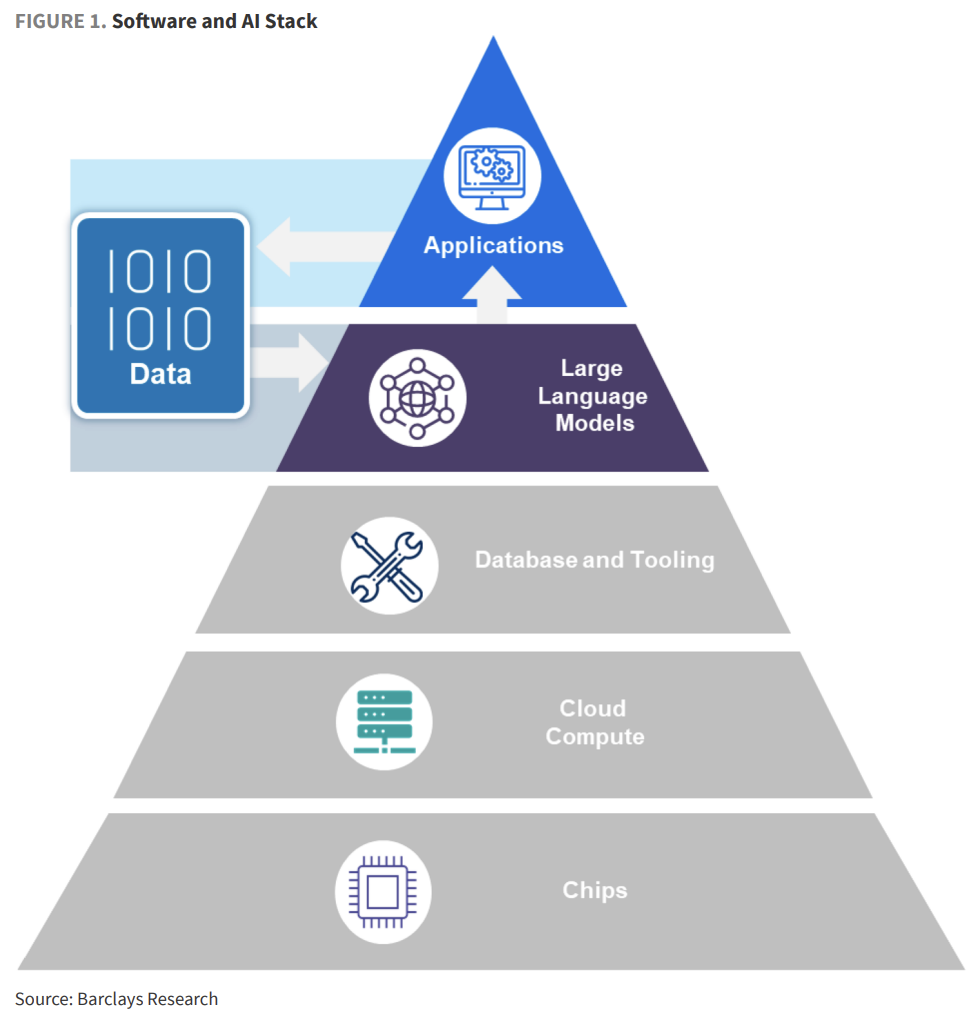
Core Viewpoint - Barclays highlights a critical technological distinction: AI tools are indeed encroaching on the application layer of SaaS companies, but they cannot shake the foundational "system of record" infrastructure, which is the core moat for companies like Salesforce and SAP [1][2]. Group 1: Impact of AI on SaaS Companies - The recent release of products like Claude Cowork by Anthropic has led to a significant decline in enterprise software stocks, with Salesforce and Workday dropping over 40% in the past 12 months [2]. - Investors are confused about the boundaries of AI capabilities, leading to a panic sell-off as they believe new AI tools will completely replace traditional SaaS software, resulting in a zero valuation for legacy companies [2][3]. - Barclays' report argues that a simplistic "one-size-fits-all" logic does not apply to most enterprise software companies [3]. Group 2: AI Capabilities and Limitations - Generative AI excels in pattern recognition and "draft generation," but its probabilistic nature poses fundamental limitations, particularly in scenarios requiring absolute accuracy [5]. - Traditional software operates on deterministic rules, ensuring consistent outputs, while AI software is probabilistic and cannot guarantee the same level of consistency [5][6]. - This indicates that AI operates at a higher level of abstraction and is not a direct replacement for traditional software [6]. Group 3: Mispriced Software Companies - Barclays identifies three categories of enterprise software companies that have been mispriced during the sell-off, starting with system of record companies like Salesforce, which provide critical data requiring certainty [9]. - SAP's position is even more secure, as it manages essential business data and workflows that cannot be handled by advanced generative AI models [9][10]. - The report suggests that AI will not replace these systems but will increase their importance, as AI agents will create more data touchpoints, raising the complexity that system records need to manage [10]. Group 4: Additional Misjudged Investment Opportunities - Besides system of record companies, Barclays points out two other categories that have been misjudged: beneficiaries of AI agents and AI computing providers [11]. - Companies like JFrog, Snowflake, and MongoDB may see increased usage due to the demand for more code and data driven by AI expansion [11]. - There is a logical contradiction in the market's reaction; if AI is powerful enough to disrupt the software industry, the demand for computing power should surge, yet companies like Oracle and CoreWeave have also faced significant sell-offs [11]. Group 5: Reevaluation of Software Sector Valuations - The market correction is deemed necessary for the application layer of enterprise software, which has long enjoyed inflated valuations due to controlling both infrastructure and interface [15]. - If AI technologies can overlay on system records, they may begin to erode the pricing power of SaaS companies [15]. - Barclays concludes that the era of easy high profits for bloated application layers may be over, but this does not signify the end of the entire industry [15][16]. Group 6: Market Sentiment and Future Outlook - The indiscriminate nature of the current sell-off indicates that investors with limited understanding of the software industry are making decisions based on extreme viewpoints [16]. - As understanding of AI capabilities and SaaS business models deepens, the market may reprice companies incorrectly categorized as "AI victims" [16].
AI恐慌引发软件股“大逃杀”,华尔街反应过度了?
Jin Shi Shu Ju· 2026-02-12 08:59
Core Viewpoint - The software sector on Wall Street has faced significant turmoil due to fears that artificial intelligence (AI) will disrupt the industry, culminating in a recent sell-off described as a "collapse" [1] Group 1: Market Reactions - Major software companies have seen substantial stock declines, with ServiceNow (NOW) down over 22%, Thomson Reuters (TRI) down over 26%, Intuit (INTU) down over 26%, Snowflake (SNOW) down 18%, and Salesforce (CRM) down over 20% since January 29 [1] - The market logic suggests that AI companies like Anthropic and OpenAI may either develop their own software to compete with existing products or enable businesses to easily create custom internal software, both scenarios posing risks to traditional software firms [1] Group 2: Analyst Perspectives - Analysts argue that the panic on Wall Street may be an overreaction, suggesting that AI may not replace all existing software companies but could enhance the services of many legacy firms [1][2] - Jason Ader from William Blair emphasizes the need to differentiate between software companies facing greater risks and those that are more secure, indicating that the current sell-off may not reflect the true value of individual companies [2] Group 3: Challenges for AI Companies - There are significant barriers preventing AI companies from overtaking existing software firms, including the reluctance of enterprises to allocate IT resources for developing custom software unless it offers a critical long-term advantage [3] - The initial development costs of custom software are only part of the equation, and despite the availability of open-source software, the third-party software market has continued to thrive [3] - Ader notes that using AI tools to create new applications may not be practical for companies that already have effective solutions in place [3] Group 4: Integration of AI - AI functionalities are likely to be integrated into existing software, enhancing their capabilities and customer value rather than completely replacing them [4] - Data governance issues also pose challenges, as companies may be hesitant to share proprietary data with AI models, preferring to work with established partners [5] - While some software companies may struggle to keep pace with the evolving AI landscape, those that adapt are likely to thrive [5]
AI vs SaaS:先卖再问,市场“卖对了一半”?
Hua Er Jie Jian Wen· 2026-02-12 08:24
Core Insights - The recent release of Anthropic's products has triggered a significant sell-off in enterprise software stocks, revealing an overreaction in the market regarding AI threats [1][3] - Barclays highlights that while AI tools are encroaching on the application layer of SaaS companies, they do not threaten the foundational "system of record" infrastructure, which is crucial for companies like Salesforce and SAP [1][3] Group 1: Market Reaction and Misunderstandings - The release of Claude Cowork by Anthropic has been described as the tipping point for the decline in enterprise software stocks, with Salesforce and Workday seeing over a 40% drop in the past year [3] - Investors are confused about the capabilities of AI, mistakenly believing that new AI tools will completely replace traditional SaaS software, leading to a devaluation of established companies [3][12] - Barclays' report argues that the simplistic view of AI as a total replacement for software does not apply to most enterprise software companies [3] Group 2: AI Capabilities and Limitations - Generative AI excels in pattern recognition and initial draft generation but has fundamental limitations due to its probabilistic nature, making it less effective in scenarios requiring absolute accuracy [4][5] - Traditional software operates on deterministic rules, ensuring consistent outputs, while AI software functions probabilistically, lacking guaranteed consistency [5][6] Group 3: System of Record Companies - Barclays identifies three categories of enterprise software companies that have been mispriced during the sell-off, starting with system of record companies like Salesforce and SAP, which provide critical data requiring certainty [7][8] - SAP's position is particularly strong, as it manages essential business data and workflows that generative AI cannot handle effectively [7][8] - The report suggests that AI will not replace these systems but will instead increase their importance as AI creates more data touchpoints [8] Group 4: Misjudged Investment Opportunities - Besides system of record companies, Barclays points out two other categories that are misjudged: beneficiaries of AI agents and AI computing providers, which may see increased demand due to AI expansion [9] - There is a contradiction in the market logic; if AI is powerful enough to disrupt the software industry, the demand for computing power should rise, yet companies like Oracle and CoreWeave have also faced sell-offs [9] Group 5: Application Layer Challenges - The market's panic is not entirely unfounded, as SaaS companies have struggled with poor user interfaces, high prices, and security vulnerabilities, leading to customer dissatisfaction [10] - Companies like Klarna are moving away from traditional SaaS products in favor of smaller firms, utilizing AI tools to build their own applications, which highlights a genuine threat to the SaaS model [10] Group 6: Future Market Dynamics - The current market correction is seen as necessary, as SaaS companies have enjoyed inflated valuations by controlling both infrastructure and interface [11] - The emergence of AI technologies that can operate above system records may erode the pricing power of SaaS companies, indicating a shift in the profitability landscape [11] - As understanding of AI capabilities and SaaS business models deepens, the market may begin to re-evaluate companies incorrectly labeled as "AI victims," while those relying on poor application layers may face continued valuation pressure [12]