
青岛银行

Search documents
中小银行增资“补血”进行时
3 6 Ke· 2025-07-21 04:03
Group 1 - A new wave of capital replenishment is occurring among small and medium-sized banks, with over 120 city commercial banks and rural commercial banks having approved capital increase plans or completed capital changes since early 2025 [1][2] - The capital replenishment needs reflect the objective requirements of bank business development, as sufficient capital is essential for credit issuance and risk resistance [2][7] - Local governments and state-owned enterprises play a significant role in the capital replenishment of small and medium-sized banks, enhancing capital strength and optimizing equity structure [7][17] Group 2 - Recent capital increases by banks such as Zhangjiakou Bank and Luzhou Bank indicate a trend towards raising core capital through methods like private placements and public offerings [4][12] - The positive effects of capital increases include improved capital adequacy ratios, enhanced risk resistance, and potential governance structure optimization through the introduction of strategic investors [8][10] - However, challenges such as share dilution, cost pressures, and the need for effective integration of new resources may arise from these capital increases [10][12] Group 3 - Compared to large state-owned banks, small and medium-sized banks face more severe challenges in capital replenishment, with capital adequacy ratios significantly lower than their larger counterparts [13][15] - The reliance on local government support and state-owned capital for short-term capital relief highlights the need for a sustainable capital replenishment mechanism based on improved operational performance [15][18] - The current low-interest-rate environment and tightening regulatory requirements necessitate adjustments in revenue structures for banks to maintain growth and profitability [18]

国联智选红利股票A:2025年第二季度利润25.9万元 净值增长率3.04%
Sou Hu Cai Jing· 2025-07-21 02:49
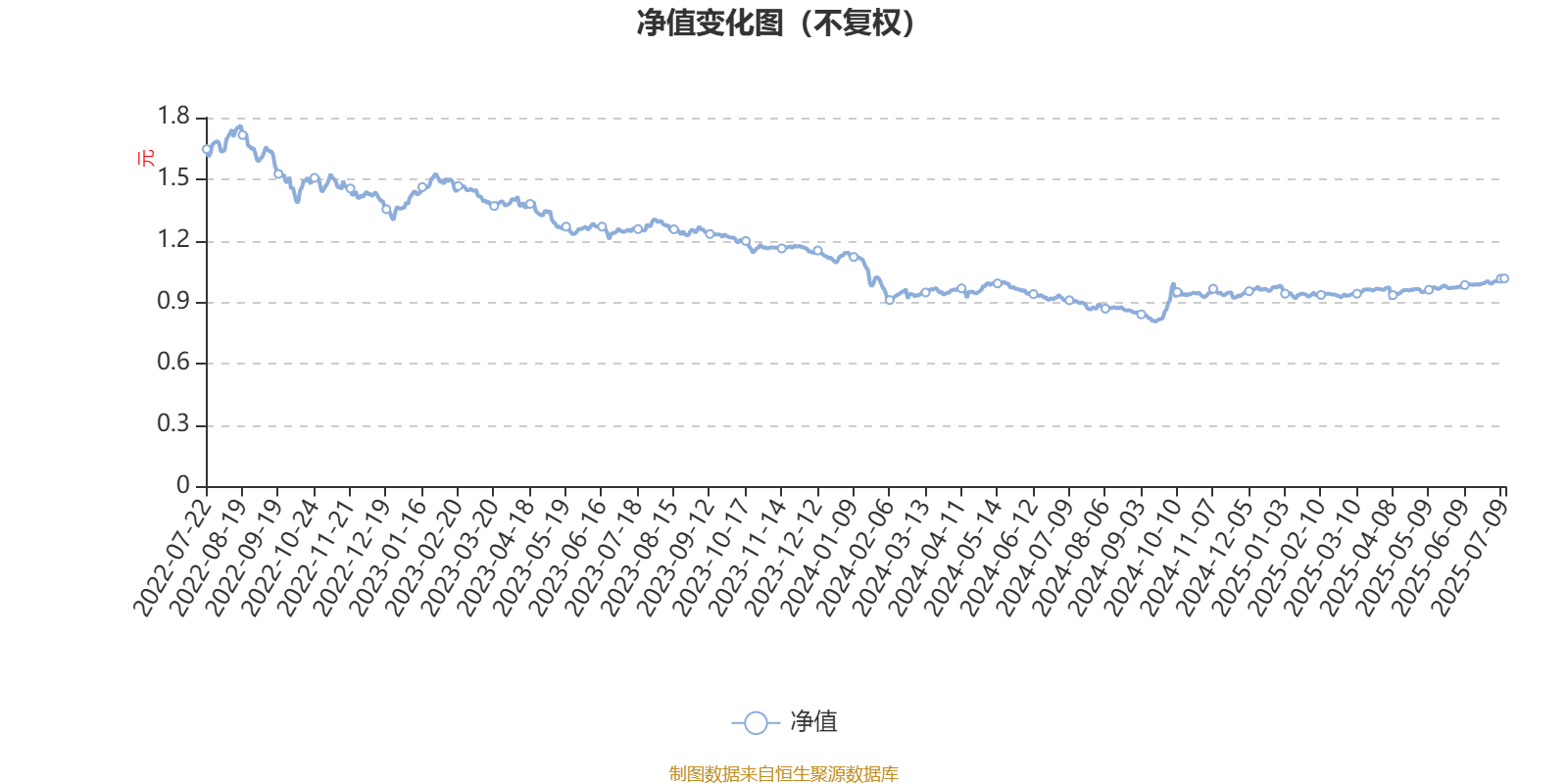
Core Viewpoint - The AI Fund Guolian Intelligent Selected Dividend Stock A (005569) reported a profit of 25,900 yuan for the second quarter of 2025, with a weighted average profit per fund share of 0.029 yuan. The fund's net value growth rate for the period was 3.04%, and the fund size reached 7.5541 million yuan by the end of the second quarter [2][13]. Fund Performance - As of July 9, the unit net value of the fund was 1.015 yuan. The fund's performance over various time frames is as follows: - 3-month net value growth rate: 8.46%, ranking 78 out of 110 comparable funds - 6-month net value growth rate: 8.90%, ranking 59 out of 110 comparable funds - 1-year net value growth rate: 11.74%, ranking 79 out of 110 comparable funds - 3-year net value growth rate: -36.68%, ranking 72 out of 78 comparable funds [2]. Risk Metrics - The fund's Sharpe ratio over the past three years was -0.5998, ranking 77 out of 78 comparable funds [7]. - The maximum drawdown over the past three years was 54.36%, with the worst quarterly drawdown occurring in Q1 2022 at 24.92% [9]. Investment Strategy - The fund employs a quantitative intelligent stock selection model, focusing on stocks with high cash dividend yields, stable dividends, and certain growth potential. It emphasizes individual stock profitability screening and crowding control, aiming for high excess returns through reasonable industry and stock diversification [2]. Portfolio Composition - As of June 30, the fund's average stock position over the past three years was 86.17%, compared to a comparable average of 88.08%. The fund reached a peak position of 92.4% at the end of 2021 and a low of 51.39% at the end of Q1 2024 [12]. - The top ten holdings of the fund include Gree Electric Appliances, Jiangsu Bank, Suzhou Bank, Qingdao Bank, Shanghai Bank, Beijing Bank, Industrial Bank, Chongqing Rural Commercial Bank, Caibai Co., and Industrial and Commercial Bank of China [16].
【大宗周刊】绿证价格飙升,电力交易市场有新情况!涉及大宗商品,舟山市作出部署
Qi Huo Ri Bao· 2025-07-21 00:30
Group 1: Overview of Zhoushan's Development - Zhoushan is positioned as a blue gateway in the Yangtze River Delta economic circle, making significant strides in the oil and gas industry chain reform, with bonded fuel oil bunkering volume ranking among the top globally [1] - The establishment of the "Zhejiang International Commodity Trading Center" aims to expand the oil and gas industry chain experience to other commodities like iron ore, non-ferrous metals, and quality proteins, marking a new chapter in integrated reform [1][2] - The local government has outlined a clear path for the construction of the commodity trading center, focusing on enhancing trading platform construction, service levels, and price influence [1][4] Group 2: Integration and Expansion of Trading Platforms - Since 2025, Zhejiang's government has actively promoted the integration and enhancement of commodity spot trading platforms, leading to the establishment of the Zhejiang International Commodity Trading Center [2] - The center aims to create a comprehensive platform for spot trading of various commodities, transitioning from a single oil and gas focus to a broader range of commodities [2] Group 3: Price Index and Market Influence - "Zhoushan Price" has emerged as a significant price index for low-sulfur fuel oil, breaking the overseas market's monopoly on pricing [3] - The Zhejiang International Oil and Gas Trading Center has launched several price indices and market products, including the "Zhoushan Biodiesel Storage Comprehensive Price" and "LNG Tank Truck Freight Index," enhancing the influence of Zhoushan's pricing [3] Group 4: Government Initiatives and Future Plans - The Zhoushan government has been actively working on policies to support the trading center's development, including financial support and talent development initiatives [4] - Future plans include further integration of trading platforms, enhancing trading varieties, and optimizing trading models to boost trading scale and price influence [4]
银华混改红利灵活配置混合发起式A:2025年第二季度利润156.49万元 净值增长率5.01%
Sou Hu Cai Jing· 2025-07-18 08:29
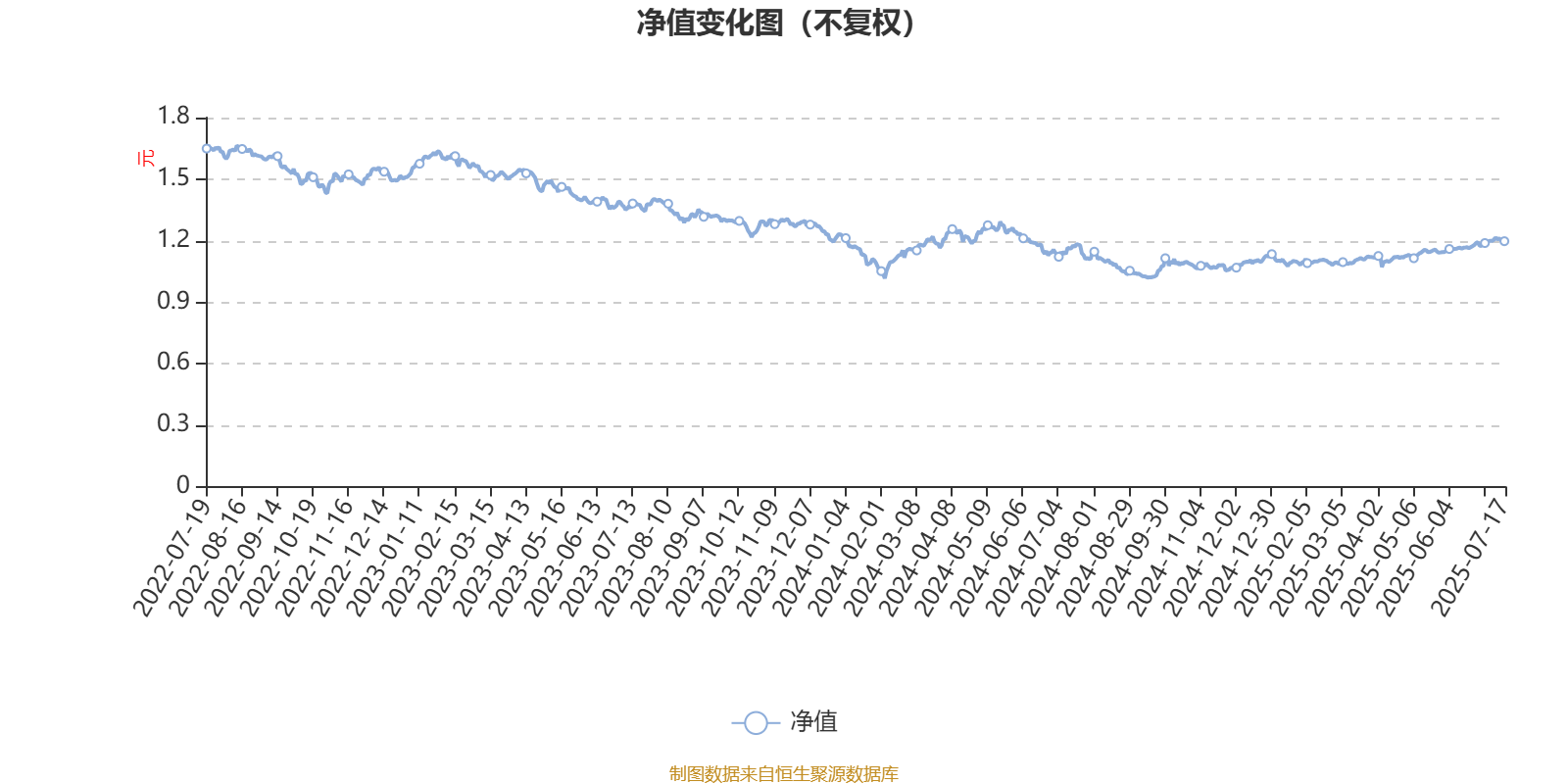
Core Viewpoint - The AI Fund Yin Hua Mixed Reform Dividend Flexible Allocation Mixed Initiation A (005519) reported a profit of 1.5649 million yuan in Q2 2025, with a net value growth rate of 5.01% for the period [3]. Fund Performance - As of the end of Q2 2025, the fund's scale was 32.6497 million yuan [14]. - The fund's unit net value as of July 17 was 1.197 yuan [3]. - The fund's performance over different time frames includes: - 3-month net value growth rate: 6.99%, ranking 582 out of 880 comparable funds [3]. - 6-month net value growth rate: 8.91%, ranking 380 out of 880 comparable funds [3]. - 1-year net value growth rate: 2.26%, ranking 790 out of 880 comparable funds [3]. - 3-year net value growth rate: -26.93%, ranking 726 out of 870 comparable funds [3]. Risk Metrics - The fund's Sharpe ratio over the past three years was -0.5078, ranking 824 out of 874 comparable funds [7]. - The maximum drawdown over the past three years was 38.97%, ranking 360 out of 864 comparable funds [10]. - The highest quarterly maximum drawdown occurred in Q1 2024, at 17.45% [10]. Investment Strategy - The fund adheres to a low-volatility dividend stock selection strategy, which has outperformed its benchmark in the first half of the year [3]. - The average stock position over the past three years was 83.36%, compared to the industry average of 80.33% [13]. - The fund reached its highest stock position of 93.73% at the end of H1 2023, while the lowest was 24.17% at the end of H1 2019 [13]. Top Holdings - As of the end of Q2 2025, the fund's top ten holdings included major banks and financial institutions such as Industrial and Commercial Bank of China, China Merchants Bank, and Ping An Insurance [17].




招商证券电话会议纪要(20250713)
CMS· 2025-07-18 07:43
Investment Rating - The report maintains a "Recommended" rating for the industry, indicating a positive outlook for investment opportunities [2]. Core Insights - The report emphasizes that the macroeconomic policy in the second half of the year will focus on addressing price issues, which could significantly alter the pricing logic of domestic assets and impact market trends [5][6]. - The ongoing "involution" phenomenon in both supply and demand sides is contributing to downward price pressures, necessitating policy interventions from both sides to alleviate these pressures [3][4]. - The introduction of the Science and Technology Innovation Bond ETF is seen as a significant development, with a rapid expansion of the market for science and technology bonds, indicating strong support for technological innovation financing [10][11]. Summary by Sections Macroeconomic Analysis - The likelihood of achieving a 5% economic growth target for the year is high, but the need for additional policies to stimulate growth is decreasing [2]. - Price levels are under pressure, leading to negative growth in prices, which affects the normal circulation of the national economy [2][3]. Supply and Demand Dynamics - The report identifies that excessive working hours among employees are suppressing reasonable consumer demand, contributing to an oversupply situation [3]. - It suggests that addressing the "involution" requires measures on both supply and demand sides, including the orderly exit of inefficient production capacities [3][4]. Science and Technology Innovation Bonds - The launch of the Science and Technology Innovation Bond ETF is part of a broader policy initiative to support technological innovation, with significant growth in the issuance of science and technology bonds [10][11]. - The report highlights that the current market for science and technology bonds has expanded rapidly, with a total issuance exceeding 620 billion yuan as of early July [10][11]. Banking Sector Analysis - The report discusses the importance of evaluating bank asset quality, emphasizing the need for a comprehensive assessment of various indicators to gauge the health of banks [19][20]. - It introduces new metrics such as "broad non-performing asset ratio" and "excess provision profit multiple" to provide a more accurate picture of banks' asset quality [22][23]. Securities and Investment Strategy - The report notes that the securities market is entering a phase of stock competition, with a focus on long-term investment strategies and the importance of adapting to regulatory changes [26][27]. - It suggests that the brokerage sector is poised for growth, particularly in the context of ongoing market reforms and the increasing role of institutional investors [25][28].

电话会议纪要(20250713)
CMS· 2025-07-18 05:35
Macro - The likelihood of achieving a 5% economic growth target for the year is high, with a decreasing necessity and intensity for incremental policies in the second half of the year [1] - Continuous price pressure has negatively impacted the normal circulation of the national economy, leading to a focus on addressing price issues through unconventional macroeconomic policies [1][2] - The phenomenon of "involution" in both supply and demand sides has intensified downward price pressures, with low capacity utilization and excessive capital expenditure on the supply side, and long working hours suppressing consumer demand on the demand side [2][3] Strategy - The IPO process in Hong Kong involves both public offerings and international placements, with the former primarily targeting retail investors, leading to a liquidity "drain" effect due to the need for investors to freeze funds for subscriptions [6][8] - The introduction of the FINI system in 2023 has significantly reduced the liquidity pressure associated with IPOs by allowing for a pre-set funding compression mechanism, which can save approximately 71% of the funds that would have been frozen historically [8] - The launch of the first batch of Sci-Tech Bond ETFs on July 7, 2025, raised 29 billion yuan, marking a significant expansion in the Sci-Tech bond market, which has seen rapid growth due to supportive policies [9][10] - The current Sci-Tech bonds are predominantly issued by state-owned enterprises, with a significant portion allocated to the banking sector, indicating a strong focus on financing technology innovation [10][11] Non-Bank Financials - The securities industry is expected to benefit from a stable equity market and a recovering bond market, with significant growth in financing activities driven by state-owned banks [22][23] - The competitive landscape is shifting towards a focus on functionality and profitability, with a notable increase in the concentration of leading firms in the industry [24][25] - The capital market is stabilizing, with various funding sources supporting a potential upward breakout in equity markets, positioning brokerages as key players in this trend [26][27] Real Estate - The valuation of major real estate companies is believed to have entered an investment range, with a focus on the "demand bottom" and the dynamics of supply and demand relationships [28] - A potential decline in new housing prices is anticipated, with second-hand housing listings expected to decrease in the coming years, indicating a stabilization in the market [28] Fund Evaluation - The report highlights the regulatory framework surrounding performance benchmarks for mutual funds in the U.S., emphasizing the importance of appropriate benchmark selection for fund performance evaluation [29][30] - U.S. actively managed funds predominantly use single benchmarks, with a high correlation between fund performance and benchmark indices, contrasting with the more complex benchmark structures often seen in China [30][31]
0.03%报3503.78点,深证成指跌科技、半导体、医疗保健行业涨
Xin Yong An Guo Ji Zheng Quan· 2025-07-17 02:34
Market Overview - The US Producer Price Index (PPI) remained flat in June, with a year-on-year increase of 2.3%, the smallest since September[12] - The Shanghai Composite Index fell by 0.03% to 3503.78 points, while the Shenzhen Component and ChiNext both dropped by 0.22%[1] - The Hong Kong Hang Seng Index decreased by 0.29% to 24517.76 points, with the Hang Seng Tech Index down 0.24%[1] Sector Performance - In the A-share market, the pharmaceutical and automotive sectors showed notable gains, while the overall market remained weak[1] - The European stock indices closed slightly lower, while the three major US indices saw modest gains: Dow Jones up 0.53%, S&P 500 up 0.32%, and Nasdaq up 0.25%[1] Economic Policies - The Chinese government is taking measures to curb irrational competition in the new energy vehicle sector, emphasizing cost investigations and price monitoring[12] - The US economy is showing slight growth, as indicated by the Beige Book, despite the cautious approach of manufacturers in passing on tariff costs[12] Trading Activity - The total trading volume in the Hong Kong market reached 2589.506 million HKD[1] - The IPO of Valiant Bio-B (9887) attracted over 5 billion HKD in subscriptions, with cornerstone investors planning to invest approximately 690 million USD (about 5.42 billion HKD)[10]
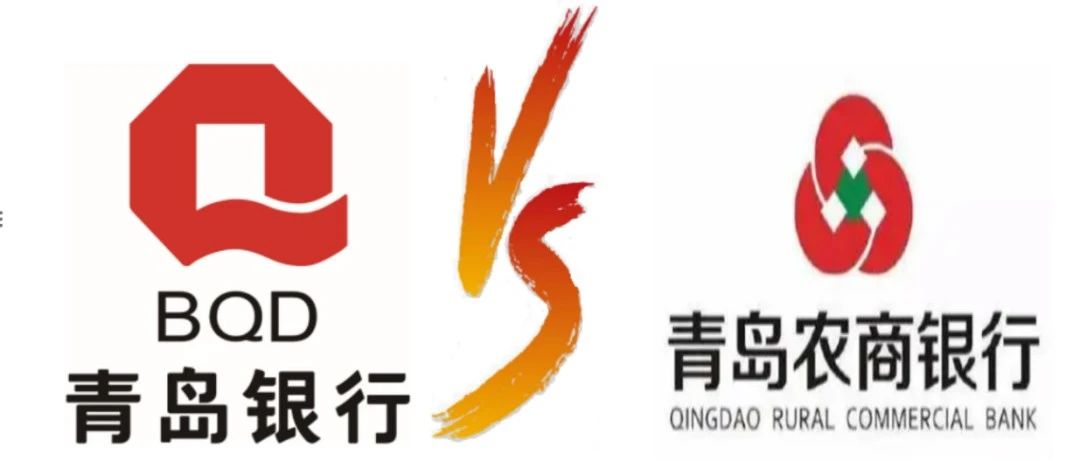
青岛银行VS青岛农商行:同城农商行与城商行的对决
数说者· 2025-07-16 14:22
Core Viewpoint - Qingdao's GDP for 2024 is projected to reach 1.67 trillion yuan, with a year-on-year growth of 5.7%, ranking 13th nationally and 3rd among major cities in China [1] Group 1: Historical Background - Qingdao Bank was established in 1996 and listed on both the Hong Kong and Shenzhen stock exchanges in 2015 and 2019 respectively [3] - Qingdao Rural Commercial Bank was formed in 2012 and listed on the Shenzhen Stock Exchange in 2018 [3] Group 2: Shareholder Background - Both banks have a dispersed shareholder structure with no controlling shareholders, but they share some common investors [4] - Qingdao Guoxin holds 11.25% of Qingdao Bank and 9.08% of Qingdao Rural Commercial Bank [4] Group 3: Operational Regions - Qingdao Bank has expanded its operations across all 16 cities in Shandong but lacks branches outside the province [6] - Qingdao Rural Commercial Bank primarily operates in Qingdao, with branches in Jinan and Yantai, and holds stakes in 9 village banks across various regions [6][7] Group 4: Subsidiary Situation - Qingdao Bank has two subsidiaries: Qingyin Financial Leasing and Qingyin Wealth Management [9] - Qingdao Rural Commercial Bank has no subsidiaries apart from its village banks [10] Group 5: Personnel and Compensation - As of 2024, Qingdao Bank has 5,312 employees, with 1,322 holding master's degrees [11] - Qingdao Rural Commercial Bank employs 5,832 people, with 585 holding master's degrees, and has a lower average salary compared to Qingdao Bank [12][13] Group 6: Financial Performance - As of 2024, Qingdao Bank's total assets are 689.96 billion yuan, while Qingdao Rural Commercial Bank's total assets are 495.03 billion yuan [15] - Qingdao Bank's net profit is 4.26 billion yuan, surpassing Qingdao Rural Commercial Bank's 2.86 billion yuan [15] - Qingdao Bank has a lower non-performing loan ratio of 1.14% compared to Qingdao Rural Commercial Bank's 1.79% [16][25] Group 7: Historical Development Comparison - In the past decade, Qingdao Bank has consistently outperformed Qingdao Rural Commercial Bank in total assets, revenue, and profit [21] - Qingdao Rural Commercial Bank's net interest margin has declined significantly from 3.69% in 2015 to 1.67% in 2024 [21][23]

银行板块年内涨幅超15%,大股东减持套现加剧顶部担忧
Di Yi Cai Jing· 2025-07-16 12:52
Core Viewpoint - The A-share banking sector is experiencing significant pressure, with concerns about a potential peak following substantial gains in stock prices, particularly after major shareholders began to reduce their holdings [1][2]. Group 1: Market Performance - As of July 16, 2023, the Shenwan Banking Index has recorded a year-to-date increase of 15.20%, with all 42 A-share listed banks showing gains, and some like Xiamen Bank and Shanghai Pudong Development Bank exceeding 30% [1]. - The average dividend yield for A-share listed banks has dropped to approximately 3.8%, down from 5.01% a year ago, indicating a significant increase in valuation levels [5]. - The price-to-earnings (PE) ratio of the China Securities Banking Index has risen to 7.4 times, the highest since April 2018 [5]. Group 2: Shareholder Actions - China Life Insurance plans to completely divest its 5,078,940 shares in Hangzhou Bank, representing 0.7% of the bank's total equity, marking its fourth reduction since 2021 [3]. - Other banks, such as Changsha Bank and Qilu Bank, have also seen major shareholders announce plans to reduce their stakes due to personal financial strategies [3]. - Conversely, some shareholders have chosen to increase their stakes, with New China Life Insurance acquiring shares from Commonwealth Bank of Australia, becoming the fourth largest shareholder in Hangzhou Bank [4]. Group 3: Industry Outlook - Industry experts express mixed views on the future of the banking sector, with some highlighting the resilience of banks despite pressures on net interest margins, while others warn of overheating risks due to rapid price increases [2][6]. - The banking sector's return on equity (ROE) has fallen below 10%, primarily due to slowing credit growth and ongoing pressure on net interest margins [6]. - Long-term investment value in bank stocks remains positive, with expectations of asset quality improvement and continued appeal for long-term funds due to stable dividends [7].

青岛银行(002948) - 关于2025年金融债券发行完毕的公告
2025-07-16 10:47
证券代码:002948 证券简称:青岛银行 公告编号:2025-022 2025 年 7 月 16 日 经中国人民银行批准,青岛银行股份有限公司(以下简称"本行")于近日在 全国银行间债券市场成功发行"青岛银行股份有限公司2025年金融债券"(以下简 称"本期债券")。 本期债券于2025年7月14日簿记建档,并于2025年7月16日发行完毕,发行规 模为40亿元人民币,品种为3年期固定利率债券,票面利率为1.71%。 本期债券募集资金将用于优化中长期资产负债匹配结构,增加稳定中长期负 债来源并支持新增中长期资产业务的开展。 特此公告。 青岛银行股份有限公司董事会 青岛银行股份有限公司 关于2025年金融债券发行完毕的公告 本行及董事会全体成员保证公告内容的真实、准确和完整,没有虚假记载、误导性陈 述或者重大遗漏。 ...