
vivo

Search documents
东莞“百千万工程”实践看长安,市场主体三年增长19.8%
Nan Fang Du Shi Bao· 2025-10-21 05:20
Core Insights - Dongguan's "Hundred Million Thousand Project" aims to activate high-quality development in towns and villages, with Chang'an Town emerging as a model for success [1][2][7] Economic Performance - Chang'an Town's GDP is projected to reach 1,050.7 billion yuan in 2024, marking a 5.5% year-on-year growth, with significant contributions from over 44,000 industrial enterprises [2][5] - The town's tax revenue exceeded 19.7 billion yuan, and the number of market entities grew by 19.8% over three years [2][3] Industrial Development - Chang'an has established a "2+3" characteristic industrial system, focusing on electronic information and hardware mold industries, alongside emerging sectors like intelligent vision and new energy vehicles [2][3] - The town's industrial output value reached 40 billion yuan, with a total import-export volume of 41 billion yuan [1] Community and Governance - Approximately 70% of enterprises and population are based at the town and village level, emphasizing the importance of community-driven economic models [3][4] - Chang'an is promoting diversified community economies, moving from a rental model to technology and industry-focused initiatives, leading to increased collective income [3][4] Talent and Education - The town has implemented various talent attraction strategies, resulting in over 267,000 talents, including 22,000 high-level professionals [5][6] - Investments in education include a 1.2 billion yuan project for a new school and expansions of existing public schools, adding over 5,500 quality public school seats [6] Future Goals - By 2025, Chang'an aims to enhance urban-rural integration, strengthen comprehensive capabilities, and address social welfare gaps, continuing its trajectory of economic growth [7]
锚定AI浪潮:从消费电子到AI算力,瑞声科技(2018.HK)引领千亿散热市场新纪元
Ge Long Hui· 2025-10-21 03:58
Core Insights - Apple's COO Sabih Khan praised the problem-solving capabilities of Chinese suppliers, highlighting the strategic value of AAC Technologies as a core supplier in defining technology standards and advancing manufacturing processes [1] - AAC Technologies has been collaborating with Apple for 17 years, with a significant increase in product shipments from 2 million to 610 million units annually, indicating a deep strategic partnership [2] - The VC vapor chamber is becoming a standard for high-end devices, with AAC Technologies positioned as a key supplier, benefiting from the rising demand for efficient thermal management solutions in AI smartphones [3] Company Overview - AAC Technologies has achieved full automation in its production processes for VC vapor chambers, providing a competitive edge through complete control over the manufacturing chain [4] - The company has developed various production techniques for different materials used in VC chambers and has a planned monthly capacity of nearly 30 million units, ensuring robust support for large client orders [4] Strategic Transition - AAC Technologies is transitioning from a consumer electronics component supplier to a core hardware platform for AI computing, expanding its market reach into sectors like smart vehicles and AI servers [5] - The company's strategic shift is expected to enhance its valuation as it moves from traditional consumer electronics to high-growth AI infrastructure, supported by partnerships with leading global users [5][6] Market Dynamics - The focus of the market is shifting from short-term performance to the fundamental transformation of AAC Technologies' business model, which is expected to drive structural improvements in profit margins and valuation [6]
英伟达发布800VDC白皮书,关注GaN及SiC功率器件
Ping An Securities· 2025-10-21 03:16
Investment Rating - The industry investment rating is "Outperform the Market" [1][33]. Core Insights - NVIDIA's recent white paper on the 800V DC architecture highlights energy consumption as a critical factor affecting the development of current and next-generation AI data centers. The power density of GPU racks is approaching 100 times that of web servers and continues to grow exponentially. Power infrastructure, once secondary, is now on par with or surpassing computational space [3]. - The 800V DC architecture significantly reduces current, copper usage, and cable volume compared to 54V DC or 480VAC systems while maintaining safety and scalability. It enhances overall energy efficiency and density through simplified power paths and increased transmission voltage [3]. - The performance of the 800V DC system relies on GaN (Gallium Nitride) and SiC (Silicon Carbide) power semiconductors, which have unique advantages in high-voltage, high-frequency, and high-efficiency scenarios. The market for GaN and SiC is expected to grow significantly, with GaN power devices projected to increase from $390 million in 2024 to $3.51 billion by 2030, representing a compound annual growth rate (CAGR) of 44% [3]. - The report suggests focusing on the GaN and SiC supply chain, recommending companies such as Sanan Optoelectronics, China Resources Microelectronics, Innoscience Technology (Hong Kong), Tianyue Advanced, Sinda Semiconductor, Silan Microelectronics, and Times Electric [3]. Summary by Sections Industry Overview - NVIDIA's white paper emphasizes the transformation of data centers into "AI factories" driven by GPU advancements, highlighting the critical role of energy infrastructure [3]. Market Trends - The demand for GaN and SiC is driven by applications in AI data centers, new energy vehicles, and humanoid robots, indicating a robust market outlook [3]. Investment Recommendations - The report recommends monitoring the GaN and SiC industry chain, identifying key players for potential investment opportunities [3].
台积电三季度营收超预期,Q3全球智能手机市场持续复苏 | 投研报告
Zhong Guo Neng Yuan Wang· 2025-10-21 01:05
Core Viewpoint - TSMC's Q3 2025 revenue reached $33.1 billion, exceeding guidance, with a year-on-year growth of 40.8% and a net profit increase of 39.1% [1][2][3] Industry Summary - The electronic sector is experiencing a moderate recovery, with a focus on structural opportunities in AI computing, AIOT, semiconductor equipment, key components, and rising storage prices [2][6] - Global smartphone shipments in Q3 2025 reached 323 million units, a 2.6% year-on-year increase, driven by high-end models, while China's smartphone shipments declined to 68 million units, down 0.6% year-on-year [1][4][5] Company Performance - TSMC's Q3 2025 revenue was $33.1 billion, with a year-on-year increase of 40.8% and a quarter-on-quarter increase of 10.1%. The net profit was 452.3 billion NTD, up 39.1% year-on-year [3] - The revenue growth was primarily driven by AI and high-performance computing (HPC) demand, contributing 57% to total revenue, while smartphone, IoT, automotive electronics, and consumer electronics accounted for 30%, 5%, 5%, and 1% respectively [3] - TSMC's revenue guidance for Q4 2025 is between $32.2 billion and $33.4 billion, with a gross margin expected between 59% and 61% [3] Market Dynamics - The global smartphone market is recovering moderately, with high-end innovations and emerging regions driving growth, while the Chinese market faces challenges of weak demand and structural transformation [5][6] - Domestic brands like Xiaomi, Transsion, and Vivo have shown growth in the global smartphone market, while Chinese brands are experiencing varying degrees of decline due to seasonal factors and limited new products [4][5] Investment Recommendations - The industry is advised to focus on companies benefiting from strong domestic and international demand in the AIOT sector, as well as those involved in AI innovation and upstream supply chain domestic substitution [6]

国内首款eSIM手机即将发售!多家公司早有布局相关业务
Zheng Quan Shi Bao· 2025-10-21 00:48
Core Insights - Apple CEO Tim Cook announced the official launch of the iPhone Air in China on October 22, which is the first smartphone in the country to utilize eSIM technology, eliminating the physical SIM card slot [1] - Major Chinese telecom operators, including China Unicom, China Mobile, and China Telecom, have received approval to commence eSIM services, marking a significant shift towards a "cardless era" in mobile technology [1][2] - The global eSIM market is projected to grow significantly, with an estimated 1 billion eSIM-enabled smartphones by the end of 2025 and 6.9 billion by 2030, representing 76% of total smartphone connections [2] Industry Developments - The eSIM technology integrates SIM card functions into the phone's internal chip, allowing for a more compact design and improved features such as water and dust resistance [2] - Domestic brands are quickly adapting to the eSIM trend, with OPPO announcing an eSIM version of its Find X9 series set to launch in November [1] - The eSIM industry involves a complex ecosystem, including chip design, platform management, operator services, device integration, and end-user applications, with expectations for collaborative growth and maturity [3] Company Activities - Several companies have been actively involved in the eSIM space, including Unisoc, which has launched multiple eSIM products compliant with GSMA standards [4] - Eastcompeace has developed an embedded operating system and eSIM management platform that has received GSMA security certification [5] - Megmeet has established a mature eSIM solution with large-scale production capabilities across 4G and 5G platforms [5] Market Performance - eSIM concept stocks have seen an average increase of 42.42% this year, significantly outperforming the Shanghai Composite Index [7] - Six stocks have recorded gains exceeding 50%, including Hengbao Co., Eastcompeace, and Chutianlong [7] - Despite the overall positive trend, some stocks have experienced significant pullbacks, with several dropping over 30% from their year-to-date highs [7]
多项大赛落地 东莞滨海湾AI产业释放“磁吸效应”
Nan Fang Du Shi Bao· 2025-10-20 23:12
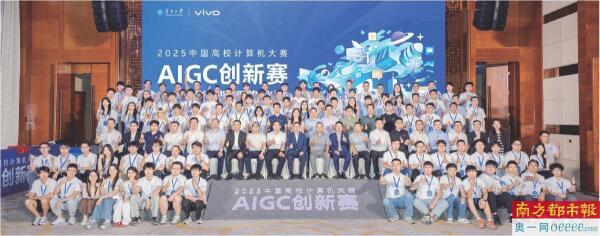
Core Insights - The article highlights the growing significance of the Binhai Bay area as a hub for AI competitions and innovation, attracting talent and fostering industrial development through various AI-related events [4][6][10]. Group 1: AI Competitions - The "Industrial AI Application Innovation Challenge" is set to close registrations in 10 days, with over 1,000 students participating, showcasing their "AI+" solutions [4]. - The AIGC Innovation Competition attracted 6,390 students from 478 universities, forming 2,310 teams, while the upcoming Intelligent Interaction Innovation Competition has 3,626 teams and 4,939 participants from 477 universities [6]. - The competitions focus on technological creativity and address industry pain points, with the "Hundred Scenery Competition" targeting specific technical needs of enterprises in Dongguan [7]. Group 2: Industrial Development - Binhai Bay has become a focal point for AI development, with major companies like OPPO and vivo establishing significant operations in the area, including global computing centers and health labs [8]. - The local government has implemented supportive policies, including a 300 million yuan incentive package and the establishment of a 10 billion yuan AI industry fund, to accelerate AI development [8][9]. - Binhai Bay has been designated as a national AI application pilot base, enhancing its status in the AI industry [9]. Group 3: Talent and Resource Attraction - The competitions not only generate excitement but also attract valuable talent and resources necessary for high-quality regional development [10]. - The "Youth Partner Program" offers various incentives for young innovators, including project funding and living subsidies, to encourage entrepreneurship in the area [10]. - Binhai Bay plans to collaborate with universities and AI companies to establish a technology incubation base, aiming to create a hub for AI project transformation [11].

抢占核心商圈,重塑消费体验——vivo人文影像馆落子武汉
Sou Hu Cai Jing· 2025-10-20 22:17
Core Insights - The article highlights the transformation of brand retail spaces from "selling products" to "creating experiences" in the context of an evolving consumer landscape and the rise of the experience economy [1][9] - Vivo has opened its first cultural imaging museum in Central China, located in the strategic commercial hub of Wuhan's Chu River Han Street, aiming to connect with young consumers through a blend of technology, art, and interactive experiences [1][9] Group 1: Vivo's New Retail Concept - The cultural imaging museum serves as a physical manifestation of Vivo's imaging strategy, enhancing user perception of advanced imaging technology through immersive interactions and creative inspiration [3][9] - The museum features a three-level layout designed to provide a comprehensive imaging exploration journey, showcasing Vivo's latest imaging technology, particularly the flagship X300 series equipped with proprietary imaging chips and advanced optical technologies [3][4] Group 2: Interactive Experiences and Exhibitions - The first floor includes immersive experience zones where users can engage with high-resolution photography and video capabilities, such as capturing detailed models and experiencing ecological photography breakthroughs [3][4] - The second floor hosts a themed photography exhibition in collaboration with the China Photographers Association, showcasing works that connect professional photographers with the general public, thereby stimulating creative expression [4][6] Group 3: Community Engagement and Future Vision - The third floor features a playful experience area themed around the movie "Zootopia 2," offering professional photography services and personalized memorabilia, enhancing user engagement through fun and interactive elements [6][8] - Vivo's collaboration extends beyond the museum with a themed street event, providing users with opportunities to create and share content, thus deepening the integration of technology and intellectual property [8][9] - The establishment of the cultural imaging museum marks a significant step for Vivo in building a "cultural technology" brand ecosystem, aiming to foster creativity and emotional connections within a public cultural space [9]

“中国企业500强”见证经济活力(人民时评)
Ren Min Ri Bao· 2025-10-20 21:48
Group 1 - The threshold for entering the "2025 China Top 500 Enterprises" list has increased for 23 consecutive years, with the number of enterprises exceeding 100 billion yuan reaching 267, and 15 enterprises reporting revenues over 1 trillion yuan, indicating a dual leap in scale and quality of large enterprises in China [1] - State-owned enterprises (SOEs) and private enterprises (PEs) are driving market vitality, with 251 SOEs and 249 PEs in the top 500, reflecting a balanced contribution from both ownership types and the implementation of the "two unwavering" principles [1][2] - The manufacturing sector contributed 40.48% to the revenue of the top 500 enterprises, while the service sector contributed 40.29%, showcasing a balanced development that challenges the notion that strong manufacturing must come at the expense of services [2] Group 2 - The "2025 China Top 100 Multinational Corporations" list has seen an 11.76% increase in the entry threshold, with overseas assets totaling 11.96 trillion yuan, indicating a steady improvement in the average multinational index [3] - Chinese enterprises are not merely exporting products but are achieving "value export" through global industrial chain restructuring, with companies like vivo and Transsion capturing significant shares in emerging markets [3] - The synergy between SOEs and PEs, the integration of manufacturing and services, and the local-global linkage are injecting new vitality into economic development, positioning Chinese enterprises for continued growth and transformation [3]
国内首款eSIM手机即将发售 多家公司早有布局相关业务
Zheng Quan Shi Bao· 2025-10-20 17:10
Core Insights - Apple CEO Tim Cook announced the launch of the iPhone Air in China on October 22, which is the first smartphone in the country to use eSIM technology, eliminating the physical SIM card slot [1] - The launch follows the approval of eSIM services by major Chinese telecom operators, marking the official entry of eSIM technology into the mobile phone market in China [1][2] - The global eSIM market is projected to grow significantly, with an estimated 1 billion eSIM smartphone connections by the end of 2025 and 6.9 billion by 2030, representing 76% of total smartphone connections [2] Industry Developments - The eSIM ecosystem involves a complex supply chain including chip design, platform management, operator services, device integration, and end-user applications, with expectations for collaborative development and maturation of the industry [3] - Several companies in the A-share market have been actively developing eSIM capabilities, including Unisoc, which has launched multiple eSIM products compliant with GSMA standards [4] - Eastcompeace has successfully developed an embedded operating system and eSIM IoT management platform that received GSMA security certification [5] - Megmeet has established mature eSIM solutions with large-scale production on 4G/5G chip platforms [6] - Chutianlong's eSIM products have been approved by China Unicom, and Wanma Technology has been a long-term provider of eSIM solutions across various standards [7] Market Performance - eSIM concept stocks have seen an average increase of 42.42% year-to-date, significantly outperforming the Shanghai Composite Index, with six stocks rising over 50% [8] - Some eSIM concept stocks have experienced significant pullbacks from their year-to-date highs, with declines exceeding 30% for several companies [9] - A total of 14 eSIM concept stocks have received "positive" ratings from brokerage firms, with eight stocks rated by more than ten institutions, including ZTE, Guanghetong, China Telecom, China Mobile, and Megmeet [9]



电子行业周报:台积电三季度营收超预期,Q3全球智能手机市场持续复苏-20251020
Donghai Securities· 2025-10-20 15:39
Investment Rating - The report indicates a cautious investment outlook for the electronics sector, suggesting a gradual recovery in industry demand and advising against chasing high prices while recommending slow accumulation during dips [5]. Core Insights - TSMC's Q3 2025 revenue reached $33.1 billion, exceeding guidance and reflecting a 40.8% year-on-year growth, with net profit increasing by 39.1%. The revenue from 7nm and below process nodes accounted for 74% of total revenue [4][10]. - Global smartphone shipments in Q3 2025 reached 323 million units, a 2.6% year-on-year increase, driven by high-end models, although shipments in China declined by 0.6% [4][10]. - The electronics industry is experiencing a mild recovery, with structural opportunities in AI computing, AIOT, semiconductor equipment, key components, and rising storage prices [4][5]. Summary by Sections Industry Overview - TSMC's Q3 2025 revenue was $33.1 billion, a 40.8% increase year-on-year, with a net profit of NT$452.3 billion, up 39.1% year-on-year. The company expects Q4 revenue between $32.2 billion and $33.4 billion [4]. - The global smartphone market is recovering, with high-end models driving demand, while the Chinese market faces challenges with a 0.6% decline in shipments [4][10]. Market Performance - The electronics sector underperformed the market, with the Shanghai-Shenzhen 300 index down 2.22% and the Shenwan Electronics Index down 7.14% [19][21]. - As of October 17, 2025, the semiconductor sub-sector saw a decline of 6.53%, while consumer electronics dropped by 9.10% [21][22]. Investment Recommendations - Focus on companies benefiting from strong domestic and international demand in the AIOT sector, such as Lexin Technology and Rockchip Technology [5]. - Monitor AI innovation-driven sectors, particularly computing chips and optical devices, with companies like Cambricon and Source Photonics highlighted [5]. - Consider leading stocks in the storage sector, such as Zhaoyi Innovation and Jiangbo Technology, as prices are expected to recover [5].