美的集团

Search documents
年内1494家A股公司回购1392亿元,美的集团115亿元居首
Bei Ke Cai Jing· 2025-12-31 14:23
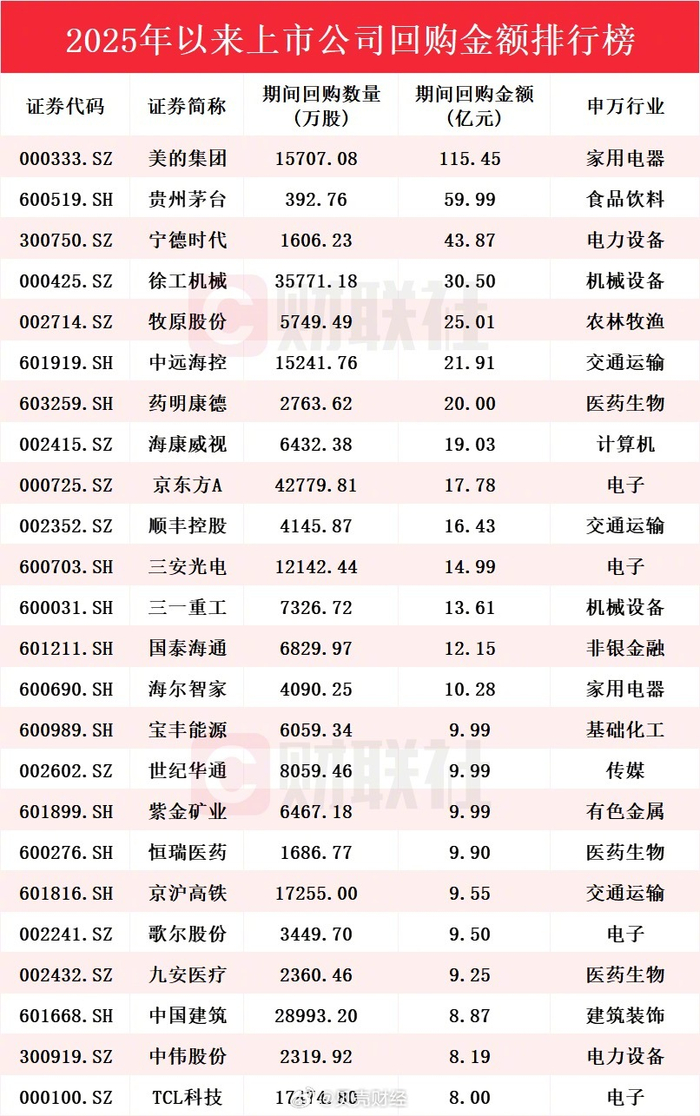
Group 1 - As of the report date, 1494 A-share companies have implemented share buybacks in 2025, with a total amount exceeding 1392.84 billion yuan [1] - Among these, 14 companies have repurchased more than 1 billion yuan, with Midea Group leading at 115.45 billion yuan [1] - Other notable companies include Kweichow Moutai with 59.99 billion yuan and CATL with 43.87 billion yuan in buybacks [1] Group 2 - The top companies by buyback amount include: - Midea Group: 15,707.08 thousand shares, 115.45 billion yuan [1] - Kweichow Moutai: 392.76 thousand shares, 59.99 billion yuan [1] - CATL: 1,606.23 thousand shares, 43.87 billion yuan [1] - XCMG Machinery: 35,771.18 thousand shares, 30.50 billion yuan [1] - Muyuan Foods: 5,749.49 thousand shares, 25.01 billion yuan [1]







美的集团接待20家机构调研,包括睿远基金、华创证券、长江养老保险、银河证券等
Jin Rong Jie· 2025-12-31 13:03
Group 1 - Midea Group disclosed a research reception announcement on December 31, 2025, hosting 20 institutions including Ruifeng Fund and Huachuang Securities [1] - The latest stock price of Midea Group is 78.15 yuan, down 0.70 yuan or 0.89% from the previous trading day, with a total market value of 593.76 billion yuan [1] - Midea Group's rolling P/E ratio is 13.28, ranking 13th in the home appliance industry, which has an average P/E ratio of 30.26 [1] Group 2 - The smart building technology segment showed strong performance, with revenue reaching 28.1 billion yuan in the first three quarters of the year, a year-on-year increase of 25% [1] - The segment has diversified its customer base, including data centers, healthcare, industrial parks, and rail transit, leading in market share for commercial multi-split units and centrifugal units [1] Group 3 - The humanoid robot business is progressing steadily, with the "Mei Luo U" six-arm wheeled humanoid robot recently unveiled, and the "Mei La" series planned for 2026 entry into Midea's offline experience stores [2] - Midea Group was established on April 7, 2000, primarily engaged in general equipment manufacturing [2] - As of September 30, 2025, Midea Group had 308,748 shareholders, an increase of 31,510, with an average holding value of 1.9232 million yuan [2]
美的集团通过私人安排合共回购约132.77万股A股
Zhi Tong Cai Jing· 2025-12-31 12:59
美的集团(000333)(00300)公布,通过私人安排合共回购约132.77万股A股,涉资约2669.48万元。 ...
美的集团(00300)通过私人安排合共回购约132.77万股A股
智通财经网· 2025-12-31 12:58
智通财经APP讯,美的集团(00300)公布,通过私人安排合共回购约132.77万股A股,涉资约2669.48万 元。 ...
美的集团(00300) - 翌日披露报表
2025-12-31 12:48
FF305 翌日披露報表 (股份發行人 ── 已發行股份或庫存股份變動、股份購回及/或在場内出售庫存股份) 表格類別: 股票 狀態: 新提交 公司名稱: 美的集團股份有限公司(於中華人民共和國註冊成立的股份有限公司) 呈交日期: 2025年12月31日 | 3). | 購回股份 (股份購回並註銷) | -641,286 | 0.009312 % | RMB | 19.39 | | --- | --- | --- | --- | --- | --- | | | 註銷根據本公司2023年限制性股票激勵計劃項下所購買的A股 | | | | | | | 變動日期 2025年12月31日 | | | | | | 4). | 就根據股份計劃授予參與人(發行人的董事除外)的股份獎勵或期權 | 51,369 | 0.000746 % | RMB | 70.29 | | | 而發行新股或轉讓庫存股份 - 涉及新股 | | | | | | | 根據於第八期股票期權激勵計劃行使期權 | | | | | | | 變動日期 2025年12月23日 | | | | | | 5). | 就根據股份計劃授予參與人(發行人的董事除外)的股份獎 ...
智通港股解盘 | 2025港股全年表现给力 航天航空火爆来袭
Zhi Tong Cai Jing· 2025-12-31 12:38
Market Overview - The Hang Seng Index experienced a slight decline of 0.87% on the last trading day of 2025, but overall, it rose from approximately 19,600 points at the beginning of the year to 25,630 points, marking a 27.77% increase for the year, the best annual performance in five years [1] - The IPO market in Hong Kong is strong, with the total IPO scale for 2025 expected to reach 286.3 billion HKD, regaining the top position globally [1] - The performance of Hong Kong stocks is closely tied to the US market, with recent Federal Reserve meeting minutes indicating a consensus on potential interest rate cuts, although internal disagreements exist [1] Semiconductor Industry - The U.S. Department of Commerce has modified its policy to allow Samsung and SK Hynix to export chip equipment to their factories in China, requiring annual approval, driven by the upcoming IPO of Changxin Memory Technologies [2] - The new policy does not indicate a change in the U.S. stance but reflects urgent market conditions, as a ban would lead to market share loss for these companies [2] Consumer Electronics - The National Development and Reform Commission and the Ministry of Finance released a notice on December 30 regarding a large-scale equipment update and consumer goods replacement policy for 2026, but the subsidy standards were cut, leading to a muted market reaction [2] - The subsidy ratio was reduced from 20% to 15%, and the maximum subsidy per item decreased from 2,000 to 1,500 CNY, with the number of supported categories halved from 12 to 6 [2] Aerospace and Space Technology - The aerospace sector is gaining traction in the A-share market, with companies like China International Marine Containers (CIMC) benefiting from their role as core suppliers of rocket propellant storage and transportation [4] - CIMC has delivered nine large liquid oxygen storage tanks for commercial space projects, with significant revenue and orders from leading institutions [4] - JunDa Co., focusing on space computing, has formed a strategic partnership to explore the application of perovskite battery technology in space energy, indicating potential growth in the space computing market [5] Aviation Industry - The aviation sector is experiencing a surge in demand, with domestic flight ticket bookings for the New Year holiday exceeding 3.54 million, a 28% year-on-year increase [7] - Airlines are benefiting from lower oil prices and a stronger RMB, which reduces fuel costs and enhances financial performance [7] - China Eastern Airlines reported a net profit of 2.103 billion CNY for the holiday period, a significant turnaround from a loss the previous year, with strong growth in passenger turnover and capacity [9][10]
银河金工指数分析系列研究:市场基准分析:主要策略指数
Yin He Zheng Quan· 2025-12-31 11:27
Core Insights - The report highlights a clear differentiation in the performance of growth and value indices, with growth indices showing superior profitability and elasticity, while value indices emphasize defensive characteristics and dividends [1][3][23]. Group 1: Major Large and Mid-Cap Indices - The major indices analyzed include the CSI 300 Growth Index, CSI 300 Value Index, CSI 500 Growth Index, and CSI 500 Value Index, all of which are designed to capture excess returns or enhance specific style returns [3][4]. - Growth indices are characterized by lower allocation to financials and higher allocation to technology, consumer, and manufacturing sectors, while value indices are the opposite, focusing more on financials and cyclical sectors [6][10]. - The CSI 300 Growth Index has a significant concentration of large-cap stocks, with the top ten stocks accounting for 67.1% of the index weight, indicating a strong leader effect [10][11]. Group 2: Fundamental Performance of Indices - Growth indices exhibit higher PE and PB ratios compared to value indices, reflecting market expectations for future growth, with the CSI 300 Growth Index showing a cumulative increase of over 100% [1][23]. - The annualized returns since the inception of the indices show that the CSI 500 Growth Index leads with a cumulative increase of over 150%, while the CSI 300 Value Index has a more modest increase of approximately 30% [25][39]. - Dividend yields are significantly higher in value indices, with the CSI 300 Value Index maintaining a dividend rate of 3.5%-4.5%, while growth indices show lower dividend willingness [39][41]. Group 3: Market Capitalization Distribution - The CSI 300 indices are primarily composed of large-cap stocks, with over 80% of the CSI 300 Growth Index constituents having a market capitalization exceeding 100 billion [17][20]. - The CSI 500 indices focus on mid-cap stocks, with a significant portion of constituents falling within the 10 billion to 50 billion range, highlighting the distinct characteristics of mid-cap indices [17][20]. Group 4: Shareholder Attributes - Growth indices are predominantly composed of private enterprises, while value indices are mainly represented by state-owned enterprises, indicating a divergence in shareholder characteristics [11][53].
美的集团:这里的新高静悄悄!
市值风云· 2025-12-31 10:08
Core Viewpoint - The article discusses the impact of the 2026 "National Subsidy" policy for replacing old home appliances on leading home appliance companies' performance in the coming year, particularly focusing on Midea Group's stock buyback and financial performance [3][31]. Group 1: Stock Buyback and Market Performance - Midea Group has spent 10 billion on stock buybacks from June 17, 2025, to December 8, 2025, with 70.36% of the repurchased shares set for cancellation, signaling strong cash flow and valuation discount [3][4]. - Since the buyback began, Midea Group's stock has seen a maximum increase of over 15%, closing at a price that attempted to reach its historical high of 88.74 yuan per share [4]. - The stock's price-to-earnings ratio (PE) reached 13.32 times, with a dividend yield of 5.16%, indicating an attractive valuation [30]. Group 2: Financial Performance - Midea Group's revenue for 2024 is projected to be 409.1 billion, a year-on-year increase of 9.5%, with the first three quarters of 2024 showing a revenue of 364.7 billion, up 13.8% [5][10]. - The net profit for 2024 is expected to be 38.54 billion, reflecting a 14.3% increase year-on-year, with the first three quarters showing a net profit of 37.88 billion, up 19.5% [10]. - Midea Group has consistently outperformed competitors like Gree Electric and Haier Smart Home in terms of revenue and net profit since 2020 [10][12]. Group 3: B2B Business Contribution - Midea Group's B2B business contributed significantly to its revenue, with 2024 B2B revenue at 104.5 billion, accounting for 26% of total revenue [15]. - The B2B segment includes various solutions such as new energy and industrial technology, smart building technology, and robotics, with the new energy and industrial technology segment showing a 20.58% year-on-year growth [16][20]. - The company has strategically elevated its B2B business to be on par with its consumer-oriented smart home business since 2020, marking a significant shift in its operational focus [19]. Group 4: Acquisition Strategy - Midea Group has a history of strategic acquisitions that have bolstered its growth, including the purchase of Toshiba's air conditioning business and KUKA Robotics, enhancing its capabilities in various sectors [22][24]. - The acquisitions have allowed Midea to fill gaps in its product offerings and expand its global influence, with a notable increase in goodwill, reaching 34.37 billion by the end of Q3 2025 [25]. - The company has not experienced significant goodwill impairment in any fiscal year, indicating successful integration of acquired entities [25]. Group 5: Future Outlook with National Subsidy - The new "National Subsidy" policy for 2026 will continue to support the home appliance sector but will be more focused and optimized, which is seen as a positive for leading companies like Midea [31].
2025中国工业关键词:从新型工业化、AI+到万亿降本
Guan Cha Zhe Wang· 2025-12-31 09:48
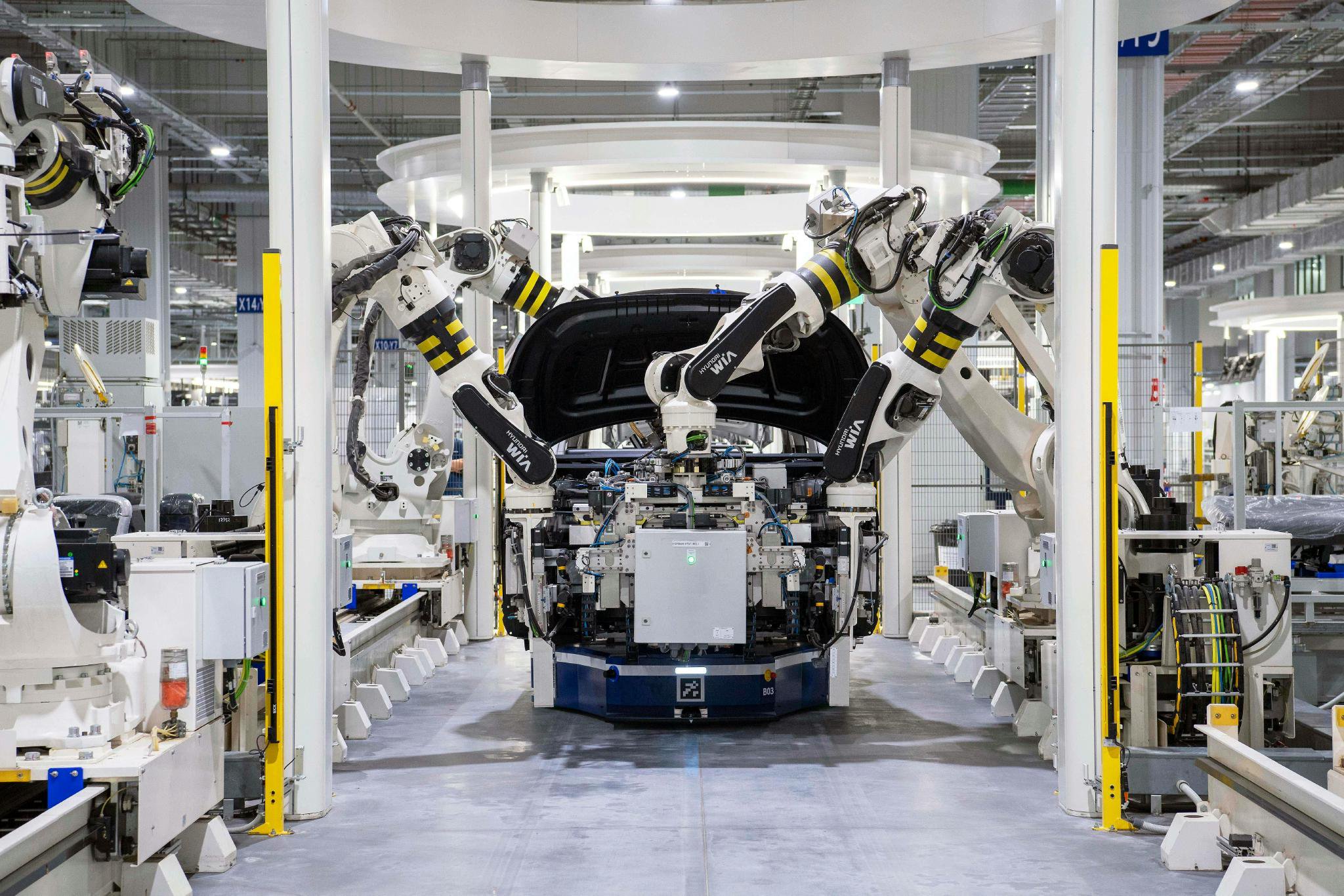
首先,作为2025年工业领域核心任务,新型工业化被写入《政府工作报告》,其核心要义在于推动科创与产业创新深度融合,带动传统产业迭代更新与新型 产业发展壮大,为"十四五"圆满收官与"十五五"平稳开局夯实工业发展根基。 2025年作为"十四五"收官与"十五五"谋划的关键交汇点,中国工业产业在政策精准引领与创新驱动双轮驱动下,呈现出稳中有进、质效双升的良好发展态 势。 数据显示,全年规模以上工业增加值同比增长5.9%,1—11月规模以上高技术制造业、装备制造业增加值同比分别增长9.2%和9.3%;制造业转型升级步伐持 续加快,累计建成7000余家先进级、500余家卓越级智能工厂,为产业高质量发展筑牢根基。 本文将围绕年度核心关键词,结合行业实践与典型案例,复盘2025年中国工业产业发展脉络,展望未来发展方向。 一、新型工业化 2025年,新型工业化称得上中国工业产业发展的总纲领。 在政策指引下,各地纷纷聚焦实体经济,以先进制造业为骨干构建现代化产业体系。长三角地区推动电子信息、高端装备等产业集群化发展,通过跨区域协 同创新实现产业链上下游高效联动;珠三角地区则依托智能制造、绿色制造试点示范,推动传统制造业向高端化、 ...
硬核满配“芯”突破!美的推出酷省电二代新品,省电舒适体验双升级
Sou Hu Wang· 2025-12-31 09:30
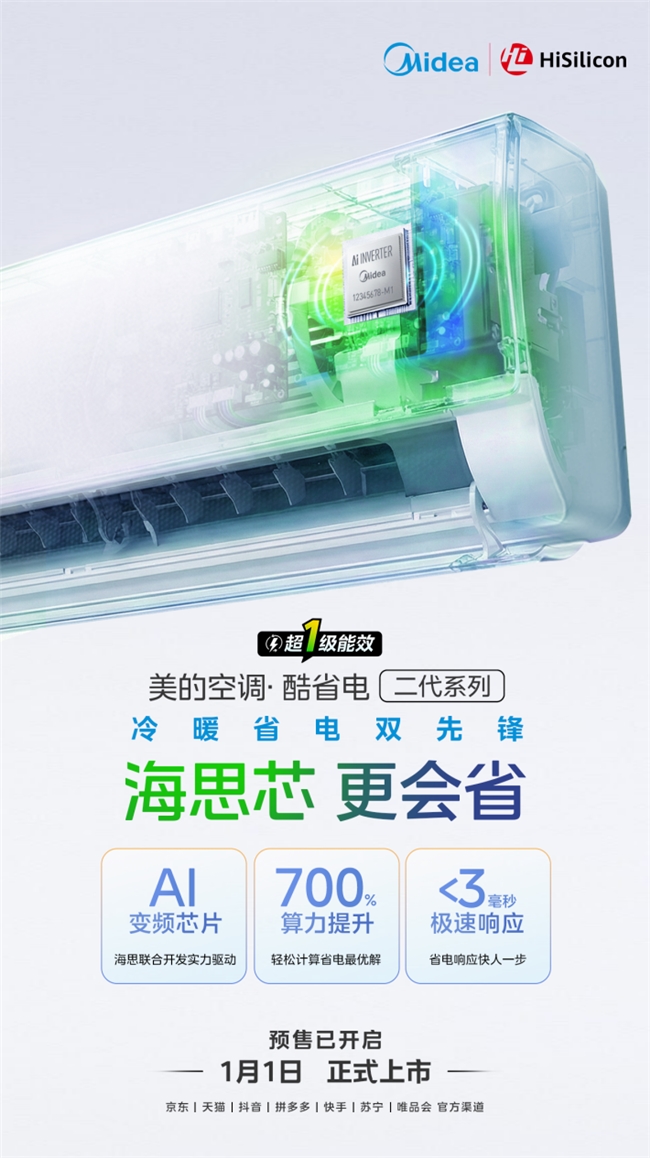
Core Viewpoint - The air conditioning industry is facing challenges related to energy consumption and user comfort, with Midea's new "Cool Energy Saving" series aiming to address these issues through advanced technology and AI integration [1][11]. Group 1: Energy Efficiency and Technology - The traditional air conditioning systems often sacrifice speed for energy savings, leading to ineffective energy consumption and high electricity bills, especially during winter heating [1] - Midea's "Cool Energy Saving" series has sold 1 million units, indicating strong market demand for energy-efficient solutions [3] - The new "Cool Energy Saving 2nd Generation" features an AI variable frequency chip developed in collaboration with Hisilicon, achieving a 700% increase in computing power and a response time of just 3 milliseconds [5] Group 2: Hardware and Performance - The new air conditioner is equipped with advanced hardware, including a unique compressor and enhanced heat exchange components, which improve cooling and heating efficiency by 10.7% and increase heat exchange area by 77% [8] - The system can achieve a temperature difference of within 0.2 degrees Celsius across the entire room, addressing user concerns about temperature fluctuations [9] Group 3: Market Position and Consumer Response - Midea's "Cool Energy Saving 2nd Generation" is positioned to disrupt the market by addressing the technical shortcomings of traditional air conditioners and meeting core consumer demands [11] - The pre-sale of the new series has exceeded 10,000 units, with a full launch planned across major online platforms, indicating strong consumer interest and potential for market impact [11]