OPPO

Search documents
1TB内存价差达4000元,存储涨价“压力棒”递给了手机厂
第一财经· 2025-11-05 15:13
Core Viewpoint - The article discusses the significant increase in storage component costs impacting smartphone manufacturers, leading to price hikes in mid to high-end models, with some models experiencing price differences of up to 4000 yuan due to storage upgrades [3][4][10]. Price Surge in Storage Components - The cost of storage components accounts for approximately 10%-20% of smartphone hardware costs, resulting in price increases of 100-500 yuan for mid to high-end models [3][7]. - The price of LPDDR4X (4GB) saw a quarter-on-quarter increase of 30.4% in Q3 2025, with other DRAM products also experiencing increases of over 20% [3][10]. - The price difference for various memory specifications in smartphones has widened significantly, with discussions on social media highlighting that storage has become more expensive than gold [4][5]. Market Dynamics and Manufacturer Responses - The price fluctuations in the storage market are primarily driven by the gradual exit of LPDDR4X from the market, leading to increased demand for HBM and SSD products [7][8]. - Manufacturers are adjusting prices of different storage versions to balance costs and profits, with notable price differences between models, such as a 600 yuan increase for the Redmi K90 standard version [8][9]. - Major storage manufacturers like Samsung and SK Hynix plan to raise memory prices further in Q4, with potential increases of up to 30% [10][11]. Impact on Consumer Electronics - The price of DDR4 memory has surged significantly, with 4GB versions increasing by 150% and 16GB versions by 743% from the beginning of the year to November 5 [13]. - The ongoing price increases are expected to persist into the first half of 2026, with potential stabilization in the second half as production capacity increases [13][14]. Strategic Adjustments by Smartphone Manufacturers - Smartphone manufacturers are likely to promote higher-priced flagship models to maintain profit margins, while lower-end models may face challenges due to cost pressures [14][15]. - Some manufacturers are shifting focus to higher-end markets, with brands like realme increasing prices for their GT8 series to around 4000 yuan [15][16]. - The market for smartphones priced between 1000-2000 yuan has decreased by approximately 2.5%, indicating a shift towards higher-end products [15].


1TB内存价差达4000元,存储涨价“压力棒”递给了手机厂
Di Yi Cai Jing· 2025-11-05 14:08
Core Insights - The rising cost of memory components is significantly impacting smartphone manufacturers, with storage costs accounting for approximately 10%-20% of total hardware costs [1][4] - The price increase in memory has led to a general price hike of 100-500 yuan for mid-to-high-end smartphone models, with some models seeing price differences of 3000-4000 yuan based on memory specifications [1][4] - The market is experiencing a shift in demand towards higher-capacity storage options, as manufacturers adjust pricing strategies to mitigate the impact of rising costs [4][10] Industry Impact - The current memory price surge is primarily driven by the gradual exit of LPDDR4X from the market, which has triggered a chain reaction affecting pricing [4] - Major memory manufacturers like Samsung, SK Hynix, and Micron are expected to raise memory prices further in Q4, with increases potentially reaching 30% [7] - The price of LPDDR4X is projected to rise by 10%-15% in Q4, with low-capacity products expected to remain strong in pricing throughout the year [7][10] Consumer Behavior - Discussions on social media highlight the perception of memory prices surpassing that of gold, with significant price differences noted for various smartphone models [2] - Consumers are increasingly viewing higher storage options as luxury items, with notable price hikes for models with larger memory capacities [2][4] Manufacturer Strategies - Smartphone manufacturers are responding to rising costs by increasing the prices of different storage versions, encouraging consumers to opt for higher-capacity models to offset the cost pressures [4][10] - Companies are facing challenges in maintaining competitive pricing while ensuring healthy profit margins, leading to a cautious approach in product innovation [10][12] - Some manufacturers are shifting focus to flagship models with higher price points to sustain profitability amidst rising component costs [10][12]
TIAN RUIXIANG Holdings Ltd. Enters Into Agreement to Acquire REN Talents Inc.
Globenewswire· 2025-11-05 14:00
Core Viewpoint - TIAN RUIXIANG Holdings Ltd. has announced a definitive agreement to acquire REN Talents Inc., enhancing its international presence and diversifying its business beyond insurance services [1][3]. Company Overview - TIAN RUIXIANG Holdings Ltd. is an insurance broker based in Beijing, China, offering a variety of insurance products, including property and casualty insurance, health insurance, and life insurance [4]. - REN Talents Inc. is a global creative brand agency founded in 2021, with offices in New York, Shanghai, and Paris, specializing in brand strategy, marketing, and content development for clients in fashion, beauty, lifestyle, and technology sectors [2][5]. Acquisition Details - The acquisition involves the issuance of 3,211,010 Class A ordinary shares at a price of $2.18 per share, with the transaction expected to close around November 5, 2025 [1]. - REN Talents has served over 100 clients across various industries, including notable brands like ANTA, Xiaomi, and Miniso, and manages high-profile talents [2][5]. Strategic Implications - The acquisition is part of TRX's globalization strategy, aiming to integrate insurance services into consumer and lifestyle sectors, thereby creating an "Insurance + Brand + Lifestyle" ecosystem [3]. - The U.S. and Europe are identified as critical markets for innovation, consumer spending, and branding, which will enhance TRX's global brand influence [3].

曾经躺赚的“非洲手机之王”,为什么突然不“香”了?
凤凰网财经· 2025-11-05 13:27
Core Viewpoint - Transsion, known as the "king of African mobile phones," is facing significant challenges due to increased competition and rising costs, leading to a situation of "increased revenue but decreased profit" [4][21]. Group 1: Company Background and Growth - Transsion was founded in 2006 by Zhur Zhaojiang, who identified the potential of the African market after extensive travel [5]. - The company achieved remarkable success, becoming the top mobile phone vendor in Africa by 2017, with a market share exceeding 40% by 2024 [7][8]. - Transsion's unique innovations, such as deep skin tone beautification technology, catered specifically to African consumers, contributing to its rapid market capture [5][7]. Group 2: Financial Performance - In the first three quarters of 2025, Transsion reported revenue of 495.4 billion yuan, a slight decline of 3.3% year-on-year, while net profit plummeted nearly 45% to 21.5 billion yuan [4][13]. - Despite a revenue rebound in Q3 2025, net profit still fell by 11.06% to 9.35 billion yuan [4][13]. - The company's gross margin decreased to 19.5%, and net margin dropped from 7.69% to 4.47% in 2025 [12][13]. Group 3: Competitive Landscape - Transsion's market dominance is being challenged by competitors like Xiaomi, Huawei, OPPO, and vivo, who are aggressively entering the African market [9][12]. - The competitive landscape has shifted from growth to intense competition, with Transsion's market share growth slowing to 6% in Q2 2025 [12]. - The entry of these competitors has led to a significant erosion of Transsion's traditional low-end market segment [9][12]. Group 4: Cost Pressures and Legal Challenges - Rising costs, particularly in memory chips, have severely impacted Transsion's profit margins, with prices for DDR4 memory increasing over 100% [16][17]. - The company is also embroiled in ongoing patent disputes, notably with Huawei, which has further complicated its operational landscape [17]. - Sales expenses increased by 4.17% in the first three quarters of 2025, further squeezing profit margins [17]. Group 5: Strategic Responses - In response to declining profits, Transsion is focusing on product upgrades and increasing R&D spending, which rose by 17.26% to 2.139 billion yuan in 2025 [15][16]. - The company is diversifying its market presence by exploring opportunities in South Asia and Latin America, as well as expanding into digital accessories and home appliances [15][16]. - Despite these efforts, new business segments are still in the investment phase and have not yet made a significant contribution to overall revenue [15].


第八届虹桥国际经济论坛“人工智能国际标准赋能产业升级”分论坛举办
Xin Lang Cai Jing· 2025-11-05 12:05
11月5日,第八届虹桥国际经济论坛"人工智能国际标准赋能产业升级"分论坛在国家会展中心(上海) 举办。市场监管总局副局长束为、上海市人民政府副市长陈杰出席分论坛并致辞。分论坛上,国际标准 化组织(ISO)副主席贾维尔·加西亚、国际电工委员会(IEC)副秘书长吉勒·索内特、中国科学院院士 郭旭、欧洲电信标准化协会(ETSI)前总干事卢易思,以及华为、西门子、中兴通讯、OPPO等国内外 知名企业负责人围绕"人工智能国际标准赋能产业升级"主题发表演讲并开展专题讨论。分论坛还发布了 《人工智能 大模型》等国家标准外文版、人工智能标准国际合作倡议及《2025人工智能科技伦理及审 查评估研究报告》英文版等三项成果。(市场监管总局) ...
品牌门店成为旅行的“情绪目的地” ?泡泡玛特、MUJI的在地化新叙事
3 6 Ke· 2025-11-05 11:44
Core Insights - The article discusses how brand stores are becoming "emotional destinations" for travelers, with a significant increase in cross-regional travel during the recent holiday period, estimated at 2.433 billion trips [1] Group 1: Brand Store Trends - More tourists are not just visiting attractions but are actively seeking unique brand stores in local areas, enhancing their cultural consumption experience [1][7] - The concept of "localized storytelling" is categorized into three types: local guide stores, collector's item stores, and exhibition stores [7] Group 2: Local Guide Stores - Local guide stores integrate into new commercial districts, creating a sense of local identity. They cater to tourists' desires for both exploration and familiarity [8] - An example is the tea brand "Cha Bai Dao," which collaborates with local culture in Chengdu, incorporating traditional elements into its store design [8][12] Group 3: Collector's Item Stores - Collector's item stores use natural or cultural landscapes as their backdrop, positioning the brand as the "best viewing platform" [17] - M Stand, a coffee chain, exemplifies this by creating a store in Urumqi that features local cultural elements, attracting travelers [18][22] Group 4: Exhibition Stores - Exhibition stores, like those of MUJI and Starbucks, focus on creating immersive experiences that blend local culture with brand identity [28] - Starbucks has opened several non-heritage concept stores that showcase local craftsmanship and art, enhancing the cultural experience for customers [29][34] Group 5: Consumer Experience - The article emphasizes that providing a multi-sensory consumer experience is crucial for offline retail, with localized store designs being a key strategy [44] - The goal is to create unique environments that resonate with consumers, transforming casual visitors into brand advocates [44]


网易多款游戏下架OPPO渠道 ,厂商与渠道的博弈进入深水区
Di Yi Cai Jing· 2025-11-05 11:19
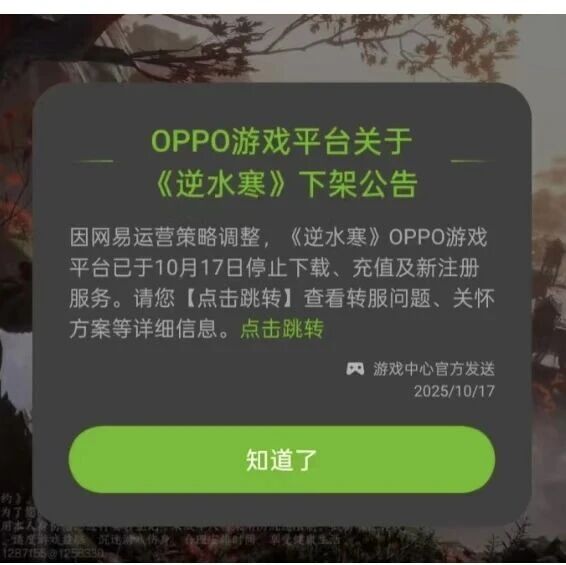
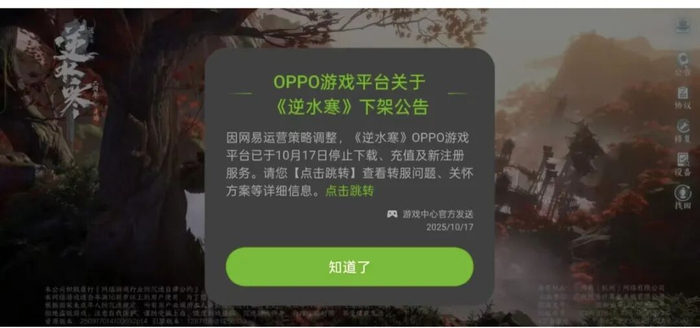
Core Viewpoint - The ongoing conflict between game developers and distribution channels, particularly regarding the withdrawal of multiple NetEase games from the OPPO platform, highlights a significant shift in the gaming industry dynamics, driven by cost issues associated with Android distribution channels [1][2][3] Group 1: Game Withdrawals - Multiple NetEase games have been removed from the OPPO channel, including titles like "Onmyoji: Yokai House" and "Onmyoji: Card Game," with the latest being "Nirvana in Fire" and "Pro Evolution Soccer" [2] - The trend of withdrawing games from OPPO has escalated from smaller titles last year to major flagship products this year, indicating a broader industry shift [2] Group 2: Industry Dynamics - Analysts suggest that the era of distribution channels charging exorbitant fees is coming to an end, as game developers seek to optimize their operational strategies [3] - The situation reflects a growing trend in the gaming industry where developers are reassessing their partnerships with distribution platforms due to financial pressures [2][3]

多款知名游戏下架OPPO渠道,厂商与渠道的博弈进入深水区
Di Yi Cai Jing· 2025-11-05 11:15
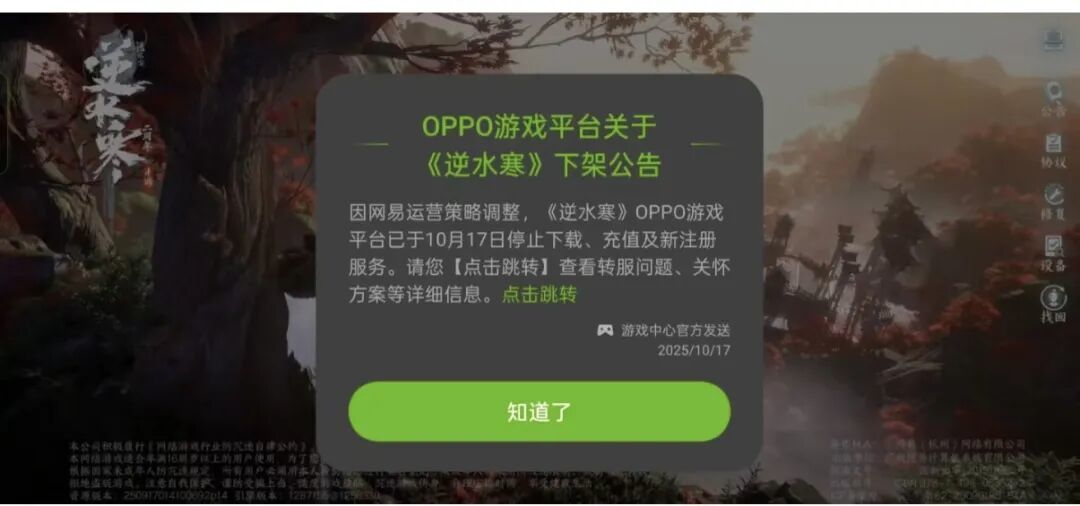
Core Viewpoint - The recent trend of multiple NetEase games ceasing operations on OPPO's platform reflects a broader shift in the gaming industry, driven by high channel fees and changing market dynamics [2][3][5]. Group 1: Game Operations and Partnerships - Several NetEase games, including "逆水寒" (Naraka: Bladepoint), have stopped operations on OPPO's platform due to "operational strategy adjustments" by NetEase [2]. - OPPO's customer service confirmed the cessation of services but could not provide information on future collaborations with NetEase [2]. - The trend of NetEase withdrawing games from OPPO began last year and has continued into 2025, with multiple titles announcing their exit from the platform [2]. Group 2: Industry Trends and Analysis - Industry analysts suggest that the withdrawal of games from Android channels is a response to high fees imposed by these platforms, indicating a shift away from reliance on channel distribution [3][5]. - The gaming industry is witnessing a decline in profit margins, which exacerbates tensions between game developers and distribution channels [5]. - The emergence of high-quality games allows developers to attract users through direct downloads, reducing dependency on traditional app stores [5]. Group 3: Historical Context and Changes - The gaming industry previously relied heavily on app stores for user acquisition, but this model is becoming less effective as the market evolves [4]. - The "hardcore alliance" formed in 2014, which established a 50-50 revenue split between game companies and mobile manufacturers, is being challenged as developers seek more favorable terms [3].
多款知名游戏下架OPPO渠道
Di Yi Cai Jing· 2025-11-05 10:35
Core Viewpoint - The recent trend of multiple NetEase games ceasing operations on OPPO's platform reflects a broader shift in the gaming industry, driven by high channel fees and changing market dynamics [2][3][4]. Group 1: Game Cessation on OPPO - Several NetEase games, including "逆水寒" (Nirvana in Fire), have stopped operations on OPPO's platform due to "operational strategy adjustments" by NetEase [2][3]. - This trend is not new; multiple titles have previously announced their exit from OPPO, including "阴阳师:妖怪屋" (Onmyoji: Yokai House) and "梦幻西游" (Fantasy Westward Journey) [3][4]. - Analysts suggest that more prominent titles from NetEase may also follow suit, indicating a significant shift in the gaming landscape [3][4]. Group 2: Industry Dynamics - The gaming industry is witnessing a decline in the relevance of Android channels, with companies increasingly opting to withdraw from these platforms due to high revenue-sharing demands [4][5]. - The "hardcore alliance" formed by major players like Tencent has also contributed to this shift, as it established a 50/50 revenue-sharing model that is now being challenged [4][5]. - The contribution of channels to user acquisition is diminishing, while the revenue-sharing ratios remain high, leading to increased tension between game developers and platform providers [5][6]. Group 3: Strategic Shifts - Companies like NetEase and Tencent are confident in their games' appeal, believing that withdrawing from channel servers will not significantly impact user retention and may even enhance user migration to official servers [6]. - The industry is moving towards a model where high-quality games attract users directly, reducing reliance on traditional channel distribution methods [5][6].
多款知名游戏下架OPPO渠道
第一财经· 2025-11-05 10:17
Core Viewpoint - The article discusses the recent trend of OPPO channel servers for multiple NetEase games being shut down, attributed to NetEase's operational strategy adjustments, reflecting a broader shift in the gaming industry regarding distribution channels and revenue sharing [3][4][5]. Group 1: Game Shutdowns - Several NetEase games have announced the cessation of operations on OPPO's platform, including titles like "逆水寒" and "实况足球," with the trend starting from last year and continuing into 2025 [4][5]. - The shutdowns are part of a larger pattern where both mid-sized and major titles are exiting OPPO, indicating a significant shift in the gaming landscape [4][5]. Group 2: Industry Trends - Industry analysts suggest that the era of channels demanding high fees is coming to an end, as game developers are increasingly opting to withdraw from Android channels due to unfavorable revenue-sharing agreements [5][6]. - The "hardcore alliance" formed by major companies like Tencent has led to speculation about revenue-sharing disputes, with developers seeking more favorable terms [5][6]. Group 3: Changing Distribution Dynamics - The reliance on app stores for user acquisition is diminishing, as game quality has improved, allowing developers to attract users through direct downloads rather than through channels [6]. - Major companies like NetEase and Tencent are confident in their game appeal, allowing them to withdraw from channel servers without fearing significant user loss, potentially even using the shutdowns to attract users back to official servers [6].