软银集团

Search documents
刷屏!徐新出手字节跳动
中国基金报· 2025-11-21 12:55
Core Viewpoint - The article discusses the recent acquisition of a stake in ByteDance by Xu Xin, referred to as the "Queen of Venture Capital," highlighting the competitive auction process and the implications for ByteDance's valuation [2]. Group 1: Acquisition Details - Xu Xin successfully acquired a portion of ByteDance's shares for nearly $300 million, which was a significant increase from the initial auction price of around $200 million, raising ByteDance's valuation to $480 billion (approximately 3.4 trillion RMB) [2][6]. - The auction involved seven bidders, with Xu Xin's firm, Today Capital, being one of the key participants [2]. Group 2: Valuation Context - ByteDance's valuation of $480 billion positions it as the second highest-valued startup globally, surpassing SpaceX, which is valued at approximately $400 billion [6]. - Market research indicates that ByteDance's valuation has been adjusted upwards by various investment firms, with estimates ranging from $400 billion to $450 billion in late 2022 [7]. - The company's revenue for Q2 2025 is projected to exceed $43 billion, with a year-on-year growth of 25%, making it the highest-grossing social company globally [7]. Group 3: Historical Perspective - Xu Xin reflected on a past opportunity to invest in ByteDance when it was valued significantly lower, indicating a missed chance due to a lack of understanding of the business model at that time [4]. - The article emphasizes the importance of recognizing high-growth companies early in their development cycle, particularly in relation to technological advancements [8].


Meesho eyes $6 billion valuation with December IPO
The Economic Times· 2025-11-21 12:36
Core Viewpoint - Meesho, an online marketplace in India, is preparing for an initial public offering (IPO) aiming for a valuation of approximately 530 billion rupees ($6 billion) and plans to raise around 60 billion rupees through the offering [5]. Group 1: IPO Details - The IPO will consist of a fresh issue of shares valued at 42.5 billion rupees and an offer for sale of 175.7 million shares from existing investors [5]. - The company is in discussions with SBI Funds Management for a pre-IPO placement, which may influence the size of the IPO [5]. - The IPO is expected to launch in the first half of December [5]. Group 2: Market Context - Meesho is part of a growing trend in India's IPO market, which has seen companies raise nearly $19.5 billion this year, following a record $21 billion in 2024 [2][5]. - The ongoing deliberations regarding the IPO may lead to changes in timing and deal size [2]. Group 3: Financial Performance - Meesho reported a free cash flow of 10.32 billion rupees for the year ending March 2025, the highest among listed e-commerce firms in India [4]. Group 4: Advisory Team - The IPO is being advised by Kotak Mahindra Capital Co., Axis Bank Ltd., and local units of JPMorgan Chase & Co., Morgan Stanley, and Citigroup Inc. [5].


OpenAI“硬”转身:联手富士康,锁定AI基建主动权
2 1 Shi Ji Jing Ji Bao Dao· 2025-11-21 12:29
Core Insights - OpenAI has entered a strategic partnership with Foxconn to collaborate on the design and manufacturing of next-generation AI infrastructure hardware, marking a shift from a reliance on cloud service providers to a more asset-heavy model [1][3] - The partnership includes three main components: parallel development of multiple generations of AI data center cabinets, optimization of the domestic AI supply chain in the U.S., and manufacturing key components of AI data centers in U.S. factories [1][2] - OpenAI has gained priority evaluation rights for Foxconn's products, enhancing its control over server hardware selection [2] Strategic Shift - OpenAI is transitioning from a light-asset model dependent on cloud services to a heavy-asset model involving self-built data centers, as indicated by recent personnel changes and strategic initiatives [3] - The "Stargate" AI infrastructure project, initiated with Oracle and SoftBank, has an initial investment of $100 billion, with plans to expand to $500 billion over four years [3] - OpenAI's energy and computing demands are increasing, with a recent agreement to add 4.5 GW of data center capacity, bringing the total planned energy consumption for the "Stargate" project to 5 GW [3] Chip Supply Agreements - OpenAI has signed multiple chip supply agreements, including a $119 billion contract with CoreWeave, which has since been increased to $224 billion [4] - A $38 billion AI computing supply agreement with Amazon AWS will provide OpenAI with advanced NVIDIA GPU chips and millions of CPU chips over the next seven years [5] - OpenAI is diversifying its supplier strategy by establishing deep partnerships with chip manufacturers, including a significant collaboration with NVIDIA and AMD, with total planned energy consumption from these agreements reaching 26 GW [5] Market Concerns - Analysts have raised concerns about potential "circular deals" between OpenAI and chip manufacturers, which could inflate valuations and create market bubbles [6] - OpenAI's rapid spending has led to skepticism regarding its ability to generate sufficient profits to justify these investments, despite CEO Sam Altman's projection of achieving an annual revenue of $20 billion by year-end and several hundred billion by 2030 [6] - OpenAI's latest valuation stands at $500 billion following a capital restructuring [6]
大跳水!刚刚,40.3万人爆仓!币圈突发!
券商中国· 2025-11-21 12:27
Core Viewpoint - The cryptocurrency market is experiencing a significant downturn, with Bitcoin and Ethereum seeing substantial price drops, reflecting a broader risk-off sentiment among investors [1][2][6]. Market Performance - Bitcoin fell to a low of $81,629, with a 24-hour decline of 10.44%, while Ethereum dropped to $2,681.49, down 10.92% [2][3]. - The total cryptocurrency market capitalization fell below $3 trillion, with a 24-hour decline exceeding 8% [1]. Liquidation Events - Over the past 24 hours, more than $1.965 billion in cryptocurrency positions were liquidated, affecting approximately 403,398 traders [3][4]. - The largest single liquidation occurred in Hyperliquid-BTC-USD, valued at $36.78 million [4]. Market Sentiment - Analysts indicate that the current market sentiment is extremely fearful, with the cryptocurrency market acting as a barometer for risk appetite [1][7]. - The recent downturn is attributed to a combination of heightened risk aversion and a sell-off in technology stocks, which has negatively impacted investor sentiment [5][6]. Historical Context - Bitcoin has seen a cumulative decline of about 23% in November, marking its largest monthly drop since June 2022 [6]. - The recent sell-off began on October 10, leading to a significant liquidation of leveraged positions worth $19 billion, resulting in a total market value loss of approximately $1.5 trillion [6][8]. Future Outlook - Market analysts express caution regarding potential further declines, with concerns that if Bitcoin continues to drop, it may trigger additional margin calls for leveraged positions [7][8]. - The current environment is described as the most pessimistic since the start of the bull market in January 2023, with indications that demand may have significantly waned [8].

日本真的“有事”了,“日子很难过”
Mei Ri Jing Ji Xin Wen· 2025-11-21 12:15
Group 1 - Japanese Prime Minister Sanae Takaichi's remarks on Taiwan and historical issues are seen as detrimental to regional stability and Japan's own interests [1] - Takaichi's policies are perceived as neglecting public welfare while aligning closely with the U.S., aiming for military expansion despite high inflation in Japan, which may lead to risks of yen depreciation and economic instability [1] - Criticism from mainstream media, the public, and opposition parties suggests that her rhetoric is inciting war and undermining trust with neighboring countries, raising concerns about her administration's future [1] Group 2 - The Japanese tourism industry is facing significant challenges due to a surge in cancellations of Chinese tourist bookings, with cancellations reaching 70% of overall orders within two days [3] - Hokkaido, a key destination for Chinese tourists, is experiencing a notable decline in visitor numbers, impacting local businesses such as hotels and tour services [3][4] - Predictions indicate that the cancellation of Chinese tourist bookings could lead to a reduction in Japan's tourism revenue by approximately 1.79 trillion yen (about 11.5 billion USD) over the next year, potentially decreasing Japan's GDP by 0.29% [4] Group 3 - The cancellation of the trilateral cultural minister meeting between China, Japan, and South Korea is attributed to rising tensions following Takaichi's comments, with China condemning her statements as harmful to regional cooperation [5] - The Nikkei 225 index fell by 2.4% to 48,625.88 points, marking a weekly decline of 3.48%, with significant drops in major stocks, particularly in the AI sector [5] Group 4 - The Bank of Japan's Governor, Kazuo Ueda, indicated that the central bank must consider the impact of a weak yen on import costs and inflation, suggesting potential tightening of monetary policy to support the yen [7] - Concerns are raised about the volatility in the Japanese market, which is perceived as more alarming than recent fluctuations in the U.S. stock market, with warnings of potential capital flight if investor confidence wanes [7]
MaaS定义AI下半场:一场对大模型生产力的投票
华尔街见闻· 2025-11-21 11:19
Core Insights - The AI sector is experiencing a significant capital surge in 2025, with companies like Zhipu and MiniMax vying for the title of "first stock of large models," highlighting the industry's growing prominence [1] - A value gap exists where companies invest heavily in AI but many remain stuck in pilot phases without generating tangible financial impacts [1] - The market is shifting towards the "second half" of model value realization, with companies facing the dilemma of high investment costs versus the fear of missing out on technological advancements [1] Group 1: Market Dynamics - The transition from "selling model parameters" to "delivering MaaS (Model as a Service)" allows companies to focus on business value rather than the risks of model iteration [2] - The competition in the AI "second half" is characterized by a shift from demo showcases to a battle of foundational models as the basis for enterprise AI deployment [4] - A dramatic market reshuffle is occurring, with Anthropic's Claude series leading the enterprise-level LLM API market with a 32% usage share, while OpenAI's share has dropped from 50% to 25% [4][9] Group 2: Financial Growth and Strategy - Anthropic's "enterprise-first" strategy has led to a remarkable increase in annual recurring revenue (ARR), soaring from $1 billion to $5 billion within months [9] - Traditional cloud giants like Alibaba Cloud are adopting a "build kitchen" strategy, offering a full-stack solution from IaaS to MaaS, while engaging in price wars to attract customers [10][11] - Smaller firms are finding opportunities by focusing on niche markets and differentiating their offerings rather than competing directly with giants [12][14] Group 3: Performance and Efficiency - As of 2025, companies are prioritizing model performance and efficiency over mere token price reductions, indicating a shift in focus towards effective AI solutions [13] - Zhipu's new models, GLM-4.5 and GLM-4.6, have seen a rapid increase in token usage, particularly in coding tasks, attracting significant developer interest [14][27] - The demand for high-performance models in critical applications, such as coding and financial analysis, is driving companies to pay premiums for improved accuracy and reliability [18][21] Group 4: Future Trends and Implications - The emergence of MaaS is not just a commercial choice but a technological necessity, as companies must navigate the complexities of AI deployment strategies [17] - The market is witnessing a shift where foundational models are becoming the primary applications, with the potential for models to evolve into autonomous agents [22][24] - The valuation of AI companies is changing, with a growing recognition that foundational models represent a new form of labor rather than just software, leading to a potential revaluation of independent firms in the sector [26][28]

黄仁勋:市场未充分认识到英伟达的优秀
财联社· 2025-11-21 10:50
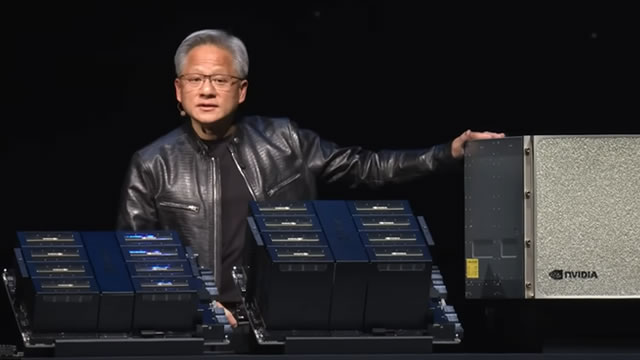
Core Viewpoint - The article discusses the recent volatility in the stock market, particularly focusing on Nvidia's disappointing stock performance despite a strong earnings report, highlighting the challenges faced by the company in meeting market expectations [3][5]. Group 1: Nvidia's Market Performance - Nvidia's stock initially rose nearly 5% after its earnings report but ultimately closed down 3.15%, indicating a significant market reaction [5]. - The CEO of Nvidia, Jensen Huang, expressed frustration during an all-hands meeting, stating that the market's expectations for Nvidia are excessively high, creating a "no-win" situation for the company [5][8]. - Huang emphasized the immense pressure on Nvidia, suggesting that even a slightly disappointing earnings report could lead to catastrophic consequences for the market perception of AI [7][8]. Group 2: Impact on the AI Industry - Huang commented on the perception of an "AI bubble," indicating that a poor performance would serve as evidence of such a bubble, while a strong performance would be seen as fueling it [7]. - The article notes that Nvidia's significant influence on the global market makes it increasingly difficult to meet external expectations, which adds to the pressure on the company [8]. - The recent market fluctuations resulted in Nvidia losing $500 billion in market value within a week, a historical occurrence that underscores the company's substantial market presence [9].


A股失守3900点,牛市行情结束了吗?
Sou Hu Cai Jing· 2025-11-21 10:22
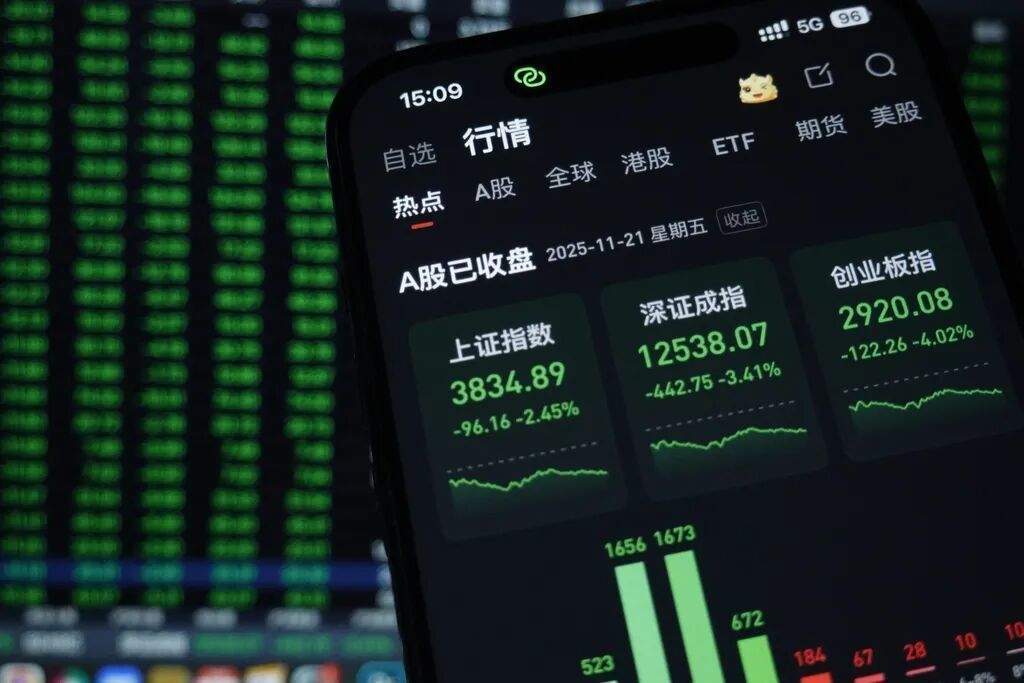
Market Overview - On November 21, the A-share market experienced a significant adjustment, with all three major indices opening lower and closing down. The Shanghai Composite Index fell 2.45% to 3834.89 points, while the ChiNext Index dropped over 4% [2][3] - More than 5000 stocks declined, with 107 stocks hitting the daily limit down, indicating a widespread sell-off in the market [3] Institutional Perspectives - Despite the market's downturn, institutional views suggest that the foundation of the current slow bull market remains intact, with potential for continued strength in A-share indices [2][9] - Yang Delong, Chief Economist at Qianhai Kaiyuan Fund, believes that the current market is a slow bull market that could lead to significant wealth growth for investors, with a possibility of a comprehensive bull market forming by 2026 [2][9] Global Market Context - The global stock markets are also under pressure, with major indices such as the Nikkei 225 and KOSPI experiencing declines of 2.40% and 3.79%, respectively. This global downturn is partly attributed to the cooling expectations for a Federal Reserve rate cut in December [5][6] - Concerns over high valuations in technology stocks have resurfaced, contributing to declines in global tech stocks, including Nvidia, which saw a drop despite reporting better-than-expected earnings [7][8] Future Market Outlook - Financial analysts maintain a positive outlook for the market in 2026, with expectations of continued inflows of micro-level capital and potential for exceeding profit expectations in companies [10][11] - The focus for future investments includes technology self-reliance, industrial base upgrades, and strategic resource security, as the market is expected to remain in a slow bull phase [10][11]
A股失守3900点,牛市行情结束了吗?
和讯· 2025-11-21 10:15
Market Overview - On November 21, the A-share market experienced a significant adjustment, with all three major indices opening lower and closing down. The Shanghai Composite Index fell 2.45% to 3834.89 points, while the ChiNext Index dropped over 4% [2][3] - A total of 5071 stocks declined, with 107 stocks hitting the daily limit down, contrasting sharply with only 33 stocks reaching the limit up [4] Sector Performance - According to the Wind China Industry Index, only the cultural media sector managed a slight increase of 0.1%, while all other sectors showed declines. The fine chemicals, basic metals, and forestry sectors had the largest drops [5] Global Market Context - The global stock markets also faced declines, with the Nikkei 225 index down 2.40%, the KOSPI index down 3.79%, and the Hang Seng Index down over 2% [8] - The pressure on global markets is attributed to the cooling expectations for a Federal Reserve rate cut in December, following mixed signals from the Fed's recent meeting minutes [9] Long-term Market Outlook - Despite the recent market volatility, analysts believe the foundation of the current slow bull market remains intact. They anticipate that the A-share index has the potential to continue strengthening [12] - The chief economist of Qianhai Kaiyuan Fund, Yang Delong, suggests that the market is likely to transition from a structural bull market to a comprehensive bull market by 2026, which could enhance consumer confidence and drive economic growth [12][13] Investment Strategies - Analysts recommend focusing on three investment themes for the future: technological self-reliance, upgrading industrial foundations, and securing strategic resources [13] - The Chen Guo team from Dongfang Caifu expresses optimism for the Chinese stock market in 2026, highlighting potential areas of outperformance, including corporate earnings and advancements in AI [14]
Global investors battle between long- and short-term wins amid Nvidia volatility
CNBC· 2025-11-21 09:36
Core Viewpoint - Global investors are facing a conflict between short-term gains and long-term stability amid a significant sell-off in AI-related stocks, despite Nvidia's strong earnings initially boosting market sentiment [1][2]. Market Reactions - Nvidia's earnings report led to a temporary surge in its stock, but it ended the trading session down 3% the following day, indicating volatility in the market [1]. - The sell-off in AI stocks was exacerbated by economic speculation regarding the Federal Reserve's potential rate cuts, which has left investors on edge [2][7]. Regional Market Performance - Asia-Pacific markets experienced declines, with SoftBank's stock dropping over 10%, while European stocks opened negatively as well [3]. - In contrast, U.S. futures showed signs of recovery, suggesting a mixed sentiment among investors [3]. Investor Sentiment and Behavior - Market movements have been influenced by sentiment, momentum, and innovation, with geopolitical risks also playing a role [4]. - Investors are currently focused on short-term cycles due to year-end compensation pressures, leading to a lack of long-term hedging strategies [5][6]. AI Market Dynamics - There is uncertainty regarding which companies will emerge as winners or losers in the AI sector, with a distinction expected between those investing in AI and those benefiting from AI infrastructure [8].