
中国西电

Search documents
中国西电:2026年,公司将紧抓新型电力系统建设机遇
Zheng Quan Ri Bao Wang· 2026-01-27 13:16
证券日报网讯 1月27日,中国西电(601179)在互动平台回答投资者提问时表示,2025年,公司锚定高 质量发展首要任务,优化产业结构,抢抓市场开拓,加快科技创新,深化改革攻坚。截至2025年9月30 日,实现营业总收入170.04亿元,同比增加11.54%,实现利润总额13.14亿元,同比增加14.7%。2026 年,公司将紧抓新型电力系统建设机遇,以质量为根本、效益为中心、科技创新为支撑、精益管理为主 线、市场开拓为龙头,努力提升经营业绩和内在价值,推动公司高质量发展。 ...

中国西电:公司全资子企业西安西电电力电子有限公司具备电力电子变压器的研制能力
Zheng Quan Ri Bao Wang· 2026-01-27 13:12
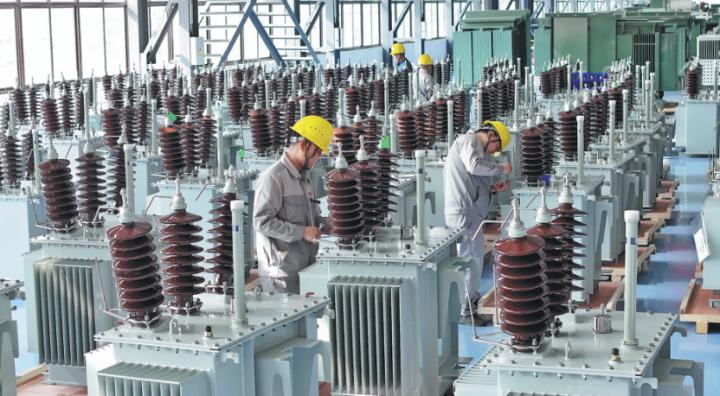
证券日报网讯1月27日,中国西电(601179)在互动平台回答投资者提问时表示,公司全资子企业西安 西电电力电子有限公司具备电力电子变压器的研制能力,该产品主要应用于分布式可再生能源接入与消 纳、交直流混合配电网及微网。目前该产品并无在可控核聚变等方面的应用。 ...
国海证券:数据中心强化电力基建需求 出海仍是企业长期增长驱动力
智通财经网· 2026-01-27 08:44
Core Viewpoint - Global investment in power grid infrastructure is expected to grow over the next decade, with varying supply and demand dynamics across different regions [2][3] Regional Perspective - China: During the "14th Five-Year Plan" period, the power supply and demand are expected to become more balanced, leading to resilient grid investment [2] - United States: From 2025 to 2029, the compound annual growth rate (CAGR) for utility capital expenditures is projected to be 4.6%, with data centers being a significant contributor to power infrastructure investment due to supply bottlenecks [2] - Other Regions: Electricity consumption growth in Europe is expected to rise, while demand in emerging economies remains strong [2] Technical Perspective - The penetration rate of renewable energy continues to increase, with various grid technologies like STATCOM and flexible direct current starting to see wider adoption [2] - Green hydrogen and green alcohol are identified as long-term technological trends for deep decarbonization, with demand beginning to emerge under policy catalysts [2] Data Center Insights - Data centers are a key driver of power infrastructure investment globally, particularly in the U.S. [2] - The U.S. Department of Energy forecasts an additional load of 52 GW from data centers by 2030 compared to 2024, with some estimates reaching up to 109 GW [2] Supply Bottlenecks - The delivery cycle for power transformers remains high, currently exceeding 100 weeks [2] - Major companies are scheduling gas turbine production until 2028, driven by equipment replacement cycles, rapid expansion of AI data centers, and energy transition [2] Investment Recommendations - Power infrastructure investment remains robust, maintaining a "recommended" rating for the power equipment industry [4] - Focus on North American power equipment shortages, with key stocks including Siyi Electric (002028.SZ) and TBEA (600089.SH) [4] - Attention to new power supply technologies for data centers, with relevant stocks including Sifang Co. (601126.SH) and China XD Electric (601179.SH) [4] Power Trading Opportunities - Companies like Guoneng Rixin (301162.SZ) and Langxin Group (300682.SZ) are highlighted for their potential in the market-oriented transformation of the power industry and AI applications [5] UHV Investment - Investment in ultra-high voltage (UHV) grid infrastructure is expected to grow steadily, unaffected by external geopolitical risks, making it suitable for strategic allocation [5]

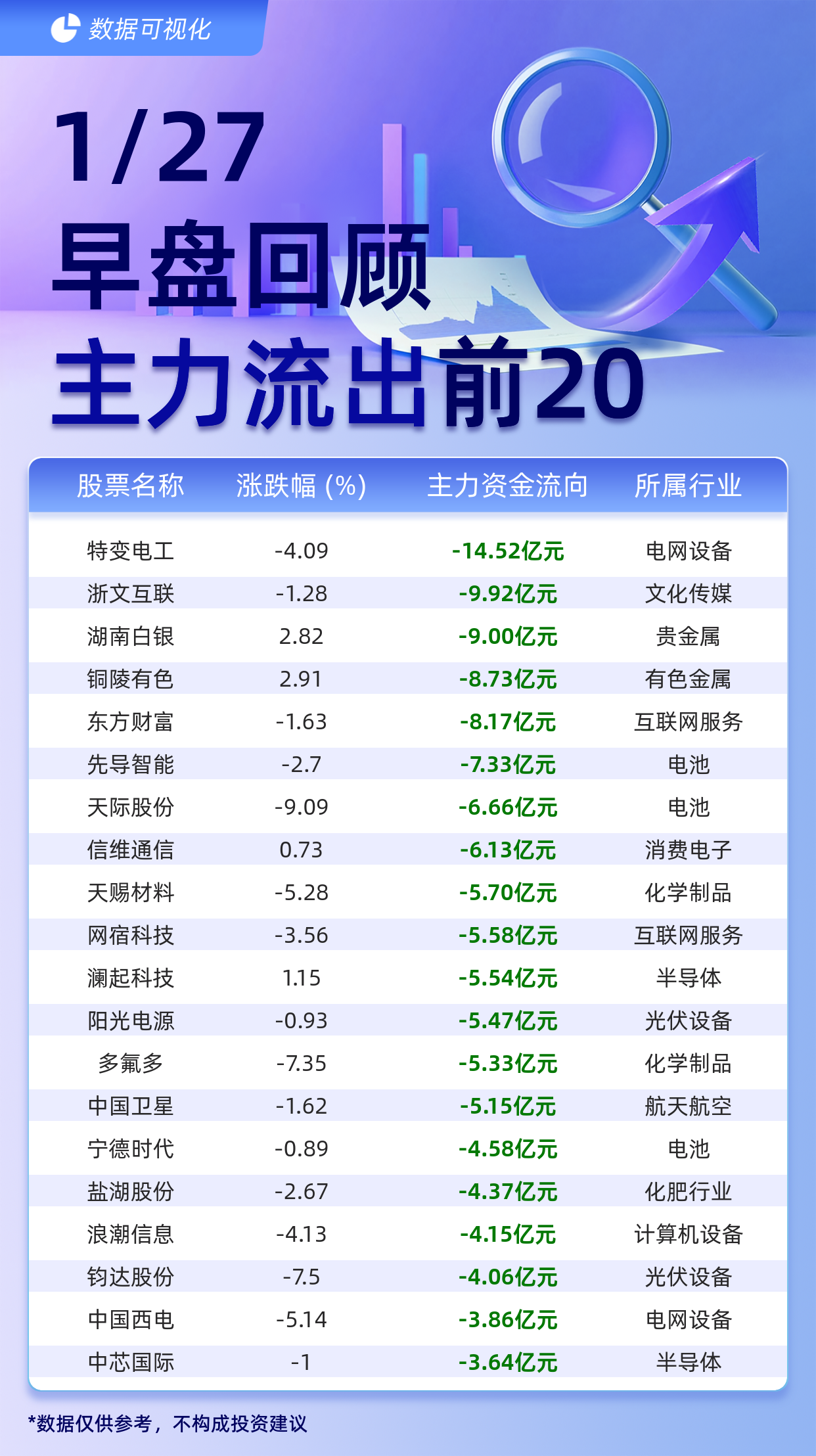
主力个股资金流出前20:特变电工流出14.52亿元、浙文互联流出9.92亿元
Jin Rong Jie· 2026-01-27 04:21
Core Viewpoint - The data indicates significant outflows of capital from various stocks, with notable amounts withdrawn from companies across different sectors, particularly in the electric equipment and battery industries [1][2][3]. Group 1: Major Stocks with Capital Outflows - TBEA Co., Ltd. experienced a capital outflow of 1.452 billion yuan, with a decline in stock price of 4.09% [2]. - Zhejiang Wenlian reported a capital outflow of 992 million yuan, with a stock price decrease of 1.28% [2]. - Hunan Silver saw a capital outflow of 900 million yuan, with a stock price increase of 2.82% [2]. - Tongling Nonferrous Metals had a capital outflow of 873 million yuan, with a stock price increase of 2.91% [2]. - Dongfang Fortune experienced a capital outflow of 817 million yuan, with a stock price decrease of 1.63% [2]. Group 2: Additional Stocks with Notable Outflows - Leading Intelligent reported a capital outflow of 733 million yuan, with a stock price decrease of 2.7% [2]. - Tianji Co., Ltd. faced a capital outflow of 666 million yuan, with a significant stock price drop of 9.09% [2]. - Xinyi Communication had a capital outflow of 613 million yuan, with a stock price increase of 0.73% [2]. - Tianci Materials saw a capital outflow of 570 million yuan, with a stock price decrease of 5.28% [2]. - Wangsu Science & Technology experienced a capital outflow of 558 million yuan, with a stock price decrease of 3.56% [2]. Group 3: Other Companies with Capital Outflows - Longi Green Energy reported a capital outflow of 547 million yuan, with a stock price decrease of 0.93% [3]. - Dufeng Co., Ltd. faced a capital outflow of 533 million yuan, with a stock price decrease of 7.35% [3]. - China Satellite had a capital outflow of 515 million yuan, with a stock price decrease of 1.62% [3]. - Contemporary Amperex Technology experienced a capital outflow of 458 million yuan, with a stock price decrease of 0.89% [3]. - Salt Lake Potash reported a capital outflow of 437 million yuan, with a stock price decrease of 2.67% [3].







2025年陕西省能源生产情况:陕西省发电量3288.9亿千瓦时,同比增长2.6%
Chan Ye Xin Xi Wang· 2026-01-27 03:51
2025年12月,陕西省发电326.3亿千瓦时,同比增长1.8%。2025年,陕西省发电3288.9亿千瓦时,同比 增长2.6%。分品种看,2025年,陕西省火力发电量2815.2亿千瓦时,占总发电量的85.6%,同比增长 1.1%;陕西省水力发电量97.1亿千瓦时,占总发电量的3%,同比增长24.9%;陕西省风力发电量212.7亿 千瓦时,占总发电量的6.5%,同比增长7.9%;陕西省太阳能发电量163.91亿千瓦时占总发电量的5%, 同比增长10.6%。 上市企业:陕天然气(002267)、通源石油(300164)、宝光股份(600379)、隆基绿能(601012)、 中国西电(601179)、陕西煤业(601225)、陕鼓动力(601369)、美能能源(001299)、陕西能源 (001286)、爱科赛博(688719) 相关报告:智研咨询发布的《2026-2032年中国能源行业市场研究分析及投资前景评估报告》 2018-2025年陕西省各品种发电量累计产量统计图 报告中的产量数据统计口径均为规模以上工业,其统计范围为年主营业务收入2000万元及以上的工业企 业。 由于规模以上工业企业范围每年发生变化, ...

国海证券晨会纪要-20260127
Guohai Securities· 2026-01-27 01:04
Group 1: Company Overview - The company, SmartSens, is expected to achieve a revenue of 8.8 to 9.2 billion yuan in 2025, representing a year-on-year increase of 47% to 54% [3] - The projected net profit for 2025 is estimated to be between 976 million to 1.031 billion yuan, indicating a significant year-on-year growth of 149% to 162% [3] - The company anticipates a net profit margin of 11.15% for 2025, which is an increase of 4.57 percentage points compared to the previous year, reflecting improved profitability and operational efficiency [4] Group 2: Product Segments - In the smartphone sector, the company has deepened collaborations with multiple clients, leading to a substantial increase in the shipment of high-end products, including 50 million pixel cameras [5] - In the automotive electronics sector, the company has seen a significant rise in the shipment of products used for intelligent driving assistance, contributing to revenue growth [5] - The smart security segment has also experienced growth, with the company increasing its market share in high-end security and smart home applications [5] Group 3: Market Trends and Opportunities - The Chinese government has announced subsidies for consumers purchasing digital and smart products, which is expected to boost sales in the consumer electronics sector [6] - Recent policy changes in Canada and Germany are expected to facilitate the export of Chinese electric vehicles, creating new competitive dynamics in the automotive market [6] - The penetration rate of passenger cars equipped with advanced driving assistance systems (L2 level) in China has reached 64%, indicating a growing market for intelligent driving technologies [6] Group 4: Financial Projections - Revenue projections for SmartSens from 2025 to 2027 are estimated at 90.5 billion, 122.45 billion, and 152.43 billion yuan, with year-on-year growth rates of 52%, 35%, and 24% respectively [8] - The projected net profits for the same period are 10.03 billion, 15.17 billion, and 19.83 billion yuan, with year-on-year growth rates of 155%, 51%, and 31% respectively [8] - The company maintains a "buy" rating with corresponding price-to-earnings ratios of 41, 27, and 21 for the years 2025, 2026, and 2027 [8]

心智观察所:AI狂奔,中国变压器成了最硬通货
Guan Cha Zhe Wang· 2026-01-27 00:43
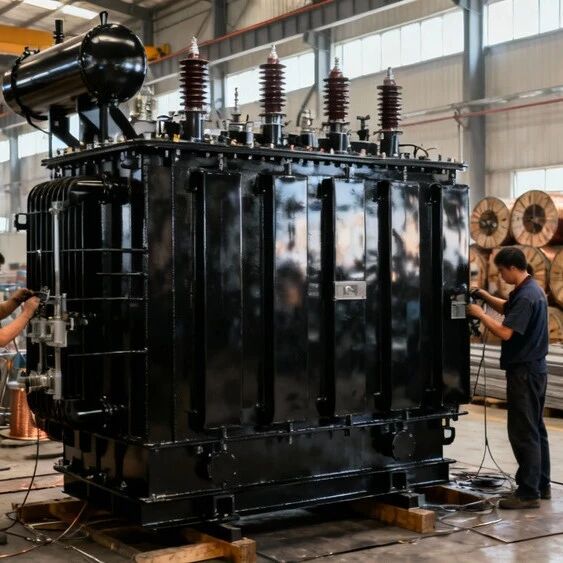
Core Viewpoint - The article emphasizes that the real bottleneck for the future of artificial intelligence (AI) is not computational power but electrical power, specifically the availability of large power transformers (LPTs) which are critical for energy infrastructure [1][2]. Group 1: Current Situation in the U.S. - The U.S. is facing a significant shortage of large power transformers, which are essential for converting high-voltage electricity for long-distance transmission [2][3]. - The average delivery time for a standard large transformer has reached 128 weeks, while transformers for data centers can take up to 144 weeks, with some cases nearing four years [2]. - Over 80% of large power transformers in the U.S. are expected to be imported by 2025 due to the decline of domestic manufacturing capabilities [3]. Group 2: Policy and Economic Implications - The U.S. government has imposed high tariffs on Chinese transformers, yet American companies are still compelled to purchase them due to a lack of alternatives [3][9]. - The high costs associated with tariffs are ultimately borne by U.S. electricity companies and consumers, revealing the limitations of "decoupling" strategies in critical infrastructure [9]. Group 3: European Context - Europe is also experiencing a transformer shortage, which hampers the integration of renewable energy projects into the grid [4][5]. - The European Union aims to increase renewable energy to 45% by 2030, but many projects are stalled due to insufficient transformer supply [4]. - European countries are beginning to source transformers from China, despite political pressures, to avoid project delays [5]. Group 4: China's Manufacturing Advantage - China has developed a complete and efficient transformer manufacturing supply chain, from raw materials to assembly, making it a key player in the global market [6][8]. - The typical delivery time for a large transformer in China is 10 to 14 months, significantly shorter than in the U.S. and Europe [8]. - Chinese manufacturers are not only meeting domestic demands but are also exporting transformers globally, establishing themselves as a reliable supplier [6][8]. Group 5: Strategic Insights - The article highlights the importance of stable energy supply for technological advancements, asserting that without reliable electricity, ambitious AI projects remain unfeasible [9][10]. - China's sustained investment in its manufacturing base has positioned it as a strategic player in the global supply chain for critical infrastructure [10].

新能源+AI周报(第40期20260118-20260124):储能量价齐升,太空、AI主题延续-20260126
Tai Ping Yang Zheng Quan· 2026-01-26 15:01
Investment Rating - The report does not provide specific investment ratings for the industry sectors mentioned [2]. Core Insights - The overall industry strategy focuses on the simultaneous rise in energy storage volume and price, with ongoing themes in space and AI [3]. - The new energy vehicle supply chain is entering an upward cycle, benefiting companies like CATL and EVE Energy due to the electrification upgrade and optimization of energy storage patterns [3]. - By the end of December 2025, China's electric vehicle charging infrastructure is expected to reach 20.092 million units, a year-on-year increase of 49.7% [3]. - Global energy storage battery shipments are projected to reach 640 GWh in 2025, a year-on-year increase of 82.9%, with CATL maintaining a leading position [3][25]. - The solid-state battery sector is entering a critical phase of engineering and industrialization, with companies like Xiamen Tungsten and Peking University Technology benefiting [4]. Summary by Sections Energy Storage and New Energy - The energy storage trend continues to improve, with companies like Sungrow Power and Huaneng Power benefiting from a significant increase in domestic procurement, which exceeded 100 GWh for the first time [5]. - The average price of lithium battery storage systems has rebounded by 6.39% to 0.5226 yuan/Wh [5]. - AI expansion and global grid upgrades are driving demand for power equipment, benefiting companies like TBEA and Sanyuan Electric [5]. Lithium Carbonate and Battery Materials - The supply and demand for lithium carbonate are exceeding expectations, with companies like Salt Lake Potash and Hunan Youneng benefiting from favorable market conditions [4]. - The cost of phosphoric iron lithium cathode materials has increased, with processing fees rising by 318.7 yuan/ton compared to November averages [4][27]. AI and Robotics in New Energy - The integration of AI and humanoid robots in the new energy sector is gaining traction, with companies like Zhejiang Rongtai and Keda Li benefiting from advancements in robotics [7]. - Tesla's shift towards becoming a robotics company is expected to create new growth cycles, with significant implications for the automotive industry [7][26]. Market Trends and Projections - The report highlights that the global energy storage battery shipment is expected to reach 1,090 GWh in 2026, a year-on-year increase of 70% [25]. - The market for commercial energy storage products is evolving, with larger capacity batteries becoming mainstream and driving innovation in the sector [29].



AI狂奔,中国变压器成了最硬通货
虎嗅APP· 2026-01-26 13:22
Core Viewpoint - The article emphasizes that the real bottleneck for the future of artificial intelligence (AI) is not computational power but electrical power, particularly the availability of large power transformers, which are crucial for the operation of AI data centers and energy infrastructure [4][6]. Group 1: Current Challenges in the U.S. and Europe - In the U.S., there is a significant shortage of large power transformers (LPTs), with an average delivery time of 128 weeks for standard transformers and 144 weeks for generator step-up transformers (GSUs) [6][8]. - The decline of U.S. manufacturing capabilities since the 1980s has led to over 80% of large power transformers being imported, primarily from China [7]. - European countries face similar issues, with many renewable energy projects unable to connect to the grid due to a lack of suitable transformers, highlighting a critical lag in the upgrade of transmission systems [10][11]. Group 2: The Role of China in Transformer Manufacturing - China has developed a complete and efficient transformer manufacturing supply chain, from raw materials to assembly, making it a key player in the global market [12][13]. - Chinese manufacturers can deliver large transformers in 10 to 14 months, significantly faster than their U.S. and European counterparts, which can take up to three years [13]. - The demand for Chinese transformers is increasing globally, as countries like the U.S. and those in Europe are forced to rely on Chinese imports despite political tensions and tariffs [15][18]. Group 3: Strategic Implications - The reliance on Chinese transformers reveals the limitations of "decoupling" strategies in critical infrastructure sectors, as the need for reliable electrical supply outweighs political considerations [15][18]. - The article suggests that the ability to produce essential infrastructure equipment domestically is a form of strategic deterrence in a world marked by supply chain vulnerabilities and geopolitical conflicts [18].
数据中心强化电力基建需求,出海仍是企业长期增长驱动力:2026年电力设备年度展望
Guohai Securities· 2026-01-26 12:35
Investment Rating - The report maintains a "Recommended" rating for the power equipment industry [1] Core Insights - The report addresses key issues such as global power equipment demand from the perspective of power infrastructure investment, focusing on data center power infrastructure, overseas expansion as a long-term growth driver, and changes in the domestic power industry [6][7] - Global power infrastructure investment is expected to grow over the next decade, with varying power supply and demand situations across different regions [9][10] - Data centers are a significant driver of power infrastructure investment globally, particularly in the United States, where demand is projected to increase substantially [38][39] - The report highlights the importance of technological advancements in the power sector, including the rise of new energy technologies and their implications for power equipment demand [37] Summary by Sections Power Infrastructure - Power infrastructure investment is a direct driver of power equipment demand, with a projected CAGR of 12.7% from 2020 to 2024 [14] - In China, power supply and demand are expected to trend towards balance, with resilient grid investment during the 14th Five-Year Plan [21] - In the U.S., public utility capital expenditures are expected to grow at a CAGR of 4.6% from 2025 to 2029, with a focus on generation investment [28] - European electricity demand is anticipated to rebound, with emerging economies showing strong power demand growth [29] AI Data Centers - Data centers are projected to contribute nearly half of the load growth in the U.S., with significant investments from major tech companies [39] - The U.S. Department of Energy forecasts an increase of 52GW in data center load by 2030 compared to 2024 [41] - Supply bottlenecks exist in power transformers and gas turbines, impacting data center construction timelines [42] Overseas Expansion of Power Equipment - Overseas expansion is a crucial long-term growth driver for power equipment companies, with domestic firms expected to gain market share due to shorter delivery times [50] - The overseas market for power equipment is estimated to be four times larger than the domestic market, presenting significant growth opportunities [54] Power Trading - The domestic power market is undergoing significant changes, with a trend towards increased supply and demand balance and a rising share of new energy sources [62] - By the end of 2025, new energy sources are expected to fully enter the market, leading to substantial changes in operational and revenue models for power companies [72] - The retail market for electricity is projected to grow, with independent electricity sales companies expected to play a more prominent role [75]