
华宝证券

Search documents
ETF策略指数跟踪周报-20250811
HWABAO SECURITIES· 2025-08-11 05:22
1. Report Industry Investment Rating No relevant content provided. 2. Core Viewpoints The report provides several ETF strategy indices constructed with the help of ETFs and tracks the performance and positions of these indices on a weekly basis. These indices aim to achieve excess returns relative to the market through different strategies [13]. 3. Summary by Directory 1. ETF Strategy Index Tracking - **Overall Performance**: The table shows the performance of various ETF strategy indices last week, including index returns, benchmark returns, and excess returns. For example, the Huabao Research Small - Large Cap Rotation ETF Strategy Index had a last - week index return of 1.27%, a benchmark (CSI 800) return of 1.38%, and an excess return of - 0.11% [14]. 1.1. Huabao Research Small - Large Cap Rotation ETF Strategy Index - **Strategy**: It uses multi - dimensional technical indicator factors and a machine - learning model to predict the return difference between the Shenwan Large - Cap Index and the Shenwan Small - Cap Index. It outputs signals weekly to decide positions and obtain excess returns. - **Performance**: As of 2025/8/8, the excess return since 2024 was 17.66%, the excess return in the recent month was - 0.25%, and the excess return in the recent week was - 0.11%. The current position is 100% in the SSE 50 ETF (510300.SH) [15][18][19]. 1.2. Huabao Research SmartBeta Enhanced ETF Strategy Index - **Strategy**: It uses price - volume indicators to time self - built barra factors and maps timing signals to ETFs based on their exposures to 9 major barra factors to achieve market - outperforming returns. - **Performance**: As of 2025/8/8, the excess return since 2024 was 15.81%, the excess return in the recent month was - 0.76%, and the excess return in the recent week was - 0.34%. The positions include CSI 1000 ETF (512100.SH) with a weight of 6.25%, STAR 50 ETF (588000.SH) with a weight of 51.51%, etc. [19][20][23]. 1.3. Huabao Research Quantitative Windmill ETF Strategy Index - **Strategy**: It starts from a multi - factor perspective, including the grasp of medium - and long - term fundamentals, tracking of short - term market trends, and analysis of market participants' behaviors. It uses valuation and crowding signals to prompt industry risks and multi - dimensionally dig potential sectors. - **Performance**: As of 2025/8/8, the excess return since 2024 was 9.46%, the excess return in the recent month was 4.80%, and the excess return in the recent week was 1.54%. The positions include Industrial Mother Machine ETF (159667.SZ) with a weight of 20.56%, Non - ferrous Metals ETF (512400.SH) with a weight of 20.47%, etc. [23][25][27]. 1.4. Huabao Research Quantitative Balance Art ETF Strategy Index - **Strategy**: It uses a multi - factor system including economic fundamentals, liquidity, technical aspects, and investor behavior. It constructs a quantitative timing system to judge the equity market trend, predicts the market's small - large cap style, and adjusts the equity market position distribution. - **Performance**: As of 2025/8/8, the excess return since 2024 was - 1.88%, the excess return in the recent month was - 0.84%, and the excess return in the recent week was - 0.48%. The positions include 10 - year Treasury Bond ETF (511260.SH) with a weight of 9.74%, CSI 1000 ETF (512100.SH) with a weight of 5.70%, etc. [27][28][31]. 1.5. Huabao Research Hot - Spot Tracking ETF Strategy Index - **Strategy**: It tracks and mines hot - spot index target products in a timely manner through strategies such as market sentiment analysis, industry event tracking, and policy changes, and constructs an ETF portfolio to capture market hot - spots. - **Performance**: As of 2025/8/8, the excess return in the recent month was 0.78%, and the excess return in the recent week was 0.91%. The positions include Non - ferrous Metals 50 ETF (159652.SZ) with a weight of 29.66%, Hong Kong Consumption ETF (513230.SH) with a weight of 26.50%, etc. [31][34][35]. 1.6. Huabao Research Bond ETF Duration Strategy Index - **Strategy**: It uses bond market liquidity and price - volume indicators to select effective timing factors and predicts bond yields through machine - learning. When the expected yield is below a certain threshold, it reduces the long - duration positions in the bond investment portfolio. - **Performance**: As of 2025/8/8, the excess return in the recent month was 0.05%, and the excess return in the recent week was 0.06%. The positions include 10 - year Treasury Bond ETF (511260.SH) with a weight of 50.03%, 5 - to 10 - year Treasury Bond ETF (511020.SH) with a weight of 25.01%, etc. [35][36][38].
公募“降费潮”来临
21世纪经济报道· 2025-08-08 08:28
Core Viewpoint - The wealth management industry is undergoing significant transformation in 2025, driven by regulatory changes and increased competition among financial institutions [1][2]. Regulatory Changes - A series of policies have been introduced to strengthen the regulatory framework for wealth management product sales, including the "Commercial Bank Agency Sales Management Measures" effective from October 1, 2025, which clarifies the responsibilities of banks as sales agents [5]. - The "Financial Institutions Product Appropriateness Management Measures," effective from February 1, 2026, aims to enhance consumer protection by helping consumers identify risks and choose suitable products based on their needs and risk tolerance [6]. Market Dynamics - The public fund sales sector is facing dual challenges of shrinking income and insufficient professional services, necessitating a shift in business models and service concepts [2][9]. - The ongoing fee reduction reforms in public funds are expected to save investors approximately 45 billion yuan annually starting in 2025, further pressuring sales channels [9]. Sales Channel Evolution - The sales landscape for wealth management products is shifting from a sales-oriented approach to a service-oriented model, emphasizing digitalization and refined services to meet diverse investor needs [2][18]. - The number of institutions selling wealth management products has increased, with 569 institutions involved in the distribution of products by mid-2025, reflecting a growing trend towards multi-channel distribution [14][15]. Industry Competition - The competition in the wealth management product distribution market is intensifying, with banks expanding their distribution channels amid declining net interest margins [13][14]. - The traditional commission-based sales model is under pressure due to declining trailing commissions, leading to a market shakeout where smaller institutions are being eliminated [10][11]. Service Transformation - Wealth management firms are increasingly focusing on providing tailored services to meet the specific needs of different investor segments, moving away from a one-size-fits-all approach [19]. - Some institutions are launching innovative products that emphasize risk management and stability, such as the "TREE Long-term Profit Plan" by China Merchants Bank, which offers risk parity-based asset allocation solutions [19].



券商竞速基金投顾:探索账户管理模式 AI重构业态
2 1 Shi Ji Jing Ji Bao Dao· 2025-08-07 13:48
21世纪经济报道记者 易妍君 21世纪经济报道记者了解到,今年以来,除了签约资产规模增长,部分券商基金投顾业务的盈利客户比 例、投顾策略业绩也有不错的表现。 值得注意的是,伴随AI的发展,券商对于基金投顾业务的发展模式有了更加深入的探索。 公募基金投顾业务试点转常规正在推进中,券商加速向"买方投顾"转型。 除了中金财富买方投顾资产保有规模跨越1000亿元里程碑,近期,多家券商释放了基金投顾业务稳步增 长的积极信号。 "基金投顾业务未来应该朝着账户管理模式发展,强调资产配置能力,并呈现投资策略不断丰富、服务 及收费模式多样化以及千人千面的特点。"国信证券有关人士向记者指出。 增长势头 近期,多家券商公布了旗下基金投顾业务最新规模,均呈现增长势头。 7月中旬,中金财富透露,公司买方投顾资产保有规模跨越1000亿元。其买方投顾服务矩阵包括"中国 50""微50""金选FOF""公募50"等一站式产品配置解决方案及"股票50""ETF50"等交易资产解决方案。 华宝证券基金投顾业务规模、客户数双双增长。截至7月中旬,华宝证券基金投顾规模突破55亿元,客 户数超过15万户,分别较去年末增长40%和20%,增长规模主要来 ...
降费潮倒逼财富管理转型 代销机构从拼规模到拼服务
2 1 Shi Ji Jing Ji Bao Dao· 2025-08-07 10:16
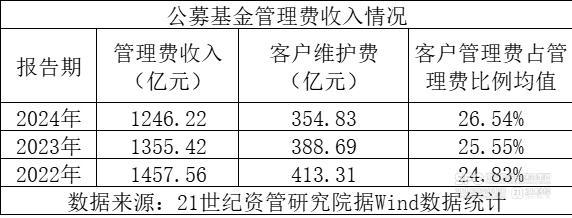
Core Viewpoint - The year 2025 is identified as a crucial transformation year for the wealth management industry, driven by regulatory changes and increased competition among financial institutions [1] Regulatory Changes - The "Commercial Banks Agency Sales Business Management Measures" will be implemented on October 1, 2023, emphasizing the responsibilities of banks as agency sales institutions [2] - The "Financial Institutions Product Appropriateness Management Measures" will take effect on February 1, 2026, focusing on consumer rights protection and risk identification [3] Market Dynamics - The public fund industry is experiencing a decline in management fees, with a projected 8% decrease in overall management fee income from 2023 to 2024, leading to reduced tail commission income [5][6] - The traditional agency sales model, heavily reliant on tail commissions, is under pressure as major players like China Merchants Bank and Ant Fund report revenue declines despite increased sales volumes [7] Competitive Landscape - The wealth management product distribution market is witnessing a significant reshuffle, with many small and medium-sized institutions exiting the market due to compliance issues and the need for transformation [7] - The proportion of wealth management products distributed by established financial institutions is increasing, with 89.61% of the market share held by 32 licensed wealth management companies as of mid-2025 [8] Strategic Shifts - Wealth management institutions are increasingly focusing on direct sales and expanding their distribution channels, with a notable increase in the number of cooperative distribution institutions [9][10] - The industry is moving towards a more diversified and digital approach, with a shift from sales-driven to service-oriented models, emphasizing investor education and tailored product offerings [11][12]
【深度】城投债收益率跌进“1”时代,券商资管转型迎大考
Xin Lang Cai Jing· 2025-08-06 09:37
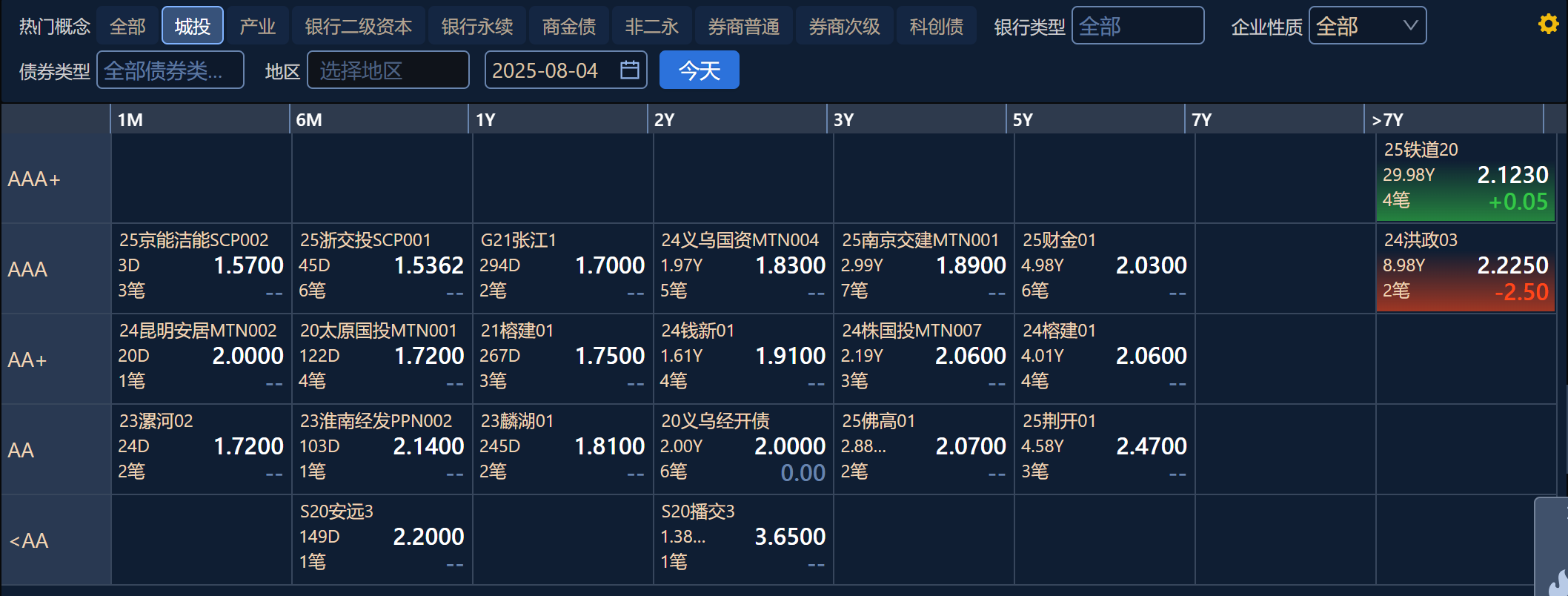
Core Viewpoint - The current favorable conditions for broker asset management relying on city investment bonds are expected to last only for about a year, as credit spreads are rapidly compressing, leading to a decline in the performance of fixed-income investment managers [1][2]. Group 1: Market Conditions and Trends - The strategy of holding low-credit city investment bonds to maturity has been widely adopted by broker asset management firms, relying on bond yields and a bull market for bonds to achieve excess returns [3][4]. - Since 2022, the market for city investment bonds has been evolving along two main lines: a continuous decline in risk-free interest rates and increased constraints on local government debt issuance, leading to extreme compression of credit spreads [6][7]. - As of now, high-grade long-term city investment bond yields have entered the "2" era, with yields for AAA-rated bonds under three years dropping to the "1" range [7]. Group 2: Challenges Faced by the Industry - The fixed-income investment sector is facing three major challenges: a sharp decline in static returns, passive duration extension leading to significant net value fluctuations, and intertwined credit and liquidity risks due to tightening city investment policies [8][9]. - The reliance on city investment bonds is becoming increasingly difficult to meet the performance benchmarks set by banks, with expectations that many fixed-income products will fail to meet these benchmarks starting next year [10]. Group 3: Transformation and Strategic Shifts - Broker asset management firms are undergoing a transformation to diversify their investment strategies, moving from a reliance on city investment bonds to a multi-asset and multi-strategy approach, including domestic and international stocks, commodities, and bonds [2][11]. - The industry is seeing a significant increase in the issuance of Fund of Funds (FOF) products, with 52 firms having issued a total of 405 FOF products as of July 30, indicating a shift towards more diversified asset management strategies [17][18]. - Successful transformation in the broker asset management sector will likely depend on talent and differentiation, with firms needing to leverage their comprehensive capabilities and deep market knowledge to provide customized solutions [12][19].
【深度】“摆脱”城投债,券商资管转型迎大考
Xin Lang Cai Jing· 2025-08-06 09:26
Core Viewpoint - The current favorable conditions for broker asset management relying on city investment bonds are expected to last only for about a year, as credit spreads are rapidly compressing, leading to a decline in the performance of fixed-income products and potential job losses for fixed-income investment managers [1][4][10]. Group 1: Current Market Conditions - The strategy of holding low-credit city investment bonds to earn management fees is becoming less viable due to extreme compression of credit spreads [1][4]. - The fixed-income investment managers are facing a significant decline in business opportunities, with expectations of widespread underperformance in fixed-income products starting next year [1][10]. - The yield on high-grade long-term city investment bonds has dropped significantly, with 3-year AAA-rated bonds now yielding in the "1" range [8][9]. Group 2: Historical Context and Strategy Shift - Historically, broker asset management relied heavily on city investment bonds due to their government backing and low default risk, especially after the 2016 supply-side reforms led to widespread defaults in corporate bonds [5][6]. - The past decade saw investment managers achieving over 6.4% annualized returns with minimal volatility by primarily investing in city investment bonds [4][7]. - The transition to a more diversified asset strategy has begun, with a shift from city investment bonds to a multi-asset approach that includes domestic and international stocks, commodities, and bonds [3][11]. Group 3: Challenges and Future Outlook - The fixed-income sector is facing three major challenges: a sharp decline in static returns, increased duration risk, and intertwined credit and liquidity risks [9][10]. - The asset management industry is expected to undergo significant transformation, with successful firms likely to be those that can differentiate themselves and leverage talent effectively [11][12]. - The growth of FOF (Fund of Funds) products is seen as a strategic move to adapt to changing market conditions, with a notable increase in issuance from 2021 to 2024 [16][18].

国债ETF(511010)上一交易日资金净流入超8000万元,避险需求和政策不确定性支撑国债配置价值
Sou Hu Cai Jing· 2025-08-05 02:32
Group 1 - The core viewpoint of the news is that the demand for government bonds is increasing due to risk aversion and policy uncertainties, leading to significant net inflows into government bond ETFs [1] - The Ministry of Finance and the State Taxation Administration announced that starting from August 8, 2025, interest income from newly issued government bonds will be subject to value-added tax, which may impact investor sentiment [1] - The central bank plans to cancel the freeze on pledged bonds in repurchase agreements to enhance market liquidity, indicating a long-term optimization of monetary policy operations [1] Group 2 - Huabao Securities noted that the pressure on the bond market is easing, and a turning point is emerging, with a marginal softening in the "anti-involution" policy statements [1] - Recent deep corrections in commodity futures, such as coking coal and polysilicon, have alleviated panic in the bond market, increasing the willingness of investors to enter the market [1] - Despite an increase in government bond supply, the central bank is maintaining liquidity through reverse repos, clearly indicating a policy stance to prevent liquidity tightening from negatively impacting the bond market [1] Group 3 - The government bond ETF (511010) tracks the 5-year government bond index (000140), which reflects the overall price trends of government bonds with an approximate remaining maturity of 5 years [1] - The index consists of mid-term government bonds with high credit ratings and good liquidity, aiming to measure market interest rate changes and the performance of mid-term fixed-income products [1] - The index does not involve specific industry or style allocations, emphasizing the high credit rating and relatively stable investment return characteristics of government bond assets [1]
基金投顾产品月报系列(20):基金投顾产品7月调仓一览-20250805
KAIYUAN SECURITIES· 2025-08-05 02:05
Quantitative Models and Construction Methods Model 1: Industry Rotation Model - **Model Name**: Industry Rotation Model - **Model Construction Idea**: The model aims to capture excess returns by rotating investments across different industries based on their performance trends - **Model Construction Process**: - Identify industry sectors with strong performance trends - Allocate investments to these sectors while reducing exposure to underperforming sectors - Monitor and adjust the portfolio periodically to maintain optimal sector allocation - **Model Evaluation**: The model has shown to perform well in capturing excess returns by timely rotating across industries[11][13][17] Model 2: Macro-Driven Model - **Model Name**: Macro-Driven Model - **Model Construction Idea**: This model leverages macroeconomic indicators to guide investment decisions - **Model Construction Process**: - Analyze macroeconomic data such as GDP growth, inflation rates, and employment figures - Adjust portfolio allocations based on the expected impact of these indicators on different asset classes - Continuously update the model with new macroeconomic data to refine investment decisions - **Model Evaluation**: The model has demonstrated effectiveness in aligning investments with macroeconomic trends, leading to favorable returns[11][13] Model Backtesting Results - **Industry Rotation Model**: - Absolute return in July: 5.85%[13] - One-year return: 30%[17] - **Macro-Driven Model**: - Absolute return in July: 3.99%[13] - One-year return: 25%[17] Quantitative Factors and Construction Methods Factor 1: Duration Extension - **Factor Name**: Duration Extension - **Factor Construction Idea**: Increase the duration of bond holdings to enhance returns in a declining interest rate environment - **Factor Construction Process**: - Identify bonds with longer maturities - Increase the allocation to these bonds while reducing exposure to shorter-term bonds - Monitor interest rate trends and adjust the duration accordingly - **Factor Evaluation**: This factor has been effective in enhancing returns during periods of declining interest rates[4][28][32] Factor 2: Equity Allocation Adjustment - **Factor Name**: Equity Allocation Adjustment - **Factor Construction Idea**: Adjust the allocation between equity and debt based on market conditions - **Factor Construction Process**: - Increase equity allocation during bullish market conditions - Reduce equity allocation and increase debt holdings during bearish market conditions - Continuously monitor market indicators to adjust allocations - **Factor Evaluation**: This factor has shown to improve portfolio performance by dynamically adjusting to market conditions[5][34][37] Factor Backtesting Results - **Duration Extension**: - Increase in duration for pure bond products: 0.10 years[32] - Increase in duration for fixed income plus products: 0.05 years[32] - **Equity Allocation Adjustment**: - Increase in equity allocation for mixed bond products: 1.74%[36] - Increase in equity allocation for stock products: 0.97%[36]
基金投顾业绩飘红 收益亮眼更需“理性引导”
Shang Hai Zheng Quan Bao· 2025-08-03 13:34
Group 1 - The core viewpoint emphasizes that while fund advisory performance has been recognized by investors, the focus is increasingly on the importance of "three parts investment, seven parts advisory" [3] - Fund advisory combinations have shown impressive performance, with equity funds and stock fund indices achieving a nearly 29% increase over the past year, benefiting from the market recovery [1][2] - Specific fund advisory combinations have outperformed their benchmarks significantly, such as the "Advantage Industry All-Star" combination with a 41% return, exceeding its benchmark by 17 percentage points [1] Group 2 - The rise of index funds as a foundational asset in equity fund advisory has led to notable returns, with the "China Europe Index Pioneer" combination achieving a 33.67% return, surpassing its benchmark by 9 percentage points [2] - The focus on "three parts investment, seven parts advisory" highlights the need for advisory firms to guide investors rationally, especially during volatile market conditions [3] - Industry experts stress the importance of maintaining investor confidence and managing their financial interests, distinguishing fund advisory from public FOFs [3]
多家券商基金投顾业务规模大幅增长 高净值客户争相入场?
Mei Ri Jing Ji Xin Wen· 2025-07-31 13:45
Core Insights - The A-share market is experiencing a "bull market atmosphere," leading to significant growth in the fund advisory business, which has finally emerged from a period of stagnation [1][2] - Major firms like Zhongjin Wealth have surpassed 100 billion yuan in fund advisory assets, while other brokerages such as Huabao Securities and Hu'an Securities have also seen substantial increases in both scale and client numbers [1][2] Fund Advisory Scale Expansion - In 2025, Zhongjin Wealth announced that its buy-side advisory assets exceeded 100 billion yuan [2] - Huabao Securities reported a fund advisory scale of over 5.5 billion yuan, with a client base exceeding 150,000, marking a 40% and 20% increase respectively compared to the end of the previous year [2] - Hu'an Securities saw its signed assets grow by over 20% since the beginning of the year, with a client reinvestment rate of 40.4%, up by 4.7% [2][3] - The average holding period for clients increased by 33 days to 204 days, and 84.7% of fund advisory clients reported profits, outperforming non-fund advisory clients by 19.8 percentage points [2][3] Client Base Expansion - The number of high-net-worth and institutional clients has increased, with Huabao Securities focusing on multi-asset strategies to meet diverse client needs [5][6] - Hu'an Securities has diversified its client base by adding institutional clients, enhancing business growth opportunities [6][7] - The firm has tailored its strategies to cater to different client profiles, with high-net-worth clients preferring stable income products and ordinary clients favoring low-threshold, easy-to-operate strategies [6][7] Strategy Development - Hu'an Securities has centered its strategy around "fixed income+" products while also introducing target yield strategies and absolute return products [7] - Some firms are exploring new models, such as combining fund advisory services with private investment products to better serve clients [8] Industry Calls for Regularization - Since the pilot program began in 2019, the number of participating institutions has increased from 5 to 60, with a total asset scale of 146.4 billion yuan and 5.24 million clients as of March 2023 [9] - Industry professionals are advocating for the transition from pilot to regular operations, emphasizing the need for policy support rather than rapid expansion [9] - Suggestions include expanding the range of assets available for fund advisory services and integrating these services into personal pension accounts to enhance long-term investment strategies [9]
