
华能国际

Search documents
2025年全年电力数据点评:新能源装机创新高,用电量结构优化
Zhong Guo Yin He Zheng Quan· 2026-01-31 06:24
Investment Rating - The report maintains a "Recommended" investment rating for the industry [5]. Core Insights - The report highlights a record high in new energy installations, with total installed wind power reaching 640.0 GW, a year-on-year increase of 22.9%, and solar power installations at 1201.7 GW, up 35.5% year-on-year [4]. - Total electricity consumption in 2025 was 10,368.2 billion kWh, reflecting a growth of 5.0% compared to the previous year [4]. - The report anticipates that the growth rate of new energy installations will return to rational levels during the 14th Five-Year Plan period, with an expected addition of over 200 GW in 2026 [4]. Summary by Sections New Energy Installations - In 2025, new installations of wind and solar power reached 434 GW, marking a historical high, with year-on-year growth rates of 50.4% and 13.7%, respectively [4]. - The report notes that the growth rate of wind and solar installations is diverging due to the impact of policy changes on electricity pricing and output characteristics [4]. Electricity Consumption Trends - The report indicates that traditional industrial electricity consumption is slowing down, while new infrastructure and emerging industries are showing significant growth [4]. - In 2025, the share of secondary industry in total electricity consumption was 64.0%, a decrease of 0.8 percentage points, while the tertiary industry's share increased to 19.2%, up 0.6 percentage points [4]. Company Recommendations - For thermal power, the report recommends companies with diversified regional layouts and those with relatively small expected price declines in 2026, such as Huaneng International and Datang Power [4]. - For hydropower, it suggests focusing on companies with high dividend yields like Yangtze Power and those with stable pricing mechanisms like Guizhou Power [4]. - In the nuclear power sector, it highlights the growth potential of China General Nuclear Power and China National Nuclear Power despite short-term pricing pressures [4]. - For new energy, it recommends companies like Longyuan Power and Jilin Electric Power, which are positioned to benefit from supportive pricing and consumption trends [4].
国家发展改革委 国家能源局关于完善发电侧容量电价机制的通知
国家能源局· 2026-01-30 09:29
Overall Thoughts - The notification aims to improve the capacity pricing mechanism on the generation side to ensure stable power supply, facilitate green development, and optimize resource allocation in the energy sector [4][5]. Classification of Capacity Pricing Mechanism - The capacity pricing mechanism for coal and natural gas power generation will be enhanced, with a recovery ratio of fixed costs for coal power plants increased to no less than 50% [5]. - The pricing mechanism for pumped storage power plants will continue to follow government pricing for plants that commenced construction before the issuance of the relevant guidelines, while new plants will have their capacity prices determined based on average costs [6]. - A new capacity pricing mechanism for independent new energy storage on the grid side will be established, with pricing based on local coal power capacity standards [7]. Establishing Reliable Capacity Compensation Mechanism - A reliable capacity compensation mechanism will be established to compensate power generation units based on their ability to provide stable power during peak demand periods [8]. - The compensation will cover coal, gas, and eligible independent new energy storage units, gradually expanding to include pumped storage [9]. Improving Supporting Policies - The adjustment of coal power long-term market trading prices will be allowed based on supply and demand, with flexibility in contract pricing mechanisms [10][11]. - The capacity fees and compensation will be included in local system operating costs, with specific pricing rules for energy storage facilities based on market conditions [12]. Implementation Organization - Provincial pricing authorities are tasked with coordinating the implementation of capacity pricing policies and establishing reliable capacity compensation mechanisms [13]. - An assessment system for users' economic capacity to bear electricity costs will be established to inform compensation standards [14].


新型储能的“保底工资”来了!容量电价水平参照煤电标准,结合放电时长和顶峰贡献
中关村储能产业技术联盟· 2026-01-30 09:11
Core Viewpoint - The article discusses the implementation of a new capacity pricing mechanism for power generation, aimed at enhancing the stability and efficiency of the electricity system while supporting the transition to a green and low-carbon energy structure [4][14][16]. Summary by Sections 1. Introduction of the Notification - The National Development and Reform Commission (NDRC) and the National Energy Administration (NEA) issued a notification to improve the capacity pricing mechanism for power generation, aligning with national energy reform and the construction of a new energy system [4][14]. 2. Reasons for Improvement - The rapid development of renewable energy in China necessitates the construction of flexible power sources to ensure stable electricity supply during periods of low renewable output. The existing capacity pricing mechanisms for coal, gas, and pumped storage power have been established to support this transition [5][6]. 3. Classification and Improvement of Capacity Pricing Mechanisms - The notification categorizes and improves the capacity pricing mechanisms for coal, gas, pumped storage, and independent new energy storage. For coal and gas, the fixed cost recovery ratio through capacity pricing will be raised to at least 50%, equating to 165 yuan per kilowatt annually [7][17]. - For pumped storage, existing projects will maintain current pricing, while new projects will adopt a unified capacity pricing based on average cost recovery principles [7][18]. - A new capacity pricing mechanism for independent new energy storage will be established based on local coal capacity pricing standards, considering peak contribution and discharge duration [8][19]. 4. Establishment of Reliable Capacity Compensation Mechanism - A reliable capacity compensation mechanism will be introduced to ensure that different types of power generation units are compensated fairly based on their peak capacity contributions, promoting healthy competition among technologies [9][20]. 5. Optimization of Market Trading and Pricing Mechanisms - The notification encourages fair participation of pumped storage and new energy storage in the electricity market, allowing for adjustments in coal power trading price limits based on local market conditions [10][22]. - It promotes flexible pricing mechanisms in long-term contracts to better reflect supply and demand dynamics [11][22]. 6. Impact on End Users - The policy will not affect electricity prices for residential and agricultural users, while commercial users may see a balanced impact due to the adjustments in capacity pricing and energy market costs [12][13]. 7. Positive Effects of the Improved Mechanism - The improvements are expected to enhance power supply security, support renewable energy utilization, and promote the healthy development of flexible power sources, ultimately facilitating the construction of a new energy system [13][16].
国家发改委、国家能源局重磅发布!
中国能源报· 2026-01-30 08:23
Core Viewpoint - The article discusses the implementation of a refined capacity pricing mechanism for power generation, aimed at enhancing the stability and efficiency of the electricity market while supporting the transition to a green energy system [1][2]. Group 1: Overall Strategy - The strategy aims to adapt to the needs of a new power system and market structure, balancing power supply security, green energy transition, and efficient resource allocation [3]. - It emphasizes the need to categorize and improve capacity pricing mechanisms for coal, natural gas, pumped storage, and new energy storage [3]. Group 2: Classification of Capacity Pricing Mechanisms - The capacity pricing mechanism for coal and natural gas power generation will be improved, with a target to recover at least 50% of fixed costs through capacity pricing [4]. - For pumped storage, existing projects will continue to use government pricing, while new projects will have their capacity pricing determined based on average cost recovery principles [5]. - A new capacity pricing mechanism for independent new energy storage on the grid side will be established, based on local coal power capacity pricing standards [6]. Group 3: Establishing Reliable Capacity Compensation Mechanism - A reliable capacity compensation mechanism will be established to compensate power generation units based on their ability to provide stable power during peak demand periods [7]. - The compensation will cover coal, gas, and qualifying new energy storage units, gradually expanding to include pumped storage [8]. Group 4: Supporting Policy Improvements - The article outlines the need to enhance electricity market trading and pricing mechanisms, allowing for flexible pricing in long-term contracts based on market conditions [9]. - It also discusses the need for improved electricity billing policies, ensuring that capacity fees and compensation are integrated into local system operating costs [10]. Group 5: Implementation and Coordination - The article emphasizes the importance of collaboration among provincial pricing authorities and energy departments to effectively implement the capacity pricing policies [11]. - It highlights the establishment of an economic capacity assessment system to guide the determination of reliable capacity compensation standards [12].
重磅!国家首次将新型储能纳入容量电价机制!关于完善发电侧容量电价机制的通知发布
中关村储能产业技术联盟· 2026-01-30 08:12
Core Viewpoint - The article discusses the implementation of a new capacity pricing mechanism for power generation, focusing on the establishment of an independent capacity pricing mechanism for grid-side new energy storage, aimed at ensuring the stable operation of the power system and promoting green development [6][8]. Group 1: Overall Strategy - The strategy aims to adapt to the needs of the new power system and market, balancing power supply security, green energy transition, and efficient resource allocation [8]. - It emphasizes the need to improve capacity pricing mechanisms for coal, natural gas, pumped storage, and new energy storage, optimizing the power market structure [8]. Group 2: Capacity Pricing Mechanism Improvement - The capacity pricing mechanism for coal and natural gas power generation will be enhanced, with a recovery ratio of fixed costs for coal power plants increased to no less than 50% [9]. - A capacity pricing mechanism for natural gas power generation will be established, determining prices based on a fixed cost recovery ratio [10]. - For pumped storage, the pricing will continue to be government-regulated for projects started before the issuance of relevant guidelines, while new projects will have their prices determined based on market participation [10]. Group 3: Establishment of New Energy Storage Pricing Mechanism - An independent capacity pricing mechanism for grid-side new energy storage will be established, with pricing based on local coal power capacity standards and adjusted according to peak capacity [11]. - The management of grid-side new energy storage projects will follow a list-based approach, with specific requirements set by the National Energy Administration [11]. Group 4: Reliable Capacity Compensation Mechanism - A reliable capacity compensation mechanism will be established to compensate power generation units based on their ability to provide stable power during peak demand periods [12]. - The compensation will consider fixed costs that cannot be recovered in energy and ancillary service markets, with adjustments based on supply-demand relationships and market progress [12]. - The compensation scope will include coal, gas, and eligible new energy storage units, gradually expanding to include pumped storage [12]. Group 5: Supporting Policies - The article outlines the need to improve electricity market trading and pricing mechanisms, allowing for flexible pricing in long-term contracts based on market conditions [14]. - It also discusses the integration of capacity fees and compensation into local system operating costs, with specific pricing rules for energy storage [15]. - A shared cost allocation method for regional pumped storage capacity fees will be established, promoting market-based optimization [15]. Group 6: Implementation and Coordination - The article emphasizes the importance of collaboration among provincial price authorities and relevant departments to implement capacity pricing policies effectively [16]. - It highlights the need for an assessment system to evaluate users' economic capacity to bear electricity costs, which will inform compensation standards [16]. - Strengthening capacity fee assessments will guide power generation units to enhance operational efficiency and peak output capabilities [17].

特写:河北两会上的“雄安团”
Xin Lang Cai Jing· 2026-01-29 13:37
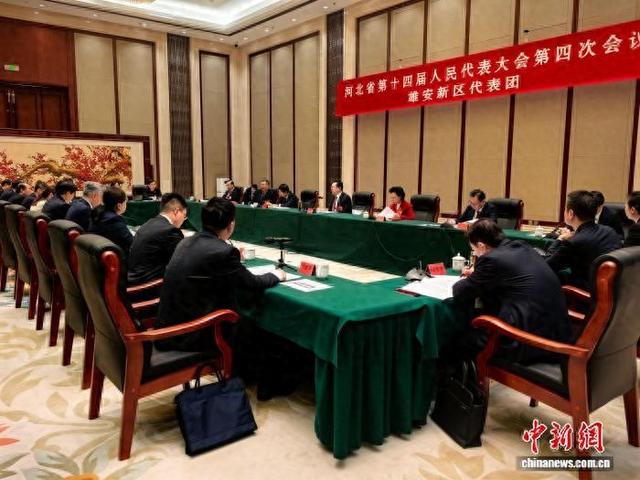
中国省级两会正在密集召开。2026年河北两会上,雄安新区代表团依旧受到外界关注。 2023年1月召开的河北省十四届人大一次会议上,雄安新区代表团首次亮相。近日召开的河北省十四届 人大四次会议上,雄安新区代表团的代表"面孔依旧"。 走进雄安新区代表团分组审议会场,一幅由白洋淀芦苇制作的"华北明珠白洋淀"芦苇画首先映入眼帘。 淀中随风摇曳的芦苇,是本地人内心深处的乡愁记忆,亦是外来游客眼中的"新城印象"之一。 中新网石家庄1月29日电 题:特写:河北两会上的"雄安团" 中新网记者 陈林 雄安宣武医院是雄安首家三级医院。河北省人大代表、首都医科大学宣武医院副院长、雄安宣武医院院 长李嘉说,雄安宣武医院建设与发展在承载区域医疗资源优化配置任务的同时,更肩负着服务北京非首 都功能疏解的使命。自2023年10月建成投用以来,已开诊科室38个,科主任均由首都医科大学宣武医院 科主任兼任,让越来越多在雄安工作、生活的人就近享受优质的医疗资源。 "现在北京医保患者在雄安就诊可以享受北京的医保报销政策,医院有各类药品1300多种,基本实现了 首都医科大学宣武医院有什么药,雄安宣武医院就有什么药。"李嘉现场用数据举例说,2025年 ...
四大增长极经济与产业洞察报告(2025)
GUOTAI HAITONG SECURITIES· 2026-01-29 08:17
产业观察 [table_Header]2026.01.29 四大增长极经济与产业洞察报告(2025) 产业研究中心 摘要:聚焦四大战略区域 2025 年协同发展,解构要素配置与产业生态新格局 期 2026.01.18 [Table_Summary] 核心观点:区域协同、产业升级与统一大市场建设的联动是高质量发展的 关键支撑。四大增长极通过制度协同破除行政壁垒,要素市场化改革畅通 资源流动,形成"顶层引领+地方创新"的协同格局。产业层面呈现梯度分 工与集群化演进,长三角技术密集型产业领跑,粤港澳大湾区聚焦跨境融 合,京津冀疏解赋能并重,川渝强化双核联动。通过"要素流动—产业协 同 —市场统一"联动路径,推动区域从"集群化"迈向"链群化",既发挥比 较优势实现差异化发展,又通过跨域平台与规则衔接强化协同,为全国构 建优势互补、高质量发展的区域经济布局提供实践支撑。 筑基与引领:2025 年四大区域聚焦制度协同、规则衔接与跨域合作,以顶 层规划与专项政策为支撑,形成"顶层引领+地方创新"的协同格局,筑牢 区域高质量发展制度根基。 破壁与赋能:要素市场化改革正推动资源配置逻辑从"区域内优化"向"跨 区域重组"转化。人 ...
近期风电招中标情况更新(1.19-1.23)
Guoxin Securities Co., Ltd· 2026-01-29 07:25
市场研究部 2026 年 1 月 27 日 投资建议 建议关注海风板块海缆、海工、桩基等领域,以及海外拿单能力优异 的企业投资机会。 风险提示 1、政策落地不及预期;2、产业链价格波动;3、投资不及预期。 近期风电招中标情况更新(1.19-1.23) 事件 2026 年 1 月 19 日-2026 年 1 月 23 日风电招中标情况。 风电招标规模合计 根据风电头条,2026 年 1 月 19 日-2026 年 1 月 23 日,共 8 个项目 2487.5MW 风机启动采购,开发商是大唐、中广核、华电。 风电中标规模合计 2026 年 1 月 19 日-2026 年 1 月 23 日,不含塔筒陆上风电项目共计 1 个,规模总计 120MW,项目中标单价为 1290 元/kW。 未经授权引用或转发须承担法律责任及一切后果,并请务必阅读文后的免责声明 看好 市场表现截至 2026.1.23 -20.00% -10.00% 0.00% 10.00% 20.00% 30.00% 40.00% 50.00% 60.00% 70.00% 2025-01- 23 2025-04- 10 2025-06- 23 2025- ...
2025年中国发电量产量为97158.8亿千瓦时 累计增长2.2%
Chan Ye Xin Xi Wang· 2026-01-29 03:49
Core Viewpoint - The report highlights the growth and trends in China's electricity generation industry, with specific data on production and year-on-year changes [1]. Group 1: Industry Overview - As of December 2025, China's electricity generation volume reached 8,586 billion kilowatt-hours, reflecting a year-on-year growth of 0.1% [1]. - Cumulatively, China's electricity generation for the year 2025 is projected to be 97,158.8 billion kilowatt-hours, indicating a cumulative growth of 2.2% [1]. Group 2: Companies Involved - The report mentions several listed companies in the electricity sector, including Huaneng International (600011), Datang Power (601991), Guodian Power (600795), Huadian International (600027), and others [1]. Group 3: Research and Consulting - The insights are derived from a report by Zhiyan Consulting, which specializes in industry research and provides comprehensive consulting services for investment decisions [1].






中国电力:2025 年风光装机超预期;电力需求增长符合预期-China – Power-2025 More Wind and Solar Installation Than Expected; Power Demand Growth In-line
2026-01-29 02:42
Summary of Key Points from the Conference Call Industry Overview - The report focuses on the **China Power** sector, specifically highlighting the growth in **wind and solar energy installations** in 2025, which exceeded expectations [1][5]. Core Insights and Arguments - **Power Demand Growth**: - National power consumption increased by **5.0% year-over-year (yoy)** in 2025, aligning with the China Electricity Council's (CEC) projections [8]. - Power demand by sector showed varied growth: - Primary: **9.9%** - Secondary: **3.7%** - Tertiary: **8.2%** - Residential: **6.3%** - This represents a moderation compared to 2024's growth rates [2]. - **Power Generation Statistics**: - Total power generation rose by **2.2% yoy** to **9,716 billion kWh** in 2025. - Solar and wind power generation increased significantly, with solar up **24.4%** and wind up **9.7%**, contributing **17%** of total generation (up from **14%** in 2024) [3]. - Thermal generation decreased by **1.0% yoy** to **6,295 billion kWh**, while hydro and nuclear generation rose by **2.8%** and **7.7%** respectively [3]. - **Capacity Additions**: - China added **543 GW** of power capacity in 2025, marking a **26.5% yoy** increase. This included: - **315 GW** of solar (up **13.7%**) - **119 GW** of wind (up **50.4%**) - **95 GW** of thermal, which accelerated from previous years [4]. - By the end of 2025, total installed power capacity reached **3,891 GW**, with solar and wind comprising **47.3%** of this total [4]. - **Sector-Specific Drivers**: - The major drivers for tertiary power consumption were identified as **electric vehicle (EV) charging** and **software & IT services**, which grew by **48.8%** and **17.0% yoy** respectively [8]. Additional Important Insights - The report indicates that the growth in renewable energy installations was higher than previously forecasted, with cumulative solar and wind capacity reaching **1,202 GW** and **640 GW** respectively by the end of 2025 [8]. - The thermal power installation for 2025 was below the CEC's forecast of **106 GW**, indicating a potential area of concern for future thermal energy investments [8]. This summary encapsulates the key findings and insights from the conference call regarding the state of the power sector in China, particularly focusing on the growth of renewable energy sources and the overall demand for power.