
广达

Search documents
台股电子2025年4月报:关税扰动致下半年能见度降低,存储Q2市况向好-20250523
Guohai Securities· 2025-05-23 07:01
Investment Rating - The report upgrades the industry investment rating to "Recommended" [1] Core Insights - The semiconductor industry faces reduced visibility in the second half of 2025 due to tariff uncertainties, while the storage market shows positive trends in Q2 [1][3] - AI hardware demand remains strong, driven by cloud service providers and government sectors, suggesting a focus on leading companies in the AI hardware segment such as NVIDIA and TSMC [1][3] Semiconductor Sector - IC Design: In April 2025, MediaTek reported revenue of NT$48.8 billion, a month-on-month decrease of 12.9% but a year-on-year increase of 16.0%. The company noted uncertainty due to tariffs [3][11] - IC Manufacturing: TSMC achieved record revenue of NT$349.6 billion in April 2025, with a month-on-month increase of 22.2% and a year-on-year increase of 48.1% [3][14] - IC Testing: ASE Technology's revenue in April 2025 was NT$52.2 billion, a month-on-month decrease of 2.9% but a year-on-year increase of 13.9% [3][22] PC/Server Sector - The PC market is affected by tariff uncertainties, with companies like Hon Hai reporting April revenue of NT$641.4 billion, a month-on-month increase of 16.2% and a year-on-year increase of 25.5% [3][25] - Quanta's April revenue was NT$154 billion, a month-on-month decrease of 20.0% but a year-on-year increase of 58.2% [3][25] PCB Sector - The PCB manufacturing sector saw overall revenue increase by 5.6% month-on-month and 18.6% year-on-year in April 2025, driven by demand for AI servers and high-end networking [3][27] - Zhen Ding's revenue reached NT$13.6 billion in April, a year-on-year increase of 22.9% [3][27] Optical Components Sector - The optical components sector is experiencing a traditional off-season, with Largan Precision reporting April revenue of NT$4.4 billion, a month-on-month decrease of 10.6% but a year-on-year increase of 26.5% [3][28] Storage Sector - The storage market is showing positive signs, with companies like Nanya Technology reporting a month-on-month revenue increase of 13.3% in April 2025 [3][4] - DRAM prices are expected to rise, with TrendForce adjusting its Q2 price forecast from -5% to +8% [3][4]
黄仁勋强调“推理AI时代才刚开始” AI基建规模 十年看10万亿美元
Jing Ji Ri Bao· 2025-05-21 23:27
Group 1 - The core viewpoint is that the AI infrastructure and factory market is in its early stages and is expected to grow from several hundred billion to over 10 trillion USD in the next decade [1] - NVIDIA's CEO Jensen Huang emphasizes the importance of advanced packaging for AI development, stating that current options are limited to CoWoS due to the stagnation of Moore's Law [1] - Huang highlights that NVIDIA is committed to driving the development of advanced packaging technologies, using their own larger chips as an example of how they utilize CoWoS for integration [1] Group 2 - NVIDIA's product planning involves annual upgrades, where improving equipment efficiency can significantly increase data center revenues while reducing costs [2] - The company advises clients to adopt a gradual purchasing strategy to avoid over-investment in outdated technology, ensuring continuous cost reduction [2] - Huang mentions the need for greater manufacturing resilience and diversification globally, with some production remaining in the U.S. while maintaining national security [2]

黄仁勋:下一代超算带宽130TB 整合72个处理器+144GPU
news flash· 2025-05-19 03:52
Core Insights - NVIDIA's CEO Jensen Huang announced the development of a next-generation supercomputer featuring a remarkable bandwidth of 130TB per second, achieved through advanced technologies [1] - The supercomputer is being assembled with components from global partners including Foxconn, Wistron, Quanta, Dell, ASUS, Gigabyte, HPE, and Supermicro, resulting in a system composed of 1.2 million parts and weighing 1800 kilograms [1] - The system integrates 72 Blackwell processors or 144 GPU chips, interconnected to form an extensive GPU system, utilizing two miles of copper wiring and containing a total of 1.3 trillion transistors [1]
英伟达、AMD等将与沙特合作…中东AI商机喷发
Jing Ji Ri Bao· 2025-05-14 23:40
Group 1 - The visit of US President Trump to Saudi Arabia resulted in a historic $600 billion deal, with a significant focus on AI infrastructure involving major tech companies like Nvidia, AMD, Amazon, Google, Cisco, and Oracle [1] - Nvidia plans to sell hundreds of thousands of AI chips over the next five years, starting with 18,000 GB300 Grace Blackwell chips for Saudi Arabia's newly established AI startup, Humain [2] - AMD has signed a $10 billion agreement with Humain to provide chips and software, aiming to build an AI data center network extending from Saudi Arabia to the US [2] Group 2 - Amazon will invest over $5 billion to create an AI zone in Saudi Arabia, utilizing AWS technology to develop an AI agent platform for the Saudi government [2] - Cisco is collaborating with Humain to build infrastructure and has expanded its partnership with Abu Dhabi AI company G42 [3] - A $100 million AI fund has been established by Saudi Arabia's STV, supported by Google, to target emerging startups in the Middle East and North Africa [3]



纬创斥资11亿美元扩大美国产能,成川普任内最大台厂投资
Jing Ji Ri Bao· 2025-05-06 23:04
Core Insights - Wistron (纬创) and Quanta (广达) are significantly increasing their investments in the U.S. to expand AI server production, with Wistron planning to invest over $1.1 billion and Quanta investing approximately $34.97 million [1][2] Group 1: Wistron's U.S. Investment Plans - Wistron plans to invest over $455 million in its U.S. subsidiary, Wistron InfoComm (USA) Corporation, raising its total capital to $500 million [1] - The company will invest up to $111 million to acquire land and facilities in Dallas for AI manufacturing, along with $70 million for building improvements [1] - Wistron will also invest up to $120 million for improvements at the Dallas Eagle facility and $411.4 million for machinery acquisition [2] Group 2: Quanta's U.S. Investment Plans - Quanta has invested approximately $34.97 million in machinery and equipment for its Fremont facility in California from August 2022 to May 2023 [2] Group 3: Wistron's Broader Investment Strategy - Wistron is also expanding its operations in Mexico, planning to invest around $40 million for improvements at its Juarez facility and to lease new space to increase production capacity [2] - The company is reallocating some AI server equipment investments to its new Anshan plant, increasing the budget from NT$38.96 billion to NT$39.14 billion [2] Group 4: Financial Management Decisions - Wistron's board has decided to sell its remaining shares in Malaysian audio company Formosa Prosonic Industries Berhad to optimize capital use for AI server operations [3] - The board also approved a capital increase of NT$1.7 billion for Wistron Asset Management Company and plans to invest up to NT$3.5 billion to establish a venture capital company [3]
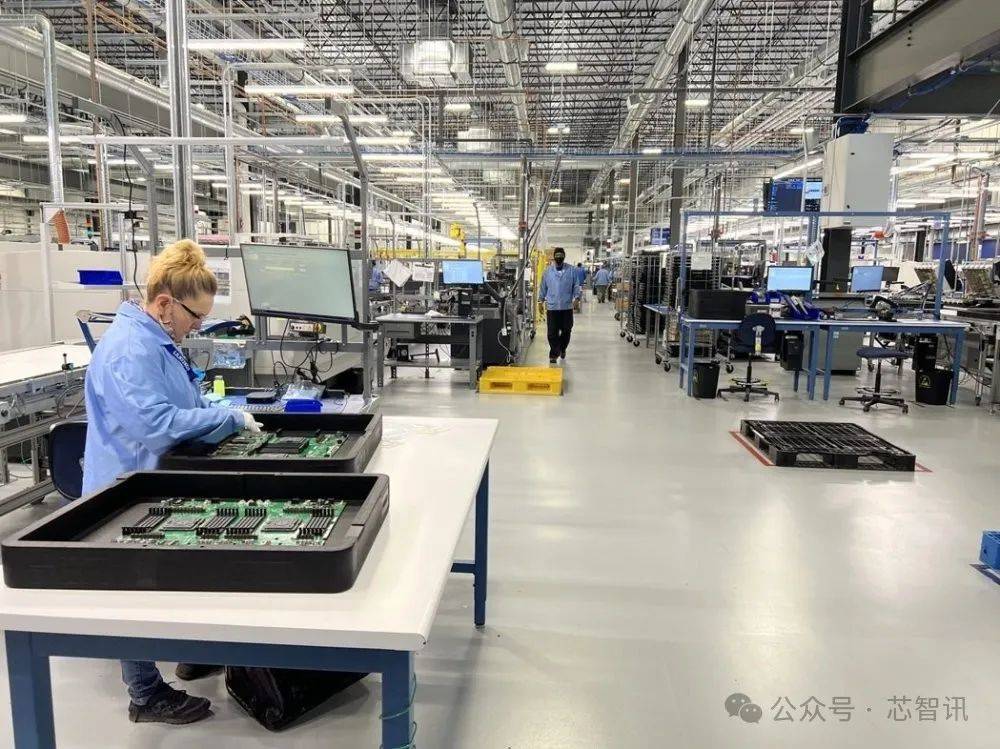
除和硕外,台系电子代工厂全部启动美国制造
Sou Hu Cai Jing· 2025-04-29 00:47
据悉,英业达选择前往德克萨斯州设厂,主要原因包括邻近墨西哥、当地电力供应较充足等。供应链此前还传出消息称,英业达考虑在德克萨 斯州租用厂房,建置先进服务器后段组装产线,预计最快下半年就可望启用。 4月29日消息,据台媒《经济日报》报道,电子代工大厂英业达也宣布加入了"美国制造"行列。而在此之前,鸿海、广达、纬创、纬颖、仁宝 等台系电子代工大厂均已投入"美国制造",随着英业达也宣布在德克萨斯州建厂,台系主要电子代工厂当中,仅剩和硕未有宣布在美国布局。 4月28日,英业达董事会批准,拟斥资上限8,500万美元,在美国德克萨斯州设立服务器制造基地。此举有望降低特朗普政府关税战干扰,助力 后续营运。 英业达董事会通过美国投资计划,授权子公司在得州寻觅合适厂房。英业达指出,美国子公司为因应未来全球化策略布局及稳定客户合作关 系,满足客户出货地点需求,同时积极争取开发新客户或市场,并降低美国关税政策波动影响,将于美国得州设立产品制造基地。 代工厂忧心特朗普政府的关税政策,将为营运增添更多不确定性,因此特朗普上任以来,各大代工厂相继部署重兵,前往美国建立制造产能, 鸿海、广达、纬创及旗下服务器代工厂纬颖、仁宝等,陆续赴美投 ...

PC出货量 研调机构不看淡 宏碁、广达等有望受惠
Jing Ji Ri Bao· 2025-04-24 23:38
Core Insights - The PC market is expected to see a growth rate of 3% to 4% in 2025, driven by the end of Windows 10, enterprise upgrade demands, and China's subsidy for old-for-new exchanges [1][2] - The global PC sales are projected to remain flat in 2024, with a potential increase in 2025 due to the aforementioned factors [1] - The introduction of AI PCs and related CPUs is anticipated to penetrate the mid-range market in the second half of the year, which will help lower product prices and promote wider applications [1] Industry Trends - The consumer electronics market is experiencing turbulence due to tariff policies, leading to increased costs for supply chain manufacturers and cautious consumer spending [1] - Innovations such as on-device AI, custom chips, and new screen formats are expected to drive growth in high-end products [2] - The non-Apple ARM architecture mobile PCs are projected to achieve over 100% annual growth rate by 2025 [1]
英伟达(NVDA):H20受限或堵住以内存弥补算力漏洞
HTSC· 2025-04-17 03:00
Investment Rating - The investment rating for the company is "Buy" with a target price of $145.00 [7][8]. Core Insights - The report highlights that the restrictions on the H20 chip sales are anticipated by the market, but new regulations may aim to close performance gaps in memory bandwidth [2][12]. - NVIDIA is expected to focus on shipping HGX architecture servers and H20 chips in FY26H1, with a close watch on the GB300 NVL72 production progress [3][12]. - The supply chain is likely to be reshaped due to tariff pressures, with a shift towards production in Mexico or the U.S. being a prevailing trend [4][12]. - The report projects a decrease in FY26 adjusted net profit by 4.7% to $112.1 billion, leading to a reduction in the target price from $160 to $145 [5][18]. Summary by Sections Sales and Market Dynamics - NVIDIA has paused H20 product sales in China and stopped accepting new orders, which is seen as a proactive adjustment to potential export controls [2][12]. - Major clients have completed their initial stockpiling of H20, while smaller clients still have some demand [2][12]. Financial Projections - The report forecasts significant revenue growth, with expected revenues of $206.1 billion in FY26, up from $130.5 billion in FY25, representing a 57.91% increase [6][18]. - Adjusted net profit is projected to reach $112.1 billion in FY26, reflecting a 50.95% increase from the previous year [6][18]. Valuation Metrics - The adjusted PE ratio for FY26 is revised down to 32.1x, with a corresponding target price adjustment to $145 [5][18]. - The report indicates that the gross margin for the H20 chip is approximately 50%, which is significantly lower than NVIDIA's overall gross margin of around 70% [2][12]. Supply Chain and Production - NVIDIA is collaborating with ODMs to enhance the localization of its supply chain in the U.S., with significant investments in production facilities in Mexico and the U.S. [4][12]. - The report notes that approximately 60% of AI servers imported into the U.S. currently come from Mexico, benefiting from USMCA trade agreement exemptions [4][12].
特朗普芯片关税模拟三剧本 最重税率恐逾100%
Jing Ji Ri Bao· 2025-04-13 22:52
Core Viewpoint - The article discusses the potential impact of U.S. President Trump's proposed semiconductor tariffs, which could impose significant financial burdens on semiconductor manufacturers in Taiwan, South Korea, and the U.S. [1][2] Group 1: Tariff Scenarios - The first scenario involves a tax based on the global semiconductor output of countries or manufacturers compared to the U.S. production, potentially leading to tariffs exceeding 100% for companies without U.S. manufacturing facilities [1][2] - The second scenario proposes direct tariffs on imported chips to the U.S., which could adversely affect companies that assemble products in the U.S. using imported chips, including major electronic manufacturing services (EMS) firms [2] - The third scenario suggests a uniform tariff on all finished electronic products containing semiconductors, which would be challenging to enforce due to the complexity of tracking semiconductor components in various products [3] Group 2: Industry Reactions - The semiconductor industry is highly concerned about the implications of high tariffs, particularly the potential for a 100% tariff on companies like TSMC if they do not establish manufacturing in the U.S. [2] - There is speculation that the best outcome would be for Trump to adopt a more lenient approach, potentially allowing many semiconductor companies to avoid tariff impacts [3]
千亿关税豁免后的交易机会——A股一周走势研判及事件提醒



Datayes· 2025-04-13 13:43
摘要/ 交出筹码后 周末最火的消息应该是手机等商品的关税豁免! 美国海关与边境保护局(CBP)于周五深夜更新了关于特朗普总统根据总统令 14257号及其修正案(EO 14259)实施的互惠关税中的商品排除指南。 此次豁 免范围涵盖大量电子产品,包括智能手机、笔记本电脑及相关组件。 随后白宫发布声明,自2025年4月5日东部夏令时间凌晨12:01起,依据总统令 14257号及其后续命令,对被豁免的进口商品(即被归类为"半导体"的商品)所 征收的关税,将依据CBP退税标准程序予以退还。 从两种口径大致估算下,豁免产品规模约在1000亿美元左右。 | | 本轮清单豁免产品出口规模测算 | | | | | --- | --- | --- | --- | --- | | 代码 | 产品 | 2024对美出口金 | 占中国对美出 | 占中国 | | | | 额(亿美元) | ロ比重(%) | 比重 | | 8471 | 自动数据处理设备(如计算机、服务器) | 412.2 | 7.9 | | | 8473.30 | 打印设备零件及附件 | 44.4 | 0.8 | | | 8486 | 半导体制造设备零件(如晶圆传输装置 ...