罗氏

Search documents
速递|减重20%!罗氏双靶点GLP-1/GIP药物CT-388 2 期数据亮相,
GLP1减重宝典· 2026-01-27 09:35
Core Viewpoint - Roche's investigational dual-target GLP-1/GIP receptor agonist CT-388 has shown significant weight loss efficacy and safety in treating obesity, paving the way for further clinical development [4][6]. Group 1: Clinical Trial Results - The Phase 2 trial CT388-103 included 469 participants and evaluated three dosage levels of CT-388, with a maximum dose of 24mg administered weekly for 48 weeks [6]. - In the highest dose group, the average weight loss after 48 weeks was 22.5% after placebo correction, with a significant statistical difference, and no noticeable weight loss plateau was observed throughout the treatment [6]. - 95.7% of participants in the 24mg group lost at least 5% of their body weight, 87% lost at least 10%, and 47.8% lost at least 20%, with 26.1% losing over 30% [6]. - 54% of participants achieved obesity remission, with a BMI below 30 kg/m², compared to only 13% in the placebo group [6]. - Among prediabetic participants, 73% normalized their blood sugar levels after treatment with 24mg CT-388, while only 7.5% in the placebo group did so [6]. Group 2: Safety and Tolerability - CT-388's safety profile aligns with existing GLP-1 class drugs, with no new or unexpected safety signals reported [8]. - Adverse events were primarily gastrointestinal and mostly mild to moderate, with a discontinuation rate due to adverse events of 5.9% in the CT-388 group and 1.3% in the placebo group, indicating an acceptable range for similar drugs [8]. Group 3: Development Strategy - Roche has prioritized CT-388 as a key asset in obesity treatment, with ongoing Phase 2 trial CT388-104 assessing its efficacy and safety in obese patients with type 2 diabetes [9]. - Phase 3 clinical projects Enith1 and Enith2 targeting obesity alone are expected to start this quarter, marking a critical validation phase for the molecule [9]. - Roche plans to explore combination therapy with petrelintide alongside CT-388 to enhance its weight management efficacy and create a differentiated obesity treatment regimen [9]. Group 4: Mechanism of Action - CT-388 is a weekly subcutaneous injection dual receptor agonist that activates both GLP-1 and GIP pathways, suppressing appetite, regulating blood sugar, and improving overall energy homeostasis [9]. - The design employs biased signaling to achieve strong receptor activation while minimizing β-arrestin recruitment, reducing receptor internalization and desensitization risks, which may help prolong drug action and maintain long-term efficacy [9].


减肥药赛道杀出重磅玩家!罗氏(RHHBY.US)CT-388减重幅度达18% 峰值销售或达25亿瑞郎
Zhi Tong Cai Jing· 2026-01-27 08:49
Group 1 - Roche (RHHBY.US) announced that patients with obesity receiving its experimental weight loss drug CT-388 lost 18% more weight compared to those receiving a placebo in a mid-stage trial [1] - CT-388 is a GLP-1R/GIPR agonist developed by Carmot Therapeutics, which Roche plans to acquire for $3.1 billion, marking its return to the GLP-1 market [1] - Roche previously developed a GLP-1 receptor agonist, Taspoglutide, which was abandoned in 2011 due to side effects [1] Group 2 - CT-388 is a weekly subcutaneous injection designed for treating obesity and type 2 diabetes (T2D), showing a maximum weight reduction of 18.3% after 48 weeks in treated subjects [2] - The safety profile of CT-388 is favorable, with most gastrointestinal adverse events being mild to moderate, and a low treatment discontinuation rate due to adverse events (5.9% for CT-388 vs. 1.3% for placebo) [2] - Roche plans to initiate late-stage trials this quarter, testing CT-388 both as a standalone therapy and in combination with other weight loss treatments [2] Group 3 - Analyst Stefan Schneider from Vontobel expects Roche to launch CT-388 by 2028, with peak sales estimated to reach 2.5 billion Swiss francs [2]

小核酸赛道,挤满了下一代大药
Ge Long Hui· 2026-01-26 21:06
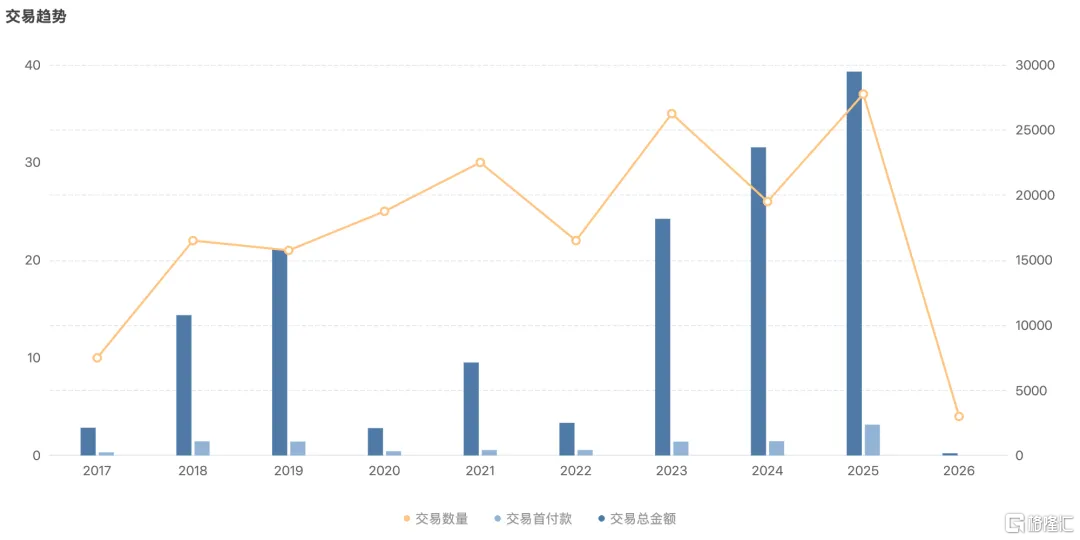
Core Insights - The small nucleic acid drug sector is experiencing a significant surge, marking the beginning of a golden era driven by technological breakthroughs and capital enthusiasm [2][11][22] Industry Developments - On January 5, 2026, Sanofi's APOC3 siRNA drug Plozasiran was approved for domestic market use to treat hyperlipidemia [1] - On January 9, 2026, Rebio Biotech, known as "China's first small nucleic acid stock," successfully listed on the Hong Kong Stock Exchange, with its stock price soaring by 40% on the first day, leading to a market capitalization exceeding 13 billion HKD [1] - China National Pharmaceutical Group announced a 1.2 billion CNY acquisition of Hegia Biotech, securing the world's first clinically validated liver-targeted delivery platform capable of annual dosing [1] Market Trends - The global small nucleic acid drug market has seen nearly 100 business development (BD) collaborations in the past three years, with transaction numbers and amounts increasing annually, reaching over 30 BD deals in 2025 totaling nearly 30 billion USD [4][9] - Notable transactions in 2025 included Novartis acquiring Avidity Biosciences for 12 billion USD and multiple other significant deals involving RNA therapies [7][9] Clinical Advancements - Ionis's APOC3 ASO drug Olezarsen showed promising results in reducing triglyceride levels by up to 72% in patients with severe hypertriglyceridemia, leading to an increase in peak annual sales forecast from 1.5 billion USD to 2.5 billion USD [12] - GSK's ASO therapy Bepirovirsen is expected to be the first drug to achieve functional cure for chronic hepatitis B, with a peak annual sales potential of 2 billion USD [12] Emerging Opportunities - The small nucleic acid drugs are expanding into various therapeutic areas, including obesity and kidney diseases, with promising results from clinical trials demonstrating significant weight loss and metabolic health improvements [13][15] - The number of small nucleic acid drugs in development globally has surpassed 1,200, with siRNA and ASO therapies being the most prominent [17] Strategic Collaborations - Domestic companies are increasingly recognized for their innovative value in small nucleic acid drugs, with active BD transactions, including significant collaborations by Rebio Biotech and other firms [18][21] - Companies like Saintin Biotech are forming strategic partnerships with major pharmaceutical firms to advance their small nucleic acid drug pipelines [19] Conclusion - The convergence of technological advancements, capital influx, and successful clinical outcomes is propelling small nucleic acid drugs into a pivotal position within the pharmaceutical industry, with China poised to become a global innovation hub [22]




JPM2026观察:超百亿巨额并购降温、AI投资热情飙升,中国药企变“台上主角”
Cai Jing Wang· 2026-01-26 08:16
Core Insights - The JPMorgan Global Healthcare Conference serves as a significant platform for the biopharmaceutical industry, influencing capital flows and industry dynamics for the year ahead [1] - This year's conference highlighted the increasing presence of Chinese biotech companies, marking a shift from being mere spectators to key players in the global market [2][3] Group 1: Chinese Biotech Companies - Seven Chinese companies, including WuXi AppTec and BeiGene, presented on the main stage, with an additional 17 companies showcasing in the Asia-Pacific session [2] - The transformation of Chinese companies from the periphery to the center of the conference reflects their substantial innovation value, evidenced by numerous licensing deals announced during the event [3] Group 2: Licensing Deals and Collaborations - Notable licensing agreements included a $650 million upfront payment from AbbVie to Rongchang Biopharma for the global rights to its PD-1/VEGF dual-specific antibody, with a total potential deal value of up to $5.6 billion [3] - Other significant collaborations involved Zhongsheng Peptide and Sai Shen Pharmaceutical partnering with Novartis, with the latter's deal valued at approximately $1.665 billion [3] Group 3: MNCs and Market Dynamics - The cautious approach of multinational corporations (MNCs) towards acquisitions is driven by the impending "patent cliff," with over $320 billion in market potential products set to lose patent protection in the next decade [3][5] - MNCs are increasingly favoring "asset-based acquisitions" over full company buyouts, allowing them to efficiently acquire core assets without the burdens of integrating entire companies [4] Group 4: AI in Drug Development - AI's integration into drug development emerged as a central theme, with Eli Lilly and NVIDIA announcing a partnership to establish a $1 billion AI innovation lab aimed at addressing long-standing challenges in the pharmaceutical industry [5][6] - The acquisition of Modella AI by AstraZeneca further emphasizes the growing importance of AI in enhancing drug discovery and clinical development processes [6] Group 5: Future Outlook - The 2026 JPM conference is expected to reflect a new paradigm where Chinese innovation becomes essential, and AI evolves from a supportive tool to a foundational infrastructure in drug development [8][9]
每日投资策略-20260126
Zhao Yin Guo Ji· 2026-01-26 04:53
Market Overview - Global markets showed mixed performance, with the Hang Seng Index closing at 26,750, up 0.45% year-to-date, while the US Dow Jones fell by 0.58% [1][3] - The Chinese stock market saw gains, particularly in materials, consumer discretionary, and healthcare sectors, while energy and real estate lagged [3] Industry Insights - The Chinese pharmaceutical sector is experiencing a significant upward trend, with the MSCI China Healthcare Index rising 9.2% since early 2026, outperforming the MSCI China Index by 5.6% [4] - The trend of Chinese innovative drugs going overseas continues to gain momentum, with multiple business development (BD) transactions occurring in early 2026, indicating a strong market for overseas licensing [5] - Key transactions include the overseas rights granted by Rongchang Biopharma to AbbVie for RC148 and by Haisika for HSK39004, showcasing the clinical progress of these drugs [5] Company Analysis - China Ping An is projected to see a 12% increase in operating profit to RMB 135.9 billion in 2025, driven by improvements in life and health insurance segments [7] - The new business value (NBV) is expected to grow by 42% year-on-year to RMB 40.4 billion, with a strong performance anticipated in the first quarter of 2026, particularly in the bancassurance channel [8] - The target price for China Ping An has been raised to HKD 90, reflecting adjustments in profit and NBV growth forecasts, with the company currently trading at 0.71 times FY26E P/EV [8]
中国医药:创新药出海BD仍然火爆,关注IO2.0抢位赛
Zhao Yin Guo Ji· 2026-01-26 03:31
Investment Rating - The report assigns a "Buy" rating to several companies in the pharmaceutical sector, indicating a potential upside of over 15% in their stock prices over the next 12 months [29]. Core Insights - The MSCI China Healthcare Index has increased by 9.2% since the beginning of 2026, outperforming the MSCI China Index, which rose by 5.6% [1]. - The pharmaceutical industry has seen significant growth, driven by strong institutional investor interest and the ongoing trend of innovative drugs going global [1]. - The report emphasizes the importance of clinical progress and data validation for pipelines that have already gone overseas, suggesting that this trend will continue in the long term [1]. Summary by Sections Industry Overview - The report highlights a robust trend in the outbound licensing of innovative drugs, with multiple business development (BD) transactions occurring at the start of 2026, reflecting a high level of activity in the sector [4]. - Key transactions include significant upfront and milestone payments for various drugs, indicating strong market interest and potential for future growth [4]. Company Ratings and Valuations - The report provides detailed valuations for several companies, including: - **Sangfor Technologies (1530 HK)**: Market cap of $7,598.4 million, target price of $37.58, with a 54% upside potential [2]. - **Gusongtang (2273 HK)**: Market cap of $963.3 million, target price of $44.95, with a 46% upside potential [2]. - **WuXi AppTec (2268 HK)**: Market cap of $10,551.0 million, target price of $88.00, with a 28% upside potential [2]. - **China National Pharmaceutical Group (1177 HK)**: Market cap of $15,951.4 million, target price of $9.40, with a 42% upside potential [2]. Market Trends - The report notes that the competition in the PD-(L)1/VEGF space is intensifying, with several companies advancing their clinical trials and aiming for first-line indications [4]. - The report suggests that the efficiency and breadth of clinical trials, as well as the richness of combination therapies, will be critical factors in determining success in this competitive landscape [4].
中金:若“乱象”事态超出预期 利多避险资产、资源品 科技逢低介入
智通财经网· 2026-01-26 00:27
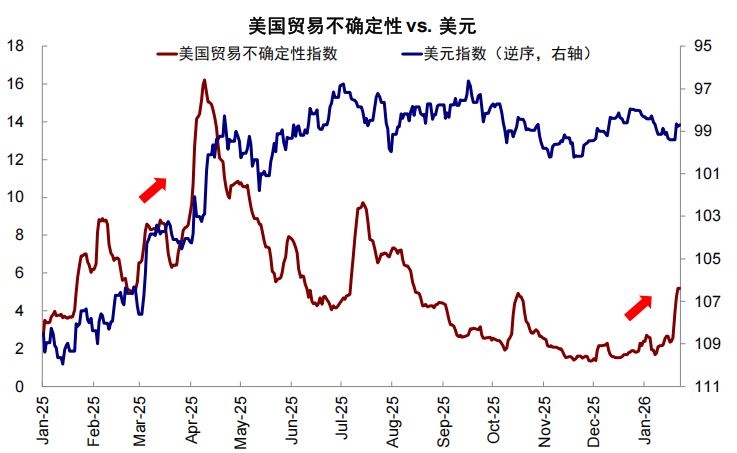
智通财经APP获悉,中金发布研报称,短期内,需要重点关注的事件有:1)"购买"格陵兰岛,目前特朗普称不再考虑对欧洲八国额外加征关税,风险暂时 缓解但需持续关注。2)最高法院对特朗普关税的裁决,由于从1月21日起法院进入约四周的"中期休庭"(intervening recess),因此最早的裁决日期可能要等 到2月20日。3)Lisa Cook最终是否会被撤职美联储理事(1月21日已完成口头辩论),以及鲍威尔刑事调查的动向。4)新主席提名,贝森特1月20日称"最早下 周(1月26日-2月1日)即可宣布"。 基准情形下,维持年度判断:即对美股整体积极,板块上周期追赶科技,还可关注小盘和金融,美元不看持续大跌,长债有交易性机会。但如果事态发展 继续超出预期的话,建议:1)避险资产,如黄金等;2)科技股,短期会有剧烈动荡,但其独立于政策波动的基本面逻辑,可以波动后逢低再买入;3)资源 品,属于当前贸易摩擦和地缘局势的"焦点",反而会强化其投资价值;4)规避美债,美联储独立性的破坏、财政可持续性担忧,以及"去美元化"叙事都会带 来压力。 中金主要观点如下: 2026年伊始,特朗普的诸多举措和言论再度超预期,引发市场大幅 ...
Want to Invest Globally? IEFA Offers Broader Diversification Than EEM.
The Motley Fool· 2026-01-25 19:15
Core Insights - The iShares MSCI Emerging Markets ETF (EEM) has shown recent outperformance with a focus on emerging markets, while the iShares Core MSCI EAFE ETF (IEFA) offers lower costs, higher yield, and broader developed-market diversification [1][2] Cost and Size Comparison - IEFA has an expense ratio of 0.07%, significantly lower than EEM's 0.72% - IEFA's one-year return is 31.8%, while EEM's is 33.3% - IEFA offers a dividend yield of 3.5%, compared to EEM's 2.1% - IEFA has assets under management (AUM) of $170.4 billion, while EEM has $25.1 billion [3][4] Performance and Risk Comparison - Over five years, IEFA's maximum drawdown is -30.41%, while EEM's is -39.82% - A $1,000 investment in IEFA would grow to $1,307 over five years, compared to $1,044 for EEM [5] Portfolio Composition - EEM holds 1,214 stocks, with significant allocations in Technology (30%), Financial Services (21%), and Consumer Discretionary (12%) - Top holdings in EEM include Taiwan Semiconductor Manufacturing (12.6%), Tencent Holdings (4.5%), and Samsung Electronics (4.5%) [6] - IEFA contains 2,591 developed-market stocks, with major sector weightings in Financial Services (23%), Industrials (20%), and Healthcare (11%) - Leading positions in IEFA include ASML Holding (2.1%), Roche Holding (1.3%), and HSBC (1.2%), indicating a more diversified approach [7] Investment Implications - IEFA serves as a low-cost index fund for global stock market exposure, with over 2,500 stocks and minimal concentration risk - EEM focuses on higher-risk emerging markets with greater growth potential but also higher fees and concentration risk [10][11]

跨国药企扫货中国创新药 谁是首席买家
经济观察报· 2026-01-25 06:30
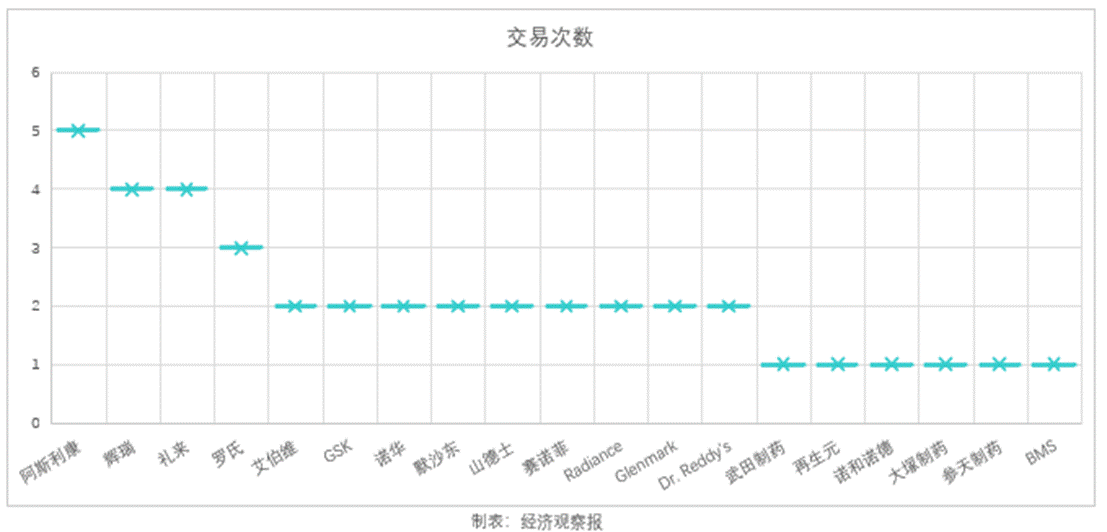
在这一年的交易热潮中,跨国巨头们的采购风格各有不同。谁出手频次最高?谁手笔最大?经济观 察报分析了全年150多笔交易,复盘跨国药企的投资画像与交易特色。 多位受访者对经济观察报表示,其所在药企与潜在合作方达成了进一步沟通意向,他们判断2026 年中国创新药对外授权交易热仍会持续。 2025年爆发式增长的对外授权交易验证了中国创新药资产的价值,该年对外授权总交易额超1300 亿美元,交易数超150笔(约占全球40%),创下历史新高。 阿斯利康最活跃 在交易频次上,阿斯利康是最活跃的跨国药企,2025年一共出手了5次。 合作方包括石药集团(01093.HK)、和铂医药(02142.HK)、加科思药业(01167.HK)、元 思生肽等。其中,在2025年6月与石药集团达成的潜在总交易额超53亿美元的合作,可排进年度 交易额前四。在资产选择上,阿斯利康主要集中在临床早期管线,以及技术平台合作。 在交易频次上,阿斯利康是最活跃的跨国药企,2025年一共 出手了5次。从立即兑现的首付款看,辉瑞与武田制药出手最 阔绰。 作者:张英 封图:图虫创意 作为中国市场销售额最高的外资药企,在经历2024年的公司治理风暴后,阿斯利康 ...

跨国药企扫货中国创新药 谁是首席买家
Jing Ji Guan Cha Wang· 2026-01-25 02:25
Core Insights - The 2026 JPMorgan Healthcare Conference highlighted significant interest from multinational companies in Chinese assets, particularly in the innovative drug sector [1][2] Group 1: Market Trends - The trend of foreign licensing deals for Chinese innovative drugs is expected to continue in 2026, following a record-breaking year in 2025 where the total licensing deal value exceeded $130 billion, accounting for approximately 40% of global transactions [3] - The surge in licensing deals in 2025 validated the value of Chinese innovative drug assets, with over 150 transactions recorded [3] Group 2: Key Players - AstraZeneca emerged as the most active multinational company in 2025, engaging in five transactions, including a notable deal with CSPC Pharmaceutical Group valued at over $5.3 billion [4] - Pfizer and Eli Lilly each conducted four transactions, with Pfizer's deal with 3SBio setting a record for upfront payments in Chinese innovative drugs at $1.25 billion [5] - GSK's collaboration with Heng Rui Medicine reached a potential total of $12.5 billion, marking the highest deal value for Chinese innovative drugs [13] Group 3: Emerging Markets - Interest in Chinese innovative drugs is not limited to Western companies; firms from India, Latin America, and the Middle East are also engaging in licensing deals [7] - Indian companies Glenmark and Dr. Reddy's each completed two business development transactions in 2025, with Glenmark's deals totaling over $2 billion [8][9] Group 4: Financial Highlights - Three companies, AstraZeneca, GSK, and Takeda, signed contracts exceeding $10 billion, while Pfizer and Novartis secured contracts over $5 billion [10] - The largest single transaction was GSK's deal with Heng Rui Medicine, which included rights to one core drug and options for 11 additional projects [13] Group 5: Future Outlook - Executives at the 2026 JPM conference expressed that Chinese assets are an effective way to supplement pipelines, indicating a shift towards acquiring entire biotechnology platforms rather than just single products [14]