
ST易购

Search documents
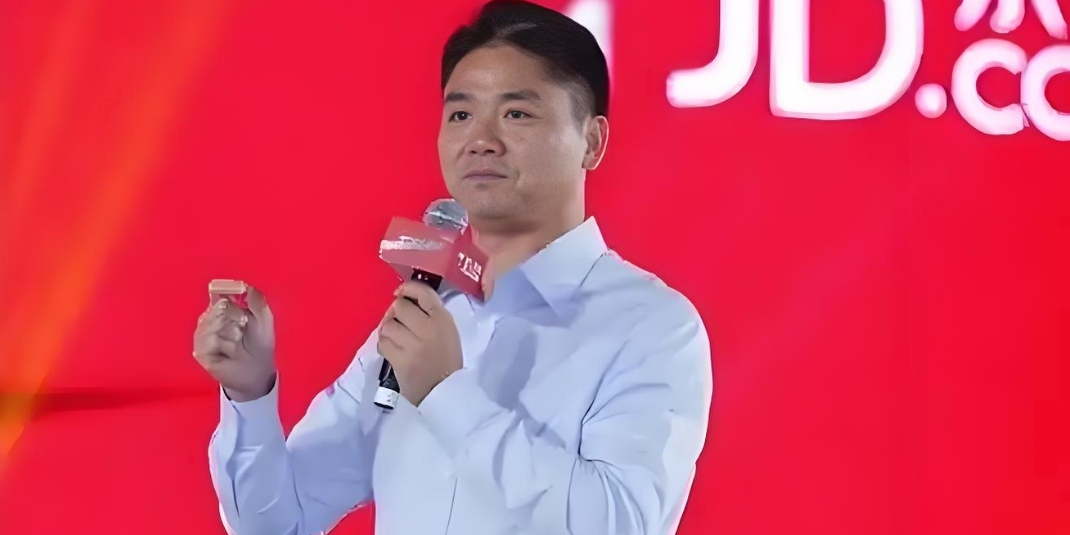
刘强东讲述京东故事 一切围绕“供应链”
经济观察报· 2025-06-18 10:21
Core Viewpoint - JD.com aims to innovate annually, focusing all business operations around the supply chain [2][11][18] Group 1: Innovation Strategy - JD.com has maintained a rhythm of innovating a new business model every three years, but will now introduce one innovation project each year, with six projects currently in progress, including stablecoins [2][19] - The company has recently entered the food delivery market, with a significant focus on leveraging its supply chain capabilities [3][25] - JD.com plans to launch a unique business model for its food delivery service that differs from competitors like Meituan, aiming to address food safety and provide high-quality, cost-effective food options [9][26] Group 2: Supply Chain Focus - All of JD.com's business operations are centered around the supply chain, with the company not engaging in activities unrelated to it [5][29] - The company has established over 1,600 logistics centers in mainland China, with a self-operated product range exceeding 10 million items, showcasing its strong supply chain capabilities [30] - JD.com maintains a low retail cost structure of around 10%, comparable to global leaders like Costco and Amazon, which supports its competitive advantage [30][31] Group 3: Organizational Changes - Liu Qiangdong has returned to a strategic role within JD.com, restructuring the organization to enhance decision-making and operational efficiency [2][16] - A strategic execution committee has been formed, including Liu and other senior executives, to oversee key business decisions [2][11] Group 4: Market Position and Competition - JD.com has rapidly scaled its food delivery service, achieving over 25 million daily orders and employing more than 120,000 full-time delivery personnel within a short period [7][24] - The company is positioned to compete aggressively in the food delivery market, offering substantial incentives to attract merchants and delivery personnel [6][25]



刘强东讲述京东故事 一切围绕“供应链”
Jing Ji Guan Cha Wang· 2025-06-18 08:54
Core Insights - Liu Qiangdong emphasizes that JD.com will innovate annually, moving away from the previous model of introducing a new business model every three years [2][6] - The company has launched six innovation projects, including stablecoins, and aims to maintain a focus on supply chain-related innovations [5][9] Business Strategy - JD.com has entered the food delivery market, with over 25 million daily orders and more than 120,000 full-time delivery personnel within just over 100 days of operation [4][11] - The company plans to differentiate its food delivery model from competitors like Meituan, focusing on the underlying fresh supply chain rather than just food sales [4][12] Organizational Changes - Liu Qiangdong has restructured JD.com's organizational framework, establishing a strategic execution committee to oversee key decisions [2][9] - The company is adopting a flatter organizational structure, allowing for more autonomy at the operational level while maintaining strategic oversight from upper management [2] Supply Chain Focus - JD.com’s business model is heavily centered around supply chain efficiency, with over 1,600 logistics centers and a self-operated product range exceeding 10 million items [13][14] - The company maintains a low retail cost structure, comparable to industry leaders like Costco and Amazon, with a retail cost of only 10% [14] Future Plans - JD.com is set to officially announce its entry into the hotel and travel sector, leveraging its supply chain capabilities to address high costs and inefficiencies in the industry [5][9] - The company aims to enhance customer experience through better product offerings, pricing, and services, all rooted in its supply chain strategy [9][10]
社情民意|持续释放“券”动力 激发消费新活力
Sou Hu Cai Jing· 2025-06-18 08:40
(网络配图) 1. 获取渠道较为单一 ■ 台盟陕西省委会 投放消费券作为短期刺激消费的有效经济政策工具,发挥着提振消费信心、激活市场需求、促进经济复 苏的重要作用。一年来,我省充分发挥"两重""两新"政策对消费的撬动作用,统筹发放家电、汽车、餐 饮等领域消费券,消费市场呈现出蓬勃活力。2024年前三季度,我省社会消费品零售额同比增长 4.4%,居全国第十位,新能源汽车零售额同比增长61.8%,一级二级能效家电零售额同比增长10.4%。 但在消费券投放过程中,发现以下问题亟需改进: 消费券投放主要惠及规模大、信息化程度高的连锁企业,数量众多的中小微企业和个体商户无法享受政 策红利。如2025年西安市家电以旧换新补贴线下活动消费券仅限在全市25家苏宁门店使用,其他企业和 商户则被排除在外。 "6·18"期间某电商平台的抢券页面。 为此,建议: 当前消费券多依托线上平台发放,由于信息不对称、数字鸿沟等因素,轻度使用网络群体、老年群体等 较难享受政策红利。如我省消费券主要在云闪付APP发放,用户群体主要为占总用户65.3%的18-40岁中 青年,难以触达老年、低收入等群体。 2. 获取方式存在异议 我省消费券发放多采 ...

拥有90万名员工的刘强东在想什么?他的CEO在忙什么?
Hu Xiu· 2025-06-17 23:14
Core Insights - The company is focusing on understanding its business model and future direction, particularly in the context of its workforce expansion and new initiatives in local living services [1][5][7] - The CEO, Sandy Xu, is seen as a key player in executing the company's strategy, particularly in local life services and the integration of various business segments [4][5][6] Group 1: Company Strategy and Workforce - The company currently has 900,000 employees, with projections to grow to 1.2 million in the next three years [1][11] - The company is emphasizing local life services as a critical area for future growth, with plans to expand new formats like the Seven Fresh Food Mall [5][6] - The integration of e-commerce, instant retail, and local living services is a strategic focus, with 40% of food delivery customers also purchasing e-commerce products [5][6] Group 2: Leadership and Management - Liu Qiangdong expressed dissatisfaction with the company's performance from 2017 to 2022, describing it as a "lost five years" with no innovation or growth [3][15] - Sandy Xu is viewed positively by Liu Qiangdong, who plans to eventually hand over domestic operations to her while he focuses on international business [3][19] - The company aims to maintain a strong supply chain focus, which is seen as the foundation of its business model, rather than being a purely internet company [8][17] Group 3: Business Model and Future Plans - The company is developing a unique food delivery model that will differ significantly from Meituan's approach, with an emphasis on food safety [2][24] - The company is committed to a long-term strategy that may take 10 to 20 years to fully realize, focusing on building a sustainable business rather than quick profits [22][23] - The international strategy will prioritize local e-commerce, local infrastructure, and local employees, aiming to support Chinese brands in foreign markets [21][22]
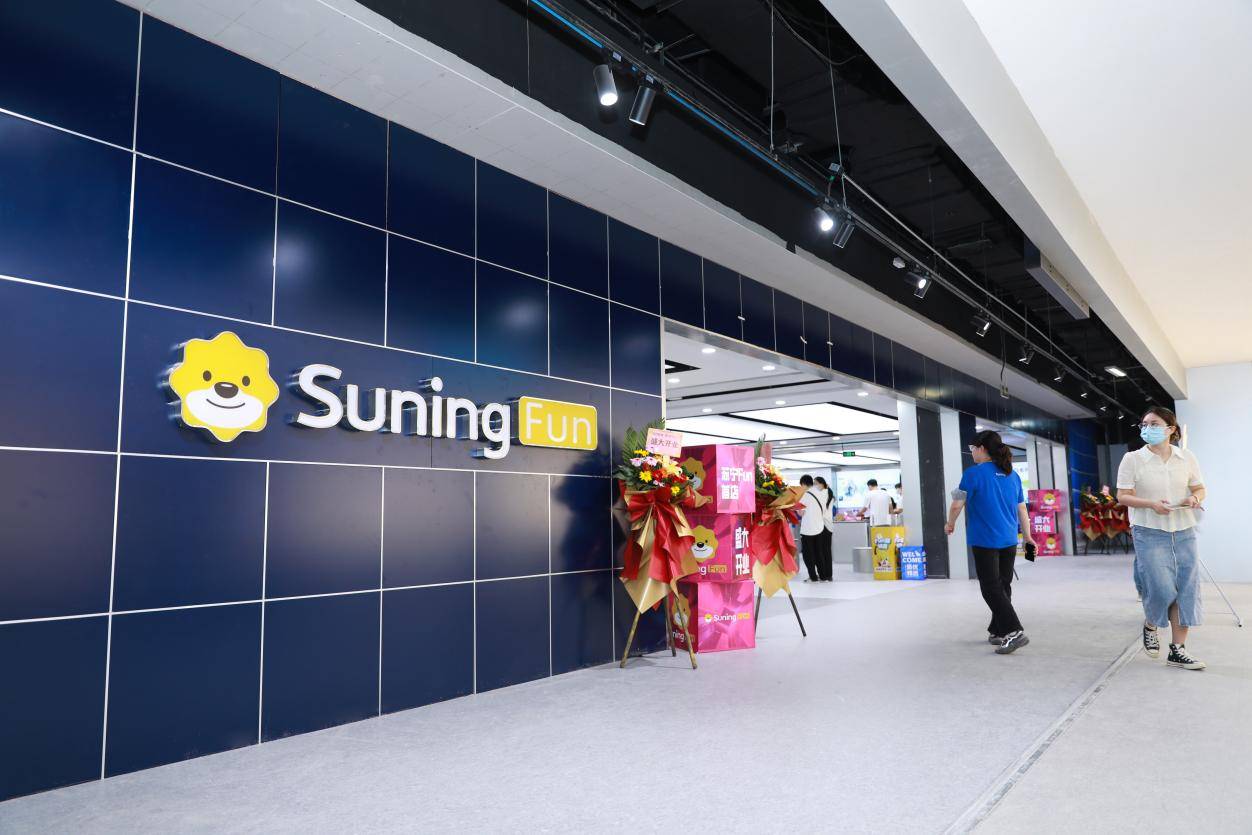
618新店首发!Suning Fun全国首家体验店亮相
Sou Hu Cai Jing· 2025-06-17 12:24
Core Insights - Suning's new retail format, Suning Fun, aims to enhance the shopping experience by integrating interest-based social interactions and experiential consumption, targeting younger consumers [1][3][9] Group 1: Store Concept and Design - Suning Fun's first experience store spans 1,500 square meters, breaking traditional retail display norms by focusing on trends in technology, entertainment, and social interaction [3] - The store features immersive VR/AR games, F1 simulators, and interactive competition zones, creating an engaging environment that encourages prolonged visits [3][7] Group 2: Product Offering - The product mix at Suning Fun is tailored to young consumers, featuring innovative tech products such as PICO 4 Ultra VR glasses and various interactive gadgets, emphasizing both functionality and social sharing [5] - The store also includes trendy IPs, limited-edition cultural products, and lifestyle items to inspire new living ideas and enhance consumer engagement [5] Group 3: Customer Engagement and Experience - Suning Fun prioritizes enjoyable shopping experiences over mere sales volume, offering various membership activities and interactive benefits during the opening, such as free coffee and family workshops [7] - The children's area is designed to attract families, providing a space for parents to relax while their children play, thus enhancing the store's appeal to young families [7] Group 4: Strategic Importance - Suning Fun is a key component of Suning's 2025 strategy to develop a dual retail approach, with larger stores focusing on high-end home appliances and smaller stores targeting community engagement and experiential shopping [9] - The strategy aims to differentiate Suning in a competitive market by combining brand-building with localized coverage, enhancing the overall retail ecosystem [9]

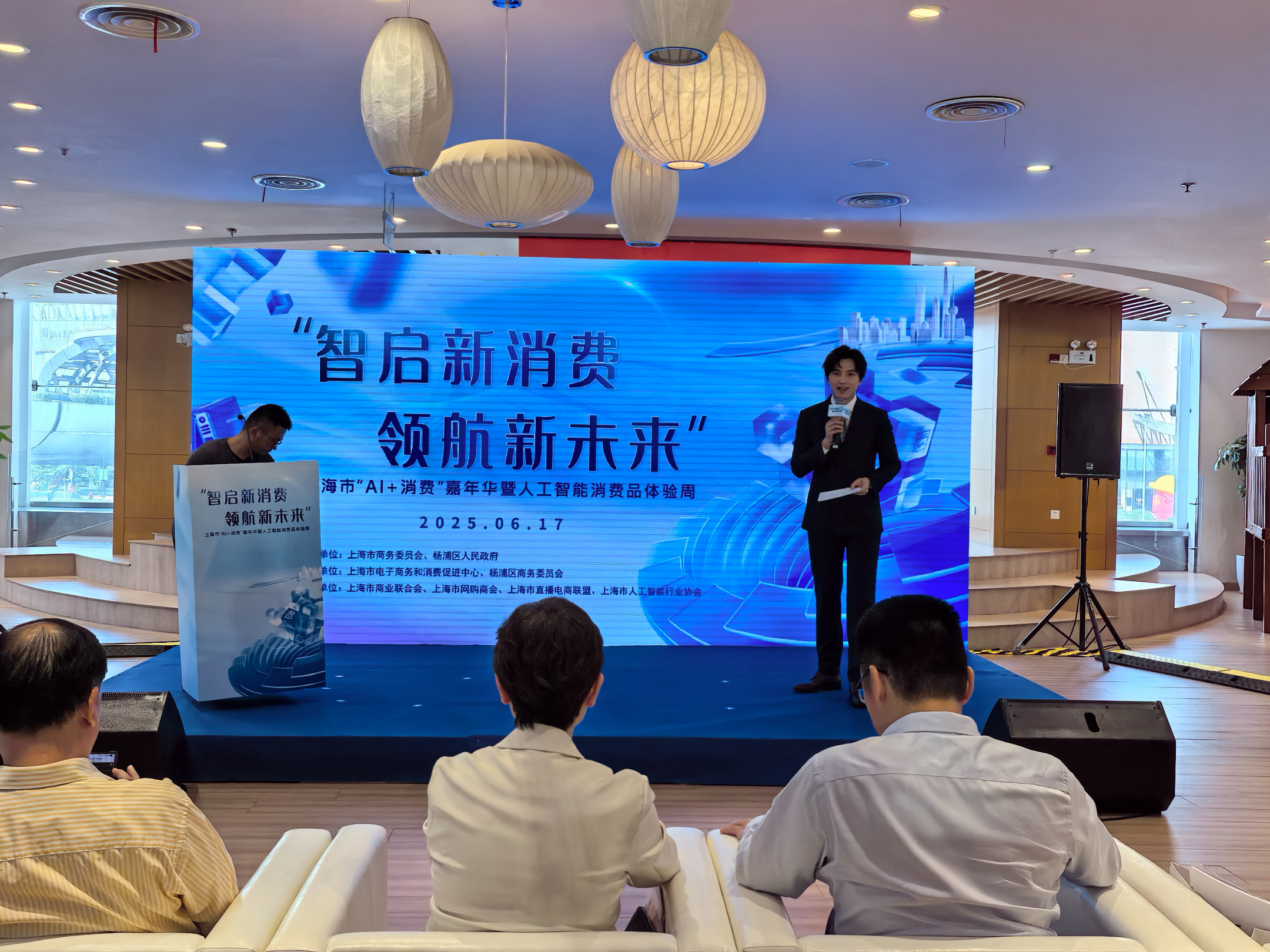
上海“AI+消费”嘉年华启幕,绿色家电促消费活动同步推进
Guo Ji Jin Rong Bao· 2025-06-17 10:43
Group 1 - Shanghai is actively exploring new paths for the deep integration of artificial intelligence and consumption amid the digital wave and ongoing market transformation [1][2] - The "AI + Consumption" Carnival aims to promote innovation in consumption scenarios powered by AI technology, fostering new growth momentum in intelligent consumption [3][5] - The Shanghai E-commerce and Consumption Promotion Center released the first batch of outstanding cases of "AI +" applications in the business sector, focusing on innovative applications across the entire chain and various scenarios [5][6] Group 2 - The event featured the launch of an online section by Taotian Group, showcasing over 200 popular AI products across three core categories: smart terminals, smart home devices, and wearable technology [6][12] - A cooperation plan was signed between the Shanghai E-commerce and Consumption Promotion Center and the Shanghai Business Association to promote the deep integration of AI technology in the consumption sector [6][12] - The Shanghai AI Consumption Experience Week includes a week-long offline experience event displaying cutting-edge products such as smart home devices and health wearables, with participation from various brands [12][14] Group 3 - The 2025 Shanghai Green Home Appliance Promotion Season was launched, aiming to activate the potential of green home appliance consumption through a combination of new product launches and green subsidies [14][17] - The implementation of the old-for-new consumption subsidy policy has significantly boosted consumer enthusiasm, with over 11 million orders and sales exceeding 26 billion yuan reported [16][17] - The promotion season emphasizes the transition from "scale expansion" to "quality upgrade" in the consumption market, reflecting a structural shift towards intelligent and green products [17][18]
南京的商场,太好逛了
Sou Hu Cai Jing· 2025-06-17 02:41
Core Insights - The article discusses the transformation of commercial spaces in Nanjing, emphasizing the shift from traditional retail to experience-driven environments that attract consumers through innovative content and immersive experiences [1][2][4]. Group 1: Commercial Transformation - Nanjing's shopping landscape is evolving with new commercial complexes like Jinling Central and Xuanwu Garden City, which focus on creating engaging experiences rather than just selling products [1][4][18]. - The concept of "experience economy" and "IP creation" is becoming essential for attracting customers, with social media playing a significant role in driving foot traffic to these venues [4][8][14]. Group 2: Innovative Features - Deji Plaza exemplifies the trend of transforming shopping malls into attractions, featuring art installations and unique amenities that draw visitors for experiences beyond shopping [6][8]. - New projects like Jinling Central and Xuanwu Garden City incorporate elements of local culture and nature, such as ecological points and immersive cultural spaces, to enhance consumer engagement [12][19]. Group 3: Economic Impact - The introduction of flagship stores and unique brands is a strategic focus for Nanjing's commercial entities, with Jinling Central featuring 30% flagship stores and over 50 new brands, significantly boosting initial foot traffic and sales [15][18]. - The integration of cultural elements into commercial spaces has proven effective, as seen with Su Ning's MAX Super Experience Store, which achieved sales exceeding 50 million yuan on its opening day [20]. Group 4: Community and Local Business - Community commercial spaces are emerging as vital components of Nanjing's retail landscape, providing convenient shopping options while fostering local culture and community engagement [21][23]. - Smaller community complexes like Zijin Zhongai Li and Ruijin Li REPARK are designed to cater to local residents while attracting younger consumers through unique themes and experiences [23]. Group 5: Future Directions - Nanjing's commercial strategy is shifting towards a focus on content creation and ecological development, aligning with consumer demands and urban growth [24][25]. - The city aims to enhance its commercial landscape by integrating various retail formats and promoting a one-stop shopping experience, while also supporting community-based commercial initiatives [24][25][27].

大家都在抢,家电“国补”额度还有吗?最新文件明确:要持续到年底!专家建议:不急的话不妨再等等
新浪财经· 2025-06-17 01:02
Core Viewpoint - The article discusses the challenges consumers face in accessing government subsidies for home appliances during the "618" shopping festival, highlighting changes in subsidy distribution and the impact on consumer behavior and retail channels [1][3][6]. Group 1: Government Subsidy Changes - Many regions have shifted from a unified subsidy system to a coupon-based system for home appliance subsidies, leading to temporary suspensions or adjustments in certain areas [1][3]. - The National Development and Reform Commission and the Ministry of Finance have confirmed that the home appliance subsidies will continue until December 31, 2025, despite some temporary pauses in specific regions [6][4]. - The government has allocated an additional 81 billion yuan to support the replacement of old consumer goods, indicating a commitment to maintaining subsidy programs [6]. Group 2: Consumer Behavior and Retail Impact - The changes in subsidy distribution have led to limited availability and specific time frames for consumers to claim subsidies, affecting purchasing decisions [3][4]. - The subsidy program has revitalized physical retail stores, as consumers who initially planned to shop online are returning to brick-and-mortar locations due to the incentives provided by the subsidies [9]. - The competition among online platforms for subsidy-related traffic has intensified, benefiting offline retailers and leading to significant sales increases for some stores [9]. Group 3: Broader Market Implications - The subsidy program is expanding beyond home appliances to include mobile phones and other consumer electronics, with specific subsidy amounts and percentages outlined for these products [8]. - The introduction of subsidies has positively impacted sales for brands like Apple, which has adjusted pricing to align with subsidy offerings, resulting in increased market share [8]. - The longer replacement cycles for mobile devices, now averaging 45 months, suggest that subsidies will play a crucial role in stimulating demand in the electronics market [9].
享受“国补” 要抓紧 618可能是最优惠的时段
Mei Ri Shang Bao· 2025-06-16 22:12
Group 1 - The current 618 shopping festival is experiencing low consumer engagement, with digital electronic products being the only standout category due to significant discounts and government subsidies [2] - Many consumers are facing issues with the "national subsidy" (国补) button disappearing from product pages, preventing them from utilizing the expected discounts during their purchases [3][4] - The national subsidy policy is set to end on December 31, 2025, but some regions may exhaust their funds earlier, potentially by mid-December, indicating a need for consumers to stay informed about local policy changes [5] Group 2 - The rapid depletion of subsidy funds in certain areas suggests that the national subsidy program is effectively stimulating consumer spending, with 65% of the 300 billion yuan allocated already consumed by the end of May [5] - Some regions have temporarily suspended subsidies due to funding shortages, system upgrades, or to maintain price stability during the 618 sales event [5] - Consumers can check the remaining subsidy amounts for different product categories in their regions through the cloud payment platform, which provides transparency regarding available funds [6]

618促销叠加国补 智能化小家电成年轻人新宠
Cai Jing Wang· 2025-06-16 09:27
Sales Growth in Small Appliances - The 618 promotional event combined with national subsidies has significantly boosted sales in the small appliance market, with online platforms like JD and Tmall reporting substantial increases in sales [1][5] - During the 618 event, sales of summer small appliances such as cooling fans and ice-making water purifiers saw remarkable growth, with portable fan sales increasing by 300% and ice-making water purifiers by 350% year-on-year [1][5] - Offline stores also experienced a surge, with Suning's small appliance sales increasing by 69% since the start of the 618 event, driven by high-ticket items like robotic vacuums and washing machines [2] Consumer Preferences - Consumers are increasingly drawn to smart and health-oriented small appliances, with robotic vacuums featuring improved interactive functions and practical designs becoming popular [3][4] - The demand for cleaning appliances has surged, with robotic vacuums and washing machines accounting for 70% of small appliance sales in stores [3] - Health-focused products like water purifiers and low-coating rice cookers have seen significant sales increases, with water purifiers up by 195% [4] Market Trends and Innovations - The national subsidy policy and promotional discounts have stimulated consumer confidence and demand, leading to a projected high-quality development phase for the small appliance market by 2025 [5][6] - The average prices of various kitchen small appliances have risen, with rice cookers increasing by 20.74% and steamers by 37.42% year-on-year [5] - Companies like Bear Electric and Supor are focusing on product upgrades and innovation, targeting high-end flagship products and expanding into diversified business areas [6]