宇树科技

Search documents
宇树科技否认申请IPO“绿色通道” 10余家上市公司直接或间接持股
Chang Jiang Shang Bao· 2026-01-05 23:53
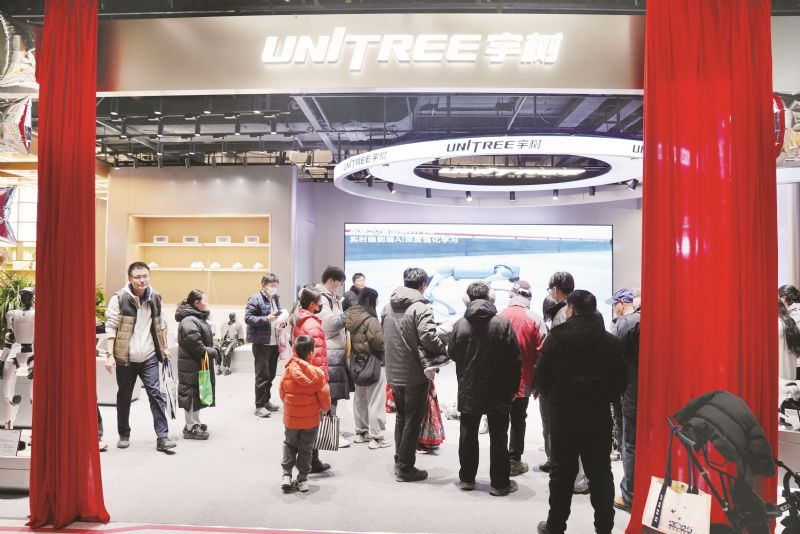
Core Viewpoint - Yushu Technology is facing rumors regarding its IPO process, specifically about the alleged suspension of its "green channel" for listing, which the company has denied, stating that its listing progress is proceeding normally [2][4][6]. Group 1: Company Status and IPO Progress - On January 4, reports emerged claiming that Yushu Technology's "green channel" for A-share listing had been halted, but the company clarified that its listing process is ongoing and will follow standard procedures [2][4]. - Yushu Technology has confirmed that it has not applied for the "green channel" and is fully compliant with listing requirements, allowing it to proceed with the IPO without this expedited process [7][9]. - The company plans to submit its listing application between October and December 2025, having already signed a listing guidance report with CITIC Securities [9][10]. Group 2: Market Context and Industry Dynamics - The adjustment of the "green channel" may be related to concerns about a bubble in the robotics sector, as nearly 30 companies in the robotics industry have applied for listings in Hong Kong within the first 11 months of 2025 [5]. - Yushu Technology is positioned to become the first humanoid robot company listed on the A-share market, which could stimulate development and upgrades across the entire industry chain [3][14]. Group 3: Financial Performance and Growth Potential - Yushu Technology reported annual revenue exceeding 1 billion yuan, with a workforce of around 1,000 employees [13]. - The company has a significant market presence, with its quadruped robots accounting for 60%-70% of global shipments, and it leads in the global sales of large humanoid robots [12][13]. - The domestic humanoid robot market is projected to grow substantially, with an expected shipment increase from 2,400 units in 2024 to approximately 18,000 units in 2025, indicating a growth rate of over 650% [13].

长江母亲河焕发生机活力(锐财经)
Ren Min Ri Bao Hai Wai Ban· 2026-01-05 22:50
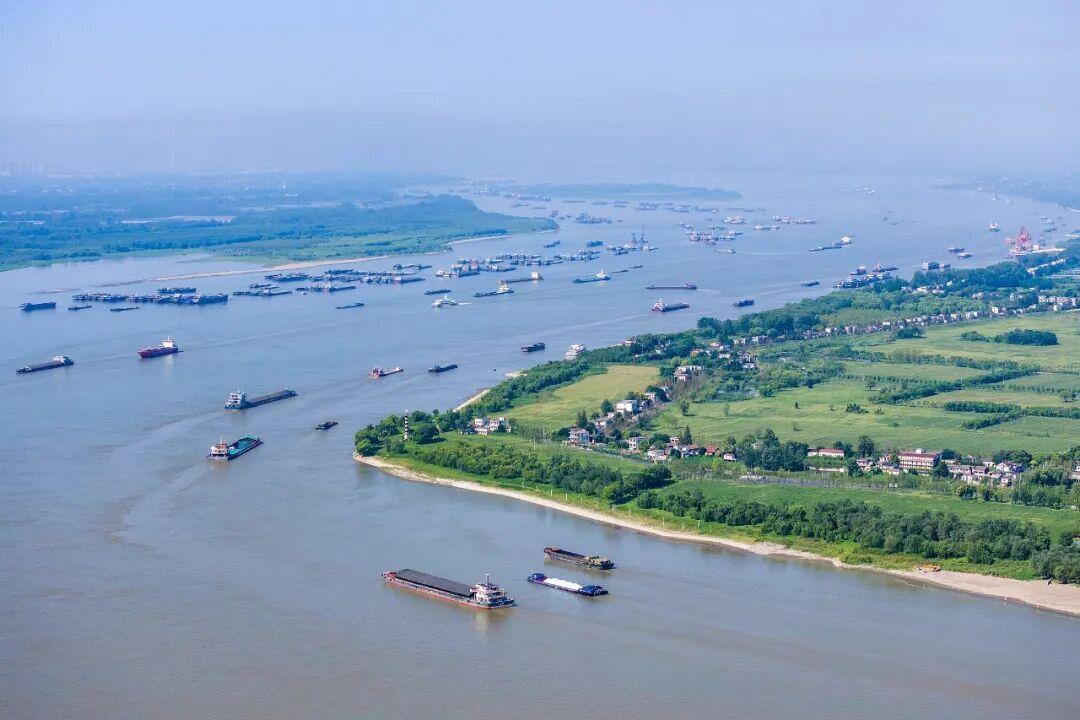
Core Viewpoint - The development of the Yangtze River Economic Belt has achieved significant progress over the past decade, focusing on ecological protection and green development, leading to a revitalization of the region's economy and environment [3][4]. Group 1: Ecological and Economic Development - The concept of "coordinated major protection, not major development" has been firmly established in the Yangtze River Economic Belt, enhancing ecological integrity [3]. - Over the past ten years, the integration of technological and industrial innovation has accelerated, resulting in world-class technological achievements and competitive enterprises [3]. - The cumulative water supply from the South-to-North Water Diversion Project has exceeded 840 billion cubic meters, benefiting 48 cities and 195 million people [4]. Group 2: Transportation and Infrastructure - The modernization of Yangtze River shipping is crucial for supporting high-quality development in the region [5]. - Significant upgrades to shipping channels have been implemented, with 29 projects aimed at enhancing capacity, including the Wuhan to Anqing section [5][6]. - The Yangtze River's high-grade shipping channels now span 11,500 kilometers, allowing for larger vessels to reach major cities [6]. Group 3: Green and Low-Carbon Transition - The Yangtze River Economic Belt is a key area for industrial aggregation, with efforts focused on promoting green and low-carbon transitions [7]. - The establishment of innovation platforms has led to breakthroughs in critical technologies across various fields, including artificial intelligence and quantum information [7]. - The region has seen the creation of 41 national advanced manufacturing clusters and 30 strategic emerging industry clusters, representing 51% and 45% of the national totals, respectively [7].
10年来,长江经济带走出一条生态优先、绿色发展的新路子 优良水质比例提升近30个百分点,地区生产总值翻一番多(权威发布)
Ren Min Ri Bao· 2026-01-05 22:28
Core Insights - The development of the Yangtze River Economic Belt has led to significant improvements in ecological quality, economic growth, and social welfare over the past decade, with a focus on green development and ecological protection [1][2][3][4][5]. Economic Development - The per capita disposable income of residents increased from 23,000 yuan to 44,000 yuan, a growth of 91% [3][5]. - The regional GDP more than doubled, with its share of the national total rising from 42.2% to 47.3% [1][5]. Ecological Improvements - The proportion of good water quality in the Yangtze River increased from 67% to 96.5% [5]. - The water quality of the main river has been maintained at Class II for six consecutive years, and the population of flagship species like the Yangtze River dolphin has increased [4][6]. Infrastructure and Transportation - The high-grade navigable waterways of the Yangtze River increased from 8,000 kilometers to 11,000 kilometers, with cargo throughput at trunk ports growing by 71% to reach 4.2 billion tons, maintaining the world's leading position in inland river transport [3][8]. - The construction of a comprehensive transportation corridor along the river has accelerated, enhancing connectivity and trade [3]. Industrial Transformation - The Yangtze River Economic Belt has seen the establishment of 41 national-level advanced manufacturing clusters and 30 strategic emerging industry clusters, accounting for 51% and 45% of the national totals, respectively [7]. - Traditional industries such as steel and petrochemicals are undergoing green transformation, with 24 national carbon peak pilot cities and parks established [7]. Cultural and Social Development - Efforts to protect and promote the cultural heritage of the Yangtze River have been emphasized, including the establishment of the Yangtze National Cultural Park [3]. - Water projects have effectively protected the safety of people's lives and property, with over 840 billion cubic meters of water supplied through the South-to-North Water Diversion Project, benefiting 1.95 million people [3].
苦练内功向高处攀登
Jing Ji Ri Bao· 2026-01-05 22:07
回望2025年,从实验室技术突破到全球市场份额攀升,从传统产业蝶变升级到新兴赛道加速领跑,民营 企业交出了一份亮眼答卷。 过去一年,民营企业与中国经济发展同频共振。创新火花在车间和实验室里迸发,华为在全球瞩目下发 布首款鸿蒙折叠电脑,这不仅是产品的迭代,更是在核心技术领域的自主突破;宇树科技研发的机器人 灵巧地走向世界生产线,展示中国在高端制造领域的实力;比亚迪的新能源汽车在多个海外市场销量登 顶,每一辆汽车都在为全球绿色转型增添中国动力。从中国制造到中国智造,我国企业正从技术的跟随 者转变为未来的开拓者。 民营企业的足迹已遍布五洲四海,加速融入全球价值链。2025年前11个月,民营企业进出口23.52万亿 元,增长7.1%,占我国外贸总值比重已达57.1%。跨越山海抵达各个国家和地区的,不仅是优质的产品 和服务,更是可信可爱可敬的中国品牌形象。 转型的阵痛与升级的喜悦,在每条生产线上交织。养殖企业向全链条食品企业转型,纺织企业推动生产 环节智能化改造,钢铁企业革新工艺降低碳排放,光纤企业突破国外技术封锁……一家家民营企业奋力 挣脱旧有模式束缚,向智能化、绿色化、融合化方向进阶,攀向产业链更高处。 沉甸甸的成 ...
【时代风口】人形机器人火爆背后的冷思考
Zheng Quan Shi Bao· 2026-01-05 18:49
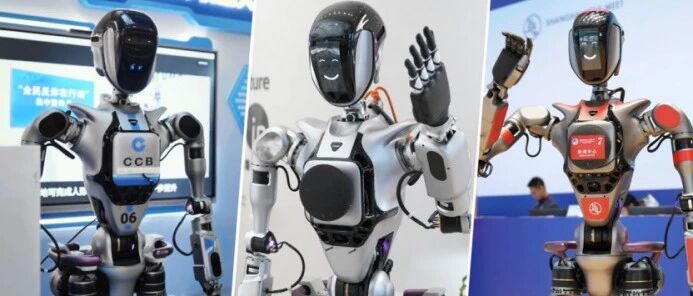
刘诗梦 从火爆蛇年春晚的机器人扭秧歌节目到宇树科技的机器人格斗赛,再到近日特斯拉人形机器人在柏林市 集上售卖爆米花,从试验场到应用场,人形机器人的发展是人类科技史上一次对自身形态与能力的深度 仿生与超越,已突破了"表演"的定义,走向了人类的实际生活。 本报专栏文章仅代表作者个人观点,特此说明。 (文章来源:证券时报) 目前,人形机器人不仅能完成工厂装配、仓库搬运、家庭清洁等不同的任务,还能在服务、陪伴、教育 中与人类进行交互,并建立信任与情感连接。例如星动纪元的人形机器人已实现在物流分拣场景中的协 同工作,能够满足多种复杂场景的需求。 虽然人形机器人产业爆发出巨大的市场潜力,但整体仍处于"小规模单点试验"和商业化早期阶段,距离 达到理想状态还有很长一段时间。其一,脱离人类辅助仍旧是一个核心难题。从技术层面看,大多数人 形机器人还得依赖人类进行远程辅助才能完成任务,多模态感知技术还不成熟,其泛化能力等方面未达 理想预期。其二,获得高质量数据比较困难。高质量数据是人形机器人精确实现场景运用中非常重要的 一点,其大模型需要大量的高质量数据进行训练,从而完成一系列复杂工作。其三,硬件与物理方面的 限制。人形机器人的运 ...

【时代风口】 人形机器人火爆背后的 冷思考
Zheng Quan Shi Bao· 2026-01-05 18:32
目前,人形机器人不仅能完成工厂装配、仓库搬运、家庭清洁等不同的任务,还能在服务、陪伴、教育 中与人类进行交互,并建立信任与情感连接。例如星动纪元的人形机器人已实现在物流分拣场景中的协 同工作,能够满足多种复杂场景的需求。 虽然人形机器人产业爆发出巨大的市场潜力,但整体仍处于"小规模单点试验"和商业化早期阶段,距离 达到理想状态还有很长一段时间。其一,脱离人类辅助仍旧是一个核心难题。从技术层面看,大多数人 形机器人还得依赖人类进行远程辅助才能完成任务,多模态感知技术还不成熟,其泛化能力等方面未达 理想预期。其二,获得高质量数据比较困难。高质量数据是人形机器人精确实现场景运用中非常重要的 一点,其大模型需要大量的高质量数据进行训练,从而完成一系列复杂工作。其三,硬件与物理方面的 限制。人形机器人的运动离不开手、关节、传感器等系统配合,但目前来看,除了其硬件成本极高以 外,还有易损坏、信息融合算法复杂、续航能力不足等问题。其四,安全责任划分的争议。当发生事故 时,对于涉及的制造商、程序员、所有者以及机器人自身的责任划分,现有法律框架难以对其进行清晰 界定。 当大家都站在风口抢占人形机器人赛道时,就更应该保持理性思考 ...
576起!总融资金额超500亿!融资爆发的背后,中国机器人行业呈现哪些机遇与趋势?
机器人大讲堂· 2026-01-05 15:00
2025年,是全球机器人投资继续爆发的一年。 AI 技术与机器人产业的深度融合,更让整个机器人赛道迎来了融资与创新的双重爆发期。 从实验室的技术突破到商业化的规模化落地,从核心零部件的攻坚到全 产业链的协同升级,机器人产业正以肉眼可见的速度重塑全球制造业格局、拓展服务经济边界,成为新质生产力的重要增长极。 那么,在这一年中,有 哪些领域的机器人融资最为迅速?哪些区域正在大力推动机器人产业集群发展?哪些新产品成为焦点?哪些新技术趋势正在出现?哪些企业 脱颖而出? 值新旧交替之际, 机器人大讲堂 聚焦 202 5 年 机器人行业 融资全景,勾勒融资画像,探寻潜藏其中的新发展趋势。 一、 融资整体态势:逆势爆发,规模与数量双突破 2025年,全球宏观经济环境仍存不确定性,一级市场投资态度整体趋于审慎,但机器人产业凭借"硬科技"属性与数字经济融合的核心价值,成为资本逆势布局的热 门领域。这一年,中国机器人行业投融资市场呈现出"量价齐升"的爆发式增长态势,创下多项历史新高。 先看几个扎扎实实的数字 。 据机器人大讲堂& 立德智库 不完全统计 , 2025年中国机器人行业公开披露的投融资事件达576起,总融资规模突破50 ...
视频丨十年来长江经济带生产总值翻了一番多 未来工作重点公布
Yang Shi Xin Wen Ke Hu Duan· 2026-01-05 14:28
Core Insights - The development of the Yangtze River Economic Belt over the past decade has seen significant improvements in water quality, with the proportion of good water quality rising from 67% to 96.5%, and regional GDP more than doubling, increasing its share of the national economy from 42.2% to 47.3% [1] Group 1: Environmental Protection and Economic Growth - The concept of "coordinated major protection, not major development" has been effectively implemented, leading to the resolution of the "chemical industry surrounding the river" issue by addressing nearly 10,000 chemical enterprises [1] - A total of 1,361 illegal docks have been cleared, and black and odorous water bodies in major cities along the river have been largely eliminated [1] - The water quality of the Yangtze River has improved from some sections being classified as Grade V to the entire river being classified as Grade II [1] Group 2: Technological and Industrial Innovation - The integration of technological and industrial innovation in the Yangtze River Economic Belt has accelerated, with the establishment of international technology innovation centers in Shanghai and other regions [1] - Significant technological achievements include the "artificial sun" achieving a billion-degree operation for a thousand seconds and targeted cancer drugs, alongside the emergence of competitive innovative companies like DeepSeek and Yushu Technology [1] - World-class industrial clusters have formed in sectors such as automotive manufacturing and electronic information [1] Group 3: Infrastructure and Transportation - The functionality of the Yangtze River as a "golden waterway" has been reinforced, with the high-grade navigable waterways increasing from 8,000 kilometers to 11,000 kilometers [1] - The cargo throughput of trunk ports has grown by 71%, reaching 4.2 billion tons, maintaining its position as the world's leading inland river [1] Group 4: Cultural and Social Development - The cultural heritage of the Yangtze River has deepened, with the successful inclusion of the Liangzhu Ancient City Ruins in the World Heritage List and significant archaeological discoveries at Sanxingdui [2] - The "Happiness Yangtze" initiative has improved quality of life, with per capita disposable income rising from 23,000 yuan to 44,000 yuan, an increase of 91% [2] - The South-to-North Water Diversion Project has delivered over 84 billion cubic meters of water, benefiting 48 cities and 195 million people [2] Group 5: Future Development Plans - The "14th Five-Year Plan" emphasizes the continued development of the Yangtze River Economic Belt, focusing on ecological protection, innovation, regional collaboration, and cultural heritage [3][4] - Key areas of focus include pollution control, fostering original technological innovations, and enhancing agricultural production capabilities [3][4] - The plan aims to strengthen the safety and quality of life in the region, ensuring food security and improving the welfare of the population [4]
硬科技公司加速IPO,券商投行谋变革:“投资+保荐”联动成主流,头部机构领跑
Mei Ri Jing Ji Xin Wen· 2026-01-05 13:49
Core Insights - The rapid rise of AI technology is reshaping industries, leading to a surge in IPOs for tech companies, particularly in the AI and GPU sectors [1][3][4] - MiniMax, an AI model company, is expected to become one of the fastest companies to go public, with a potential listing in January 2026 [3] - The IPO market is witnessing a significant shift, with a notable increase in listings from unprofitable tech companies, driven by supportive policies and market conditions [4][5] Industry Trends - As of December 26, 2025, the A-share market saw a total IPO amount of 1,290.1 billion, significantly lower than previous years, but with a fundamental shift towards unprofitable tech companies [4][10] - The introduction of new listing standards on the Sci-Tech Innovation Board and the Growth Enterprise Market has facilitated the entry of unprofitable tech firms into the market [5][11] - The trend of unprofitable tech companies going public is supported by a clear policy direction aimed at fostering innovation and growth in the tech sector [5][17] Market Dynamics - The majority of newly listed companies in 2025 are tech firms, with a significant portion being unprofitable, indicating a shift in investor sentiment towards innovation over immediate profitability [6][9] - Major brokerage firms dominate the IPO landscape, with a concentration of listings from a few top firms, highlighting a monopolistic trend in the tech IPO market [9][10] - The rapid listing process for companies like Moer Thread and Muxi reflects a broader trend of accelerated capital market access for tech firms [7][11] Investment Opportunities - The current environment presents a unique opportunity for investment banks to engage with high-potential tech companies early in their development, emphasizing the importance of "investment first" strategies [12][14] - The success of IPOs for companies like Moer Thread and Muxi has generated significant profits for their underwriting banks, showcasing the lucrative nature of tech IPOs [9][10] - The focus on deep industry engagement and support for tech firms is reshaping the role of investment banks, moving from traditional underwriting to comprehensive value creation [11][12] Regulatory Environment - Recent regulatory changes have created a more inclusive environment for tech companies, allowing for greater flexibility in listing requirements, particularly for unprofitable firms [5][15] - The role of investment banks as gatekeepers is emphasized, with a focus on maintaining high standards for tech firms seeking to go public [17] - The ongoing support from government and institutional investors is crucial for the sustainability of the tech IPO boom, particularly in high-growth sectors like semiconductors and AI [15][16]
十年来长江经济带生产总值翻了一番多 未来工作重点公布
Yang Shi Xin Wen Ke Hu Duan· 2026-01-05 13:05
Core Insights - The development of the Yangtze River Economic Belt over the past decade has seen significant improvements in water quality, economic growth, and environmental protection measures [2][3] Economic Growth - The GDP of the Yangtze River Economic Belt has more than doubled, increasing its share of the national GDP from 42.2% to 47.3% [2] - The per capita disposable income of residents has risen from 23,000 yuan to 44,000 yuan, marking a 91% increase [3] Environmental Protection - The proportion of good water quality in the Yangtze River has improved from 67% to 96.5% [2] - The implementation of the "protection first, development second" principle has led to the closure and relocation of nearly 10,000 chemical enterprises and the cleanup of 1,361 illegal docks [2] - The water quality of the Yangtze River has improved from a mix of class five to class two across the entire river [2] Technological and Industrial Innovation - The integration of technological and industrial innovation has accelerated, with the establishment of international technology innovation centers in Shanghai and Wuhan [2] - Notable technological achievements include advancements in nuclear fusion and targeted cancer therapies, alongside the emergence of competitive innovative companies [2] Transportation and Infrastructure - The high-grade navigable waterways of the Yangtze River have increased from 8,000 kilometers to 11,000 kilometers [2] - The cargo throughput of major ports along the river has grown by 71%, reaching 4.2 billion tons, maintaining its position as the world's leading inland waterway [2] Cultural Development - The cultural heritage of the Yangtze River has been enhanced, with the successful inclusion of the Liangzhu Ancient City site in the World Heritage List [2] - Efforts are underway to promote cultural tourism and deepen the integration of culture and tourism [6] Future Development Plans - The "14th Five-Year Plan" emphasizes continued development of the Yangtze River Economic Belt, focusing on ecological protection, innovation, regional collaboration, cultural heritage, and enhancing the quality of life for residents [5][6] - Key initiatives include improving environmental protection, fostering innovation, and enhancing regional connectivity and openness [5][6]