
商汤科技

Search documents
终端厂商竞逐“根技术”与AI全场景
Nan Fang Du Shi Bao· 2025-11-09 23:10
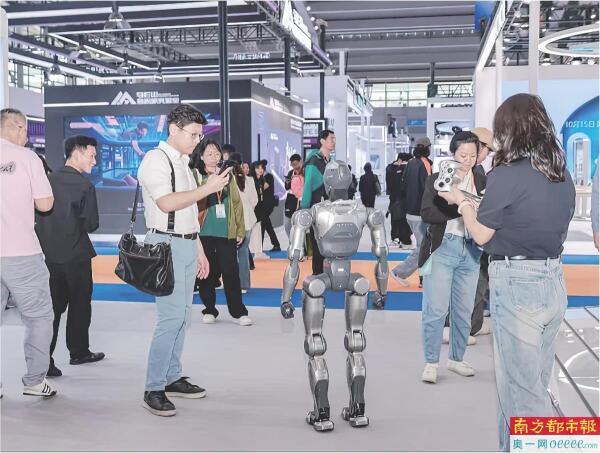
Core Insights - The first Global Consumer Electronics Innovation Conference (CEIC 2025) opened in Shenzhen, focusing on "New Electronics, New Experiences, New Consumption" with participation from nearly 300 tech companies and over 20,000 attendees on the first day [2] - The conference emphasizes breakthroughs in "root technologies" and the construction of an all-scenario ecosystem, shifting competition in consumer electronics from hardware specifications to underlying systems and AI ecosystems [2][6] - Chinese technology standards are aiming to establish new industry "narratives" and drive the global consumer electronics innovation center towards China [2] Group 1: Key Themes and Technologies - The conference showcased five major directions: smart terminals, smart vehicles, smart homes, digital health, and new technologies, presenting an innovation chain from technology to application scenarios [2] - Huawei and Honor highlighted "ecosystem" and "underlying technology" at their booths, with Huawei unveiling the HarmonyOS 6 product line and a new wireless connection technology called "Star Flash" [3][4] - Star Flash technology boasts a transmission delay of only 1/30 of traditional Bluetooth, with a sixfold increase in transmission speed and a tenfold increase in connection capacity [3] Group 2: AI and Privacy Concerns - Honor focused on foldable screen applications and new display technologies, including a naked-eye holographic VR device, while emphasizing data privacy and security in AI applications [4][5] - Honor's YOYO AI assistant received a top-tier certification for user privacy protection, showcasing the integration of privacy security into AI design as a competitive advantage [4][5] Group 3: AIoT and Industry Applications - The AIoT landscape is rapidly developing, with smart vehicles demonstrating "car-home interconnectivity" and AI models being applied in various scenarios, including home care and robotics [6][7] - The conference featured advanced AI technologies, such as a robot with proactive awareness capabilities, indicating a shift towards embodied intelligence in AI applications [7][8] Group 4: Industry Support and Future Outlook - Shenzhen's supportive policies, including a 5 billion yuan AI terminal fund, are facilitating innovation in the consumer electronics sector [8] - The CEIC 2025 is viewed as a platform for industry upgrades and global collaboration, marking a historical shift in China's consumer electronics industry from technology following to innovation leadership [8]

增程车越造越多,但销量“涨不动了” 极狐、小鹏等还有机会吗?
Mei Ri Jing Ji Xin Wen· 2025-10-29 13:28
Core Viewpoint - The market for range-extended electric vehicles (REEVs) is experiencing a slowdown in sales growth, despite an increasing number of new models being introduced by various manufacturers. The competition is intensifying as companies adapt their strategies to enhance battery capacity and electric range to compete with pure electric vehicles (EVs) [1][2][4]. Market Trends - As of September, the wholesale sales of pure electric vehicles in China reached 947,000 units, a year-on-year increase of 32.4%, while REEVs sold 129,000 units, showing a year-on-year growth of only 8.7% [2]. - The market share of pure electric vehicles has grown to 63%, while REEVs have seen a decline in market share, dropping to 9% [2][6]. Technological Developments - The cost of key components, particularly lithium carbonate for batteries, has significantly decreased, allowing for lower prices of electric vehicles. The price of battery-grade lithium carbonate fell from approximately 600,000 yuan per ton in 2022 to around 70,000 yuan per ton, a drop of over 80% [3]. - New models with larger battery capacities are being introduced, such as the Leap Motor D19 with over 80 kWh, which exceeds many comparable pure electric models [5][6]. Competitive Strategies - Manufacturers are shifting their focus from "small battery + large range extender" to "large battery + small range extender" configurations to enhance the driving experience and compete more effectively with pure electric vehicles [4][6]. - Companies are emphasizing the need for a balance between battery size and cost, with some suggesting that not all REEVs should be equipped with large batteries, but rather focus on mid to high-end models [6][8]. Future Outlook - There is a growing consensus that REEVs will continue to have a place in the market, particularly for consumers in areas with limited charging infrastructure. However, the trend indicates that pure electric vehicles will dominate the market in the coming years, with projections suggesting that by 2040, pure electric vehicles will account for 80% of the new energy vehicle market [7][9].
价值港|在血海中游泳!小鹏“重塑”小鹏
Zhong Guo Ji Jin Bao· 2025-10-29 03:04
Core Insights - Xpeng Motors has successfully navigated two significant industry crises, maintaining its position in the competitive landscape of new energy vehicles [3][5][19] - The company emphasizes the need for fundamental transformation to adapt to market challenges, as highlighted by its leadership [5][7] - Xpeng Motors is transitioning from a technology-focused approach to a more user-centric strategy, addressing market demands and product positioning [9][10][14] Group 1: Company Transformation - Xpeng Motors faced substantial pressures in 2022, prompting a critical need for change within the organization [5][8] - The management team underwent significant introspection and transformation from late 2022 to 2023, marking a period of deep organizational change [5][8] - CEO He Xiaopeng's leadership is deemed crucial for the company's ability to implement deep-rooted changes and navigate through crises [5][7] Group 2: Strategic Focus - The company is adopting a "slow and steady" approach to enhance its foundational aspects and product quality, aiming for long-term stability [3][5] - Xpeng Motors is focusing on building a comprehensive AI ecosystem, positioning itself as an AI-driven automotive company [14][16] - The company is actively working on developing AI capabilities, including a large-scale autonomous driving model, to enhance its technological edge [16][17] Group 3: Global Expansion - Xpeng Motors is entering a new phase of international expansion, establishing a research center in Europe to better understand local consumer needs [19][20] - The company is learning from past experiences and is committed to localizing its production and operations in overseas markets [19][22] - Xpeng Motors aims to build a strong brand presence in Europe, leveraging its technological advantages while adapting to local market conditions [22][23]


调研了49家欧美机构,花旗梳理出外资当前最关心中国科技股的核心话题
智通财经网· 2025-10-28 15:01
Core Insights - Citi's report highlights increasing interest from long-term institutional investors in China's technology sector, focusing on quality Hong Kong-listed tech stocks, AI supply chains, and innovations in consumer electronics [1] Part 1: Global AI Supply Chain - Investors are primarily concerned with the reflection of AI-related expectations in stock prices and the selection of supply chain targets among Hong Kong and Chinese stocks [2] - Citi notes potential upside and risks, with increased capital expenditure in cloud services and AI expected in 2026, and visibility on demand improving by 2027 [2] - The preferred order of investment targets includes companies with expansion opportunities in optical modules, PCB companies with Rubin/ASIC technology upgrades, and ODM firms benefiting from AI server/switch demand growth [3] Part 2: Chinese AI Demand - Investor focus on Chinese AI centers around Alibaba's data center capital expenditure for a tenfold expansion, AI chip supply capabilities, and commercialization paths for AI investments [4] - Despite China's competitive edge in computer/data science, challenges remain in AI chip supply, with software breakthroughs seen as key to narrowing the gap [4] - Companies like GDS Holdings and Century Internet have disappointed foreign investors despite potential benefits from China's AI capital expenditure due to uncertainties in data center supply and client onboarding [4] Part 3: Consumer Electronics Supply Chain - Interest in foldable iPhones has surged, with expectations for better-than-previously forecasted performance in 2026-2027, and a price point potentially exceeding $2,500 [5] - Key beneficiaries include Lens Technology, which has a product value contribution of $140-150 per foldable iPhone, and Luxshare Precision, which is gaining attention as a quality supplier [5] - Xiaomi faces scrutiny over factory progress, stock price support levels, and the impact of storage price fluctuations on its electric vehicle business [6] Part 4: Emerging Opportunities - Interest in smart glasses is rising, recognized as important edge devices for AI commercialization, with companies like Goertek and Sunny Optical seen as key beneficiaries [7] - Domestic semiconductor capacity is expected to meet AI chip demand by 2026, but local photolithography equipment is limited to 14nm processes [7] Part 5: AI Commercialization in China - Investors believe that AI large language models struggle to monetize in the ToC sector, while the ToB sector focuses on software products for SMEs with selective demand [8] - The number of AI agents in China is expected to grow exponentially with the implementation of "AI+" policies, but market concentration is unlikely in the next 5-10 years due to the fragmented software industry [8] - Key foreign-investor targets include Kingdee International, with additional interest in cybersecurity and AI software firms like iFlytek and SenseTime [9]
近百位未来出行领军人物齐聚进博会,2025未来出行·全球发展论坛议题全剧透
Jin Tou Wang· 2025-10-27 00:20
Core Insights - The article discusses the implementation opinions released by seven ministries in China regarding the integration of artificial intelligence in the transportation sector, aiming to enhance innovation and application in this field [1] Group 1: Government Initiatives - The seven ministries aim to drive technological innovation and application in transportation through a comprehensive mechanism that includes innovation chains, industry chains, funding chains, and talent chains [1] - Key areas of focus include increasing the supply of critical technologies, accelerating innovation in application scenarios, strengthening core element guarantees, and optimizing the industrial development ecosystem [1] Group 2: Emerging Industries - The article highlights the rapid development of emerging strategic industries such as low-altitude economy, autonomous driving, new energy vehicles, smart driving, and aerospace, which collectively shape the future of transportation [1] Group 3: Upcoming Forum - The "Future Mobility: Global Development" forum will take place on November 7, 2025, at the National Exhibition and Convention Center in Shanghai, focusing on low-altitude economy, new energy vehicles, smart driving, and trends in future mobility [1][2] - The forum will feature discussions on various topics, including the establishment of an agile regulatory framework for rapid technological iteration and the strategic positioning of different players in the future mobility landscape [3] Group 4: Industry Participation - Nearly a hundred industry leaders from companies such as Toyota, Mercedes-Benz, Volkswagen, General Motors, Tesla, and others will participate in the forum, showcasing their innovations and strategies in the automotive and smart mobility sectors [3][4]
受益AI和国产替代浪潮 寒武纪第三季度业绩继续大涨
Zhong Guo Jing Ying Bao· 2025-10-21 08:29
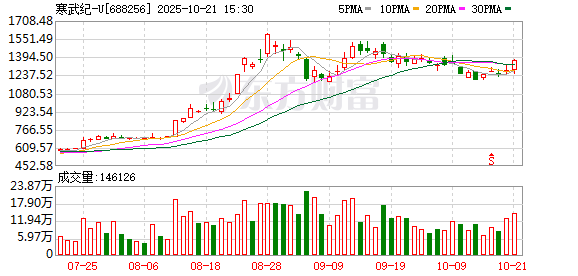
Core Insights - Cambrian's Q3 revenue reached 1.727 billion yuan, a year-on-year increase of 1332.52%, with a net profit of 567 million yuan. For the first three quarters, revenue was 4.607 billion yuan, up 2386.38%, and net profit was 1.605 billion yuan [2][3] - The significant growth in revenue is attributed to the company's ongoing market expansion and support for AI application implementation [2] - Cambrian's stock price reached a peak of 1462 yuan per share in late August, making it the highest-priced stock in A-shares, surpassing Kweichow Moutai [2] Financial Performance - Cambrian's total assets increased to 12.592 billion yuan by the end of Q3, a growth of 87.44% year-on-year, due to a specific stock issuance that raised 3.985 billion yuan [3] - Despite the revenue growth, Q3 revenue saw a quarter-on-quarter decline of 2.4%, and net profit decreased by 17% [3] - R&D investment in Q3 was 258 million yuan, a year-on-year increase of 22.05%, but the proportion of R&D to revenue decreased to 14.95%, down 160.57 percentage points from the previous year [3][6] Market Position and Competition - Cambrian is recognized as a leading AI chip company in China, with products used in cloud servers and data centers [2] - The AI chip market is becoming increasingly competitive, with many companies entering the field, while Nvidia still holds a dominant position globally [4] - Cambrian aims to leverage the growing demand for AI technology across various industries and enhance its market expansion efforts [4] Strategic Developments - Cambrian announced a strategic partnership with SenseTime to optimize software and hardware collaboration, which positively impacted stock prices for both companies [5] - The domestic AI chip market is benefiting from the shift towards local alternatives, as evidenced by Cambrian's revenue surge despite Nvidia's market share in China dropping to zero [5][6]

商汤沙特与中国电信(阿联酋)签署合作备忘录 中企助力阿曼智慧城市建设
Cai Jing Wang· 2025-10-21 08:06
Group 1 - SenseTime MEA has formed a significant partnership with China Telecom (UAE) to advance AI vision applications in the smart city sector in Oman, marking a new era of digital transformation in the region [1] - SenseTime MEA, a joint venture established in late 2021 between SenseTime and Saudi Arabia's Public Investment Fund (PIF), focuses on developing smart cities, smart tourism, and AI education in the Middle East [1] - The collaboration combines SenseTime MEA's experience and technology in the Middle East with China Telecom's integrated advantages in "cloud-network-intelligence security," expanding AI technology into more Gulf regions [1] Group 2 - SenseTime is an AI software company committed to leading AI research and creating a scalable and inclusive AI software platform, aiming to drive economic, social, and human development [3] - The company has a strong academic foundation and invests heavily in original technology research, enhancing its capabilities in multimodal and multitask general AI, covering key areas such as perception intelligence, natural language processing, decision intelligence, and intelligent content generation [3] - SenseTime's business includes generative AI, visual AI, and innovative ventures, focusing on efficient, low-cost, and scalable AI innovations to unlock commercial value [3] Group 3 - SenseTime advocates for an ethical view of AI development and actively participates in the formulation of industry, national, and international standards related to data security, privacy protection, and sustainable AI [4] - The company's "AI Sustainable Development Ethical Guidelines" were selected for the United Nations AI Strategic Resource Guide, making it the only Asian AI company to receive this honor [4] - SenseTime is publicly listed on the Hong Kong Stock Exchange and has established offices in various cities globally, including Hong Kong, Shanghai, Beijing, and several international locations [4]

又一药企,登陆港股!此前曾延迟上市
Zheng Quan Shi Bao· 2025-10-20 13:58
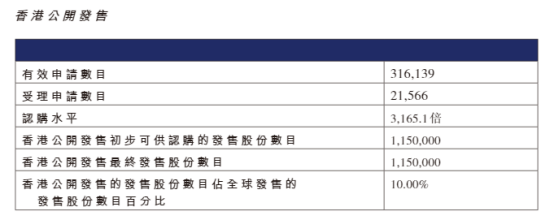
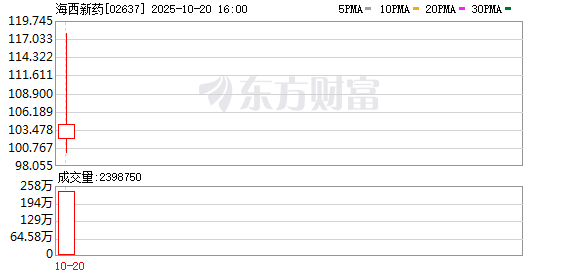
Core Viewpoint - HaiXi Pharmaceutical officially listed on the Hong Kong stock market on October 20, 2023, with a closing increase of 20.60% on its first trading day, despite the initial listing date being postponed from October 17 due to regulatory approval delays [1][2]. Company Overview - HaiXi Pharmaceutical is a commercial-stage pharmaceutical company that integrates research and development, production, and sales capabilities, focusing on innovative drug pipelines [2]. - The company's product portfolio includes generic drugs for various diseases, which account for over 25% of China's pharmaceutical sales in 2023 [2]. - HaiXi's innovative drug pipeline includes a cancer drug, an oral drug for wet age-related macular degeneration, and two other drugs in preclinical stages targeting cancer and respiratory diseases [2]. IPO Details - The IPO price was set at HKD 86.40, the upper limit of the previously announced price range, raising approximately HKD 994 million [2]. - The Hong Kong public offering was oversubscribed by 3165.1 times, with only 1,150,000 shares available, representing 10% of the global offering [3][4]. - The majority of the shares were allocated to international investors, with an oversubscription rate of 6.3 times, accounting for 90% of the global offering [3][4]. Shareholder Structure - The founding couple and a staff incentive platform are the controlling shareholders, holding approximately 41.17% of the issued share capital before the IPO [7]. - Post-IPO, the controlling shareholders will own about 35.15% of the company [7]. Financial Performance - HaiXi Pharmaceutical has shown continuous revenue growth, with revenues of RMB 213 million, RMB 317 million, RMB 467 million, and RMB 249 million for the years 2022, 2023, 2024, and the first five months of 2025, respectively [7]. - Net profits for the same periods were RMB 69 million, RMB 118 million, RMB 136 million, and RMB 90 million [7]. Market Context - The delay in HaiXi's listing has drawn comparisons to other companies in the Hong Kong market that have experienced similar issues, such as Baide Medical and SenseTime, with varying outcomes [8][9].
又一药企,登陆港股!此前曾延迟上市丨港美股看台
Zheng Quan Shi Bao· 2025-10-20 13:55
Core Viewpoint - HaiXi Pharmaceutical officially listed on the Hong Kong stock market on October 20, 2023, with a first-day increase of 20.60% after peaking at over 36% during trading [2][4]. Company Overview - HaiXi Pharmaceutical is a commercial-stage pharmaceutical company that integrates research and development, production, and sales capabilities, focusing on innovative drug pipelines [6]. - The company's product portfolio includes generic drugs for various diseases, which account for over 25% of China's pharmaceutical sales in 2023 [6]. IPO Details - The initial public offering (IPO) price was set at HKD 86.40, the upper limit of the previously announced price range, raising approximately HKD 994 million [6]. - The Hong Kong public offering was oversubscribed by 3165.1 times, with only 1.15 million shares available, representing 10% of the global offering [7][8]. Subscription and Allocation - The international offering saw an oversubscription rate of 6.3 times, with 10.35 million shares allocated, making up 90% of the global offering [9][10]. - The top 25 investors accounted for 99.62% of the international offering, totaling approximately 10.31 million shares [10]. Financial Performance - HaiXi Pharmaceutical has shown continuous revenue growth, with revenues of RMB 213 million, RMB 317 million, RMB 467 million, and RMB 249 million for the years 2022, 2023, 2024, and the first five months of 2025, respectively [10]. - Net profits for the same periods were RMB 69 million, RMB 118 million, RMB 136 million, and RMB 90 million [10]. Shareholder Structure - The founding couple and a staff incentive platform are the controlling shareholders, holding approximately 41.17% of the issued share capital before the IPO [10]. - Post-IPO, the controlling shareholders will own about 35.15% of the issued share capital [10].
AI周报 | 英伟达中国市场份额从95%降到0% ;OpenAI被曝8亿活跃用户只有5%付费
Di Yi Cai Jing· 2025-10-19 00:51
Group 1: AI Industry Developments - Baidu has launched a public beta for its AI short drama generation platform, which claims to assist creators in completing over 80% of content creation, supported by a fund of 100 million yuan and 10 billion yuan in traffic support [4] - Nvidia's CEO Jensen Huang stated that Nvidia's market share in China has dropped from 95% to 0%, attributing this to U.S. policies that have led to a complete exit from the Chinese market [2] - OpenAI is reportedly planning to expand its revenue sources, with only 5% of its 800 million active users being paid subscribers, aiming to double this ratio through new services and low-cost subscriptions in various markets [3] Group 2: Financial Performance - Cambricon reported a net profit of 1.6 billion yuan for the first three quarters of the year, with a revenue of 4.607 billion yuan, marking a year-on-year growth of 2386.38% [8] - TSMC's Q3 revenue reached 989.92 billion NTD, a 30.3% increase year-on-year, with a net profit of 452.3 billion NTD, reflecting a 39.1% growth [13] Group 3: Strategic Partnerships and Collaborations - SenseTime announced a strategic cooperation agreement with Cambricon to optimize software and hardware integration, focusing on AI infrastructure and vertical business development [9] - Nvidia and Microsoft are part of a consortium that announced a $40 billion acquisition of Aligned Data Centers, indicating a trend of major tech companies investing in AI infrastructure [10] Group 4: Market Trends and Insights - The AI video generation market is becoming increasingly competitive, with Google launching its Veo 3.1 model shortly after OpenAI's Sora 2, highlighting the rapid advancements in this sector [6][7] - Omdia's analysis indicates that AI features have not yet become a primary driver for consumers to upgrade their smartphones, although interest in AI capabilities is growing in the Chinese market [11]
