星巴克

Search documents
星巴克出售中国业务控股权;广告业规模最大收购案尘埃落定 | 2025年11月全球企业并购
Sou Hu Cai Jing· 2025-12-05 03:20
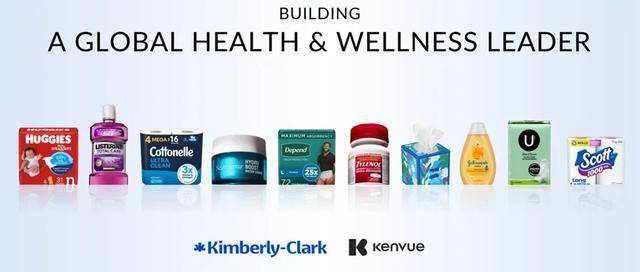
Major Mergers and Acquisitions - Kimberly-Clark is set to acquire Kenvue for approximately $48.7 billion, creating a large consumer health products company with projected annual net revenue of about $32 billion by 2025 [1] - Abbott Laboratories has agreed to acquire Exact Sciences for $23 billion, marking its largest acquisition in nearly a decade, focusing on rapid cancer detection [2] - Pfizer has successfully acquired Metsera for over $10 billion after winning a bidding war against Novo Nordisk [3] - AkzoNobel plans to merge with Axalta Coating Systems, resulting in a combined company valued at $25 billion, with expected annual revenue of $17 billion [5] - Parker Hannifin will acquire Filtration Group for $9.25 billion, enhancing its industrial business portfolio [5] - Macquarie Asset Management proposed to acquire Qube Holdings, valuing the Australian logistics company at approximately $7.5 billion [6] - Omnicom Group's acquisition of Interpublic Group has been finalized, creating the largest marketing communications group globally with revenues exceeding $25 billion [8] Chinese Market Developments - Starbucks announced the sale of a controlling stake in its China business to Boyu Capital for $4 billion, aiming to double its store count in China [11][12] - CPE Yuanfeng is forming a joint venture with Burger King to establish "Burger King China," with an initial investment of $350 million [12] - China International Capital Corporation plans to acquire Xinda Securities and Dongxing Securities, potentially creating a leading brokerage firm in the market [12] Other Notable Transactions - GlobalFoundries has acquired Advanced Micro Foundry to expand its presence in the emerging silicon photonics industry [13] - Panasonic Holdings is selling its subsidiary Panasonic Housing Solutions to YKK Group, which focuses on residential equipment [13] - Posco Holdings will acquire a 30% stake in Mineral Resources' lithium business for approximately AUD 1.2 billion (USD 765 million) [14]

星巴克工会罢工进入第三周,数百名成员在帝国大厦外集会
Ge Long Hui A P P· 2025-12-05 02:31
Core Viewpoint - Starbucks union strike has entered its third week, with hundreds of union members gathering at the Empire State Building, which houses a three-story Starbucks Reserve store and serves as the company's regional headquarters [1] Group 1 - The strike involves 145 stores, with 55 stores remaining closed during the protest [1]

星巴克中国、蜜雪冰城……茶咖品牌们,都盯上了打工人的早餐
3 6 Ke· 2025-12-04 03:55
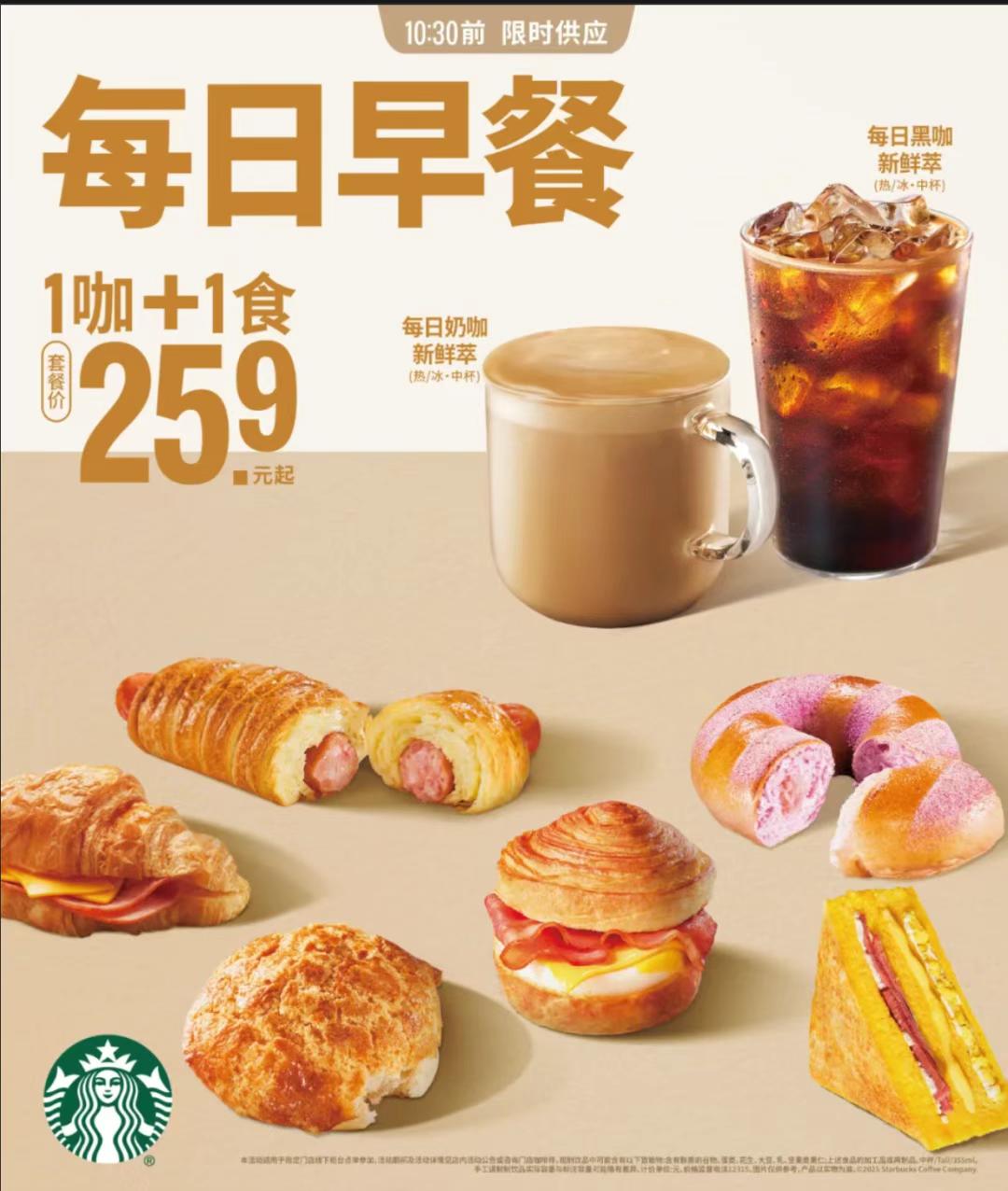
Core Insights - The article discusses the emerging trend of beverage brands, particularly coffee and tea chains, entering the breakfast market, indicating a shift in consumer behavior and market strategy [2][3][23] Group 1: Market Trends - Major beverage brands like Starbucks and Mixue Ice City are focusing on breakfast offerings, suggesting a strategic shift to capture consumer demand during this key meal period [2][4][22] - The trend of integrating food with beverages is becoming a standard practice rather than a differentiating factor, as seen with brands like Nayuki Tea and Tims Coffee [3][12][24] Group 2: Company Strategies - Starbucks launched a "Daily Breakfast" series in Shenzhen, offering value meal combinations at prices ranging from 25.9 to 31.9 yuan, which includes coffee and food items [6][8] - Tims Coffee has also entered the lunch market with a "Light Bagel Lunch Box" series, emphasizing health and freshness, indicating a broader strategy to attract consumers throughout the day [10][11] Group 3: Consumer Behavior - There is a growing consumer preference for convenient breakfast options, particularly among office workers and students, leading to increased demand for quick meal solutions [22][24] - The article highlights that breakfast consumption is becoming a necessity, with brands recognizing the importance of catering to this demand to enhance customer engagement and sales [22][26] Group 4: Competitive Landscape - The competitive landscape is shifting as beverage brands aim to capture a larger share of the breakfast market, which has traditionally been dominated by street vendors and local eateries [26][27] - The integration of food offerings is seen as a way to increase customer frequency and average transaction value, making it essential for brands to adapt to this evolving market [24][25]

瑞幸二次上市遭围剿,星巴克被资本拿下,29亿配送费 咖啡圈生死局
Sou Hu Cai Jing· 2025-12-03 11:48
Core Viewpoint - Luckin Coffee is facing significant challenges ahead of its potential re-listing, with a notable discrepancy between its impressive revenue growth and stagnant profits, raising concerns about its underlying business model and operational efficiency [1][9]. Financial Performance - Luckin Coffee's recent quarterly report shows a substantial increase in revenue and a rapid rise in store count, nearing competitors like Heytea. However, net profit remains unchanged, indicating deeper issues within its cost structure [3]. - The company spent nearly 2.9 billion on delivery services in just three months, more than doubling from the previous year, which highlights the financial strain from its delivery model [3][14]. Competitive Landscape - Intense price competition is evident, with competitors like Kudi Coffee drastically lowering prices, forcing Luckin to reduce its own prices from 9.9 yuan to 6.9 yuan, which has not resulted in a proportional increase in customer loyalty [5]. - The competitive pressure is compounded by Starbucks' aggressive expansion strategy in China and the emergence of Kudi Coffee, which closely mimics Luckin's business model [7]. Market Perception and Capital Concerns - Luckin's eagerness to re-list is driven by a desire to restore its image post-2019 financial scandal. However, the market remains skeptical, as the current financial performance does not convincingly demonstrate a sustainable profit model [9]. - The stock price increase in the pink sheet market appears speculative, with long-term investors scrutinizing the company's fundamentals for potential weaknesses [9]. Supply Chain and Operational Efficiency - The company recognizes that relying on subsidies is not a viable long-term strategy, as competitors are enhancing their supply chain capabilities to reduce costs and improve efficiency [11]. - Luckin must address its supply chain and store management issues to avoid superficial growth and ensure long-term viability in a competitive market [13][14].

娃哈哈集团“老臣”潘家杰跳槽古茗;星巴克中国首席增长官杨振谈外卖大战丨消费早参
Mei Ri Jing Ji Xin Wen· 2025-12-02 23:28
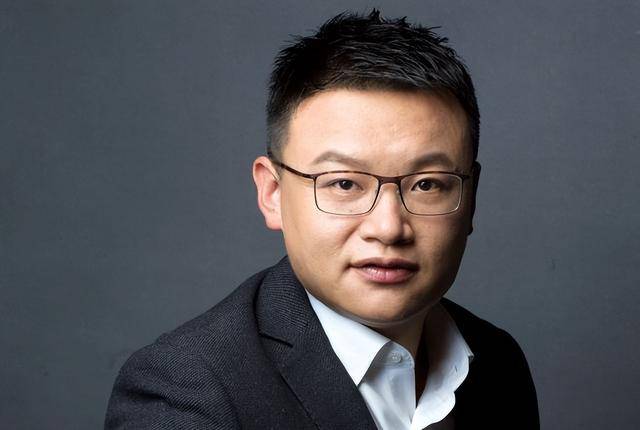
Group 1: Starbucks China - Starbucks China emphasizes that the competition in the delivery sector is not a price war but an experience war, aiming to enhance the delivery experience for customers [1] - The strategy aligns with the company's focus on optimizing delivery through membership integration and delivery assurance, moving the coffee sector's competition from price battles to value enhancement [1] Group 2: Wahaha Group and Gu Ming - Former Wahaha Group executive Pan Jiajie has joined Gu Ming as Senior Vice President of Supply Chain, overseeing new business incubation and supply chain management [2] - This transition is expected to inject mature supply chain management experience into Gu Ming, strengthening its cost control and digital capabilities, which will support the company's fundamentals [2] - The movement of high-level executives highlights a shift in the new tea beverage sector from scale expansion to deepening supply chain competition, prompting companies to prioritize core talent retention [2] Group 3: Russia's Visa Policy Impact - Russia's implementation of a temporary visa-free policy for Chinese citizens has led to a significant increase in flight searches and hotel bookings to Russia, with searches surging over 800% within an hour of the announcement [3] - This policy is expected to provide direct business growth for travel platforms, airlines, and cross-border accommodation companies, enhancing their performance outlook and fundamental support [3] - The policy's benefits will drive innovation in cross-border travel products and service upgrades, fostering collaboration across the aviation, cultural tourism, and duty-free industries [3] Group 4: Movie Ticket Resale Market - The high demand for 4D movie tickets for "Zootopia 2" has led to significant price inflation in the resale market, with tickets being sold at nearly double their original price [4] - This phenomenon indicates strong box office appeal and a surge in demand for immersive viewing experiences, which is expected to enhance the performance outlook for distributors, cinemas, and 4D equipment suppliers [4] - The success of such films is pushing the industry to focus on content quality and technological upgrades, accelerating the industrialization of quality intellectual properties [4]
星巴克同意向纽约市支付3890万美元结束员工排班问题指控
Ge Long Hui A P P· 2025-12-02 06:17
Core Points - Starbucks has agreed to pay $38.9 million to settle allegations of over 500,000 violations related to not providing employees with stable work hours over the past three years [1] - The settlement includes $35.5 million to be distributed to over 15,000 employees, along with $3.4 million in fines and legal fees [1] - The agreement, reached on November 26, acknowledges that Starbucks frequently failed to provide fixed work schedules and made changes to employee shifts without written consent, violating legal requirements [1]
突然终止运营!曾宣布大裁员!很多深圳人吃过,有网友表示可惜
Sou Hu Cai Jing· 2025-12-02 00:36
Core Viewpoint - Beyond Meat, the first publicly traded plant-based meat company, has decided to suspend its operations in China, marking a significant retreat from a market it once viewed as strategic for growth [4][10]. Group 1: Company Operations - Beyond Meat's Tmall flagship store has ceased operations as of November 27, and its Pinduoduo store no longer sells any products [2][10]. - The company had previously announced plans to cut 95% of its workforce in China by the end of June 2023 to reduce operational costs [4][10]. - Despite inquiries about a potential return to the Chinese market, Beyond Meat has not provided any responses as of the latest report [4][10]. Group 2: Market Context - The demand for plant-based meat in China has significantly declined, with major brands like Starbucks, KFC, and Nestlé ceasing to offer plant-based products [10][11]. - Beyond Meat's revenue has been on a downward trend since 2022, with projected revenues of $4.65 billion in 2021, dropping to $3.27 billion in 2024, alongside increasing net losses [11]. - The company's U.S. market also reflects a decline, with retail channel revenues down 18.4% and food service revenues down 27.3% in the latest quarter [11][12]. Group 3: Industry Challenges - The overall market for plant-based meat in China is facing challenges, as consumer preferences lean towards traditional meat products, making it difficult for plant-based alternatives to gain traction [17]. - Other companies, including Nestlé and Unilever, have also exited or scaled back their plant-based meat operations in China, indicating a broader industry retreat [15][17].

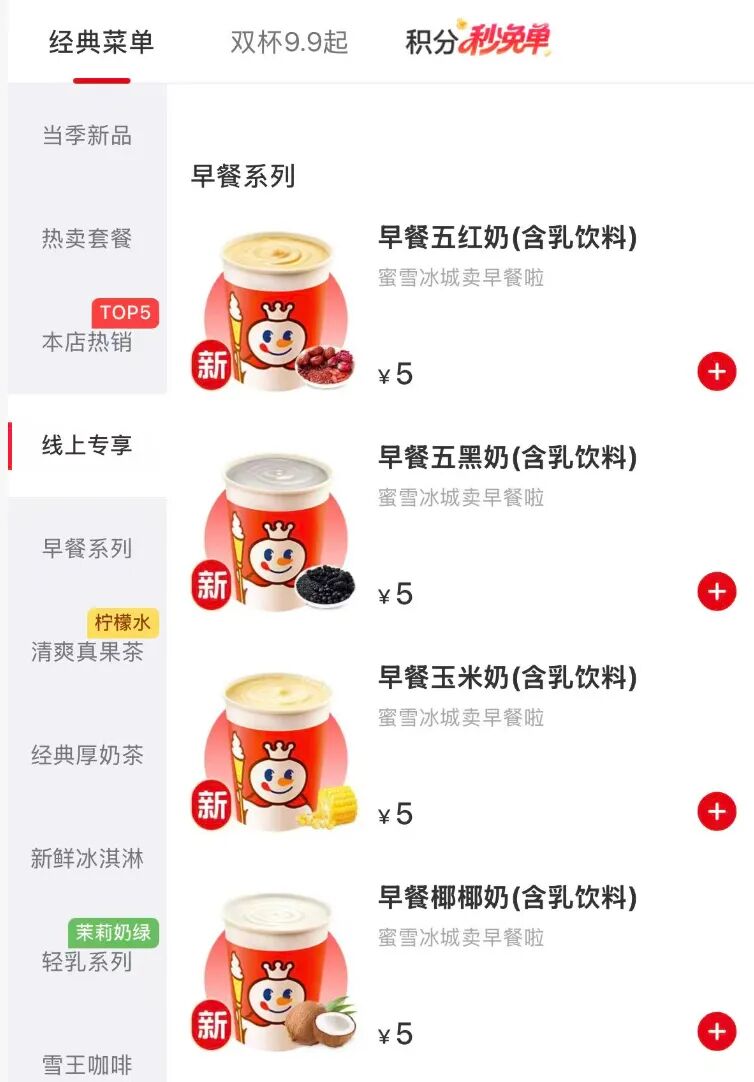
蜜雪冰城杀进早餐界
Guo Ji Jin Rong Bao· 2025-12-01 13:04
Core Insights - Mixue Ice City has launched a new breakfast product line, including four milk-based drinks priced at 5 yuan each, and is conducting consumer surveys to gather data for future product adjustments [1][2][6] Company Developments - The breakfast initiative is currently in a trial phase in cities like Dalian, Xi'an, Nanning, and Hangzhou, with no plans for large-scale rollout yet [2] - Mixue Ice City has a strong presence with nearly 42,000 operating stores in China, which allows for rapid consumer reach for new products [7] - The company has recently expanded its business scope by acquiring a majority stake in the parent company of "Fresh Beer Fu Lu Jia," diversifying its offerings beyond tea and coffee [9] Industry Trends - The breakfast market in China is projected to reach 1.35 trillion yuan by 2025, with an annual growth rate of 7%-8% [4] - The breakfast sector is currently fragmented, with the top five brands holding only 23.5% market share, indicating significant opportunities for new entrants [4] - Competitors like Tims and Starbucks have already established breakfast offerings, and other brands are also looking to enter this space to drive growth [5]
法国酸奶,被IDG买了
3 6 Ke· 2025-12-01 11:57
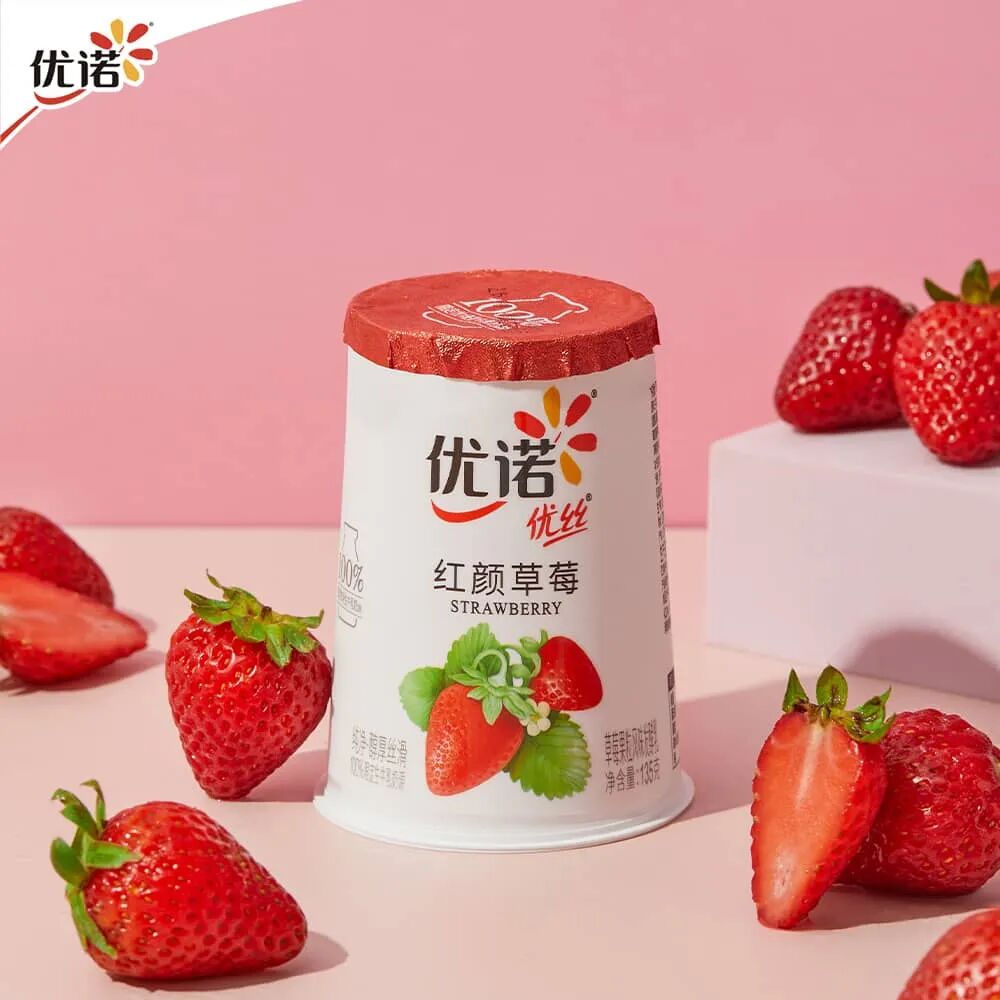
Core Viewpoint - TianTu Investment announced the sale of its entire stake in Yoplait China to Kunshan Noyuan Ruiyuan Management Consulting Co., Ltd. for a total of 1.8 billion RMB, with IDG Capital as the main backer of the buyer [1][2]. Group 1: Transaction Details - The transaction is valued at 1.8 billion RMB and has been in negotiation for nearly a year, with multiple funds competing for the acquisition [2]. - IDG Capital will retain the existing management team of Yoplait China to maintain and enhance brand competitiveness, while also aiding in regional expansion and product innovation [2][4]. - The deal marks a significant shift in ownership for Yoplait China, which was previously acquired by TianTu Investment in 2019, leading the brand from losses to profitability [1][9]. Group 2: Brand Background - Yoplait, established in France over 60 years ago, is the second-largest yogurt brand globally and entered the Chinese market in 2013 [1][7]. - The brand is known for its innovative products, including the first fruit yogurt and the iconic inverted cup packaging [7][8]. - Yoplait's journey in China has seen ups and downs, with initial entry in the 1990s followed by a more successful re-entry after being acquired by General Mills [8][9]. Group 3: Market Trends and Strategic Insights - IDG Capital's investment strategy focuses on consumer brands, leveraging its experience to scale established brands in new markets [6][12]. - The acquisition aligns with a broader trend of multinational companies divesting their Chinese operations to local firms with better market adaptability [12][13]. - The deal is part of a larger wave of consumer brand acquisitions, reflecting intensified competition in both Chinese and global markets [14].
星巴克、汉堡王接连卖身,用控股权换生存?
Sou Hu Cai Jing· 2025-11-29 15:06
Group 1 - McDonald's sold most of its stake in its mainland China and Hong Kong operations in 2017, leading to a name change to "Golden Arches (China) Co., Ltd," which sparked widespread discussion online [1] - The initial perception was that this represented a retreat of an international giant, but over the years, other global brands like Starbucks, Burger King, and COSTA have followed similar paths, indicating a broader trend [1] - This trend suggests a fundamental change in the rules of the game within the Chinese market [1] Group 2 - International brands have historically leveraged strong brand power, standardized operations, and advanced concepts like the "third space" to successfully educate and develop the Chinese market and consumers [2]