台积电

Search documents
机构:2027年HBM4将用于自动驾驶
半导体芯闻· 2025-03-07 10:20
Core Insights - The article emphasizes the critical role of memory solutions in driving the development of Generative AI (GenAI), highlighting the need for innovation in semiconductor technology [2][4] - It discusses the challenges faced by DRAM solutions, including cost and time to market, and suggests that manufacturers must adopt cost-reduction strategies while customers should commit to procurement [2][4] Group 1: Memory Solutions and Innovations - Counterpoint Research identifies that short-term Processing-In-Memory (PIM) is the most innovative memory solution, primarily supporting Neural Processing Units (NPU), but is limited to a few applications [2] - The article predicts that by 2026, Apple will transition from Package-on-Package (PoP) architecture to standalone DRAM configurations in iPhone Pro Max and foldable models to enhance bandwidth [2] - High-performance application processors (AP) and LPDDR usage are expected to increase with the advancement of autonomous driving technology, with HBM4 anticipated to be introduced in autonomous driving systems after 2027 [2] Group 2: Technological Developments and Challenges - NVIDIA's DIGITS technology aims to enhance memory bandwidth through the integration of GPU and HBM, with plans to improve CPU bandwidth by mid-2025 using SOCAMM technology [3] - The article notes that PCB and connector costs remain a significant challenge, with no immediate plans to apply this technology to the general PC market [3] - Samsung emphasizes the need for a balance between high bandwidth, speed, capacity, low latency, and power management in generative AI memory solutions [3] Group 3: Future Trends and Industry Dynamics - The article forecasts that by 2030, HBM5 will reach 20 stacked layers and integrate more logic devices into a single chiplet architecture, increasing the importance of TSMC's role in CoWoS technology [3] - The shift towards horizontal collaboration in the supply chain is highlighted as a trend that will replace the traditional vertical integration model [3][4] - The development of large language models (LLM) for mobile AI by DeepSeek is expected to lead to standardization of AI technologies by companies like OpenAI [3]


英特尔,离不开外包
半导体芯闻· 2025-03-07 10:20
Core Insights - Intel plans to continue using TSMC's manufacturing services despite aiming to reduce reliance on external suppliers in the future [1][2] - The company is evaluating the optimal percentage of products to be manufactured by TSMC, with current outsourcing at approximately 30% [2] - Intel's next-generation Core 300 series "Panther Lake" CPUs will primarily utilize its own manufacturing facilities, which is expected to improve profit margins [2] Manufacturing Strategy - Intel's strategy has shifted from aiming for zero reliance on TSMC to recognizing the benefits of maintaining a portion of production with them [1] - The company acknowledges TSMC as a strong supplier, fostering healthy competition between TSMC and Intel's own foundries [1] - Intel's advanced products, such as Xeon processors, will remain in-house, while TSMC may be used for niche products and controllers that add value to Intel's platforms [2][3] Product Focus - Intel's current manufacturing capabilities are limited in certain technology nodes, making TSMC a suitable partner for producing specific controllers [3] - The company is particularly interested in internal production of high-margin products, while still leveraging TSMC for lower-cost items priced between $10 to $15 [2]


全球企业季度净利润增长率创3年来高点
日经中文网· 2025-03-07 08:00
Core Viewpoint - Large technology companies are making significant investments in AI, contributing to overall corporate profit growth globally, with a notable performance from U.S. firms [1][2]. Group 1: Global Corporate Performance - Approximately 18,800 listed companies are projected to achieve a net profit of about $1.0776 trillion in Q4 2024, marking a 21% year-on-year increase and the highest growth rate since Q4 2021 [1]. - The net profit growth rate for U.S. companies reached 28%, the highest in three years, driven by strong performances in IT, finance, semiconductors, and retail sectors [2]. - Japanese companies saw an 11% increase in profits when calculated in USD, with major players like large banks and Sony contributing to this growth, although it lagged behind U.S. performance [3]. Group 2: Sector-Specific Insights - Amazon reported an 88% profit increase in Q4 2024, with its cloud business benefiting from AI-related demand, indicating robust performance in both cloud and retail sectors [2]. - TSMC experienced over 50% profit growth, attributing this to increased AI chip usage in smartphones and PCs, which is expected to shorten device replacement cycles [2]. - Asian companies (excluding Japan and mainland China) reported a 45% profit increase, showcasing growth in semiconductors, machinery, and services [2]. Group 3: Future Projections and Concerns - Market forecasts suggest a 16% profit increase for approximately 4,000 global companies in Q1 2025 compared to the previous year [3]. - Indicators of deteriorating U.S. economic conditions are emerging, with consumer confidence indices declining for three consecutive months, raising concerns about sustaining strong consumer spending [3]. - The market remains cautious, with global stock indices showing only a 2% increase compared to the end of 2024, indicating potential challenges ahead [3][4].
中信建投 美国关税政策解读及展望
2025-03-07 07:47
Summary of Key Points from the Conference Call Industry or Company Involved - The discussion primarily revolves around the **U.S. tariff policies** and their implications for **U.S.-China trade relations**. Core Points and Arguments - The U.S. has escalated tariffs on Chinese goods, with most facing a total tariff of up to **45%**, including an initial **25%** tariff and an additional **20%** tariff, significantly impacting U.S.-China trade relations [2][3][8] - The U.S. government frequently utilizes the **International Emergency Economic Powers Act (IEEPA)** as a legal basis for imposing tariffs, allowing the president to act swiftly without lengthy investigations or public consultations, which has sparked controversy [2][5][13] - The U.S. has requested **Canada** and **Mexico** to impose a **25%** tariff on Chinese goods in exchange for a mere **2%** tariff on their products, potentially leading to price increases and supply chain shifts in these countries, posing challenges to the **U.S.-Mexico-Canada Agreement (USMCA)** [2][6] - The U.S. plans to implement **"reciprocal tariffs"**, applying the same tariff levels to all countries to address perceived unfair trade practices, which may include a **17%** value-added tax in import tariffs, affecting global trade dynamics [2][7][10] - If the U.S. revokes China's **Most-Favored-Nation (MFN)** status, it would significantly raise the tariff costs for Chinese goods entering the U.S. market, diminishing their competitiveness and causing substantial disruptions in U.S.-China trade relations [2][8][18] Other Important but Possibly Overlooked Content - The U.S. has introduced new regulations on **smart connected vehicles** and high-tech products, banning products from hostile nations (like China) based on the identity of the controlling entity, not just the country of origin [3][15] - Chinese investments in the U.S. face national security scrutiny, and the investment environment is complicated by U.S. restrictions on certain capital flows into China [3][24][25] - The U.S. tariff policies have led to concerns about **trade diversion**, where production capacity from high-tariff countries seeks alternative markets, prompting other nations to adopt protective measures [20] - Future key dates to monitor include the implementation of new tariffs on **April 2** and the results of the **232 investigation** concerning steel and aluminum, which may lead to further trade protection measures [21] - The complexity of implementing product-specific tariffs is highlighted, as it involves numerous countries with varying trade relationships, making a uniform approach more feasible [22] This summary encapsulates the critical insights from the conference call regarding U.S. tariff policies and their broader implications for international trade, particularly concerning China.

100%关税!台积电千亿美元或无效!
国芯网· 2025-03-07 04:46
国芯网[原:中国半导体论坛] 振兴国产半导体产业! 半导体论坛百万微信群 加群步骤: 不拘中国、 放眼世界 ! 关注 世界半导体论坛 ↓ ↓ ↓ 3月7日消息,即使台积电将对美国再投资至少 1000 亿美元,但有消息称,这似乎仍无法消除美国「芯 片关税」的风险! 据外媒报道 ,台积电与特朗普政府达成的最新协议,似乎无法完全消除关税风险。特朗普可能对台湾 制造的芯片征收额外税款,但方式将有所不同,不仅是对进口芯片征税,还可能对使用这些芯片的最终 产品课征关税。这意味着,所有采用台积电的消费性电子产品价格可能大幅上涨,最高甚至可达 100% ,这将对消费产业带来毁灭性影响。 知情人士透露,特朗普政府内部仍在讨论对台积电及其他中国台湾芯片制造商课征最高 100% 关税的可 能性。其中一项方案不仅针对台湾芯片本身征收进口关税,还可能对使用这些芯片的电子设备如 iPhone 课税。 特朗普政府近期与台积电达成一项重大协议,台积电将在美国亚利桑那州投资高达 1,650 亿美元,新建 数座先进封装中心及一座大型研发设施,这将是美国史上单笔规模最大的外国投资案。 如果特朗普政府对使用中国台湾芯片的设备课税,那几乎所有主流科技 ...

三星芯片,或迎来巨变
半导体行业观察· 2025-03-07 01:23
Core Viewpoint - Samsung Electronics is undergoing a thorough review of its system chip and foundry businesses, indicating a potential restructuring due to competitive pressures from TSMC and challenges in its non-memory semiconductor strategy [1][2][4]. Group 1: Business Review and Strategy - Samsung's internal audit office, established in November, is conducting a significant review of its system semiconductor strategy, which was designated as a future growth engine by Chairman Lee Jae-Yong in 2019 [2][4]. - The review is focused on the system LSI department and the foundry business, aiming to assess challenges and identify strategies to enhance competitiveness [4][11]. - The system LSI department is facing difficulties in expanding its customer base beyond its own divisions, as highlighted by the failure of the Exynos 2500 processor to feature in the Galaxy S25 smartphone [6][9]. Group 2: Market Position and Competition - Samsung's image sensor market share is below 20%, trailing behind Sony, indicating a need for improvement in this segment [3]. - In the foundry business, Samsung's market contribution is 8.2% as of Q4 2024, significantly lower than TSMC's 67.1%, prompting a deeper revenue review [4][7]. - The company is struggling to attract sufficient foundry clients, with operational losses exceeding 2 trillion KRW (approximately 1.4 billion USD) reported for Q4 2024 [7]. Group 3: Future Plans and Adjustments - Samsung is considering transferring the Exynos SoC business from the system LSI department to the mobile experience department to align better with its smartphone strategy [9]. - The company plans to evaluate the suspension of investments in its Pyeongtaek and Taylor factories and aims to improve product yield in advanced nodes while securing AI chip manufacturing contracts [11]. - A new team has been established within the system LSI to ensure the supply of image sensors to Apple next year, indicating a focus on key partnerships [10].
台积电巨额投资美国,更多细节曝光
半导体行业观察· 2025-03-07 01:23
Core Viewpoint - TSMC plans to invest an additional $100 billion to expand its manufacturing capabilities in the U.S., which will include three new fabs, two advanced packaging facilities, and a large R&D center, bringing its total investment in the U.S. to $165 billion, making it one of the largest foreign investors in the country [1][16]. Group 1: New Facilities and Expansion Plans - TSMC has not disclosed specific details regarding the timing, location, or technology for the new investments, but there is sufficient space at the existing Fab 21 site in Arizona for new facilities [2][3]. - The Fab 21 site spans approximately 1,100 acres, which is more than twice the size of Monaco, and TSMC initially planned to build six fab modules there [2][3]. - The expansion includes three phases at Fab 21, two advanced packaging facilities, and an R&D center, with the aim of making it a major production hub [3][16]. Group 2: Employment and Workforce Impact - TSMC estimates that the new announcement will create 40,000 jobs over the next four years, significantly up from the previous estimate of 20,000 jobs by the end of 2020 [4]. - The company anticipates that some projects may run concurrently, increasing labor demand, although it has not specified whether this will double the production capacity for N3 and/or N2/A16 technologies [4][6]. Group 3: Global Investment Strategy - Despite the significant investment in the U.S., TSMC is also focusing on expanding its operations in Taiwan, Japan, and Germany, with plans to invest $38 billion to $42 billion globally by 2025 [6][7]. - TSMC is currently constructing a fab in Germany and is set to begin building a second fab in Japan, indicating a balanced global investment strategy [6][7]. Group 4: Technology Transfer and Production Costs - TSMC's ability to transfer advanced manufacturing technologies to the U.S. may face delays, as the company prefers to develop new technologies in Taiwan, where its R&D facilities are located [9][11]. - Chips produced in the U.S. using TSMC's N4 and N5 nodes are expected to be 20% to 30% more expensive than those produced in Taiwan, which may limit U.S. companies' interest in manufacturing there unless absolutely necessary [12][16]. Group 5: Customer Demand and Market Dynamics - TSMC's U.S. customers, including major firms like Apple, AMD, Broadcom, Nvidia, and Qualcomm, have requested increased production capacity in the U.S., despite the higher costs associated with U.S. manufacturing [14][16]. - The demand for U.S. production capacity has reportedly increased in light of potential tariffs on chips produced in Taiwan, adding a layer of political uncertainty to TSMC's decision-making [14][16].
芯片法案,穷途末路
半导体行业观察· 2025-03-07 01:23
Core Viewpoint - The article discusses the impending termination of the CHIPS Act, which was initially designed to revitalize the U.S. semiconductor industry through significant subsidies and investments, but is now facing criticism and operational challenges, particularly from former President Trump [1][21]. Background of the CHIPS Act - The CHIPS Act was born out of a semiconductor shortage during the COVID-19 pandemic, highlighting the vulnerabilities in the global semiconductor supply chain, especially the U.S.'s reliance on Asian manufacturers [2][3]. - It combined previous legislative efforts aimed at boosting U.S. high-tech research and semiconductor manufacturing, including the Endless Frontier Act and the CHIPS for America Act [3][4]. Investment and Economic Impact - The CHIPS Act has led to a total investment of $272 billion across 37 projects, expected to create approximately 36,300 direct jobs [5][6]. - Major semiconductor companies, including TSMC, Intel, and Samsung, have announced substantial investments in U.S. manufacturing facilities, with TSMC alone committing $400 billion for multiple plants in Arizona [6][7][8]. Challenges and Setbacks - The construction of TSMC's Arizona plant has faced significant delays and cultural clashes, leading to a postponement of mass production from 2024 to 2025 [14][15]. - Intel has reported substantial financial losses, leading to delays in its new manufacturing facilities and raising concerns about the effectiveness of the CHIPS Act [16]. Legislative and Policy Critique - Critics argue that the CHIPS Act has not delivered the expected results, with only 43% of the allocated funds disbursed and job creation falling short of projections [21]. - The act's reliance on government subsidies has been questioned, with some industry leaders advocating for a more stable market environment rather than fluctuating government support [21][22]. Future Directions - Trump has proposed converting the CHIPS Act's subsidies into tariff funds to encourage domestic semiconductor manufacturing without relying on government handouts [22]. - The article concludes that the dream of revitalizing U.S. semiconductor manufacturing may remain elusive, as the industry grapples with both internal and external challenges [23].
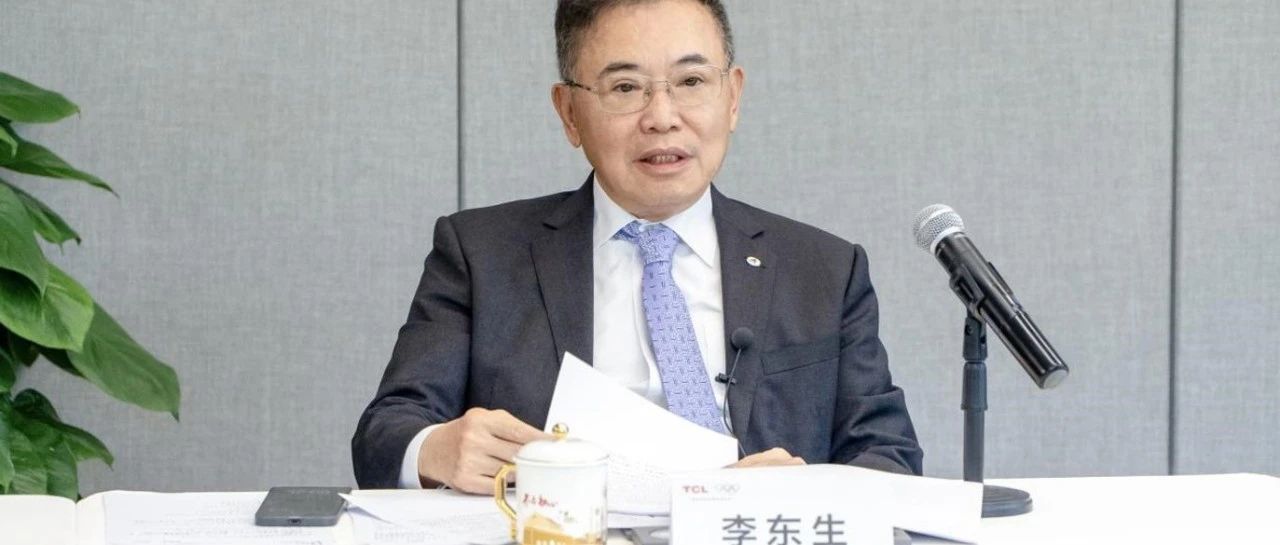
对话人大代表李东生:5年后,有些制造业将不靠融资发展丨长镜头
新浪财经· 2025-03-07 01:03
文|新浪财经 周文猛 过去4年,TCL华 星 新增固定资产投资 达 1080 亿元 , TCL 在 半导体 显示产业累计投资 达 2700 亿元 , TCL 创始人、董事长李东生对中国科技制造的发展有着充分的 信心, 敢于 为未来 投资。 亲自投身科技制造业的经历,让他洞悉了这一领域发展中的痛点、难点。因此,作为全国人大代 表的李东生,几乎每年两会都会提出一项跟制造业相关的建议。 今年两会,李东生又一次围绕优化科技制造业融资环境提出建议。李东生告诉新浪财经,"5年 后,TCL华星、京东方等国内制造业企业,将不需要再依靠资本市场融资来发展,靠自身资金就 足够滚动了。但未来3年到5年,融资还是发展的一个必要条件"。 此外,围绕时下备受关注的生成式人工智能发展,李东生也提出了"加强AI深度伪造欺诈管理"的 建议。在他看来,"人工智能的发展,同样需要加以监督管理"。 5年后 有些企业将不依靠融资发展 近年来,全国人大代表、格力电器董事长董明珠一直都是全国两会上的话题人物。她一直关注民 生和经济领域的热点问题,从个税改革到制造业创新,从加强知识产权保护到提高一线工人待 遇,提出了许多备受关注的建议,并引发广泛讨论。 过 ...

美股再次大幅下跌
Wind万得· 2025-03-06 22:43
Market Overview - The U.S. stock market experienced significant declines, with the Dow Jones Industrial Average dropping 427.51 points (0.99%) to close at 42,579.08 points, and the Nasdaq Composite Index falling 2.61% to 18,069.26 points, officially entering a technical correction zone [1][4] - The S&P 500 Index decreased by 1.78%, closing at 5,738.52 points, marking its lowest point since early November [5] Economic Policies and Market Reactions - The recent downturn followed the implementation of tariffs on Canada and Mexico, which unsettled financial markets, leading to retaliatory measures from Canada and anticipated responses from Mexico [4] - The White House announced a one-month delay in imposing tariffs on certain auto manufacturers under the USMCA agreement, which initially sparked a market rebound but ultimately failed to sustain investor confidence [4][5] - Treasury Secretary Scott Bessenet's support for the tariff policy raised concerns about the administration's long-term commitment to these controversial measures, contributing to market volatility [5] Sector Performance - In the Chinese stock market, the Direxion 3x Bull China Daily ETF (YINN) rose by 1.03%, while the iShares MSCI China ETF (MCHI) fell by 0.55% [3] - The semiconductor sector faced significant declines, particularly Marvell Technology, which dropped nearly 20% due to mixed first-quarter financial forecasts, impacting other semiconductor companies as well [5] Economic Indicators - Recent economic reports indicated potential negative impacts of Trump's policies on the U.S. economy, with rising costs due to tariffs and a surge in layoff announcements reaching the highest level since 2020 [6] - The Federal Reserve's Beige Book and ISM manufacturing data highlighted increased cost pressures on businesses due to tariffs [6] European Central Bank Actions - The European Central Bank (ECB) announced a 25 basis point rate cut, reducing the deposit facility rate to 2.5%, as part of ongoing efforts to stimulate a sluggish economy [8][9] - Despite a slight increase in inflation, overall inflation rates in the Eurozone remain below 3%, with GDP growth in the last quarter showing only a 0.1% increase [9][10] - The ECB's decision comes amid uncertainties related to potential U.S. tariffs on European goods, complicating the monetary policy landscape [9][10]