小米

Search documents
华小v与中国科技产业的“成人礼”
凤凰网财经· 2025-10-13 15:13
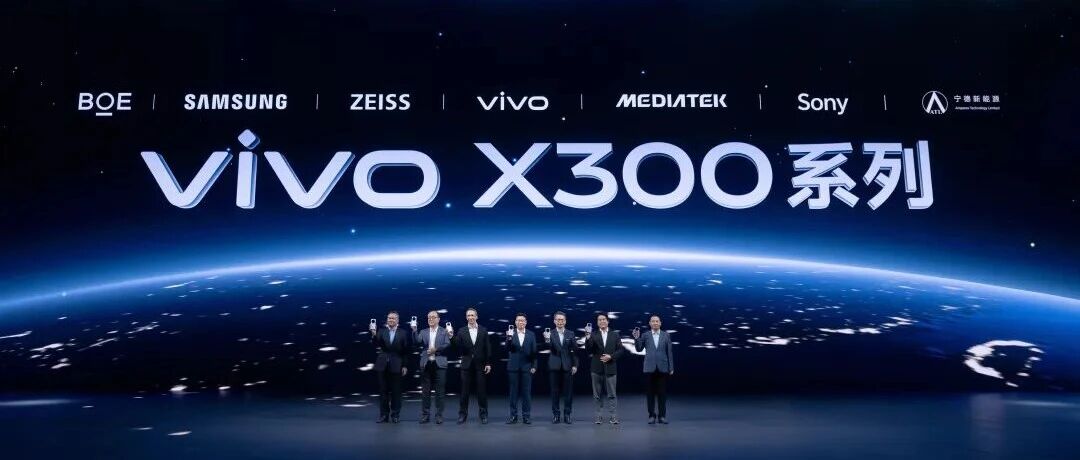
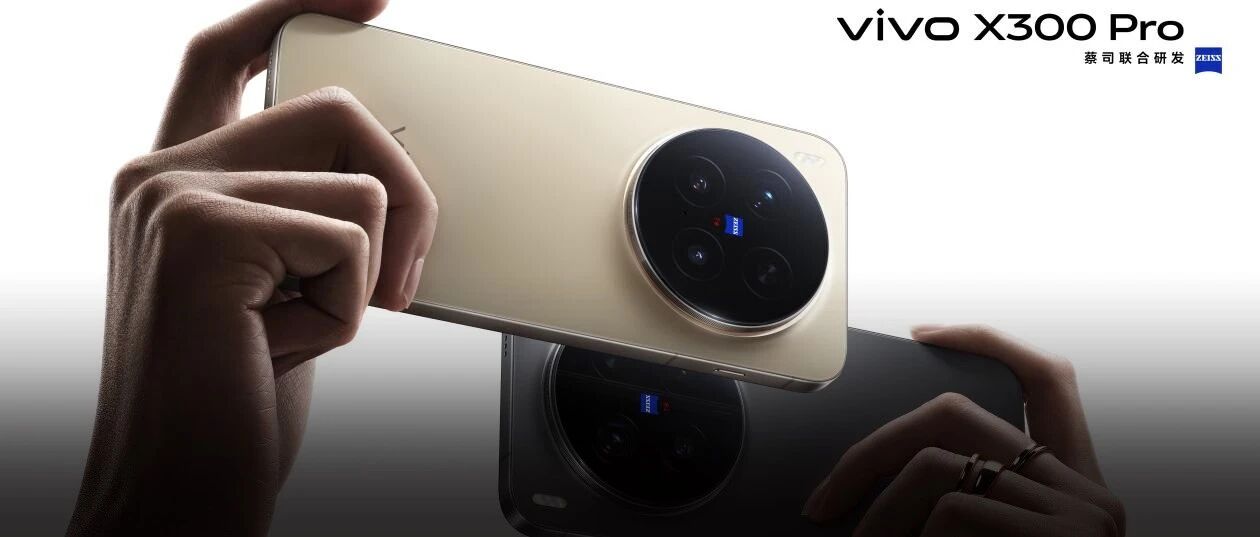
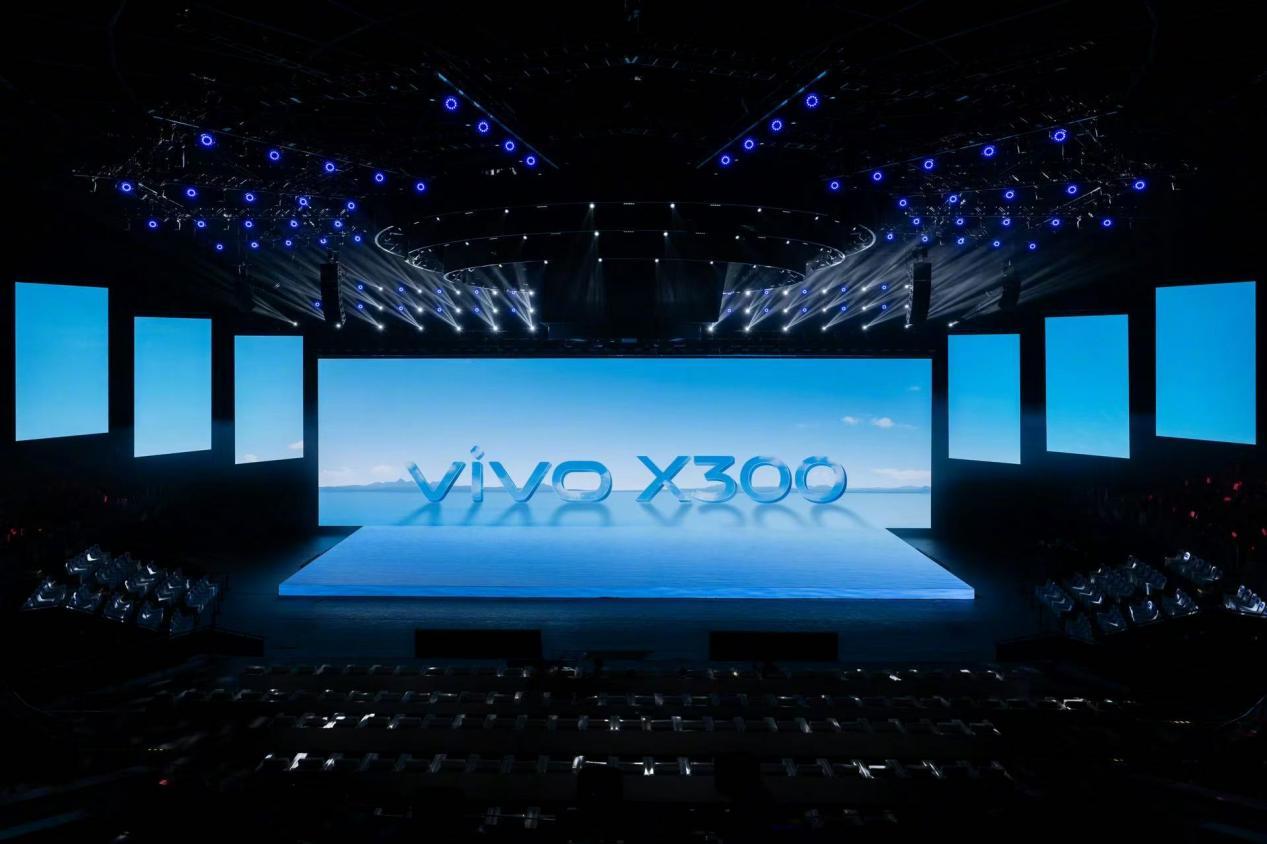
Core Viewpoint - The article discusses the emergence of a new competitive landscape in the Chinese smartphone market, characterized by the "Huawei, Xiaomi, vivo" triad, with vivo's recent X300 series launch highlighting this shift [1][9][22]. Group 1: Market Dynamics - The "华小v" (Huawei, Xiaomi, vivo) triad has collectively captured over 50% of the Chinese smartphone market, with Huawei and vivo each holding 17.6% and Xiaomi at 16.4% [4][9]. - In the high-end smartphone segment priced between 4000-6000 yuan, vivo's market share increased from 8.8% to 14% from January to July 2025, while Apple's share dropped from 23.4% to 17% [6][21]. - The presence of top-tier suppliers at the vivo X300 launch indicates strong industry support and confidence in vivo's product strategy [2][4]. Group 2: Competitive Strategies - Huawei employs a "top-down" approach focusing on technological innovation, while Xiaomi utilizes a "bottom-up" marketing-driven strategy. In contrast, vivo adopts a "demand deepening" strategy, concentrating on user-centric scenarios [10][11]. - Vivo's investment in imaging technology has led to significant advancements, including the development of a comprehensive visual platform and the introduction of the Dimensity 9500 flagship chip [12][14]. - The collaboration with leading suppliers like MediaTek and Zeiss reflects vivo's commitment to enhancing its product capabilities and user experience [21]. Group 3: Long-term Philosophy - The concept of "long-termism" is emphasized as a core business philosophy, focusing on integrity and genuine value rather than short-term gains [15][16]. - Vivo's strategy of co-research with partners like MediaTek illustrates a commitment to mutual growth and innovation, moving beyond traditional supplier relationships [19]. - The article highlights the importance of emotional value in consumer products, with vivo positioning its devices as "emotional containers" that resonate with users' experiences [18][21]. Group 4: Industry Evolution - The evolution of the Chinese smartphone industry is marked by a shift from low-end competition to high-quality, technology-driven competition, as exemplified by the "华小v" triad [22][23]. - The competitive landscape fosters a healthier ecosystem, preventing monopolistic stagnation and excessive competition, thus benefiting supply chain stability and innovation [22][23]. - The differentiation among Huawei, Xiaomi, and vivo showcases the potential for diverse development paths in the industry, challenging the traditional "winner-takes-all" mindset [23].

国产手机开启新较量,「不争先」的赢了
36氪· 2025-10-13 14:44
Core Viewpoint - The Chinese smartphone industry has entered a new phase characterized by systemic competition, where brands like Huawei, Xiaomi, and vivo are focusing on technological depth and ecosystem innovation rather than just product iteration [2][5][26]. Market Dynamics - As of September 28, 2025, vivo (including iQOO) holds an 18.4% market share, leading the Chinese smartphone market for the third quarter of 2025, and a 17.2% share for the first three quarters of 2025 [4]. - In the high-end market (above 4000 yuan), vivo ranks second with a 22.14% share, following Huawei [4]. Competitive Landscape - The current competitive landscape is defined by a shift from "single-point leadership" to "system leadership," where brands must build closed loops in technology, experience, and ecosystem [5][26]. - The evolution in the imaging sector reflects this shift, moving from hardware competition to a focus on real-world problem-solving capabilities [5][11]. Innovation Strategies - vivo's innovation strategy involves deep collaboration with partners like MediaTek and Arm, allowing for co-development of chipsets and imaging algorithms, which enhances their competitive edge [7][20]. - The X300 series exemplifies this approach, integrating advanced imaging capabilities with AI to create a seamless user experience [9][19]. Long-term Vision - vivo's approach is likened to a river, emphasizing patience and accumulation over time, which allows for the development of a reusable system capability [16][19]. - The "Blue Technology" system represents a comprehensive ecosystem that integrates chip performance, imaging, system interaction, and AI understanding, enabling continuous self-evolution [19][20]. Societal Impact - The focus on user-centric innovation is evident in vivo's projects, such as the "Digital National Treasure Plan," which utilizes imaging technology for cultural heritage preservation [23]. - By addressing real-world needs, vivo demonstrates that technological innovation can create significant social value beyond mere product performance [24][28].
东风奕派为DH项目征名 东风、华为合作更进一步
Xi Niu Cai Jing· 2025-10-13 14:08
Core Insights - Dongfeng and Huawei are collaborating on the DH project, focusing on mid-to-high-end intelligent vehicles priced between 200,000 to 400,000 yuan, with the first model expected to be a full-size SUV launching in 2026 [2][4] Group 1: Project Overview - The DH series aims to integrate advanced technologies such as Huawei's ADS 4 and HarmonyOS cockpit 5, positioning it as one of Huawei's most technologically integrated vehicles [2] - A naming contest is being held for the brand's Chinese name and logo, with the name required to be two characters, simple, and memorable, reflecting the brand values of "technology, quality, and trust" [4] Group 2: Market Context - The mid-to-high-end automotive market is highly competitive, with established players like Tesla, Li Auto, and Xiaomi, creating a stable market structure that new entrants must navigate [4] - The collaboration between Dongfeng and Huawei may adopt a model similar to the "HI PLUS model" used by GAC and Huawei, where Huawei provides advanced technology and GAC supports in battery and vehicle manufacturing [4] Group 3: Future Developments - The naming contest will conclude on October 28, and the selected creator will receive substantial rewards, indicating a proactive approach to brand development [4] - The launch of the first model next year is anticipated to introduce a new player into the Chinese mid-to-high-end intelligent vehicle market, potentially altering the current market dynamics [4]


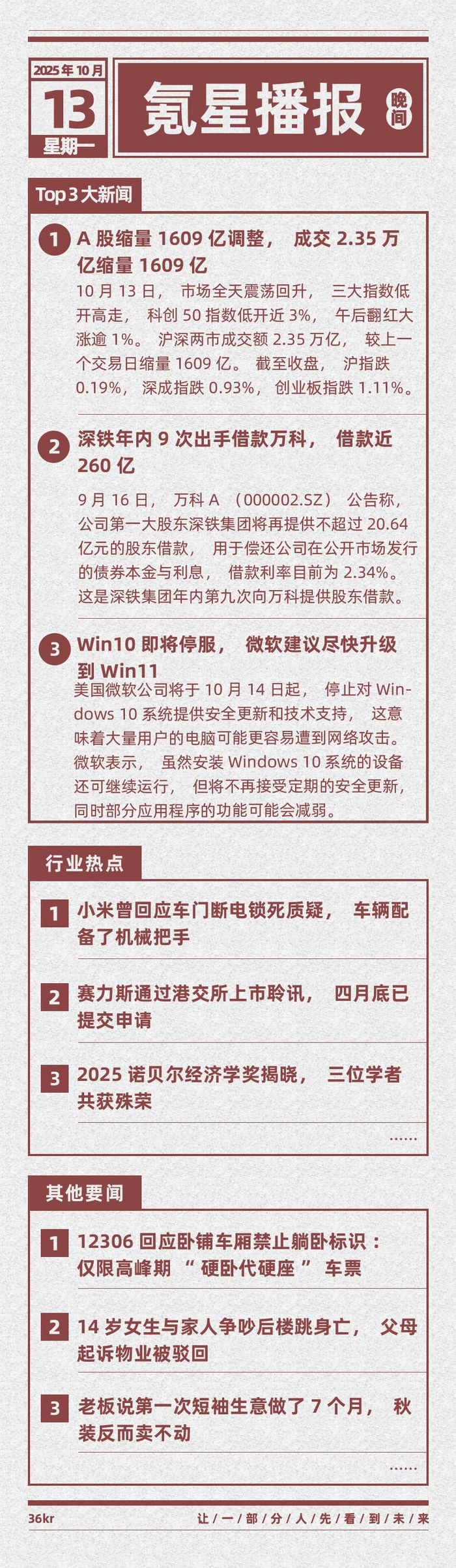
A股缩量1609亿调整,深铁年内9次借款万科近260亿
3 6 Ke· 2025-10-13 12:46
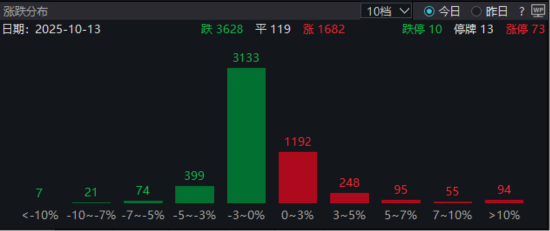
Market Overview - A-shares experienced a trading volume reduction of 160.9 billion, with a total transaction of 2.35 trillion [4] - The three major indices showed fluctuations, with the Shanghai Composite Index down by 0.19%, the Shenzhen Component Index down by 0.93%, and the ChiNext Index down by 1.11% [4] Company News - Shenzhen Metro Group has provided a total of 26 billion in loans to Vanke this year, marking the ninth loan issuance [4] - Vanke's largest shareholder, Shenzhen Metro Group, announced a loan of up to 2.064 billion for repaying bond principal and interest, with an interest rate of 2.34% [4] Technology Updates - Microsoft will stop providing security updates and technical support for Windows 10 starting October 14, which may expose users to increased cybersecurity risks [4] Other Industry Highlights - Xiaomi responded to concerns regarding the vehicle door locking issue, stating that the vehicles are equipped with mechanical handles [5] - Seres has passed the listing hearing at the Hong Kong Stock Exchange, having submitted its application in April [5] - The 2025 Nobel Prize in Economic Sciences was awarded to three scholars [5]

华小v与中国科技产业的“成人礼”
Feng Huang Wang Cai Jing· 2025-10-13 12:30
Core Insights - The launch of the vivo X300 series marks the entry of a new player in China's high-end smartphone market, showcasing a collaborative ecosystem with top-tier partners [1][4] - The Chinese smartphone market is now dominated by three major players: Huawei, vivo, and Xiaomi, collectively holding over 50% market share [5][19] - The competition has shifted from low-end, chaotic battles to high-quality competition focused on technology, user experience, and ecosystem building [8][19] Market Dynamics - The presence of major suppliers like BOE, Sony, and MediaTek at the vivo launch indicates strong industry support and confidence in vivo's product strategy [4][5] - Huawei and vivo each hold a 17.6% market share, while Xiaomi has 16.4%, illustrating a significant shift in market power towards domestic brands [5][19] - The "华小v" (Huawei, Xiaomi, vivo) era signifies a new phase in the smartphone industry, moving away from reliance on carrier channels to a focus on innovation and user-centric design [8][19] Competitive Strategies - Huawei employs a "top-down" technology-driven approach, while Xiaomi uses a "bottom-up" market-driven strategy, and vivo focuses on "deep cultivation" of user needs [9][10] - Vivo's strategy emphasizes enhancing user experience through advanced imaging technology, positioning itself as a leader in this niche [10][12] - The collaboration with Zeiss and MediaTek has allowed vivo to develop a comprehensive imaging system that surpasses traditional smartphone capabilities [10][18] Long-term Vision - The concept of "long-termism" is central to the strategies of these companies, emphasizing integrity and genuine value in consumer relationships [13][15] - Vivo's approach to technology development reflects a commitment to building a sustainable competitive advantage through deep partnerships and innovation [17][20] - The competitive landscape fosters a healthier ecosystem, preventing monopolistic stagnation and encouraging technological advancements [19][20]
ETF日报:资金面上看,市场开始转向上游的半导体设备寻找潜在的投资机会,可关注半导体设备ETF
Xin Lang Ji Jin· 2025-10-13 12:00
Market Overview - A-shares opened significantly lower due to Trump's threat of increased tariffs but quickly narrowed the decline as panic subsided, with the Shanghai Composite Index down 0.19% and the Shenzhen Component down 0.93% at the close, with total trading volume exceeding 2.3 trillion yuan [1] - The market's reaction to the tariff disturbances was quicker than in previous instances, indicating limited adjustment space for A-shares, with potential investment opportunities in rare earths, semiconductors, and AI industries amid the backdrop of US-China decoupling [1] Mining Sector - Mining stocks experienced a strong performance, with the mining ETF rising 4.59% and the Wind Rare Earth Index soaring 9.49%, driven by China's strengthened control over rare earth resources and the approaching traditional peak demand season [3] - The rare earth industry is expected to see a rise in both volume and price due to supply-side management and increasing global demand for elements like neodymium and praseodymium, particularly in green technology applications [3] - Long-term investment logic in the mining sector remains solid, with gold prices having risen over 50% since the beginning of the year, significantly enhancing the valuation space for gold mining stocks [3] Nonferrous Metals - Several metals are poised to benefit from a shift in supply-demand dynamics, particularly copper, which is expected to transition from a "tight balance" to a "shortage" over the next two years due to supply disruptions and expanding demand [4] - The Democratic Republic of the Congo's new export quota system for cobalt is anticipated to reverse the current oversupply situation, potentially leading to a shortage and driving cobalt prices to historical highs [4] - The mining sector is supported by multiple factors, suggesting further improvements in profitability and valuation, with recommendations to focus on mining ETFs [4] Semiconductor Industry - The STAR 50 Index showed resilience, with the semiconductor equipment ETF rising 3.43%, driven by the core theme of "domestic substitution and self-control" amid ongoing US-China tensions in the semiconductor sector [5] - Recent domestic measures include antitrust investigations against Nvidia and anti-dumping investigations on US-imported chips, aimed at enhancing the security and autonomy of the domestic semiconductor industry [5] - The market for domestic semiconductor equipment remains vast, with current domestic production rates for critical processes still below 20% [5] AI and Semiconductor Equipment - Semiconductor equipment manufacturers are expected to benefit from the growing demand for AI and high-performance computing (HPC), with strong investment in advanced processes driven by AI chip demand [6] - The high demand for high-bandwidth memory and 3D NAND is likely to lead to a structural supply shortage, further boosting related equipment investments [6] - The market is shifting focus from previously hot sectors like computing and chips to upstream semiconductor equipment for potential investment opportunities [6] Gold Market - Gold prices continue to rise, recently surpassing $4,090, with gold ETFs also showing significant gains, supported by increased market uncertainty and geopolitical tensions [6][8] - The trend of central banks increasing gold reserves is ongoing, with China's reserves reaching 74.06 million ounces, marking the 11th consecutive month of increases [8] - The combination of monetary expansion, fiscal deficits, and global geopolitical instability is expected to sustain demand for gold as a safe-haven asset [8] New Energy Vehicles - The new energy vehicle ETF rose 0.75% after a recent adjustment, supported by strong demand in the lithium battery sector and significant sales growth from leading manufacturers [9] - The lithium battery industry is experiencing favorable catalysts, including increased production and strong demand forecasts for 2026, alongside improved financial metrics for lithium companies [9] - The energy storage market is also showing robust demand, with significant growth in bidding for storage systems expected in the coming years [9]
小米SU7碰撞后自燃,驾驶人身亡!公司市值蒸发770亿港元
Guo Ji Jin Rong Bao· 2025-10-13 10:34
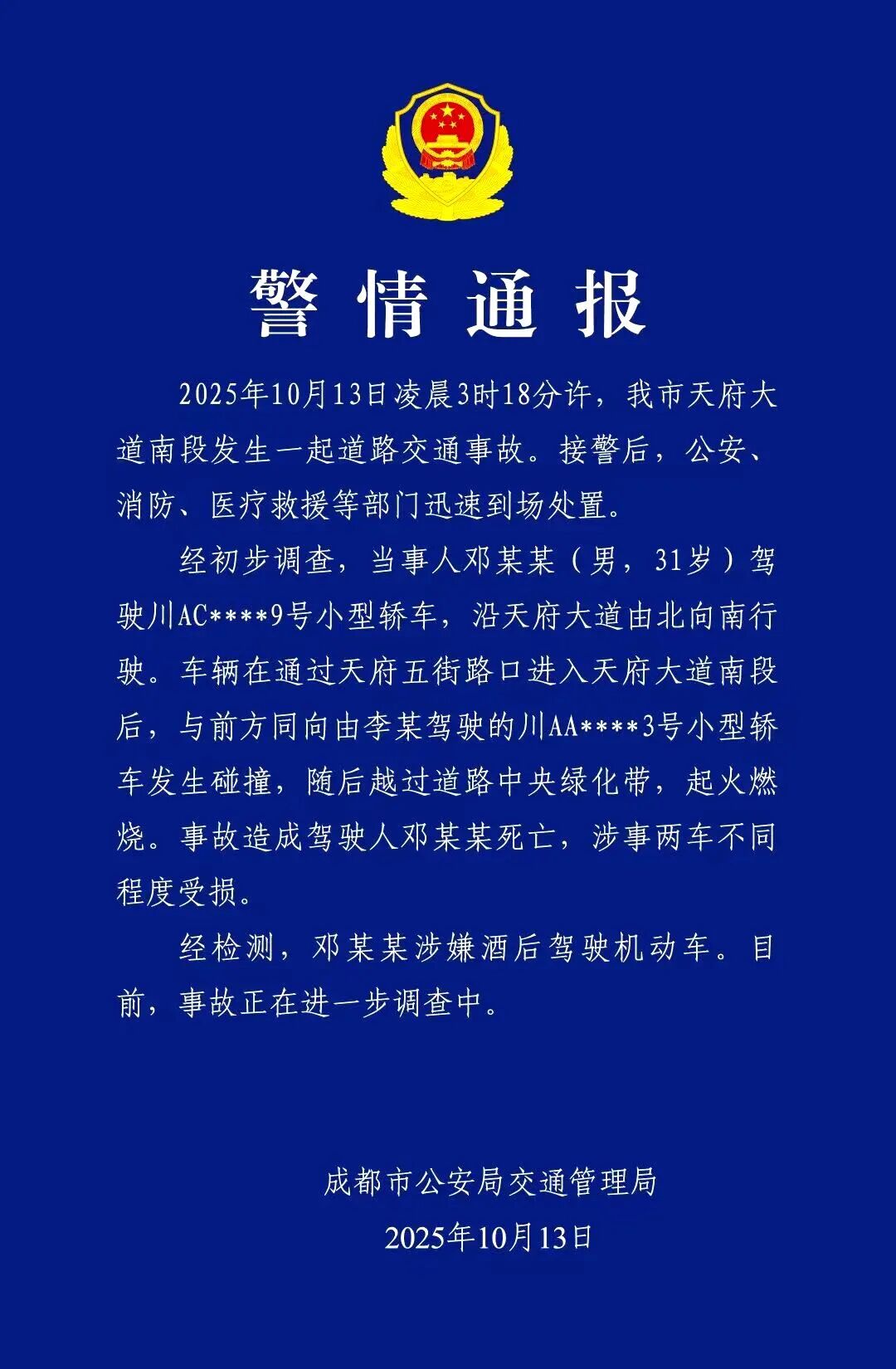
Core Viewpoint - A serious traffic accident involving a Xiaomi SU7 occurred in Chengdu, resulting in the vehicle catching fire and the driver being trapped inside, leading to his death. The incident has raised concerns about the vehicle's safety features, particularly the inability to open the doors after the collision, and has negatively impacted Xiaomi's stock price and investor confidence in its automotive business [1][2][6][7]. Group 1: Accident Details - The accident took place on October 13, where a Xiaomi SU7 lost control, collided with a green belt, rolled over, and caught fire. Eyewitnesses reported that the driver was agitated before the incident [1]. - Rescue efforts were hampered as bystanders were unable to open the car doors, despite multiple attempts to break the windows. The vehicle was completely engulfed in flames within three minutes [2]. - The driver, identified as 31-year-old Deng, was found deceased at the scene, and initial investigations indicated he was suspected of driving under the influence [5]. Group 2: Financial Impact - Following the accident, Xiaomi's stock price dropped nearly 9% during trading, closing at 49.08 HKD, which resulted in a market capitalization loss of approximately 770 million HKD [6]. - Analysts noted that the automotive business now accounts for 35% of Xiaomi's overall valuation, suggesting that ongoing safety issues could significantly affect investor perceptions of the company's growth potential [7]. Group 3: Safety Concerns and Recalls - The Xiaomi SU7 has faced multiple safety controversies this year, including two major recalls due to software defects in its smart parking and L2 driving assistance features, affecting a total of 14.8 thousand vehicles [9]. - There have been several incidents involving the SU7, including a fatal crash in Anhui and a reported loss of control leading to a vehicle falling into the sea, raising questions about the vehicle's design and safety features [10][11]. - The inability to open the doors after collisions has been highlighted as a critical design flaw, with comparisons drawn to how competitors like Tesla and BYD handle post-accident data and responses [11].
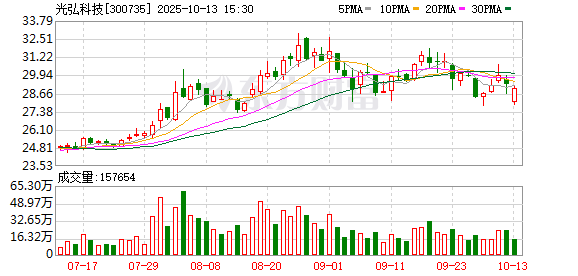
光弘科技:公司是小米重要的制造合作伙伴,为客户提供多款畅销手机的制造服务
Mei Ri Jing Ji Xin Wen· 2025-10-13 09:30
Group 1 - The core point of the article is that Guanghong Technology is a significant manufacturing partner for Xiaomi, providing manufacturing services for various popular mobile phones [2][3] - Guanghong Technology confirmed its involvement with Xiaomi but did not disclose specific models or specifications of the devices being manufactured [2]
港股收评:跌幅收窄恒指跌1.52%,半导体芯片股、黄金股转涨!小米跌5.7%,华虹半导体涨8%,中芯国际涨超3%,赤峰黄金、紫金黄金国际涨超9%
Ge Long Hui· 2025-10-13 08:59
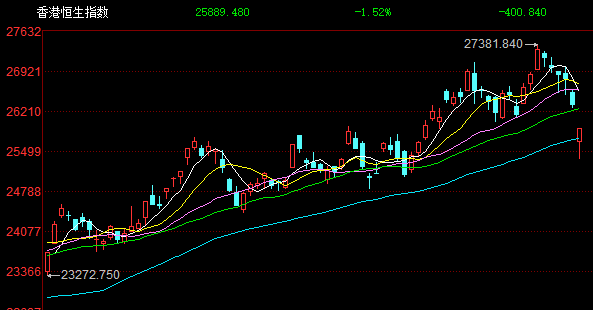
Market Overview - The Hong Kong stock market experienced a decline, with the Hang Seng Index closing down 1.52% at 25,889 points, having previously dropped as much as 3.6% during the day [1] - The Hang Seng Tech Index and the China Enterprises Index fell by 1.82% and 1.45% respectively, with the tech index at one point down nearly 5% [1] Sector Performance - Large technology stocks showed a significant narrowing of losses in the afternoon, with Xiaomi down 5.7% (previously nearly 9%), JD.com down 3.6%, and Baidu down 2.14% [3] - Consumer electronics stocks faced notable declines, particularly due to potential escalations in trade tensions, with Apple-related stock Hongteng Precision dropping nearly 8% and Lens Technology down over 6% [3] - Other sectors such as new energy vehicles, gambling, education, insurance, home appliances, aviation, and Chinese brokerage stocks also saw declines [3] Positive Movements - In contrast, semiconductor stocks and gold stocks collectively turned positive in the afternoon, with Huahong Semiconductor rising by 8% and SMIC up over 3% [3] - Gold stocks like Chifeng Jilong Gold and Zijin Mining International surged over 9%, while rare earth concept stock Jilin Jien Nickel Industry saw a strong increase of 13% [3] - Software, wind power, military, and shipping stocks showed some active performance [3]


港股收评:恒指跌1.52%,贵金属、稀土概念全天强势
Ge Long Hui· 2025-10-13 08:36
Market Overview - The Hang Seng Index closed down 1.52% at 25,889 points, having previously dropped as much as 3.6% during the day [1] - The Hang Seng Tech Index and the China Enterprises Index fell by 1.82% and 1.45%, respectively, with the tech index experiencing a near 5% drop at one point [1][2] Sector Performance - Large tech stocks showed a significant narrowing of losses in the afternoon, with Xiaomi down 5.7% after a near 9% drop, and JD.com down 3.6% [2] - Consumer electronics stocks were among the hardest hit due to potential escalations in trade tensions, while sectors like new energy vehicles, gambling, education, insurance, and aviation also declined [2] - Semiconductor and gold stocks collectively turned positive in the afternoon, with rare earth stock Jinchuan Magnetics surging 13% [2][8] Specific Stock Movements - Apple-related stocks saw a collective decline, with Hongteng Precision down over 7%, Lens Technology down over 6%, and Sunny Optical down over 4% [4][5] - The pharmaceutical outsourcing sector experienced significant drops, with Kelaiying down over 7% and WuXi AppTec down over 6% [6][7] - Rare earth stocks, particularly Jinchuan Magnetics, saw a notable increase of over 13% due to improved supply-demand dynamics [8] - Gold and precious metals stocks performed strongly, with Chifeng Jilong Gold and Zijin Mining both rising over 9% [9] Banking Sector - Some banks, such as Guangzhou Rural Commercial Bank, saw gains of over 5%, while others like Guizhou Bank and Chongqing Bank rose over 2% [12] - Analysts noted that the banking sector has underperformed since July 10, with a cumulative decline of 14%, but there may be opportunities for recovery as dividend dates approach [12] Individual Stock Highlights - Yao Cai Securities surged over 19% after receiving approval from the Hong Kong Securities and Futures Commission for an acquisition by Ant Group [13] Future Outlook - Analysts expect the Hong Kong market to experience volatility due to escalating US-China trade tensions, but domestic growth policies may stabilize investor sentiment over time [16] - Suggested sectors for investment include precious metals as a hedge against market uncertainty, the AI industry due to expanding capital expenditures from global tech giants, and sectors highlighted in China's 14th Five-Year Plan [16]